28 Italian Desserts Almost Nobody in America Has Heard Of (How Many Do You Know?)
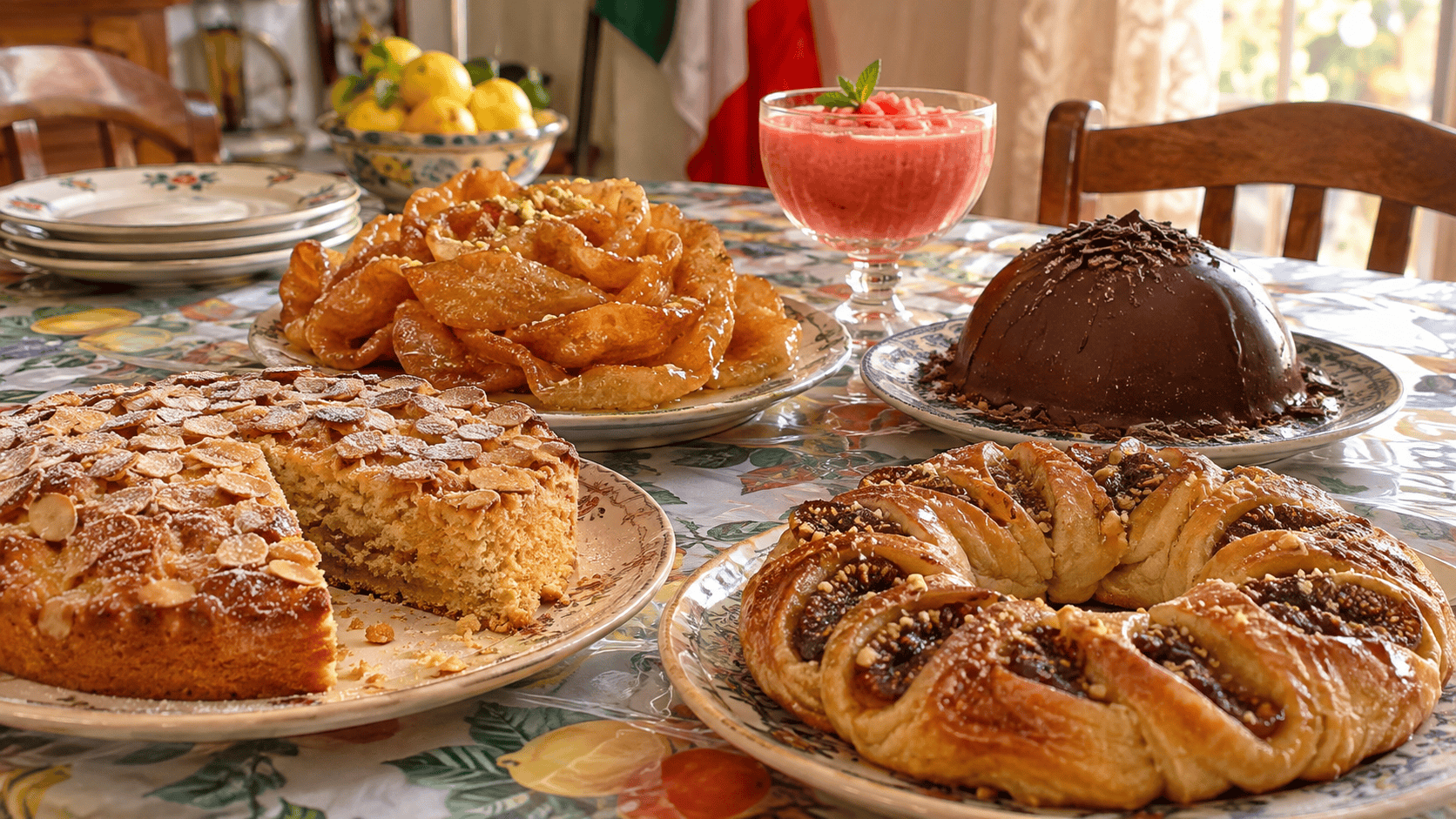
Every Italian restaurant in America has the same dessert list. Tiramisu, cannoli, gelato, maybe a spumoni if the place is old enough to have a jukebox.
Meanwhile Italy has about four thousand desserts, and most of them never got on the boat.
Some are tied to one saint’s day. Some need an ingredient nobody stocks here. Some look like a crumbly brown mess next to a shiny cannoli and lost the beauty contest.
Nonna Pina grew up outside Palermo, so the Sicilian ones on this list are just called “dessert” at her house. The northern ones she met late in life and judges accordingly. I’ve eaten maybe two-thirds of these, and I’ll tell you which ones I only know from stories.
Here are 28 real Italian desserts almost nobody in America has heard of. Count how many you already know.
1. Seadas (Sardinia)
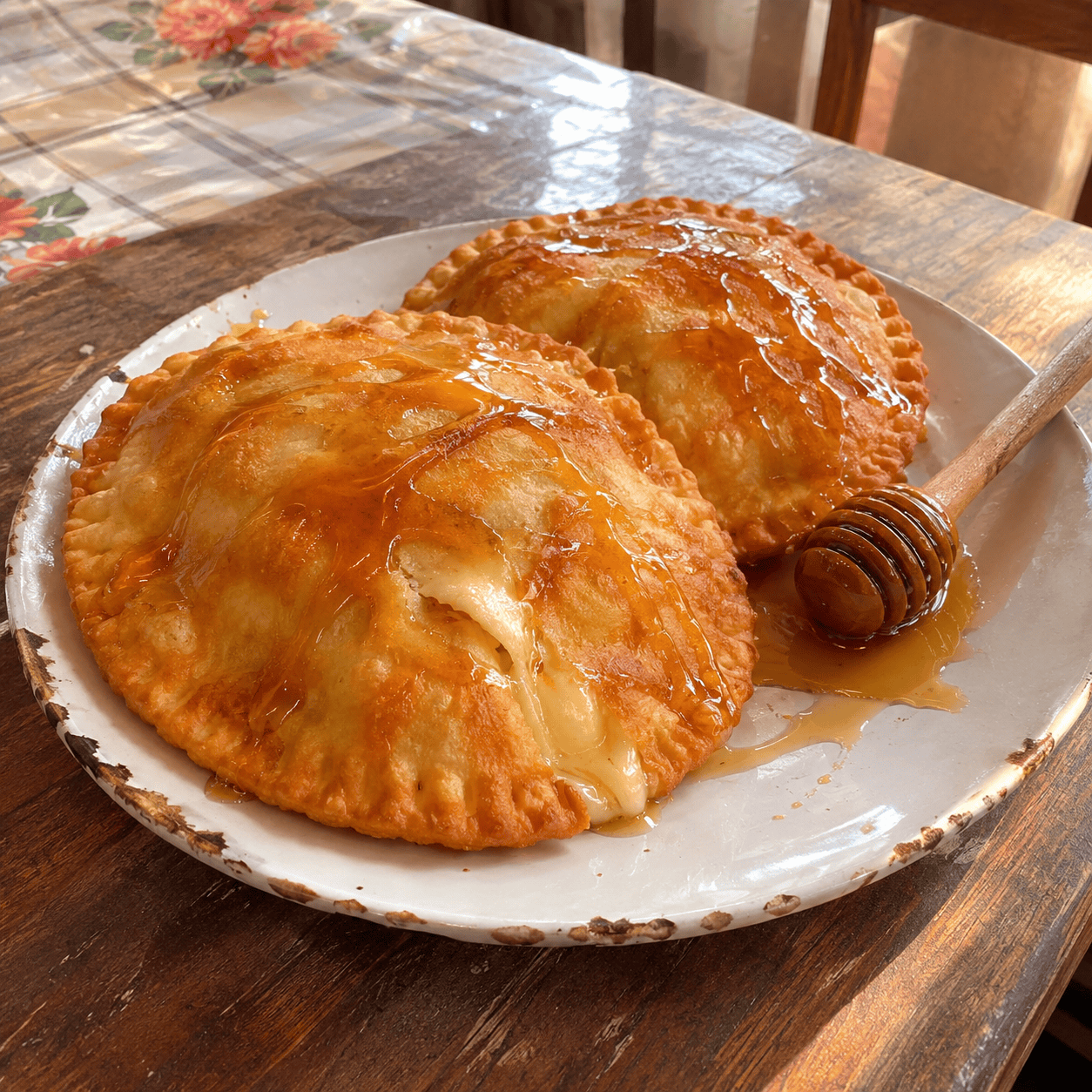
It’s a fried pastry pocket stuffed with fresh pecorino and then drizzled with honey. Cheese. Hot, stretchy, barely sweet cheese, inside a dessert.
Sardinians sometimes eat it at the end of a meal and sometimes as a course of its own, and the honey is often bitter corbezzolo honey, which tastes faintly like burnt caramel and medicine in the best way.
The first time a coworker described it to me I assumed she’d mixed up a course. Then I had one at a Sardinian place in New York and sat there with the plate in front of me for a minute like it had insulted me.
Americans never see it because the whole thing collapses on reheating and the filling is a cheese most shops here don’t carry fresh.
Nonna’s verdict: she sniffed, took a bite, and said it needed less honey. Then she ate the rest of mine.
2. Sanguinaccio Dolce (Naples and the south)
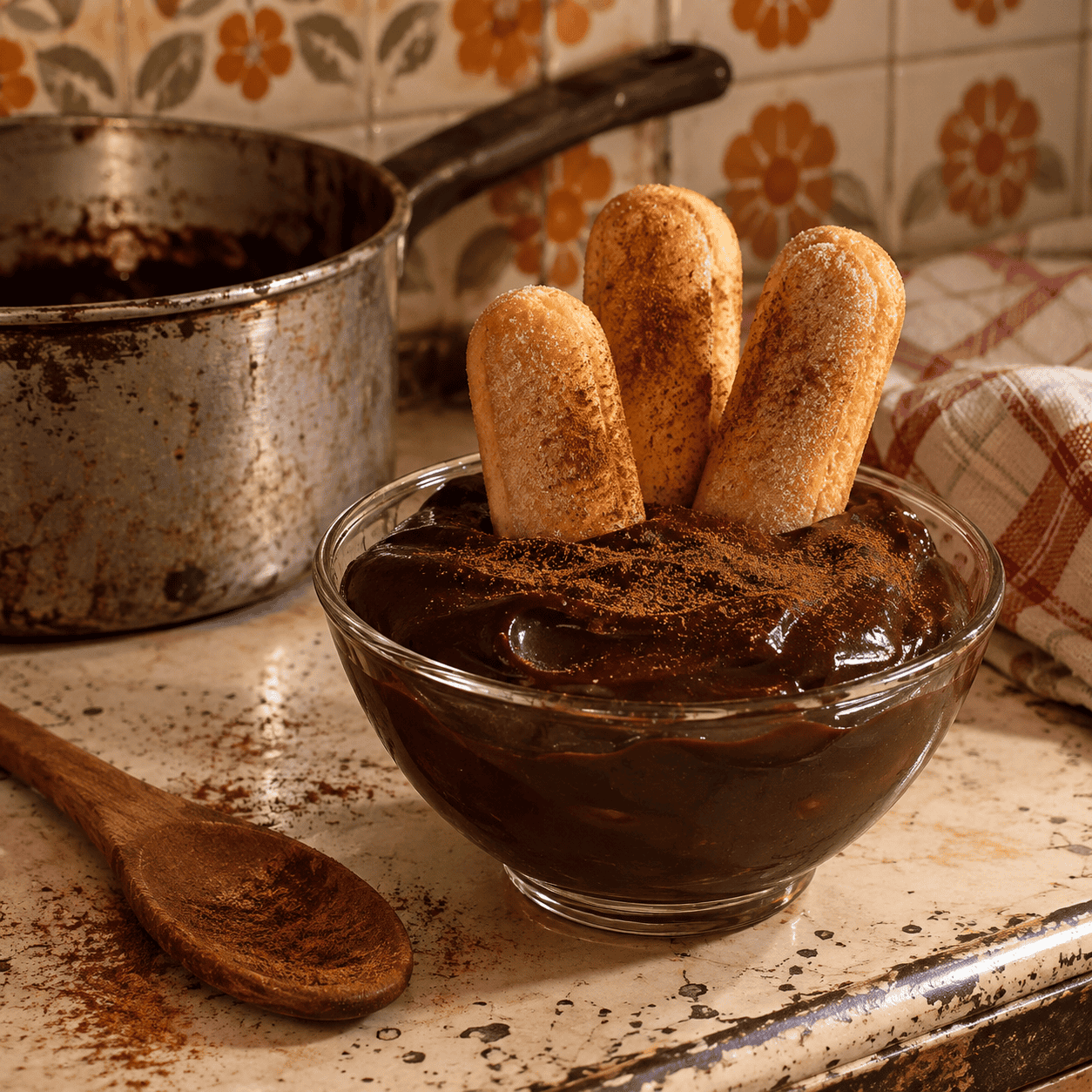
Carnevale chocolate pudding. Thick, glossy, served with savoiardi for dipping. And traditionally it was made with fresh pig’s blood.
That is not a rumor. It’s where the name comes from, and it was pig-slaughter season food, blood stirred into chocolate, sugar and cinnamon so nothing went to waste. Italy restricted the sale of fresh pig’s blood decades ago, so what you’ll be served today is a very good dark chocolate cream with no blood in it at all.
Nonna remembers the one from her childhood being darker and heavier than what gets made now. She says it like she misses it, which is a lot.
It’ll never hit an American menu because you can’t put the word blood on a dessert list and expect a sale.
3. Torta di Tagliatelle (Emilia)
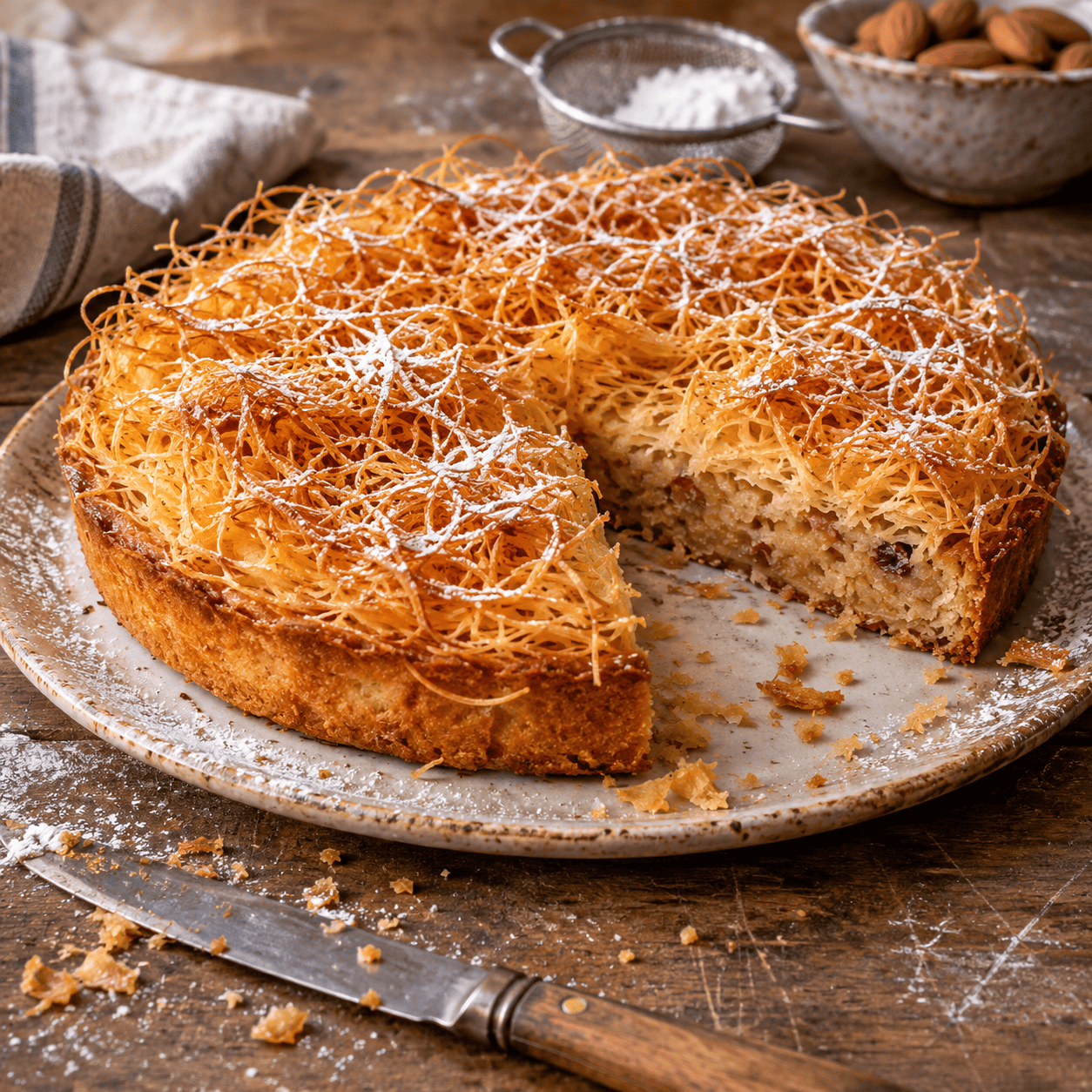
An almond tart with a nest of raw, paper-thin egg noodles baked on top until they shatter like glass.
Yes, pasta on a dessert. Emilians have been doing it for centuries, usually with a sweet almond filling under a shortcrust base, and the noodles crisp up and go slightly caramelized with butter and sugar.
It tastes like marzipan and buttered toast at the same time. The top crumbles when you cut it and that’s the point.
I’ve never had the real thing in Emilia, only a version a friend brought back the recipe for, and even her imperfect copy stopped the conversation at the table.
Americans would look at a plate of noodles with powdered sugar and ask if the kitchen made a mistake. Their loss.
4. Pastiera Napoletana (Naples)
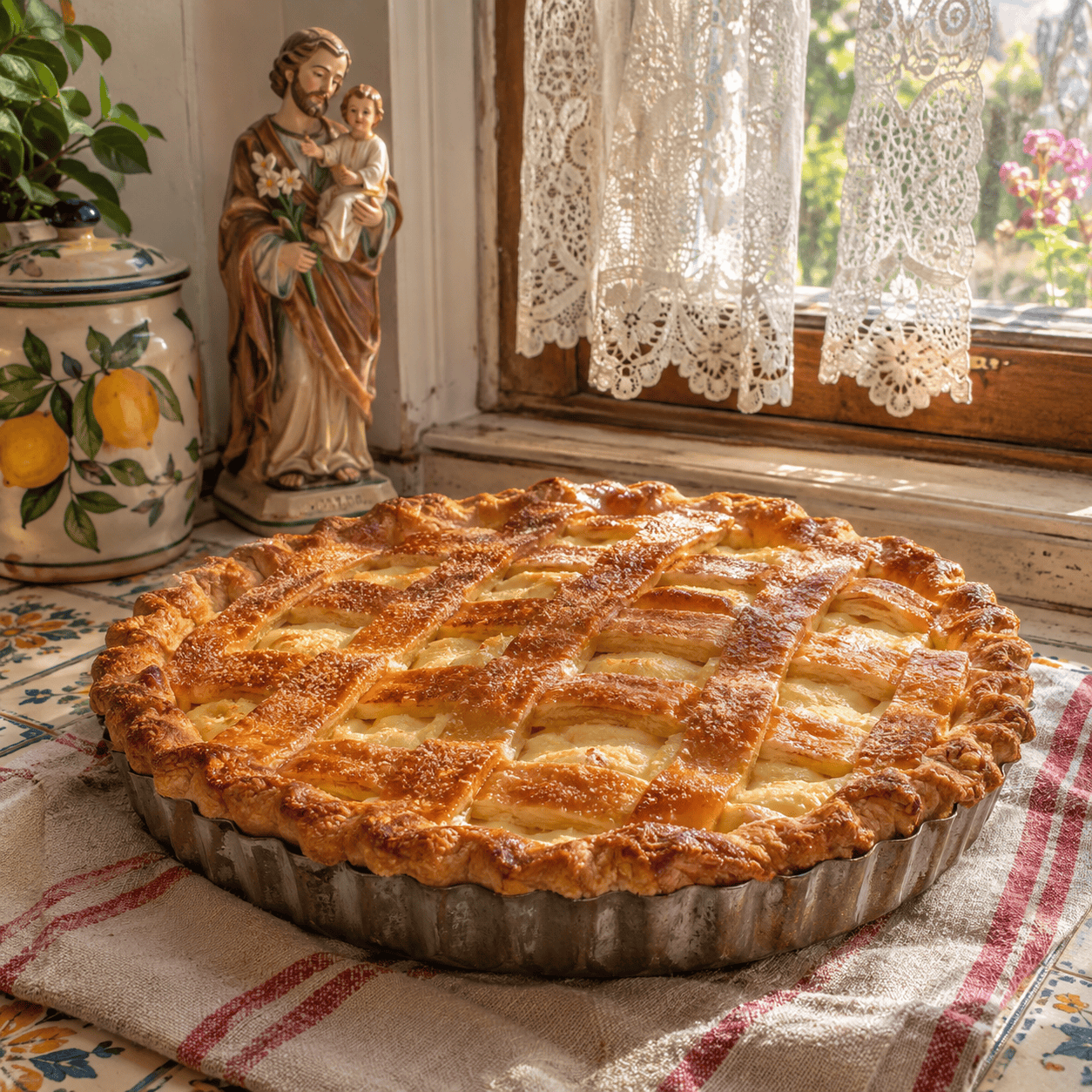
The Easter pie of Naples: cooked whole wheat berries simmered in milk, folded into sweet ricotta, perfumed with orange flower water, baked in a shortcrust with lattice strips on top.
It’s dense and slightly chewy from the grain, and the orange flower water is the whole personality. Too little and it’s a ricotta pie. Too much and it tastes like soap.
You don’t see it here because cooked wheat berries in a jar are a specialty-import item, and most American bakers would rather use rice.
Neapolitans make it on Good Friday so it can sit until Sunday, because it genuinely improves after two days.
Nonna is Sicilian and therefore considers pastiera a Naples thing. She makes one every Easter anyway, lattice and all, and if you ask her about it she starts talking about the weather.
5. Gelo di Melone (Palermo)
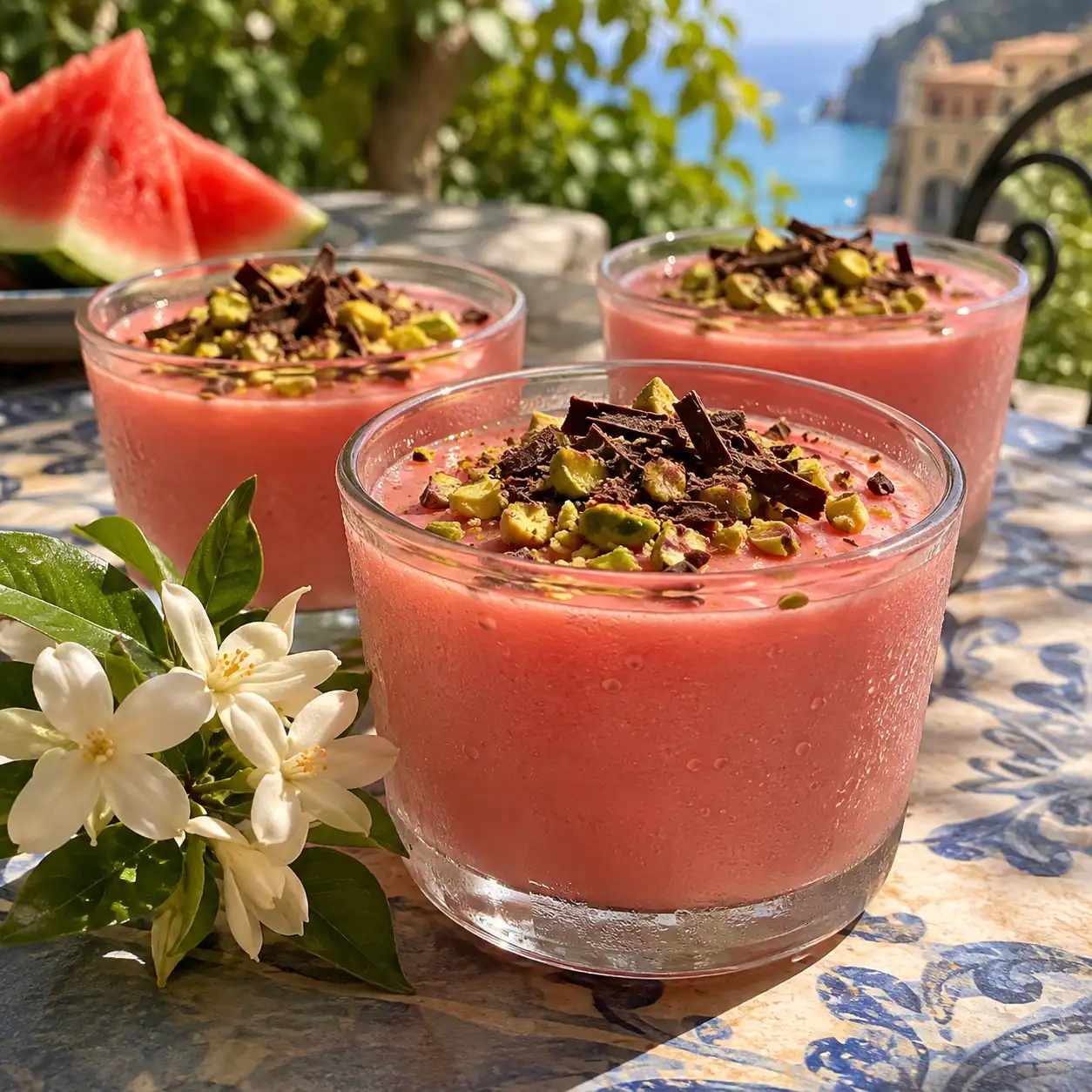
Watermelon pudding. Scented with jasmine, studded with pistachios and little bits of dark chocolate, served cold in a glass in August.
It’s watermelon juice set with starch until it wobbles. That’s it. Pale pink, barely sweet, and tasting more intensely of watermelon than watermelon does.
In Palermo it shows up for Ferragosto in the middle of August, when nobody wants anything heavy. In America it’s invisible, because it has to be made the same week the watermelon is good, and because “pudding” sounds like something out of a plastic cup.
This one I know well. My job as a kid was holding the sieve while Nonna pushed the pulp through with a wooden spoon, juice running down my wrists.
She still uses that same glass loaf pan, and still gets annoyed if you stir the chocolate in instead of layering it on top.
6. Minne di Sant’Agata (Catania)
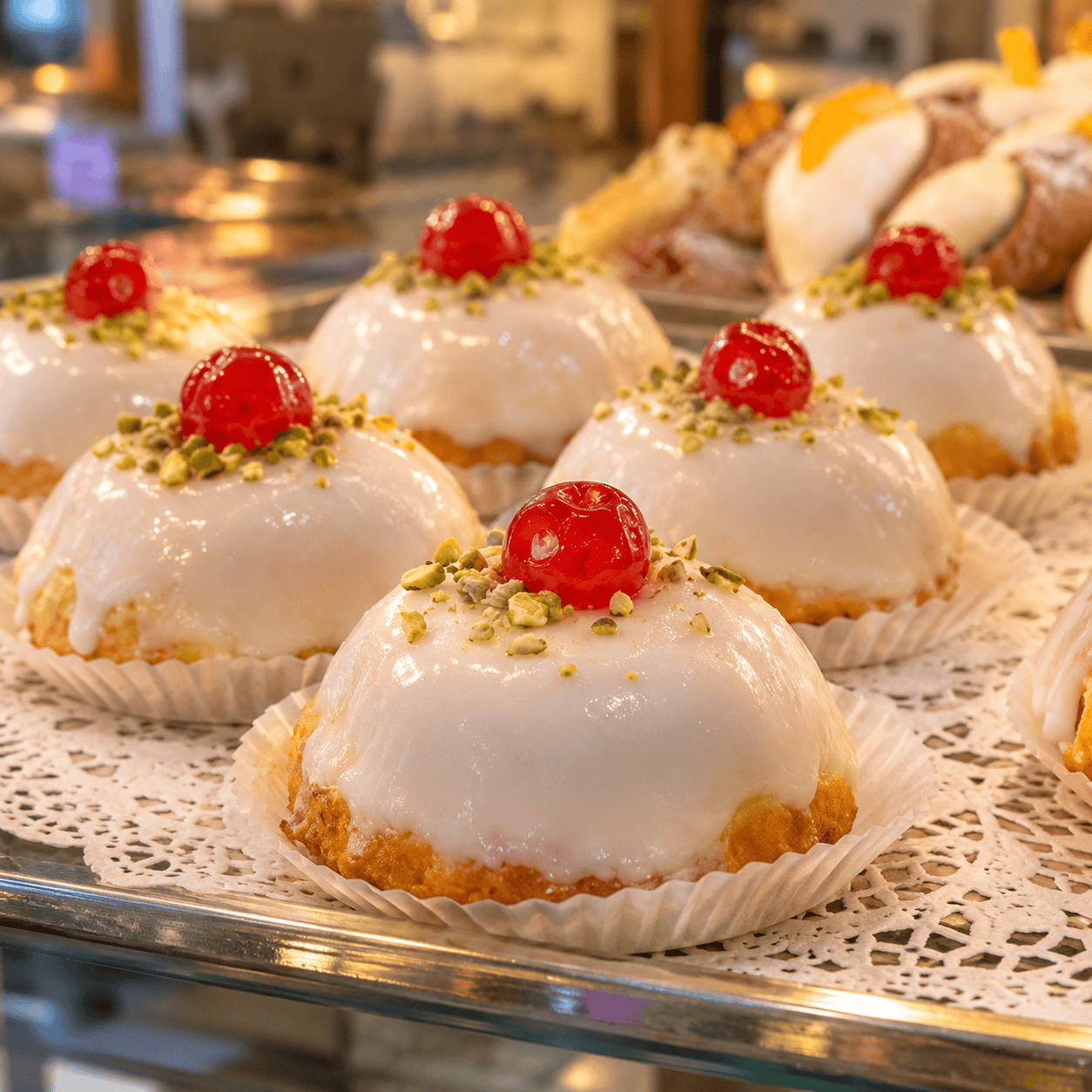
Small domed cakes filled with sweet ricotta, covered in white icing, with a single candied cherry on the very top.
They’re made for Saint Agatha’s feast in early February in Catania, and the shape is a deliberate reference to her martyrdom. Catanesi say the name out loud without flinching. Americans usually need a minute.
That minute is half the reason you never see them here. The other half is that the whole thing is bound to one city and one week in February, and nobody wants to explain the shape to a stranger.
Inside it’s the same ricotta cream as a cannolo, sometimes with chocolate chips. The white icing on top is the whole outfit.
Nonna calls them by the polite name, cassatelle. I’ve used the other one at her table exactly once. She set down her fork and gave me the look she saves for people who rinse pasta.
7. Sbrisolona (Mantua)
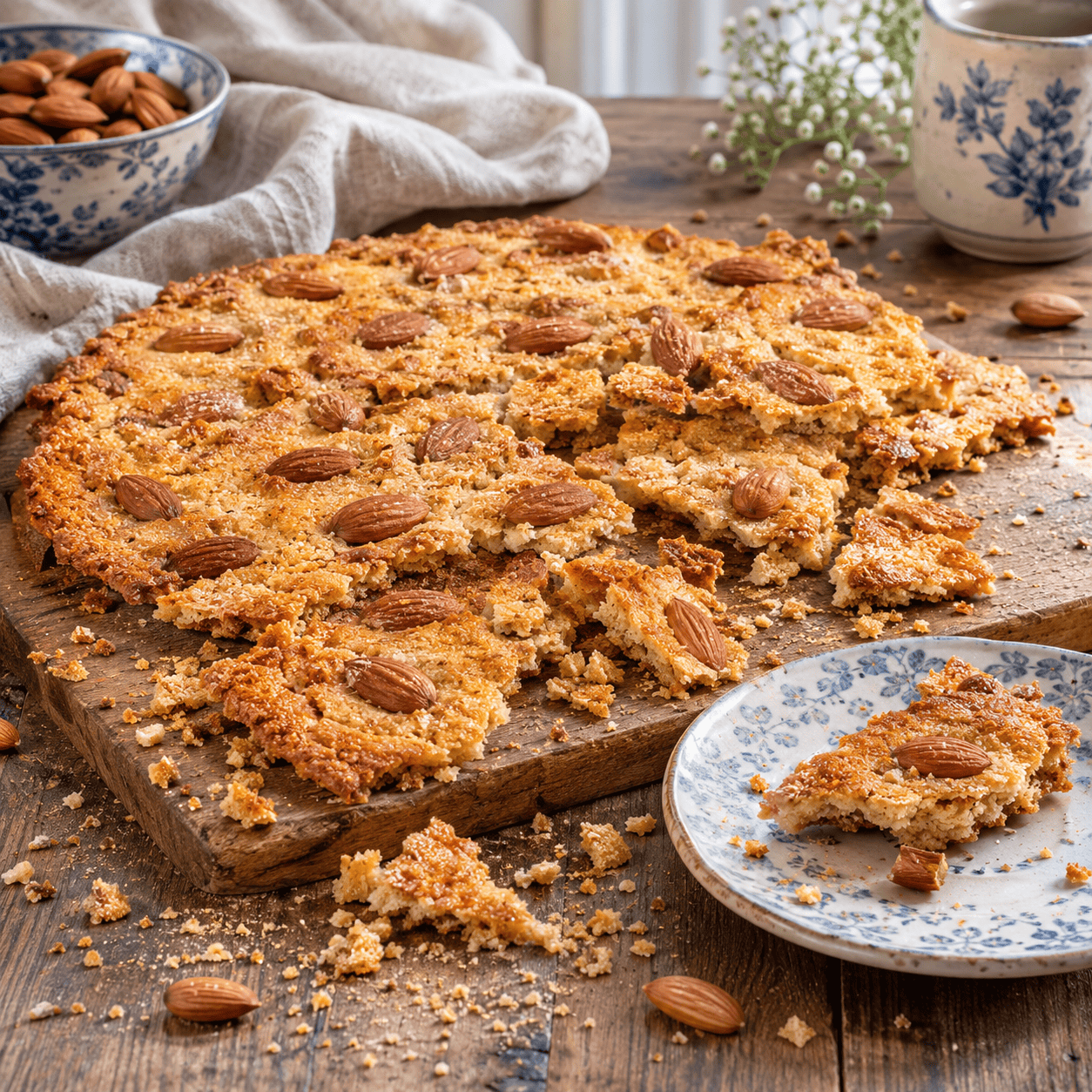
A cake you are supposed to smash with your fist. No knife.
Mantua’s sbrisolona is made with almonds, cornmeal and a lot of butter, baked flat and left so crumbly it can’t be sliced. You hit it in the center and break off shards.
It tastes like a giant almond shortbread with sandy cornmeal grit. Excellent with coffee, better with a glass of something sweet, and it keeps for over a week in a tin.
If you like a cornmeal cake with real texture, this is its rougher northern relative.
No American bakery sells it because a cake that arrives broken looks like a shipping accident.
8. Pasticciotto (Lecce, Puglia)
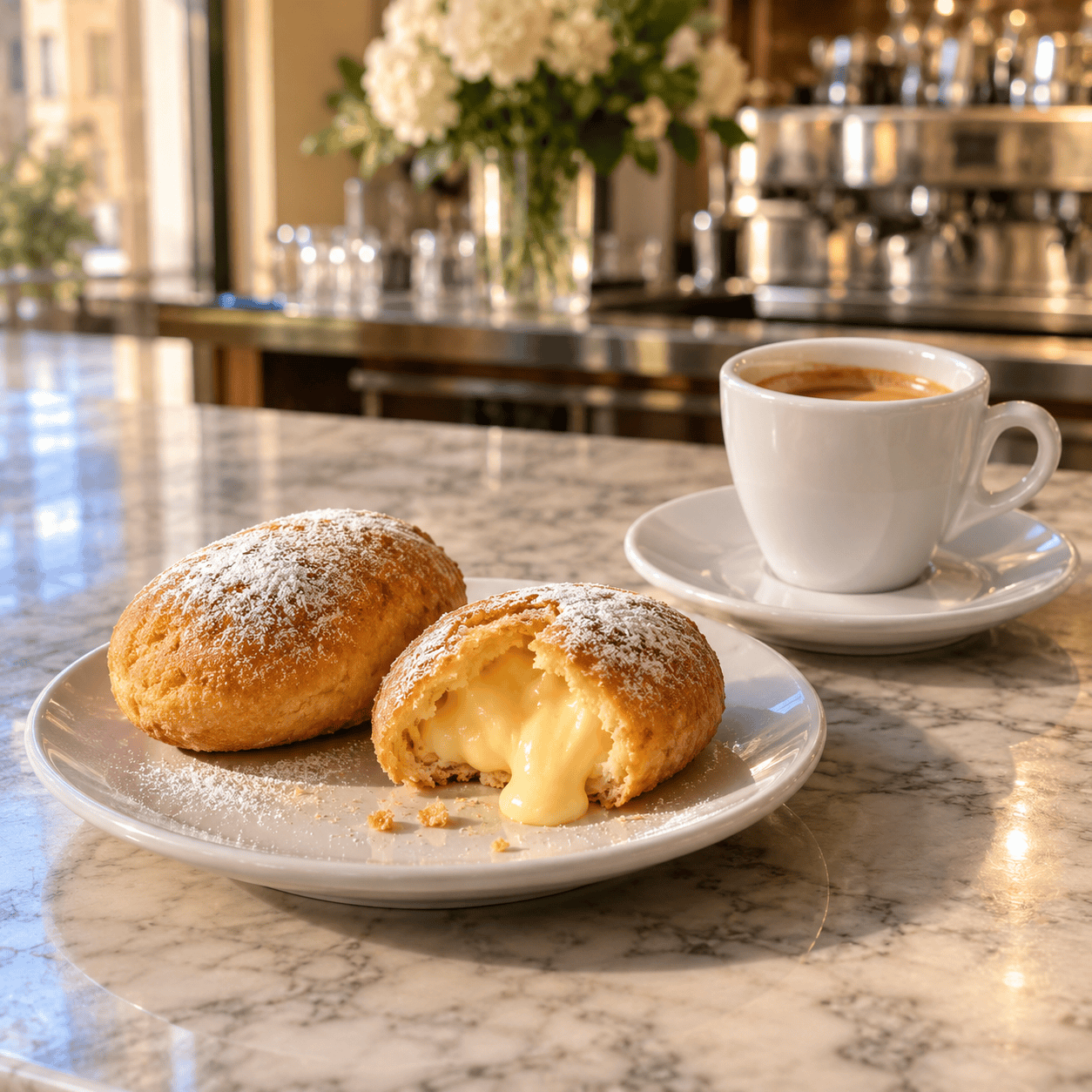
Breakfast. A small oval shortcrust shell filled with pastry cream, baked, and eaten warm at 7am standing at a bar counter in Salento.
The pastry is made with lard in the traditional version, which gives it a short, sandy snap instead of a flaky one. The custard inside is still soft from the oven.
That softness is exactly why you never see one here. Warm custard pastries have a two-hour window, and our bakeries are built around things that can sit until four in the afternoon.
A friend came back from Lecce and talked about these for an entire dinner, mostly with her hands. By dessert I had decided I was making them myself.
What I made was a sad approximation, baked in a muffin tin in my apartment and eaten standing at my own counter. It was still one of the better things I’ve eaten that year.
9. Castagnaccio (Tuscany)
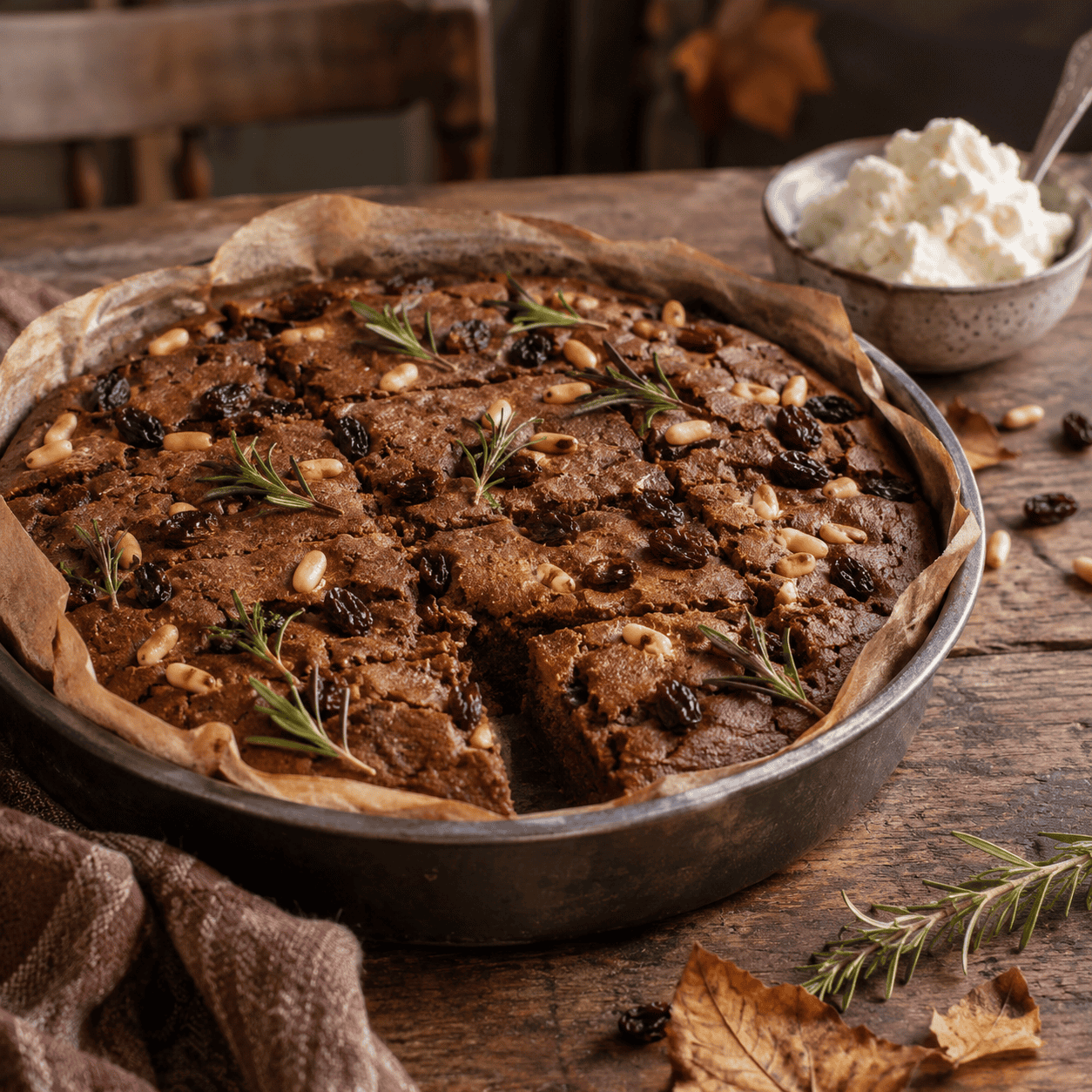
Chestnut flour, water, olive oil, rosemary, pine nuts, raisins. No sugar at all.
The batter goes into an oiled pan barely a finger deep, then gets one more drizzle of oil on top before the oven. It bakes into a thin, dark, cracked slab that looks genuinely unappealing and tastes faintly sweet from the chestnut alone, with pine resin notes from the rosemary.
It was poor people’s food in the Tuscan mountains when chestnut flour was cheaper than wheat. Now chestnut flour costs a fortune, which is its own kind of joke.
Nonna tried a slice once at a church event and declared it “a cake for people doing penance.” She’s not entirely wrong. I like it with ricotta on the side.
It never had a chance here: no sugar, herbs in a dessert, and a color best described as swamp.
10. Tartufo di Pizzo (Calabria)
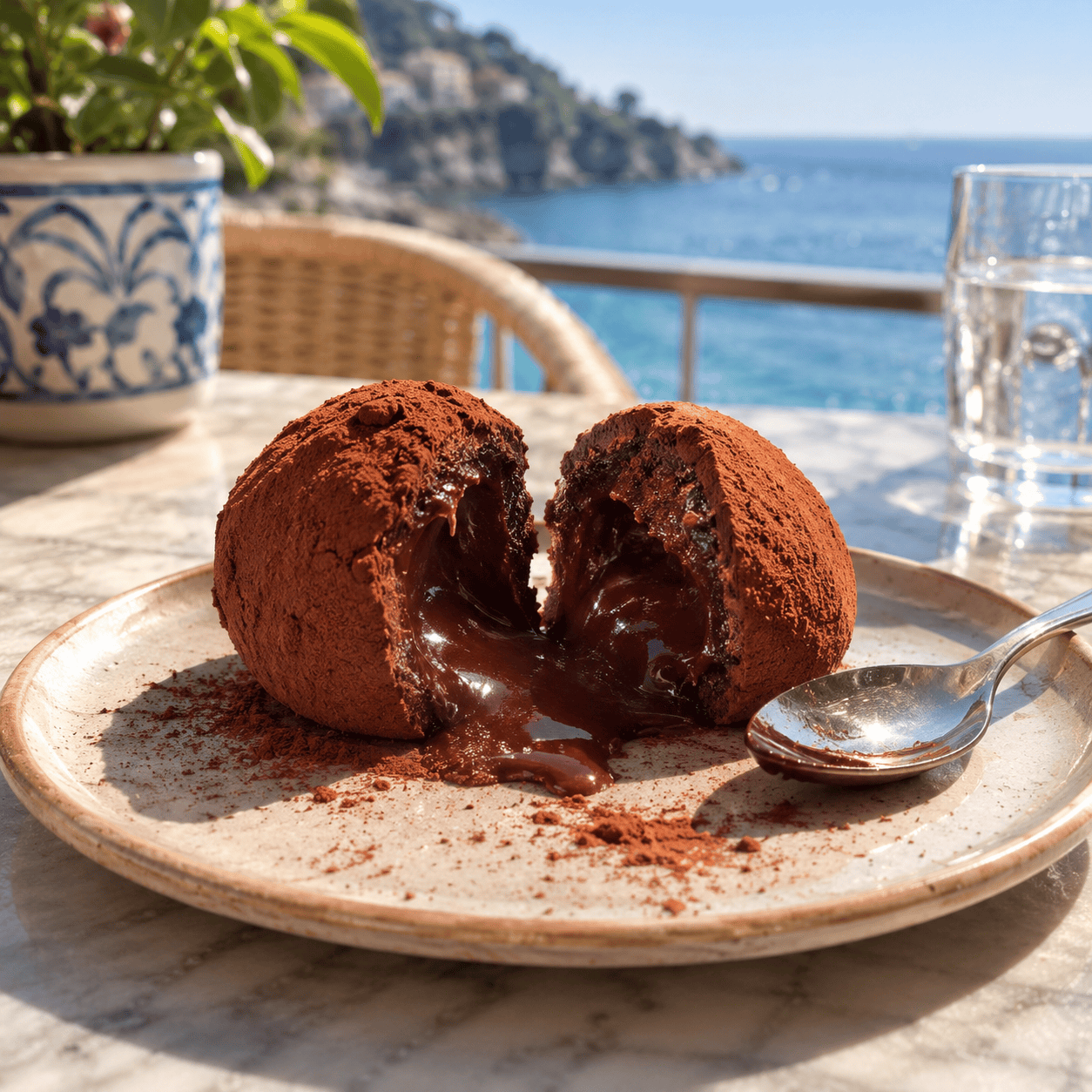
A hand-shaped ball of hazelnut and chocolate gelato with a molten chocolate heart in the middle, rolled in cocoa powder. That’s the whole thing, and it’s plenty.
It comes from Pizzo, on the Calabrian coast, and the real ones are shaped by hand in a cloth so no two are identical. You cut it and the center runs.
That center is also why it stays Calabrian. It depends on holding an exact temperature, and a shipping truck ruins it in an hour.
America does have a version of this. It’s the hard, factory-made dome in the freezer case at the Italian deli, and it is not the same animal. I’ve bought it anyway, more than once, out of loyalty.
I had the real one on a hot afternoon, eaten faster than was dignified, cocoa all down my shirt. I have thought about it approximately once a month since.
11. Delizia al Limone (Amalfi Coast)
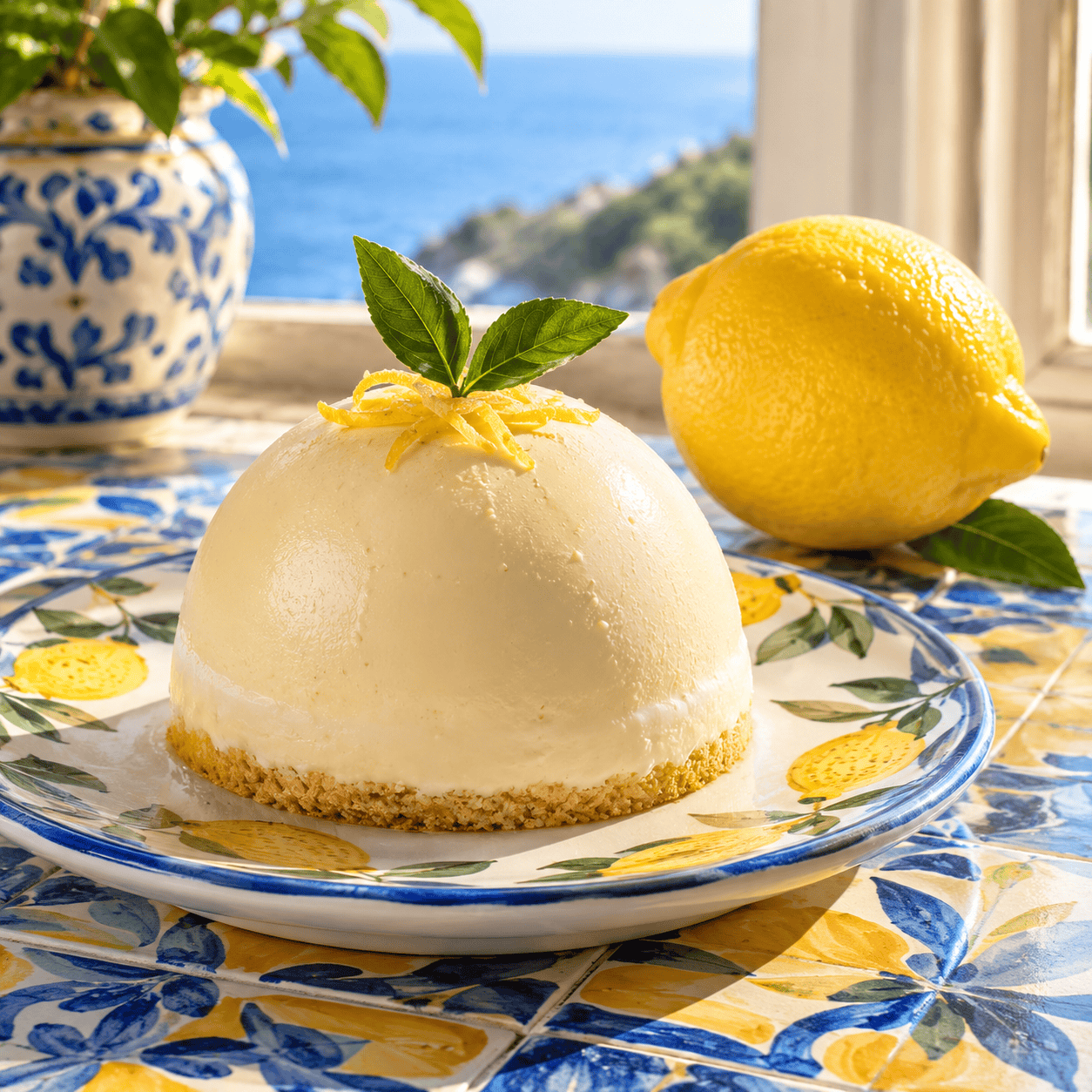
A dome of soft sponge soaked in limoncello syrup, filled with lemon cream, then coated in more lemon cream until it looks like a small white planet. Each one is a single serving, about the size of a fist, and you eat it with a spoon.
Sorrento and the Amalfi Coast run on sfusato lemons, which are enormous, thick-skinned and more perfumed than sour. Those lemons don’t grow here, and the dessert is fragile and refrigerator-dependent, which is why Americans rarely see it.
It’s a cousin to every lemon dessert that leans on real zest, except five times richer.
The whole thing tastes like cold lemon cream and almost nothing else. In July, with the box fan going in my apartment and the stove off for once, that is exactly right.
12. Buccellato (Sicily)
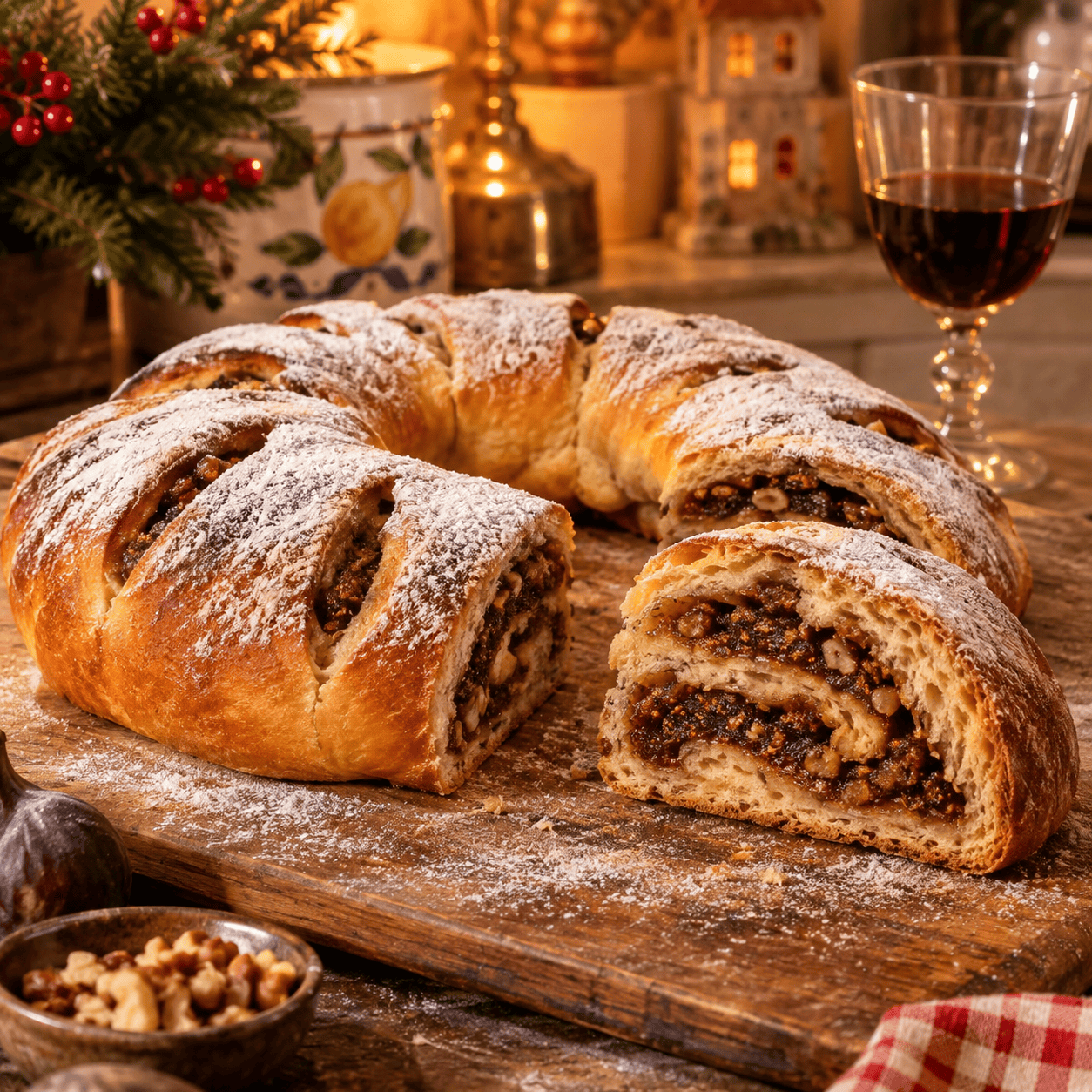
A Christmas ring of pastry stuffed with dried figs, almonds, walnuts and sometimes a little chocolate, then slashed on top so the filling shows.
In Sicily it gets made in December and sliced into fat pieces for guests all month long. The fig filling is sticky, spiced, and so dark it looks like mincemeat.
It belongs on every list of Italian Christmas desserts and almost never makes it onto an American one, for a simple reason: it looks like a brown wreath.
This is the one from Nonna’s childhood she talks about most. At the house she grew up in, one giant ring got made and hung somewhere to keep, and it was gone before Epiphany.
13. Bonet (Piedmont)
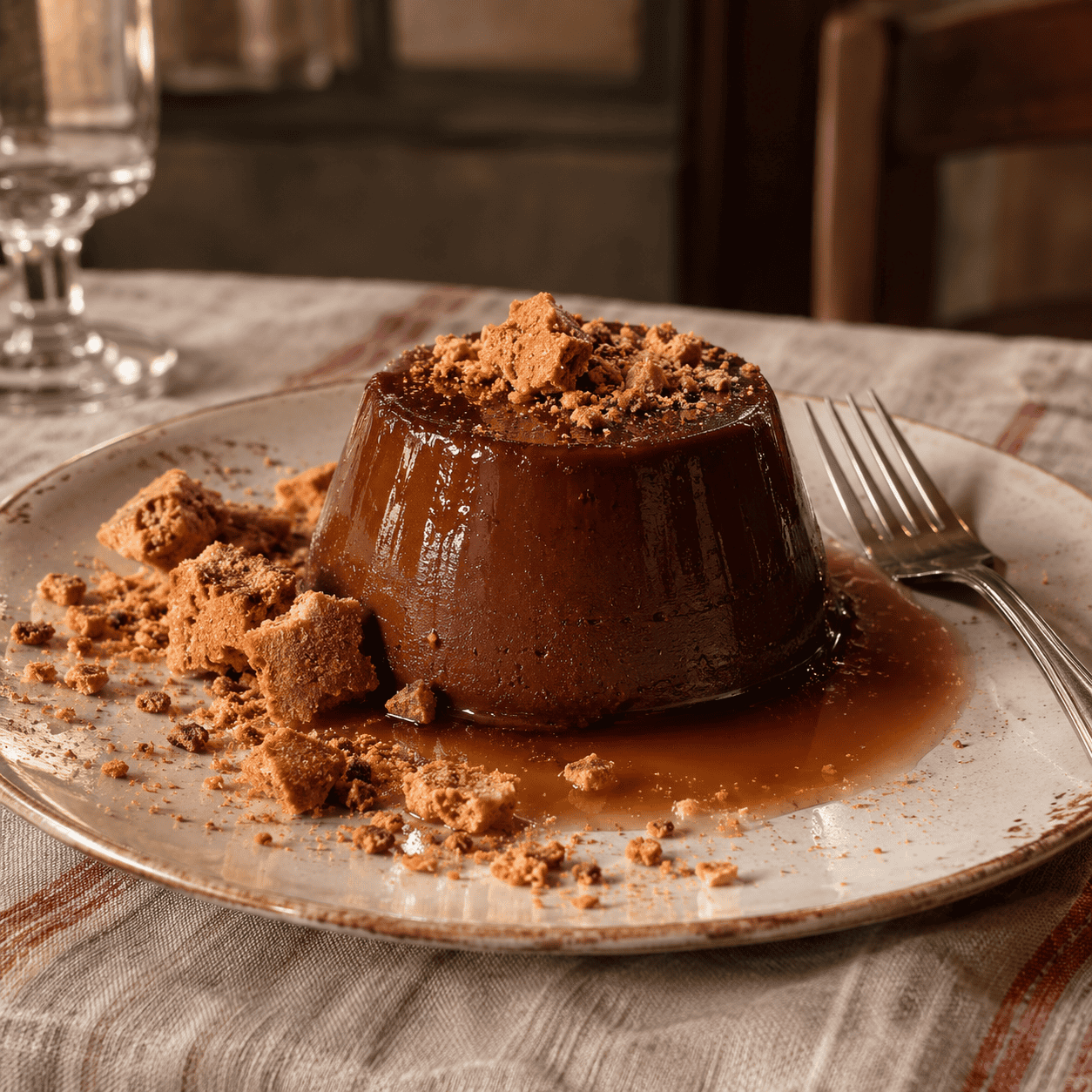
A chocolate custard with crushed amaretti cookies baked into it and a bitter caramel on the bottom, turned out of the mold like a flan.
Piedmont has been making it since well before chocolate was fashionable there, and the amaretti are what separate it from every other chocolate pudding on earth. You get that almond-bitter edge in every bite.
Texture is somewhere between flan and a dense mousse, cold, dark, served in a thin slice because one is enough.
I made it once in my apartment and under-caramelized the sugar, so it came out sweet and flat. The amaretti still saved it.
Nonna, who is suspicious of everything north of Rome, ate two slices and said nothing, which from her is a standing ovation.
14. Cuccìa (Sicily)
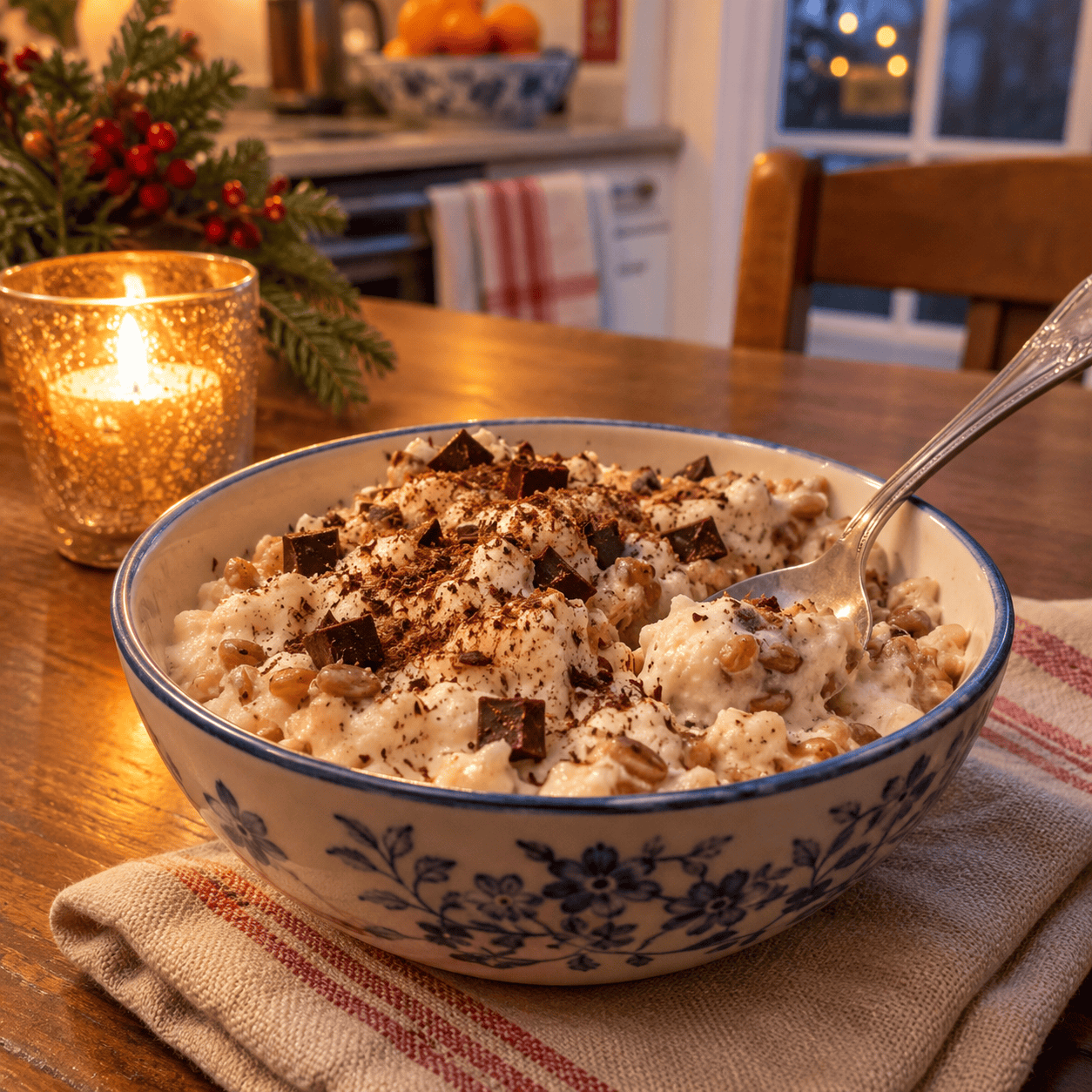
Wheat berries and sweet ricotta cream, eaten on December 13, Saint Lucy’s Day, and in many Sicilian households that day you don’t eat bread or pasta at all.
The story goes that a famine broke during Saint Lucy’s feast when a grain ship arrived, and the people were so hungry they boiled the wheat whole instead of waiting to mill it. So the whole grain is the point.
The pudding version is ricotta cream with chocolate bits folded through, with chewy wheat berries throughout. There’s also a savory version with just oil and salt.
At Nonna’s, December 13 still means no bread. She holds the line even though nobody is checking.
Americans have never heard of it because it exists for exactly one day a year.
15. Maritozzo (Rome)
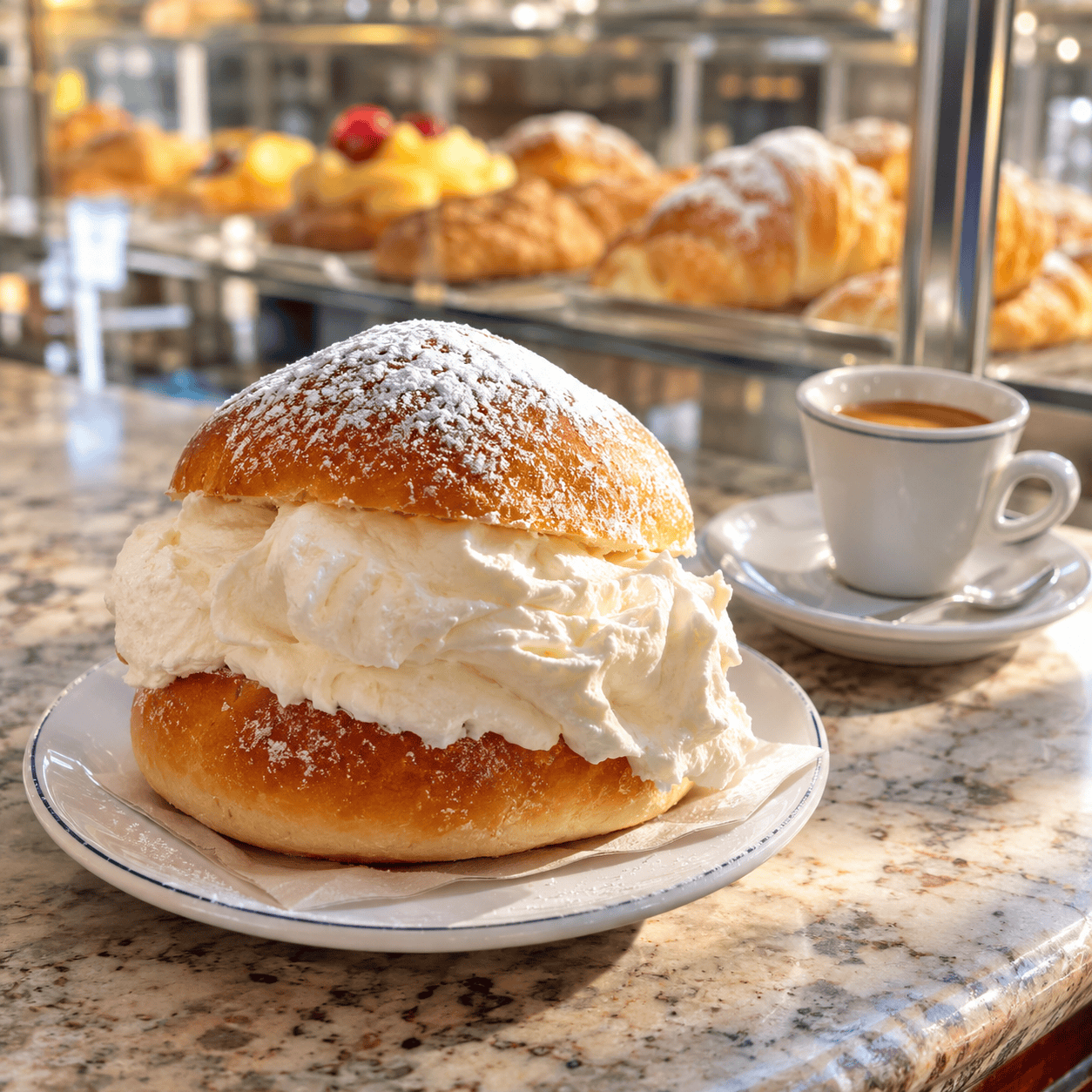
A soft sweet bun, split down the middle and packed with so much unsweetened whipped cream that it bulges out both sides.
Romans eat it for breakfast. The bun is faintly orange-scented and barely sweet, which keeps the cream from being too much, and the whole thing is meant to be eaten over a napkin.
It hasn’t caught on here because real whipped cream dies in four hours, and American bakeries need a 48-hour shelf life. A maritozzo was never built to sit in a case.
The name comes from marito and the old custom of a man giving one to his fiancée, sometimes with a ring hidden inside. John Cabot University keeps a nice short history of the Lazio classics if you want the details.
I had one in Rome at 8am and understood immediately why nobody there eats eggs.
16. Zuppa Inglese (Emilia-Romagna)
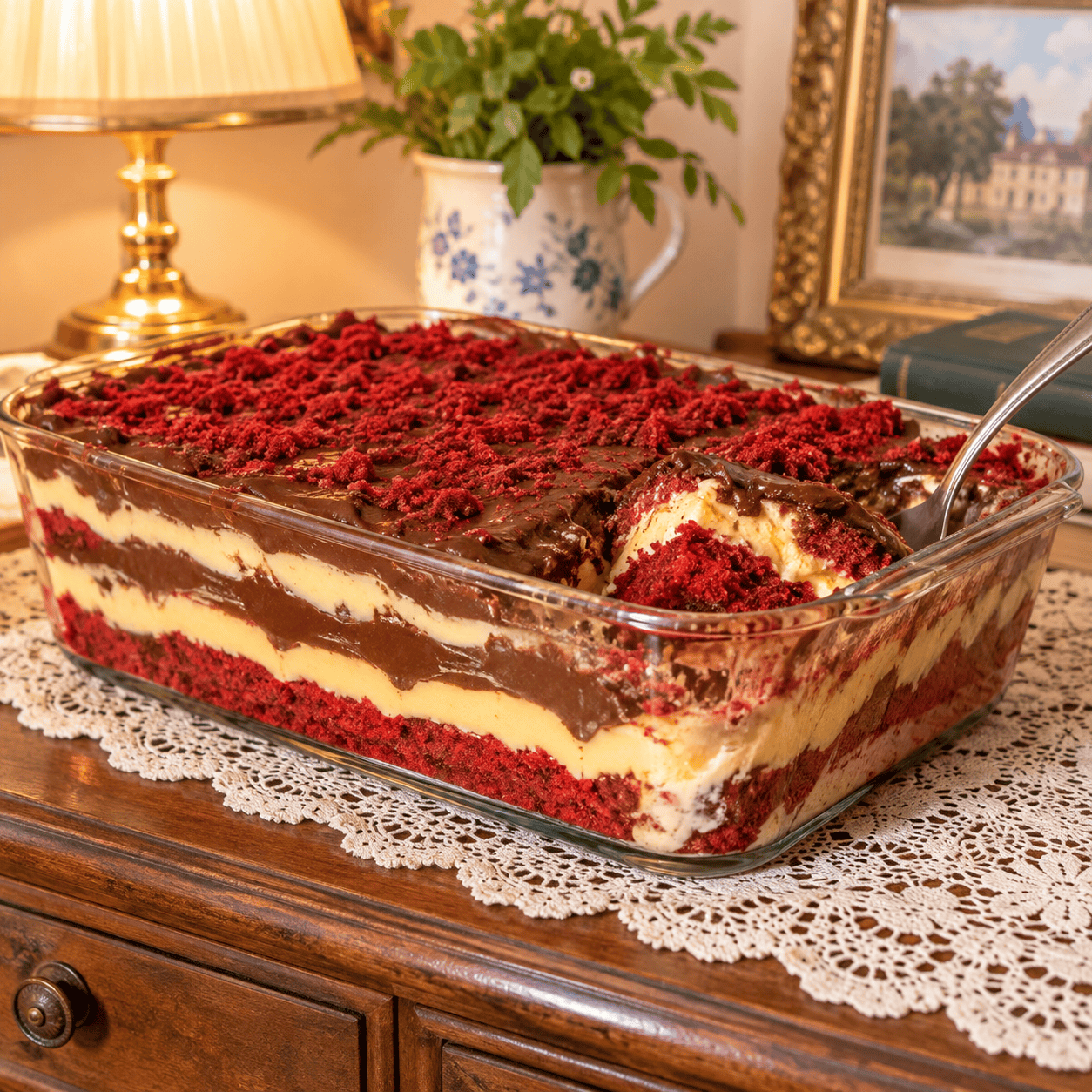
Sponge soaked in alchermes, a bright red spiced liqueur, layered with custard and chocolate cream. It is shockingly, almost cartoonishly pink-red inside.
Alchermes is the sticking point. It’s flavored with cinnamon, cloves, rose and vanilla, and historically got its red color from cochineal insects. It’s hard to find in the States and there’s no real substitute.
Flavor-wise it’s trifle’s older Italian relative, but spicier and more perfumed than anything in a British version.
Nonna has opinions about tiramisu being a newcomer, and she’s right that zuppa inglese came first by a century or more. If you want the proper classic tiramisu made the Italian way, that’s a separate argument for a separate day.
Nobody serves this here because you’d have to explain alchermes to every single customer.
17. Parrozzo (Abruzzo)
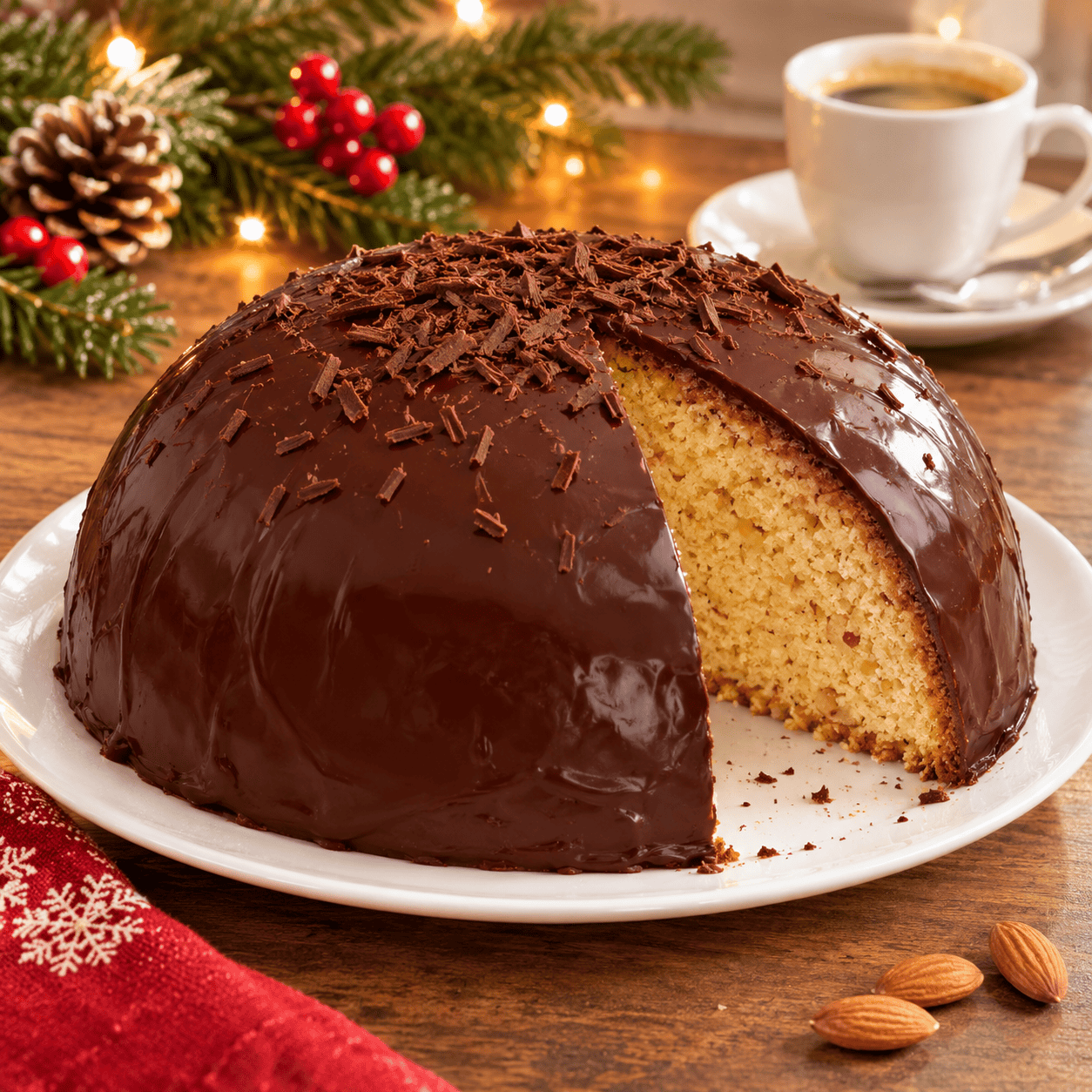
A dome of almond and semolina cake, coated in dark chocolate, meant to look like a round rustic loaf with a burnt crust.
That’s the joke: a baker in Pescara made it to imitate the dark corn bread the local farmers ate, and the chocolate shell is the “burnt” part. The poet Gabriele D’Annunzio liked it enough to write a verse about it.
It shows up at Christmas all over Abruzzo, but here it looks like a plain chocolate dome, and those don’t sell themselves.
Inside it’s moist, almond-heavy and slightly gritty from the semolina. One slice with espresso does it.
I’ve only had it from a tin a neighbor’s family shipped over, and it beat most American cake.
18. Iris (Palermo)
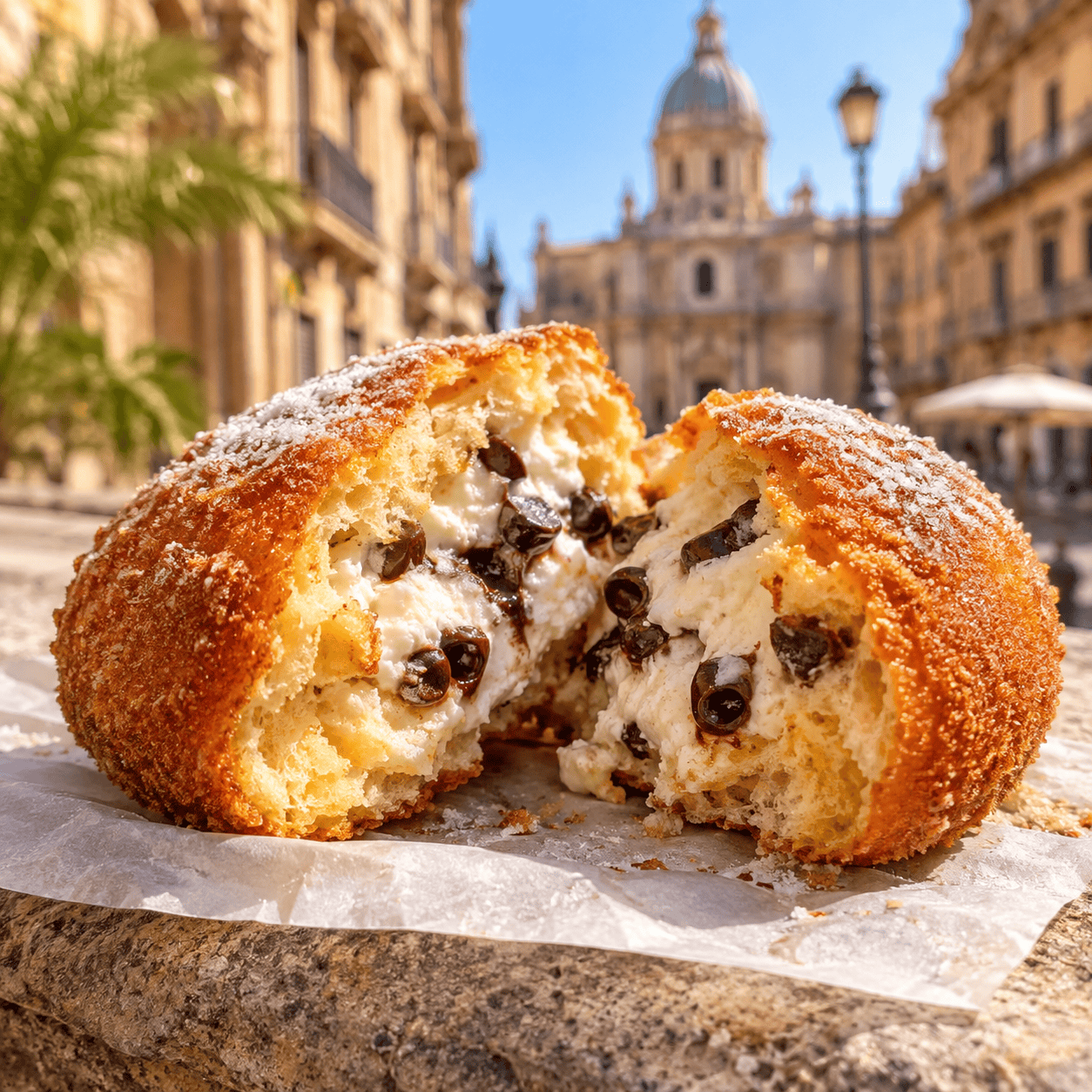
A fried brioche bun, breaded on the outside, filled with sweetened ricotta and chocolate chips. Street food, eaten warm, for breakfast or whenever.
The outside has a crumb coating that goes crunchy in the fryer. The inside is cannoli filling, warm instead of cold, which changes everything about it.
Palermitani will tell you it was invented in the early 1900s and named after an opera. Nonna will tell you where to get the good one and then complain about the price.
It never made it here because it has to be eaten within about twenty minutes of leaving the fryer. Wait an hour and it’s a greasy roll.
If you ever find one hot, abandon your plans and eat it standing up.
19. Ricciarelli (Siena)
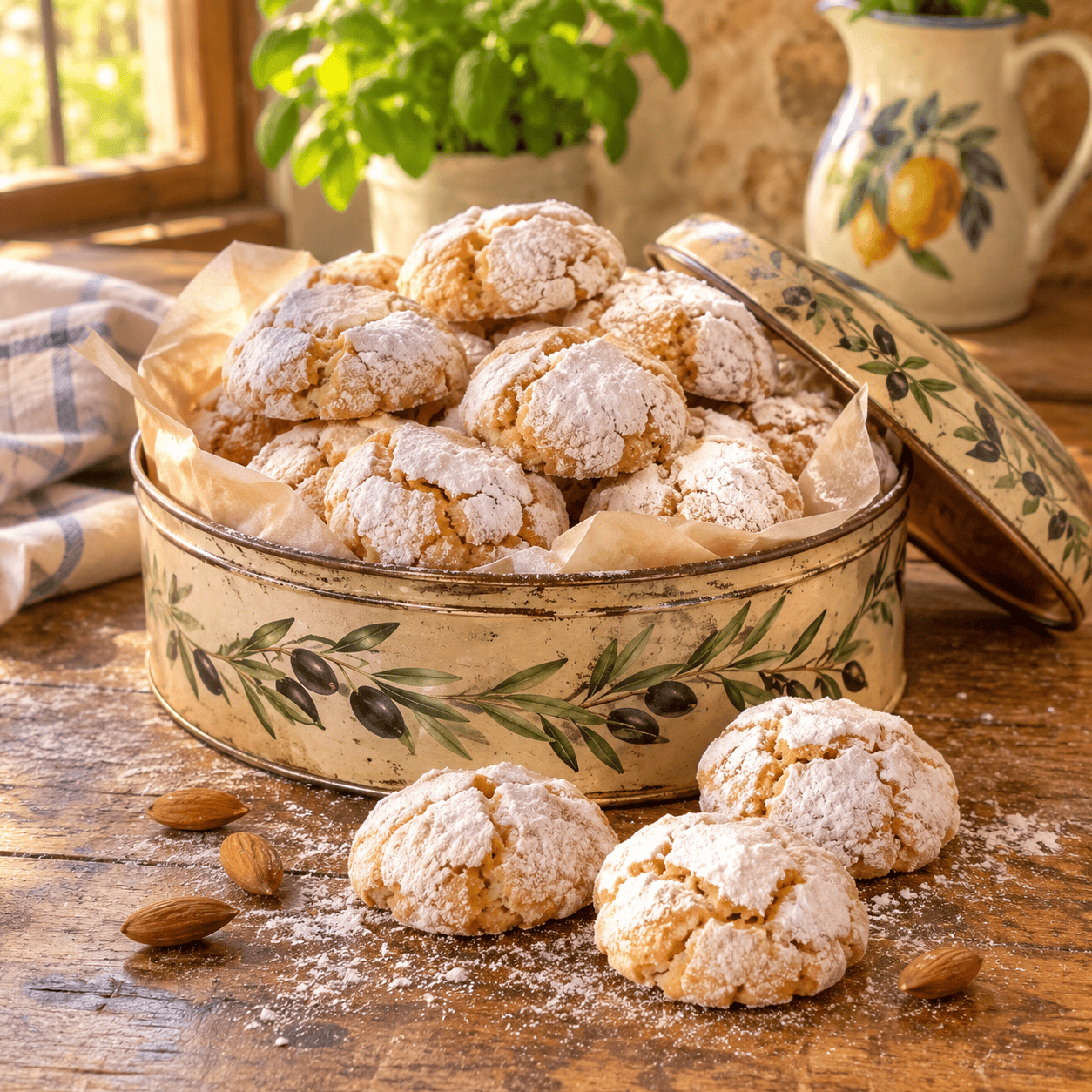
Soft, cracked almond cookies from Siena, chewy in the middle, dusted heavily with powdered sugar, shaped like fat ovals.
They’re almost all almond paste and egg white with a little orange zest, which makes them naturally gluten-free and much more interesting than an American almond cookie.
Siena has been making them since at least the Renaissance, and they hold a protected status now. Americans pass them over because under all that sugar they look like a plain marshmallow.
I bring a box to Nonna’s instead of the usual tray. The first time, she turned one over, said “Siena” like she was checking a passport, and got down the good plate she saves for her own Italian cookies.
They go stale slowly, which is why Tuscan families make them in December and still have them in January. Keep yours in a tin, lid on tight, and they’ll do the same.
20. Cartellate (Puglia)
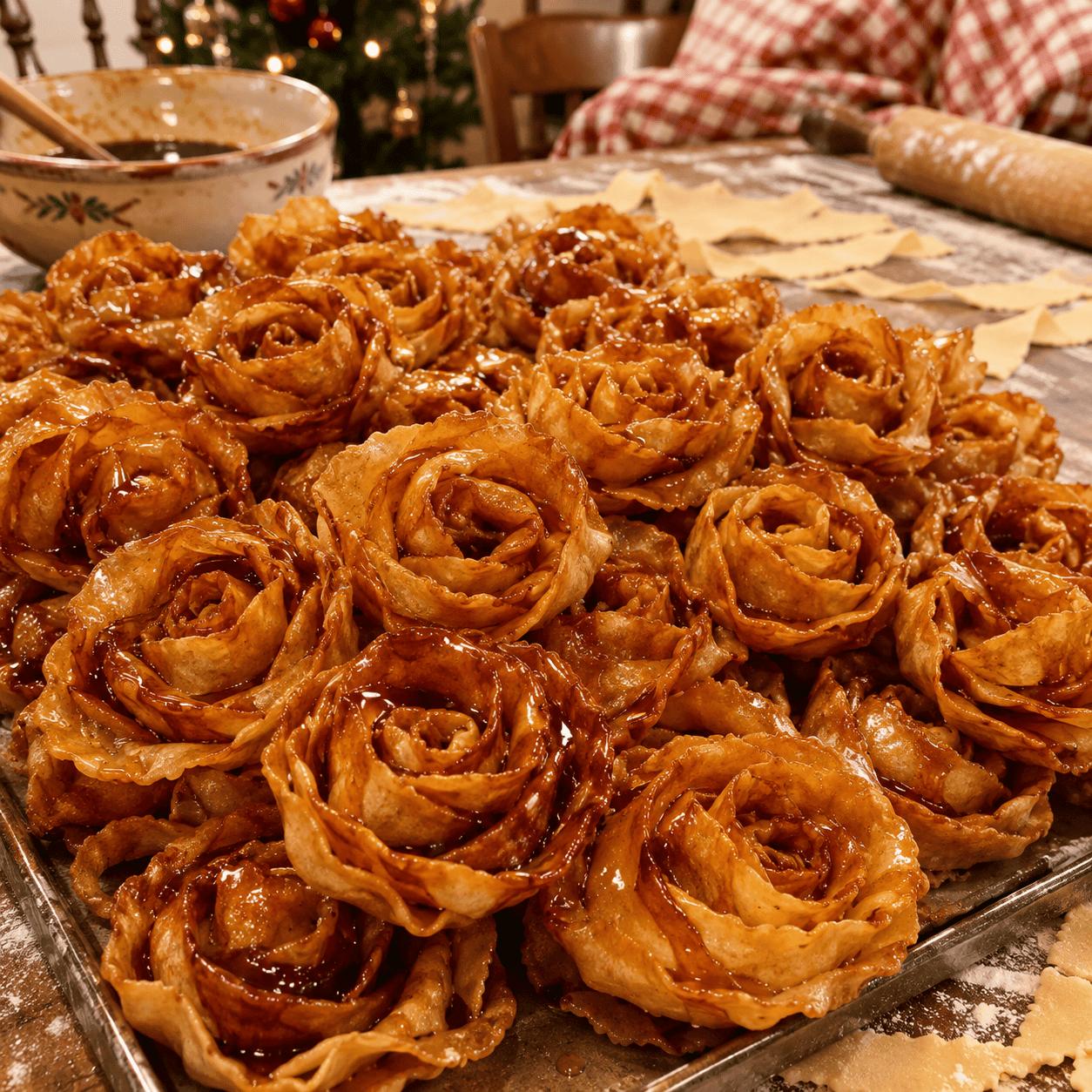
Thin strips of dough pinched into roses, deep-fried until they’re brittle as paper, then soaked in vincotto or honey until they’re sticky.
The strips get cut with a fluted pastry wheel, so every petal comes out with a ruffled edge. Nonna uses the same wheel for ravioli.
Pugliese families make them at Christmas, usually a few hundred at a time, usually with several women around one table because pinching them is slow work.
Vincotto is cooked-down grape must, dark and sweet-sour. Honey versions are sweeter and more common outside Puglia.
They shatter when you bite them and then go chewy as the syrup hits your tongue. Genuinely one of the great fried doughs.
They skip America because they’re a two-day, four-hands project and because a tray of dark sticky roses photographs terribly.
21. Torta Caprese (Capri)
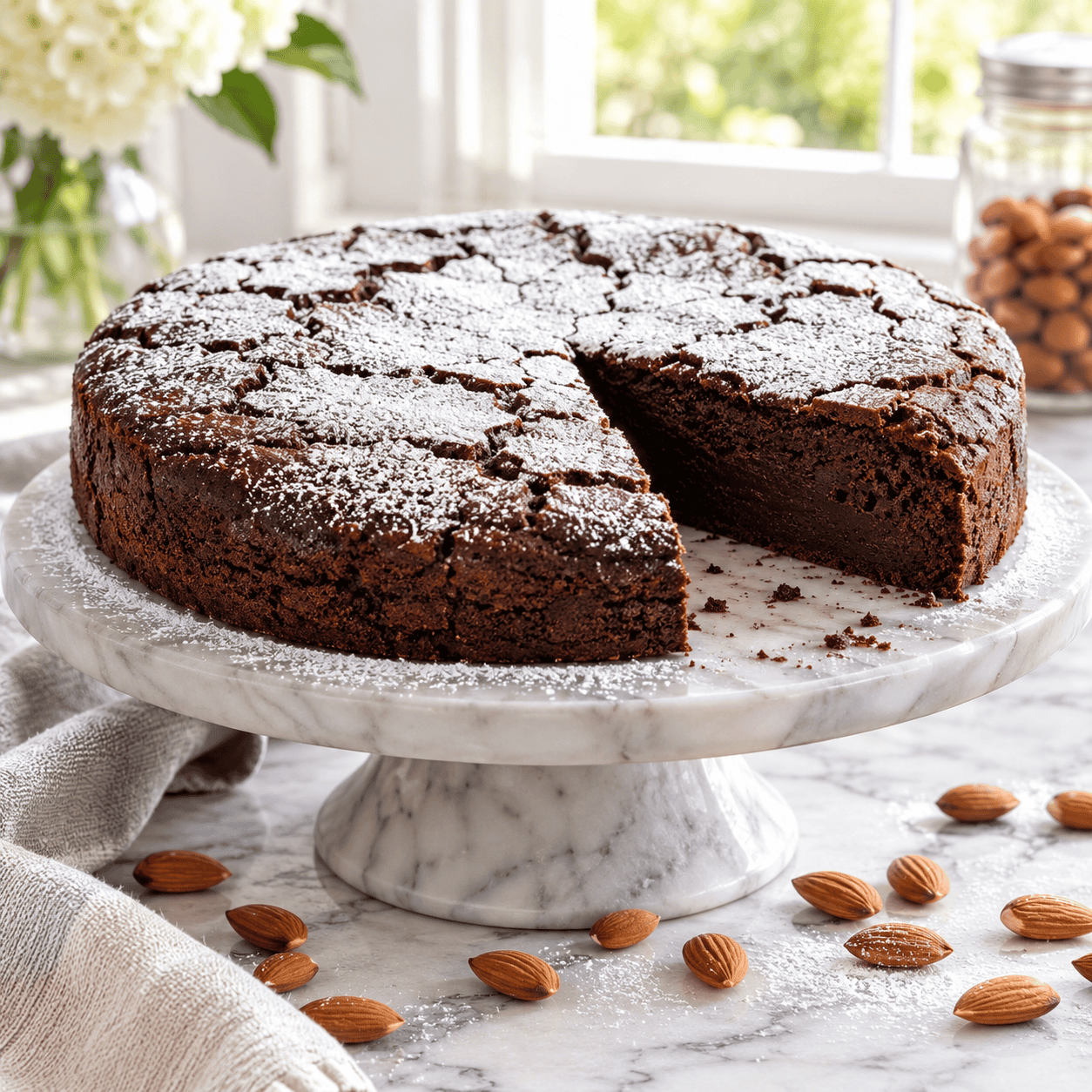
Flourless chocolate and almond cake, cracked on top, fudgy in the middle, from the island of Capri.
The legend is that a baker forgot the flour and served it anyway. Probably invented later by someone selling cake, but it’s a good story and the result is real.
It’s the most approachable thing on this list and the one Americans would love instantly: dense chocolate, ground almonds, a thin crackly top, no frosting. The only decoration is a snowfall of powdered sugar, which hides the cracks if yours look rough.
This is my go-to when someone’s coming over and I have one bowl free. It’s also one of the better Italian gluten-free options, though nobody eating it cares.
Nonna’s review: “It’s fine, but where’s the ricotta.” She says that about everything that isn’t Sicilian.
22. Frutta Martorana (Sicily)
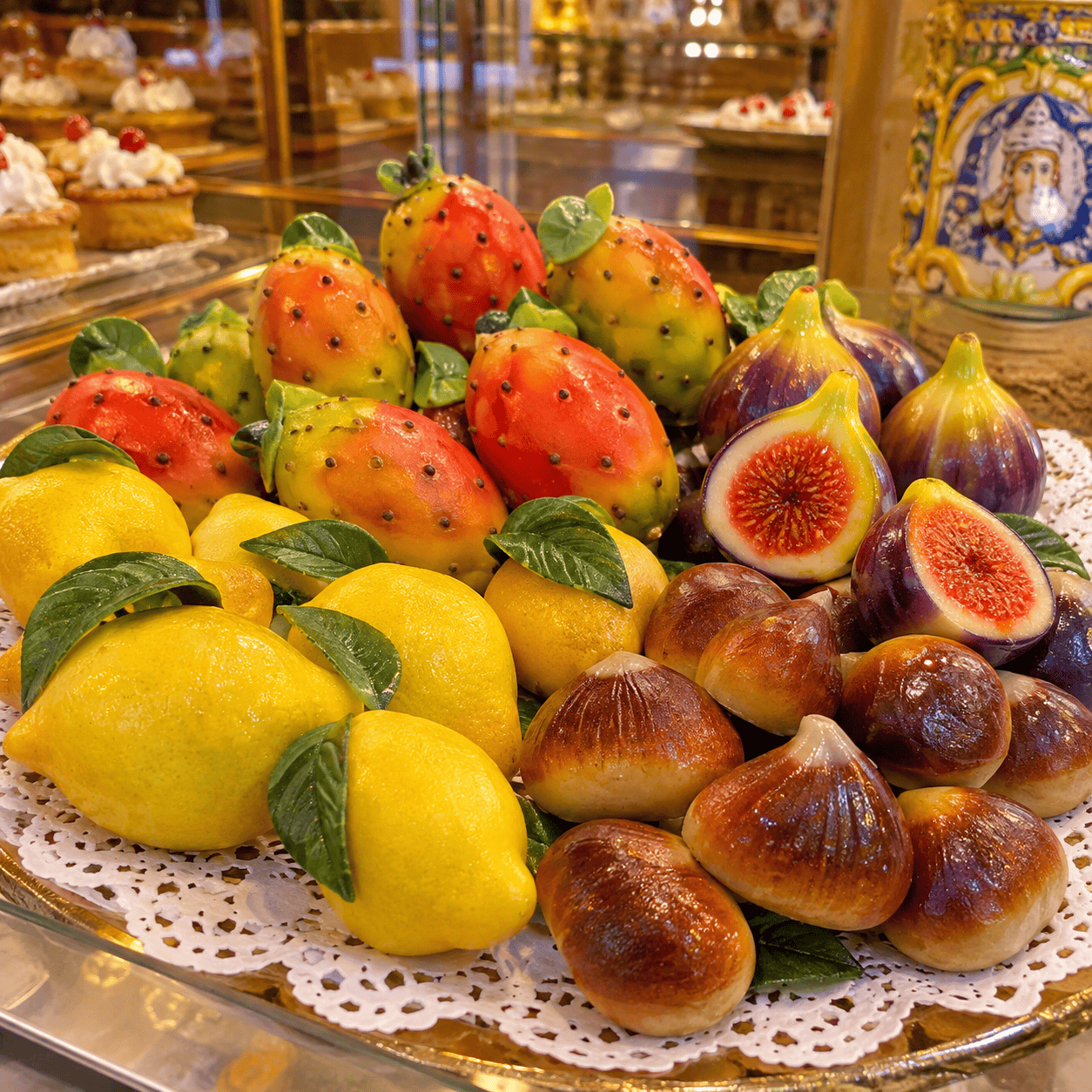
Marzipan sculpted and hand-painted to look exactly like real fruit. Prickly pears, figs, lemons, chestnuts. The good ones are indistinguishable from the real thing at arm’s length.
The tradition is tied to the Martorana convent in Palermo, where nuns supposedly hung marzipan fruit in the garden trees to impress a visiting bishop out of season.
It’s made for November 2, the Day of the Dead, when Sicilian children traditionally wake up to sweets said to be left by their departed relatives.
It tastes like almond and sugar and nothing else, which is the only disappointment: it’s a sculpture you can eat, and the sculpture is better than the eating.
Americans see it in one window in South Philadelphia a year and assume it’s decorative.
23. Zuccotto (Florence)
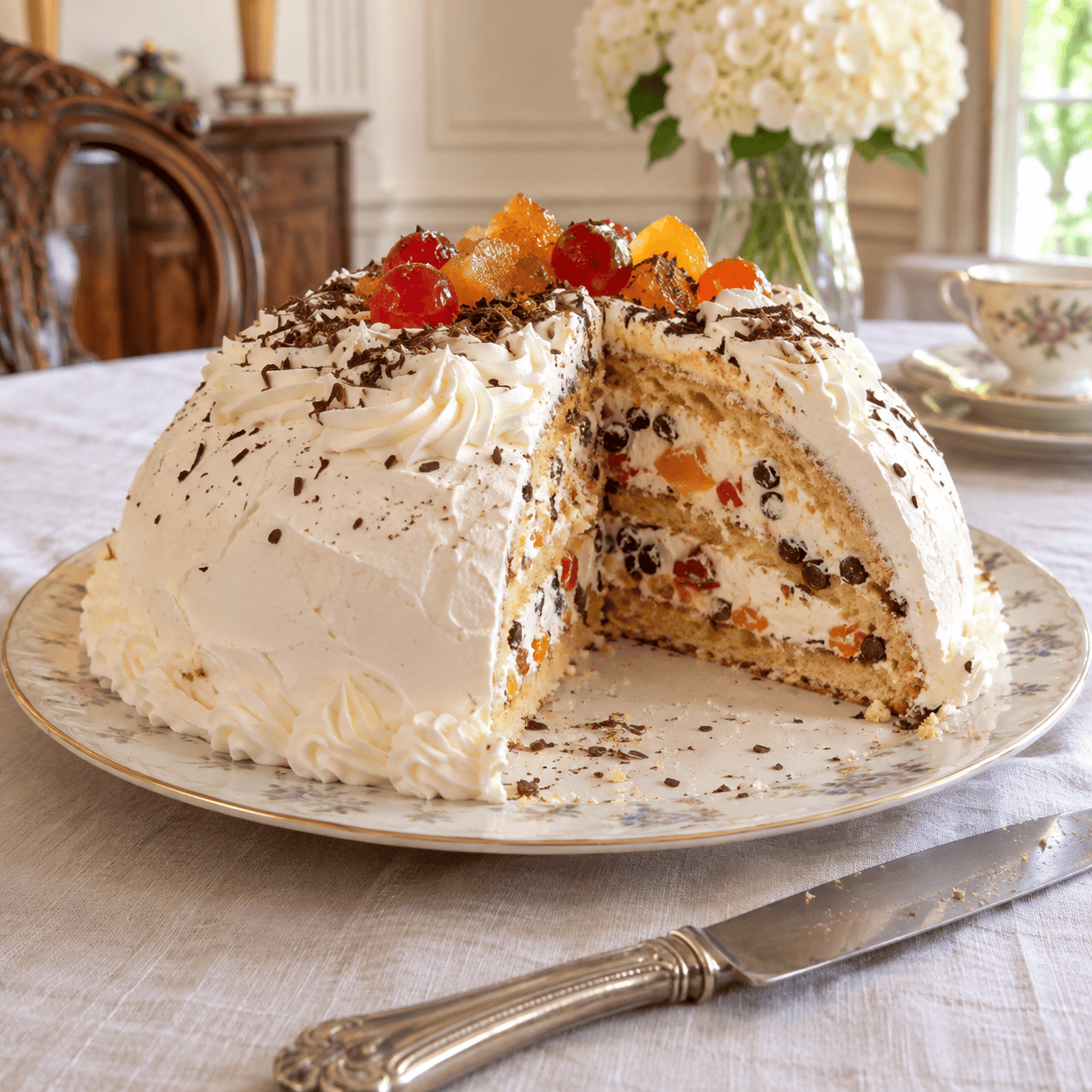
A chilled dome of liqueur-soaked sponge filled with sweetened ricotta or cream, chocolate chips and candied fruit, turned out and sliced into wedges.
Florentines claim it’s one of the oldest Italian semifreddi, and the dome shape is said to echo the cathedral cupola. Whether that’s true or a tourist-office line, the shape is distinctive.
Cold, creamy, boozy, with crunchy bits. It’s cassata’s Tuscan cousin without the green marzipan jacket.
It never made the trip here because it needs a mold, overnight chilling, and nobody’s grandmother in America taught it. Nonna Pina certainly didn’t.
So I’ve only had it once. I remember being surprised by how much liqueur was in the sponge, but mostly I remember it arriving at my table in a Florence restaurant, looking like a small white helmet.
24. Baci di Dama (Piedmont)
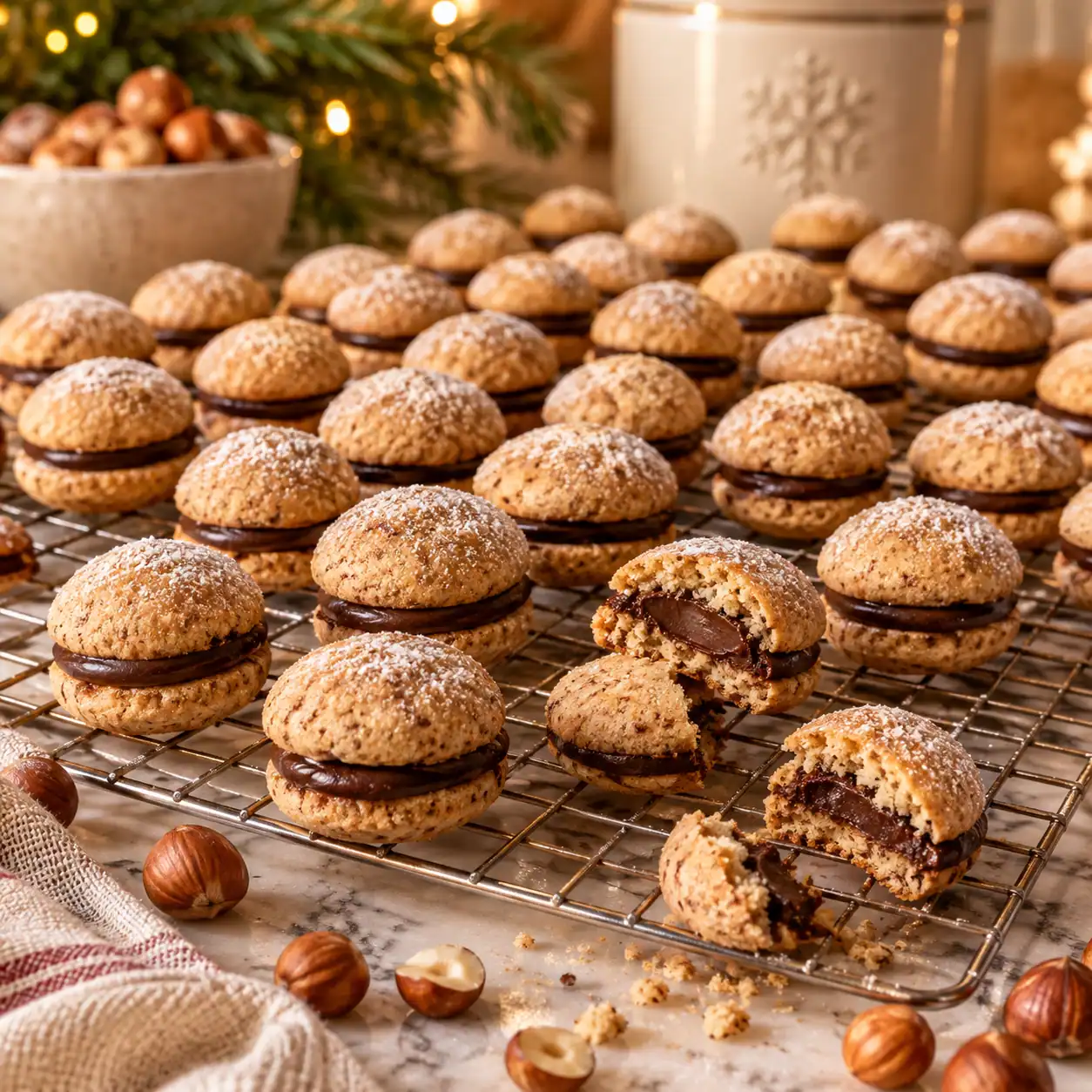
Two tiny hazelnut shortbread domes stuck together with dark chocolate. The name means lady’s kisses, and they’re about the size of a nickel.
Piedmont grows the hazelnuts that make them, and good ones taste more of toasted nut than of sugar. They snap, then go buttery.
They’re rare in American bakeries because they’re small, fiddly, and priced by weight, which is a shame. Of everything on this list, these are the easiest to love and the easiest to eat twelve of without noticing.
A friend’s grandmother in Jersey makes them every December, and I think she did the most Italian-American thing possible with them. She took a dessert with a romantic name and renamed it something practical.
Lady’s kisses? Not at her table. At her table, they’re “the little ones.”
25. Migliaccio (Naples)
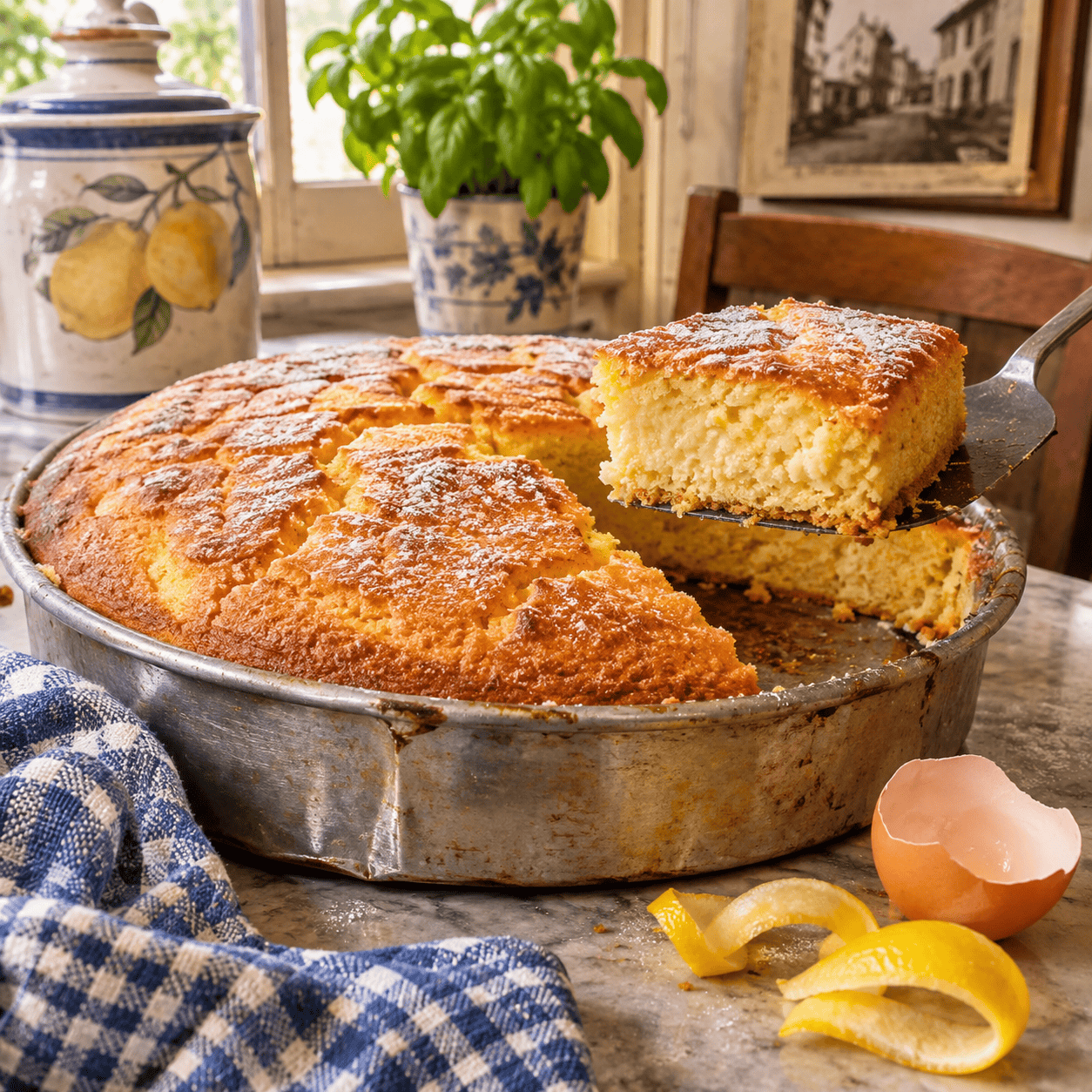
A Carnevale cake from Naples: semolina cooked in milk, folded with ricotta and eggs, scented with lemon and orange, and baked until the top cracks.
It sits halfway between a cheesecake and a baked pudding. Dense, custardy, barely sweet, with a slightly sandy semolina texture that makes it feel older than it is.
Neapolitans make it in the weeks before Lent, often alongside the fried Carnevale sweets, as the one thing on the table that isn’t deep-fried.
No American bakery carries it, mostly because “semolina ricotta cake” is a hard sell to anyone reading it out loud. That’s fine by me. It’s better made at home anyway, in whatever pan you’ve got, on a weeknight with the window open.
It costs almost nothing to make and tastes like it took effort, which is my favorite category of food.
26. Pignolata Messinese (Messina)
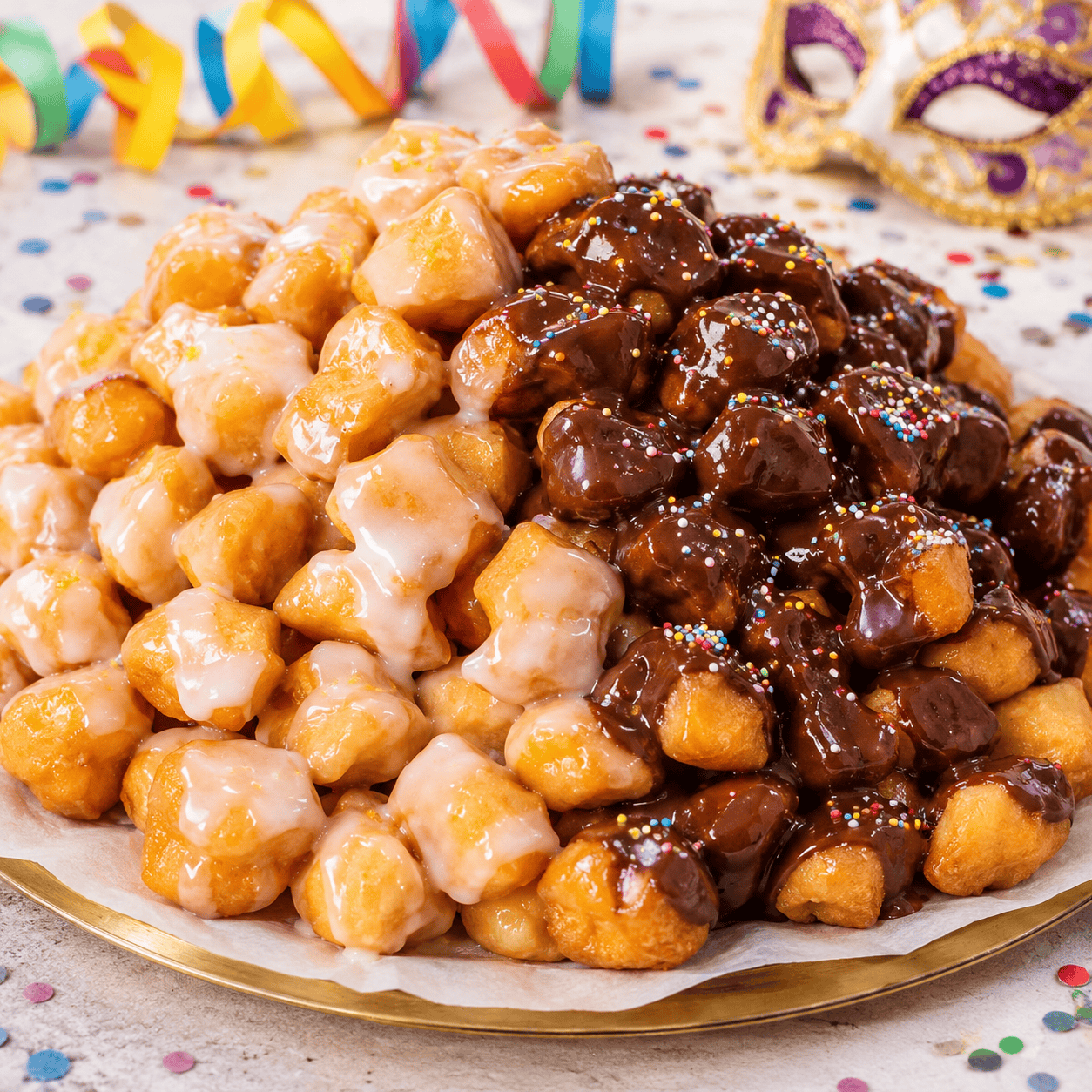
Little nuggets of fried dough mounded into a heap, one half glazed in white lemon icing and the other in dark chocolate. Split right down the middle, like somebody refused to compromise.
Messina’s version is soft, almost cake-like inside, unlike the crunchier honey-ball struffoli most Italian-American families know. That’s also why you’ve probably never seen it here: we got struffoli instead, and once a family has a honey ball, they don’t go looking for another.
It’s a Carnevale sweet, and the two-tone look is pure drama on a tray.
Nonna considers Messina practically the mainland and therefore slightly suspect. I’m from outside Philadelphia, so I don’t get a vote.
What I can tell you is how the tray goes. Everyone circles it, someone makes a speech about the chocolate, and the lemon half goes first in every room I’ve seen it in.
27. Pitta ‘Mpigliata (Calabria)
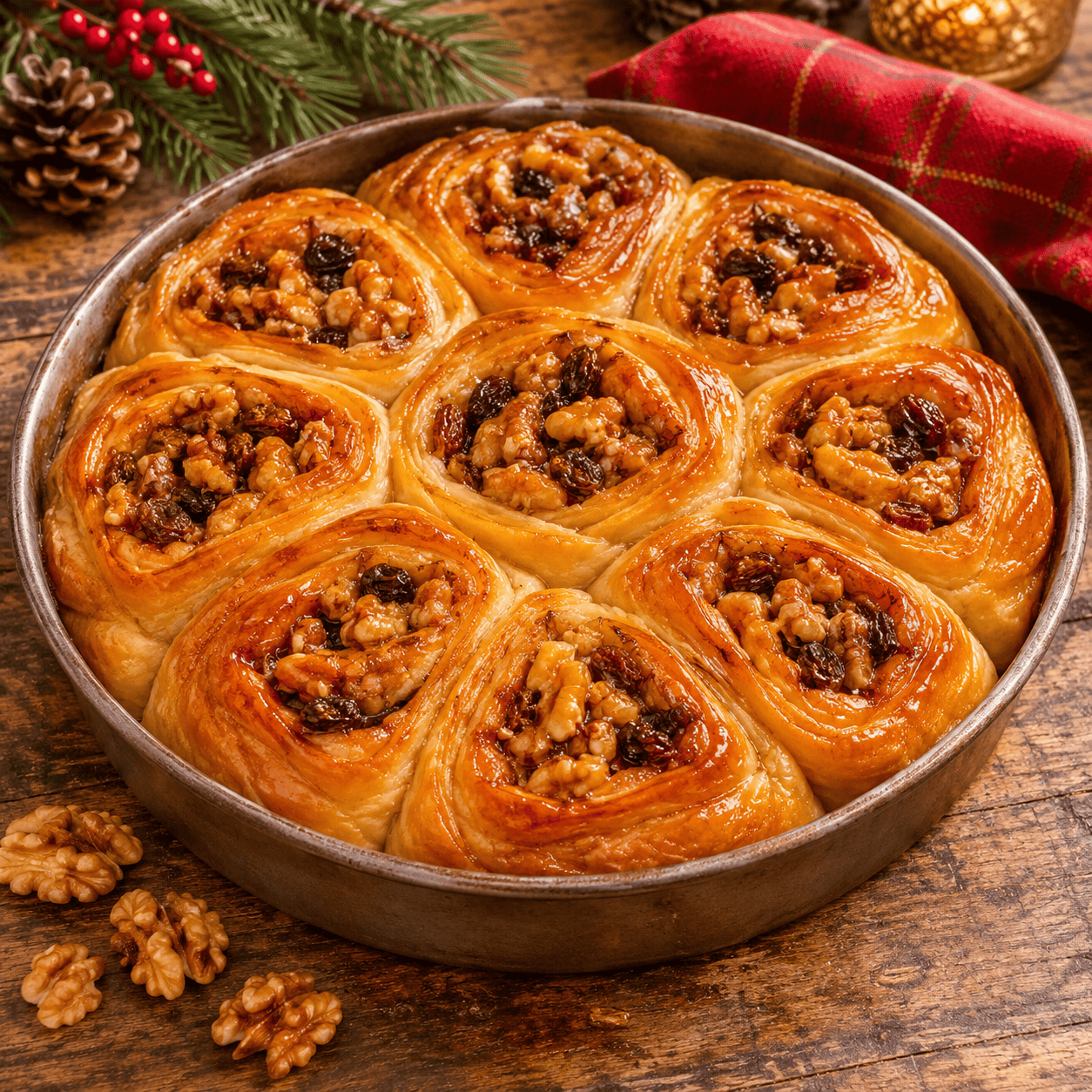
A rosette of thin dough coiled around walnuts, raisins, honey and spices, baked until the spirals go golden and the whole thing looks like a flower in a pan.
It’s from the San Giovanni in Fiore area of Calabria, made at Christmas and at weddings, and the work of rolling and coiling is why it’s a group project.
The flavor is more spice and nut than sugar. Cinnamon, cloves, sometimes a splash of liqueur in the dough.
I’ve never eaten one. A coworker’s family makes them every December in Brooklyn and she describes the smell in the house with a look on her face I recognize.
It stays in Calabria because it’s labor measured in hours, not minutes, and there’s no shortcut version worth eating.
28. Torta Barozzi (Vignola, Emilia-Romagna)
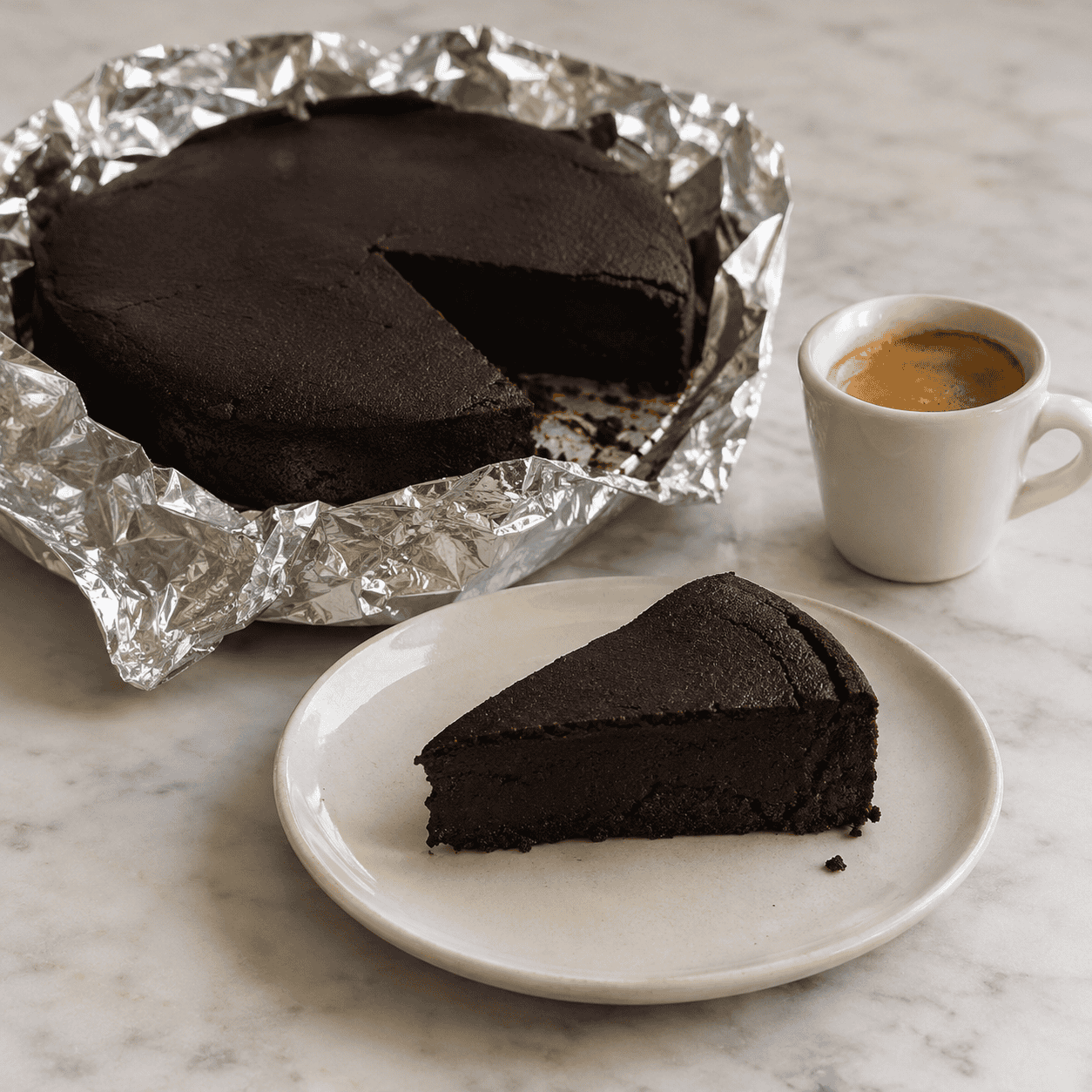
A dark, almost black cake of chocolate, coffee, peanuts and almonds from a single bakery in the town of Vignola, which has kept the exact recipe secret for well over a century.
They’re serious about it. The cake is trademarked, wrapped in silver foil, and nobody outside that bakery knows the full formula. Plenty of people have published guesses.
It’s flourless, intensely bitter-sweet, and dense enough that a thin slice feels like plenty. Coffee is the dominant note, more than chocolate.
It is the clearest case I know of single-town food in Italy: one bakery, one cake, and a recipe that has outlasted every attempt to copy it.
Americans will never see it on a menu because there’s exactly one place on earth that makes it, and it isn’t here.
So: how many of the 28 did you already know? Four means you’re normal. Twelve means somebody in your family kept the recipes. Twenty means you should be writing this list instead of me.
Nonna scored fifteen and insisted the ones she didn’t know “aren’t real desserts anyway.”
Buon appetito, Madeline