![Pink vintage Italian scooter, est. 2020. Italian [Brand Name] logo.](https://www.the-bella-vita.com/wp-content/uploads/2022/03/cropped-new-logo-2.png)
31 Unwritten Rules of an Italian Kitchen Nobody Ever Explained to You
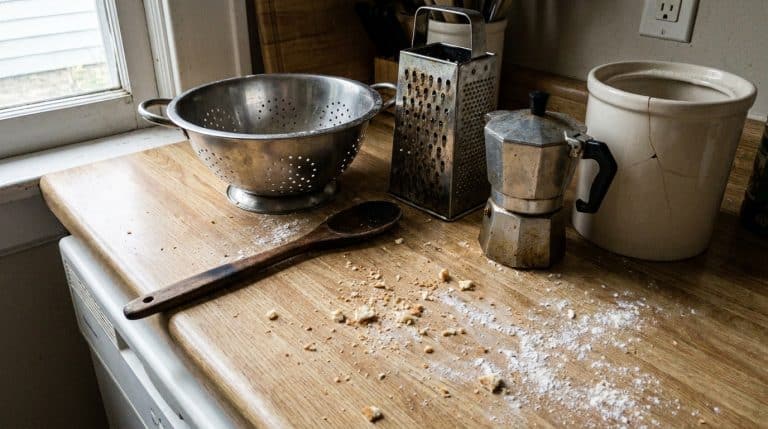
Nobody sat me down and taught me these.
I learned them the way everyone learns them: by doing something wrong in front of Nonna Pina and getting a look that could curdle milk. She came from a town outside Palermo in 1952, landed in a Philadelphia rowhouse, and ran that kitchen until she was ninety. There was no written code. There was just the correct way and the way that got you removed from the stove.
Some of the rules made sense. Some were pure superstition with a cannoli on top. All of them got enforced.
My kids broke about half of these before they turned twelve and lived to tell it, because I’m softer than she was. But I still hear her when I salt the water.
Here are 31 rules nobody ever explained, where they came from, and the ones I break anyway.
1. Salt the water like the sea
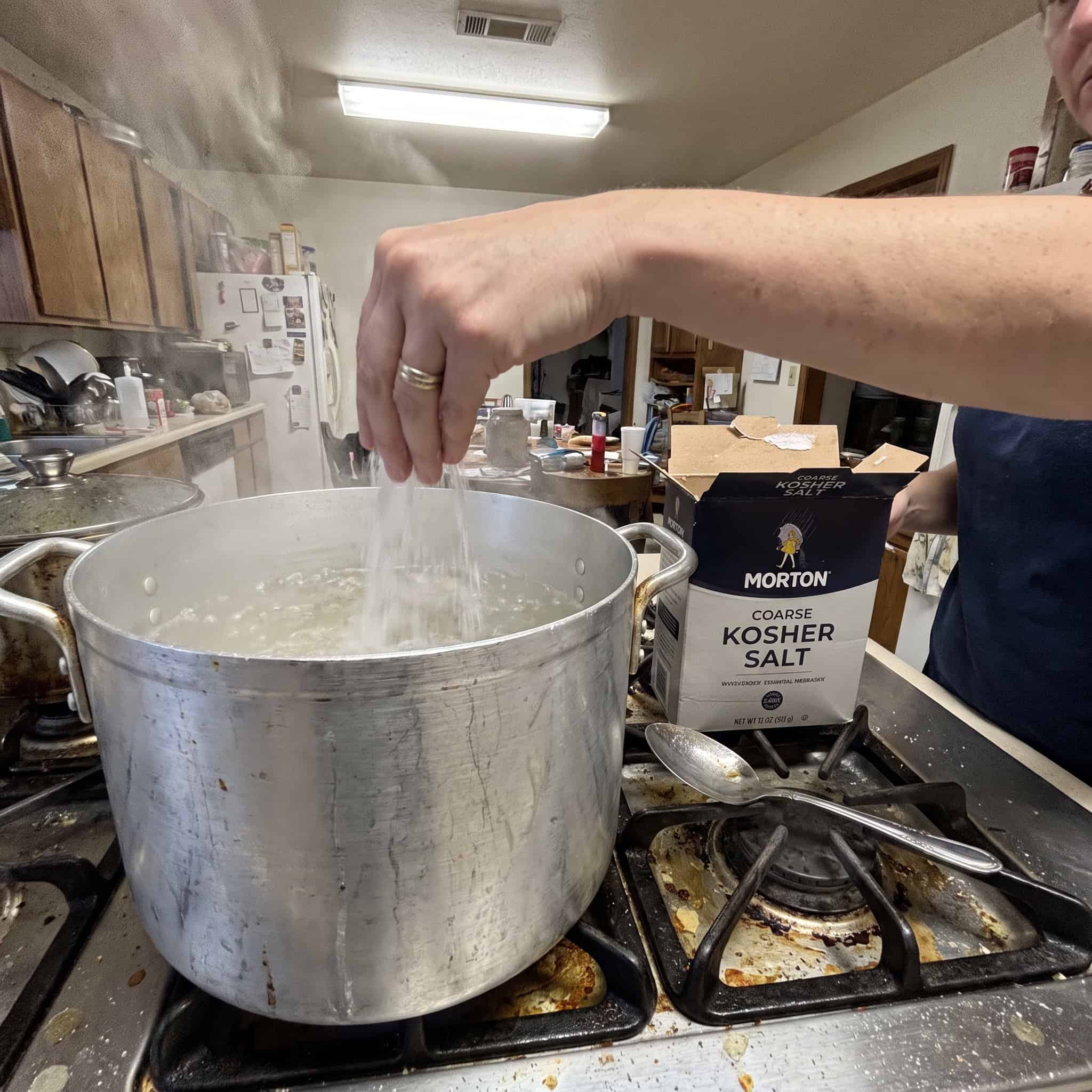
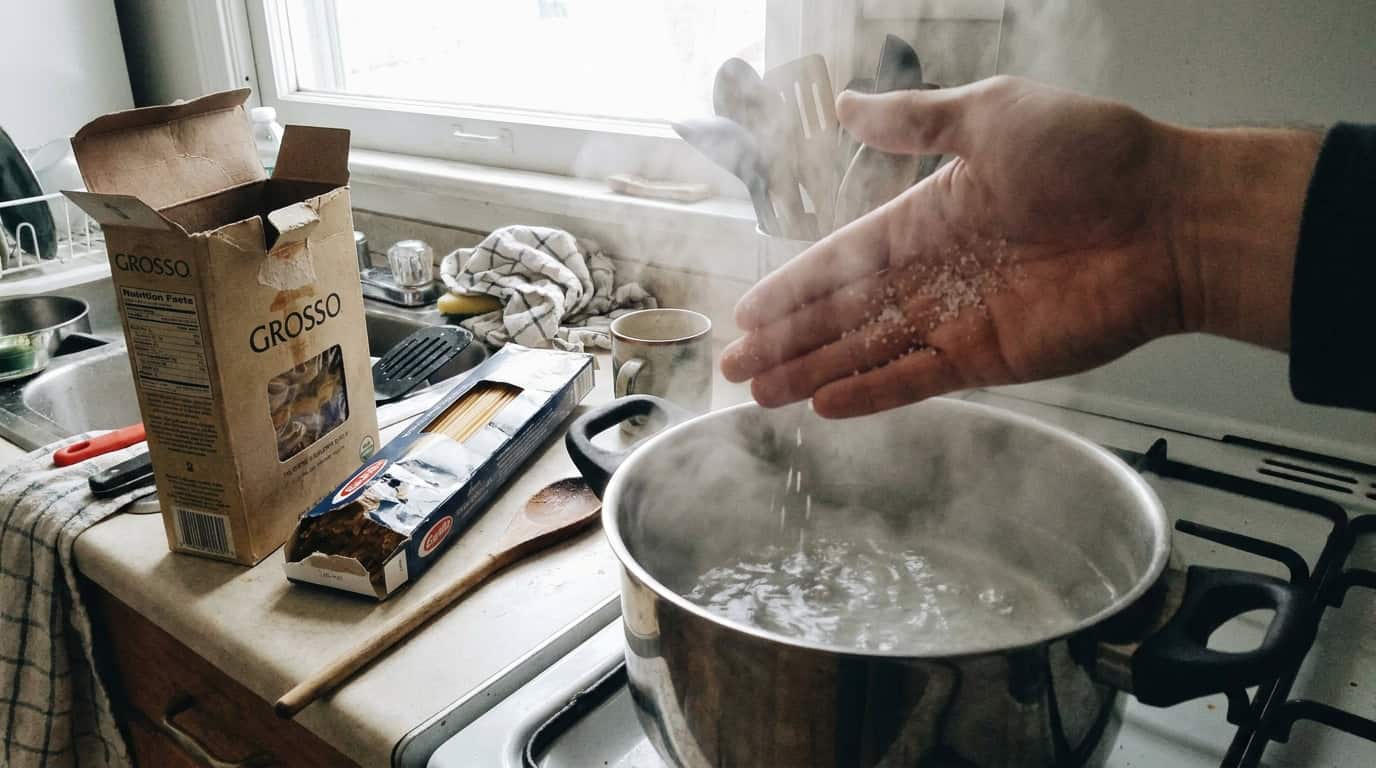
Not a pinch. A handful, thrown in from the box, with the confidence of a woman who has never measured anything.
Nonna held her palm flat and let it go. If the water didn’t taste like the Jersey shore in August, she’d add more while making a face at you.
I still do it by feel. My daughter asked me how much once and I said “you’ll know,” which is exactly what was said to me, and I heard myself become my grandmother in real time.
2. Never rinse the pasta
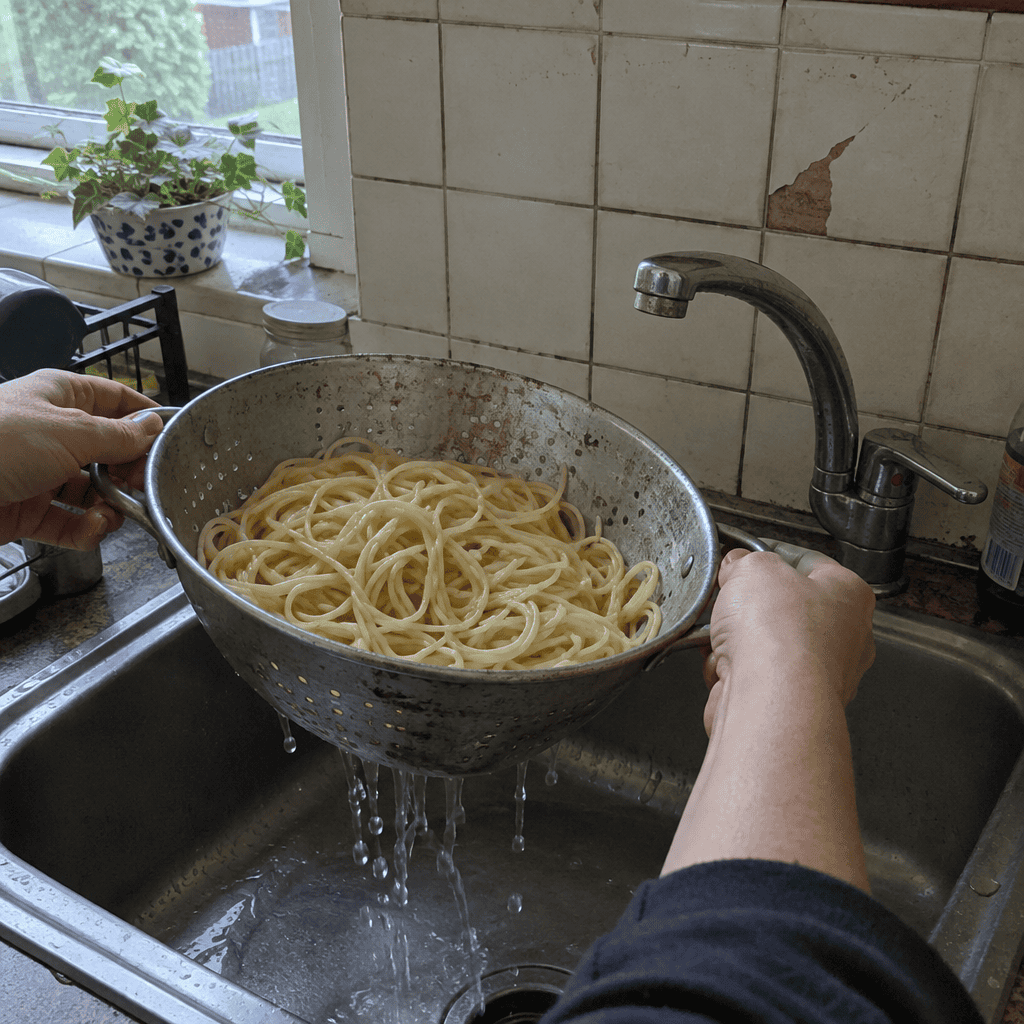
Rinsing washes off the starch, and the starch is what makes the sauce cling instead of slide.
I saw a neighbor do it once at a block party, under cold water, in a colander, in front of God and everybody. Nonna didn’t say a word. She just stopped eating.
The one exception: cold pasta salad for a summer picnic. Even then I rinse fast and I don’t announce it.
3. No cheese on seafood pasta
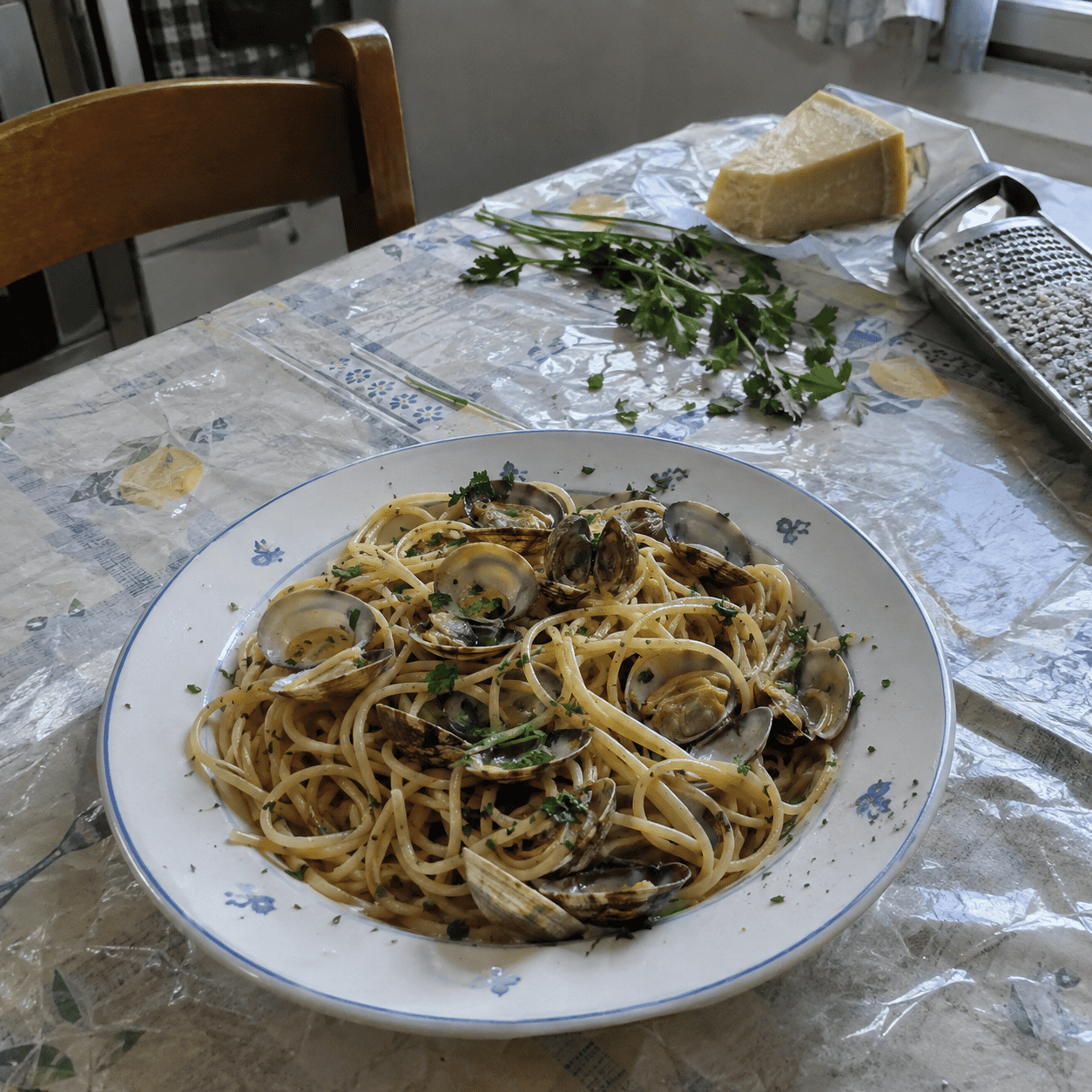
You can put parmigiano on almost anything in that house. Almost.
Put it on spaghetti with clams and the table goes quiet. The reasoning was never explained to me as chemistry — it was explained as “we don’t do that.”
She was right, though. Cheese flattens the brine and you lose the whole point of the clam. I hold the line on this one. It’s the hill.
4. Bread goes on the table, not on a plate
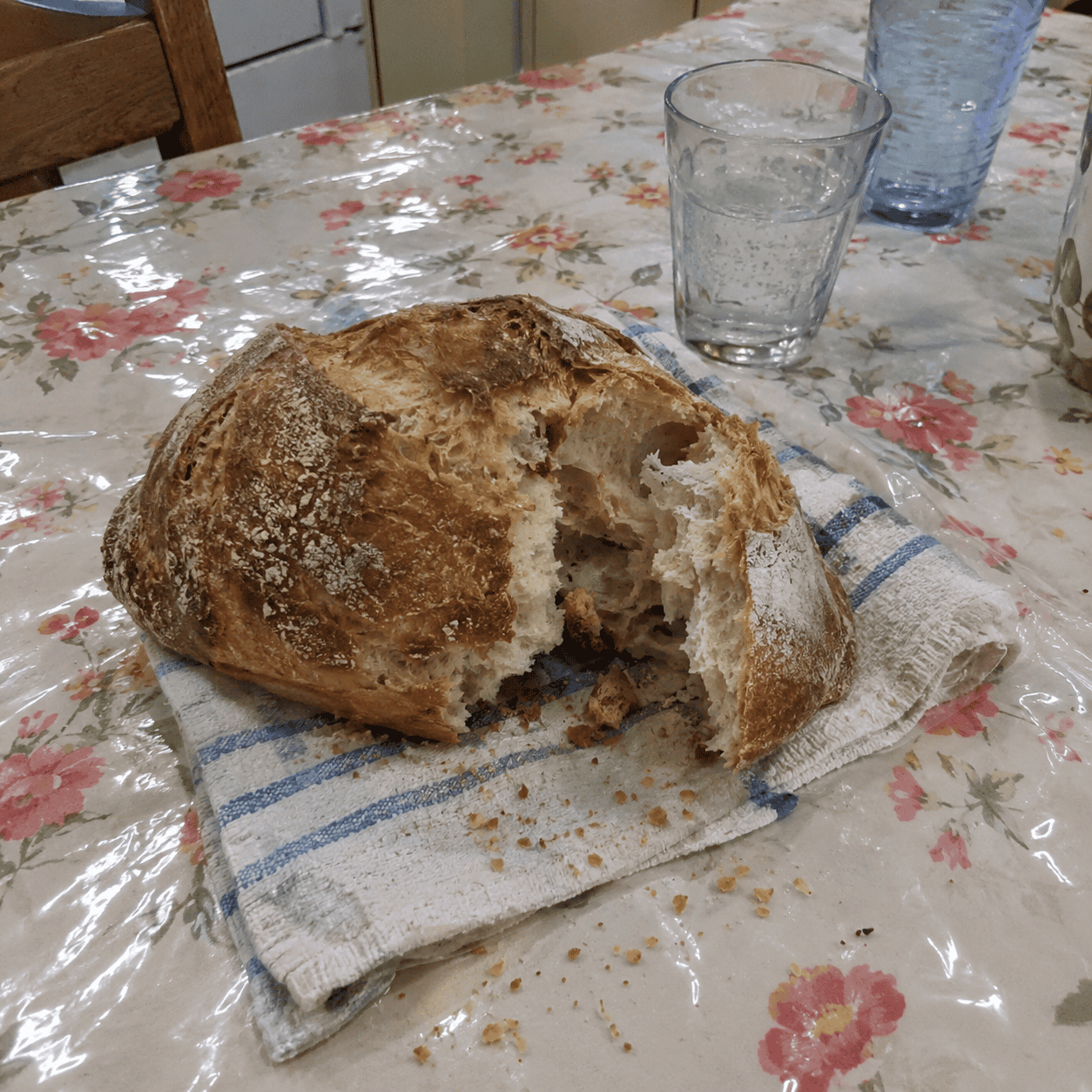
A basket in the middle, or just loose on the tablecloth. Bread does not get its own real estate.
Nonna’s bread sat on the good tablecloth on a folded dish towel, torn not sliced, and whoever reached for the heel first won something.
And it isn’t an appetizer. You eat it with the food, or you use it at the end. Which brings us to the next rule.
5. Scarpetta is mandatory, not optional
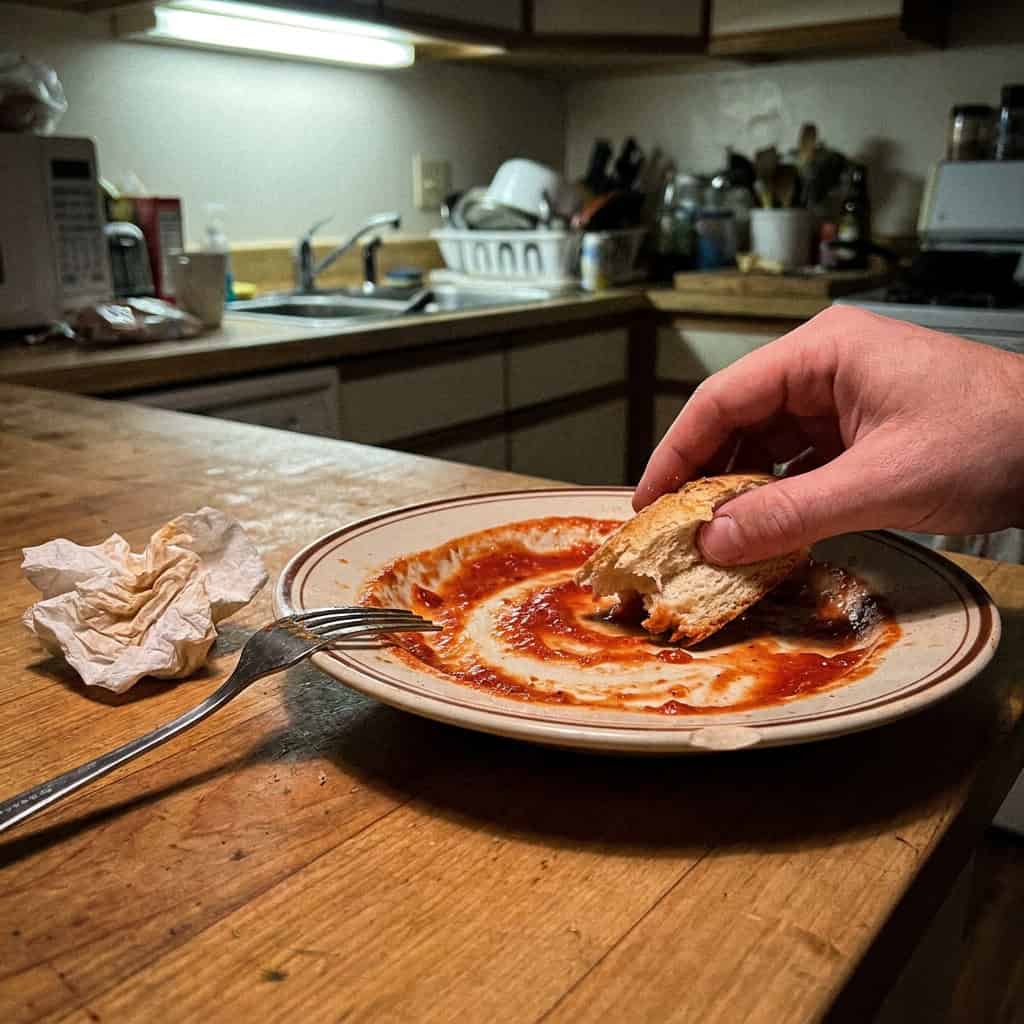
A plate going into the sink with sauce still on it was a small tragedy.
You tear a piece of bread, you drag it through what’s left, you eat it. My uncle used to do it so thoroughly you could’ve put the plate back in the cabinet.
Fancy people call it sopping. We called it finishing your food.
6. The sauce pot is nobody’s business but hers
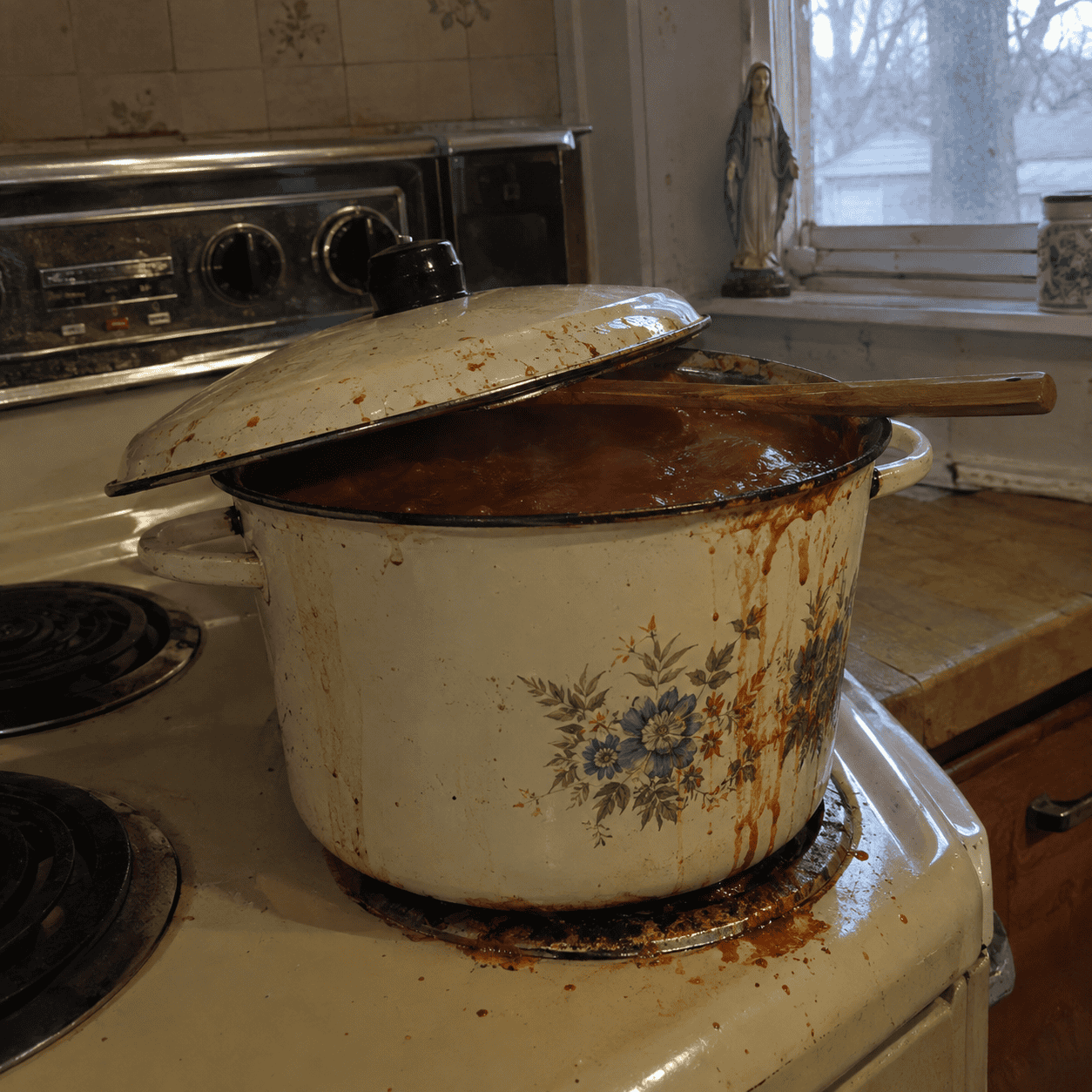
You did not stir it. You did not taste it. You did not lift the lid to look.
Sunday gravy went on before 8am Mass and simmered until two, and the kitchen door might as well have had a velvet rope. The one time I added oregano at nine years old, she tasted it, looked at me, and said nothing for an hour. That was worse.
Now the pot is mine. My son stirred it last Christmas and I let him. I also watched him the entire time.
7. It’s gravy. Or sauce. And we’re not settling it today
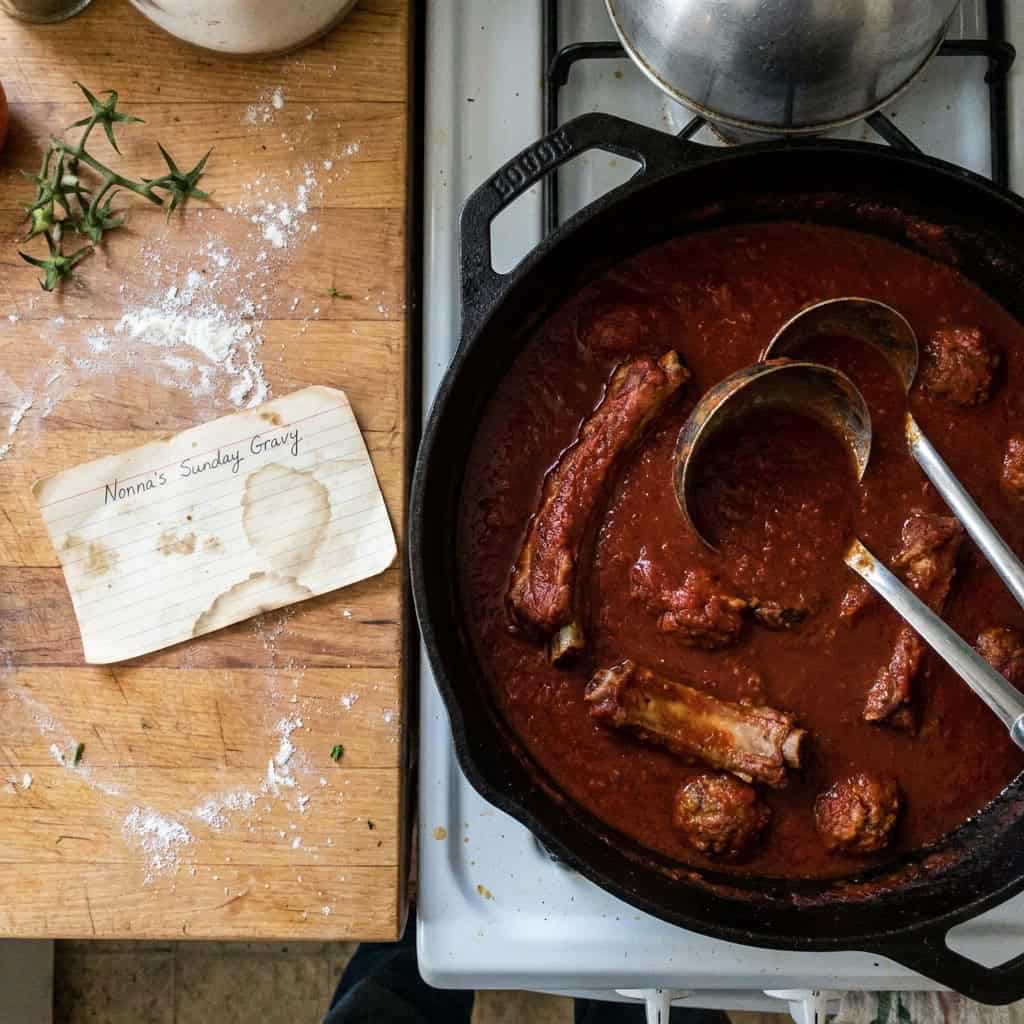
South Philly says gravy. Half of New Jersey says sauce. My own family is split down the middle and has been since 1968.
Nonna called it sugo and thought the whole argument was an American invention, which it is. Researchers at Rutgers have written whole papers on how Italian-American Sunday dinner became its own tradition separate from anything in Italy, and the vocabulary came along with it.
I say gravy when it has meat in it and sauce when it doesn’t. That satisfies nobody, which feels correct.
8. Never arrive empty-handed
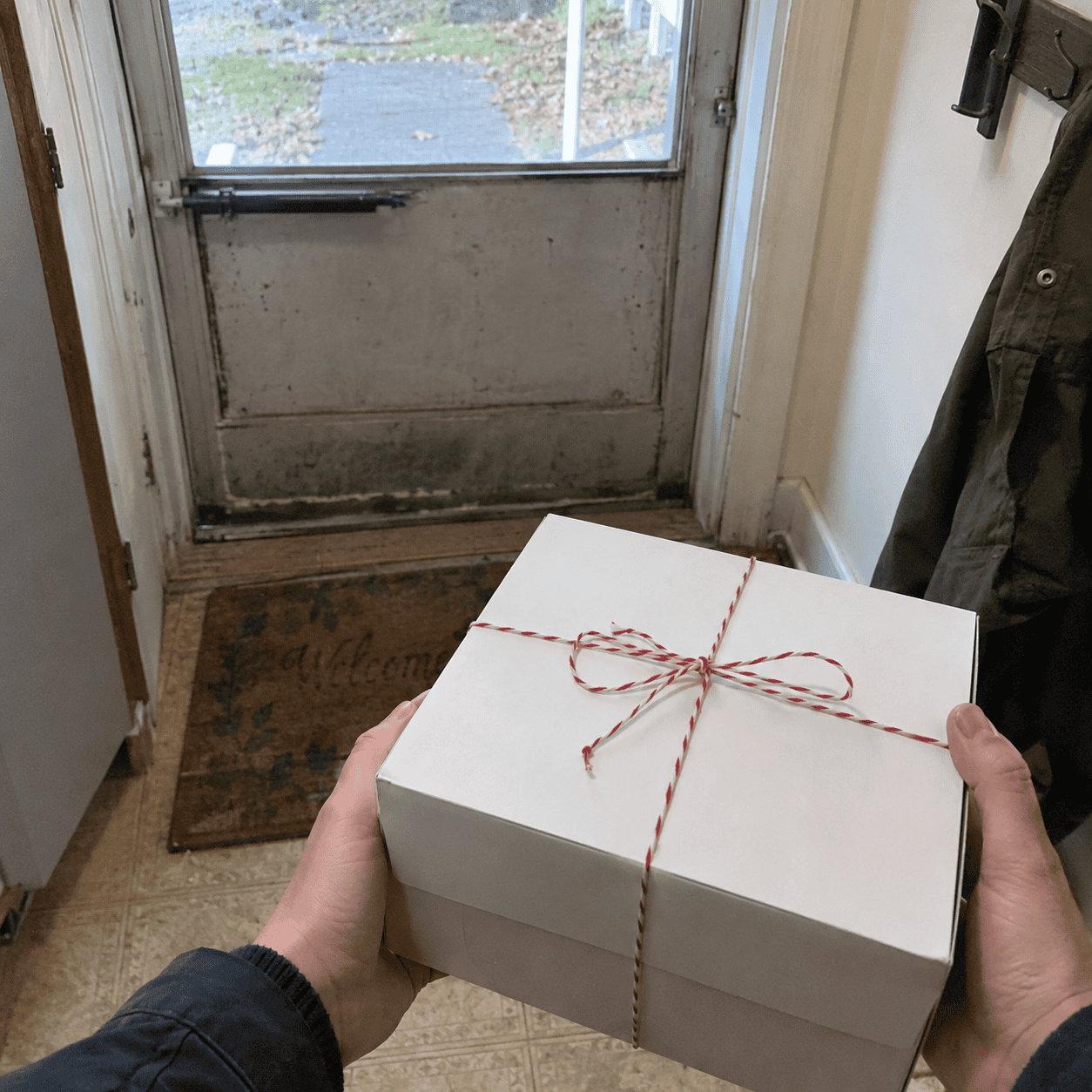
Not a bottle, not a tray, not flowers — something. The hands must be full.
My mother kept a backup box of bakery cookies in the freezer specifically for being invited somewhere on short notice. That box was a strategic reserve.
I’ve shown up with a tray of Italian cookies to a cookout where nobody wanted cookies. Doesn’t matter. The hands were full.
9. Never bring the dish the host is known for
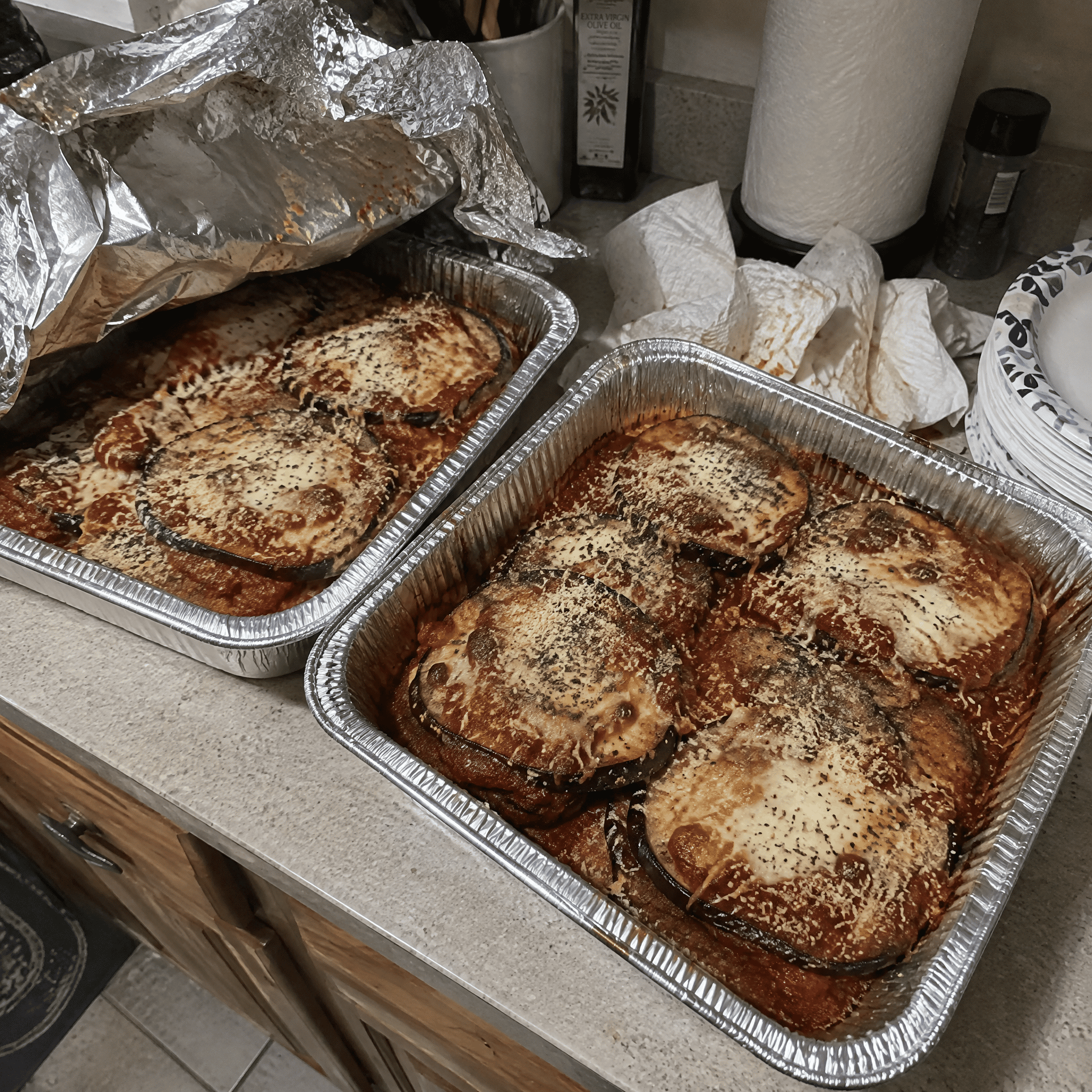
This one has ruined friendships.
If your aunt is the meatball person, you do not bring meatballs. You bring a salad, a bread, a dessert, anything that doesn’t compete. Showing up with a rival tray is an act of war disguised as generosity.
My cousin Roseanne brought her own eggplant parm to my mother’s house in 1997. Twenty-eight years. Still comes up.
10. The container goes home full
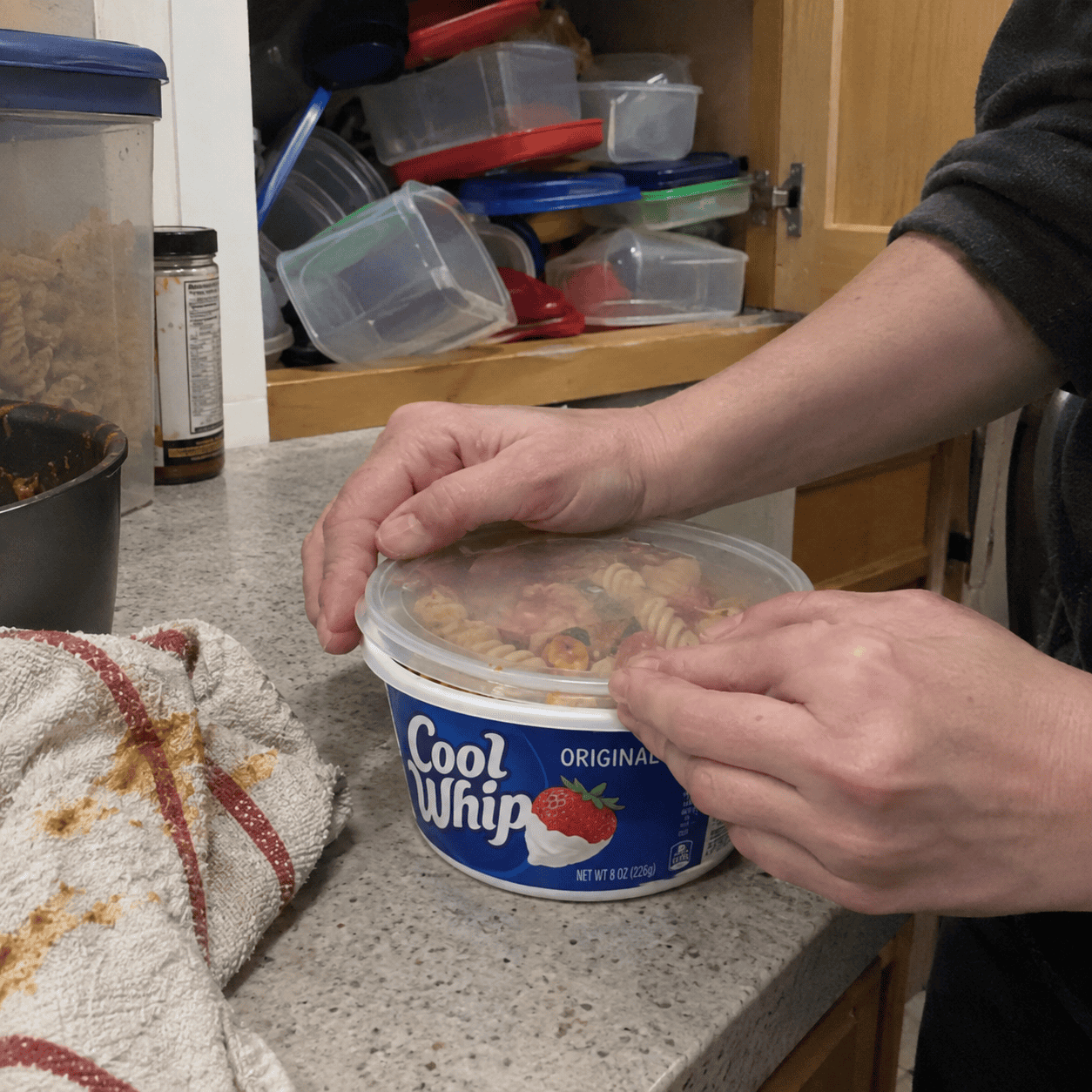
You brought a dish, you’re leaving with a dish, and it will not be empty.
Nonna had a cabinet of mismatched Tupperware and about nine Cool Whip tubs she treated like heirlooms. Nobody left without one, and nobody dared say no.
I do it to my kids now. My daughter lives forty minutes away and has four of my containers. I know exactly which four.
11. The good dishes are for company, and company is rare
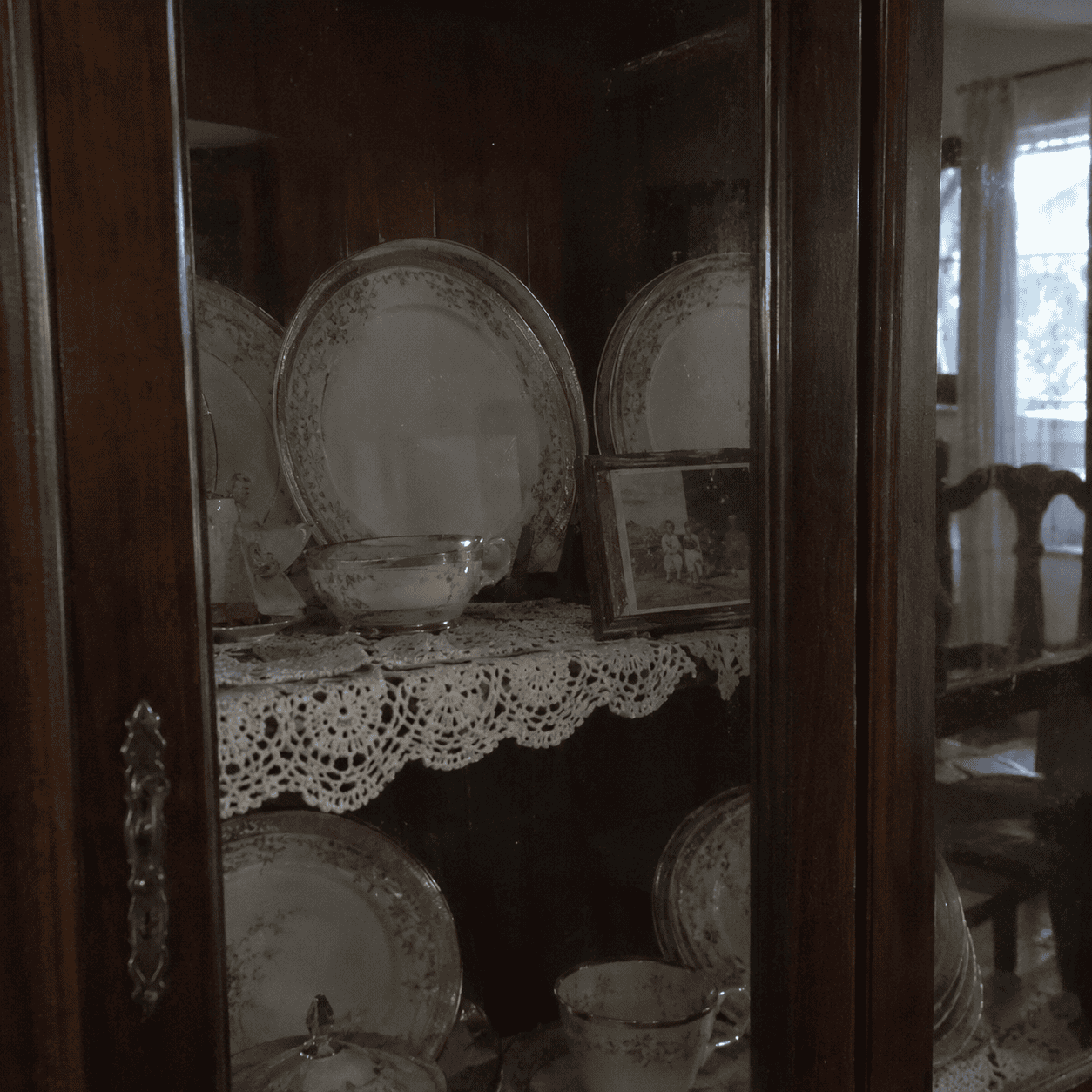
There was a china cabinet in the dining room nobody ate in.
The good plates came out maybe five times a year — Christmas, Easter, a baptism, somebody’s engagement. The rest of the year we ate off the everyday set with the chip on the rim.
I’ve started using the good ones on regular Sundays. She’d call that wasteful. I think she’d also secretly like it.
12. Seconds are not optional
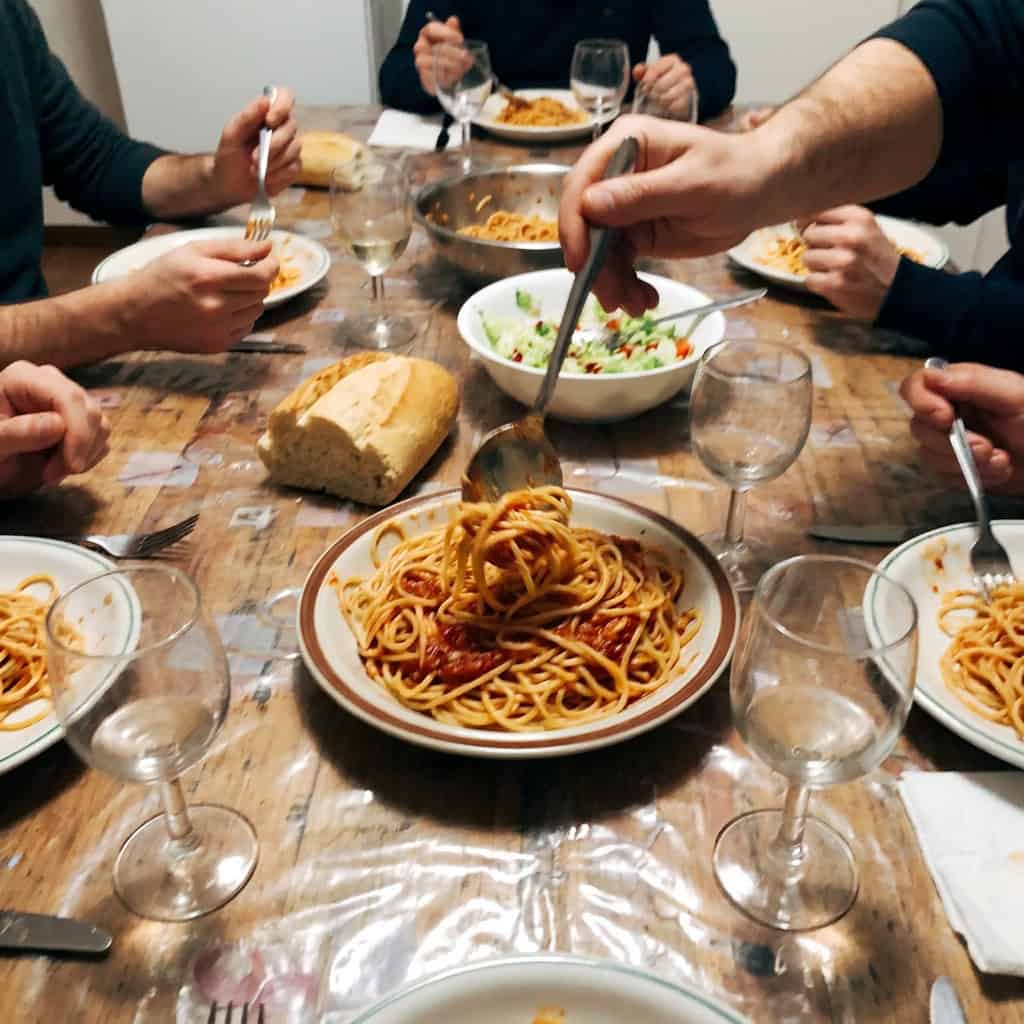
“No thank you” is understood as the opening of a negotiation, not an answer.
You’ll be asked three times. On the third, the serving spoon is already moving toward your plate and the question was rhetorical.
Refusing twice is polite. Refusing a third time implies something is wrong with the food, and now you’ve started a different conversation entirely.
13. Nobody leaves before coffee
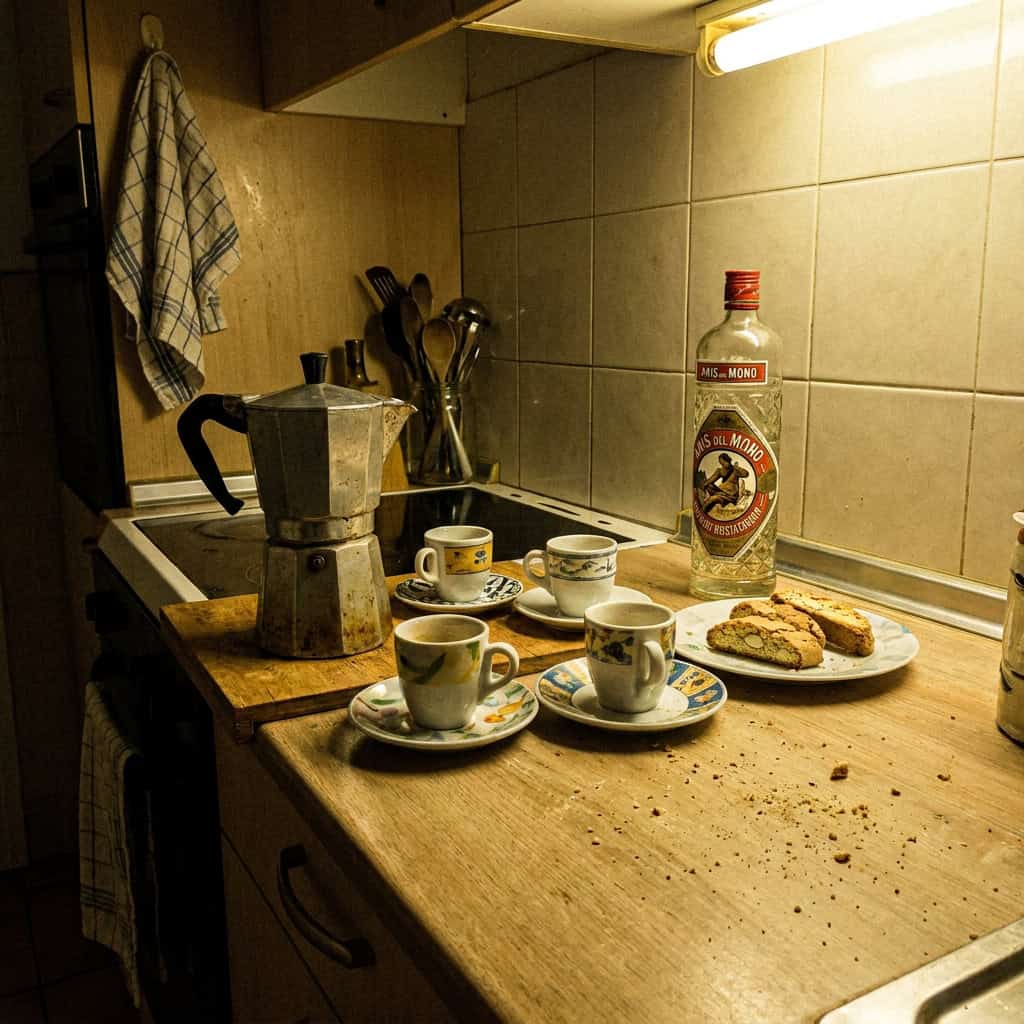
Dinner isn’t over when the plates clear. It’s over when the espresso pot comes off the stove and somebody puts out a plate of something.
Standing up to get your coat too early was read as an insult. My father once walked three guests back to the table by the elbow.
Coffee could run ninety minutes. That’s where the real talking happened — after the food, before the goodbyes, with the anisette out.
14. The wooden spoon is not just for stirring
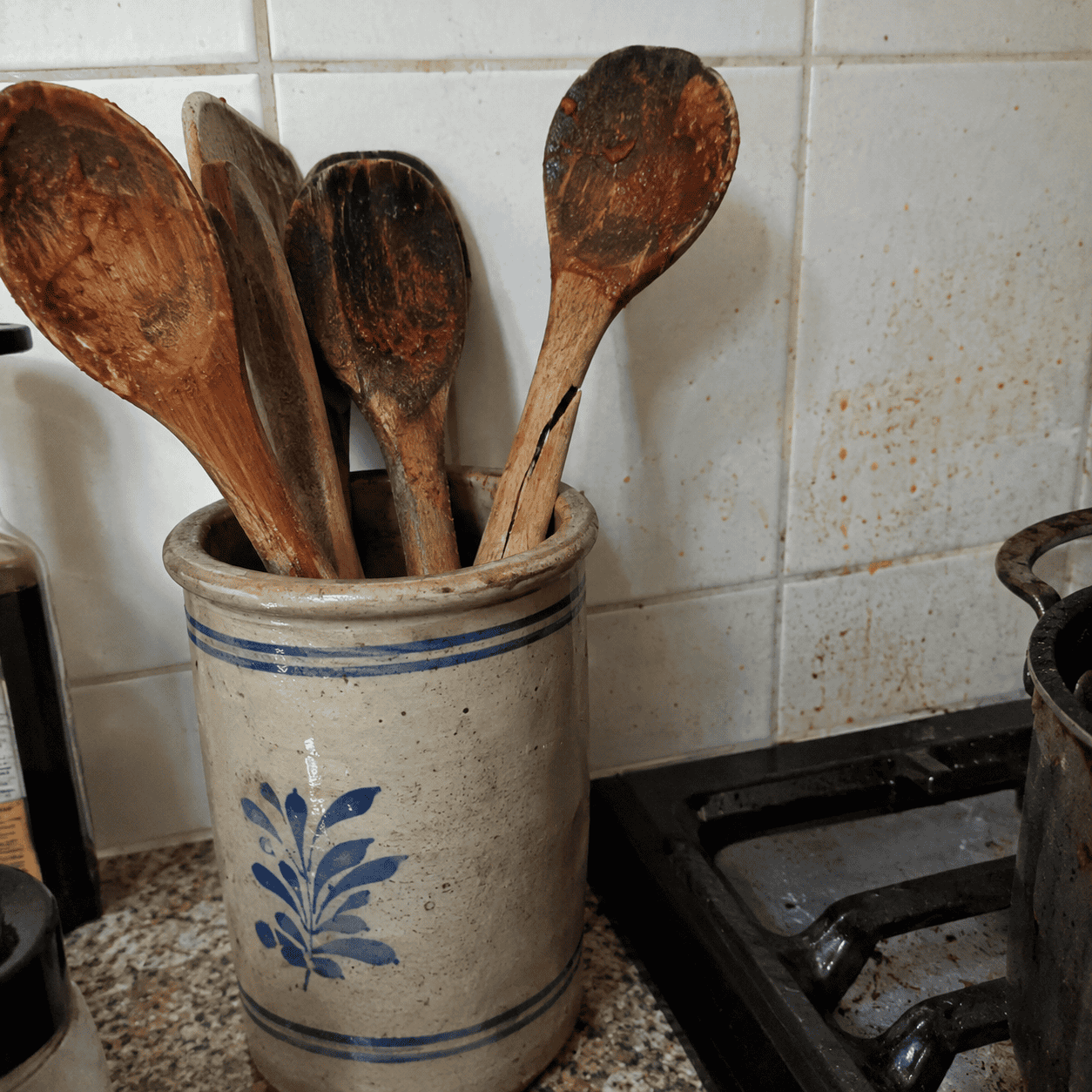
Every Italian-American adult of a certain age has a wooden spoon story.
Hers lived in a jar by the stove, and the mere act of reaching toward that jar restored order to the room instantly. I don’t think she ever actually used it on me. She never had to.
Mine still sits in a jar by the stove. My kids have never been hit with it in their lives and they still eye it.
15. Everybody gets fed, including the person who said they already ate
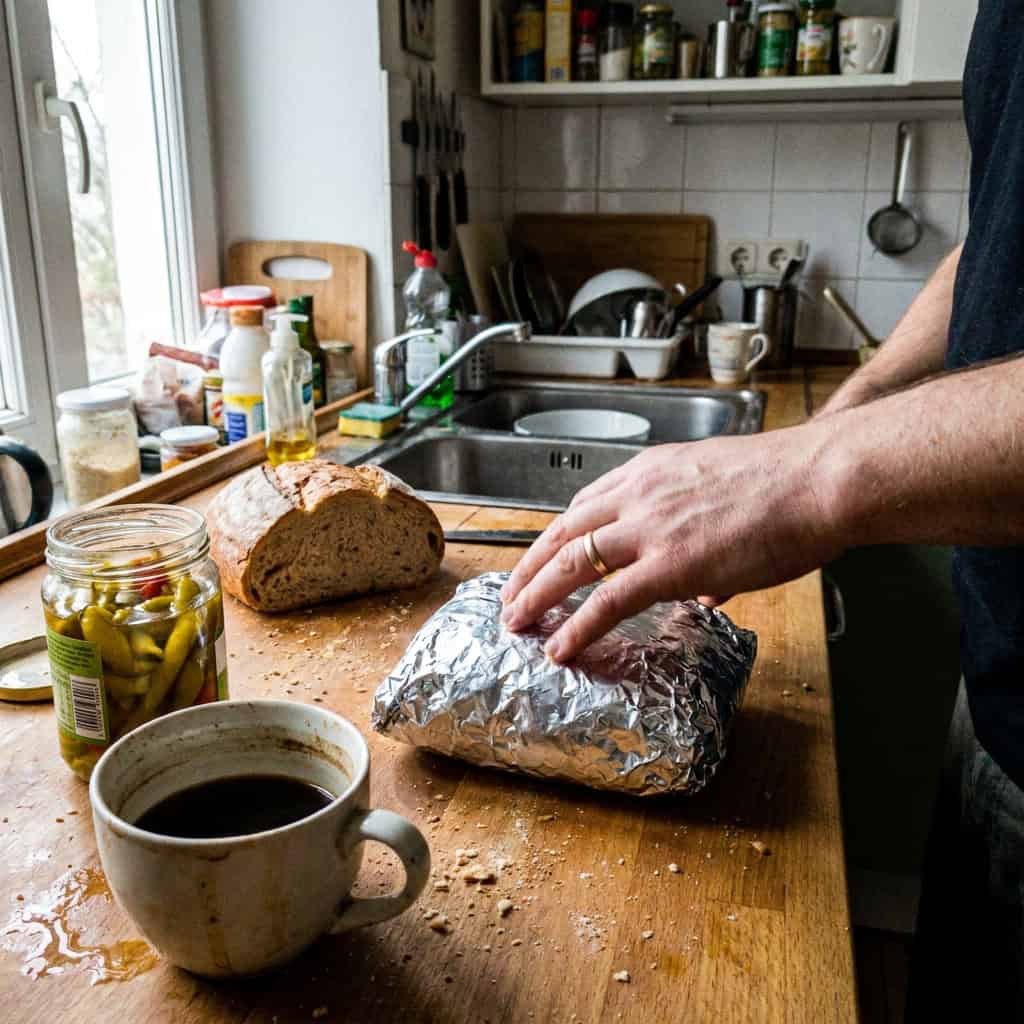
“I ate at home” means nothing in this house. It means you get a smaller plate.
Repairmen were fed. The mailman got coffee. My high school boyfriend once came to pick me up and left with a sandwich wrapped in foil he hadn’t asked for.
Feeding people was how affection got expressed by a woman who did not say “I love you” out loud until she was eighty-four.
16. Pasta is a course, not a side dish
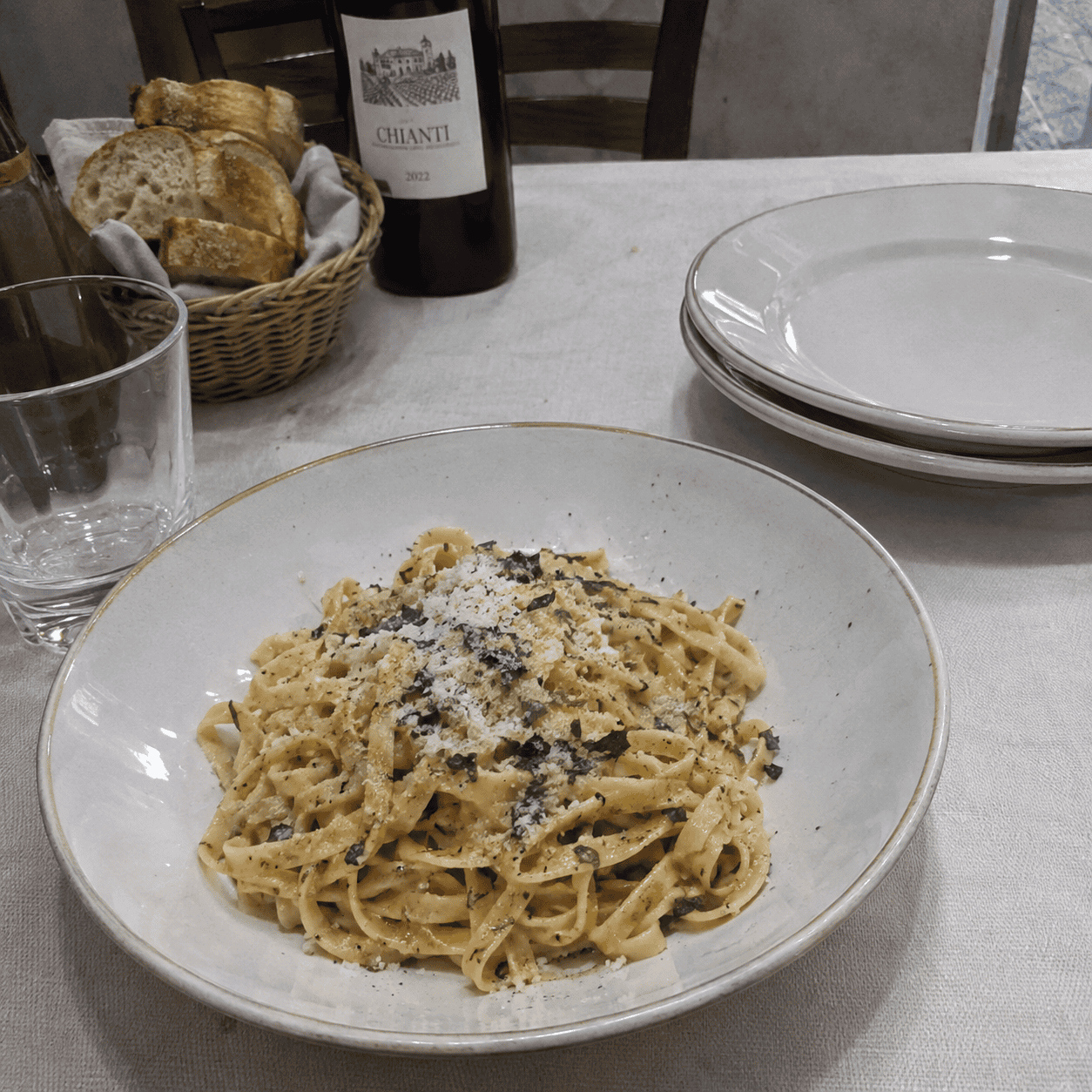
Pasta next to a chicken breast on the same plate is an American thing, and she never got used to it.
It came first, in its own bowl, and then the meat came after with a vegetable. Sunday had four courses and a nap built into the afternoon.
I break this constantly on weeknights. A bowl of quick pasta for a busy weeknight with a salad thrown next to it is dinner at my house on a Tuesday, and I’ve made peace with it.
17. You don’t cut long pasta, and you don’t need a spoon
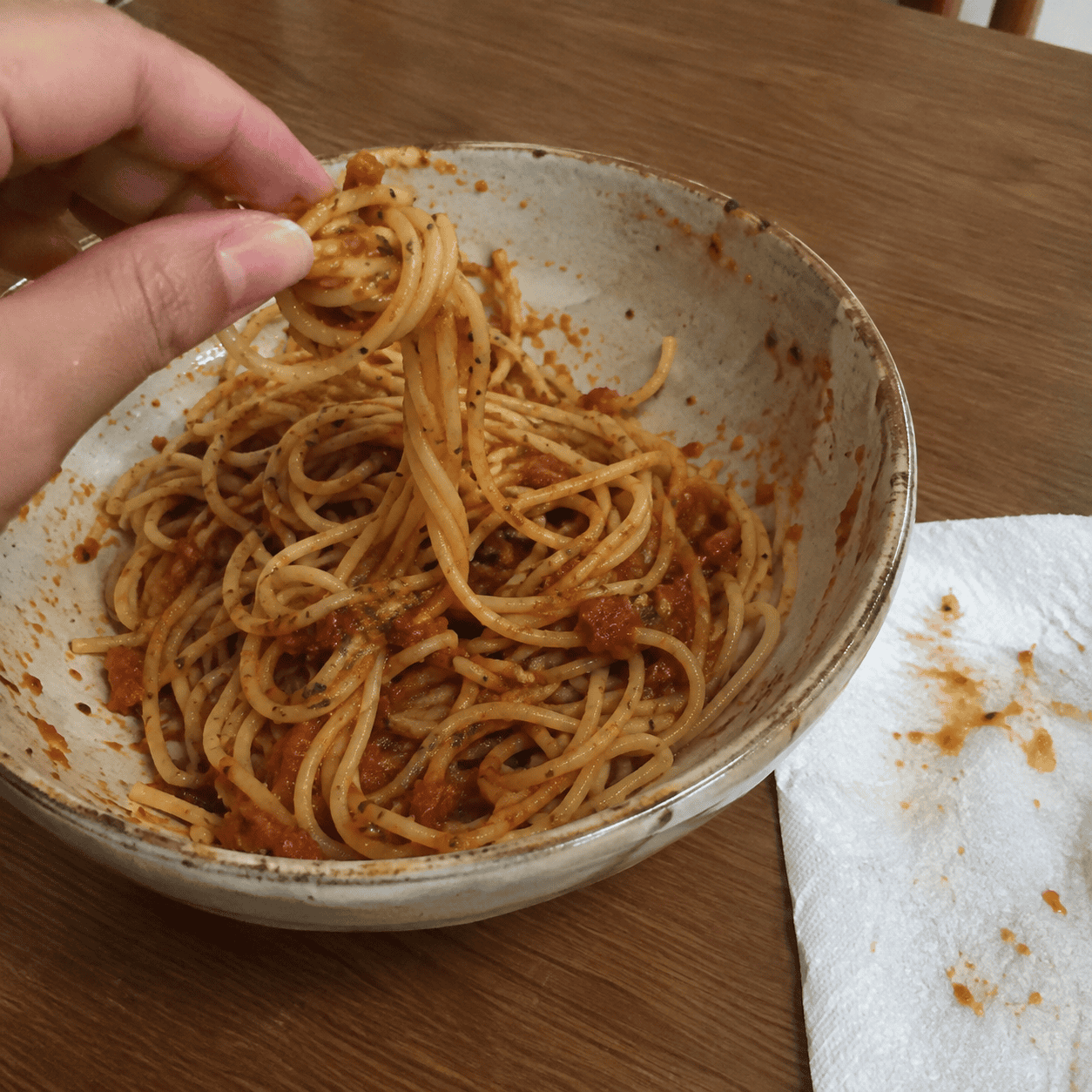
Fork against the curve of the bowl. That’s it.
Cutting spaghetti was something you were allowed to do until roughly age six, and then one day it wasn’t allowed anymore and nobody told you when the deadline was.
The spoon thing is a restaurant invention. I’ve never seen anyone in Sicily use one and I’ve been four times looking.
18. Taste everything before you salt it
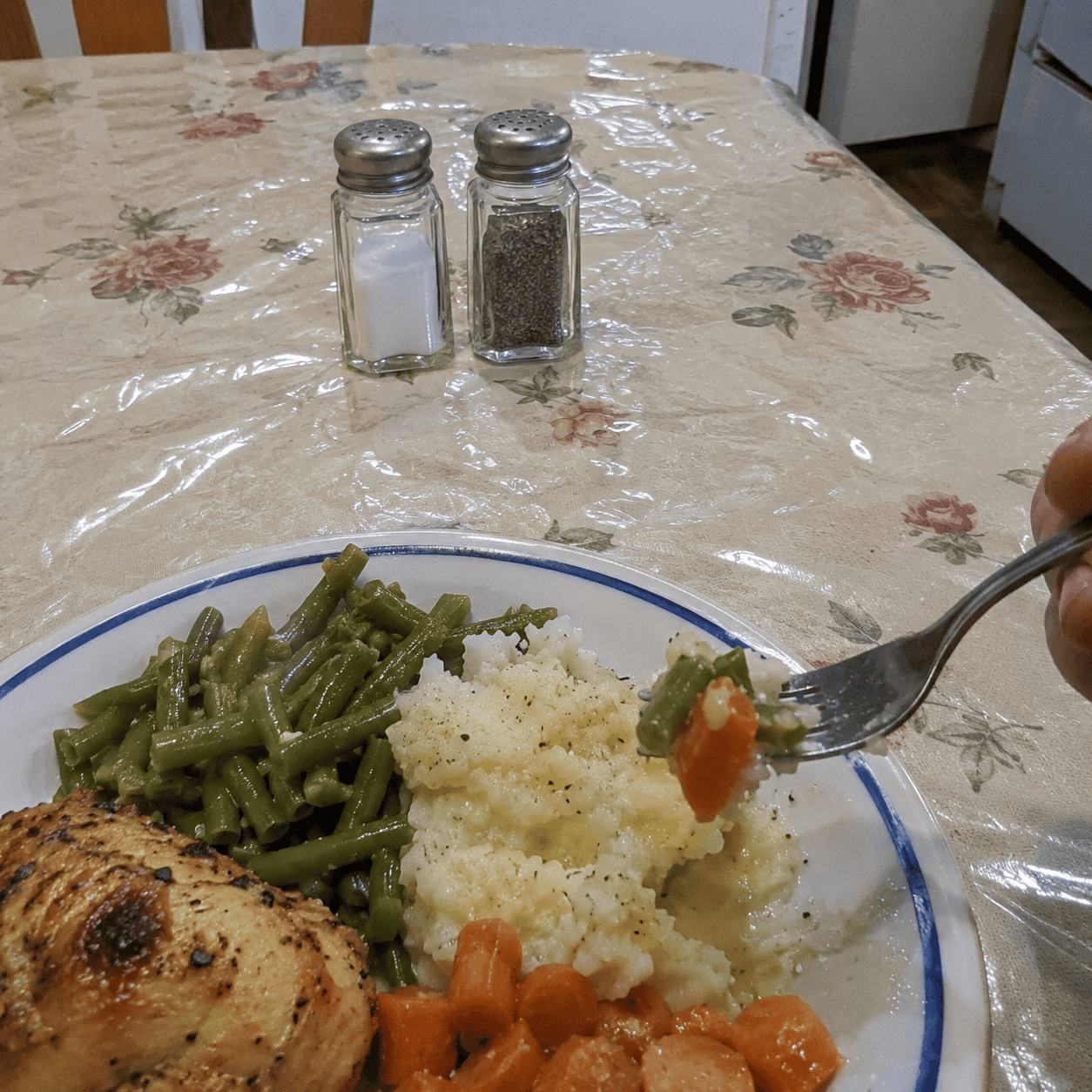
Reaching for the salt shaker before the first bite was a direct insult to the cook.
My grandfather did it once at my aunt’s table. The silence had a texture to it. He never did it again.
Taste first. Always. Then season quietly, like you’re getting away with something.
19. Nothing edible gets thrown out
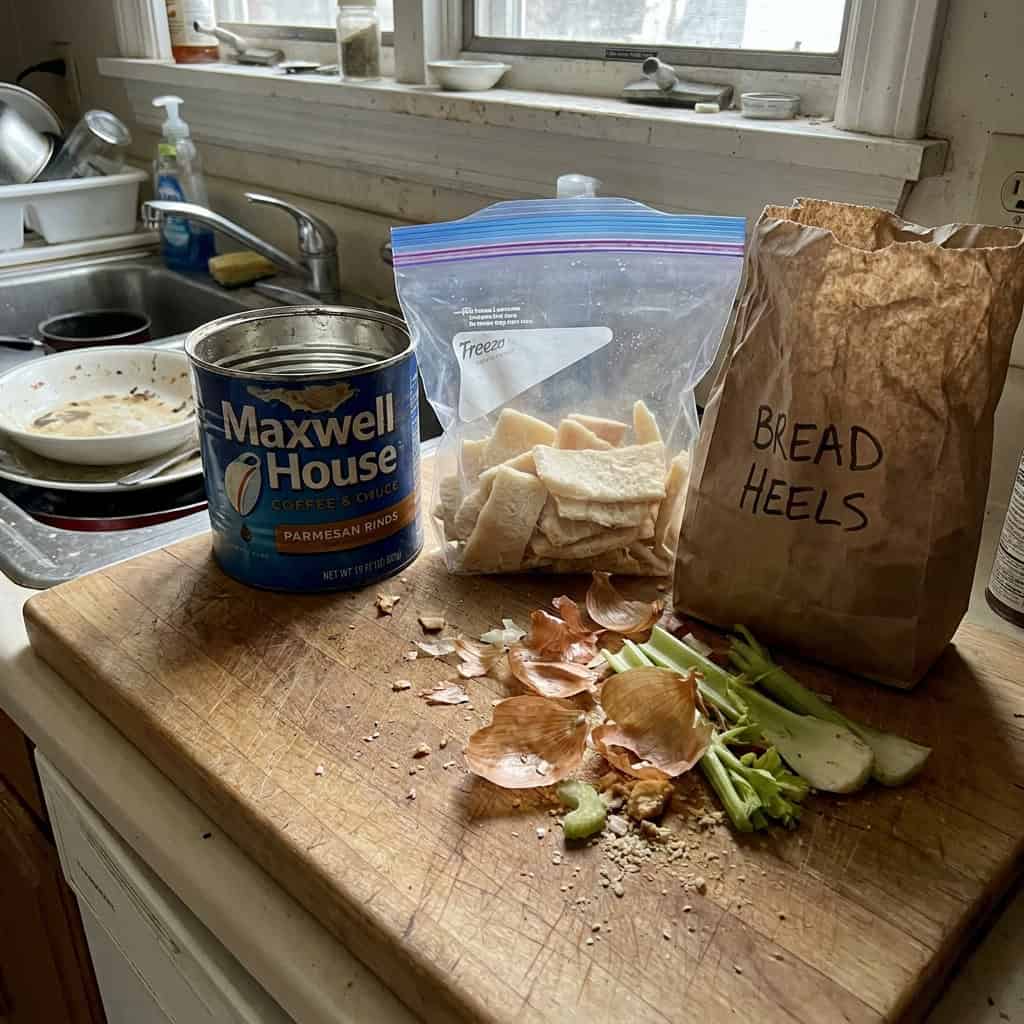
Stale bread became breadcrumbs or went into soup. Parmesan rinds went in a bag in the freezer and then into the bean pot.
Bacon grease lived in a coffee can on the back of the stove. Leftover pasta became a frittata the next day. The wilted celery and the half onion went into the soffritto.
She was a child during the war in Sicily. Waste wasn’t a moral failing to her — it was something closer to a fear.
- Parmesan rinds — freezer bag, then into beans or broth
- Stale bread — breadcrumbs, pangrattato, or soup
- Tomato ends and herb stems — into the sauce pot, fished out later
- Pasta water — into the sauce, never down the drain
20. Beans and greens stretch the week, and nobody’s ashamed of it
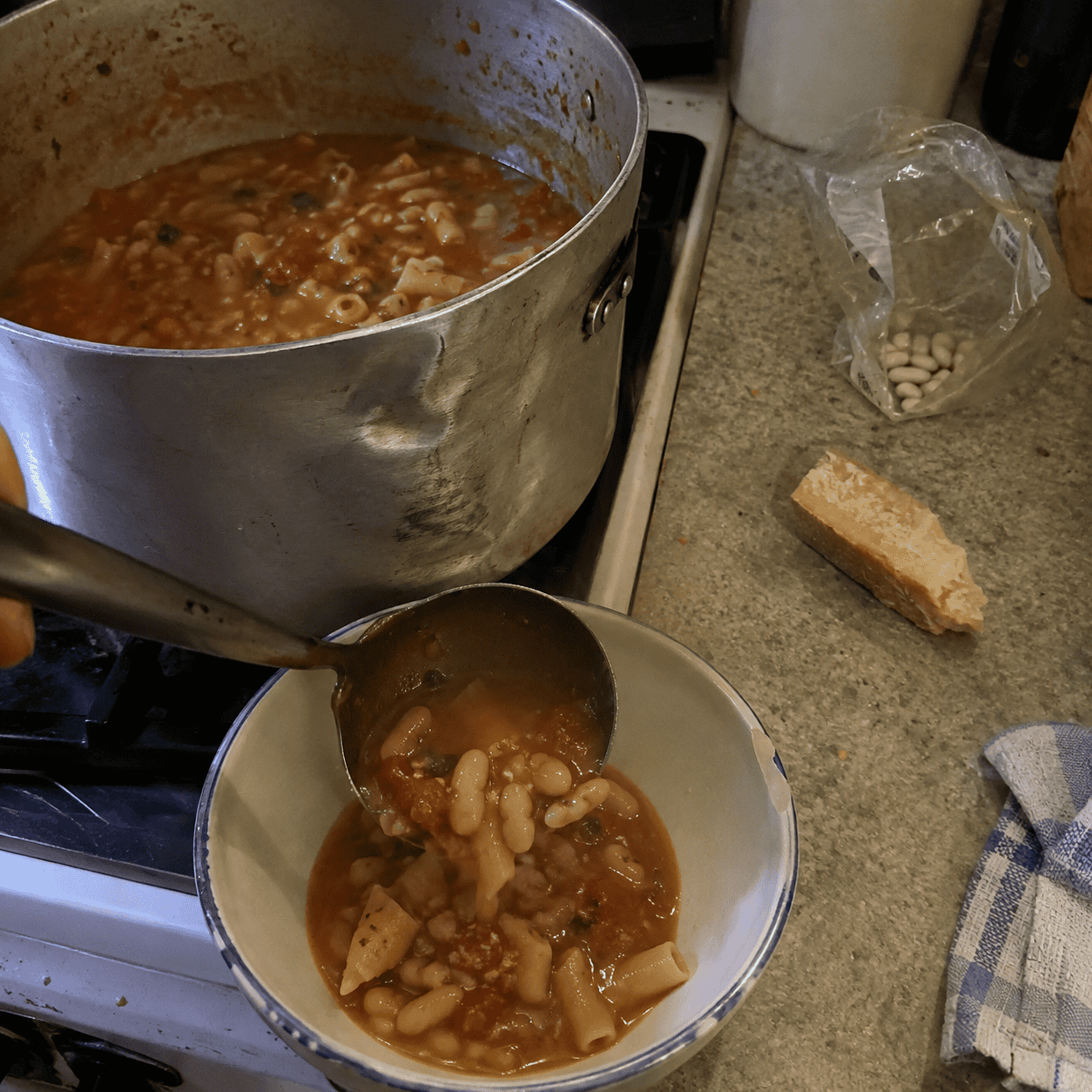
Wednesday was often pasta fagioli, and it was not a sad meal.
Cucina povera isn’t a trend in that house, it’s a Tuesday. A pound of dried beans, an onion, a rind, and whatever pasta was broken in the bottom of the box.
My kids ask for it more than they ask for the braciole. That tells you something.
21. Lentils on New Year’s, no arguments
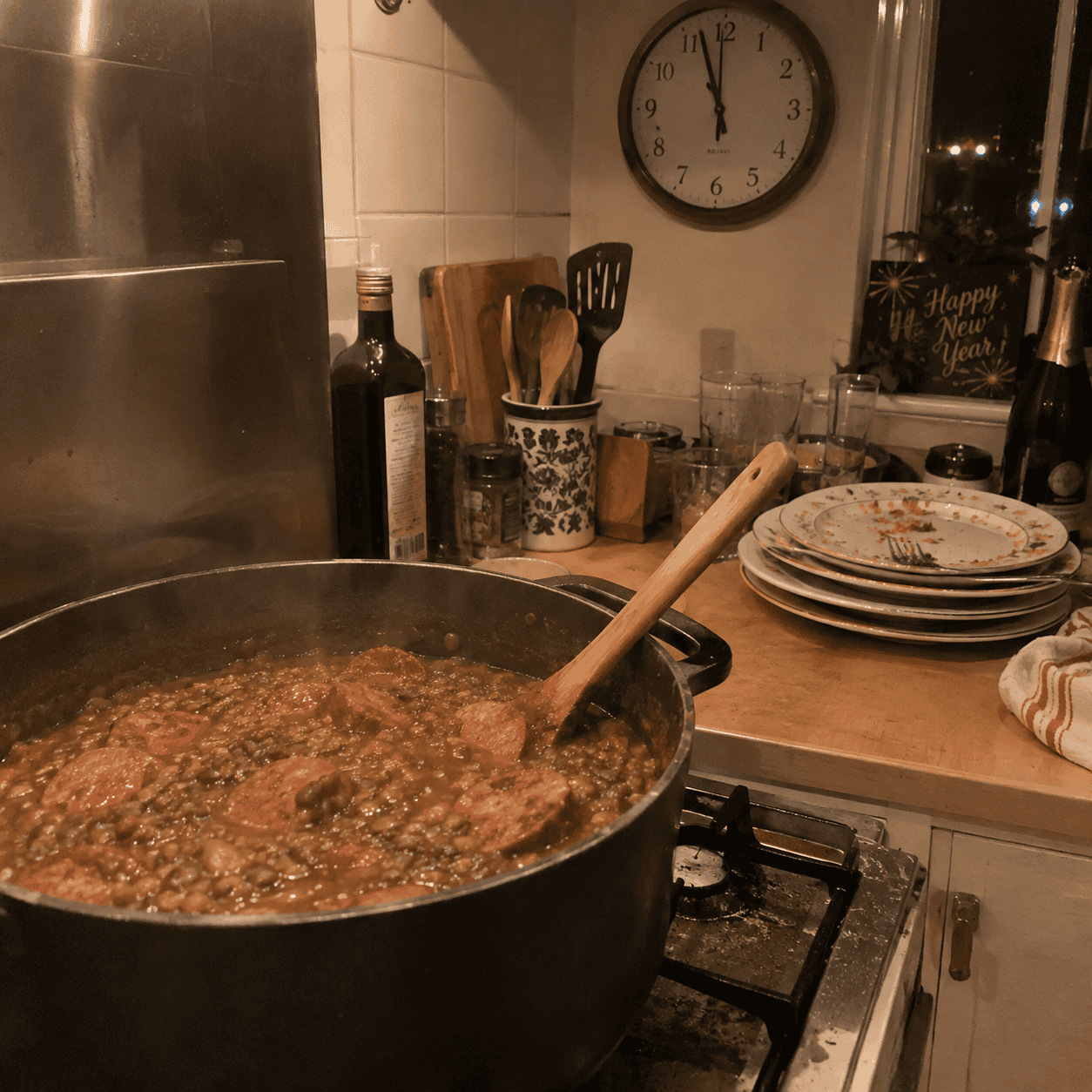
Lentils look like coins. You eat them at midnight or close to it, and you eat enough to matter.
Nonna made a big pot every December 31st and served it with cotechino, and she’d physically put a spoonful on your plate if you tried to skip it. Money for the year. Non-negotiable.
I still make lentil soup for the New Year. I don’t believe it works. I’m also not going to be the one who stops.
22. The eggplant gets salted and it gets time
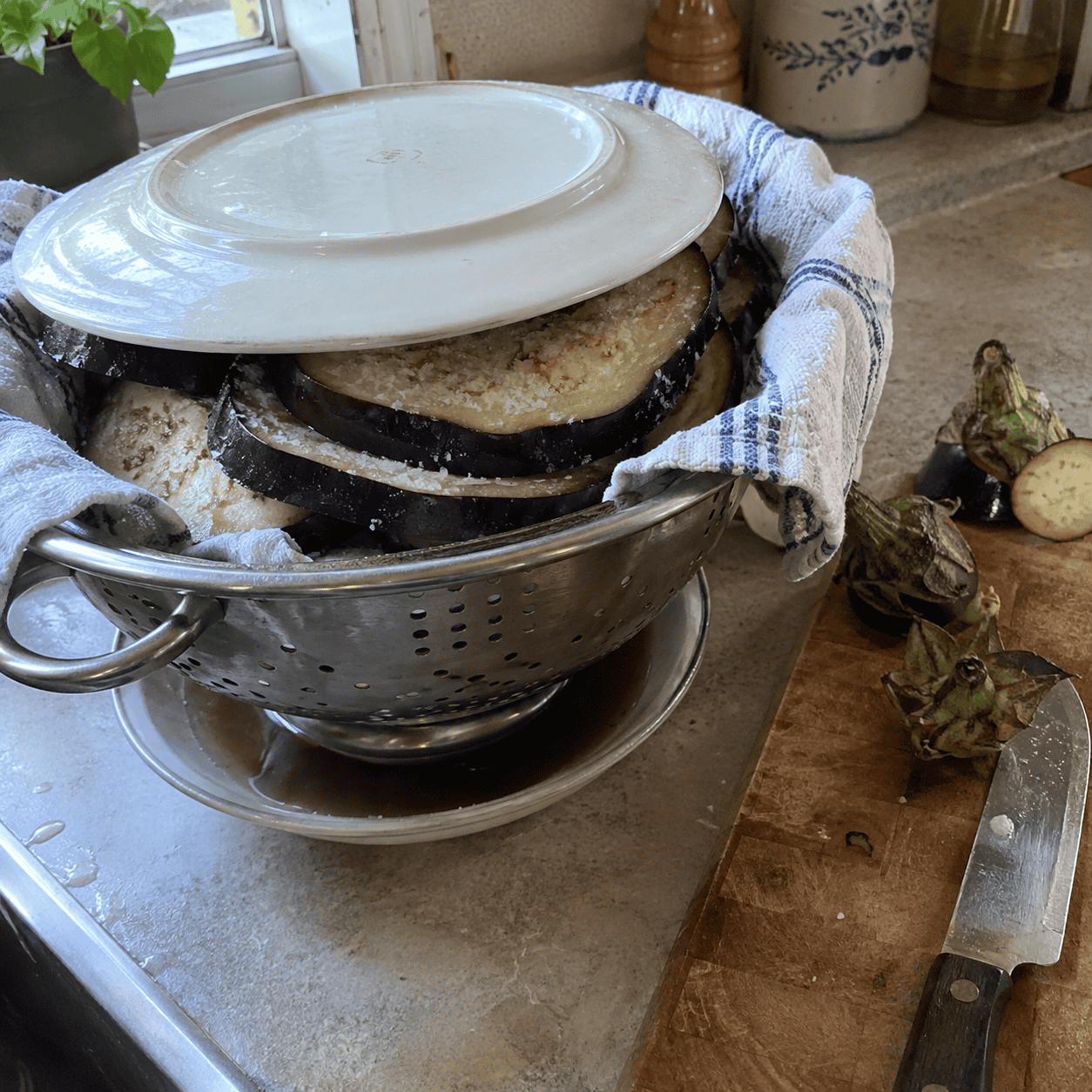
You slice it, you salt it, you weight it down with a plate, and you walk away for an hour.
She didn’t peel it either. The skin holds the slice together and she thought peeling was for people with something to prove. Her eggplant parmesan was thin-sliced, skin on, fried in batches, and stacked in a dish that weighed eleven pounds.
Modern eggplant is bred less bitter and you can skip the salting. I don’t. The hour is part of it.
23. Never let the garlic brown
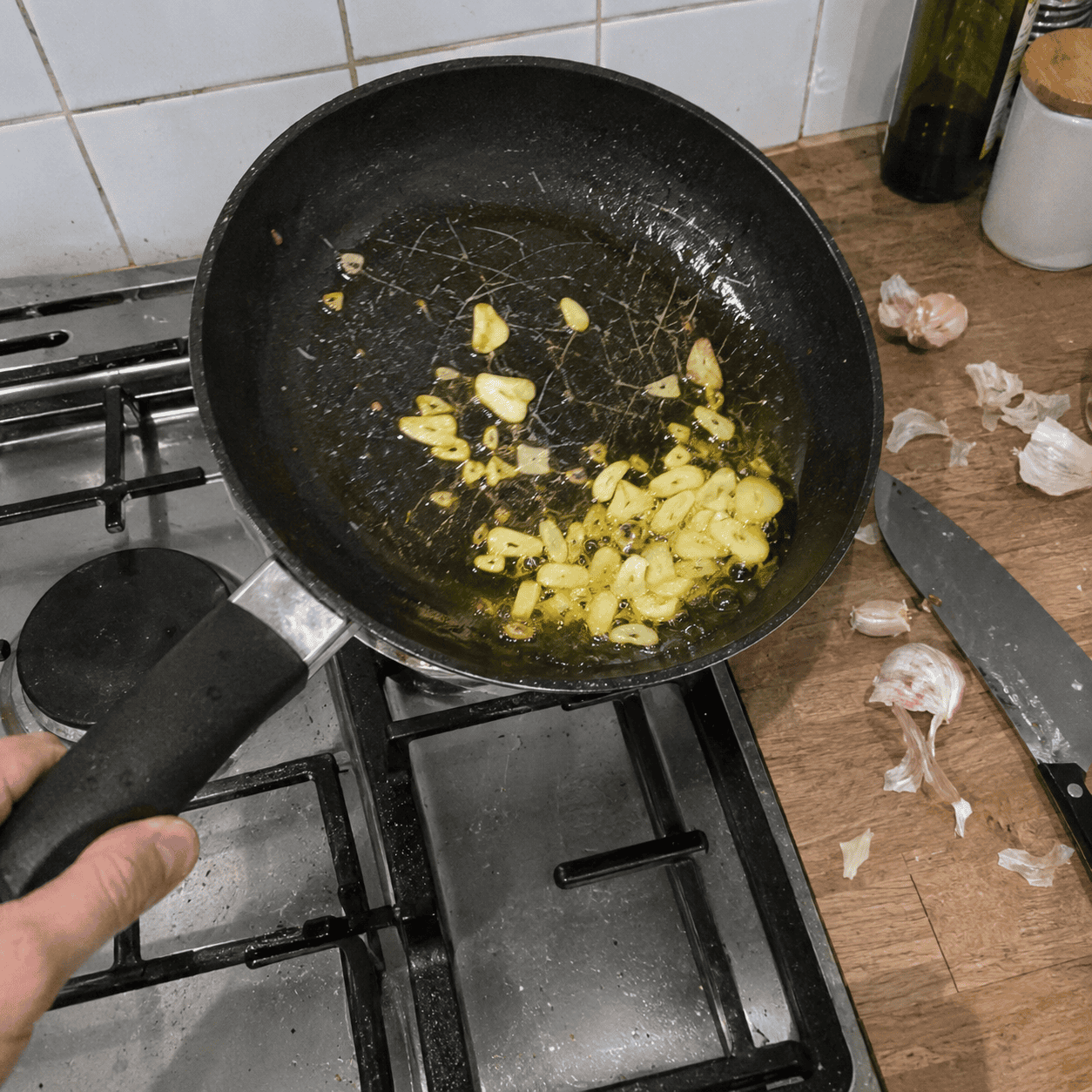
Golden is the edge. Brown is bitter and there’s no coming back.
Her hand would come across and pull the pan off the burner before I even saw the color change. Thirty seconds of inattention and the whole dish tastes scorched underneath.
Low heat, cold oil to start, and don’t walk away to answer the phone.
24. You wash as you go
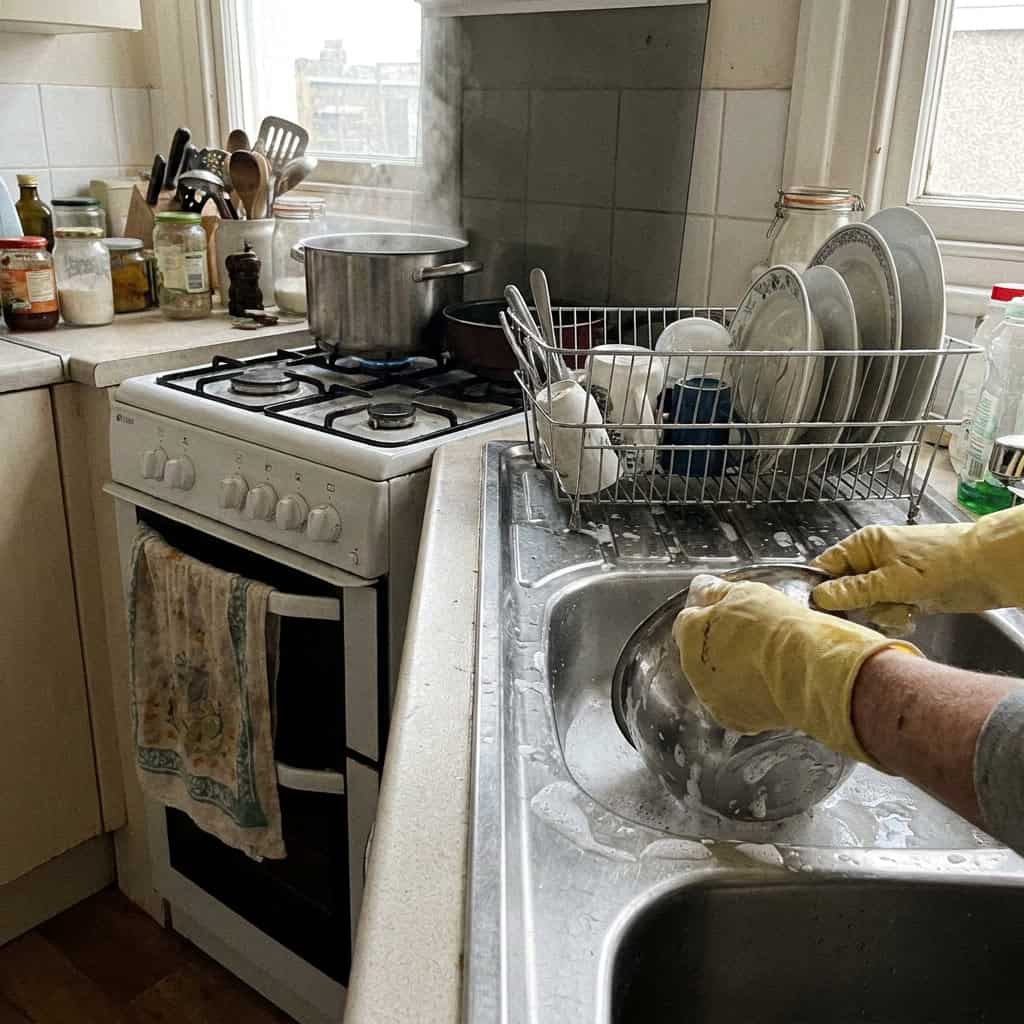
A sink full of dishes at the end of the meal meant you cooked badly.
She cleaned while the water came to a boil, while the sauce simmered, while she waited. By the time we sat down, the kitchen was already mostly reset.
I don’t do this well. I’m a pile-it-up cook and I know she’d have something to say about my counters.
25. The table gets set properly, even for nobody
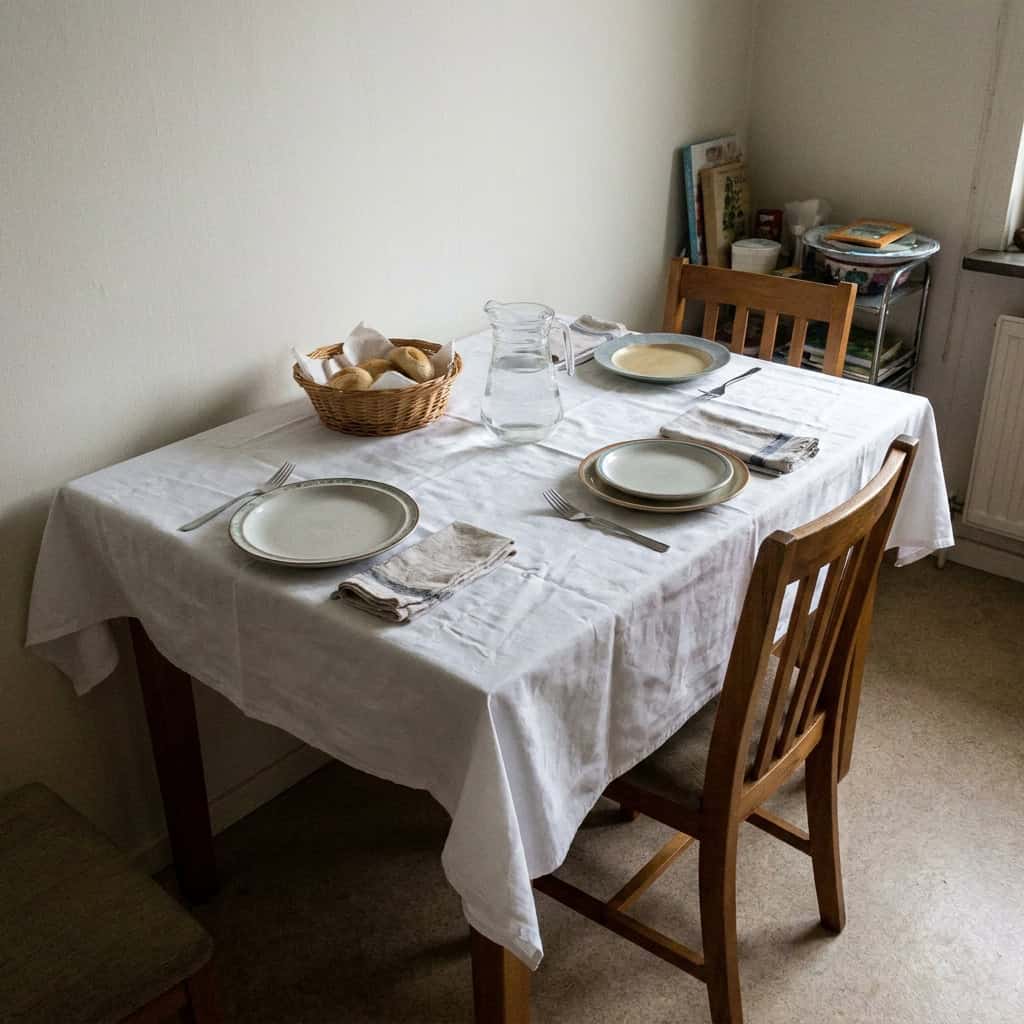
Tuesday with three people still got a tablecloth, cloth napkins or at least real ones, and everyone sitting at the same time.
No eating standing at the counter. No plates in front of the TV, unless it was the Phillies in October, which was a recognized exception.
Simone Cinotto’s work on The Italian American Table makes the case that the family meal became the main way immigrant families held authority and identity together. Felt about right from where I was sitting, on the chair with the phone book on it.
26. Olive oil is for finishing, not just for cooking
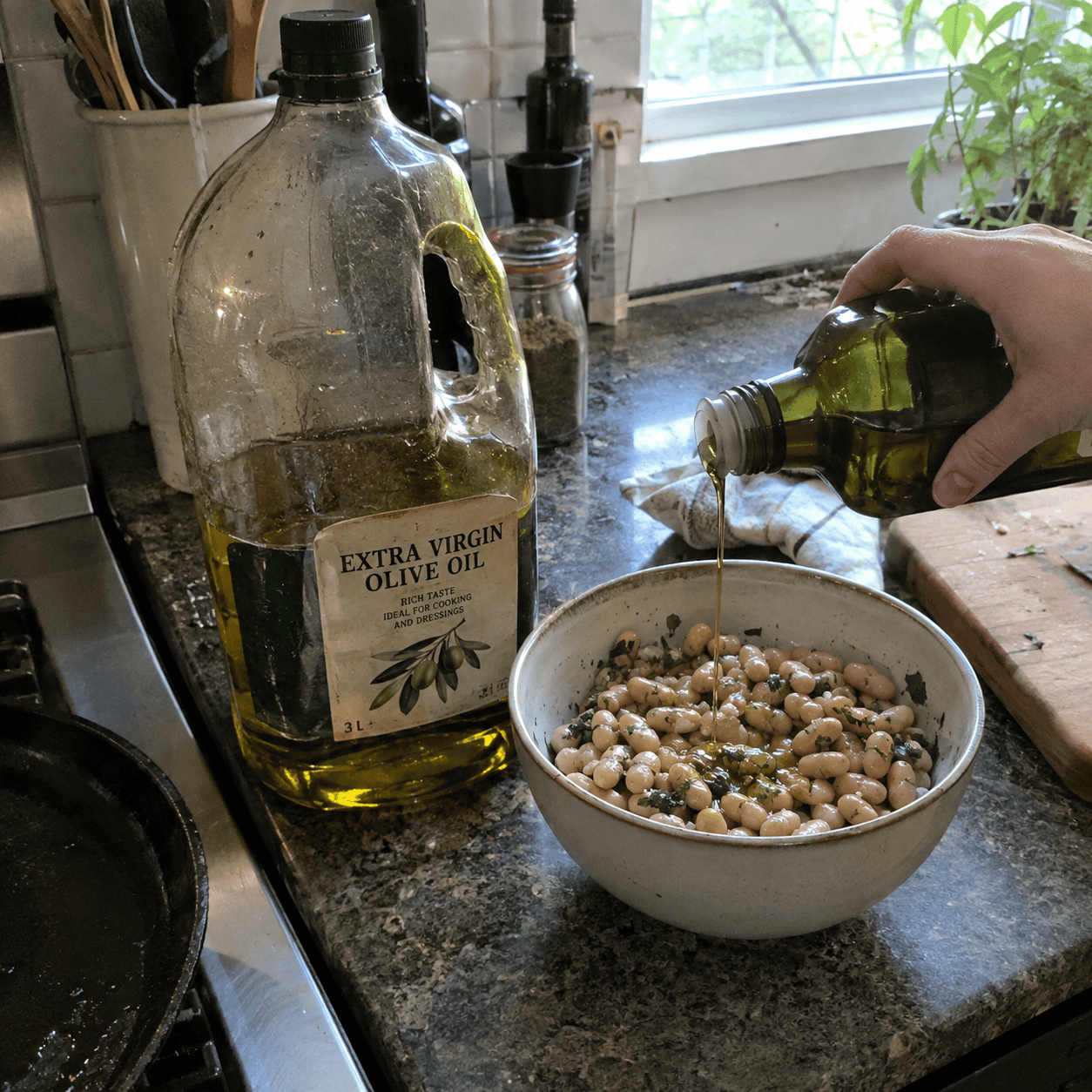
Two bottles. The everyday one by the stove, and the good one that came out at the end and never went near heat.
She’d pour a thread of the good stuff over soup, over beans, over a plate of greens, and over a piece of bread for herself while standing up.
The good bottle was sometimes a gift from someone’s cousin in Sicily, in an unlabeled container that looked faintly illegal.
27. The second kitchen in the basement is where the real cooking happens
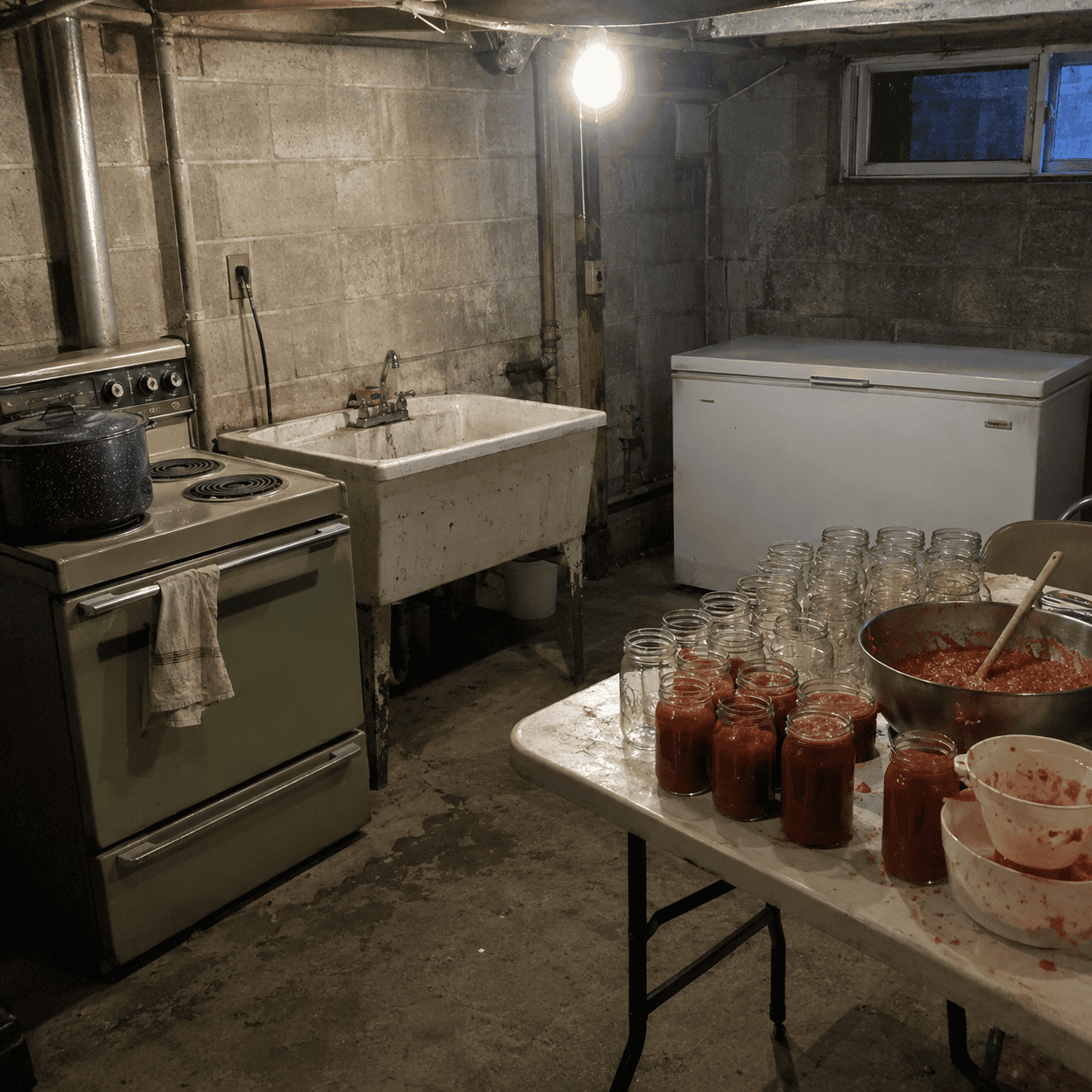
Upstairs kitchen: company, coffee, the good linoleum. Downstairs kitchen: the frying, the canning, the sausage, the smell that would have gotten into the curtains.
Ours had a utility sink, a second stove from 1961, a chest freezer, and a folding table where tomatoes got jarred every August. Nobody who wasn’t family ever saw it.
If you grew up with this, you didn’t know it was unusual until a friend came over and asked why there were two refrigerators.
28. The pot of water goes on before you know what you’re making
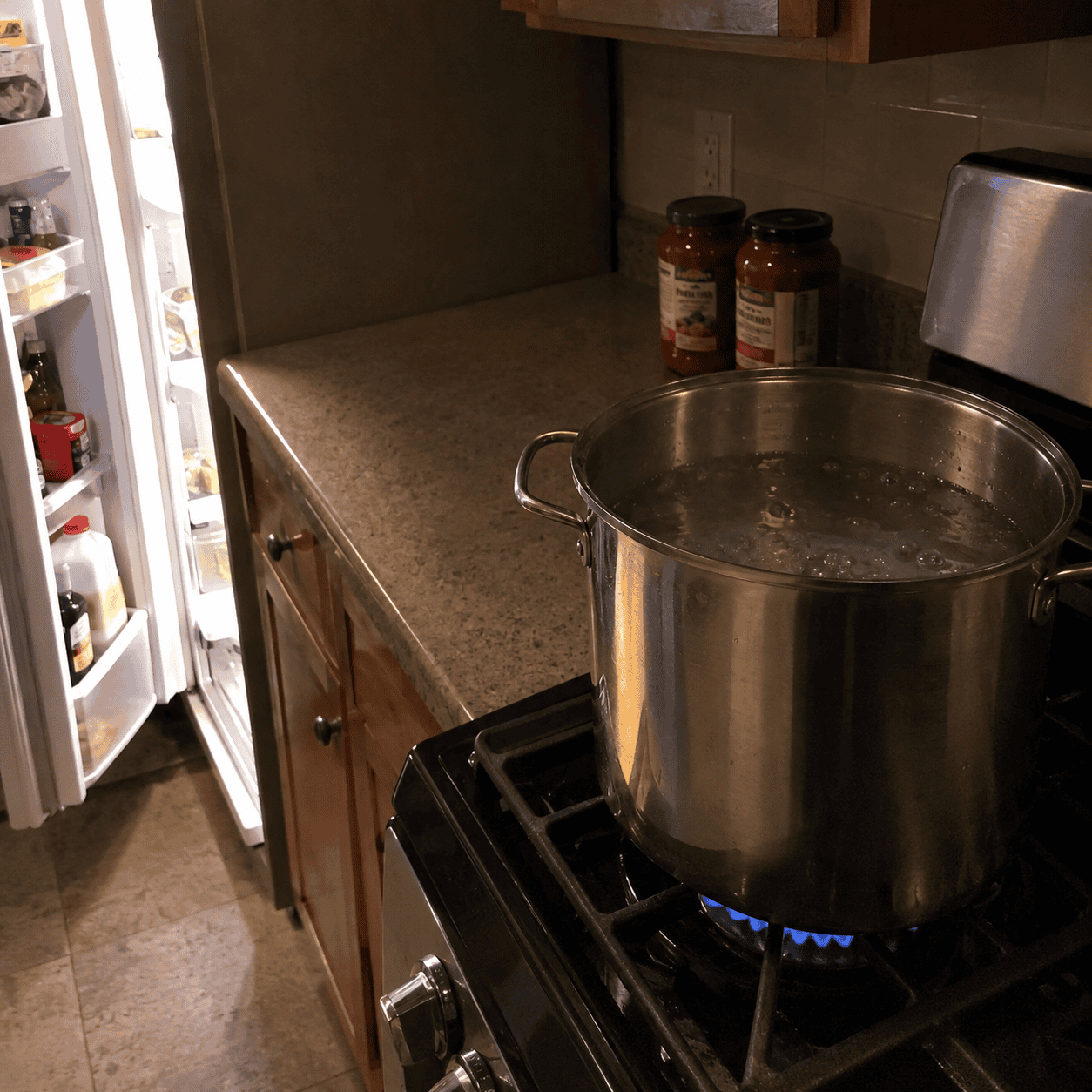
It’s a timing thing and it’s a faith thing.
She’d fill the big pot and light the burner while still deciding between two sauces. By the time she’d made up her mind, the water was ready and dinner was twelve minutes out.
I do this every single night. My husband thinks it’s a tic. It’s a system.
29. Sunday is not negotiable
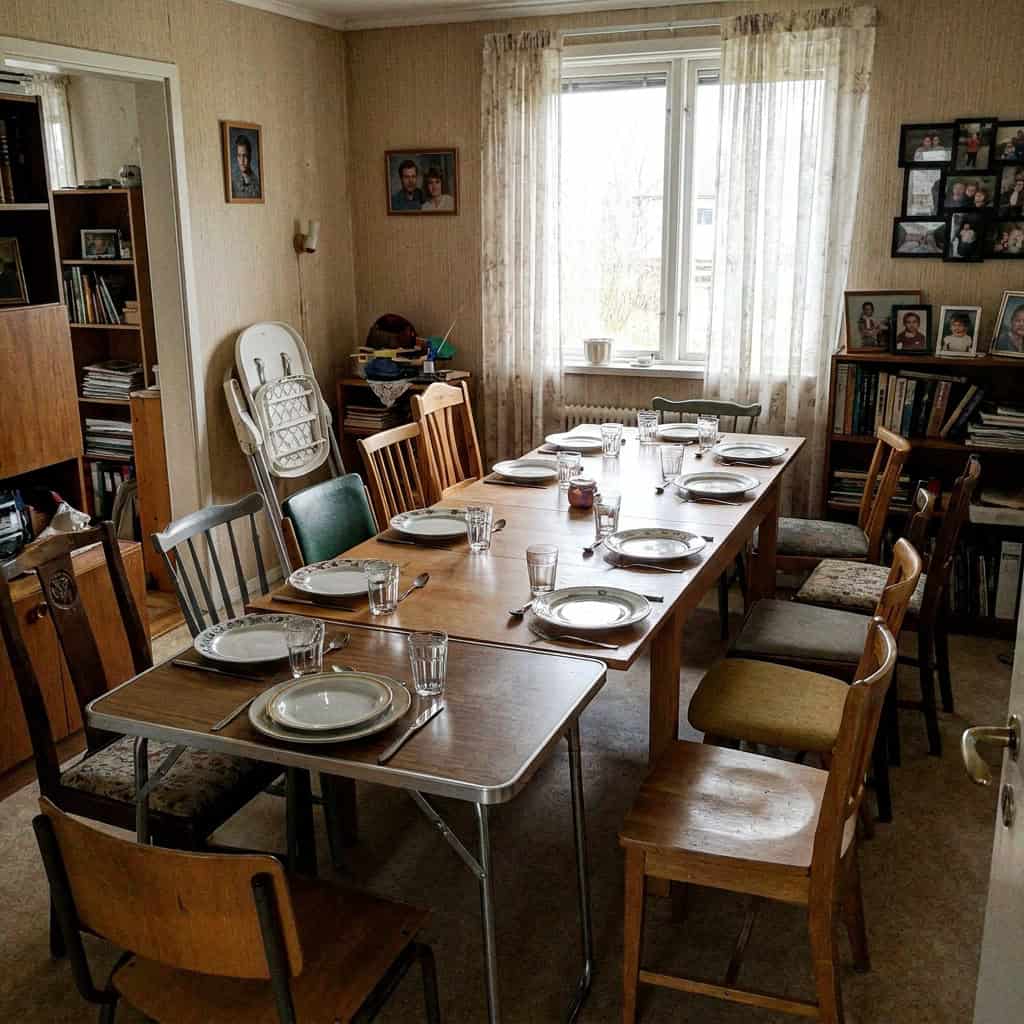
You could have plans. The plans came after two o’clock.
Everyone in a twenty-minute radius came, and the number at the table was never known in advance, which is why the pot was always too big. Cousins brought friends. Friends brought other friends.
We let that slip for a few years when the kids were in travel sports and I regret every single Sunday we skipped.
30. Dessert is fruit first, and then the real dessert
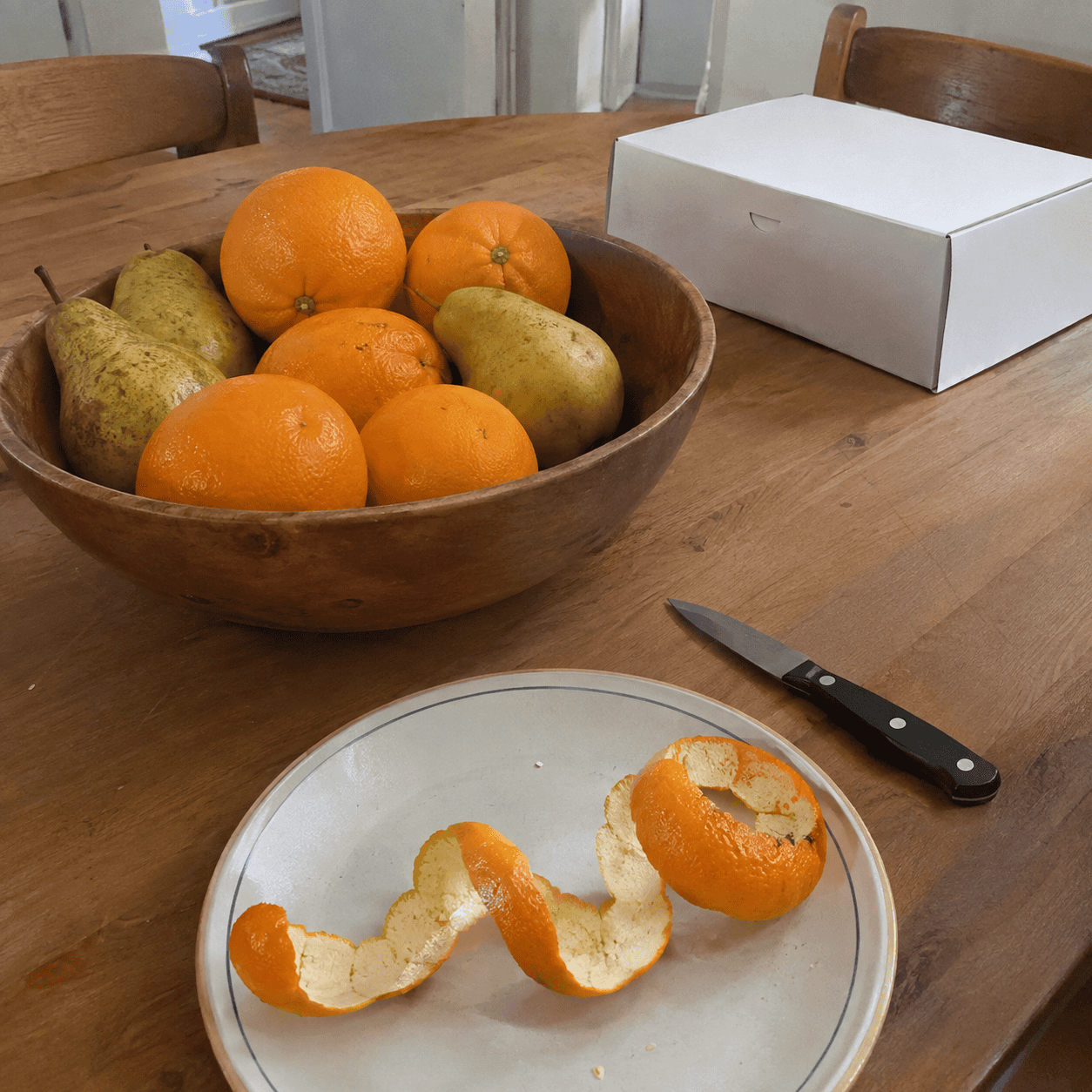
A bowl of whole fruit and a small knife came out before anything sweet.
Nonna peeled an orange in one piece as a party trick and ate it in sections while everybody else waited for the tray from the bakery. Fruit was the pause between the meal and the sugar.
Then came the cookies, the tiramisu, the thing someone’s wife made. Two desserts isn’t greedy. It’s sequencing.
31. You feed people when there’s nothing else you can do
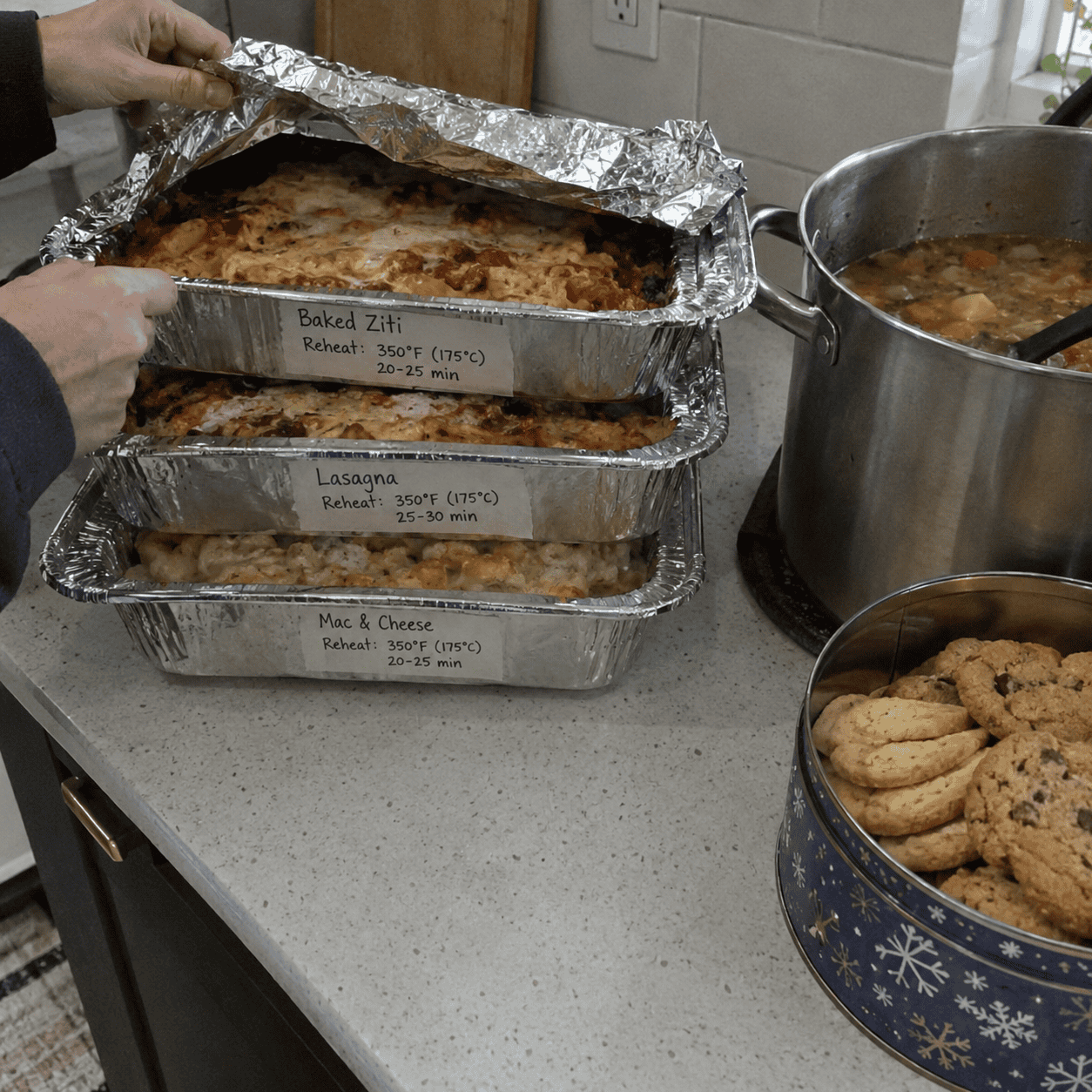
Somebody dies, somebody’s sick, somebody loses a job. You don’t call. You cook.
When my grandfather passed, the kitchen filled with aluminum trays within six hours and nobody had organized it. Three lasagnas, a ham, soup, and about nine pounds of cookies. Nonna, who could barely stand, was in there trying to make coffee for the people who’d brought the food.
That’s the whole thing, right there. Every other rule on this list is just the grammar of it.
Someone in your family is sick this week. Make the soup.
My kids break most of these and I let them, because the rules were never the point — the table was. But I still salt the water like the sea, and when I do, I’m nine years old on a chair in a rowhouse outside Philadelphia with somebody watching me do it right.
Keep a few. Break the rest. Just don’t eat standing up.
Buon appetito, Madeline