![Pink vintage Italian scooter, est. 2020. Italian [Brand Name] logo.](https://www.the-bella-vita.com/wp-content/uploads/2022/03/cropped-new-logo-2.png)
31 Things That Only Happen in an Italian Kitchen Once the Weather Turns
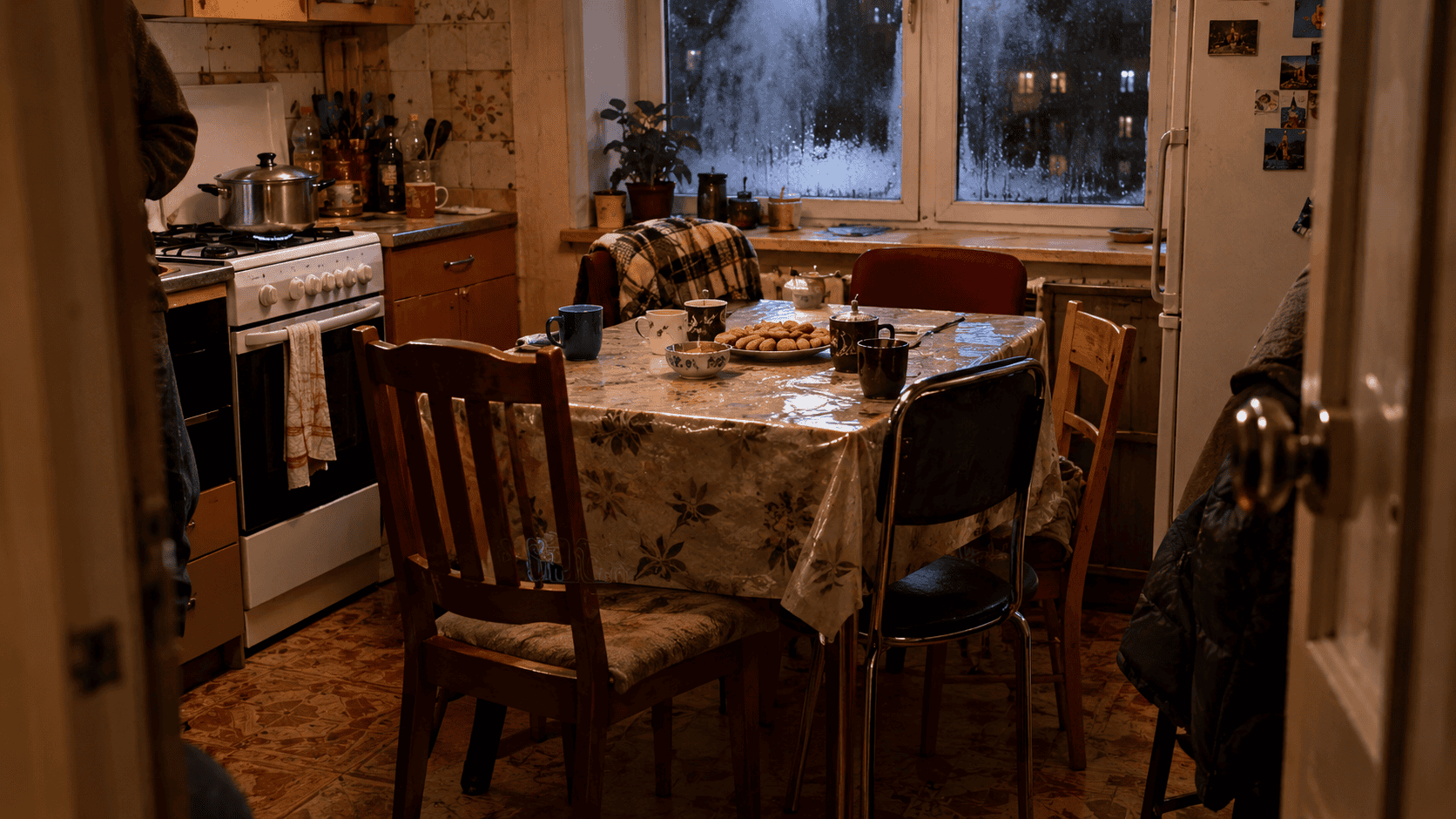
There’s a day in September when the air changes and my whole kitchen changes with it.
The windows come down. The big pot comes off the top of the cabinets. The basil on the back step starts looking tired and I start looking at it like a job that needs doing.
Nonna Pina never announced any of this. She just started acting differently — buying different cuts, running the oven for no reason, sending my grandfather to the cellar for jars. By the time I noticed, the season had already turned over without a word.
Now I do all of it myself, in a house outside Philadelphia, mostly without being asked. Here are 31 things that only happen in an Italian kitchen once the weather turns.
1. Sauce Day Ends and the Jars Go Downstairs
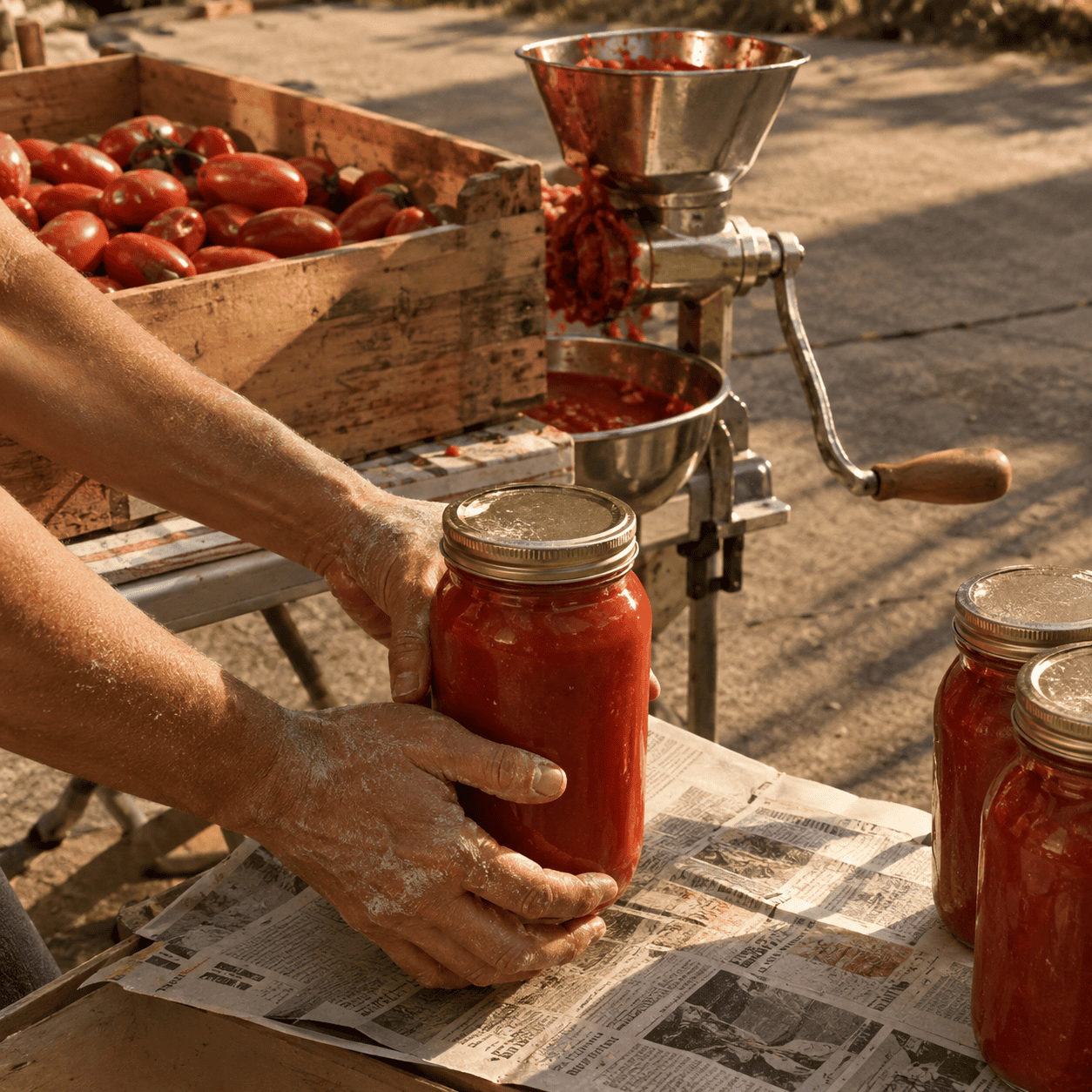
The year doesn’t drift into fall. It flips, on one specific Saturday in late August or early September, when the plum tomatoes come in by the crate and the propane burner goes out on the driveway.
My grandfather bolted the hand-crank mill to a folding table. Everyone had a station. The kids pulled stems, which is the job you get when you can’t be trusted with anything hot.
By dark there were jars cooling on sheets of newspaper, and by Sunday they were on the cellar shelves. The Appetito crowd calls it the passata tradition. In our house it was just counting: eighty-six jars one year, sixty-two another, and sixty-two meant a nervous February.
That count was the family’s security blanket. Once the jars were down, winter could come.
2. The Oven Becomes the Furnace
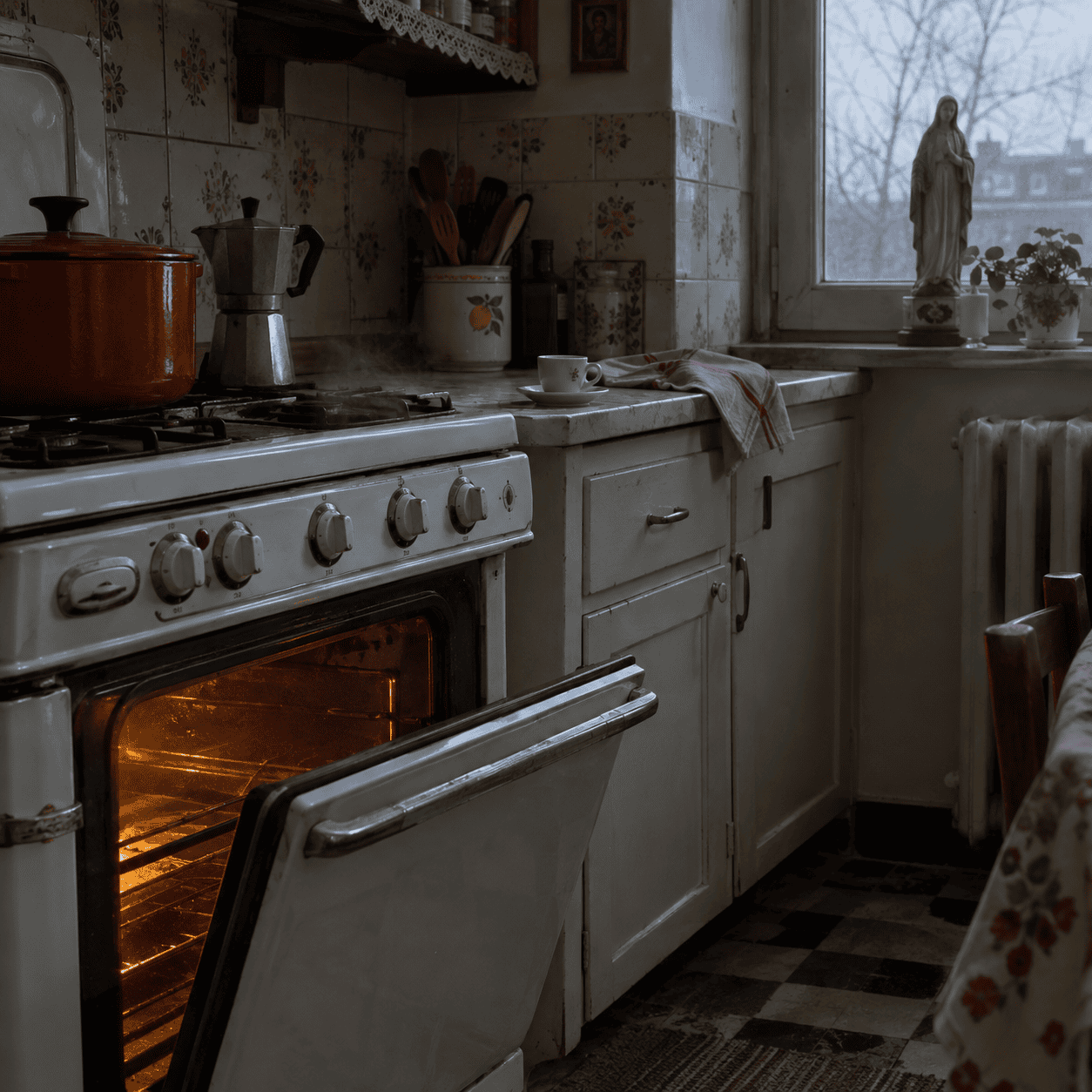
Nobody touches the thermostat in October. You bake something instead.
A tray of peppers, a loaf, a pan of potatoes nobody asked for. Then the oven goes off and the door gets cracked open, and the kitchen runs ten degrees warmer than the rest of the house until bedtime.
My mother used to stand in front of it with her coffee and her sweater on, insisting she wasn’t cold. Nobody believed her. The heat didn’t go on until my father’s own feet were cold, which was usually November 1st.
3. Sunday Gravy Goes Back to the All-Day Simmer
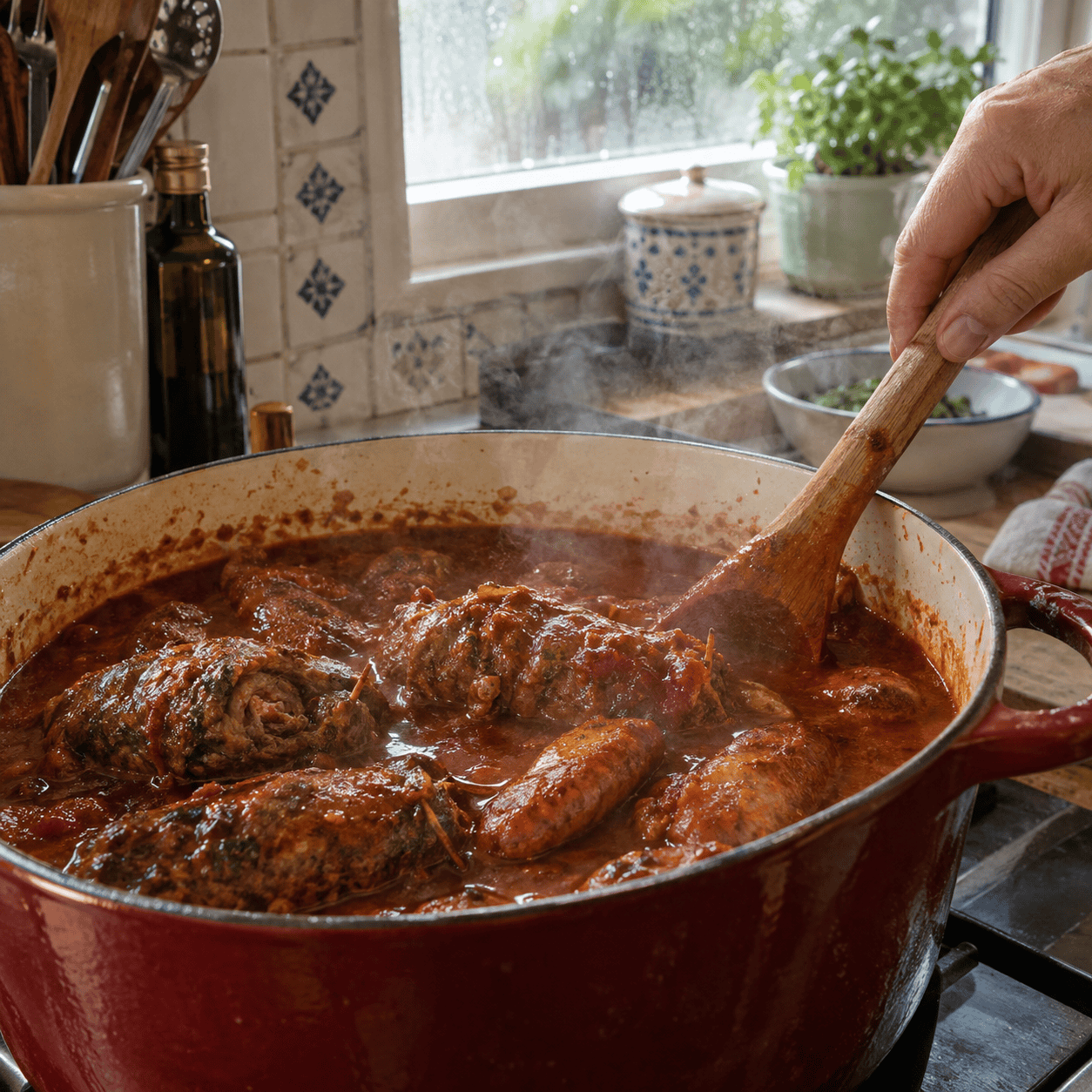
Summer sauce is fifteen minutes and a handful of basil. Cold-weather sauce is a different animal entirely.
Braciole rolled and tied Saturday night. Sausage browned first, pork neck bones in after, meatballs going in last so they don’t fall apart. Eight in the morning to two in the afternoon, lid half on.
The Sunday gravy ritual as we know it is mid-century Italian-American, not Old Country, and it’s strictly cold-weather work. You can’t run a six-hour pot in August without driving everyone out of the house.
And yes, we call it gravy. My cousins in Jersey call it sauce. We have not resolved this and we’re not going to.
4. Crates of Grapes Come Through the Cellar Window
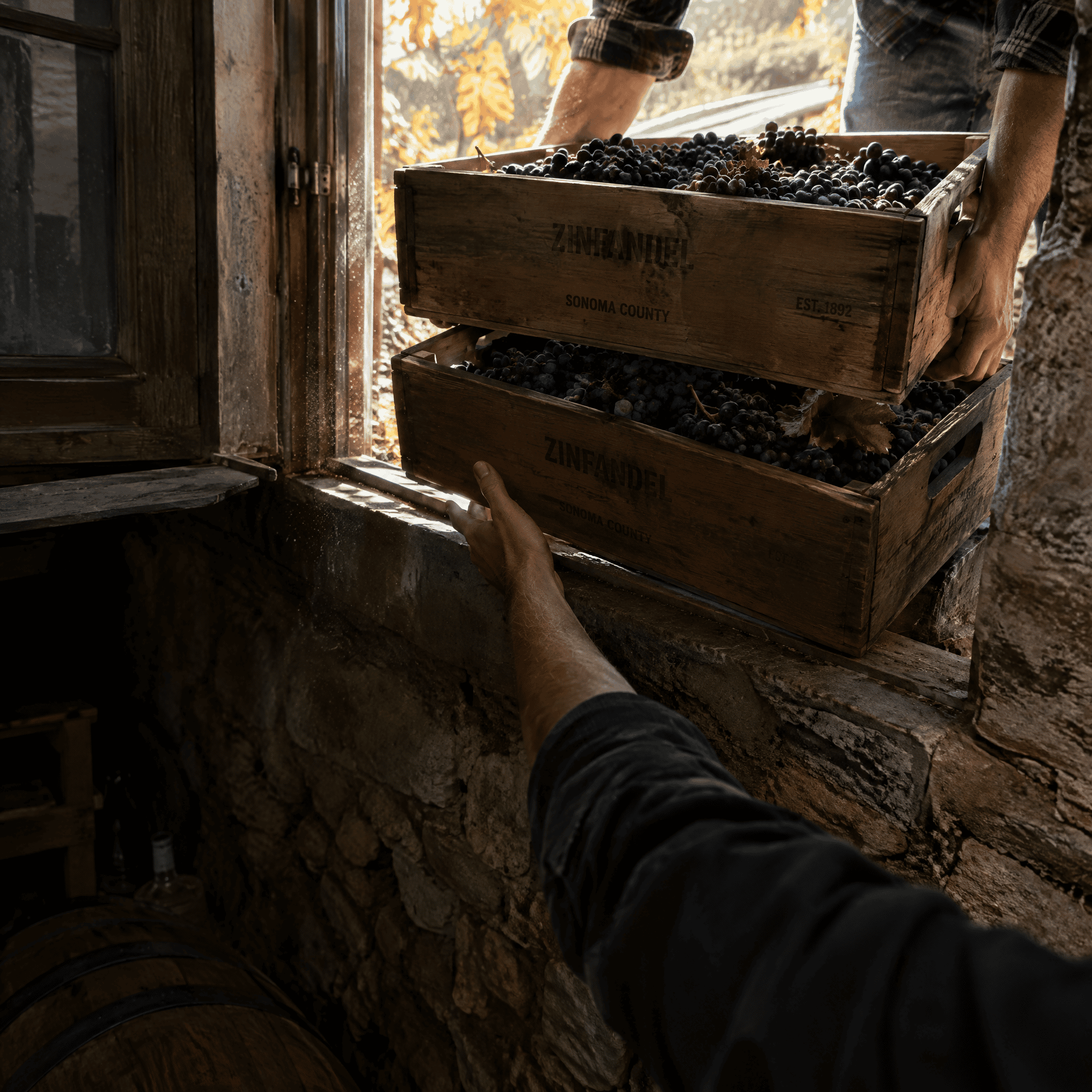
Late September, a flatbed pulls up and the wooden boxes start going through the basement window one at a time.
Sixty, seventy crates of zinfandel from California, which is how the fruit wholesalers sold it. Home winemaking was so ordinary in Italian neighborhoods that regional manufacturers built crushers and presses for the home market.
The whole house smelled like fermenting fruit until Thanksgiving. Sweet at first, then sharp, then sort of alarming.
My grandfather poured his into gallon jugs and gave them away at Christmas with the label of whatever the bottle used to be. You drank it. You said it was good.
5. The Last of the Basil Gets Stripped Before the First Frost
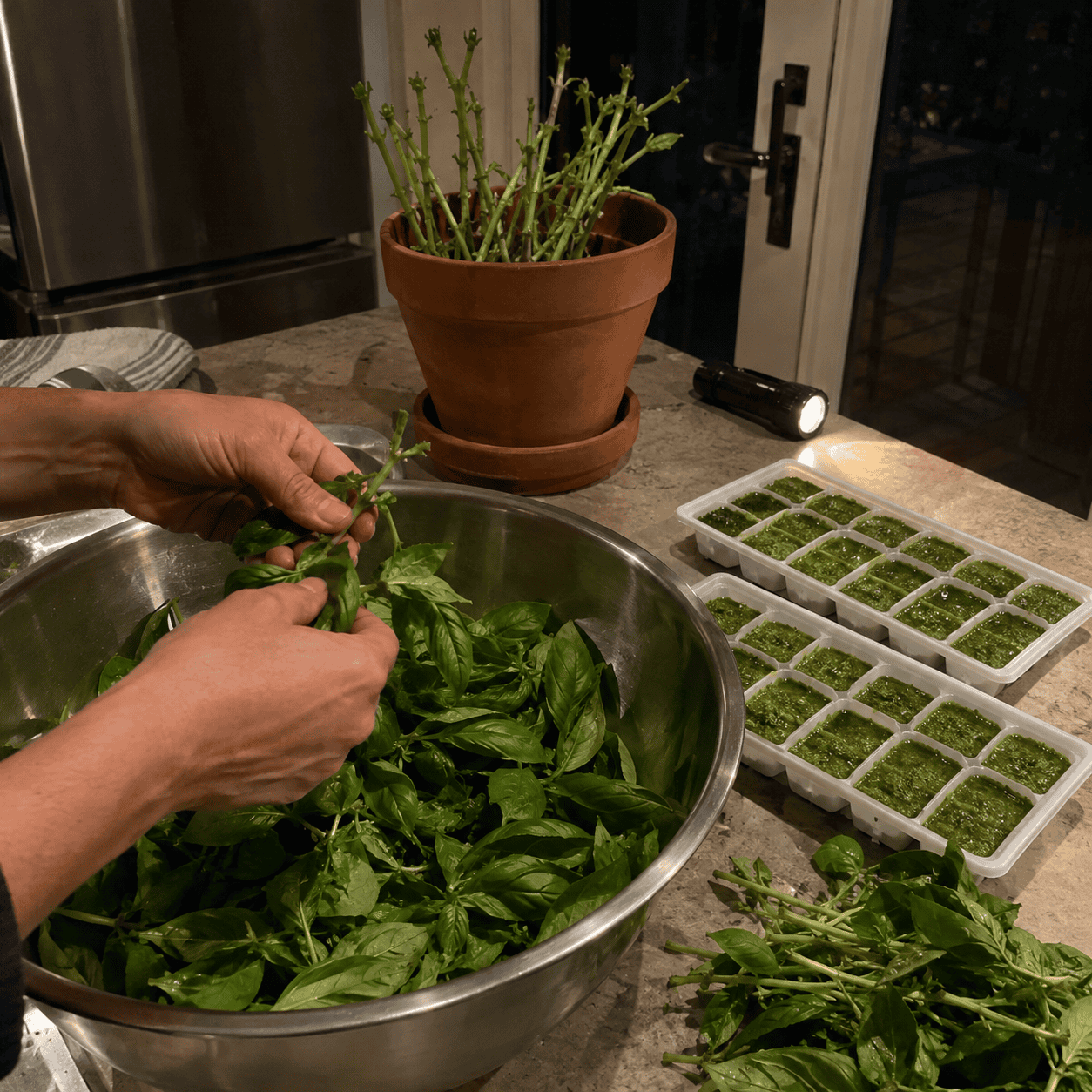
The weather guy says frost warning and the night gets ruined.
Flashlight, big bowl, out to the plants in a bathrobe. Every leaf comes off, because by morning they’ll be black and slimy and it’s over.
Then it’s nine o’clock and the kitchen is a pesto factory — mortar going, garlic everywhere, ice cube trays lined up on the counter. Those little green cubes in a freezer bag are the proof that summer actually happened.
Come February you drop two in a pan and the smell takes you right back to July. Worth the bathrobe. If you’ve got more leaves than freezer trays, there are a dozen other ways to use up fresh basil before it turns.
6. Escarole and Beans Comes Back Into Rotation
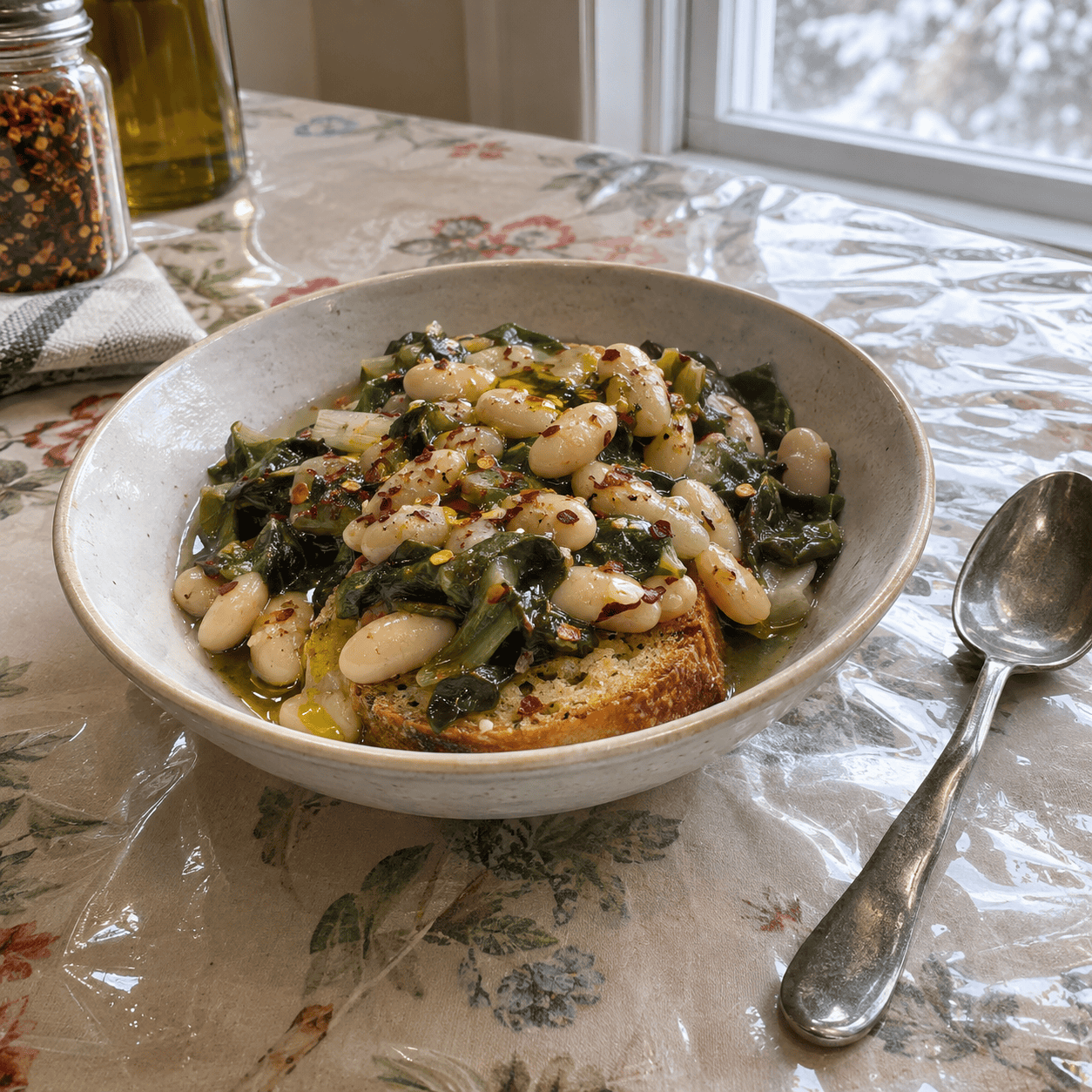
Nobody eats beans and escarole in July. It would be insane.
But the week the furnace kicks on, it’s back, twice a month until March. Cannellini, a lot of garlic, red pepper flakes, escarole wilted down into the pot at the end.
It’s Campanian peasant food, built out of almost nothing, and it costs about four dollars to make. My aunt serves it over a slice of toasted bread rubbed with garlic and calls that dinner.
It is dinner.
7. The Fig Tree Gets Wrapped Like a Mummy
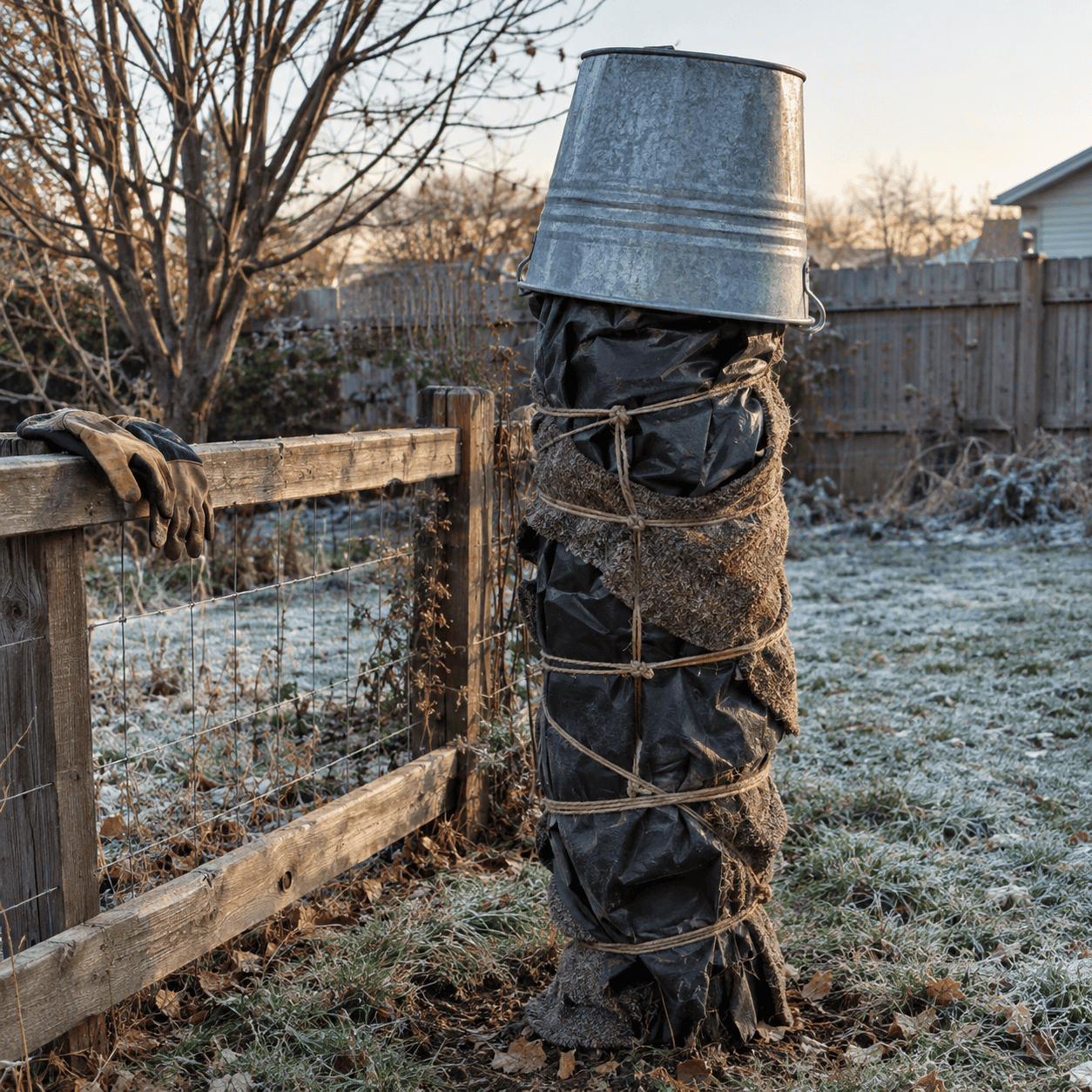
Late November, the fig tree in the backyard gets tied up tight, wrapped in tar paper and old carpet, stuffed with leaves, and capped with an upturned bucket.
Some men bent the whole tree over and buried it in a trench. My grandfather thought that was showing off.
The neighbors thought he was crazy until February, when there was fig jam on the table and nobody had bought a fig.
8. The Big Pot Comes Down From the Top of the Cabinets
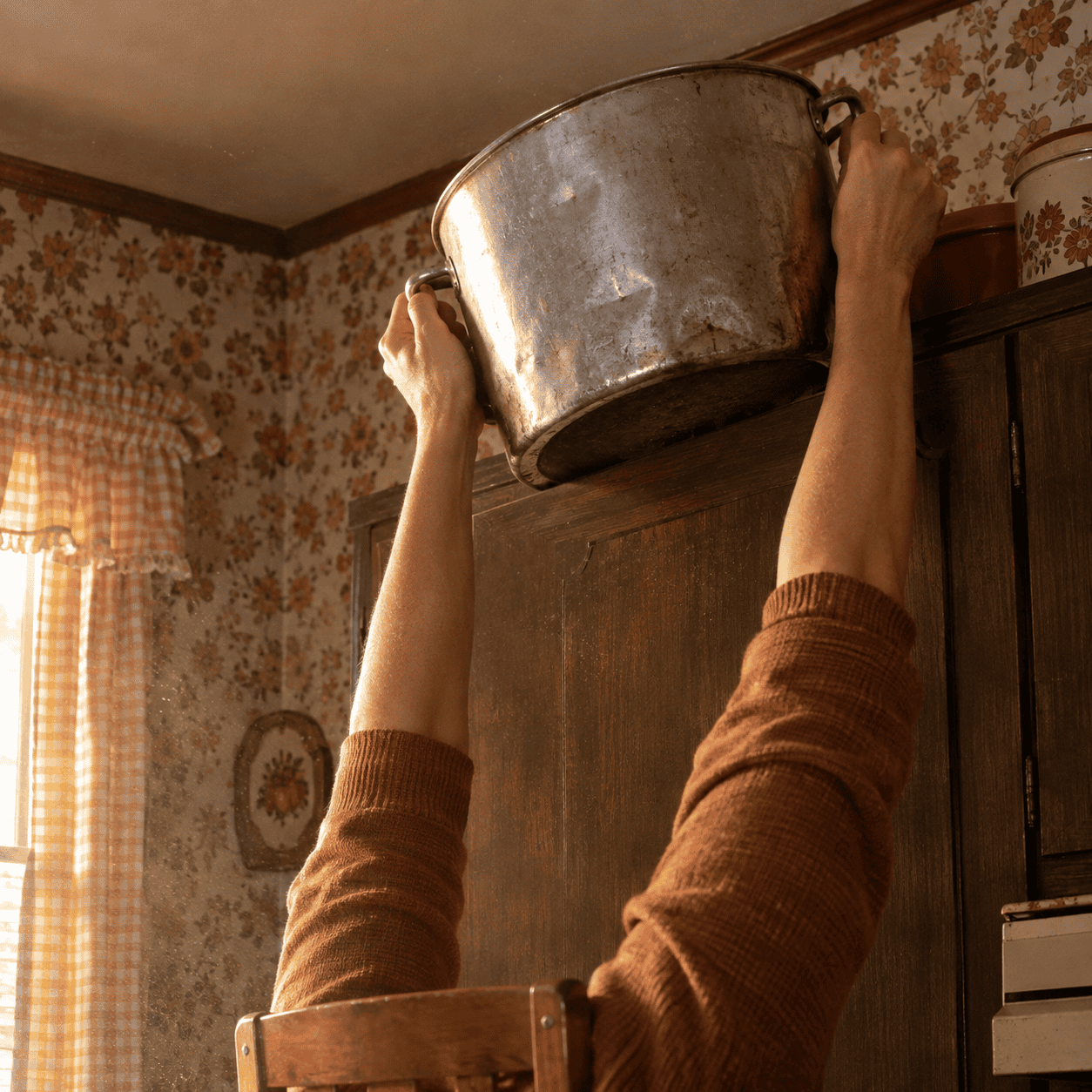
Every Italian kitchen owns one pot too tall for the stove with the hood on. It lives above the cabinets nine months a year collecting dust and grease.
Getting it down requires a chair and a bad word.
Once it’s on the burner, the season is officially open. Soup, gravy, brodo, whatever. Nobody puts it back until Easter.
9. Soffritto at Nine in the Morning
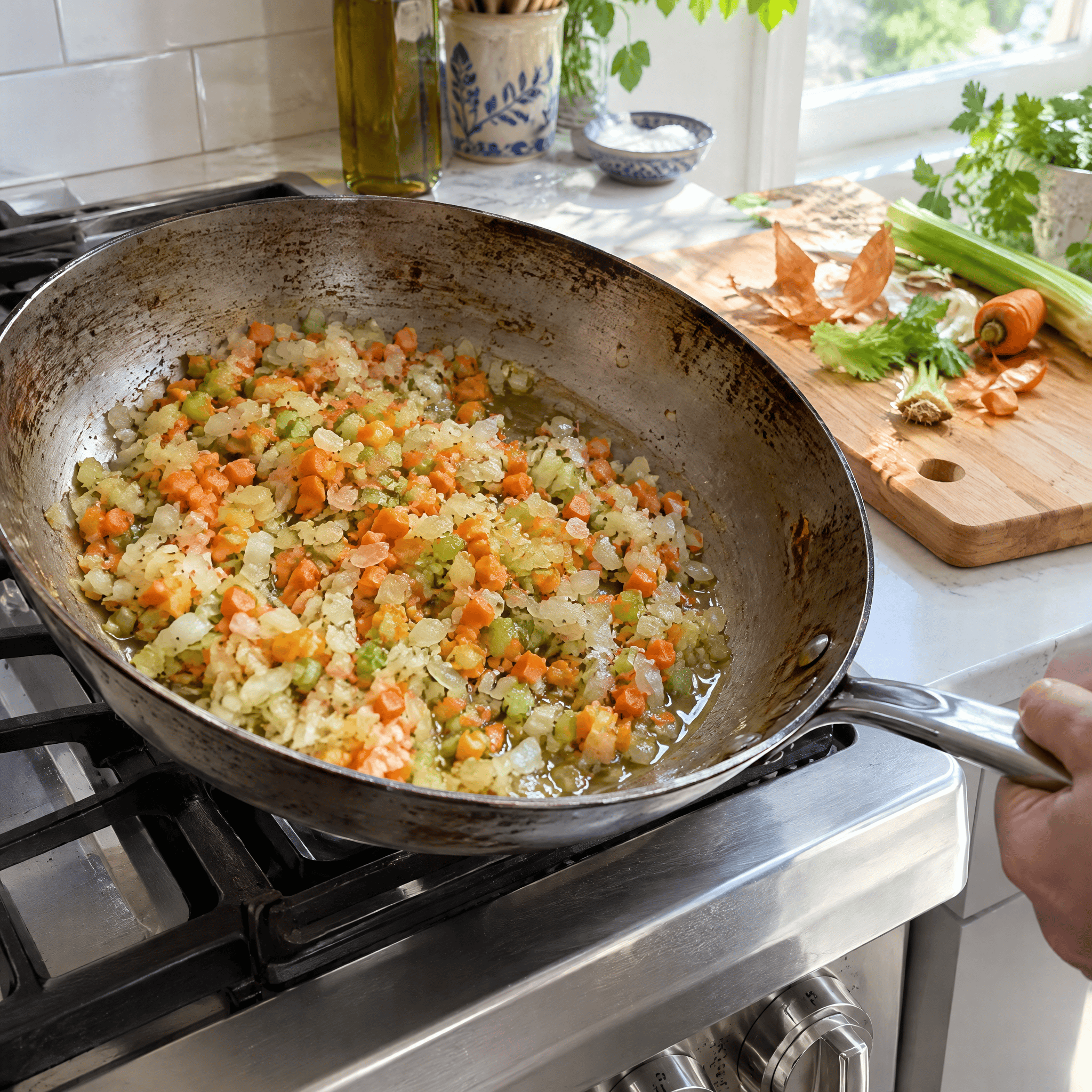
You come downstairs on a Saturday and the smell hits you before the coffee does.
Onion, carrot and celery, diced small, going slow in olive oil. Not browning. Sweating.
That smell is a promise that something is going to cook for six hours and you should not make other plans. I still start almost everything this way — the soffritto is the whole foundation, and rushing it is the fastest way to a flat pot of soup.
10. Peppers and Eggplant Go Under Oil
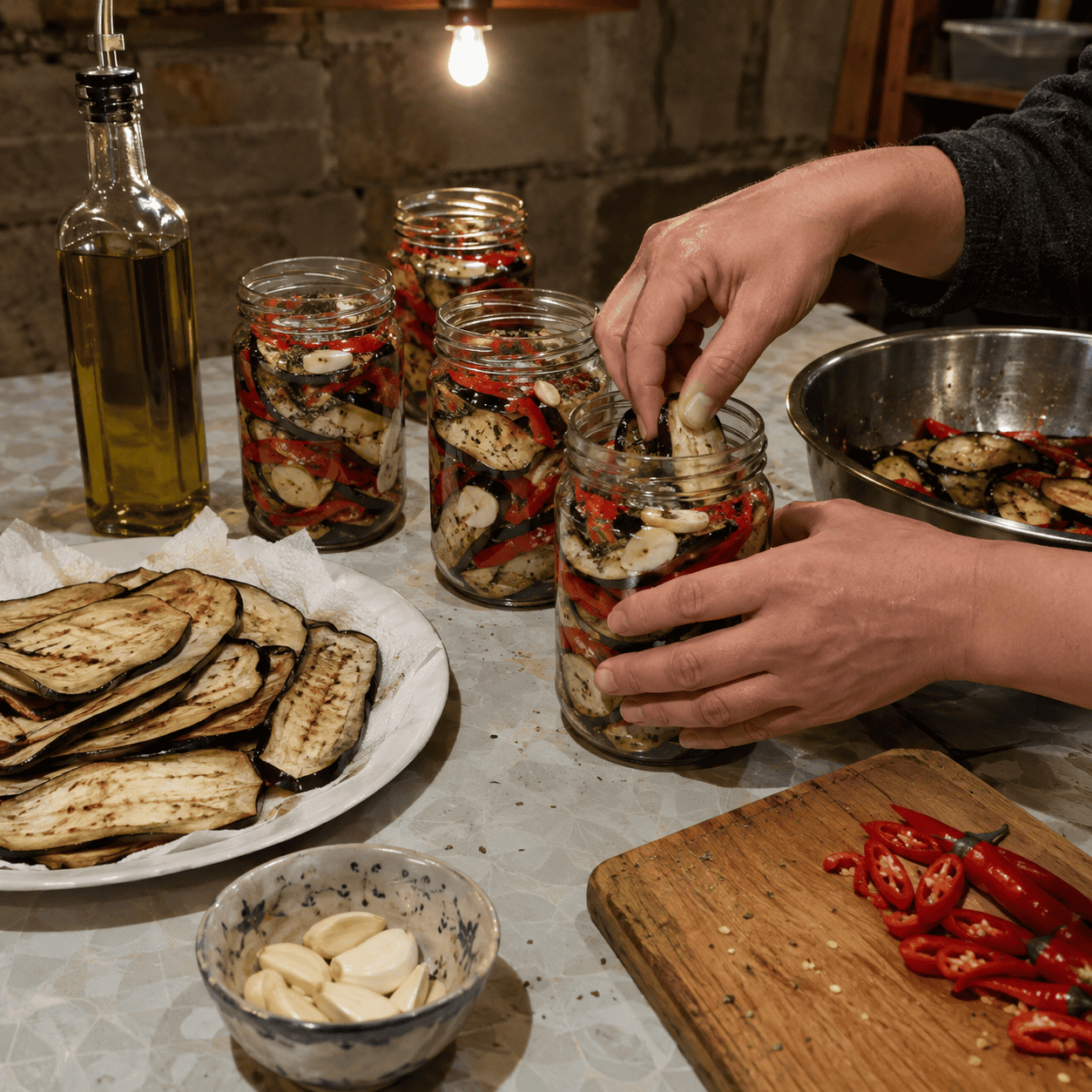
The garden gets cleaned out and whatever’s left goes sott’olio.
Hot peppers, eggplant sliced thin and pressed, mushrooms, sometimes little artichokes. Salt, vinegar, dry them out, pack them in jars with oregano and garlic, cover with oil.
Those jars go to the cellar and nobody touches them until Christmas Eve, when they get opened for the antipasto and somebody says these came out better than last year.
Somebody says that every single year.
11. The Basement Kitchen Reopens for Business
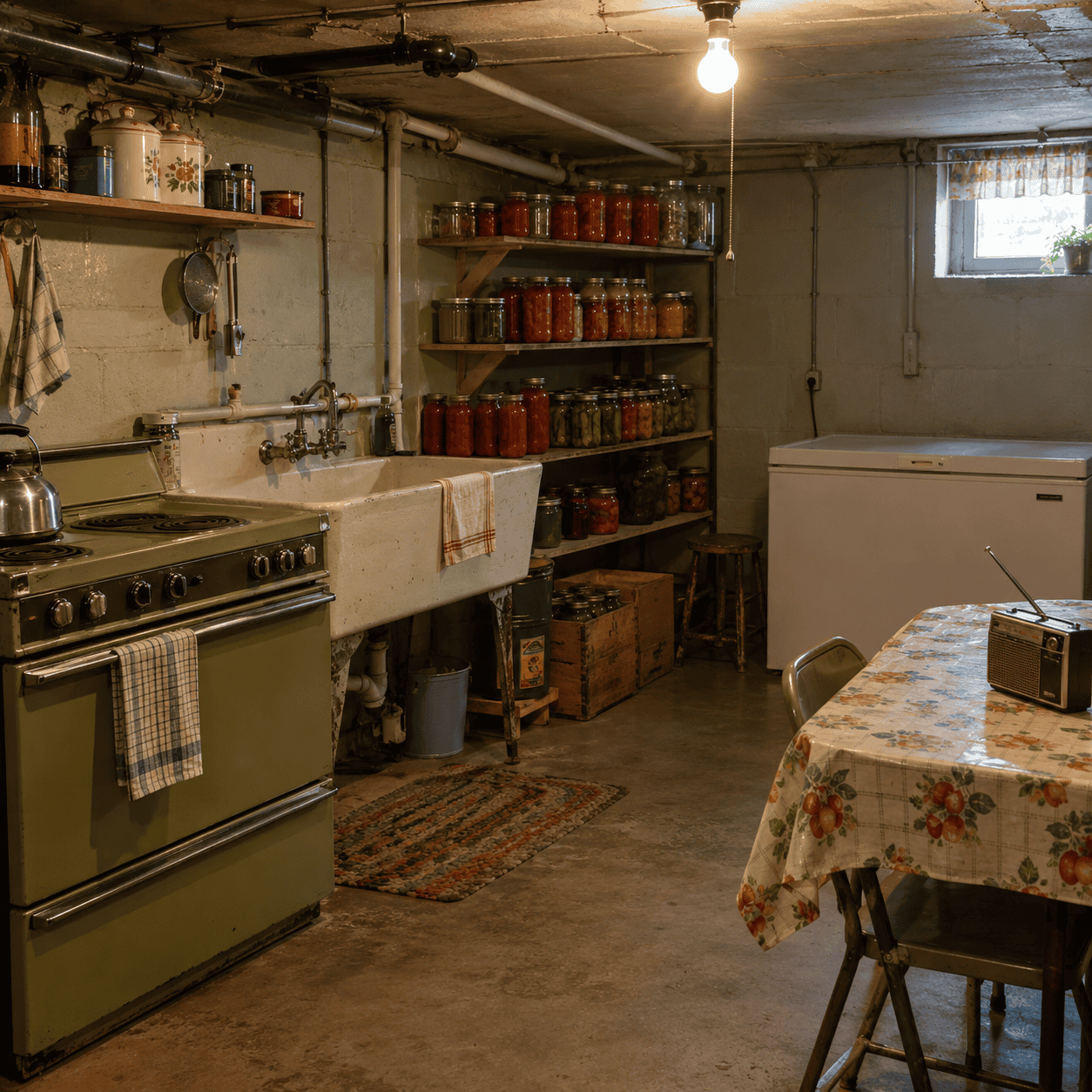
If you grew up in an Italian-American house, you know the upstairs kitchen was mostly for show once October hit.
The real one was downstairs. Concrete floor with a drain in it. A second stove, usually an old one that got replaced upstairs in 1978 and was too good to throw out. A deep utility sink, a chest freezer humming in the corner, a folding table with a vinyl cloth, and a bare bulb on a pull chain.
Everything heavy, splattering or smelly happened down there. Frying cutlets. Boiling jars. Rendering fat. Anything that would leave a film on the good curtains upstairs.
There were always shelves of canned tomatoes along one wall and a line of nails in the joists for hanging things. The whole room smelled like cold stone, vinegar and oregano, and it never fully warmed up, which was the point — the Sons and Daughters of Italy have written about how the cellar was where families gathered to bottle up the year, and that’s exactly the feeling.
My grandmother kept a transistor radio down there tuned to an Italian-language station out of South Philly. Nobody listened to it. It just played.
And nobody ate down there. You cooked downstairs, you carried it up.
12. The Chestnut Pan With the Holes Comes Out
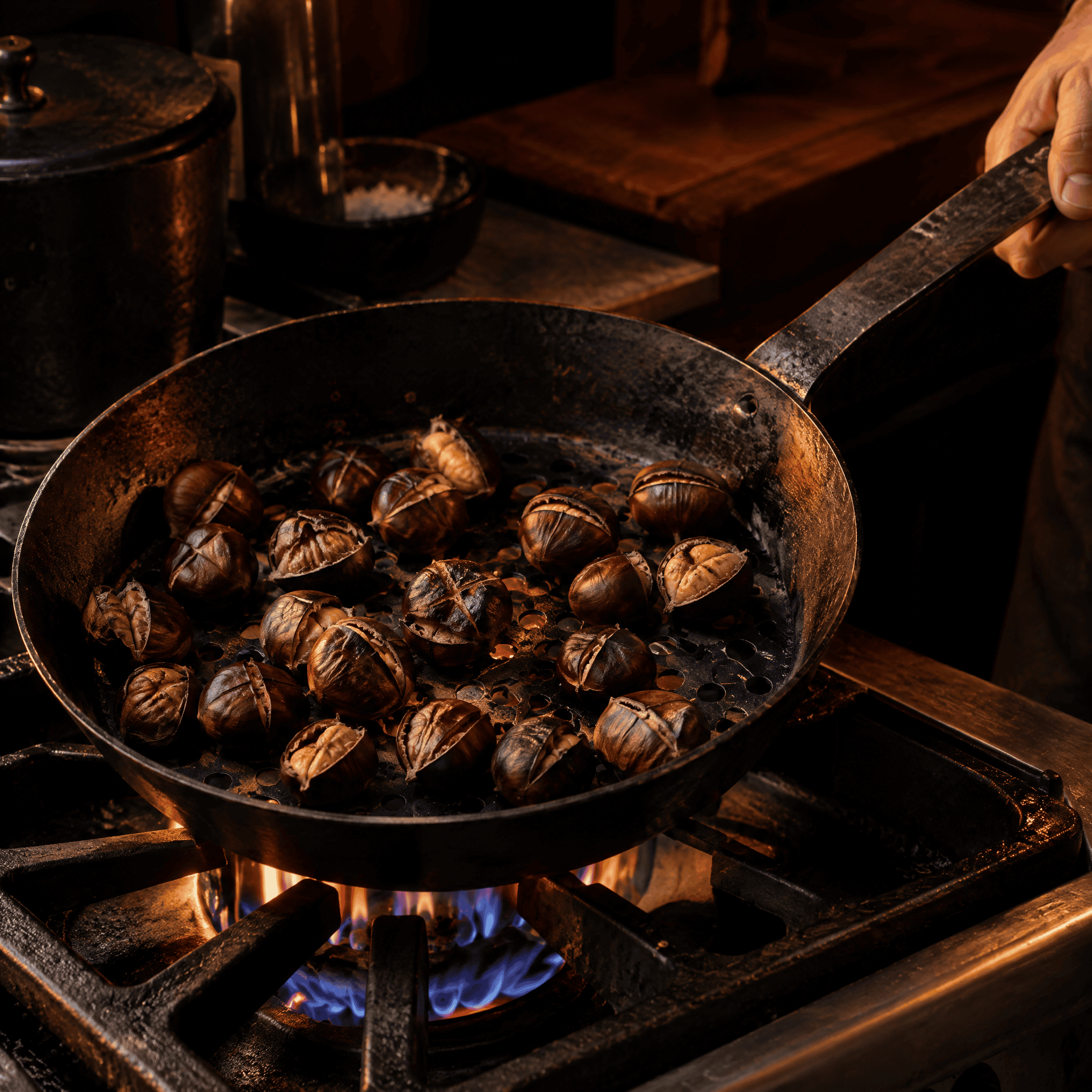
Long handle, holes punched in the bottom, black with fifty years of use.
You score an X in each chestnut so they don’t blow up in your face, then shake the pan over the flame until the shells split and curl back. Chestnuts are still Italy’s winter street snack, and in the hill towns the autumn castagnata festivals are built around them.
Nothing else has ever been cooked in that pan. It would be wrong.
13. The Butcher Order Changes to Bones and Cheap Cuts
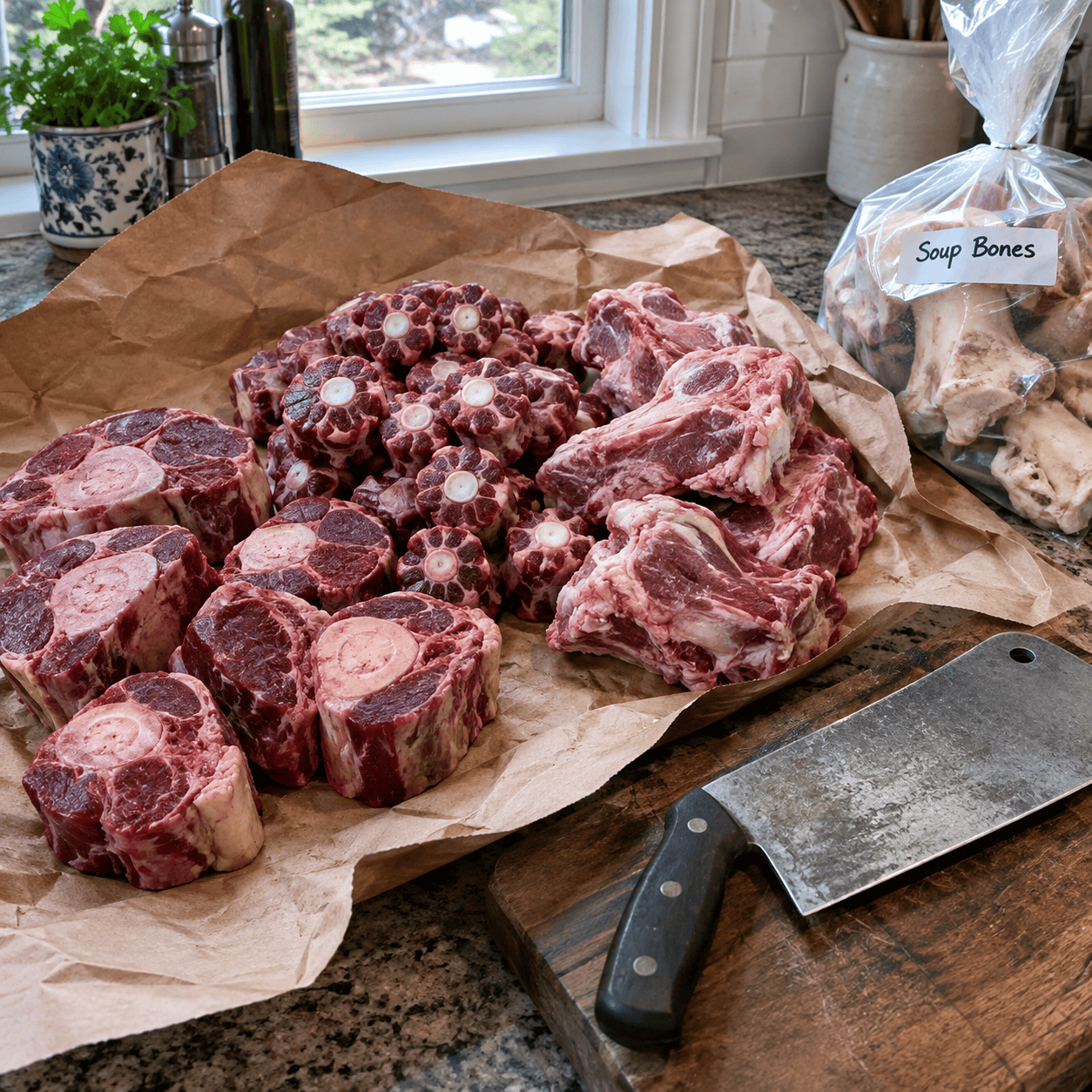
First week it stays under fifty degrees, the order changes without discussion.
No more cutlets and chops. Now it’s neck bones, shanks, chuck, oxtail, and a bag of soup bones the butcher used to throw in free.
Cold-weather Italian cooking is entirely built on cuts that need three hours and a lid. The cheap stuff gets good and the expensive stuff gets dry.
Ask for the bones. They still have them in the back.
14. Broccoli Rabe Suddenly Tastes Better
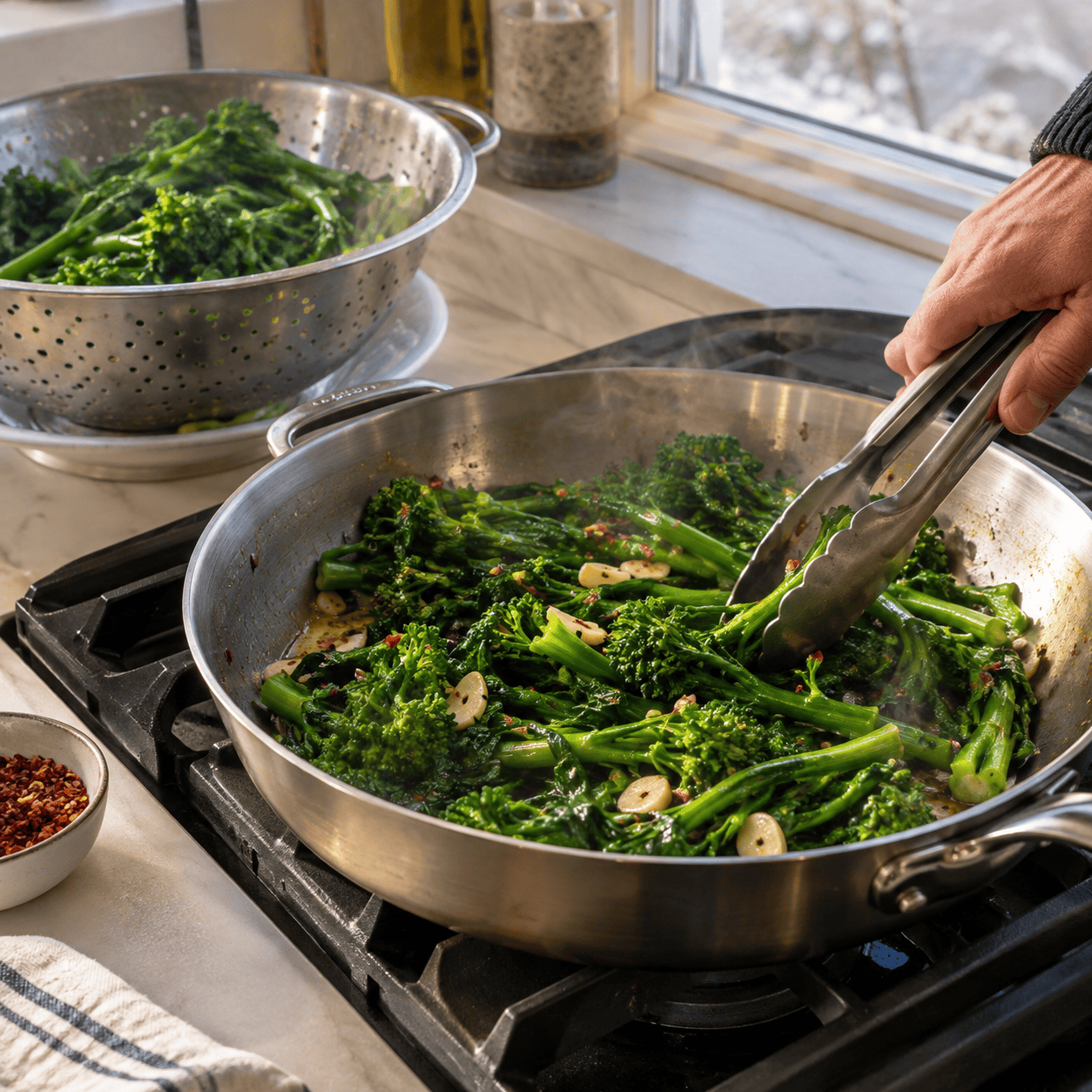
It’s not your imagination. Frost actually sweetens bitter greens — the plant converts starch to sugar to protect itself.
So rabe, escarole and cime di rapa in November taste like a different vegetable than the harsh stuff in September.
Garlic, oil, red pepper, a splash of the blanching water. Three nights a week from Thanksgiving to March, next to a pork chop or crammed into a roll with sausage.
15. Sausage and Soppressata Day
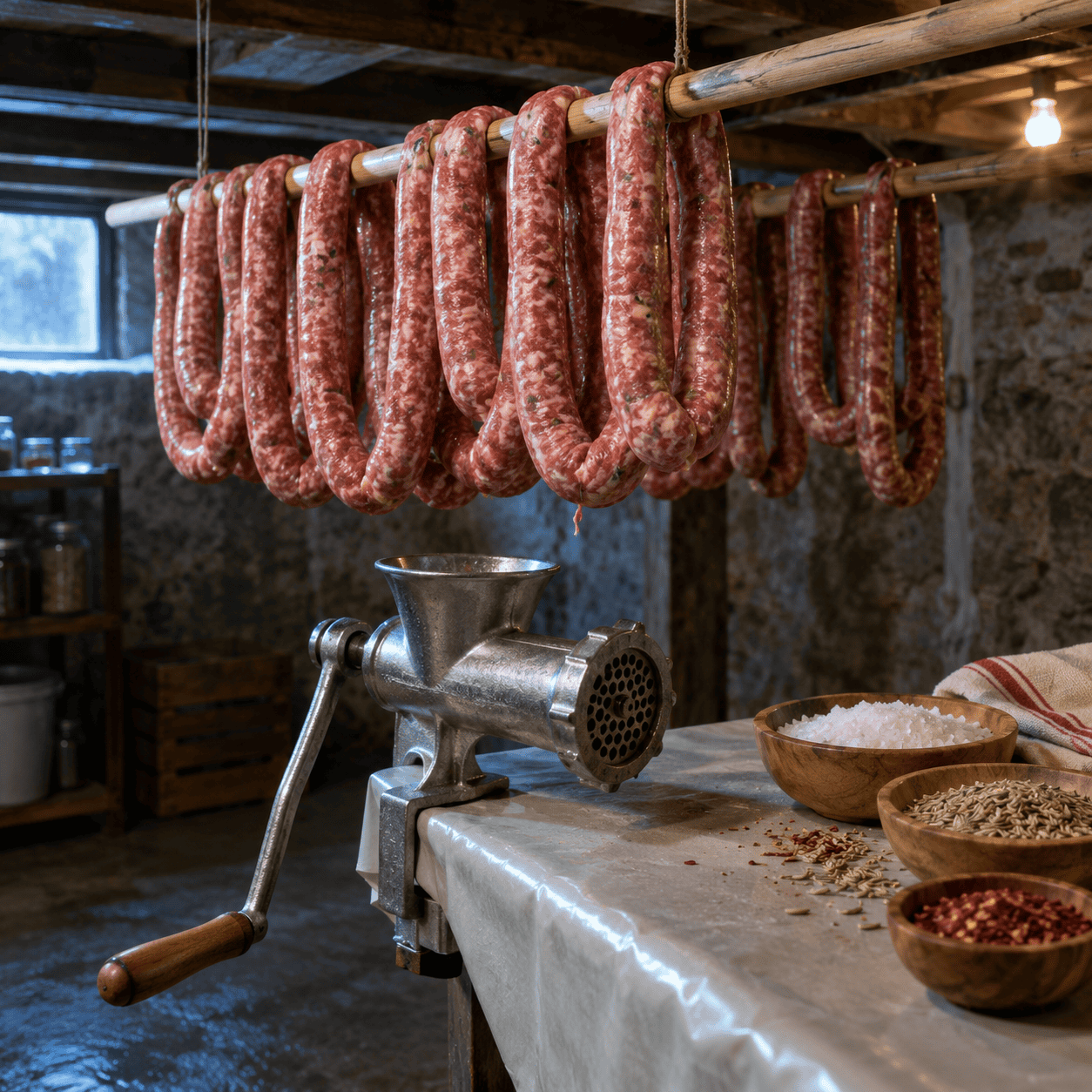
This one is weather, pure and simple. You can’t cure pork in a warm damp house, so the work waits for a cold, raw cellar — usually right after Christmas.
A whole pig’s worth of shoulder would show up and the day ran like a factory. My uncles ran the grinder. My grandfather handled the seasoning, by eye, with a bowl of coarse salt, cracked fennel, black pepper and crushed red, and he refused to tell anyone the proportions because there weren’t any.
Somebody’s job was rinsing the casings. That was the job nobody wanted and it usually went to whichever teenager had mouthed off most recently.
Then the stuffing, the tying, the pricking with a pin to let the air out. Links went on dowels hung from the floor joists, and for the next six weeks you walked under a ceiling of drying sausage every time you went down for a jar of tomatoes.
They’d fry a little patty of the raw mix first to taste for salt. That patty on a piece of bread, standing up at the table at eleven in the morning, is one of the best things I’ve ever eaten.
Fewer families do this now, and the ones that do have thermometers and humidity gauges my grandfather would have laughed at. He went by how the cellar wall felt.
16. Pasta e Fagioli Made Entirely by Feel
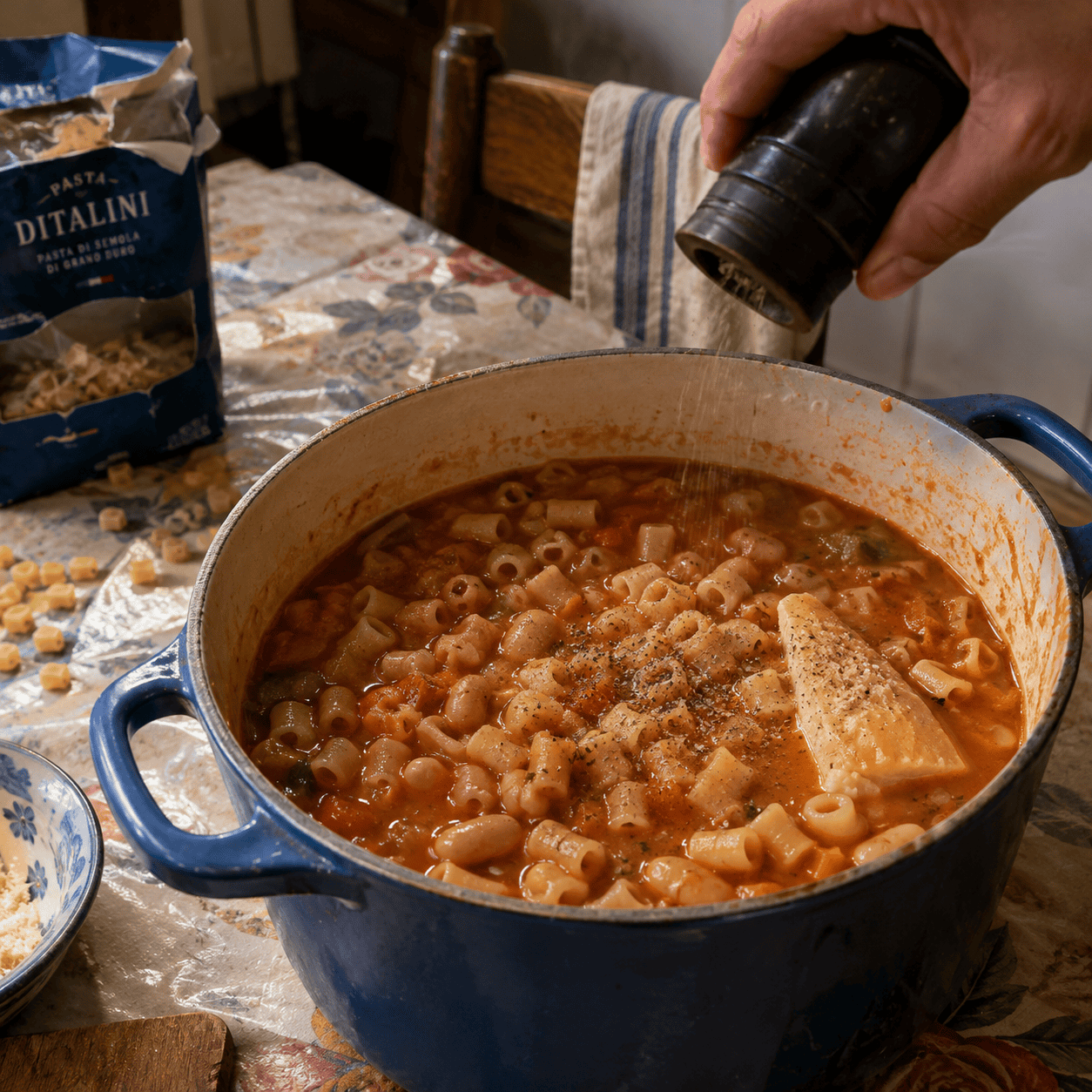
There was never a recipe. There is still no recipe.
Soffritto, a can of beans or the ones you soaked, a parmesan rind, water or broth, and whatever small pasta is loose in the cabinet — ditalini, broken spaghetti, those odd ends from three different boxes.
Thick or brothy depends on the house, and people will argue about it at a funeral. My version of pasta fagioli leans thick enough that the spoon stands up, which my husband’s family considers a personal insult.
Nobody makes it the same way twice. Everyone insists theirs is correct.
17. The Unheated Porch Becomes a Second Refrigerator
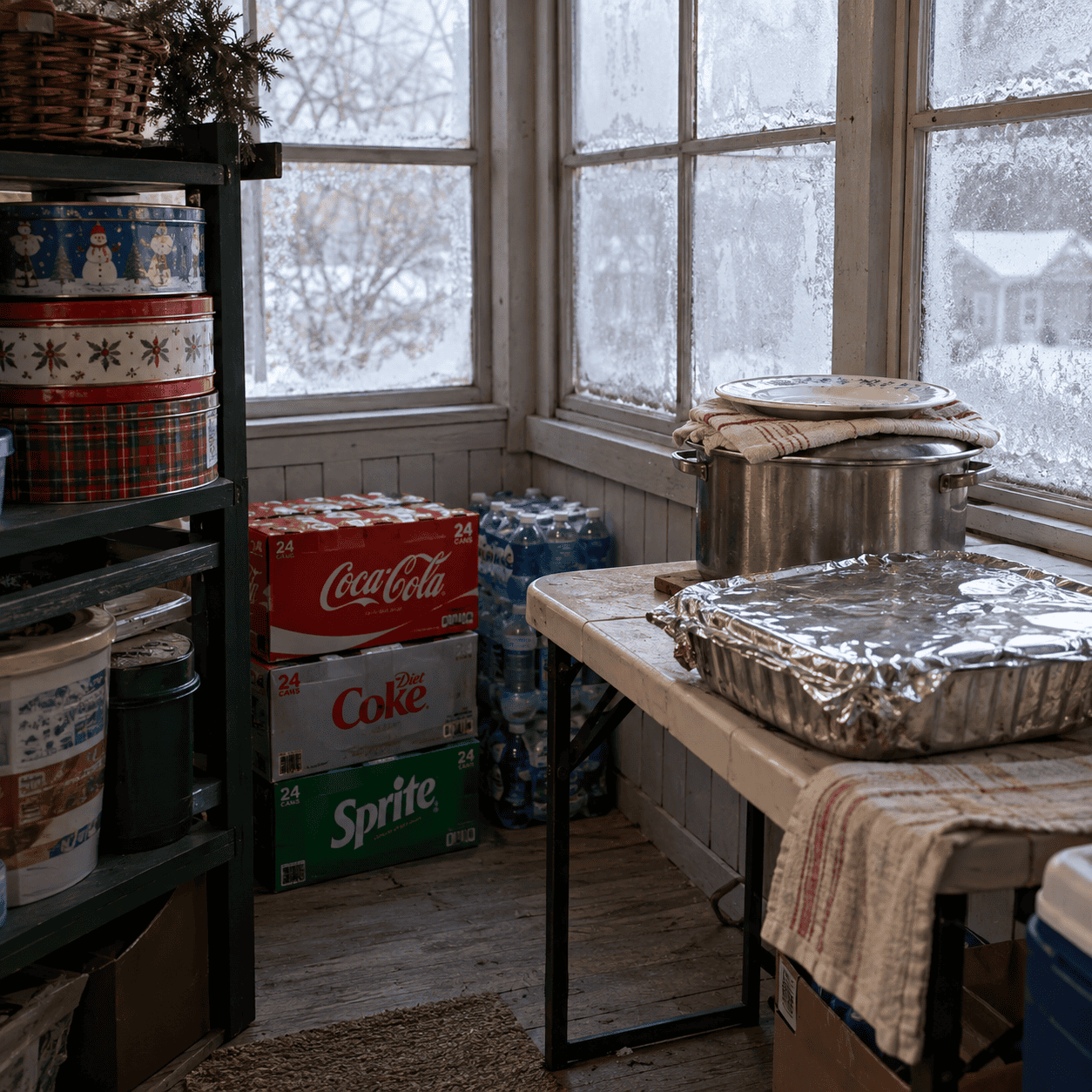
Around the second week of November, the back porch stops being a porch.
It holds steady around forty degrees out there, which is refrigerator temperature, and a refrigerator is exactly what it becomes. Stockpots of gravy with the lid weighted down. Trays of cookies in tins stacked four high. Cases of soda, jugs of wine, a turkey thawing in a roasting pan, a bowl of dough covered with a dish towel.
My grandmother staged entire holiday meals out there. The baked ziti sat on the porch overnight before Christmas because there was no room anywhere else, and in the morning it went straight into the oven cold.
Rules applied. Everything covered, because of the cats and because of my uncle. Nothing went out there until the overnight lows were reliably in the thirties, and the first warm snap in March sent everyone scrambling.
Some families used the garage. Some used the cold cellar, that one unheated corner of the basement with a vent to the outside that stayed cool year-round. Same idea, older than refrigeration, and it’s why those old row houses were built with a cold pantry on the north wall in the first place.
I still do it. My kitchen fridge cannot hold a twenty-quart pot and the porch doesn’t charge rent.
18. Polenta Gets Poured Straight Onto the Board
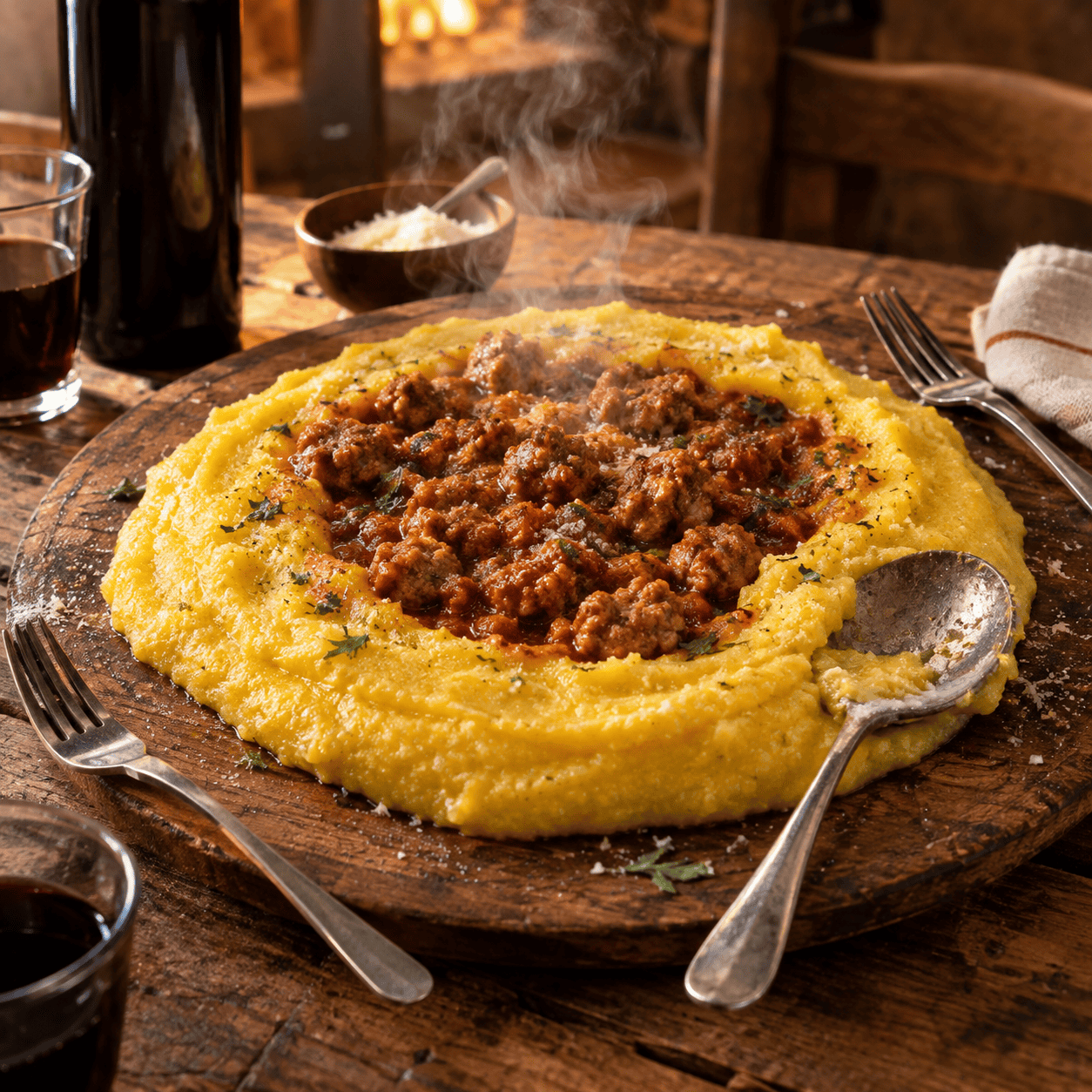
Up north polenta isn’t a side dish, it’s survival food, and the old way of serving it doesn’t involve plates at all.
You pour it hot onto a big wooden board, spread it out with a wet spoon, let it set a minute, then spoon sugo and sausage into the middle. Everyone eats toward the center from their own edge.
The board has no other job. It hangs on a nail the rest of the year.
Elbows out. Work fast.
19. Baccalà Takes Over the Sink for Three Days
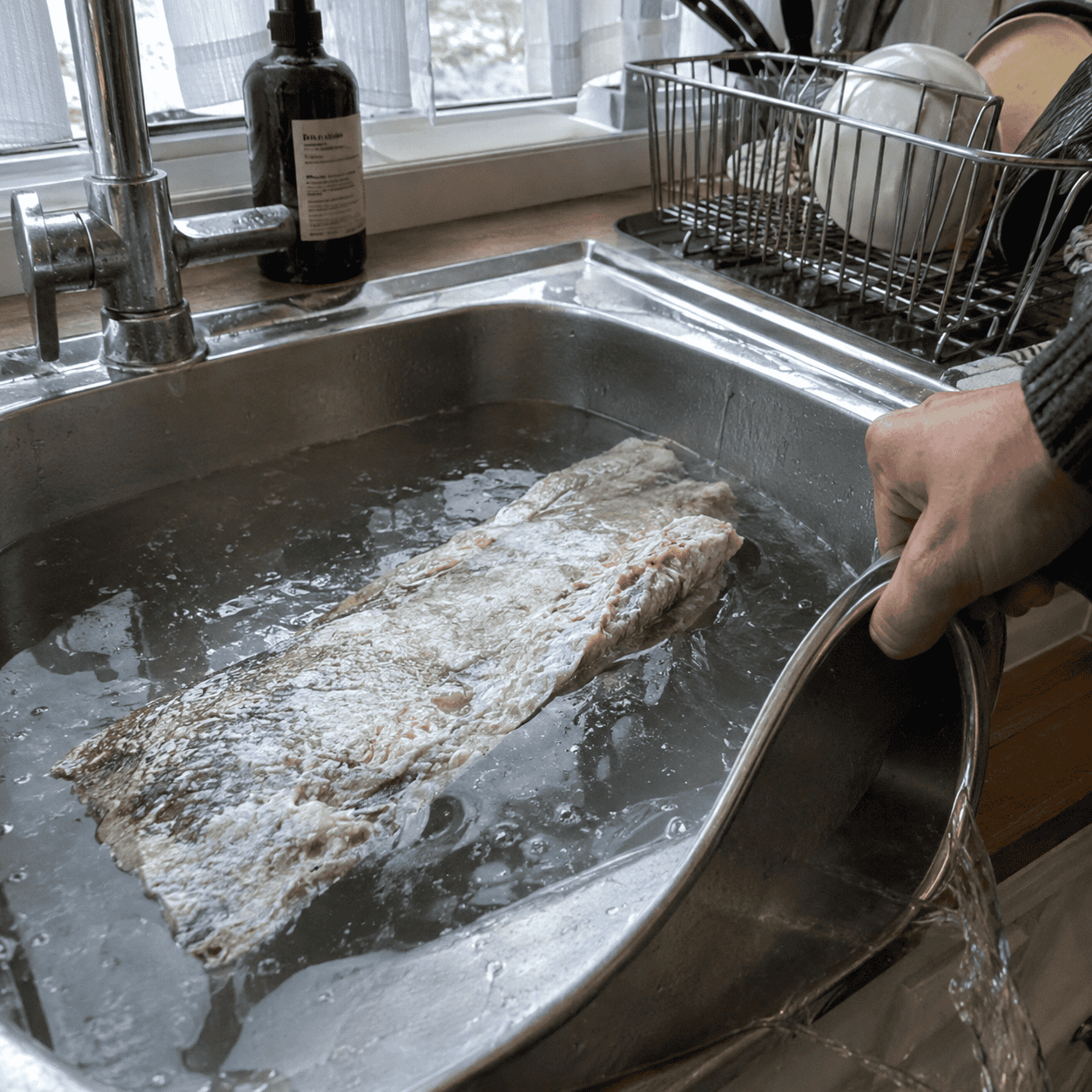
It comes home stiff as a roof shingle and smelling like the dock.
Then it lives in the sink, under cold water, for three days, and you change that water morning and night. Mid-December, the kitchen sink is unusable and everyone washes dishes in the basement.
The Christmas Eve Seven Fishes spread begins right there, in a sink full of gray water. The rest of the fish order goes in weeks ahead, because the lines at the market on the 23rd are a war.
20. Cardoons Get Battered and Fried
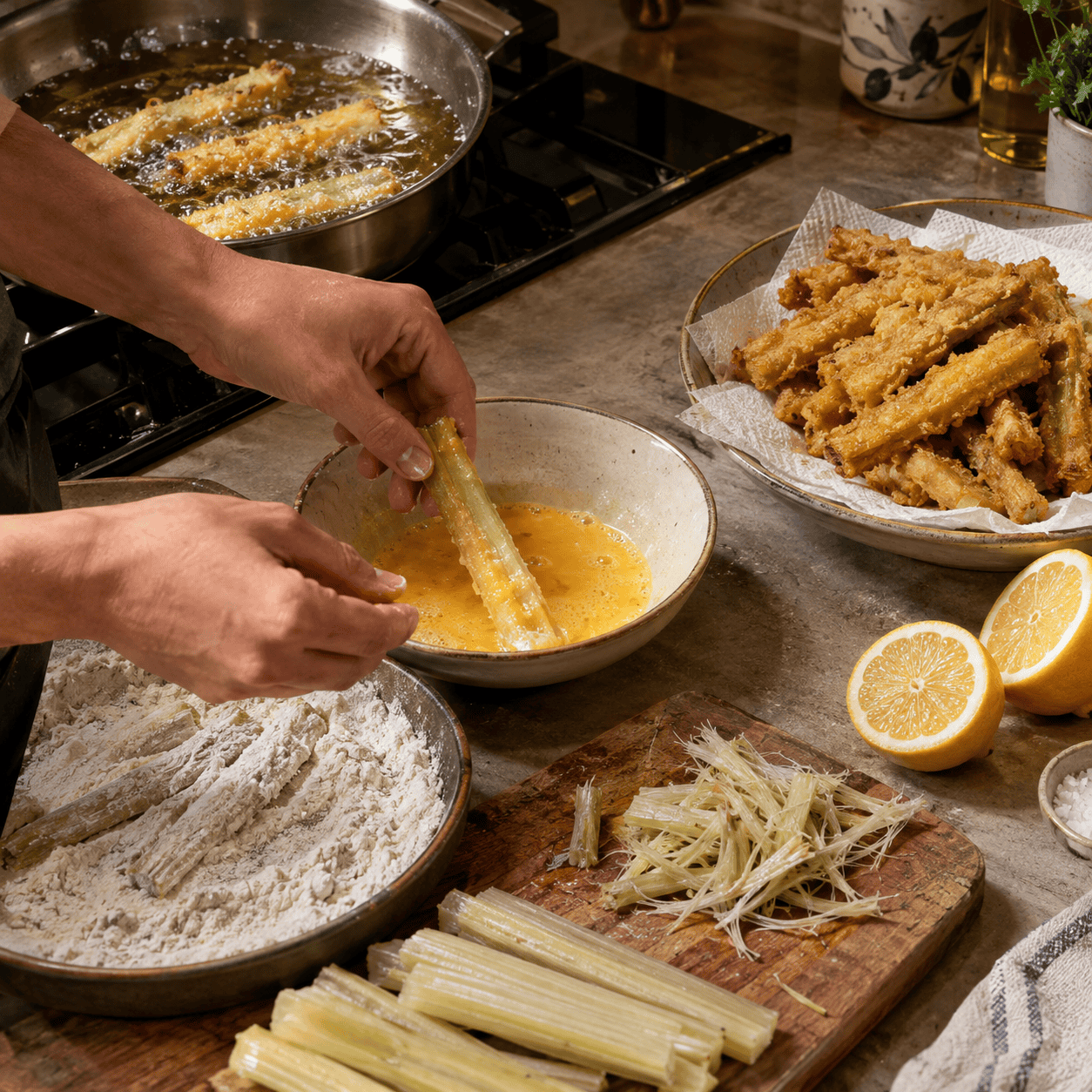
Cardoni. If your family still makes them, you’re part of a shrinking club.
They look like enormous celery and taste faintly like artichoke. You boil them with lemon, pull every string off like you’re deboning a fish, dredge them in flour and egg, and fry them in batches.
It’s an afternoon of work for a plate that disappears in four minutes on Christmas Eve.
My mother was the last one in our family who could do it right. I’m learning late.
21. The Pizzelle Iron Comes Out of Retirement
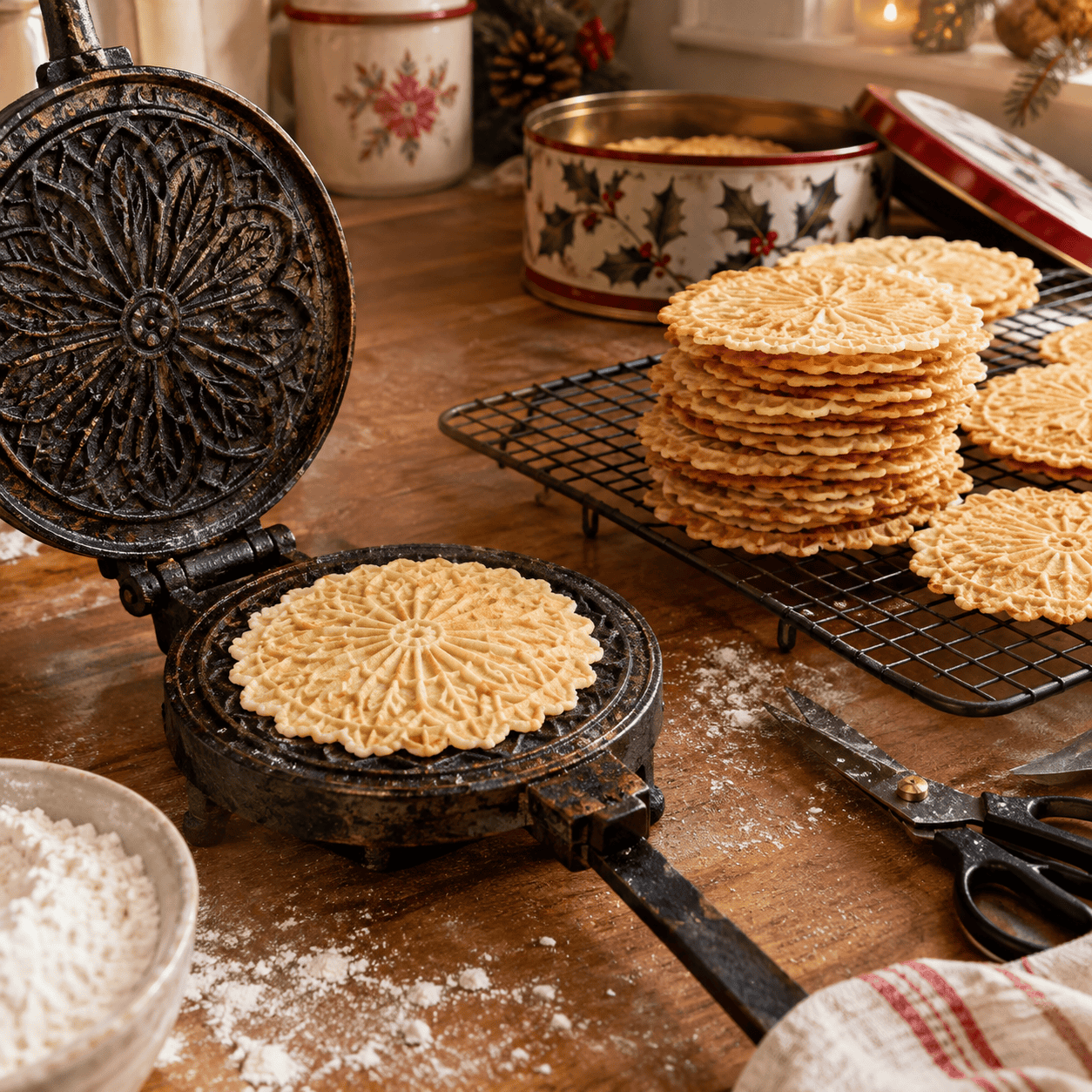
Heavy, hinged, usually scorched, used exactly once a year.
Anise or vanilla, a spoonful of batter, thirty seconds, trim the ragged edges with scissors. Then the rest of the lineup — cucidati stuffed with fig and nuts, pignoli, wine cookies, the ones with the colored sprinkles nobody can name.
Everything goes into tins and the tins go to the cold room.
Cookie trays aren’t dessert in these families. They’re currency. You arrive with one, you leave with one, and the quality of yours is discussed after you go. If you’re building a lineup, the classic Italian cookie list is where to start.
22. Rolling Day for Cappelletti in Brodo
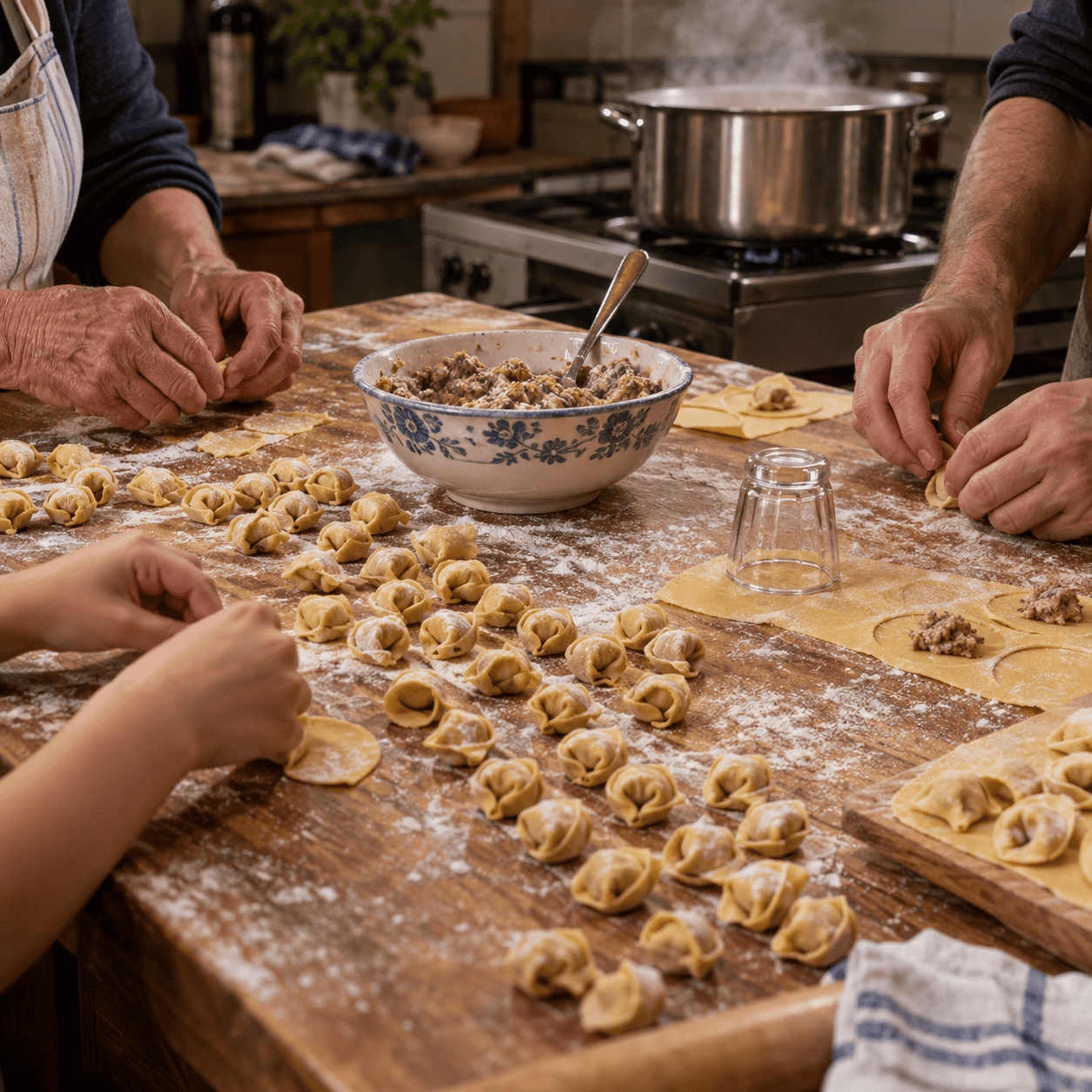
The week between Christmas and New Year’s, the table gets floured and the chairs fill up.
Three generations, a bowl of filling, a little glass to cut the rounds, and hundreds of tiny shapes rolled around a fingertip. Grandmothers’ hands move twice as fast as anyone’s and they’ll re-roll yours without saying a word.
Meanwhile the chicken brodo has been going since six in the morning, skimmed and strained clear.
It only happens when it’s cold, because the whole point is a bowl of broth that fixes you.
23. Struffoli Gets Built Into a Wreath
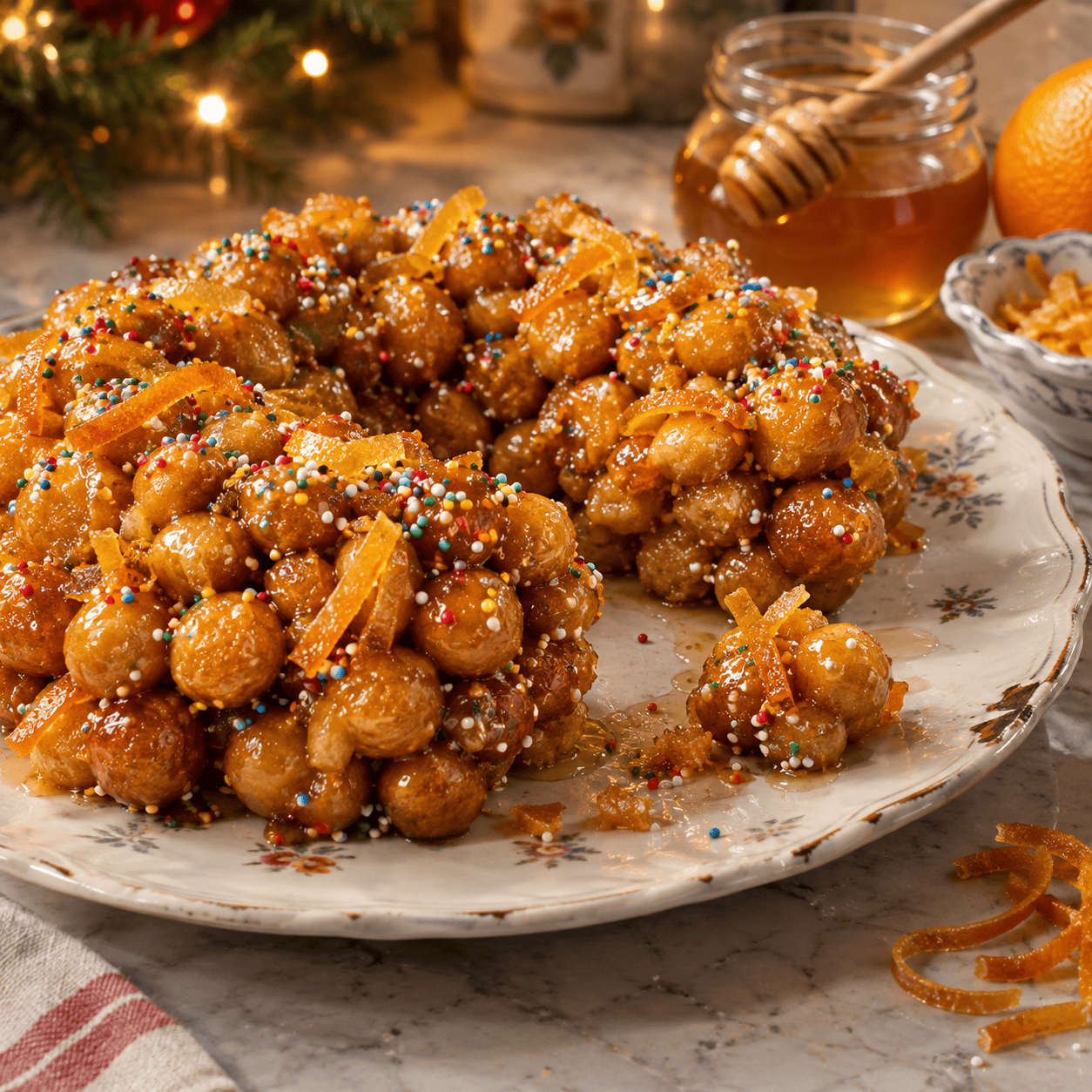
Hundreds of little dough pellets, fried in batches, dumped into boiled honey with orange zest and candied peel.
Then it gets piled into a ring on a plate, hit with nonpareils, and set out on the counter where it stays for a week getting stickier.
Nobody serves it. Everyone takes one every single time they walk past.
By New Year’s the wreath is a crescent.
24. Winter Citrus Shows Up on the Dinner Table
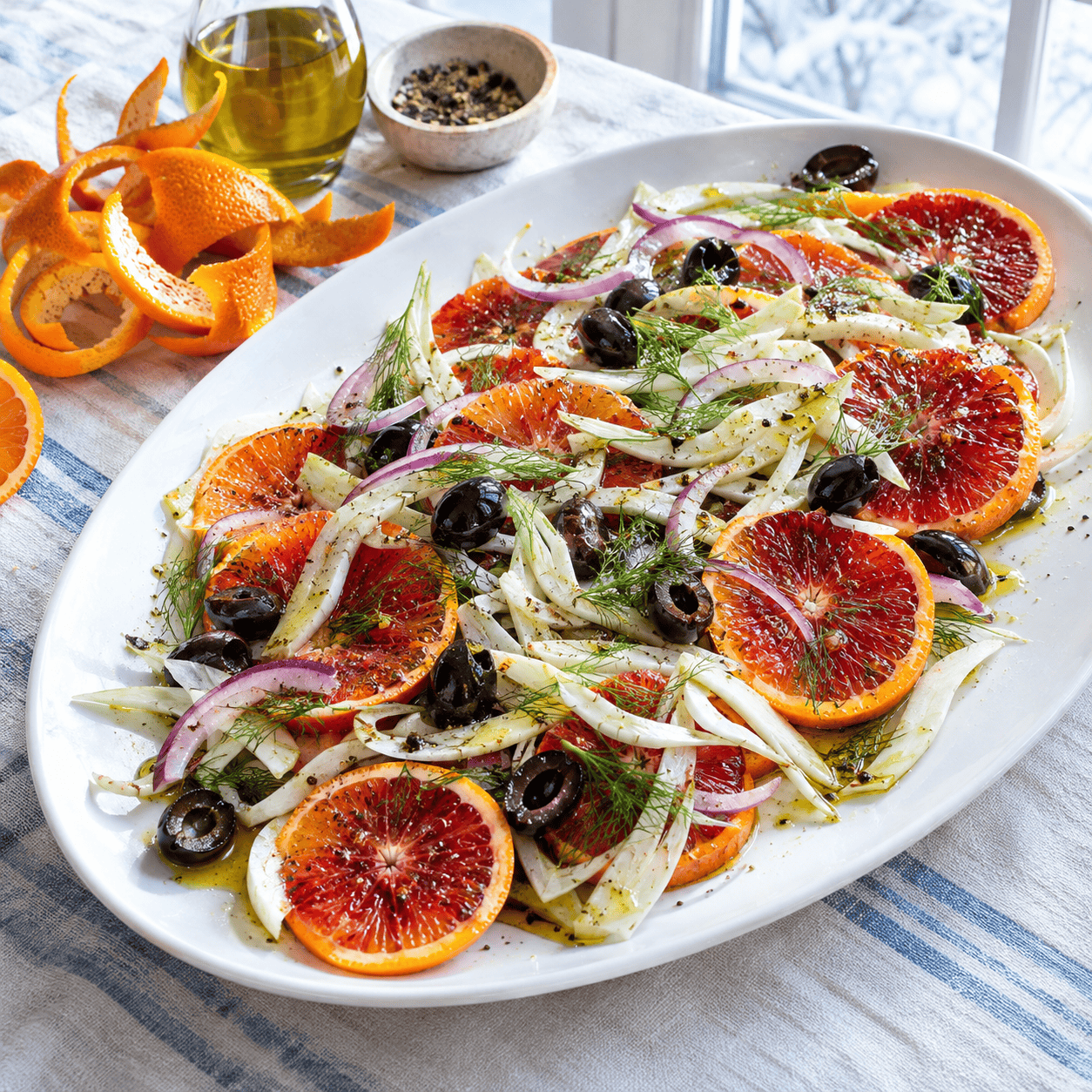
Blood oranges hit in January and Sicilian families put them on the dinner table, not the dessert plate.
Sliced thin with fennel, black olives, red onion, oil and a lot of pepper. Or just peeled at the table after a heavy meal, segments passed around, peels piling up on the cloth.
It’s the one bright cold acidic thing on a table full of braises. That orange and fennel salad cuts through pork better than anything else I know.
25. Lentils and Cotechino at Midnight
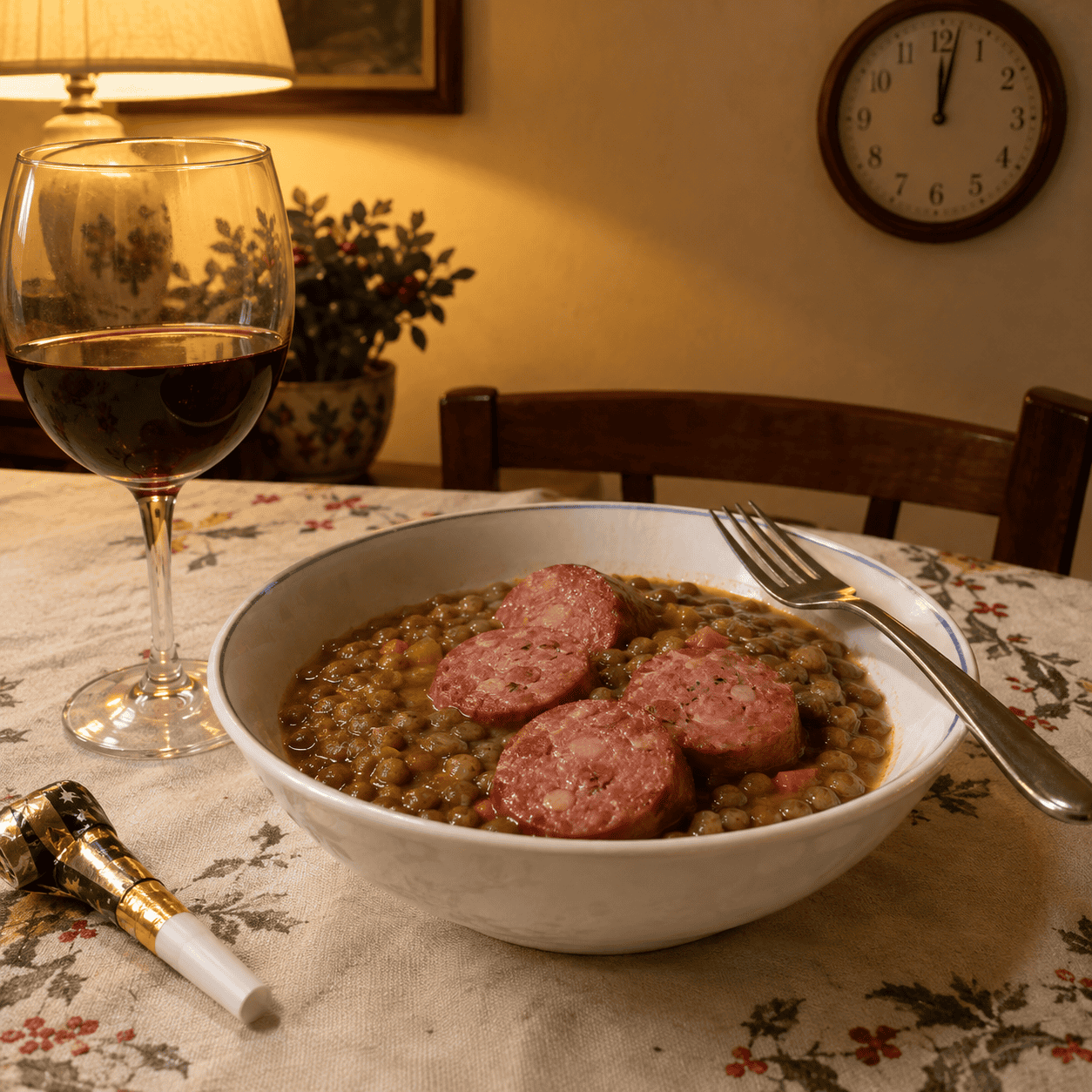
December 31st. Not negotiable.
Lentils look like coins, so you eat a bowl of them right after midnight with cotechino or zampone, and the more you eat the better the year goes.
Nobody in my family actually believes this. Nobody in my family has ever skipped it either.
You don’t test something like that.
26. Anisette Appears in the Coffee
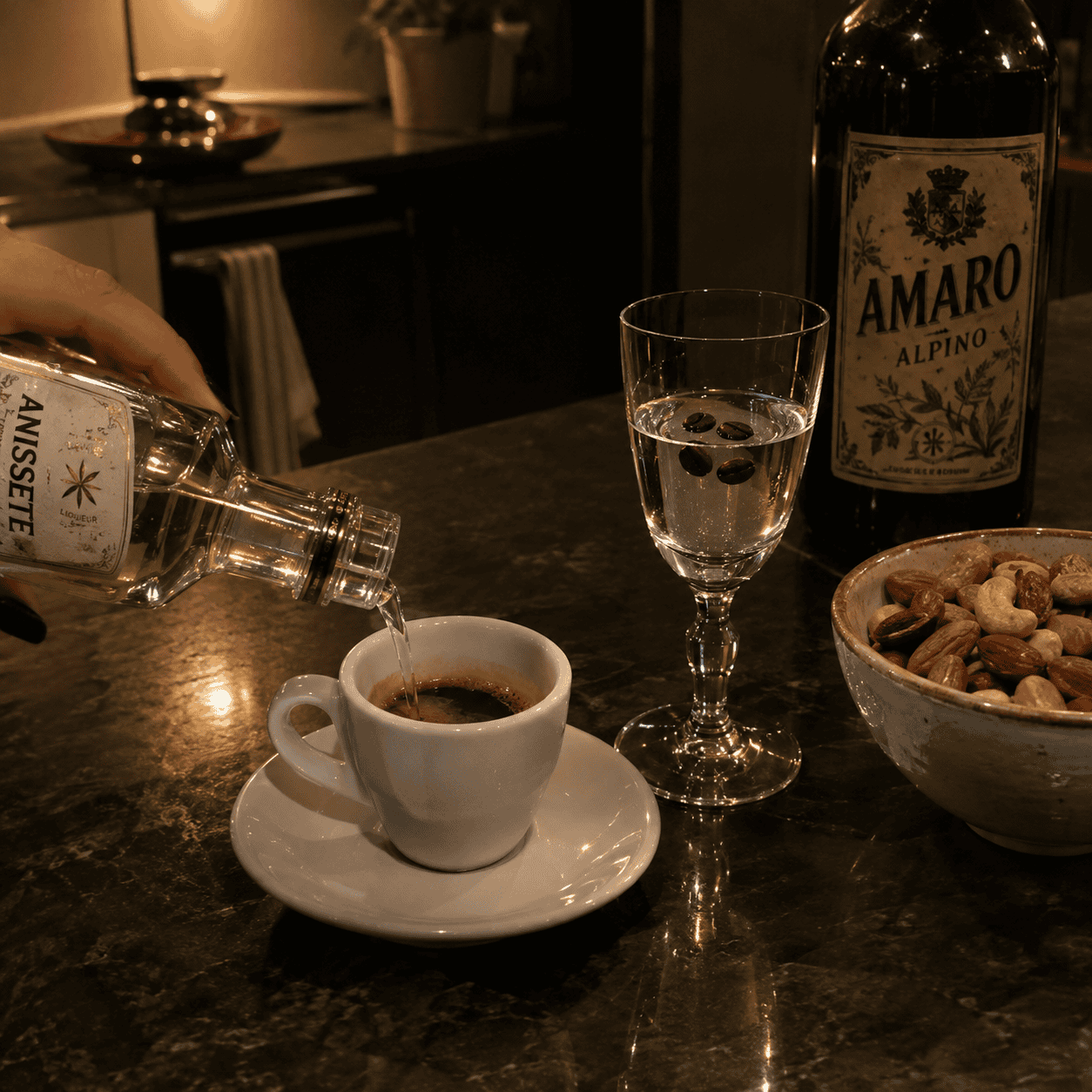
The bottle comes out of the cabinet above the fridge, the one with the glasses nobody washes because they only ever hold liquor.
Anisette or sambuca in the espresso — caffè corretto — or Strega if somebody brought it back. Then the amaro, which only moves when the meal was heavy enough to require it.
Three coffee beans in the sambuca if you’re being proper. Lit on fire if your cousin has had a few.
The digestivo cabinet is a winter institution. In July it sits untouched.
27. Pastina in Brodo Is Prescribed Like Medicine
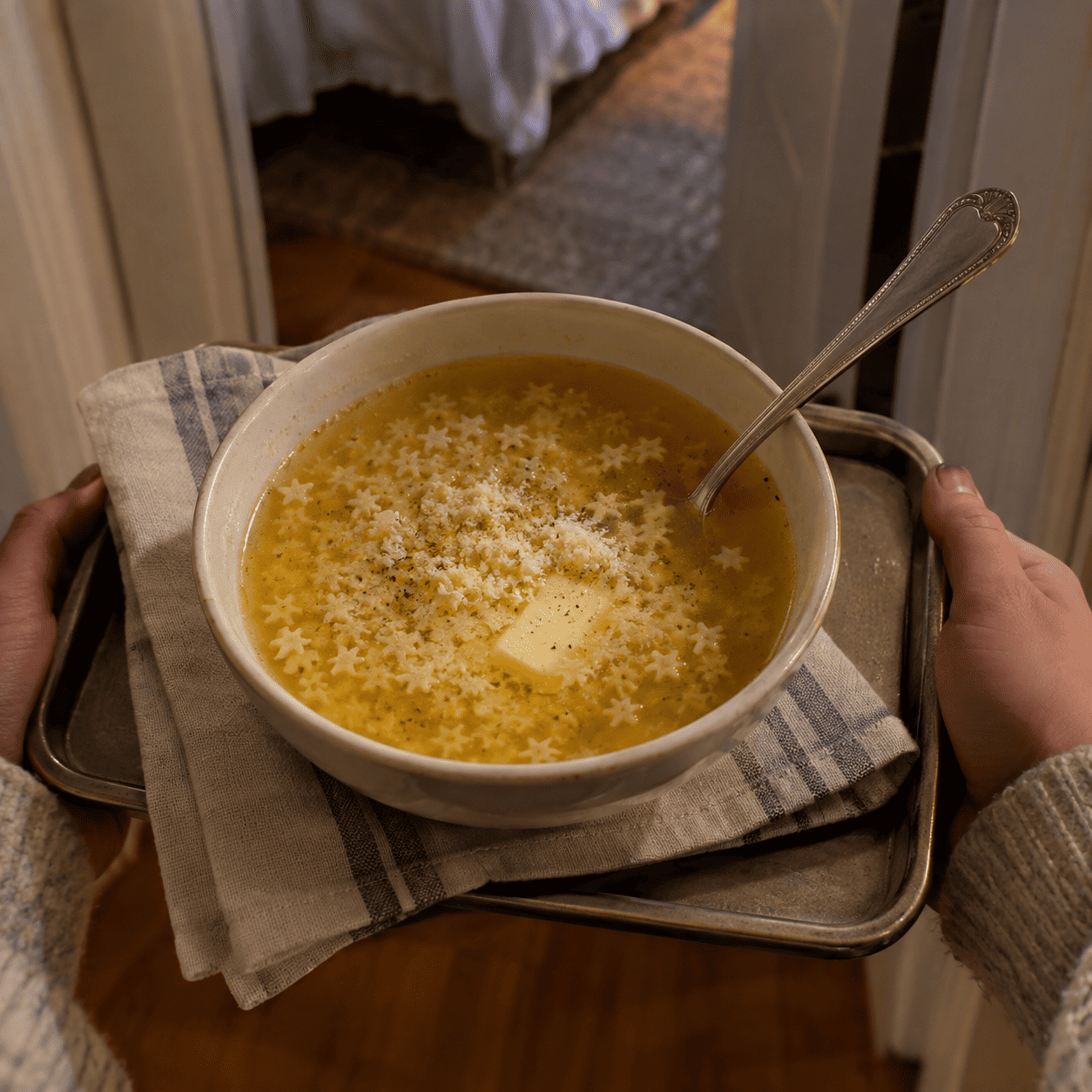
One cough. That’s all it takes.
A small pot goes on — brodo, a handful of tiny stars, a pat of butter, a shower of parmesan. Sometimes an egg beaten in at the end so it ribbons through.
It gets carried to you in a shallow bowl with a soup spoon, and you eat it in bed whether you feel like eating or not. That’s the deal.
There’s no bowl of food in the Italian-American canon more emotionally loaded than pastina in brodo. Grown men get quiet about it.
28. Nobody Leaves the Kitchen
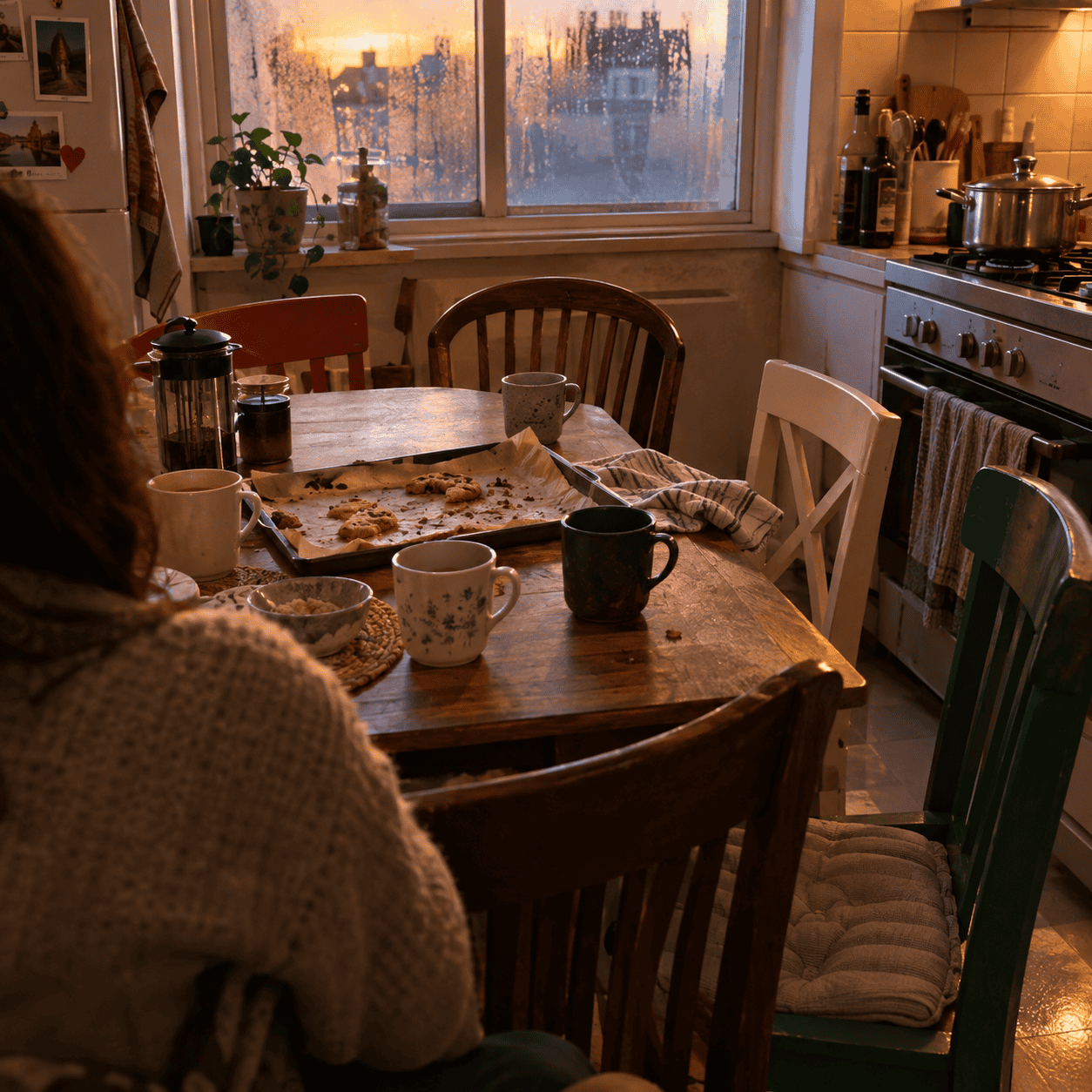
There’s a dining room. There’s a living room with furniture nobody sits on.
And every night from November to March, eleven people are crowded around a kitchen table built for six, because it’s the warm room and the coffee is always on.
Somebody’s leaning against the counter. Somebody’s half-sitting on the radiator. The pot’s still on the stove in case anyone wants more, and nobody is going anywhere.
Cold weather is what pushes a family back into one room. That’s the whole thing, really.
29. Italian Wedding Soup With Hand-Rolled Marble Meatballs
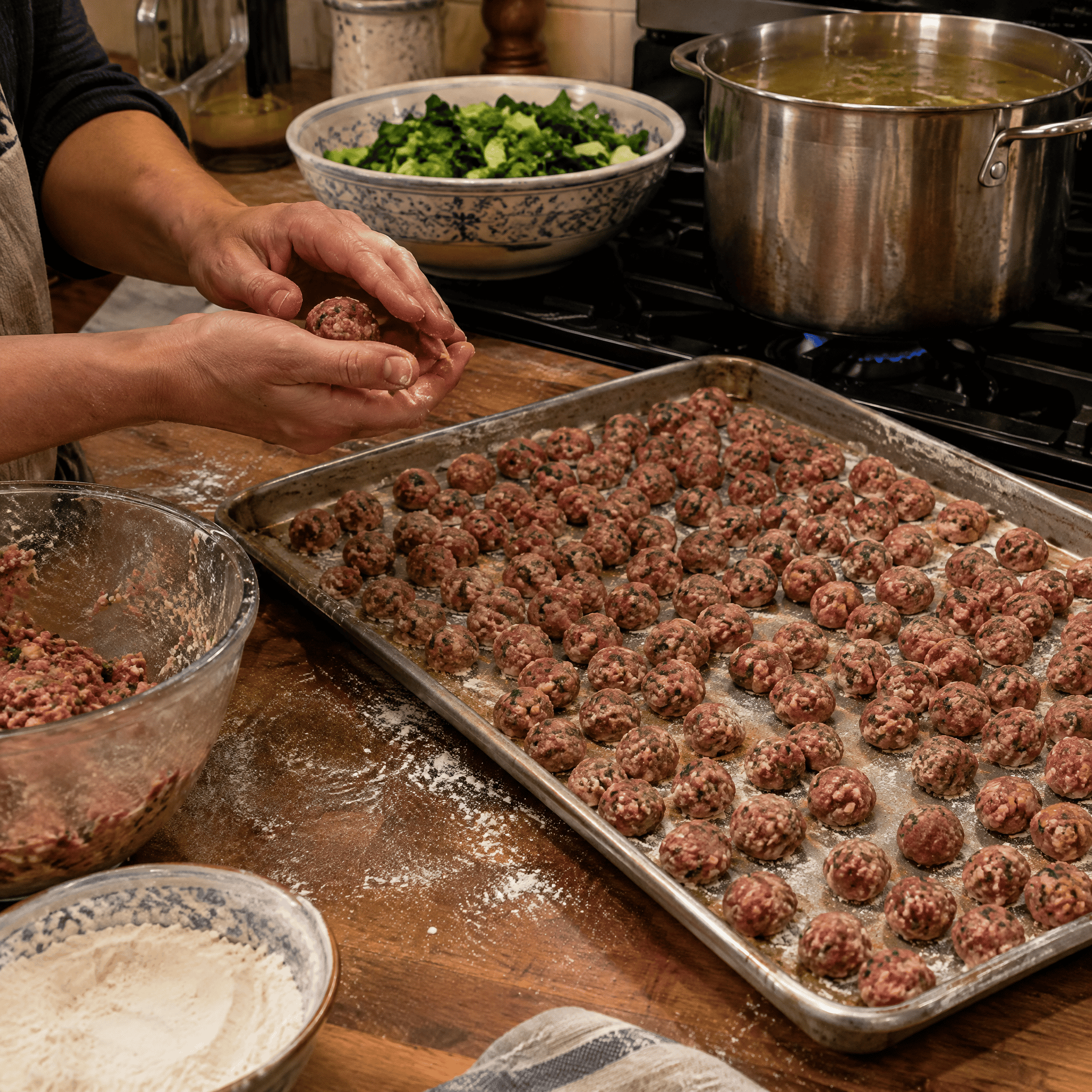
Minestra maritata — the “marriage” is the greens and the meat, not a wedding.
The work is in the meatballs. Pea-sized, rolled by hand, two or three hundred of them on a sheet pan while somebody else chops escarole. Your fingertips go numb.
They go into brodo with the greens and a little pasta, and they cook in about four minutes.
My aunt freezes them raw on trays in November so she can throw a handful into broth all winter.
30. Mushroom Hunting Season Fills the Kitchen Table
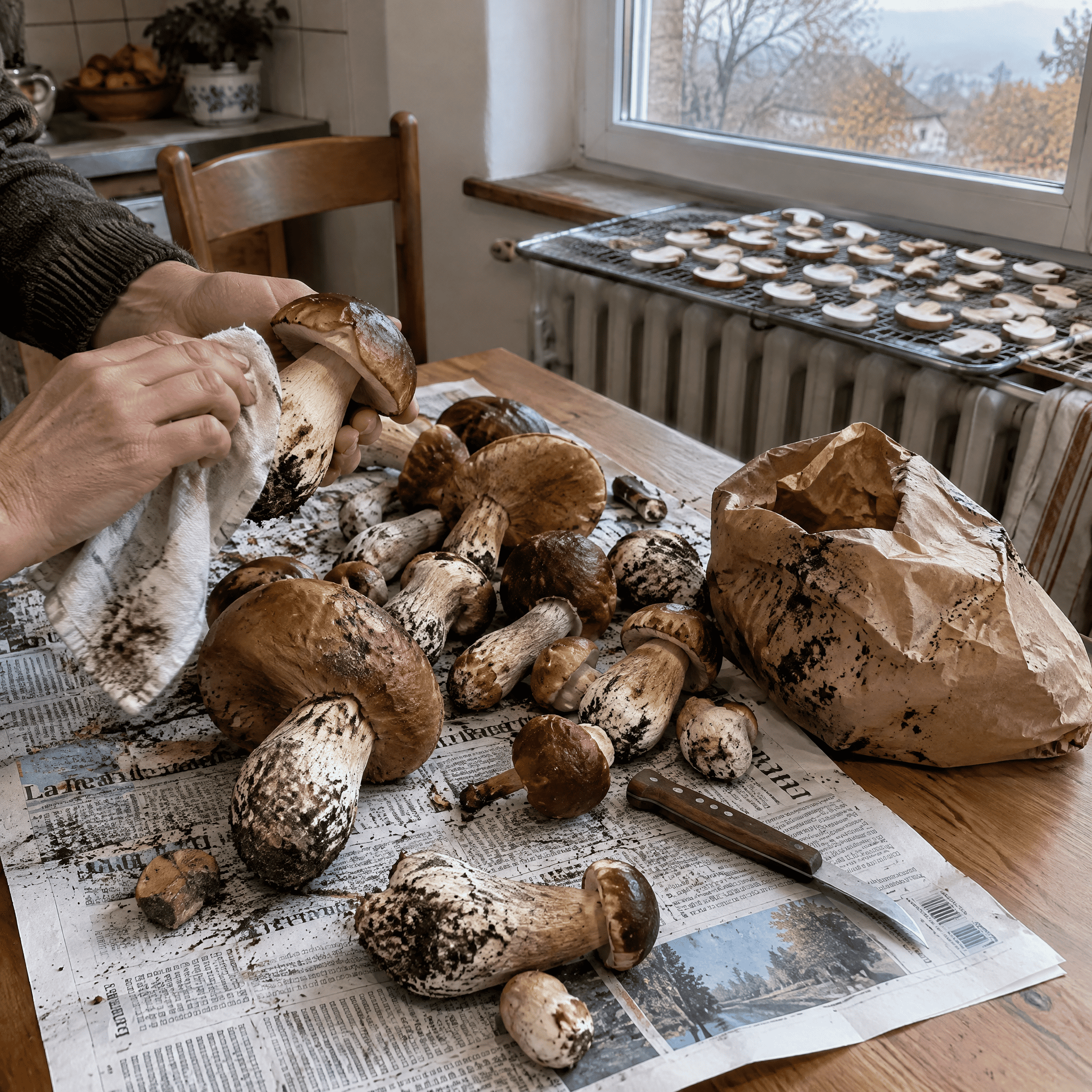
After the autumn rains, the men disappear on a Saturday morning with paper bags and come back muddy.
Porcini get laid out on newspaper across the kitchen table, brushed clean with a damp cloth — never washed — and sorted. The good ones get sliced thin and dried on screens near the furnace. The rest go in a pan with garlic and parsley that night.
Autumn in Italy still runs on this kind of foraging, with whole sagre built around the harvest.
Over here it faded with the first generation. If you know somebody’s grandfather who still goes, he will not tell you where.
31. Stale Bread Stops Being Garbage
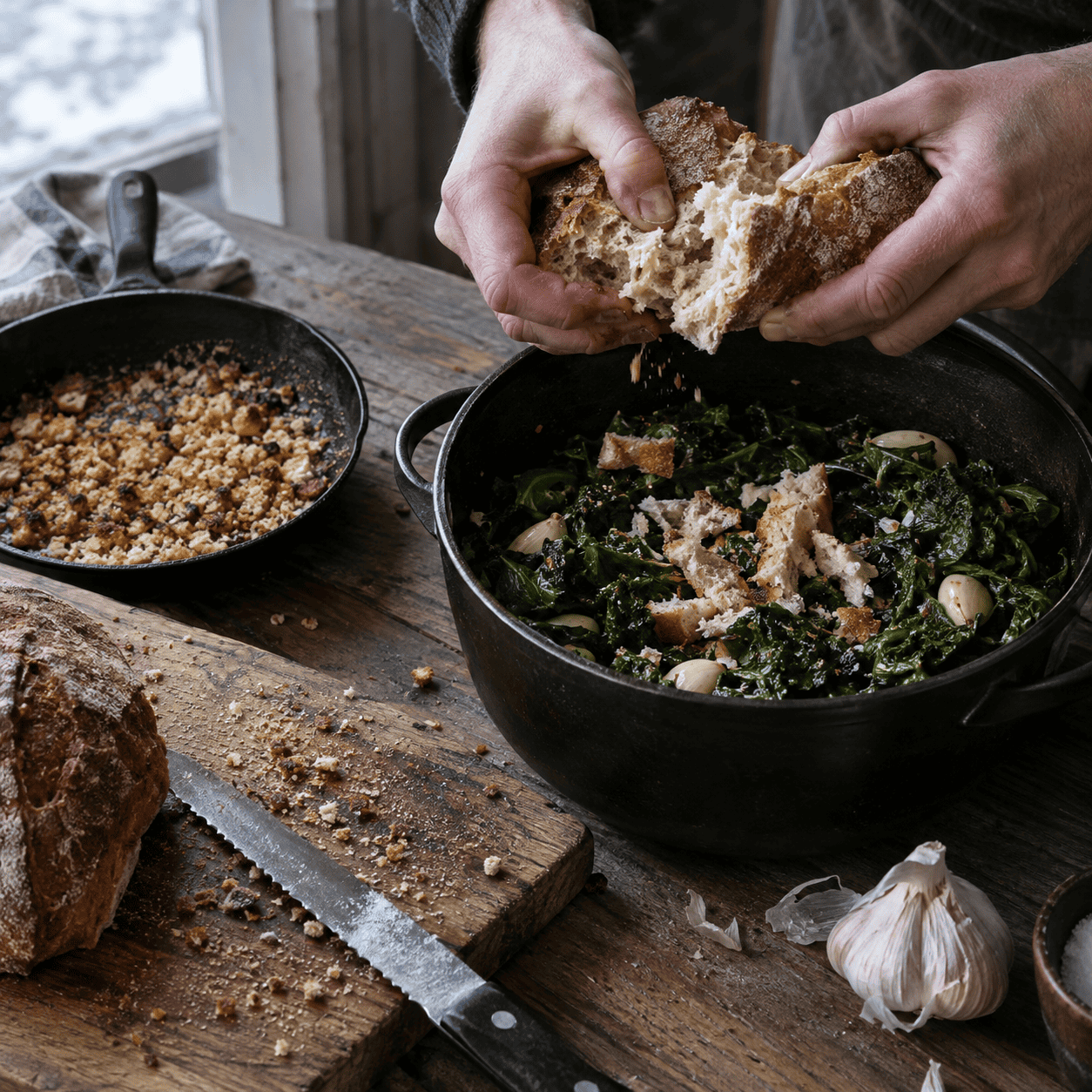
In summer, day-old bread goes into salad. In winter it goes into the pot.
Pancotto — stale bread cooked down with garlic, oil and whatever greens are around until it’s somewhere between soup and porridge. Bread in the soup bowl under the ladle. Crumbs toasted in oil and scattered over pasta where cheese would go, which is what you do when there’s no money for cheese.
Nothing was thrown out. The heel of the loaf had three possible futures and you picked one.
That’s the logic underneath everything in this list.
None of this is on a calendar anywhere. It just happens, the same way every year, because the temperature drops and the house tells you what to do.
Some of it I’ve let go. I don’t cure sausage and I’ve never grown a fig tree. But the jars are downstairs, the big pot is on the stove, and when somebody coughs in this house a small pot of brodo goes on without anybody asking.
If you still do even three of these, somebody taught you right. Keep doing them where your kids can see.
Buon appetito,
Madeline