The Unwritten Rules of Italian Christmas Leftovers
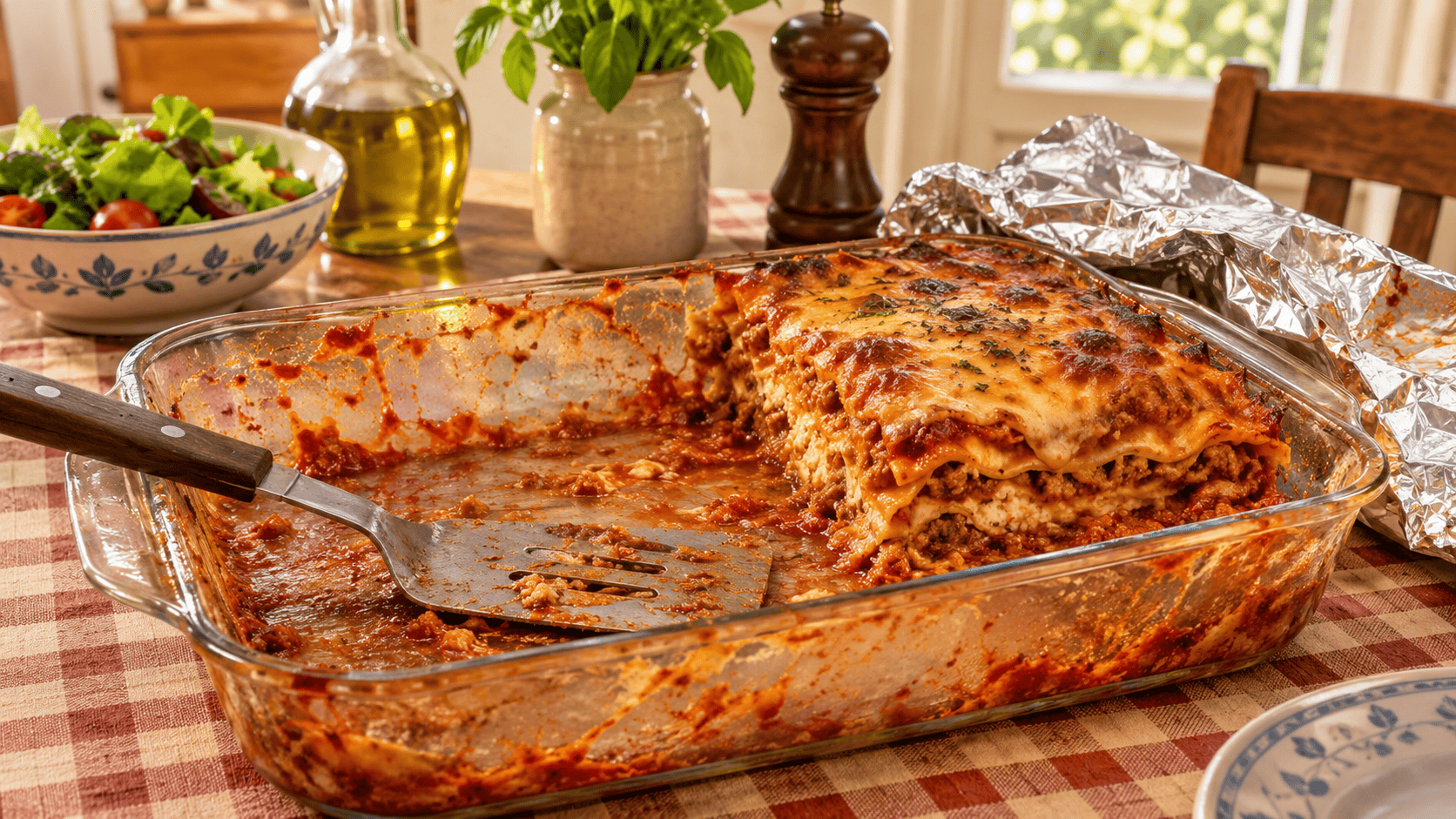
The dishes aren’t even washed yet and Nonna Pina is already standing at the counter with a stack of containers, asking me what I want. It isn’t a question.
Christmas dinner in an Italian-American house doesn’t end when people get up from the table. That’s halftime. The second half is the packing, the labeling, the negotiating, and the slow four-day disappearance of a lasagna.
Nobody writes any of it down. You just absorb it standing in a kitchen that smells like fried fish and espresso, holding a roll of aluminum foil someone handed you without looking.
I live alone now, two burners and a secondhand air fryer, and I still come home on December 25th with more food than my refrigerator can physically hold. Every year. Without fail.
Here are the unwritten rules of what happens to the food after an Italian-American Christmas.
1. The Containers Come Out Before Dessert
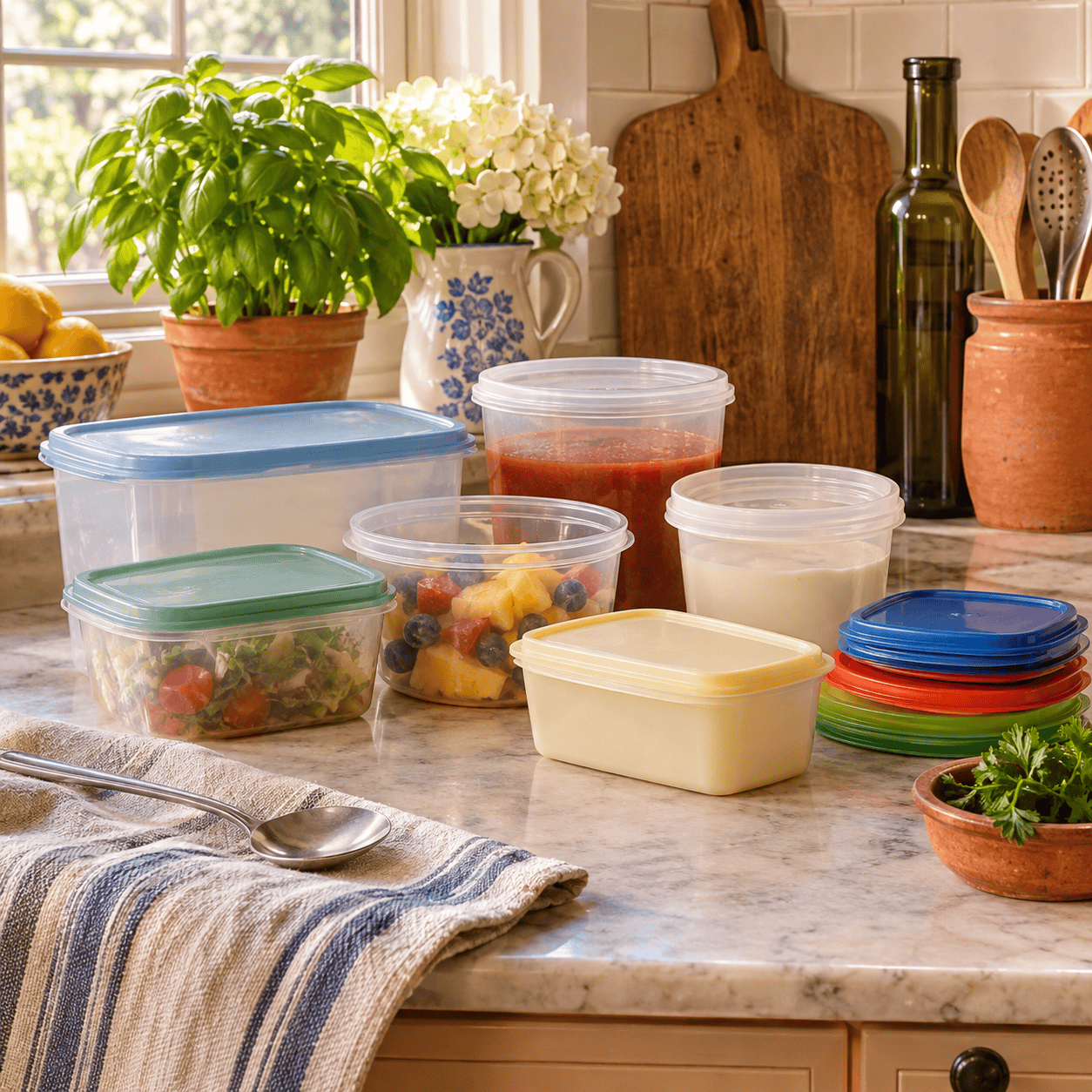
Somewhere between the second plate and the coffee, the cabinet above the refrigerator opens. That’s the sound of the holiday turning a corner.
Nonna keeps the containers in a bag inside another bag, and she starts sorting them while people are still eating. Lids on the left, bottoms on the right, a running commentary about which ones have gone missing since Easter.
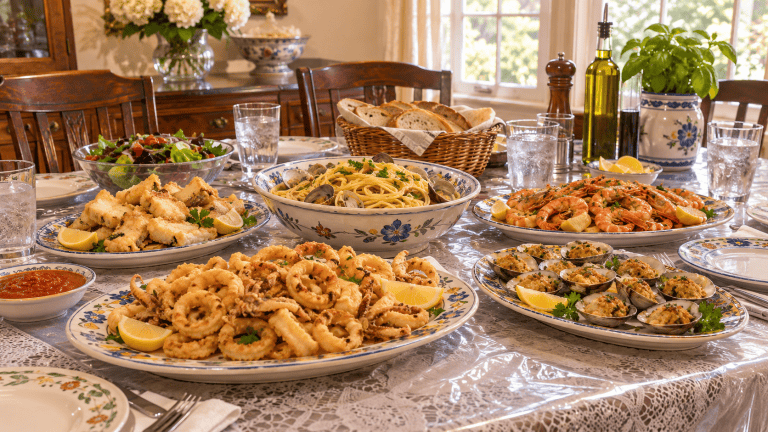
She isn’t rushing anyone out. She’s doing logistics. There are nine dishes on that table and she’s already mapped where every one of them is sleeping tonight.
I used to think it was rude. Now I do it too, in my own apartment, for four people and a tray of baked ziti.
2. Nobody Leaves Empty-Handed
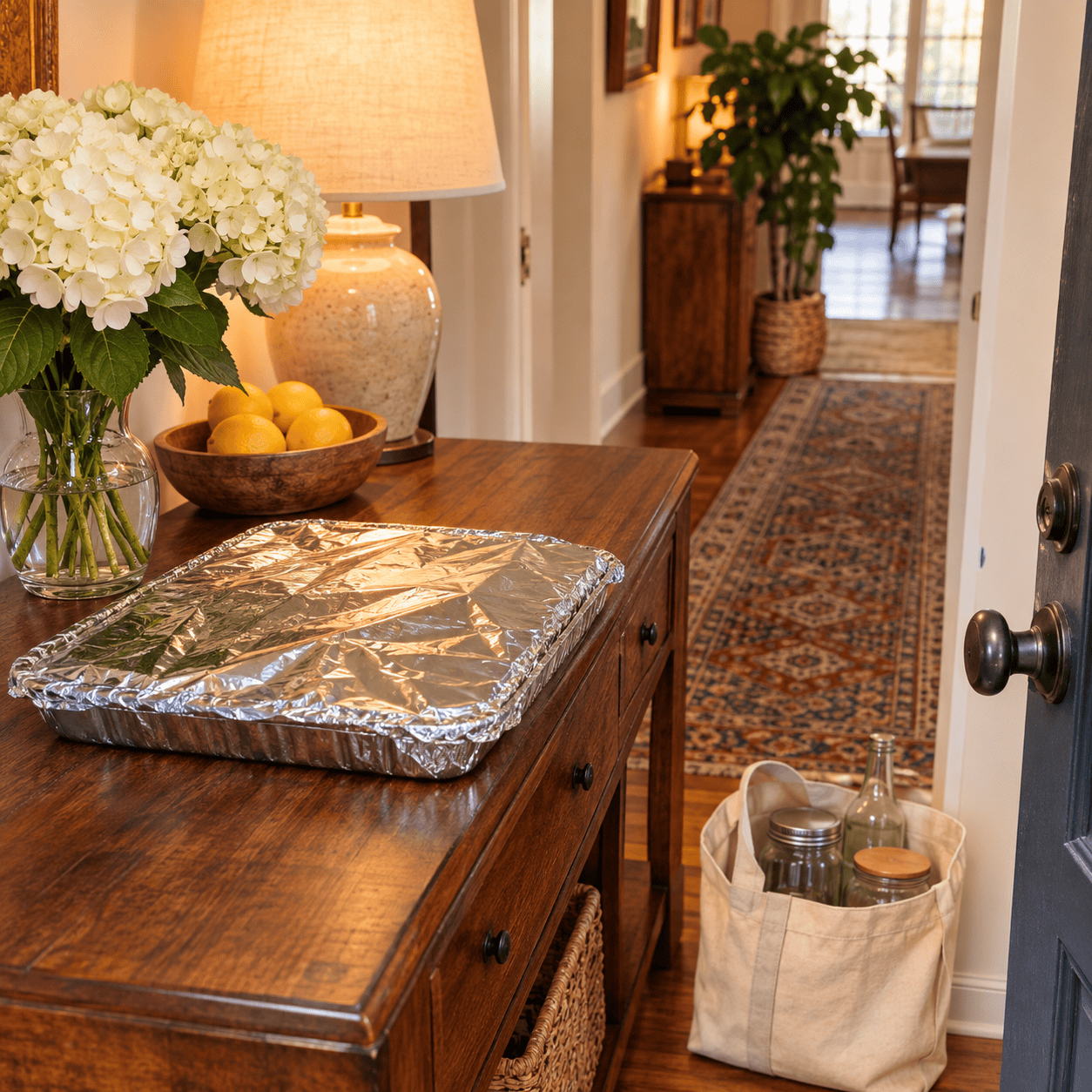
You can say no. It won’t matter.
The tray gets made whether you asked for it or not, and it will find its way into your hands at the door while you’re putting your coat on and have no free arms to refuse with. That’s the trick. That’s always been the trick.
One year a friend from work came for dinner and spent twenty minutes insisting she had no room in her fridge. She went home with a foil pan of lasagna, six cookies, and a jar of gravy. She texted me a photo of the jar on her counter at midnight with three question marks.
The same house where showing up empty-handed is not an option also won’t let you leave empty-handed. The food moves in a circle.
3. The Lasagna Corner Is Spoken For
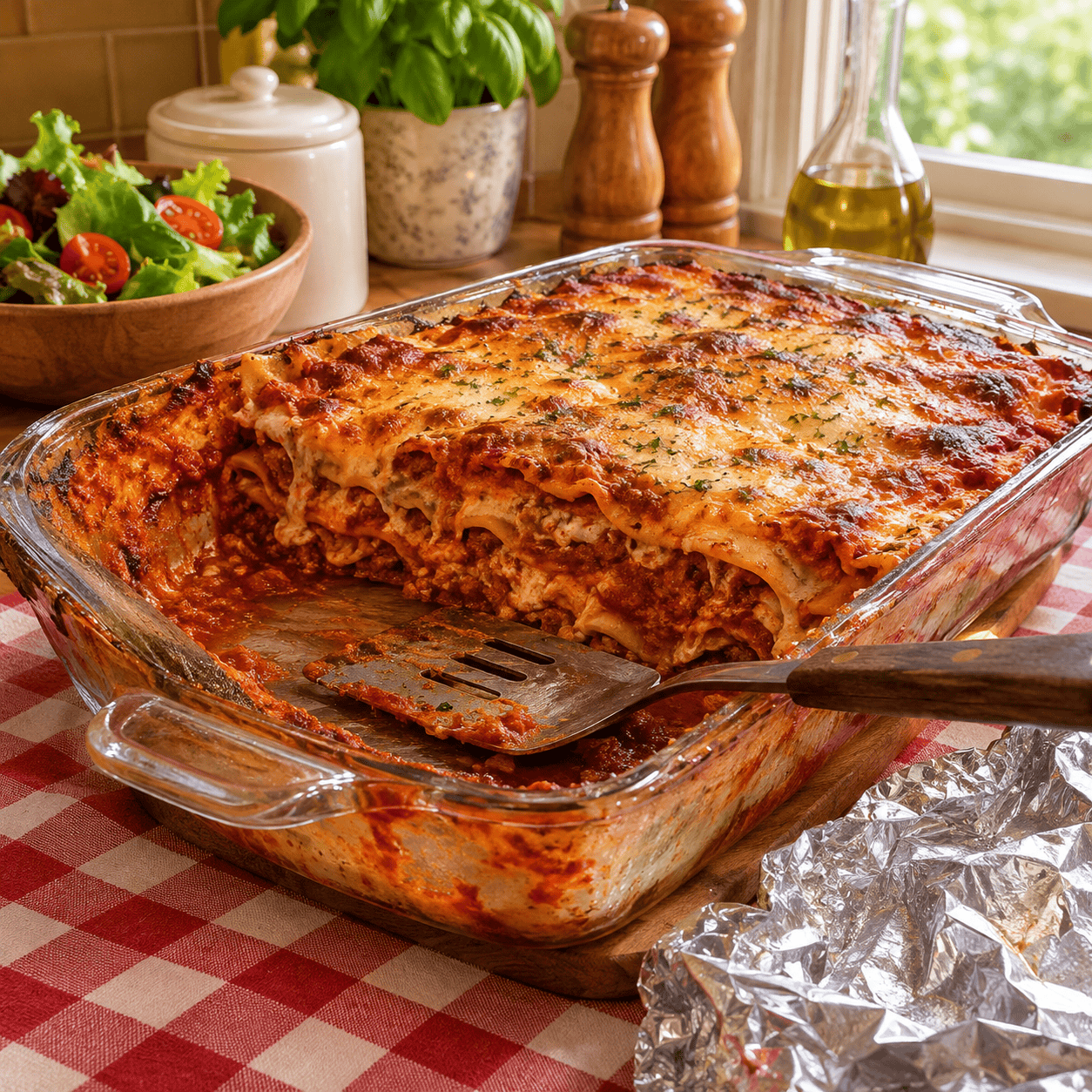
Every pan of lasagna has four corners and they are the most contested real estate of the entire holiday.
The corner is where the cheese went brown and the noodle edges turned into something between a chip and a crust. It’s structurally superior. Everyone knows this.
Nonna cuts around them on purpose when she’s serving, so the corners survive into leftover territory. Then she decides who they belong to, usually based on who helped in the kitchen that morning.
I have earned exactly one corner in my life by showing up at nine in the morning to layer. It tasted better than anything I’ve cooked since. If you want a corner, you work for it.
4. The Tupperware Has to Come Back
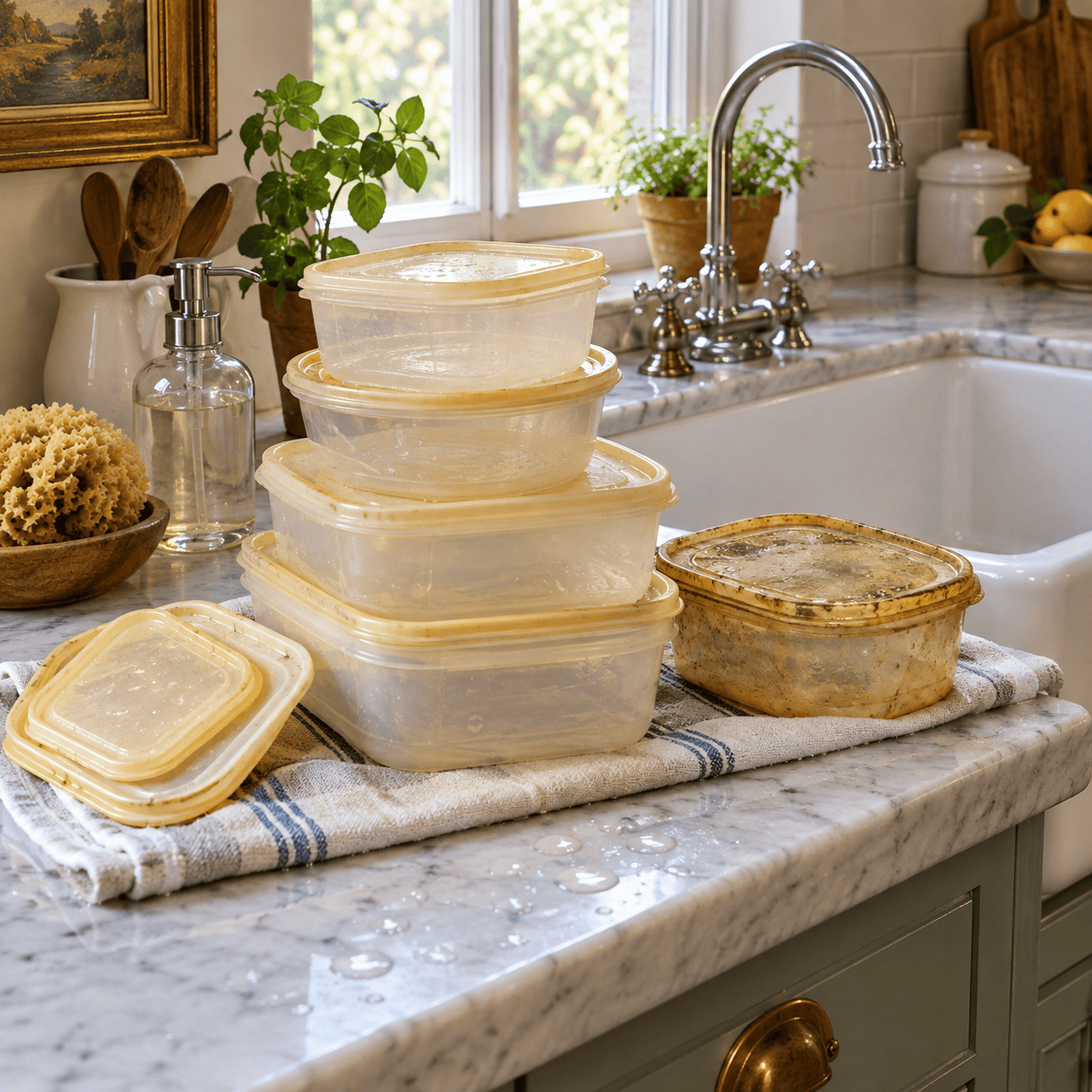
It isn’t a gift. It’s a loan with a tracking number in Nonna’s head.
She knows which container she gave you. The square one with the yellow lid she’s had since the Carter administration, the deli tub from the olives, the butter tub that has never held butter. She knows.
You return it clean, and ideally not empty. Empty is acceptable. Empty with something in it is better.
I brought one back once with a loaf of lemon bread in it and got treated like a returning war hero. The bar is low and also somehow very high.
5. Everything Gets Labeled, Badly
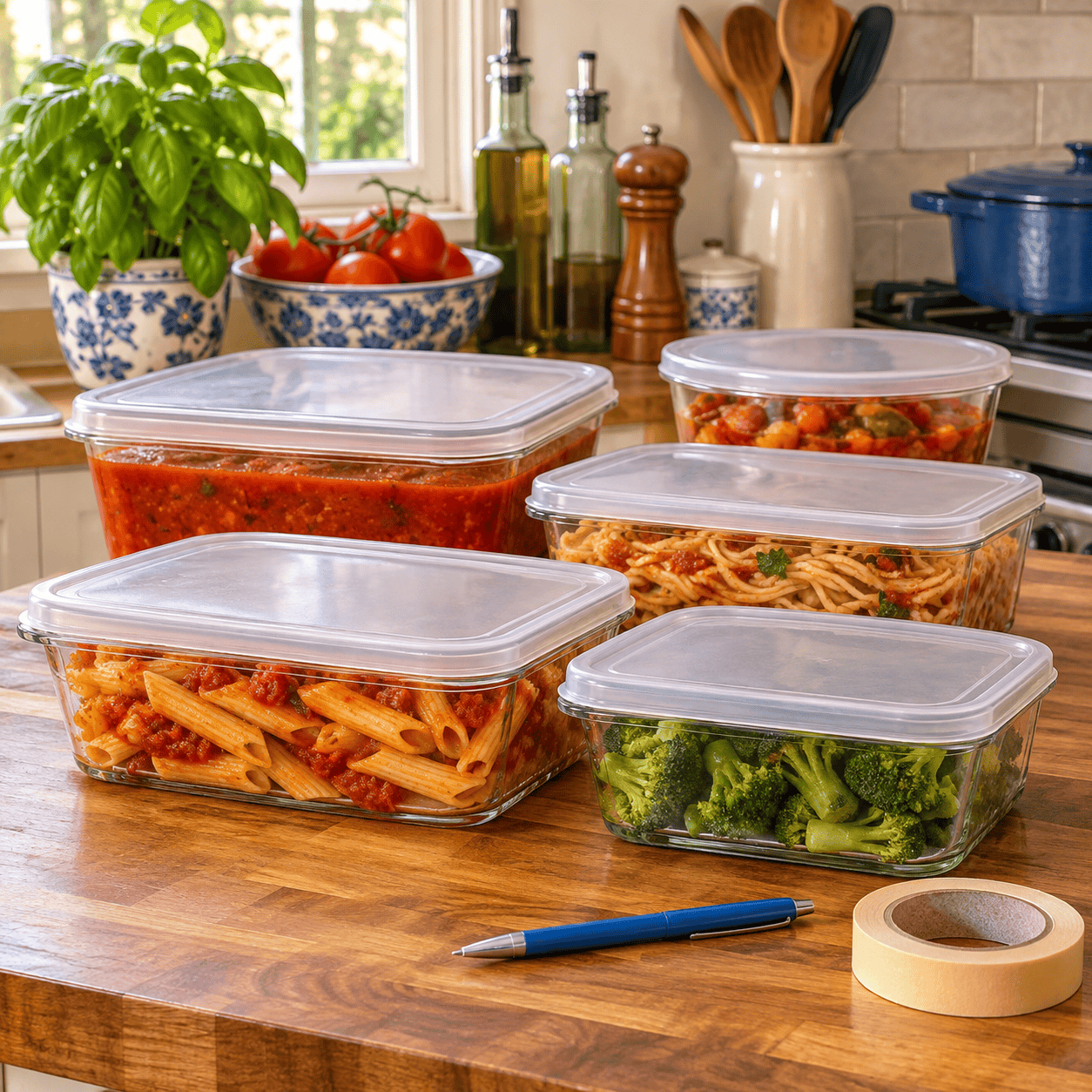
Masking tape and a ballpoint pen that barely works. That’s the labeling system and it has not changed in my lifetime.
The handwriting is tiny and slanted and says things like “gravy w/ braciole” or just “FISH.” Half of them come off in the refrigerator overnight and float to the bottom of the drawer.
The containers get reused, and so does the tape. I once opened a cottage cheese tub labeled “PEPPERS,” with “PEPPERS” crossed out and “SOUP?” written underneath. It was lentils. Nonna said the question mark covered it.
The dates are optional. If you’re asking what day something was made, you’ve already revealed you weren’t there when it was made.
I use a Sharpie now, like a person who learned something. Nonna thinks the Sharpie is showing off.
6. Cold Lasagna Is Breakfast on the 26th
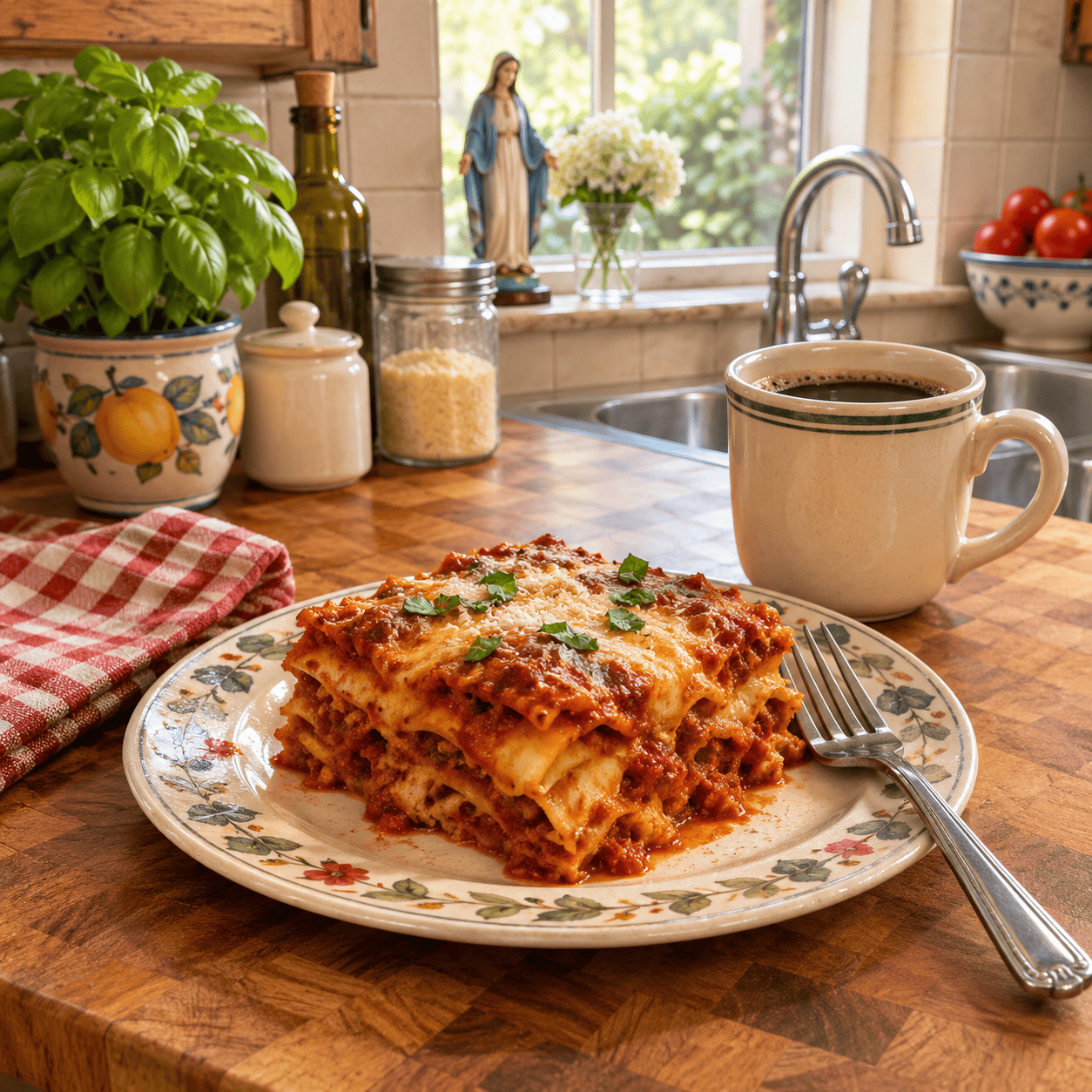
Straight from the fridge. Standing up. Fork optional, though a fork is nicer.
Cold lasagna on December 26th is one of the great foods and nobody outside this culture seems to understand it. The layers set overnight. The ricotta firms up. The ragù goes dense and almost sweet.
Heating it is a choice you can make, and it’s the wrong one before ten in the morning.
Mine comes from Nonna’s, sent home on Christmas night in foil with a dish towel knotted over the top. It’s always the corner piece, because she knows the crispy edges are the whole point.
I have eaten a cold square of traditional lasagna over the kitchen sink at 7:40 a.m. with coffee in my other hand more times than I’ll admit in writing. It’s the most at-peace I get all year.
7. The Second-Day Sauce Is the Better Sauce
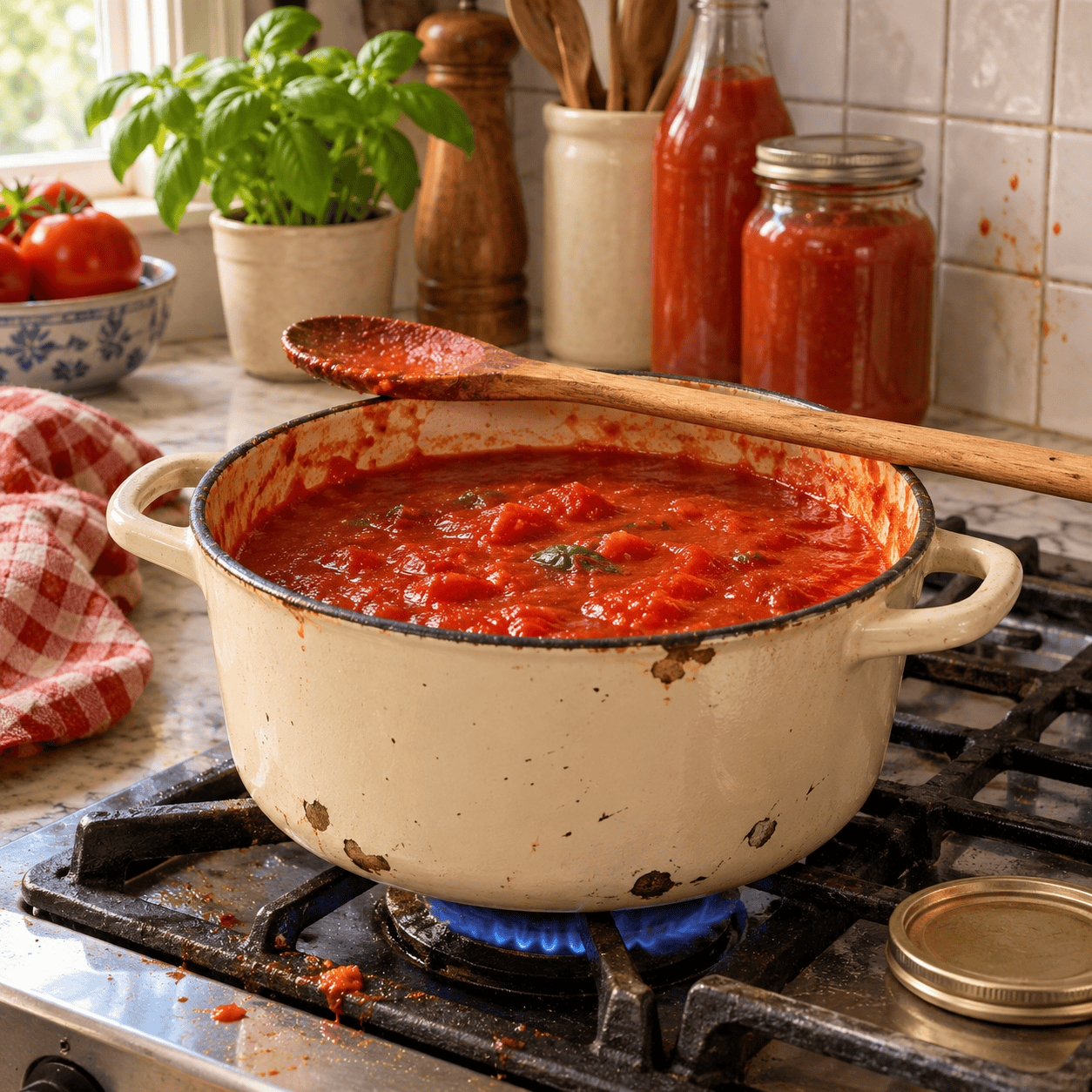
Ask anyone who grew up with a pot on the stove. Day two wins.
Something happens overnight in the refrigerator. The fat settles, the tomato loses its sharp edge, the meat that cooked in it finally gives up everything it had.
Nonna makes extra on purpose for exactly this reason, which she will deny if you ask her directly. “It’s just what was in the pot.” There were four pounds of meat in that pot.
If you ever want to taste the difference, make a Sunday gravy on a Saturday. Nobody does it by accident twice.
8. Nobody Cooks on the 26th
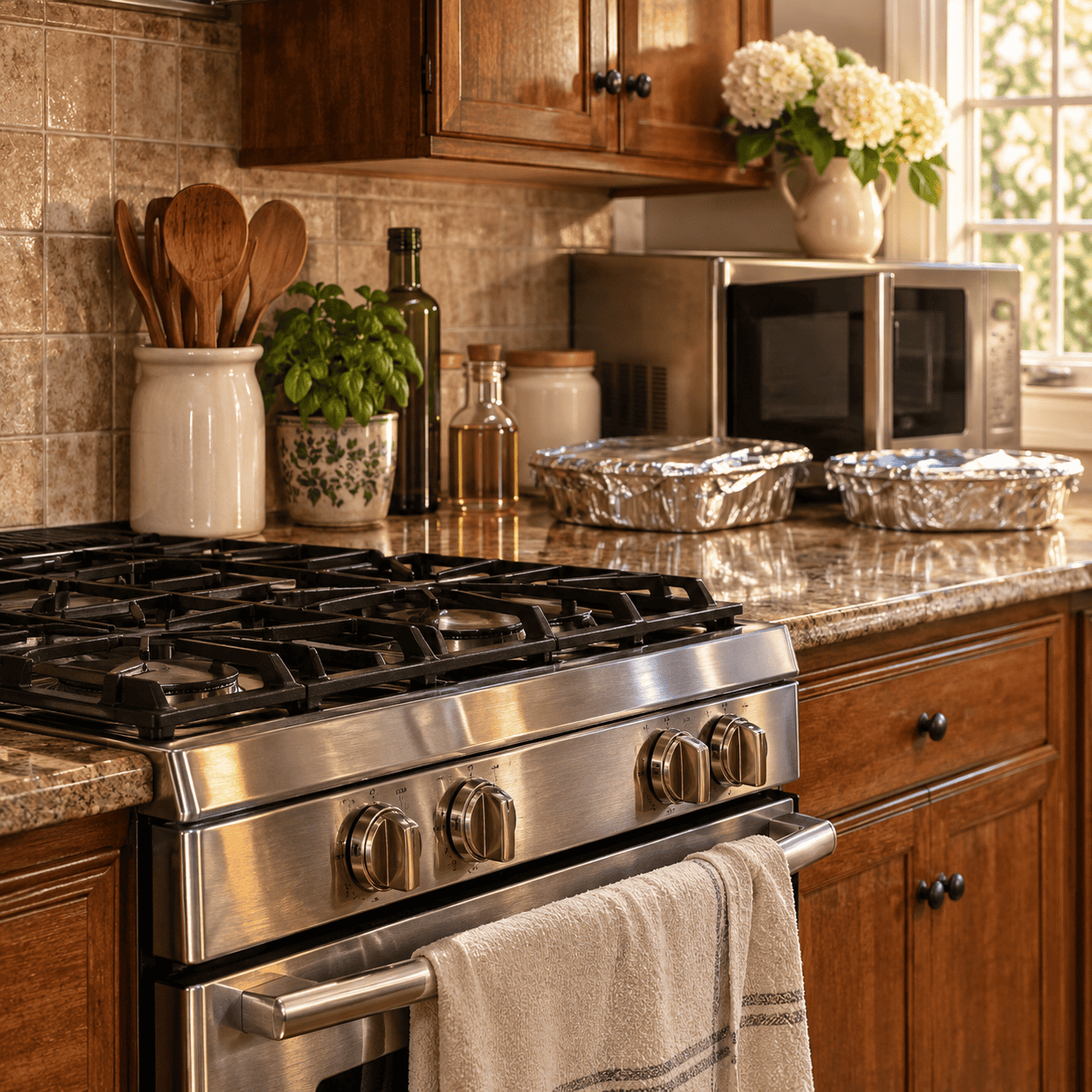
The stove gets the day off. This is the one rule everybody agrees on without arguing.
You spent two days cooking for twenty people. December 26th is for eating what’s already made, in whatever order you want, at whatever time you want.
Lunch is three cookies and a piece of cold eggplant. Dinner is a plate of leftovers heated in the microwave with a paper towel over it. That’s the whole menu.
The first time I hosted friends in my own apartment I tried to make something fresh on the 26th. Nonna called mid-afternoon, heard the pan, and asked me what I thought I was doing. Fair question.
9. Fridge Tetris Is a Competitive Sport
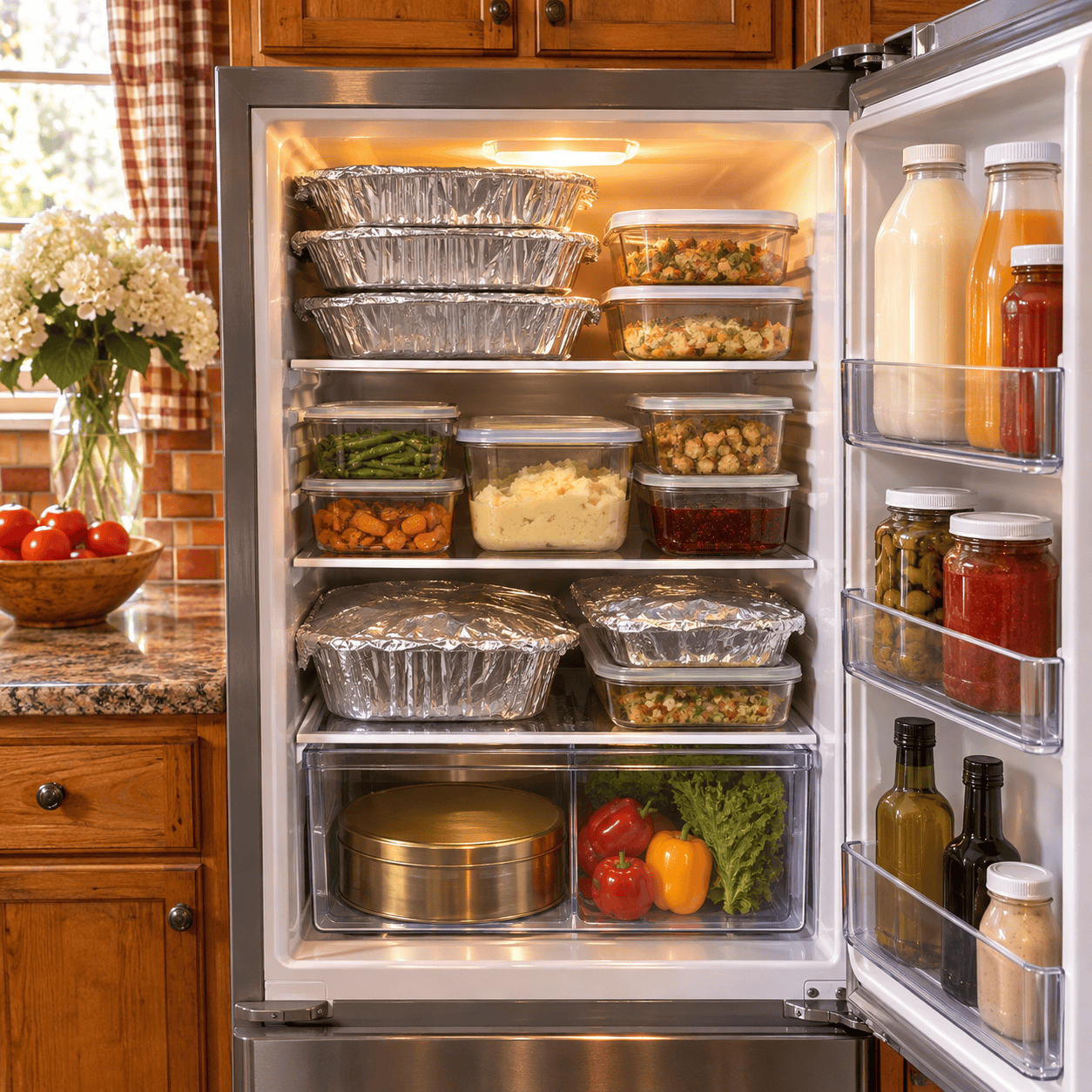
The refrigerator is full before you get home. That’s the starting condition.
You take everything out, lay it on the counter, and rebuild it like you’re packing a moving truck. Tall things in back. Foil pans flat on the bottom shelf. The crisper drawer becomes a cookie vault because nobody’s eating a vegetable this week anyway.
Items that don’t fit go on the back porch if it’s cold enough, which in Philadelphia it usually is. That’s not improvising. That’s the overflow fridge.
My apartment refrigerator is the size of a filing cabinet. I have genuinely considered which friend has the most empty shelf space before accepting a tray.
10. The Christmas Eve Fish Does Not Make It to the 26th
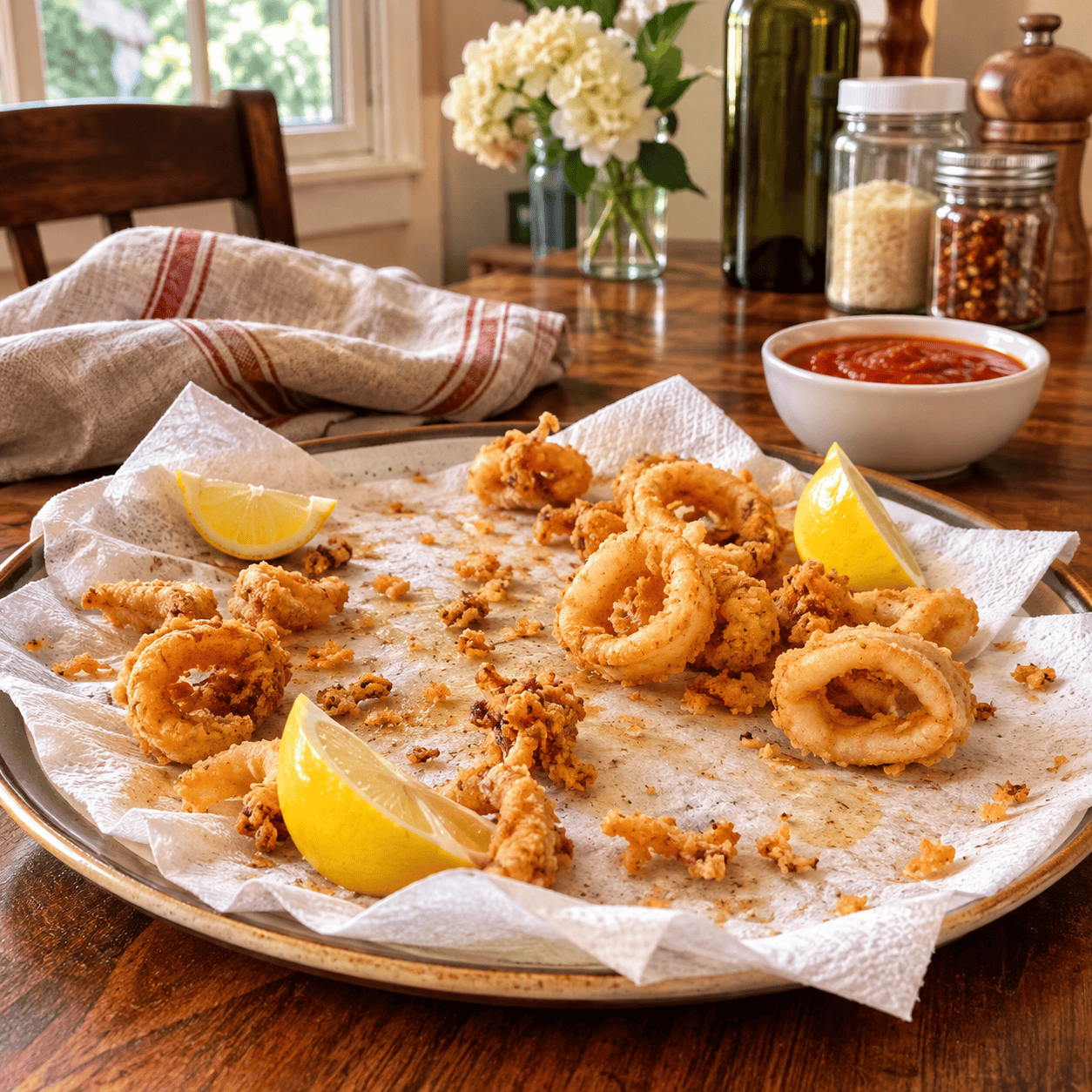
Fried calamari has a half-life of about ninety minutes and everyone in the family knows it.
Baccalà keeps. Shrimp keeps overnight if you’re quick about it. Anything that came out of hot oil is finished the same night or it’s gone soft and sad by morning.
Which is why the Christmas Eve table gets picked clean while the Feast of the Seven Fishes is still technically happening. People eat standing up. People eat on the way to the car.
The tradition itself is older than most families admit — Encyclopaedia Britannica traces it to the Catholic practice of abstaining from meat on the vigil. The no-leftovers clause is purely our own addition.
11. There Is Always a Plate for Someone Who Didn’t Come
This is the one that gets me every year.
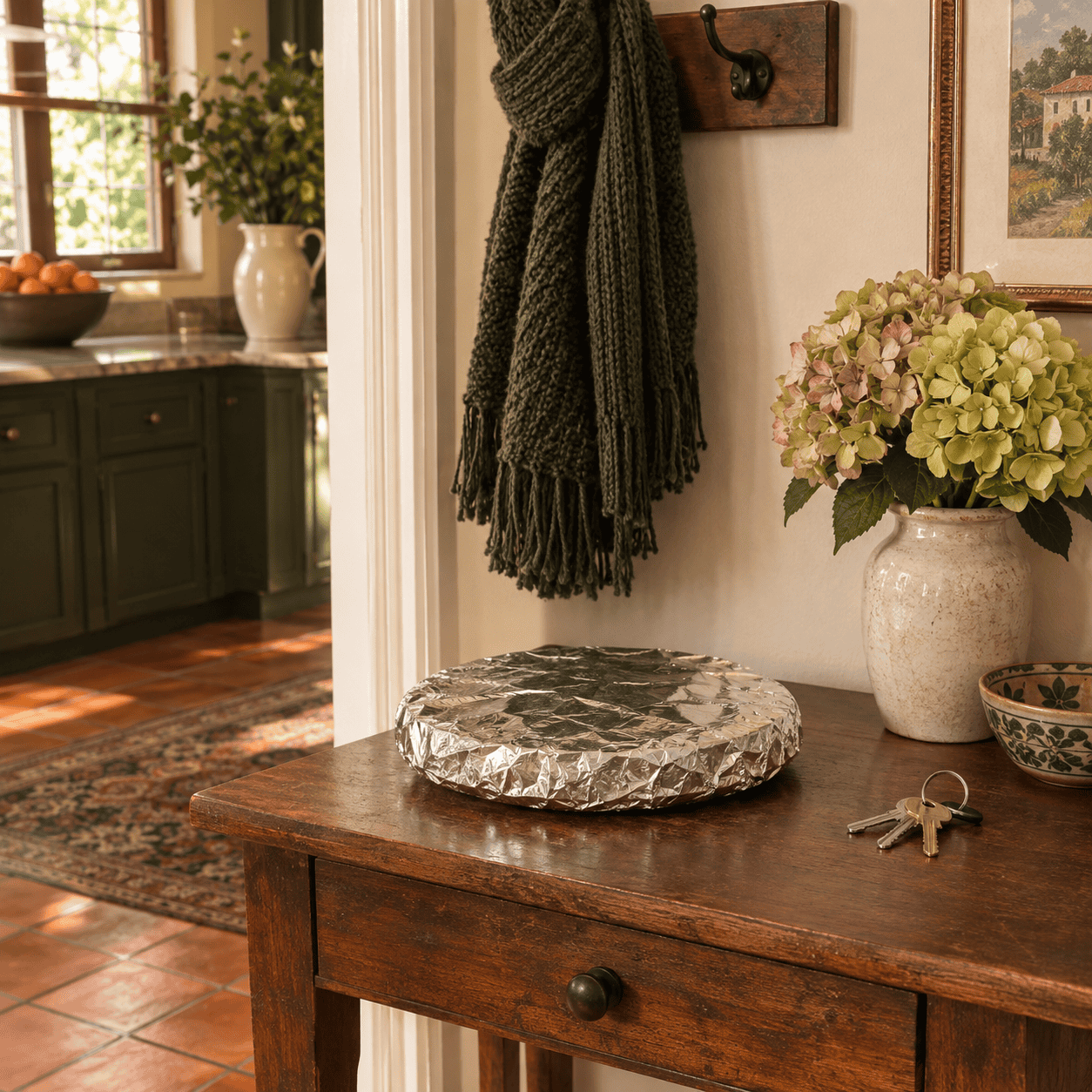
Before anyone else’s container is filled, Nonna makes up a plate for a person who wasn’t at the table. A neighbor who’s been sick. Her friend from church whose husband died in October. The man two doors down who she’s decided doesn’t eat enough.
She covers it in foil, presses the edges down with her thumbs, and writes the name on a piece of tape. It goes by the door so nobody forgets.
She’s never once announced she was doing it. I only noticed when I was about fifteen and counted the plates.
12. The Cookie Tray Gets Divided Like an Estate
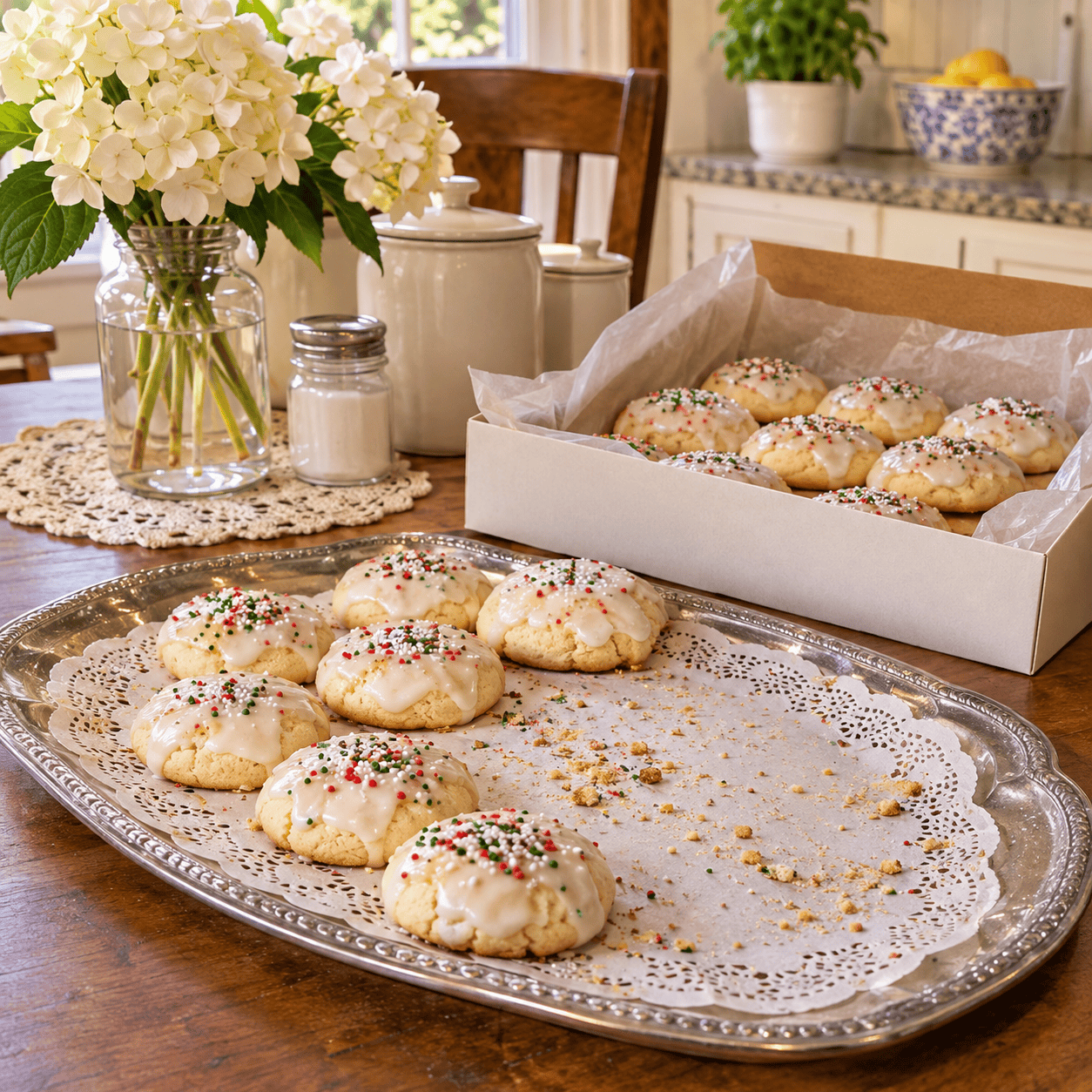
The tray that was gorgeous on Christmas Eve looks like a crime scene by the 25th. Pignoli gone, anise cookies untouched, a lone cucidati sitting there like it’s being punished.
Dividing what’s left is a diplomatic process. Everyone gets some of the good ones and some of the ones nobody wanted, because a tray of only good cookies would be unfair and also impossible.
Nonna builds each one in a shirt box lined with wax paper. She counts out loud. She does not let you pick.
If you’ve ever studied the unwritten rules of the Italian Christmas cookie tray, you already know the split is the final chapter, and it’s the tense one.
13. Leftover Pasta Becomes a Frittata
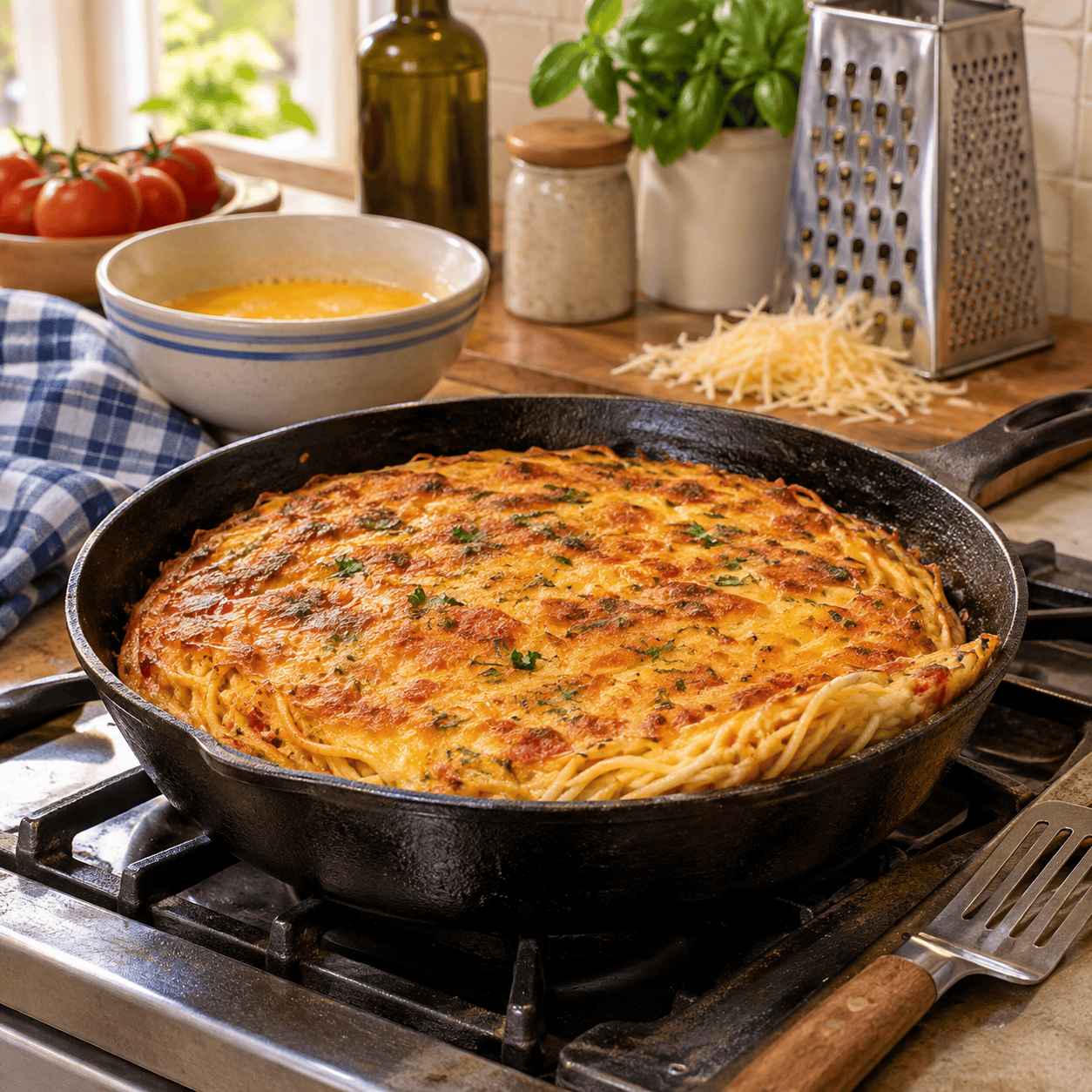
The best thing that happens all week, and it only happens because of waste.
Cold spaghetti, four eggs, whatever cheese is hard enough to grate. Into a hot pan with oil, pressed flat, left alone until the bottom sets into a crust. Flip it with a plate and a prayer.
Nonna does it in a black skillet older than the house. I do it in a nonstick pan from a discount store and it’s still good, which tells you how forgiving the dish is.
It’s the Sicilian answer to the question of what to do with a bowl of noodles nobody wants. You turn them into something that looks intentional. Same energy as the frittata with peas on the site, just carb-forward and unapologetic.
14. The Panettone Is a Long-Term Commitment
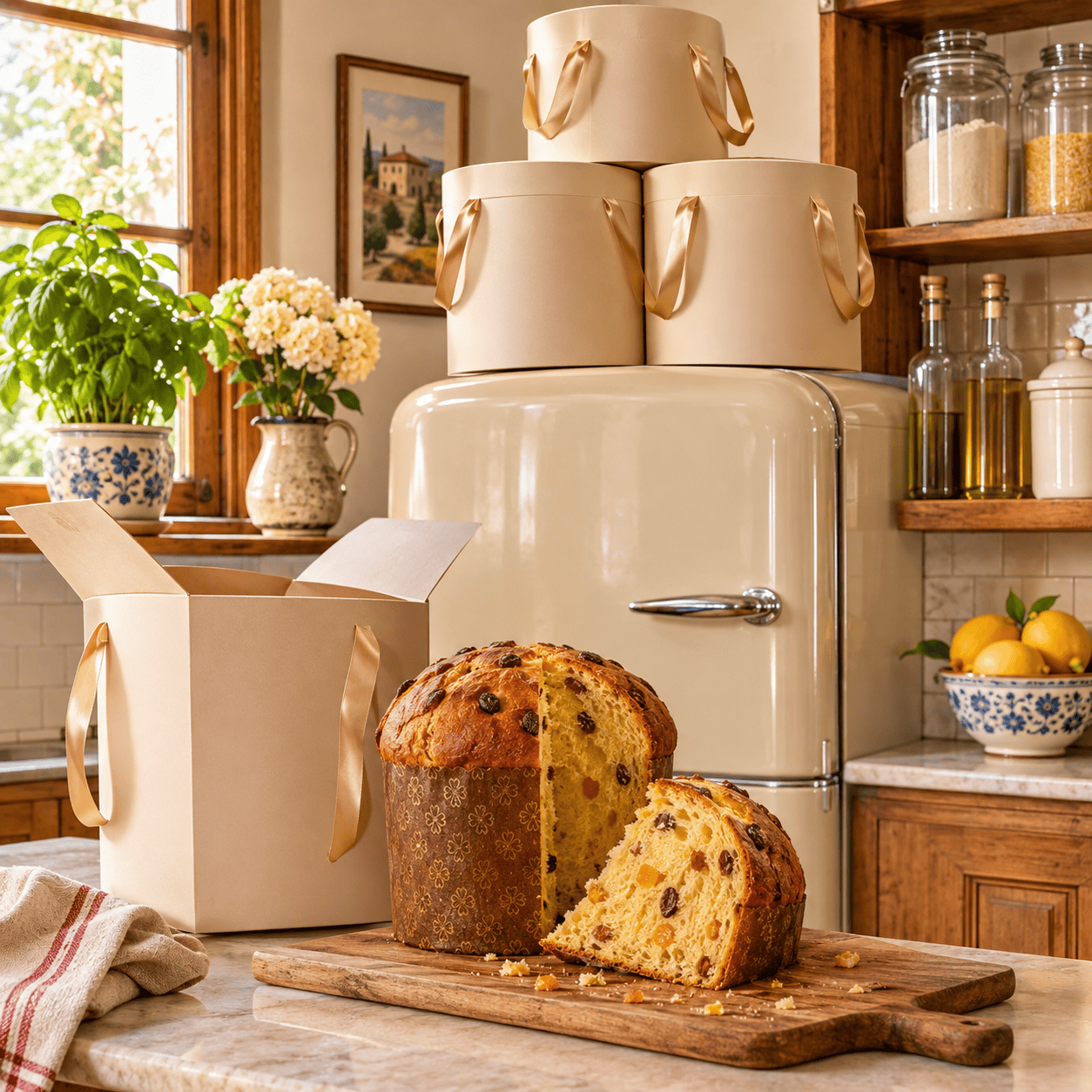
Three arrived. Nobody bought any of them.
They come in as gifts, in those tall boxes with the ribbon handle, and they accumulate on top of the refrigerator like a small city. One gets opened Christmas night. The other two enter storage.
By late January you’re slicing it, toasting it, and eating it with coffee because it’s slightly stale and that’s actually when it’s best. By February there’s still a quarter of one in a bread bag with a twist tie.
Whatever survives into March becomes French toast, soaked overnight in eggs, milk and a splash of the Strega she keeps behind the olive oil. Nonna would never call it a recipe. It’s the best thing she makes all winter.
Nonna swears she doesn’t like panettone. There is a half-eaten one in her kitchen every single February.
15. The Freezer Gravy Gets Dated Wrong
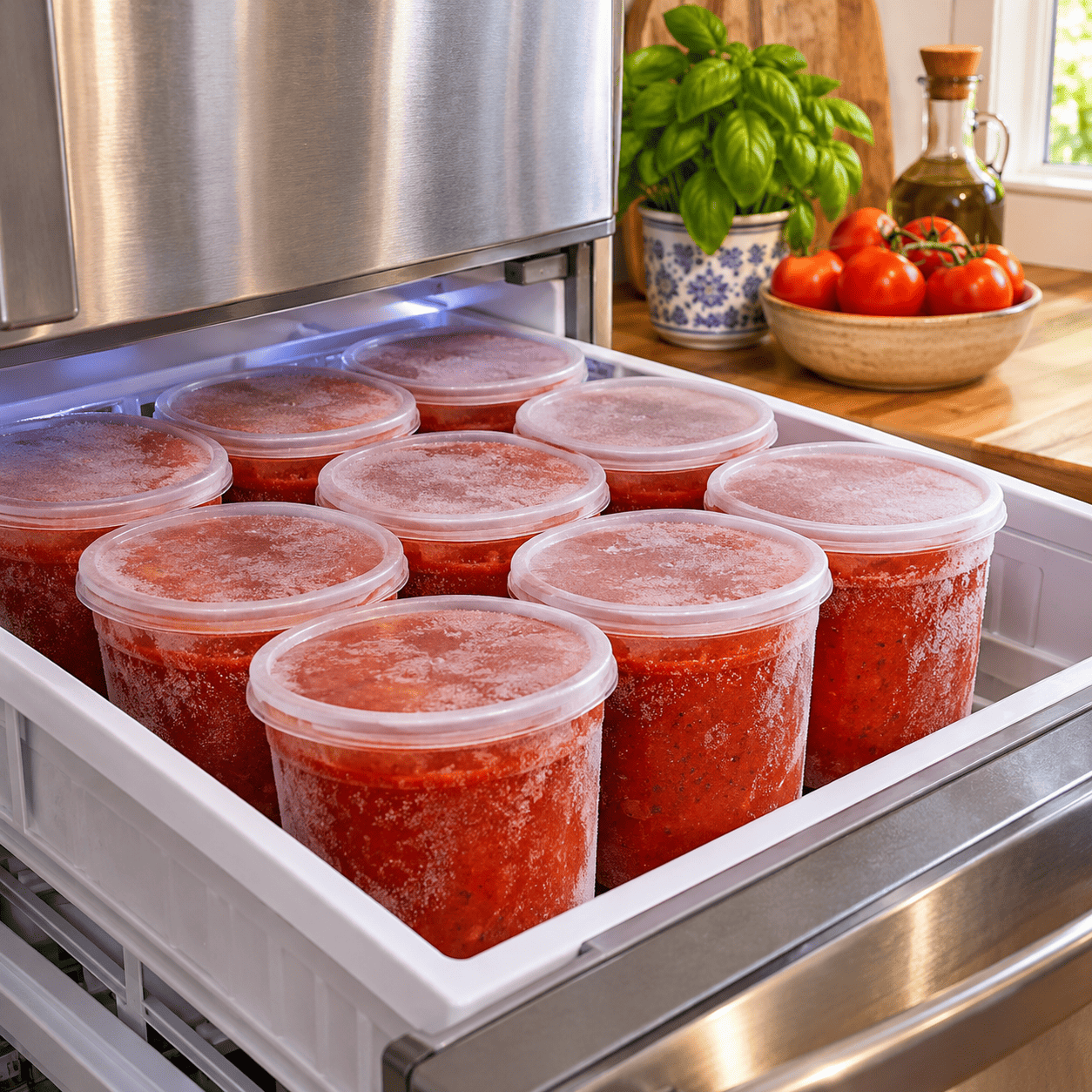
Quart containers of gravy go into Nonna’s chest freezer and the date on the lid is a suggestion.
Sometimes it’s the date she made it. Sometimes it’s the date she froze it. Sometimes it’s just “XMAS” with no year, which is the most dangerous option because there are four of those in there.
The labels are masking tape and a ballpoint pen that skipped in the cold, so half of them read “GR VY 3/1” and you fill in the rest yourself.
You thaw one in March and it’s somewhere between three months and two years old. It’s fine. Everything is fine.
This sits right next to the things Nonna did in the kitchen that would horrify a food safety inspector, and nobody who eats at her table has ever gone down for it.
16. The Ham Bone and the Parmesan Rind Are Not Trash
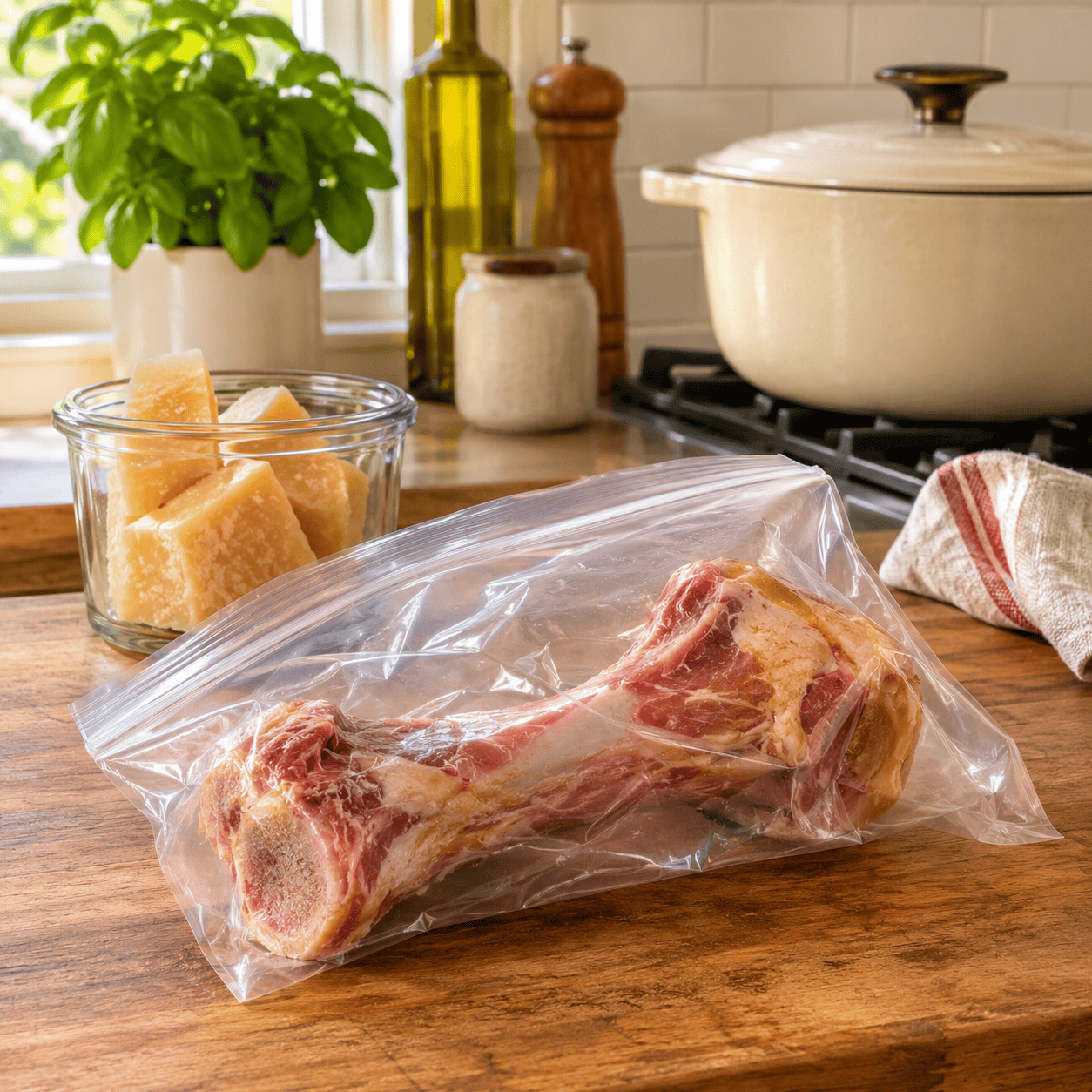
Throwing either one out is a genuine offense.
The bone goes into a bag, into the freezer, and comes out in January for escarole and beans or a pot of lentils. The rind lives in a little container in the freezer door alongside six other rinds, accumulating like coins.
Nonna has never bought stock in her life. The lentil soup for New Year’s gets its backbone from a bone that fed fifteen people on Christmas Day.
I caught myself fishing a rind out of my own trash last year. Thirty seconds of hesitation, then in it went, to the freezer. The training takes.
17. Leftovers Get Reheated the Original Way
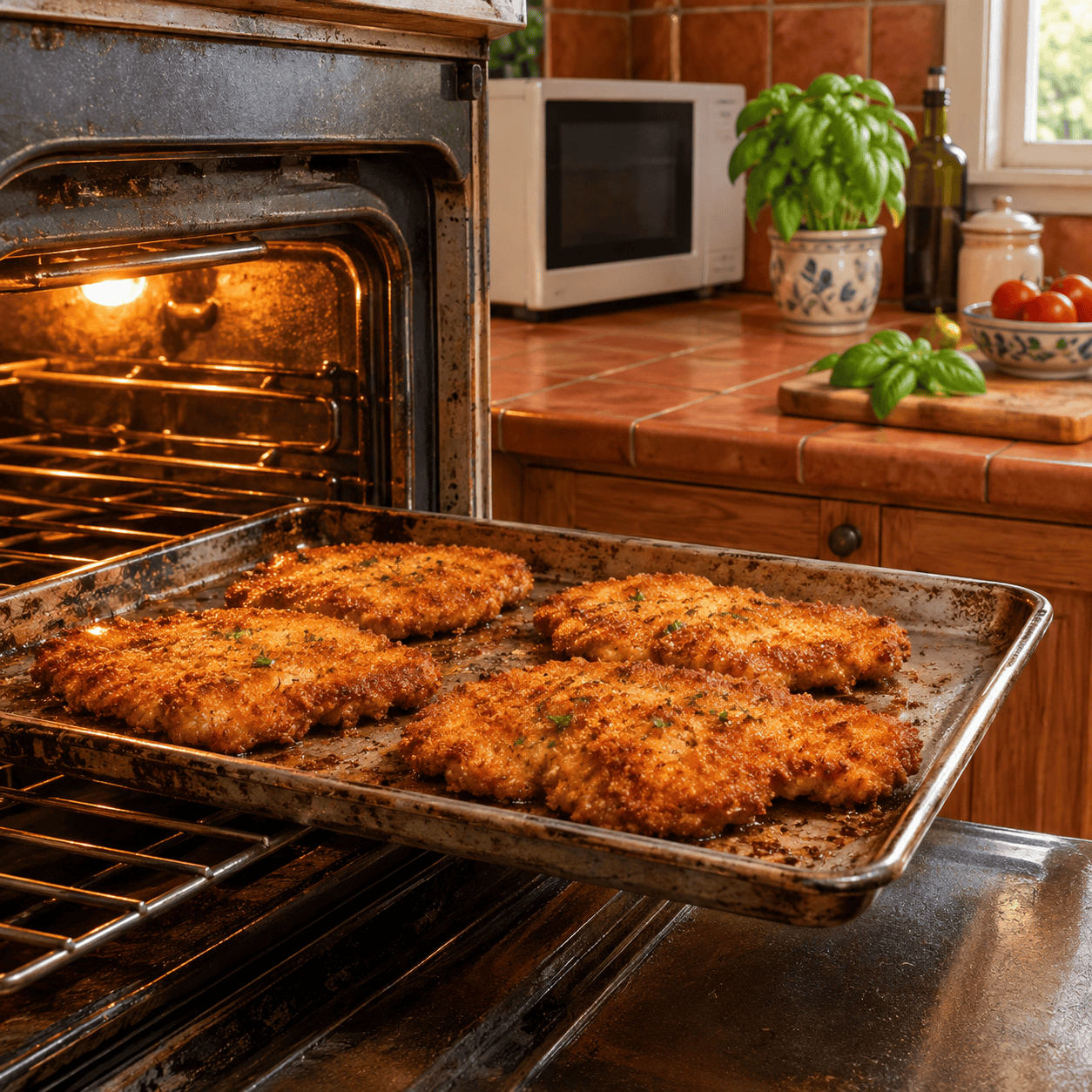
The microwave exists. It’s allowed. It’s also beneath certain foods and everybody knows which ones.
Breaded cutlets go back in a pan or the oven. Lasagna goes in the oven with foil on top and a splash of water in the pan. Soup goes in a pot. Fried anything, if it’s getting reheated at all, gets heat and air, not steam.
The microwave handles plates of mixed leftovers and that’s about the extent of its jurisdiction.
Nonna reheats leftover macaroni in her black cast iron pan with a spoonful of gravy and lets the bottom crisp until it sticks. She calls the burnt edge the best part and she is right.
My secondhand air fryer has become the apartment compromise on cutlets, and I have not told Nonna. She would want a demonstration and then she’d want one.
18. The Antipasto Platter Becomes Lunch for a Week
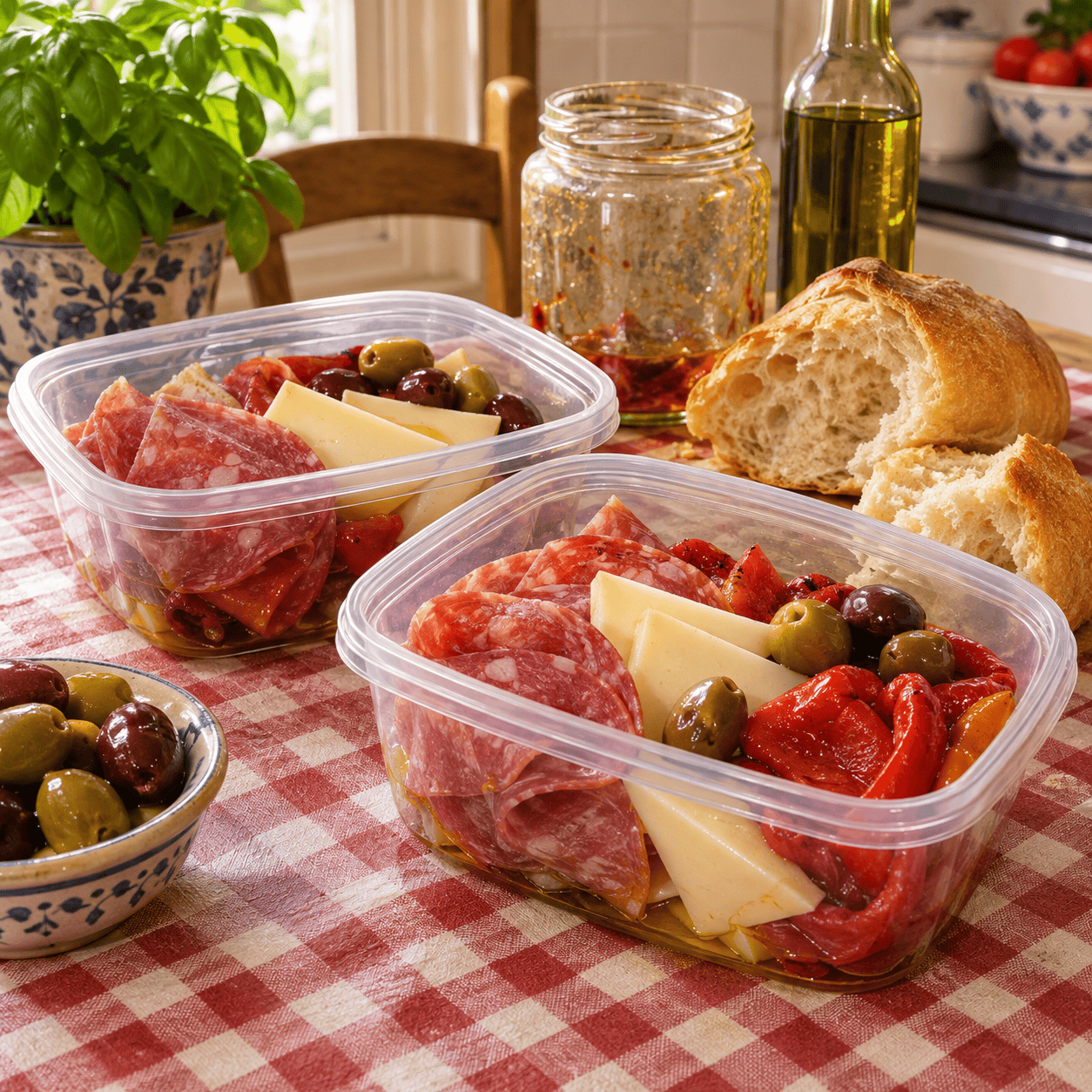
Nothing on that board spoils, which is the whole architecture of an antipasto.
Soppressata, provolone, roasted peppers in oil, marinated mushrooms, olives, a jar of giardiniera that will outlive us all. It gets consolidated into two containers and becomes every lunch from the 26th through New Year’s.
Nonna does the consolidating herself, into the same two Cool Whip tubs she has used since I was small, lids labeled in faded marker. I get sent home with one. She keeps the other and pretends she doesn’t eat out of it standing at the counter.
Put it on bread with the oil from the pepper container. That’s the sandwich. That’s been the sandwich since before I was born.
Half the Italian appetizer spread was built for exactly this second life. Nothing on it was ever meant to be eaten only once.
19. The Bread Does Not Get Thrown Away
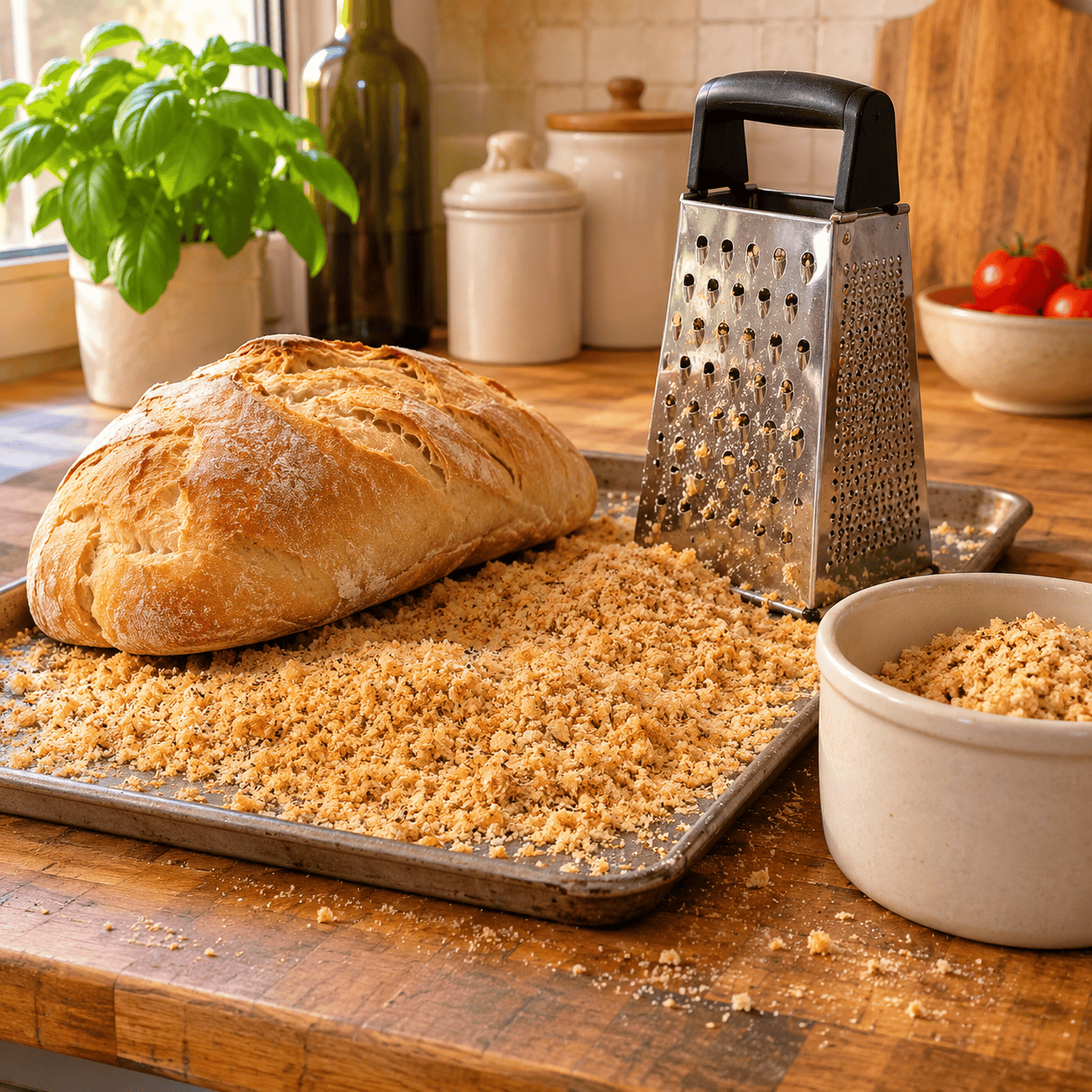
It goes hard by the 26th. That’s not a problem, that’s a stage.
Hard bread becomes breadcrumbs in a food processor, or croutons, or it gets torn into a bowl of soup, or it gets grated by hand over a sheet pan if you want to hear Nonna complain about machines.
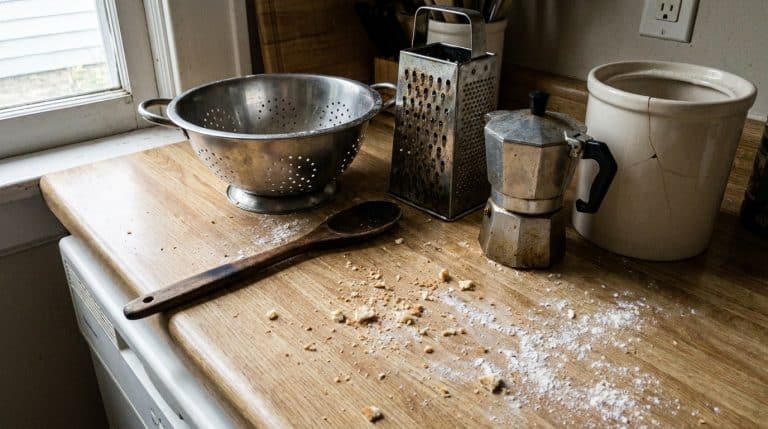
She keeps a box grater just for this, the one with a dent in the side from the year it fell off the radiator. The heels of every loaf dry on top of the fridge in a paper bag until there are enough to make it worth getting the grater down.
The crumbs go in a coffee can. The coffee can lives in the pantry and has never once been empty.
I buy breadcrumbs sometimes. It feels like cheating on someone.
20. The Struffoli Get Picked At Until They’re Gone
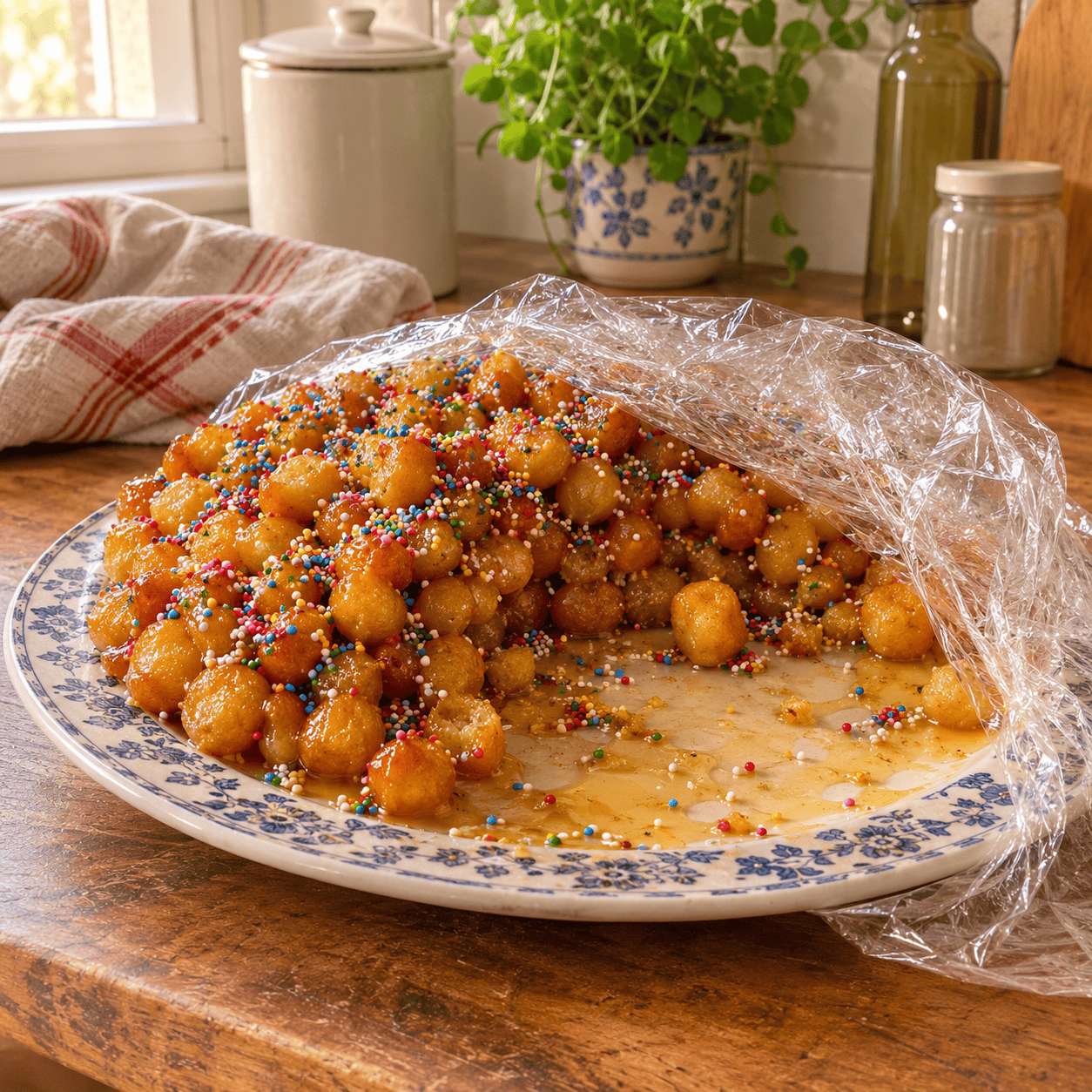
Nobody eats a serving of struffoli. People walk past the plate and take three.
They sit out under plastic wrap on the counter for four days, honey slowly pooling at the bottom, sprinkles migrating. Every pass through the kitchen costs you two or three.
Nonna piles them on the same chipped milk-glass cake stand, shaped into a wreath with a candied cherry every few inches. By the second night the wreath is a horseshoe. By the third the cherries are gone and nobody saw a thing.
The ones at the bottom are the best because they’ve been sitting in the honey the longest. The strategy is to wait and then strike.
On the 28th there’s a sticky cake stand with four of them stuck to it and nobody will admit to being the one who stopped short of finishing.
21. The Negotiation Happens at the Door
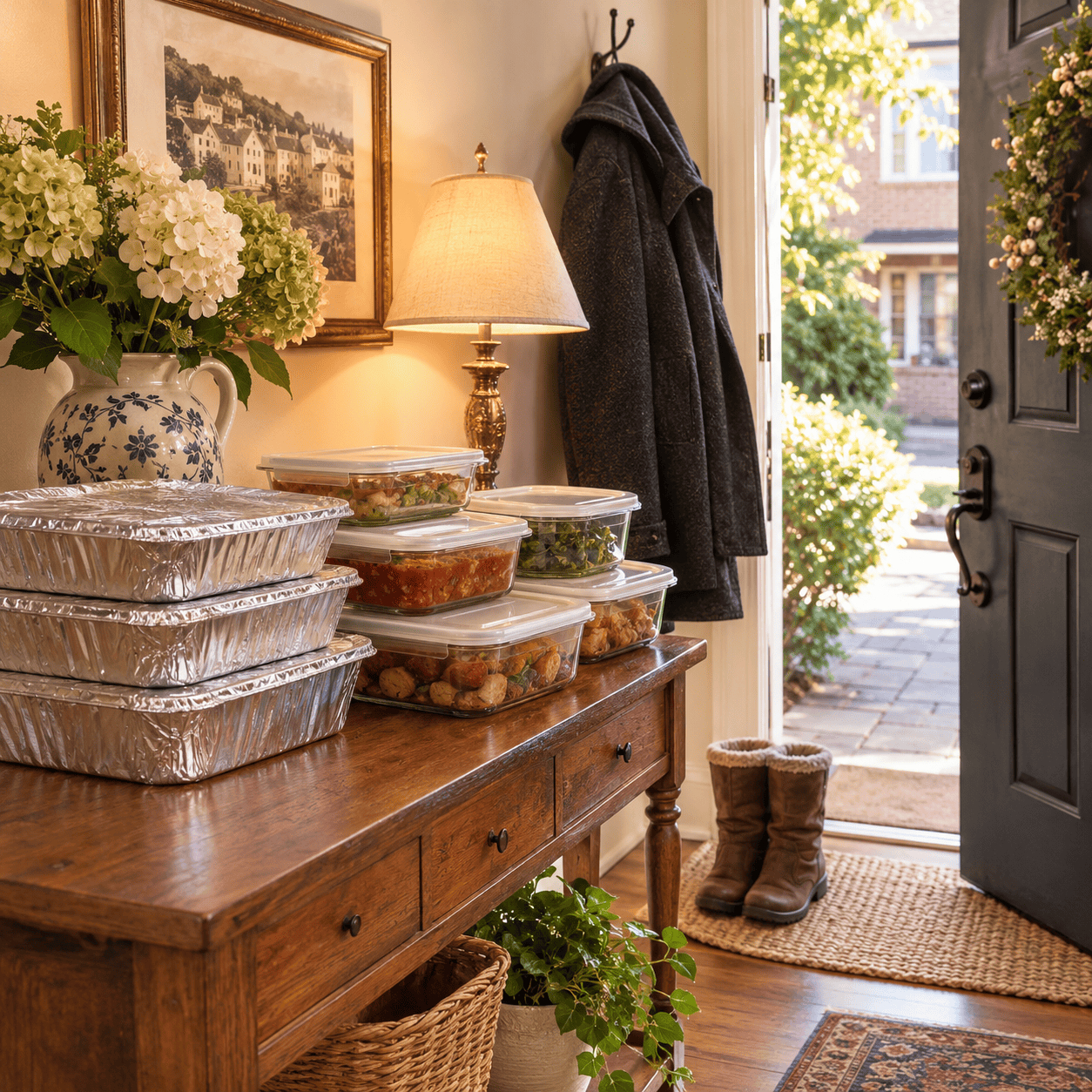
Coats on, car keys out, and now the real conversation starts.
“Take the ziti.” “I can’t, I have the fish already.” “Then take the ziti and leave the fish.” “I want the fish.” “Then take both.”
This goes on for six to eight minutes in a hallway with the door open and the cold coming in. Nobody wins. Everyone leaves with more than they arrived able to carry.
Nonna’s closing move is the Cool Whip tub. There has never been Cool Whip in it. It’s meatballs, sealed with a strip of masking tape that says “M” in her handwriting, and she presses it into your hands while you’re still saying no.
I’ve watched two grown adults negotiate over that tub like it was a hostage situation. One of them was me.
22. The Pan Goes Home With You, So Do Not Lose the Lid
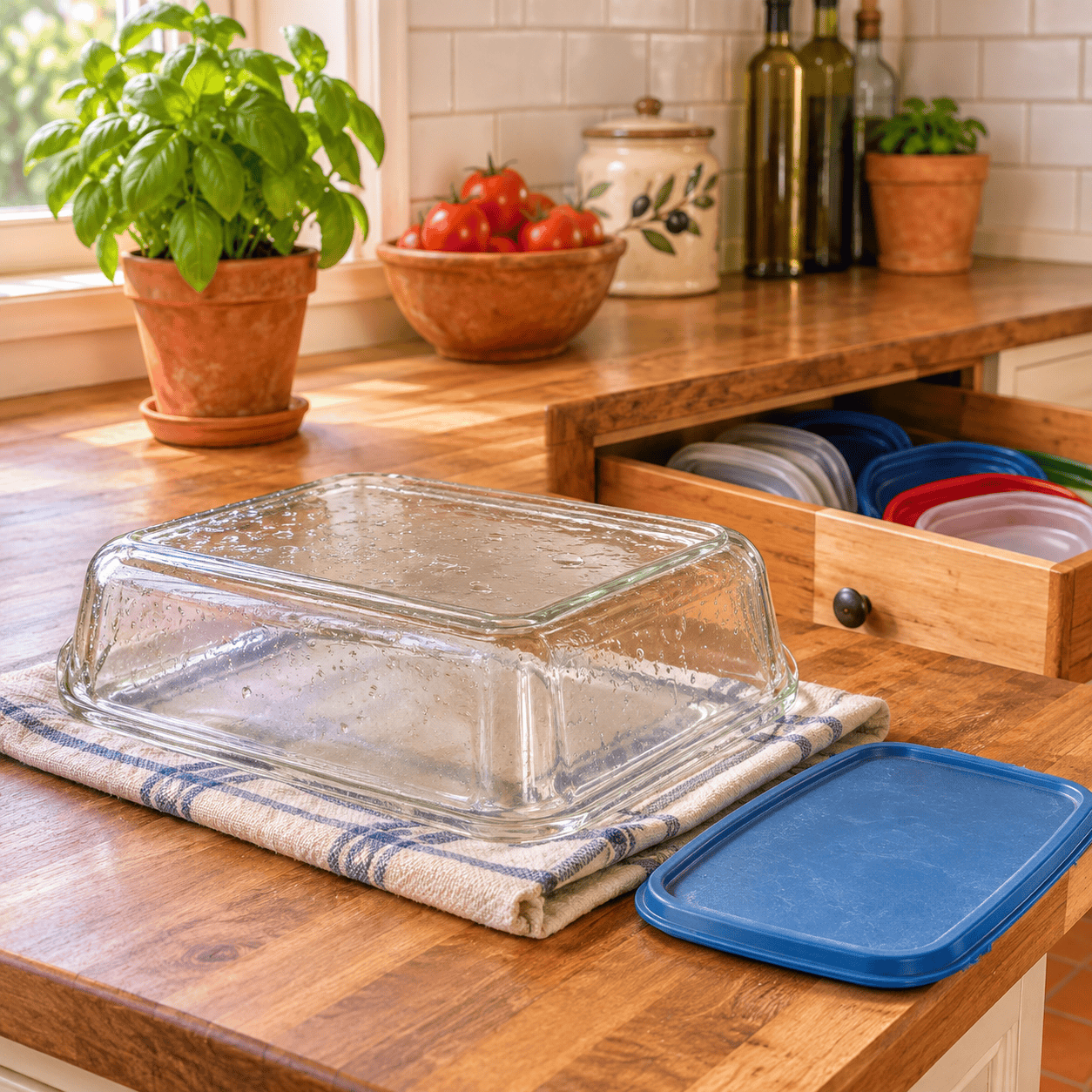
Glass baking dishes are a separate class of object from containers. They’re heirlooms with a job.
The lids never match. The 9×13 with the blue plastic lid is the good one and everyone knows it. If you leave with it, you’re responsible for it.
I once returned a dish without its lid in late January and heard about it in April, at Easter, in front of people.
Now I wash it, dry it, put the lid on, and hand it over in person. Mailing it is not an option. Dropping it off is an opportunity to be fed again.
23. The Escarole Soup Shows Up Around the 27th
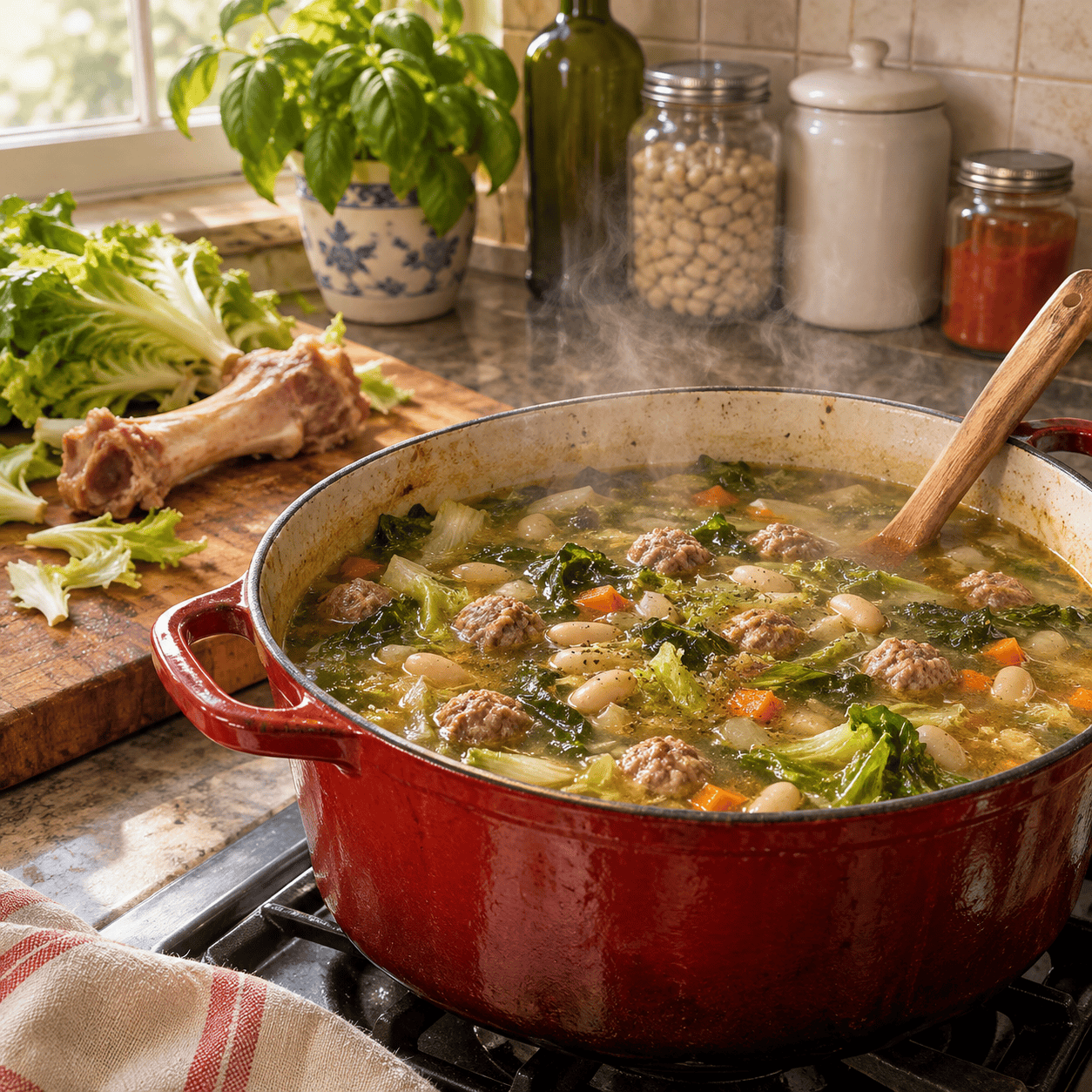
At some point around the 27th, my body revolts against cheese and demands a vegetable. Nonna’s does too, though she would never put it that way.
That’s when the ham bone comes out of the freezer and the escarole comes out of the crisper, along with whatever meatballs survived. Little meatballs if someone had the foresight to roll extra small ones.
It’s the first thing anyone has actually cooked since the 24th, and it takes forty minutes, and it feels like medicine. The rind from the end of the Locatelli goes in too, fished out with a fork right before serving.
Nonna calls it “the soup” as if there is only one. In the last week of December, there is. Everything else on the genuine Italian soups list waits for January.
24. The Ricotta Dessert Has a Clock on It
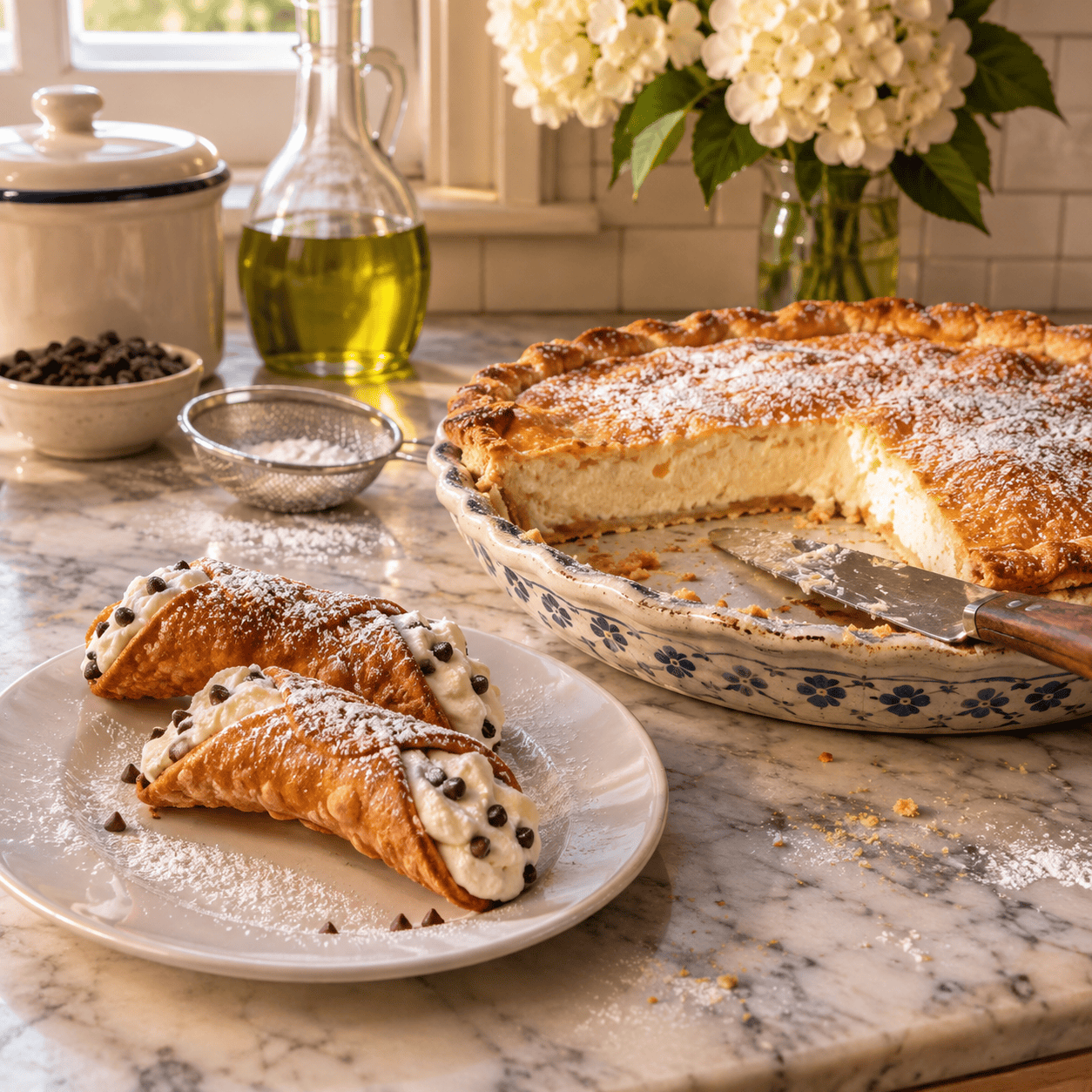
Cannoli filled on Christmas Eve are not cannoli by the 27th. They’re tubes of sweet paste in a soft wrapper.
Anything with fresh ricotta — the pie, the cheesecake, the filled shells — runs on a shorter calendar than everything else on the table. Three days, maybe four for the baked ones.
Which is why the ricotta pie gets served twice on Christmas Day and pushed on people at the door like contraband.
Nonna fills to order. The filling waits in the fridge in an old Cool Whip tub, and she pipes it from a sandwich bag with the corner snipped off, one shell per raised hand.
If you end up with a cannoli on the 28th, eat the filling with a spoon and throw the shell out. Nobody has to know and Nonna will not be told.
25. Nothing Goes to the Dog, But Something Always Does
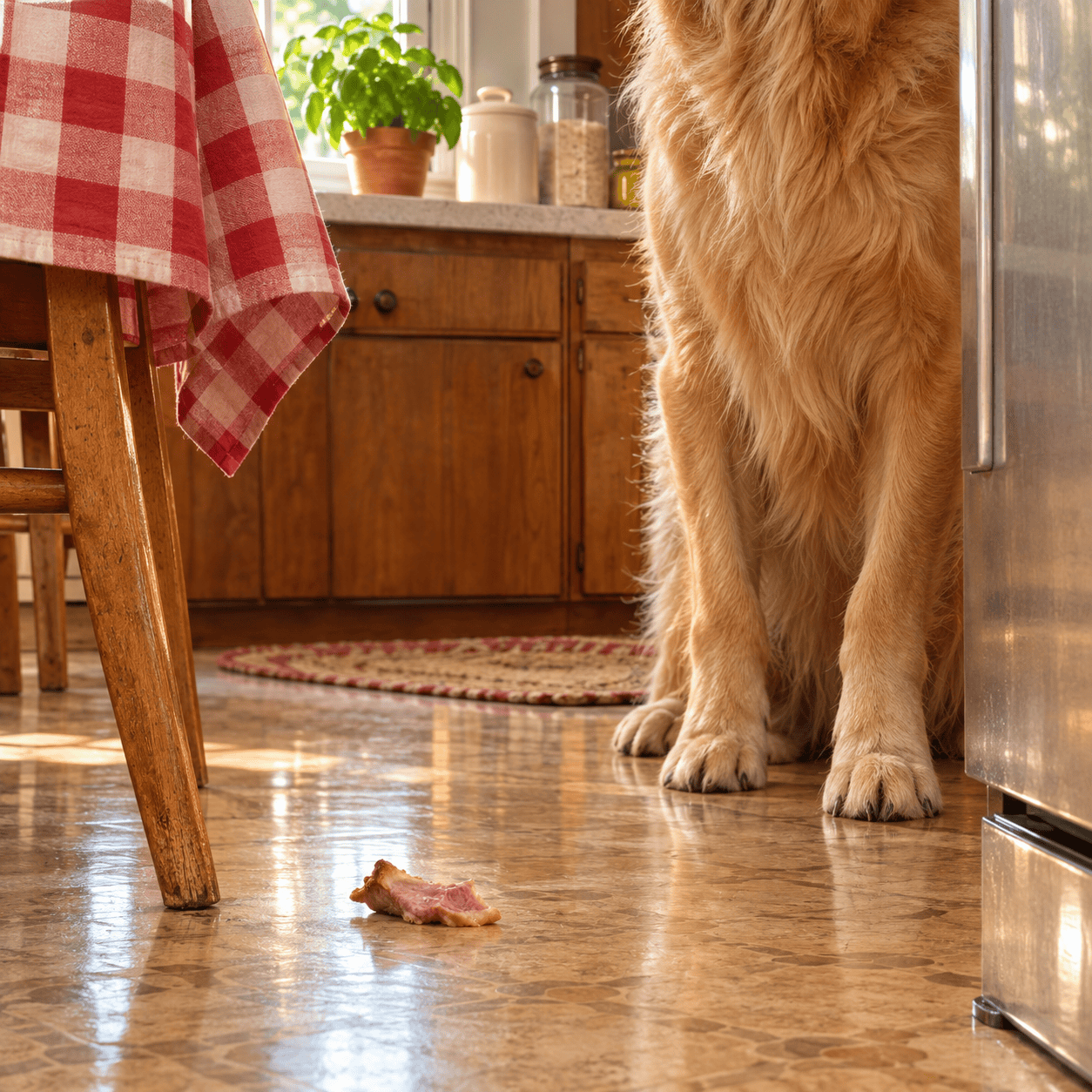
Officially, table food is bad for the dog. There are rules, posted verbally, repeatedly, usually while someone is holding a fork over the floor.
Unofficially, the neighbor’s dog has eaten more braciole than I have. A piece of meat disappears under the table at steady intervals all through dinner, and everyone pretends to be looking at the window.
By the 26th the dog has developed opinions. It will sit next to the refrigerator with the patience of someone who knows the schedule.
Nonna is the strictest about the rule and the most frequent violator. These two facts live side by side without tension.
She keeps a meatball folded in a paper napkin in her apron pocket, and the dog checks that pocket before it says hello to anyone.
26. The Anisette and the Nuts Stay Out Until New Year’s
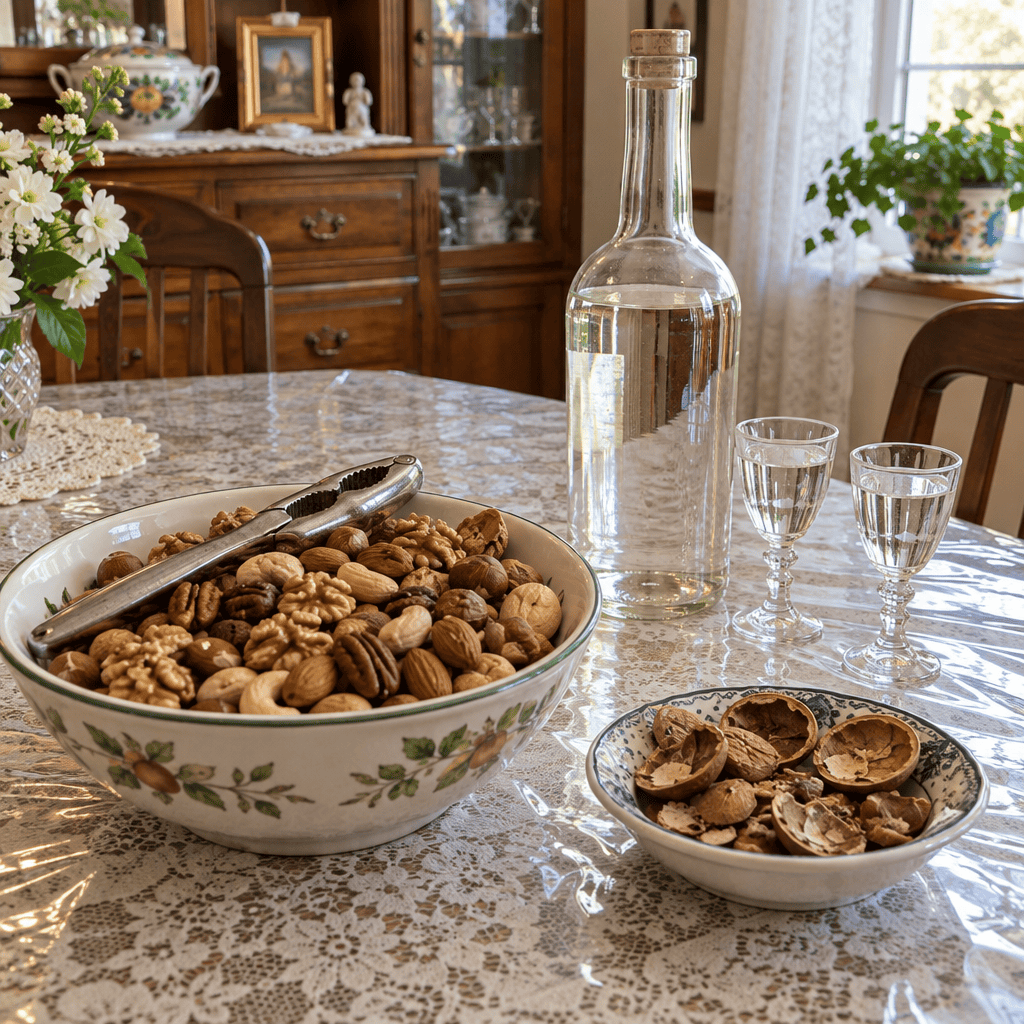
The bowl of mixed nuts with the nutcracker in it does not get put away at Nonna’s. Neither does the anisette.
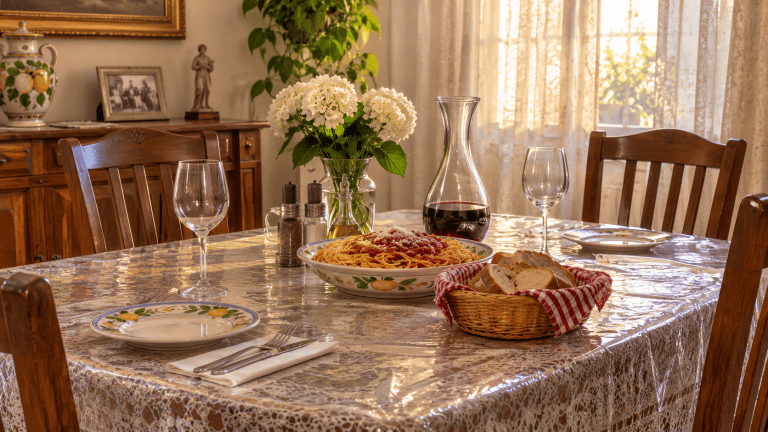
They sit on the dining room table under the good tablecloth, which is still under a sheet of clear plastic, because the table is technically in holiday mode until January 2nd.
Anyone who comes by between Christmas and New Year’s gets offered a shot and a handful of walnuts, and refusing is a longer conversation than accepting. The glasses are the tiny gold-rimmed ones from the china cabinet, so small the mailman once asked if they were for a dollhouse. Nonna pours them to the brim anyway.
The shells go in a dish. The dish fills up. Nobody empties it, which seems to be part of it.
27. The Last Container Is Eaten Alone and in Silence
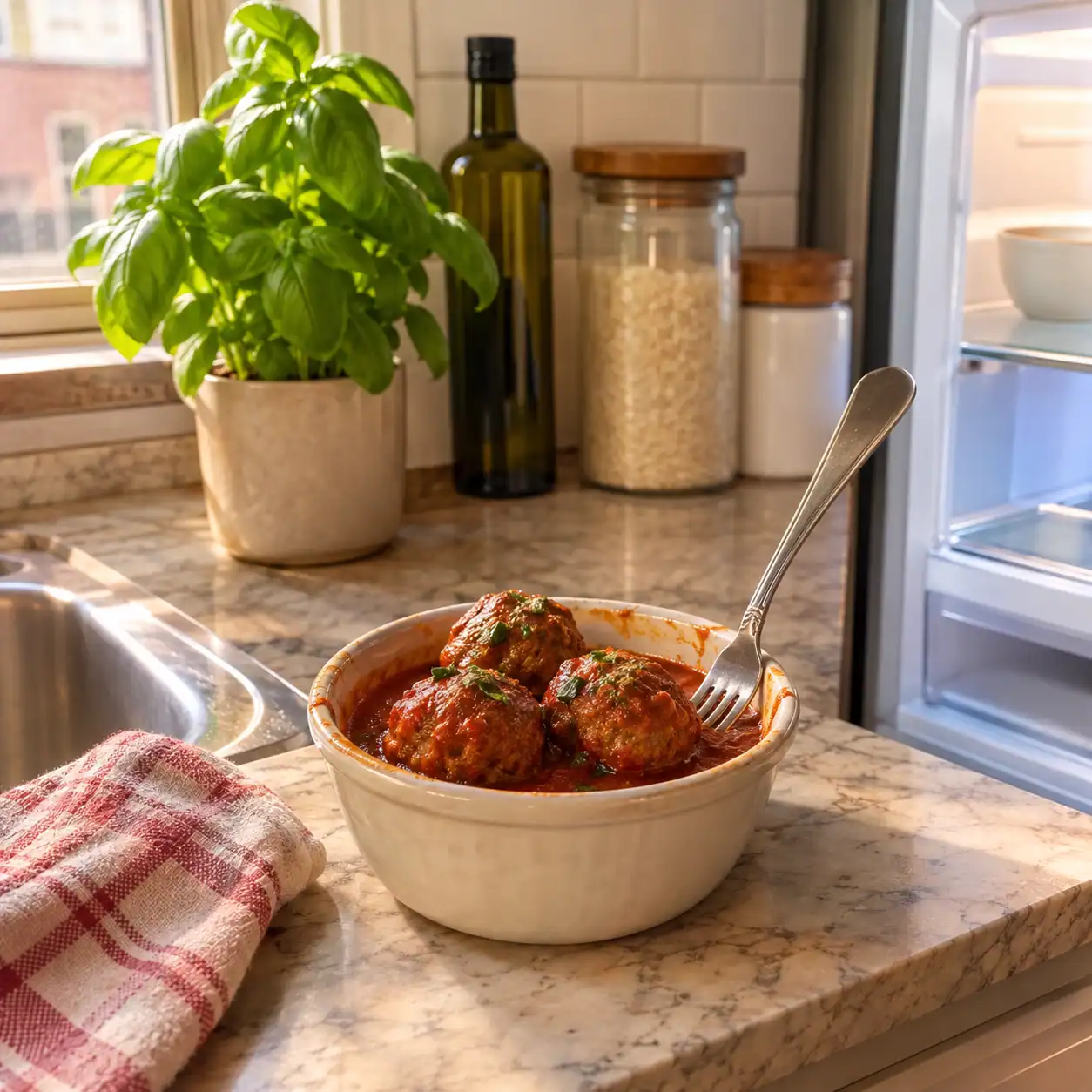
Sometime around December 29th you open the refrigerator and there’s one container left.
Usually it’s a strange one. Half a cup of gravy, three meatballs, a corner of something. Not enough to serve, too good to throw out.
You eat it standing at the counter, probably over the sink, probably cold, and that’s when the holiday actually ends. Not at midnight on the 25th. Here.
The first year I spent that moment in my own apartment instead of Nonna’s kitchen, I called her. She asked what I was eating. I told her. She said “good” and hung up, which from her is a long speech.
None of this is about food running out. It’s about the fact that an Italian-American Christmas is engineered, deliberately, to produce more than anyone can finish — so the eating keeps going for a week, so there’s always a plate for someone who needs one, so the containers keep circulating between houses into February.
The cooking ends on the 25th. The holiday ends when the last foil pan is washed and returned.
If you grew up with a back porch full of overflow trays and a roll of masking tape by the phone, you already knew every rule on this list. You just never saw anyone write them down.
Buon appetito,
Madeline