Unwritten Rules of Christmas Day Dinner at an Italian-American House
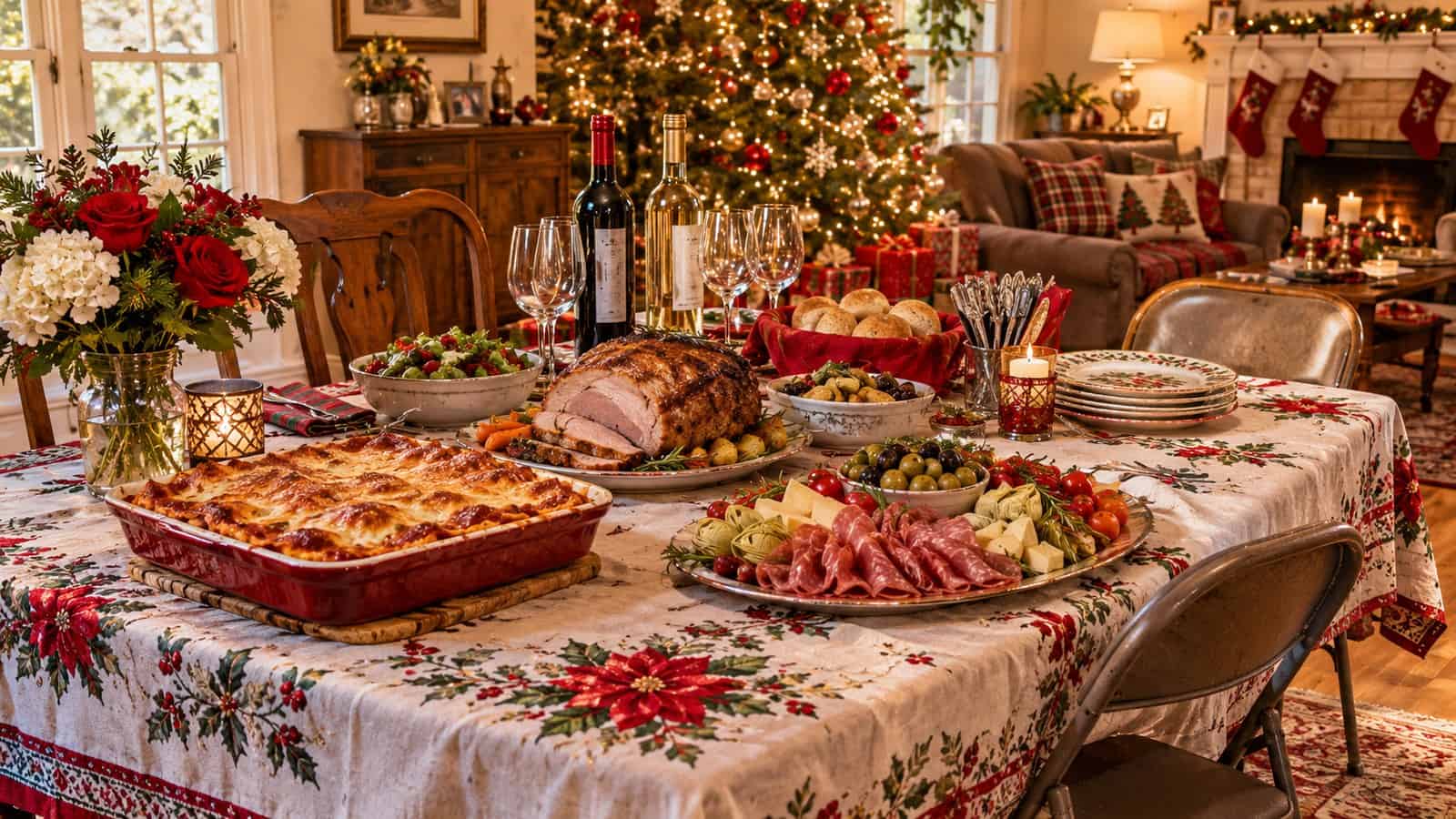
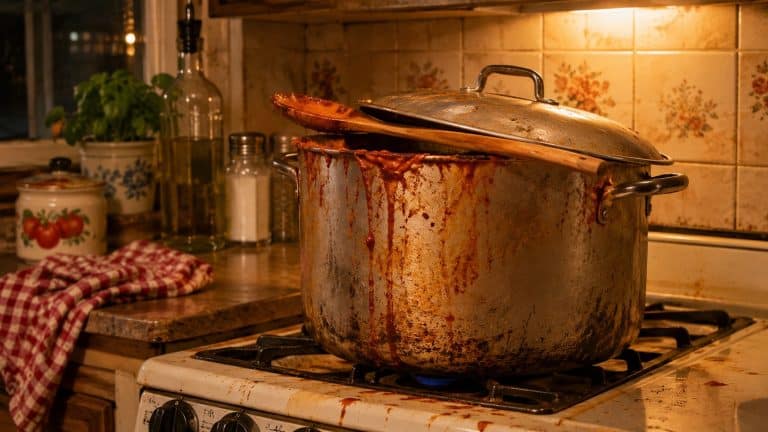
The fish is gone. The plates from last night are still drying in the rack. And by six in the morning on December 25th, there is already a pot on the stove.
That’s how I grew up, in a rowhouse outside Philadelphia with Nonna Pina running the kitchen and the rest of us orbiting around her like we had assigned seats in the solar system.
Christmas Day in an Italian-American house is not Christmas Eve. Different food, different mood, different rules. Nobody ever wrote them down. Nobody had to.
You learned them by getting corrected. Usually in front of company.
Here are the unwritten rules of Christmas Day dinner, the ones my family still follows and still argues about.
1. Christmas Eve Was Fish, So Today Is Meat
The whole shape of the day comes from the night before. You ate baccalà and smelts and clams until midnight, and now it’s over. The frying oil smell is still in the curtains, and nobody misses it.
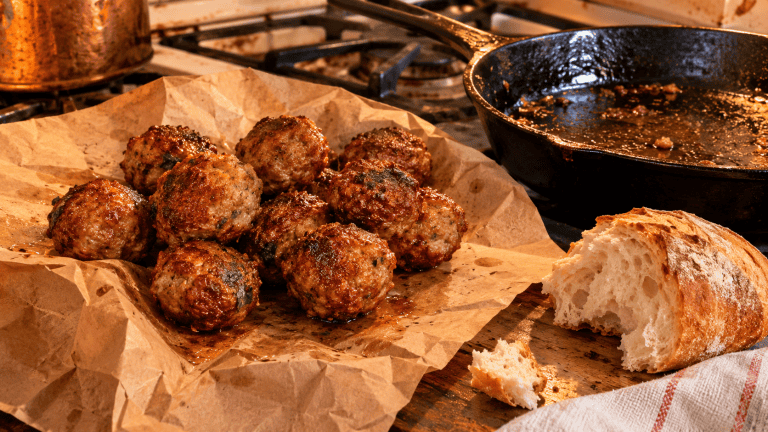
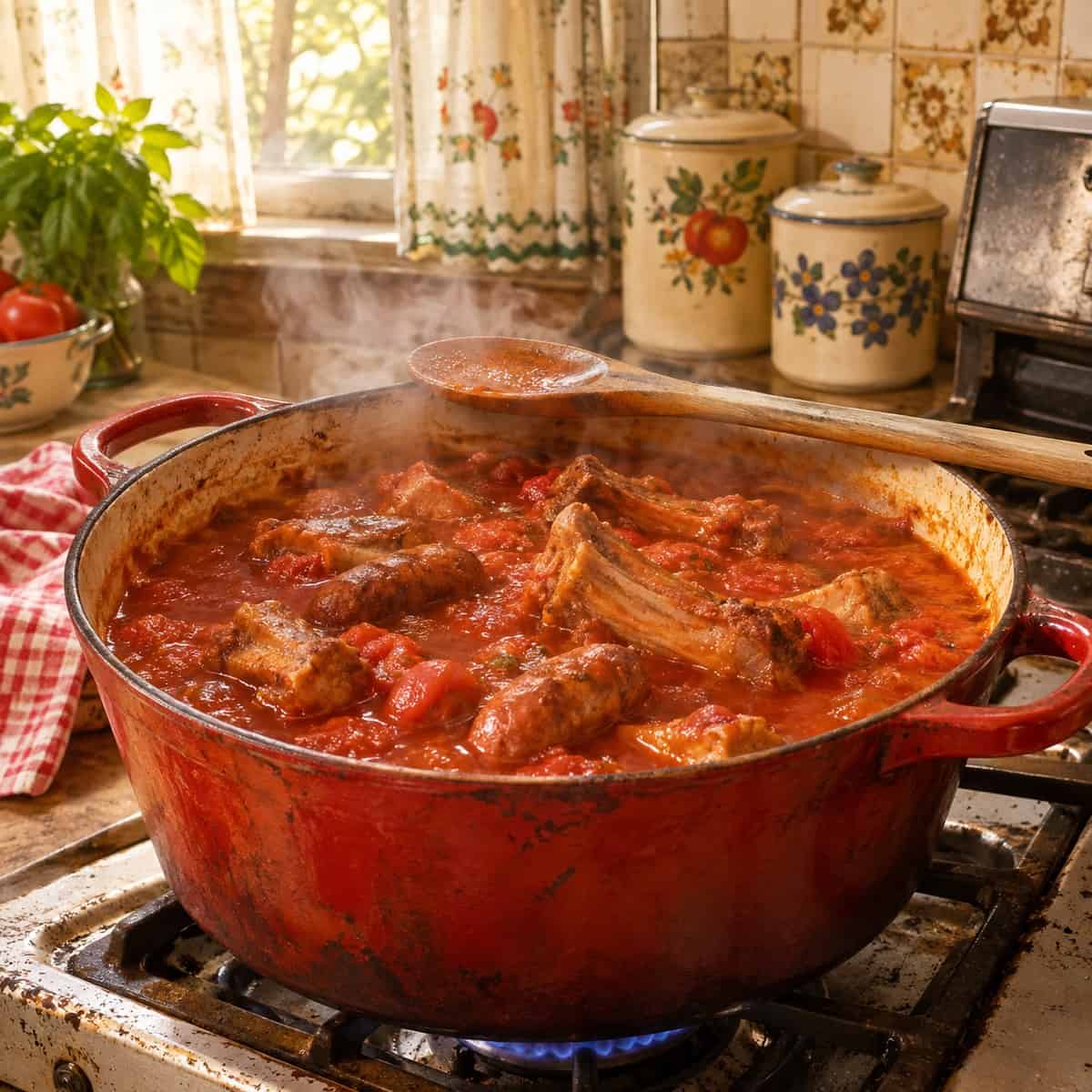
Christmas Day is meat. Pork, beef, sausage in the gravy, braciole, meatballs. No apologies, no balance, no “maybe something lighter.” The Eve was a vigil with no meat allowed, so the first meatball after Mass feels like the fast officially breaking.
Mrs. DiNapoli from next door once brought a shrimp platter on Christmas Day. Nonna looked at it, looked at her, and said, “That was yesterday.” The platter went in the back refrigerator in the basement and reappeared on the 26th.
The rule isn’t superstition. It’s relief. Fifteen hours of fish earns you a roast. Nobody needs another clam until next December.
2. The Gravy Goes On at Six in the Morning, in Pajamas
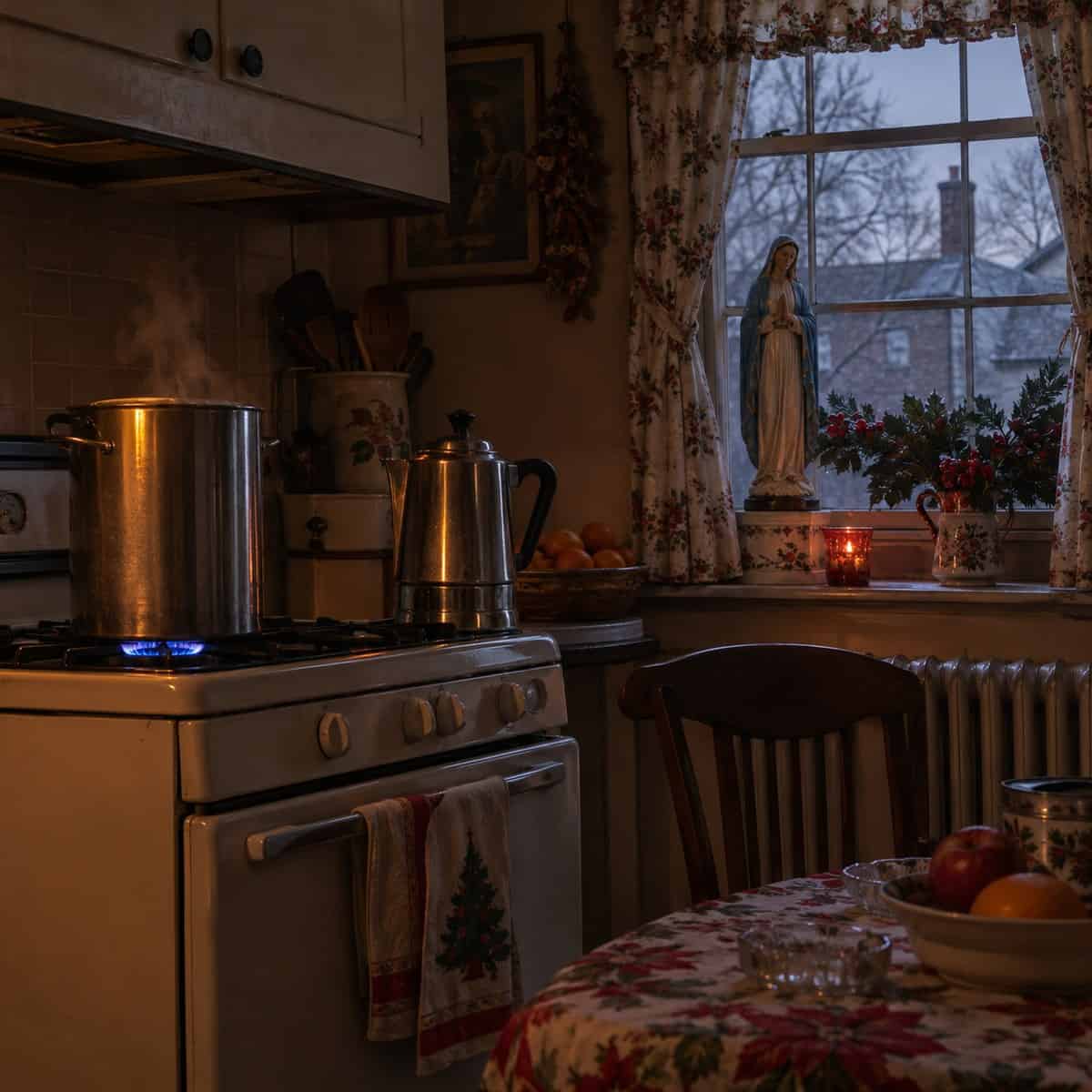
Before the tree. Before coffee, almost. Nonna came down in a housecoat with her hair still pinned and started browning meat in the dark.
You could hear it from upstairs, that spitting sound, then the smell climbing the stairwell. Christmas morning in that house smelled like garlic and pork fat, not cinnamon. By seven the tomatoes were in, the lid was tipped half off, and she was back upstairs getting dressed.
If somebody tried to start presents first, they got the same answer every year: “The gravy doesn’t care what day it is.” She meant it literally. Dinner was at two, and gravy needs most of a morning to get there.
I do it now at six too, in my apartment, and my roommate thinks it’s funny. She still wanders out early because of the smell. That’s the whole trick, and I don’t think anybody planned it.
3. The Ravioli Were Made the Week Before and Frozen in the Garage
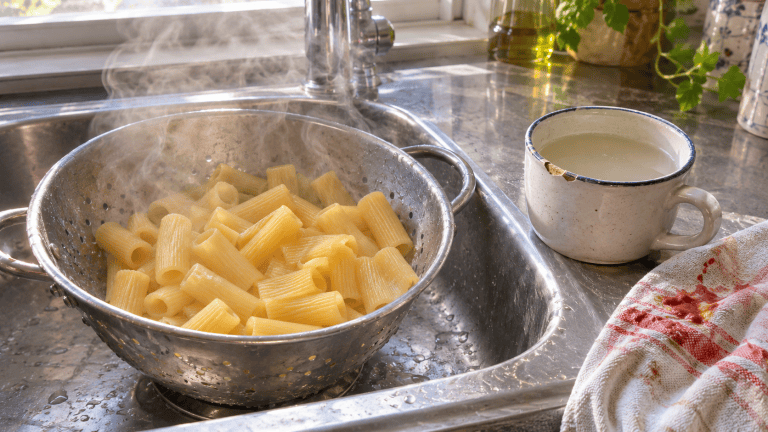
Nobody makes fresh pasta by hand on Christmas morning. There isn’t time and there isn’t counter space.
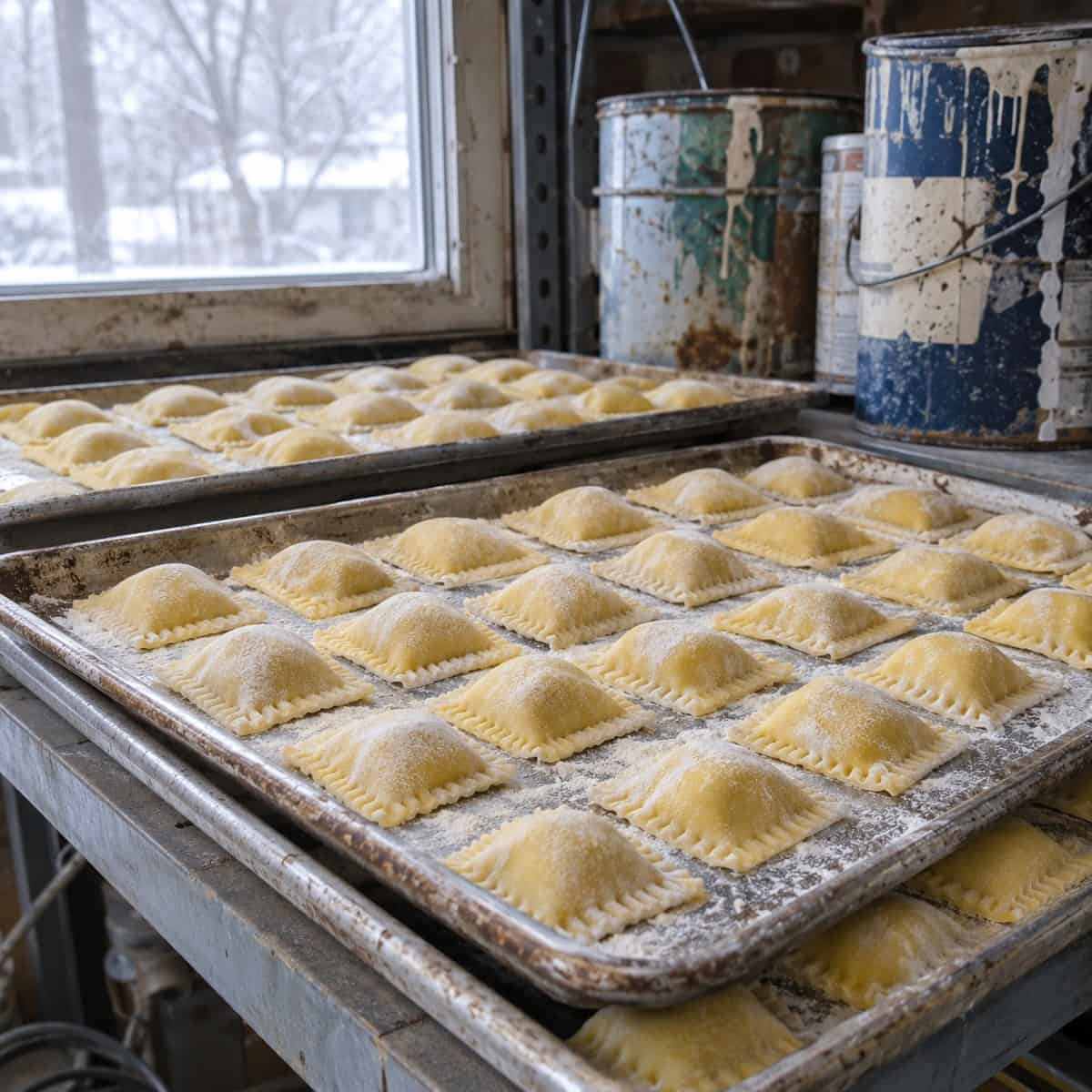
The ravioli got made the Sunday before, on a floured dining room table, by three women and however many kids could be bribed into pressing the edges with a fork. The fork marks were never even. Nobody cared, as long as the ricotta stayed inside.
Then they went on cookie sheets, single layer, out to the garage freezer. Twelve degrees outside and the garage worked just as well. Nonna’s neighbor Mrs. Carbone used to joke that the garage was the second refrigerator and the basement was the third. Frozen hard, they got bagged, and on Christmas they went straight into boiling water. Thaw them first and they turn to paste.
Break the single-layer rule and you get one enormous frozen ravioli brick. Everybody breaks it once. Only once.
4. The Lasagna Is the First Course — and There’s Still a Roast Coming
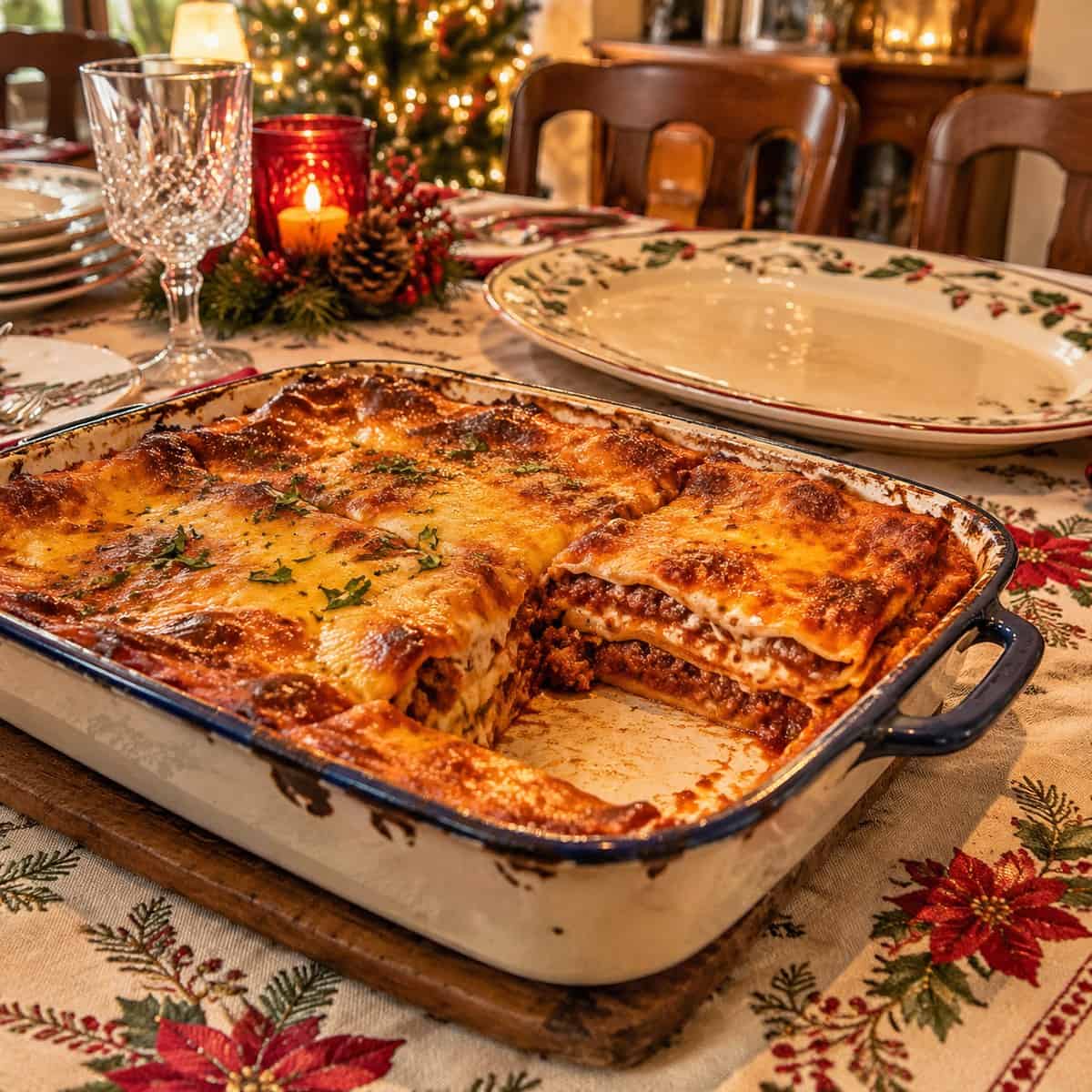
Americans hear “lasagna” and think dinner. In my family, it’s the opening act, the primo, and it gets cut small because everyone at the table knows what’s still in the oven.
It comes out, everybody takes a square the size of a paperback, and then the roast arrives twenty minutes later and the table makes that sound. The groan. The “oh madonna, there’s more.” Mrs. DiNapoli from next door makes it every year like it’s news.
The lasagna my family makes has no ricotta in it, which has started three separate arguments at that table. The layers are tight enough to hold a clean edge, which matters when it’s sharing space with a roast.
The only real mistake is loading up on it. Pace yourself. One square, no seconds, and let somebody else fight over the corner piece. The meat course is not a rumor.
5. The Roast Is Pork or Beef — Never Turkey
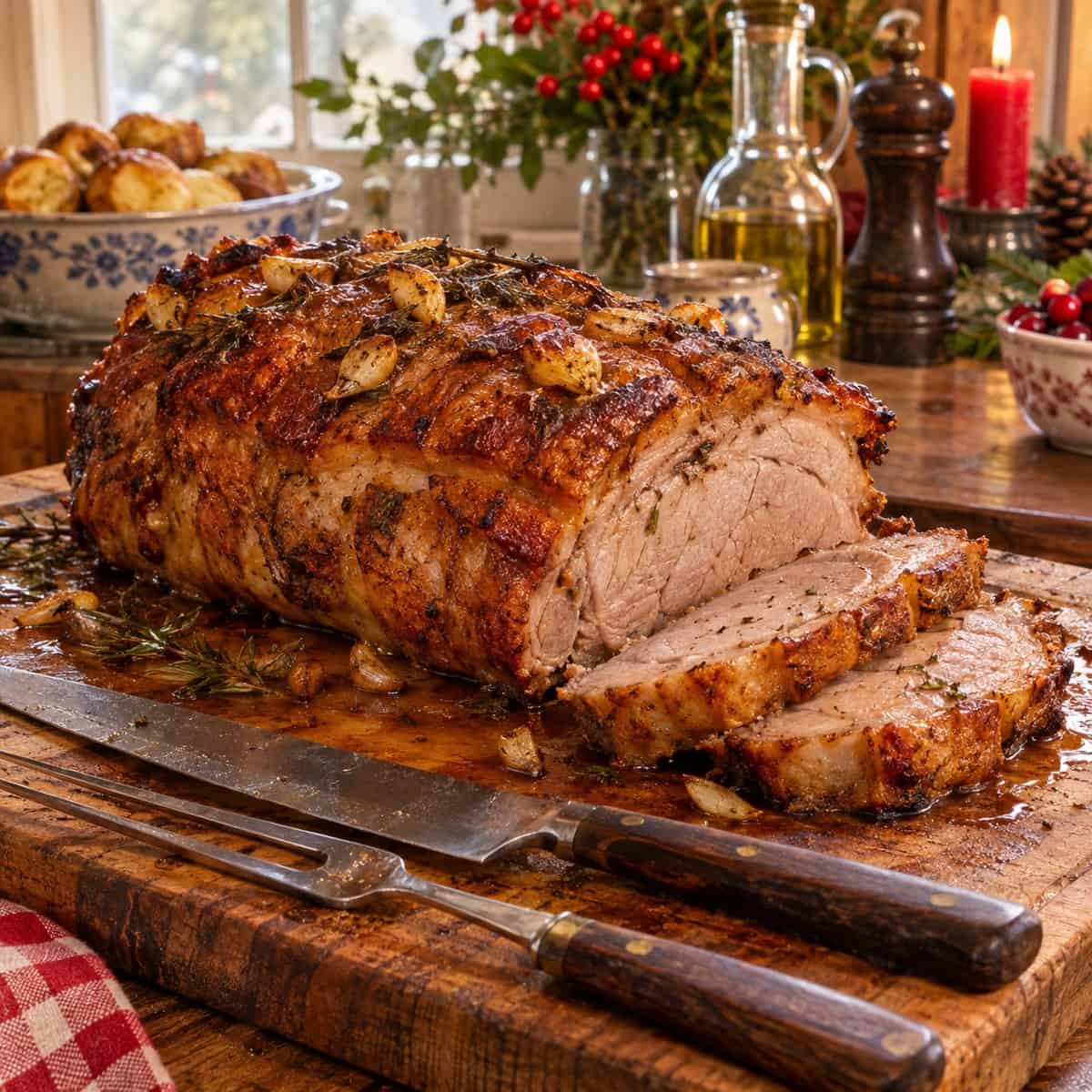
Turkey was last month. Turkey had its day and used it, and by Christmas the carcass has already been boiled down for soup.
Christmas is a pork roast with garlic slivers pushed into slits in the fat cap, or a standing rib if somebody got a bonus that year. Sometimes both, if the house is full. The garlic goes in with a paring knife the night before, so it melts into the fat while the oven does the basting.
One of Nonna’s friends from church, raised Irish in Delaware County, roasted a turkey the first Christmas she hosted the parish crowd. People were kind about it. People were also still talking about it last Christmas, which was nine years after it happened.
She makes a pork loin now, rosemary tucked under the string. Nobody told her to. She just read the room, and the room had second helpings.
6. The Braciole Gets Tied Before the Presents Get Opened
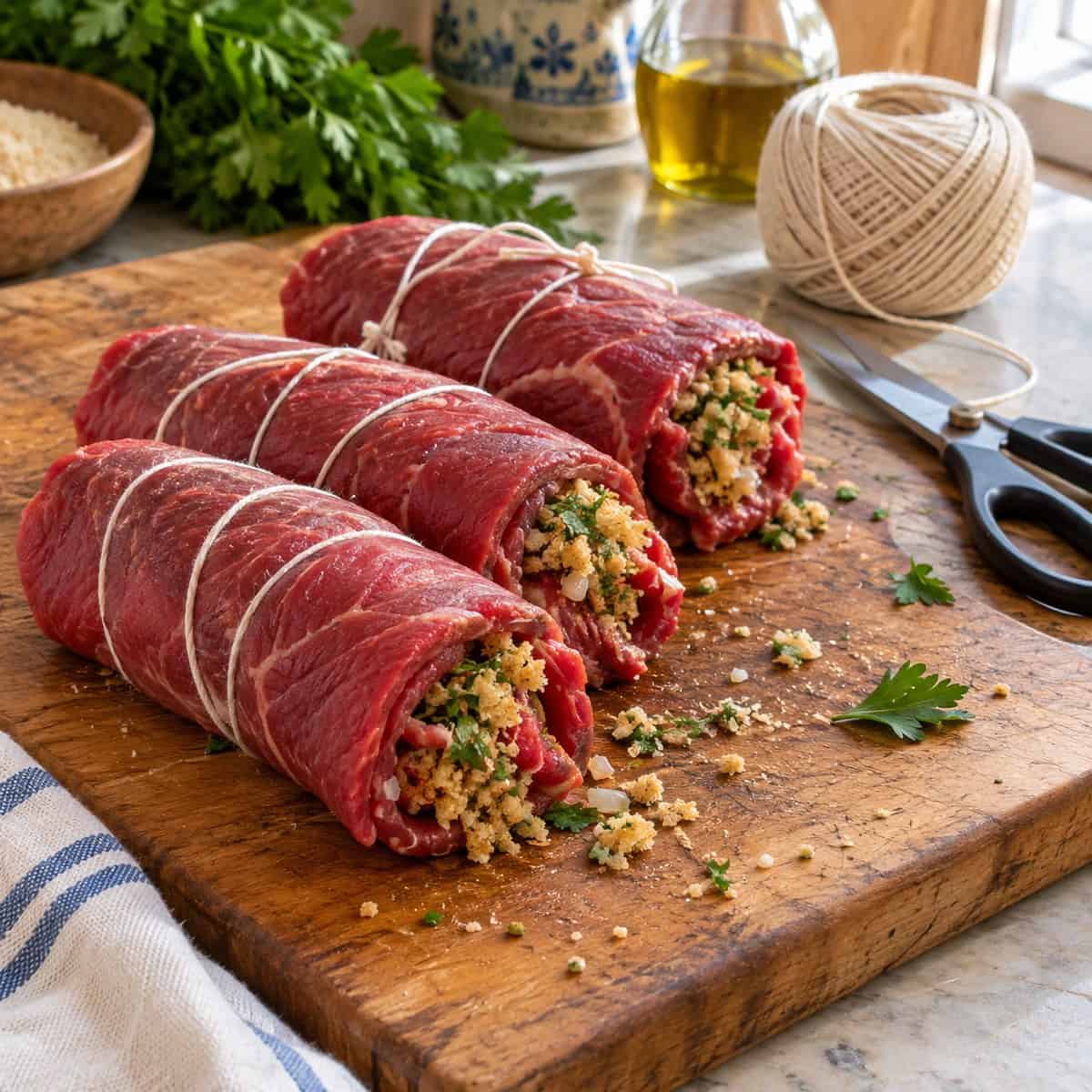
There’s a window between the gravy going on and the kids waking up. That window belongs to the braciole.
Flank steak pounded thin, breadcrumbs, parsley, pecorino, a little garlic, rolled and tied with white kitchen string. Nonna kept the string in a drawer with the rubber bands and the twist ties. She pounded the meat between two sheets of wax paper so she wouldn’t wake me on the pullout couch.
She tied them standing up at the counter, in her robe, while the radio played. Six rolls, maybe eight, three loops of string each, seam side down. Into the pot they went and that was the last anybody thought about them until two o’clock, when the string came off at the table.
Toothpicks instead of string are acceptable. Barely. Somebody always ends up biting one, usually an uncle, usually mid-sentence.
7. Antipasto Is on the Table by Eleven and the Soppressata Is From the Cousin
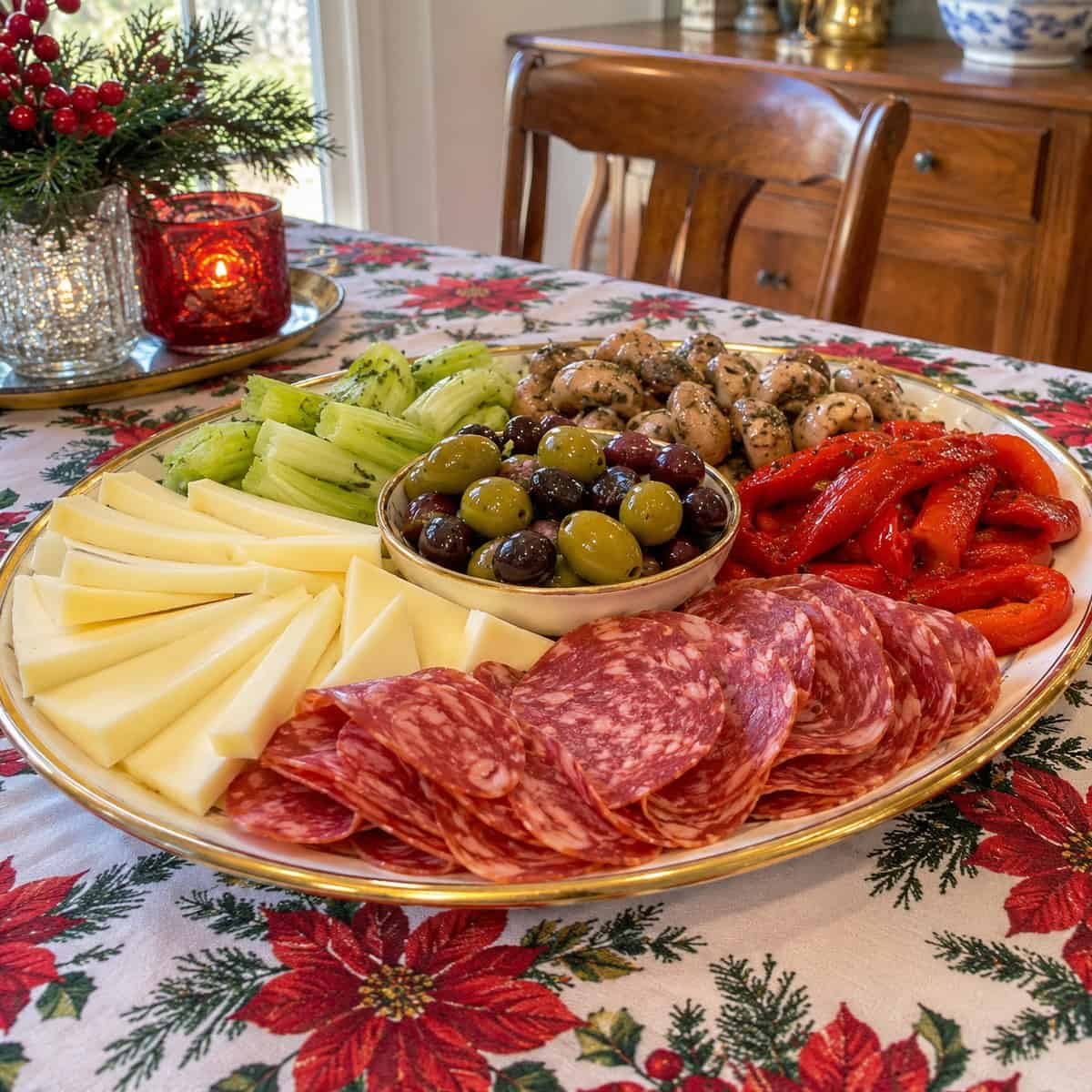
Not catered. Not a “charcuterie board.” A platter, usually oval, usually the one with the gold rim, set down by eleven so nobody fainted before two.
Provolone cut in wedges, roasted peppers in oil, olives, marinated mushrooms, celery hearts, and the soppressata that came from whoever Nonna knows who still makes it. Ours came from Sal in Hammonton, an old friend of Nonna’s from the parish, wrapped in white paper, handed over at the door like contraband. He hung it in his garage and expected a report.
You never bought that soppressata. You were given it. There’s a difference and everybody at the table knew it. You sliced it thin and told him it was his best year.
If you want a version to put out yourself, the Italian Christmas appetizers on the site are close to what we set out. Just don’t call the platter a board.
8. Dinner Is at Two, After the Second Mass
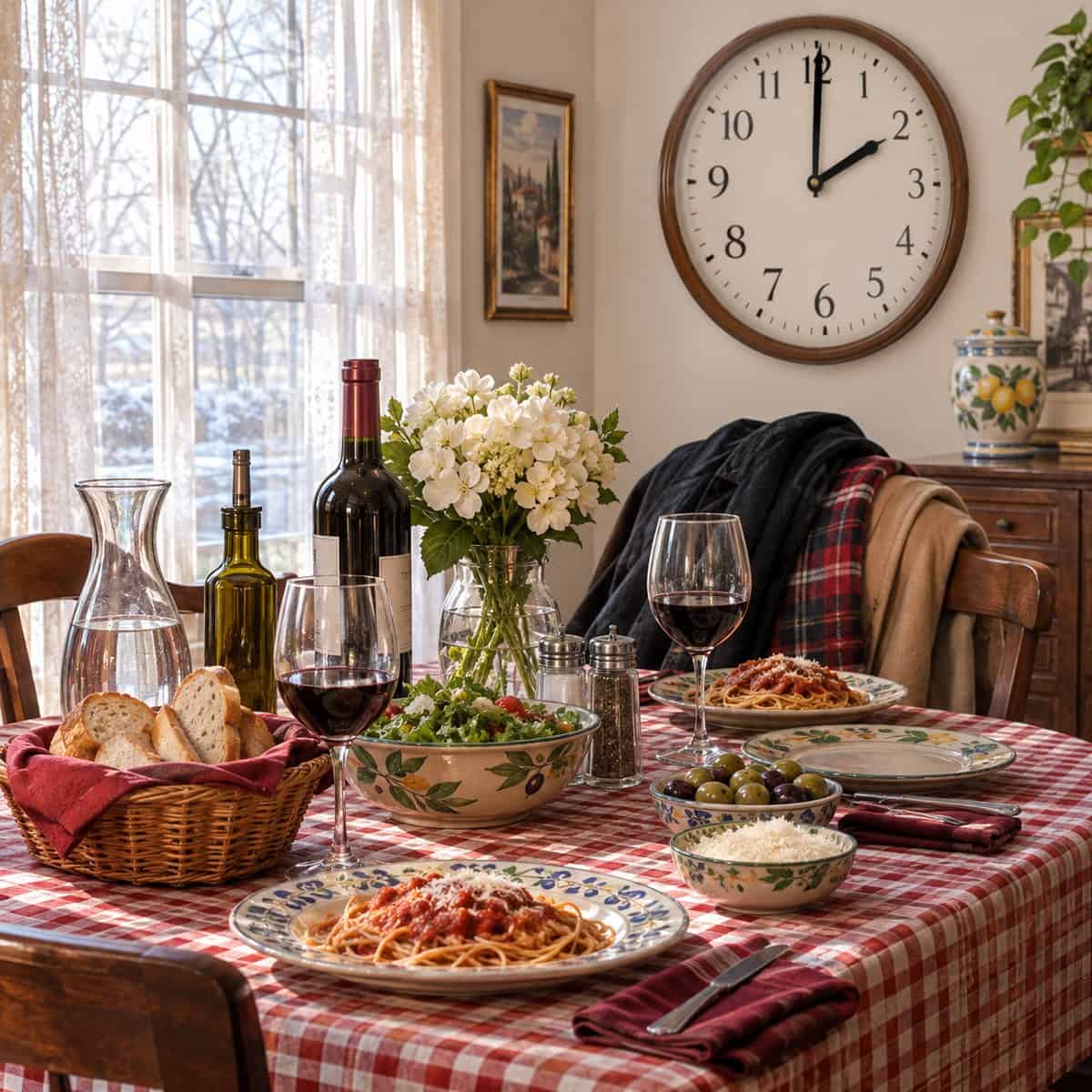
Not noon. Not five. Two o’clock, because the ten-thirty Mass lets out at eleven-forty and you need the drive home plus an hour. That hour is spoken for: coats off, the big pot of water on for the ravioli, the roast out to rest, and somebody sent to find the extra chairs.
Two o’clock also means nobody eats a real breakfast. You get coffee, a piece of the cookie tray if you’re sneaky, and told to wait. Nonna counted the pizzelle before church and counted them again after, and she always knew.
The clock is not a suggestion. People show up at one-forty-five and stand in the kitchen in their coats, holding a tray of something, getting in the way until someone hands them a job.
Arrive at three and you’ll be eating the second plating, which is colder and comes with commentary.
9. The Stuffed Artichokes Buy You an Hour
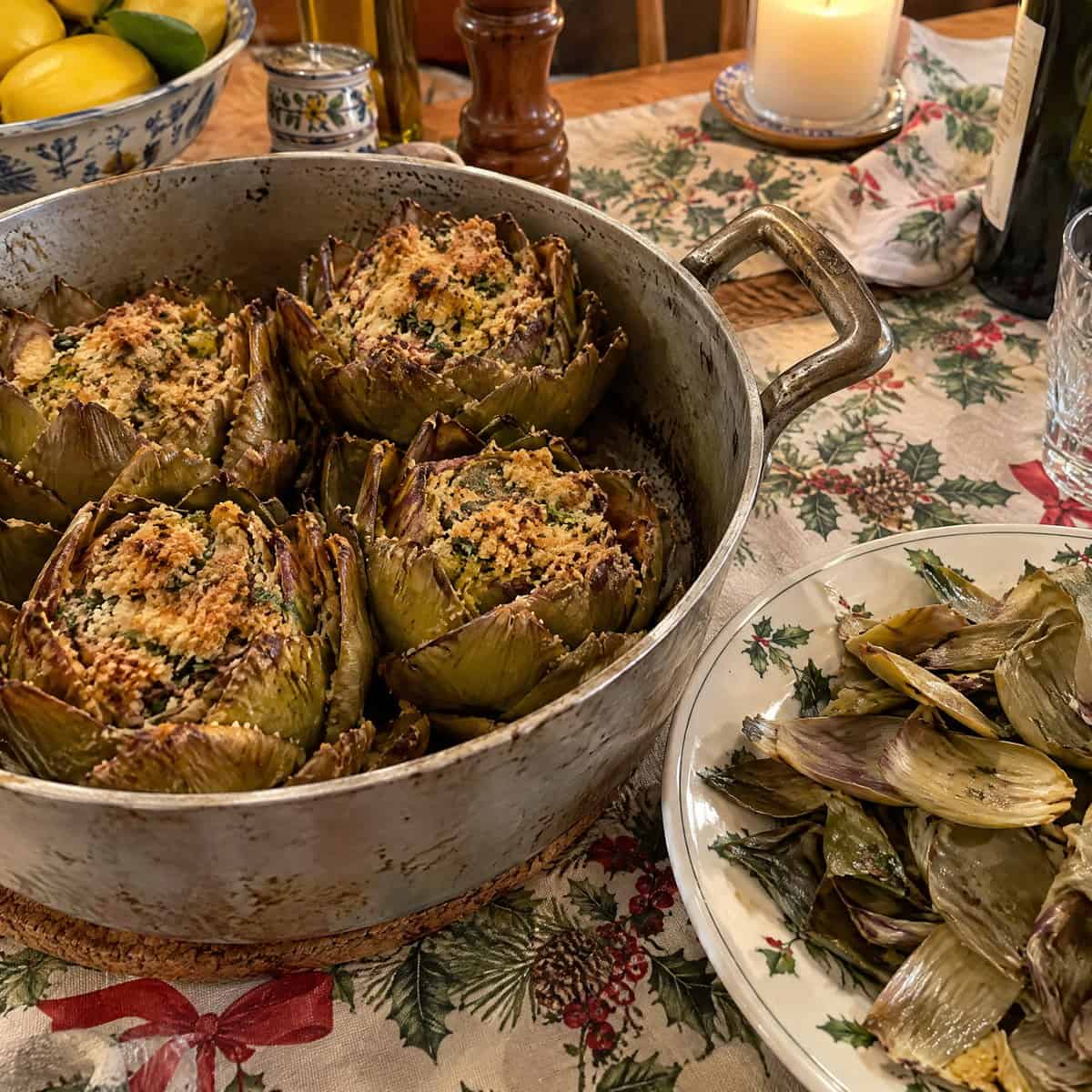
Here’s the strategy nobody admits to. The artichokes come out when the roast needs more time, and the cook decides that at the oven door.
Stuffed with breadcrumbs, garlic, pecorino, steamed until the leaves pull. You eat them with your fingers, one leaf at a time, scraping with your teeth. It takes forty-five minutes to get through one and that is the entire point. Nobody can talk with their mouth full, so nobody asks about the meat.
Nonna would set them down with an empty bowl for the leaves and say nothing. The oven needed another half hour and everyone was happily occupied, working toward the heart at the bottom.
Try explaining to a non-Italian guest why dinner includes a vegetable that requires manual labor. They’ll figure it out by leaf four, and by the heart they’ll forget they were hungry for the roast.
10. The Christmas Tablecloth From Italy Comes Out Twice a Year
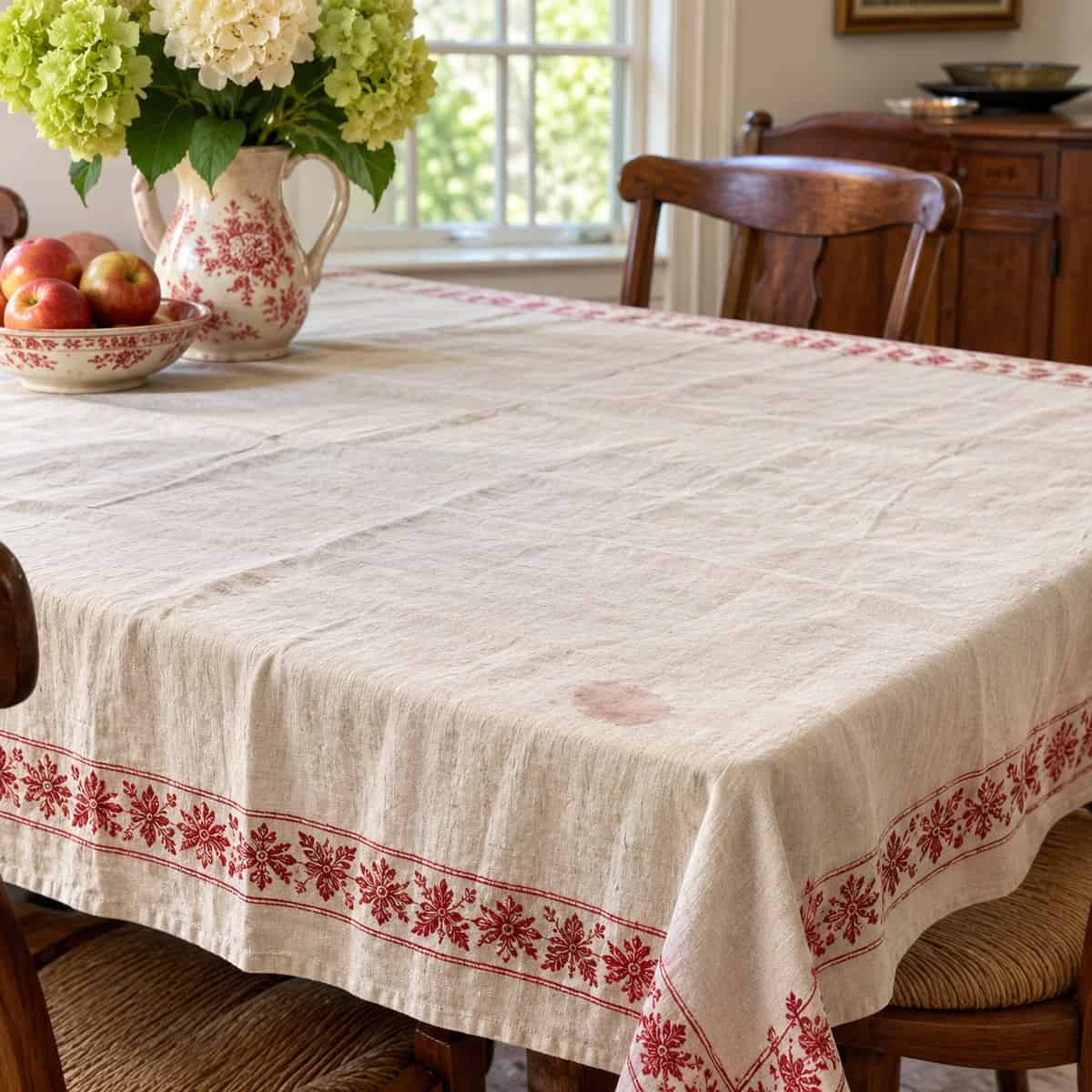
Heavy linen, cream colored, with red embroidery around the border. It came over in a suitcase in 1952, folded under Nonna Pina’s good shoes, and it comes out of the cedar chest on Christmas and Easter.
It gets ironed the night before. On the dining room table, which means the table has to be cleared the night before, which means the whole house is in motion at ten p.m. on Christmas Eve. Two of us hold the ends so it never touches the floor, and the iron goes on damp, or the embroidery puckers.
Red wine on that cloth is a felony. There was a glass knocked over in 1998, before I was even born, and the woman responsible, Mrs. Carbone from next door, still brings it up herself before anyone else can. Salt went on it, then club soda, then Nonna’s whole opinion.
It has a stain. Nobody’s throwing it out.
11. The Table Runs Out of the Dining Room Into the Living Room
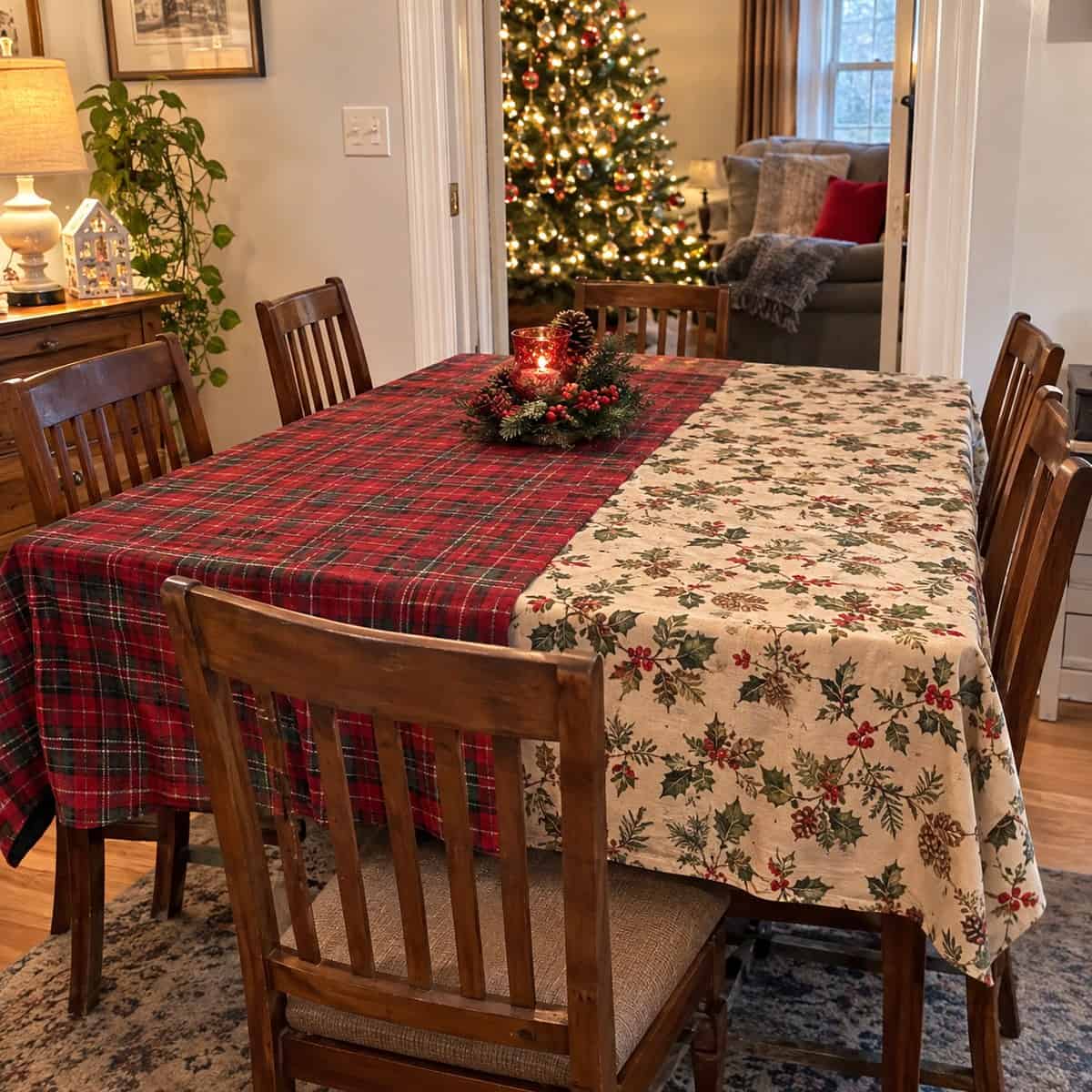
The dining room table seats ten with both leaves in. Twenty-two people are coming, and nobody has ever suggested inviting fewer.
So the card table comes up from the basement and gets jammed against the end, sticking out through the doorway into the living room at a slightly different height. A second tablecloth covers the seam. Everybody pretends it’s one table, even when the gravy boat drifts toward the low end.
If you’re seated at the card table you are either under fourteen or you married in recently. Both situations are temporary. You get promoted the year your plate lands on real wood.
The leg of that card table has collapsed exactly once, in 1989, and a tray of meatballs went with it. We still call it the incident. Now every leg gets checked twice before the antipasto goes down.
12. The Chairs Are Borrowed From the Neighbor
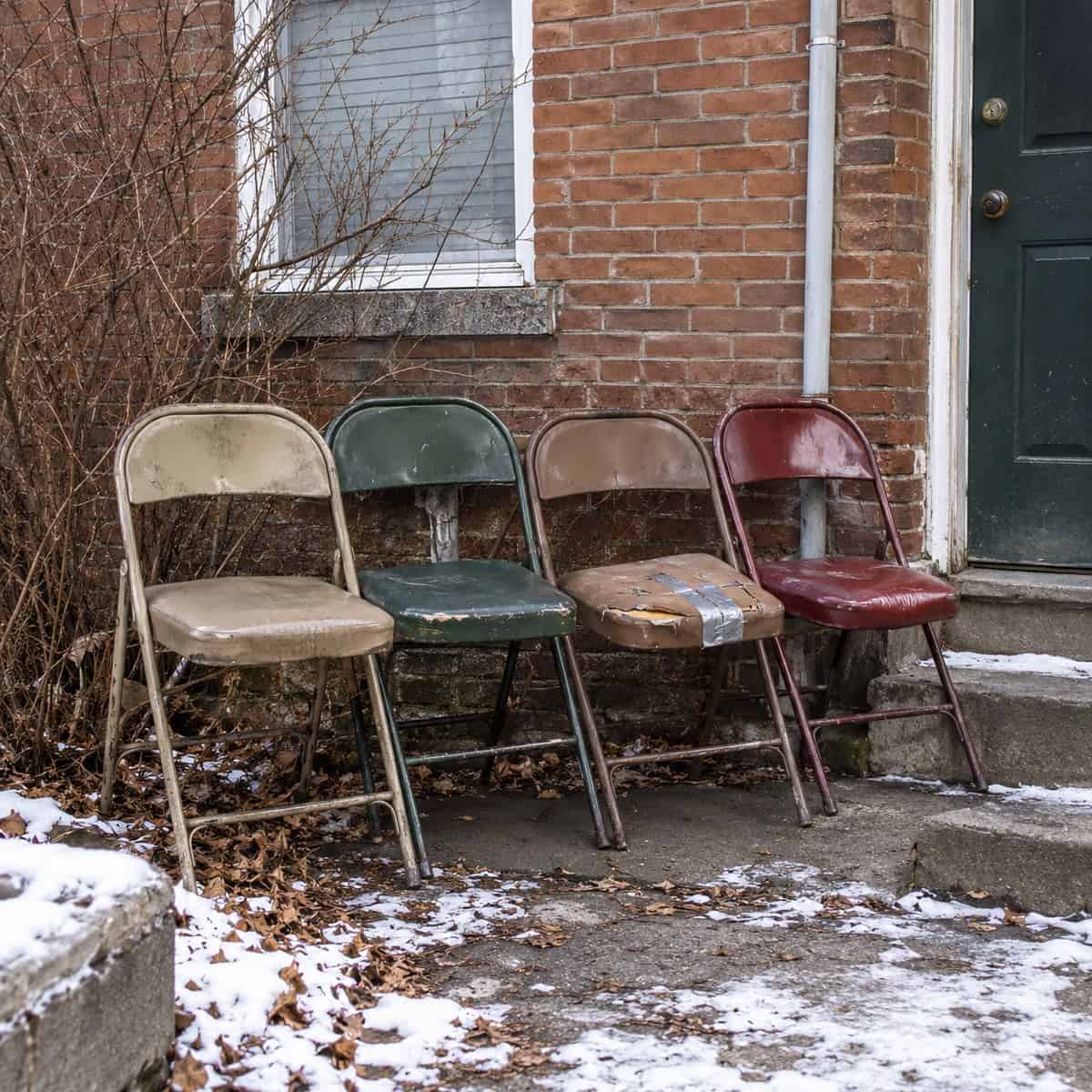
Four folding chairs from the Delucas next door, every year, carried across the shared driveway on Christmas Eve afternoon. Nonna sent me over with a plate of pizzelle as payment, I made two trips, and Mrs. Deluca watched from her storm door to make sure I didn’t scrape them on the concrete.
They had ours at Easter. It was a system older than me and nobody ever discussed the terms. Nobody needed to; both houses had the same folding table for thirty and never enough to sit on.
One of them had a torn vinyl seat and you learned fast which one it was, because it pinched. Nonna’s friend Mr. Fiore got stuck with it for eleven straight years and considered it a personal attack.
The chairs go back on the 26th, with a plate of food on top. You never return the chairs empty.
13. The Lasagna Pan Is Washed Only by the One Who Made It
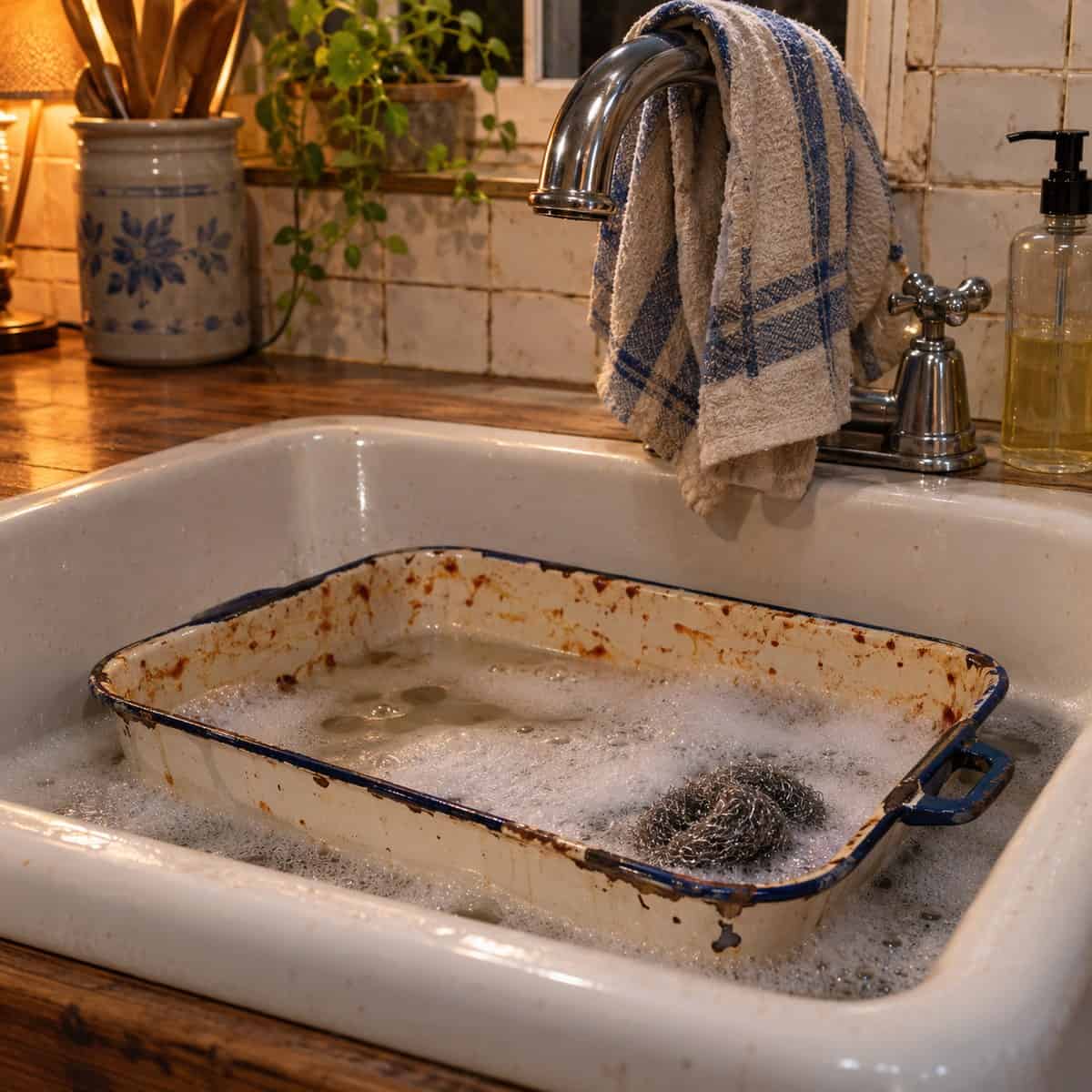
You can carry it to the sink. You can scrape it. You cannot wash it. That job belongs to whoever layered the lasagna, and on Christmas that was Nonna until she handed it to me.
The pan is enamel, chipped at one corner, and it has a particular relationship with steel wool that only one person in the family understands. Soak it wrong and you’ve ruined the corners. Her method was warm water and a pinch of baking soda overnight, then steel wool only on the baked-on edges, never across the bottom where the glaze is thin.
I watched a well-meaning neighbor attack that pan with a scouring pad when I was nine, and I watched Nonna take it out of his hands without a word, like disarming someone.
He dries now. He’s happier. So is the pan.
14. Leftovers Get Cut in Squares and Labeled With Masking Tape
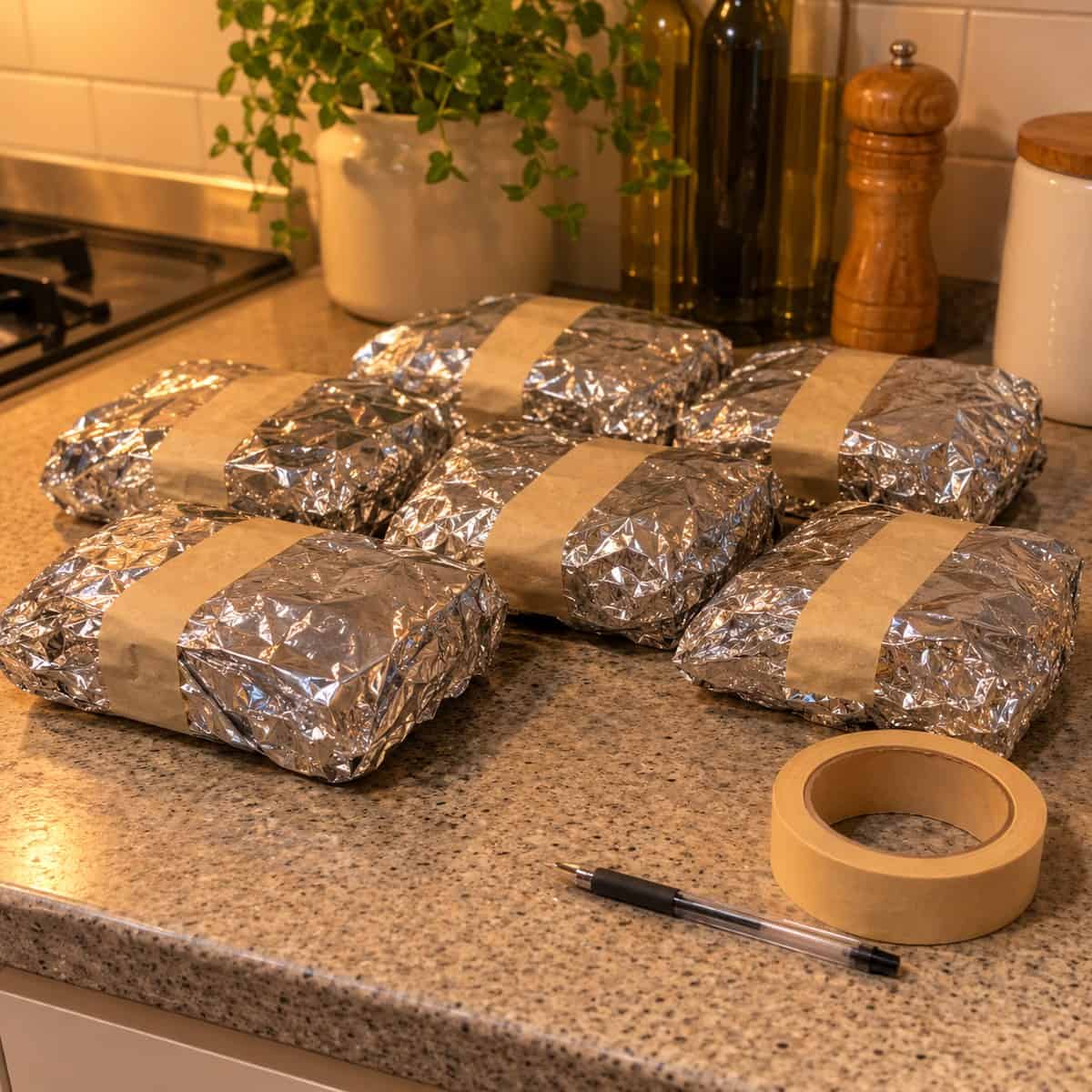
Before anybody puts a coat on, the assembly line starts at the counter. Lasagna cut in squares while it’s still warm enough to hold its shape, foil crimped tight at the corners, then the roll of masking tape and a ballpoint pen.
Names on top. R. SAL. MARIA. TOMMY — MEAT ONLY. Masking tape because it takes ink on foil and peels off clean, so the same tin can come back in January. Nonna’s handwriting on a strip of tan tape is one of the most Christmas things I can picture.
The rule is nobody leaves empty-handed, and the corollary is nobody gets to choose. You get what you’re given, and the corner pieces go to her favorite that year.
Refuse the package and you’ll be standing in the doorway for another twenty minutes losing the argument, with the tin in your hands.
15. The Panettone Nobody Wants, and Somebody Brings Two
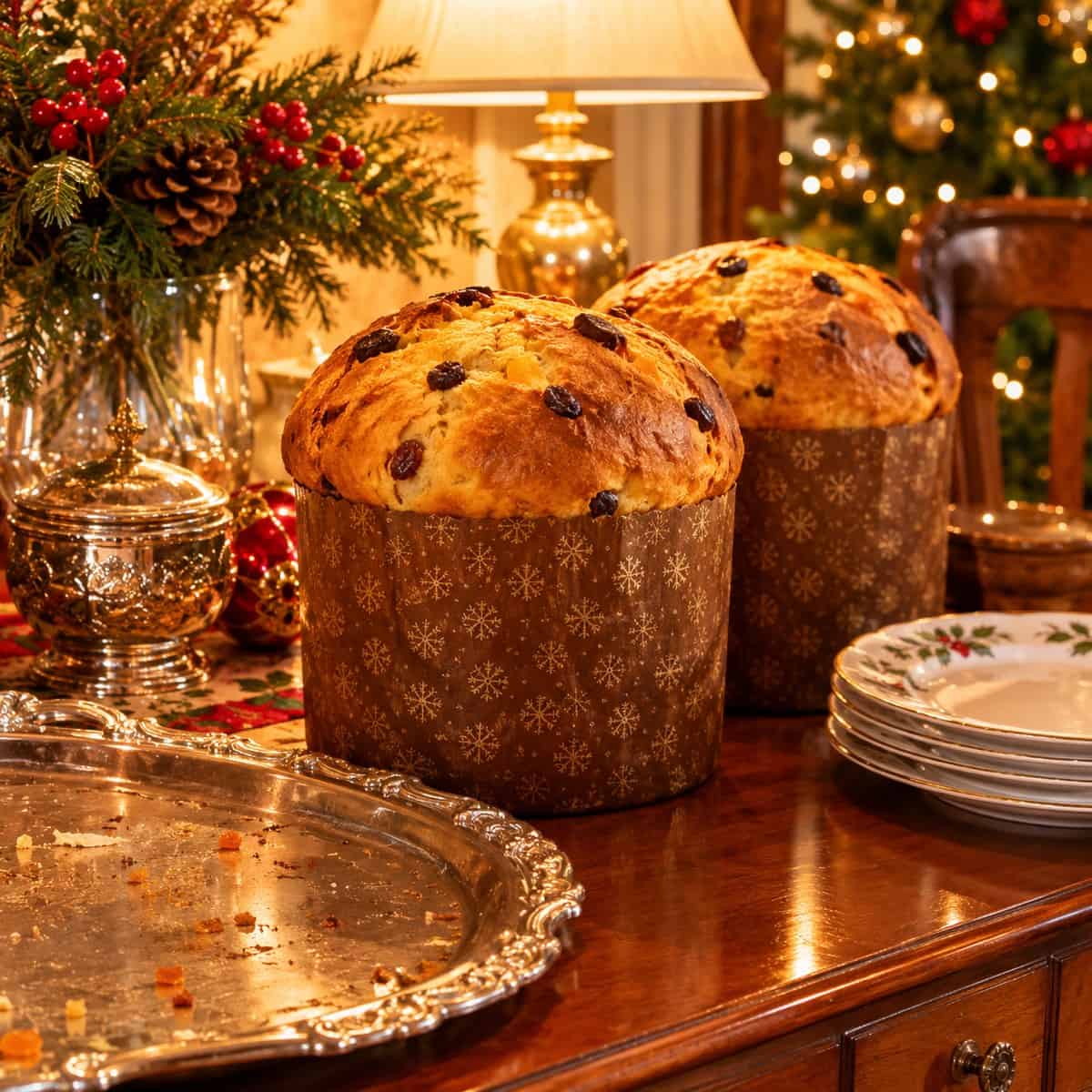
Every year. The tall box with the ribbon handle, carried in and set on the sideboard like a trophy. It’s the safe gift, because you can’t bring the dish the host is known for, and nobody gets insulted by a panettone.
And every year it sits there while people eat cannoli and cookies and the ricotta cheesecake. By eight o’clock it’s still mostly whole, the candied citron picked out by a child and left on a napkin.
Nonna ate it the next morning toasted with butter and coffee, and claimed that was the only correct way, which may actually be true. Day-old, it toasts better than it tasted fresh.
Two years ago three people brought one. We had three panettone and nine grandchildren and not a single volunteer. One of them went back out the door in somebody’s tote bag, which is the circle of life.
16. Torrone, Chestnuts, and the Nutcracker That Never Worked
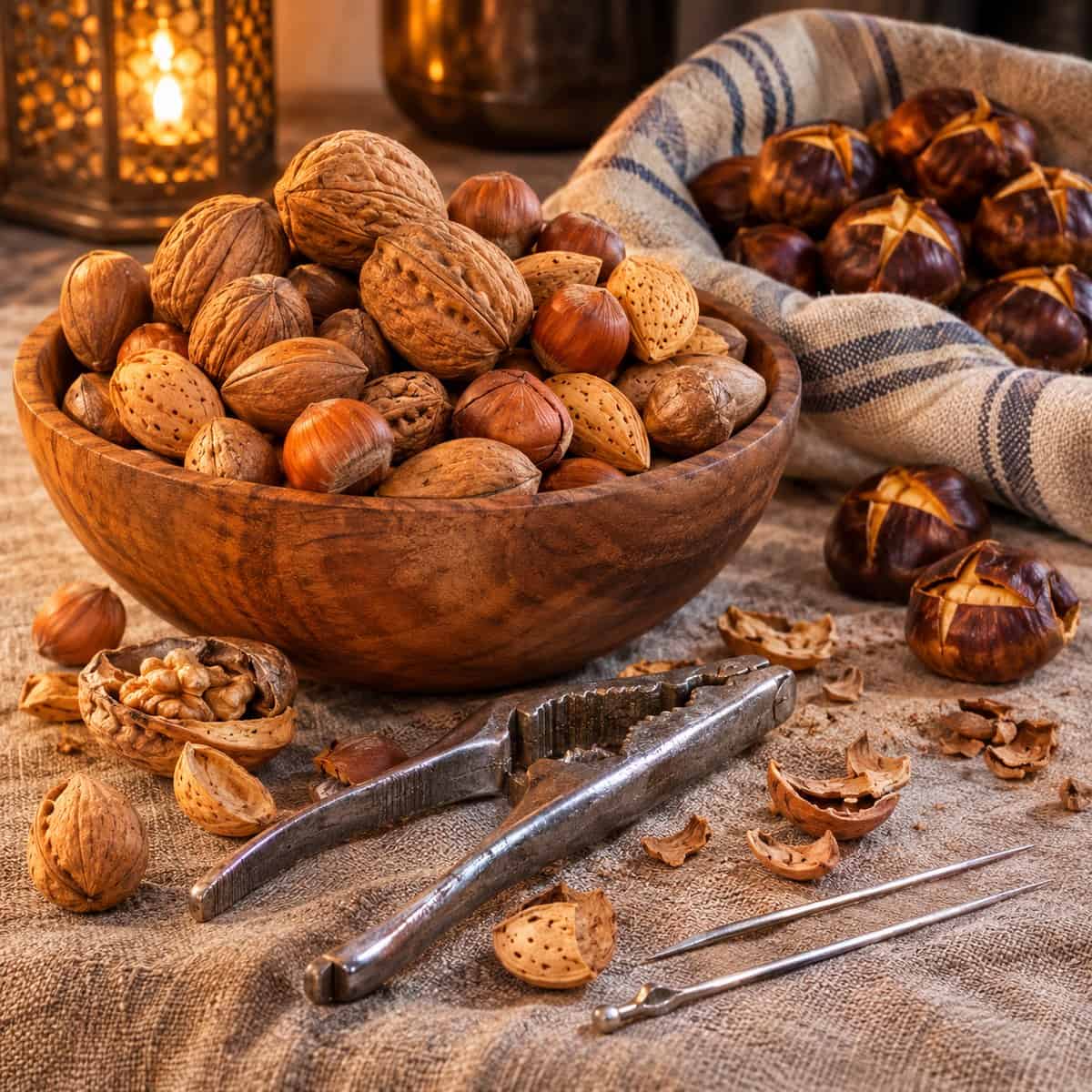
After the plates come off, the bowl comes out. Walnuts, almonds, filberts still in the shell, and a metal nutcracker that bent at the hinge sometime during the Carter administration.
Nobody replaced it. You just learned the angle, cracked toward you, thumb on the seam, and the shells went into a second bowl somebody always tipped over.
Torrone came in those little boxes with the painted scenes, hard or soft depending on which cousin bought them, and there was always a disagreement about which is correct. The hard kind needs a knife handle and a prayer. Soft. It’s soft. I’ll die on it.
And chestnuts in the oven with an X cut in the shell, burning hot, passed around in a dish towel while everybody blew on their fingers. The X is not decoration. Skip it and the steam has nowhere to go, so the chestnut pops in the oven.
17. There Is a Pyramid of Clementines and It Is Decorative
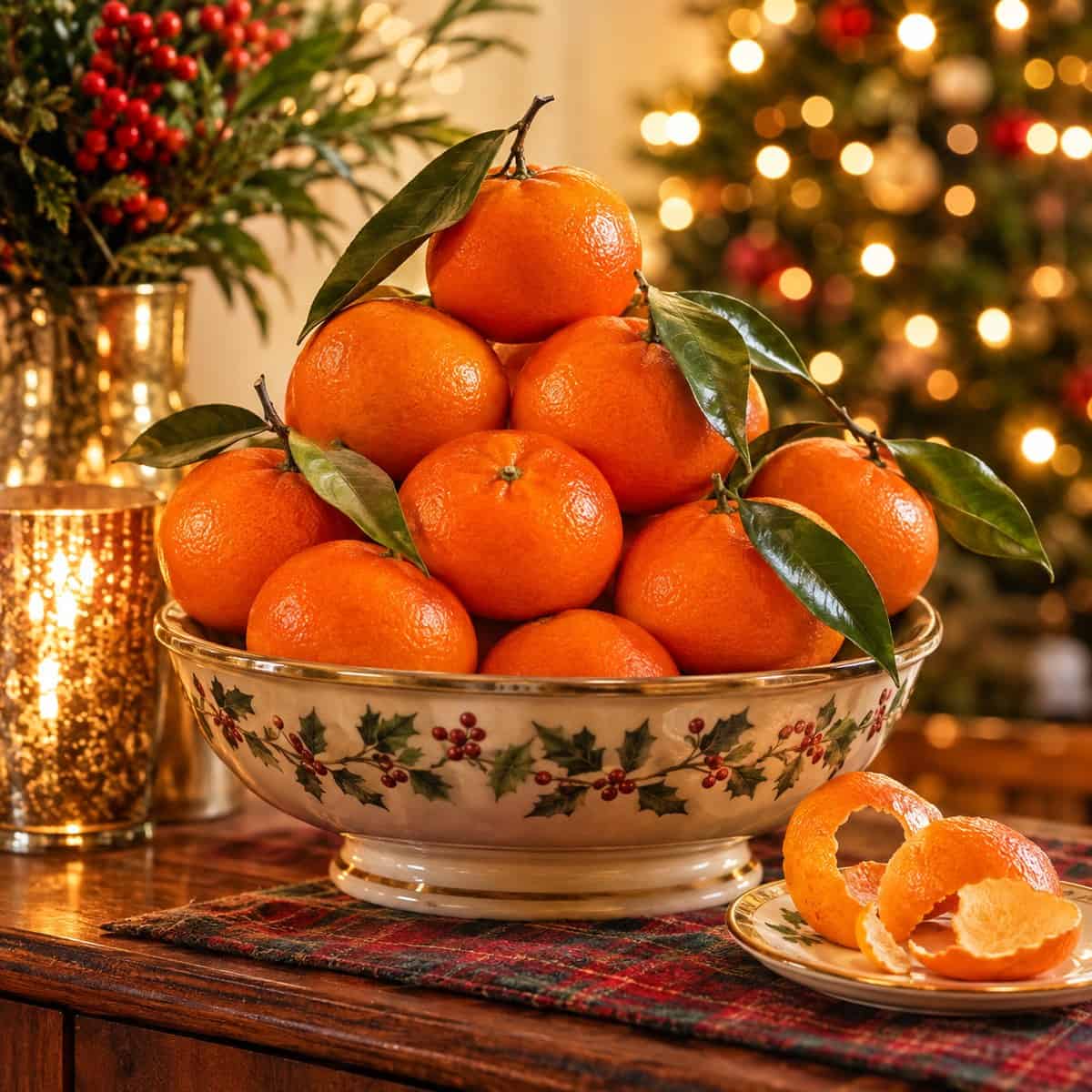
A crate of clementines arrives in early December and a bowl of them gets stacked on the sideboard on Christmas Day. The crate goes to the basement for the onions.
Stacked carefully, like a window display, biggest on the bottom, one with leaves on top. They are the centerpiece, the dessert, and the after-dessert. Somebody takes one around four o’clock and the pyramid collapses and nobody rebuilds it.
The peels get left on saucers all over the house, usually in one long curl, because Nonna never broke hers and I spent every December trying to match her. Hours later you find one behind the couch cushion, dried out and still smelling like Christmas.
We put the peels on the radiator. The heat dries them stiff and pushes the oil into the whole room. That smell is half of what I remember about that living room.
18. The Pastry Box Tied With String Arrives With the Uncle Who Is Always Late

White box, red and white string, carried flat on two hands. Sfogliatelle, lobster tails, a few cannoli filled at the bakery that morning, because a cannoli shell filled the night before goes soft and everybody at the table would know.
And it arrives at two-forty, because that uncle has never been on time to anything, and he walks in holding the box up like a hostage negotiator. His excuse is always the line at the bakery, which wraps around the block on Christmas morning. The box buys him forgiveness every single year.
The string does not get cut with scissors. It gets broken with a thumb, by whoever’s nearest, which is a skill: you hook it under the knot, twist once and pull until it pops.
Show up late without the box and you’re just late.
19. There Is a Second Dinner at Seven for Whoever Stops By
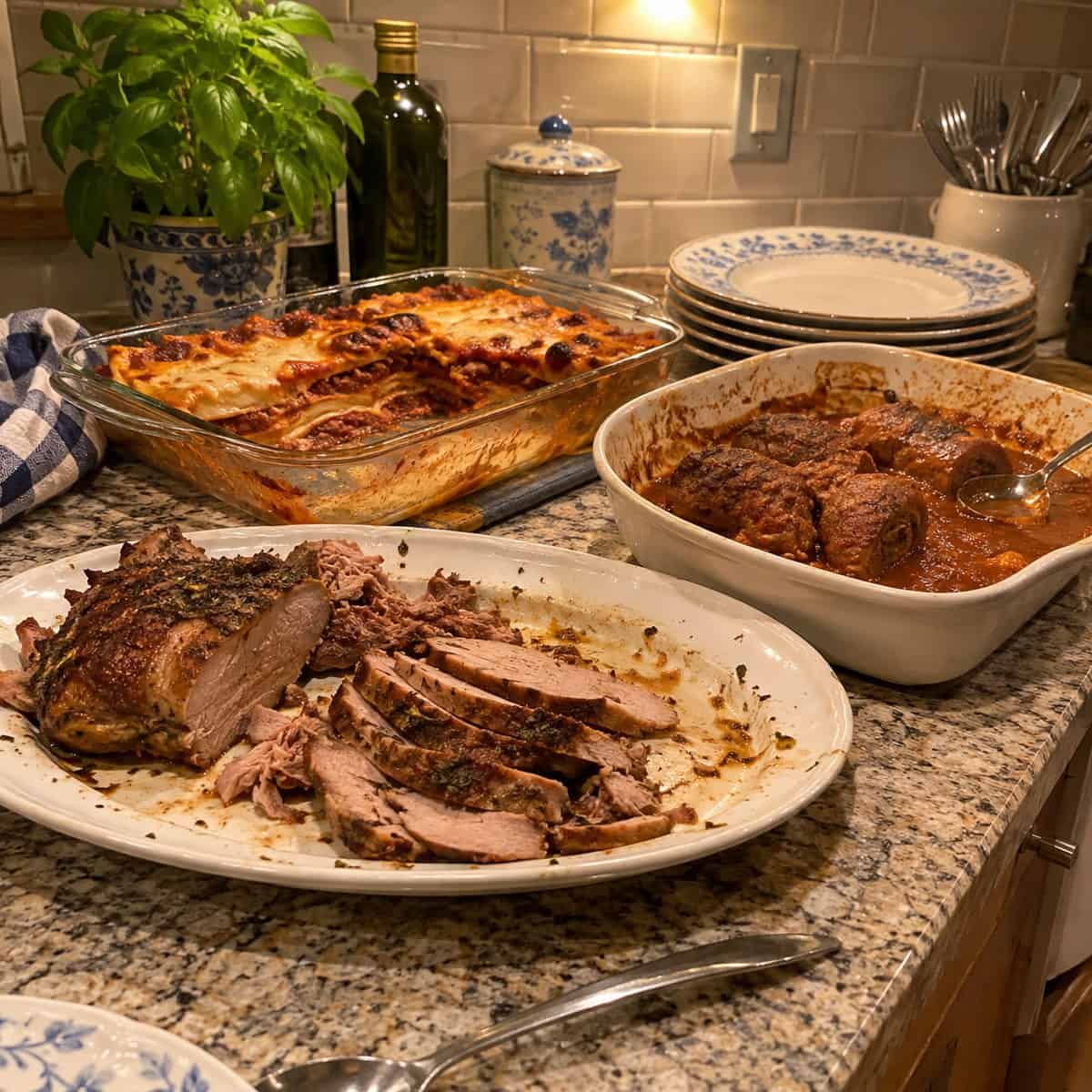
Dinner ends at four-thirty. The table gets wiped, the good plates go to soak, and the leftovers stay covered on the stove instead of going into the refrigerator. Around six-thirty somebody starts putting the food back out.
Because the Pellegrinos are stopping by after their dinner, and so is the neighbor, and so is whoever got off a late shift. They get a plate whether they say they’re hungry or not. Nonna kept the gravy on the lowest flame all afternoon for exactly this reason.
“I already ate” is not a sentence that has ever worked in that house. It just means you get a smaller plate, and then seconds.
By ten there are three generations in the kitchen eating cold braciole off the stove, standing up, in their good clothes. Nobody sits back down at the table. Best meal of the day.
20. The Christmas Records Go On and Everyone Sings the Stupid One

The stereo cabinet opened and the records came out of their sleeves with that particular crackle. Sinatra, Como, the Italian Christmas album with the cracked corner, which skipped on the third song and always had, so Nonna kept a nickel taped to the arm for weight.
And then the novelty song. In Nonna’s house it was the one about Dominick the donkey, and Mrs. DiNapoli from next door did the hee-haw part with her whole chest, every year, to the embarrassment of everyone under twenty. By the second chorus the rest of us were singing it louder than she was.
You cannot skip it. Someone will put it back on, usually whoever is carrying the lasagna in, and nobody sits until it ends.
My roommate plays it off her phone now through a little speaker in our apartment and it’s not the same and we play it anyway. Some rules survive the format change.
21. The Long-Distance Call to Italy Happens at Noon
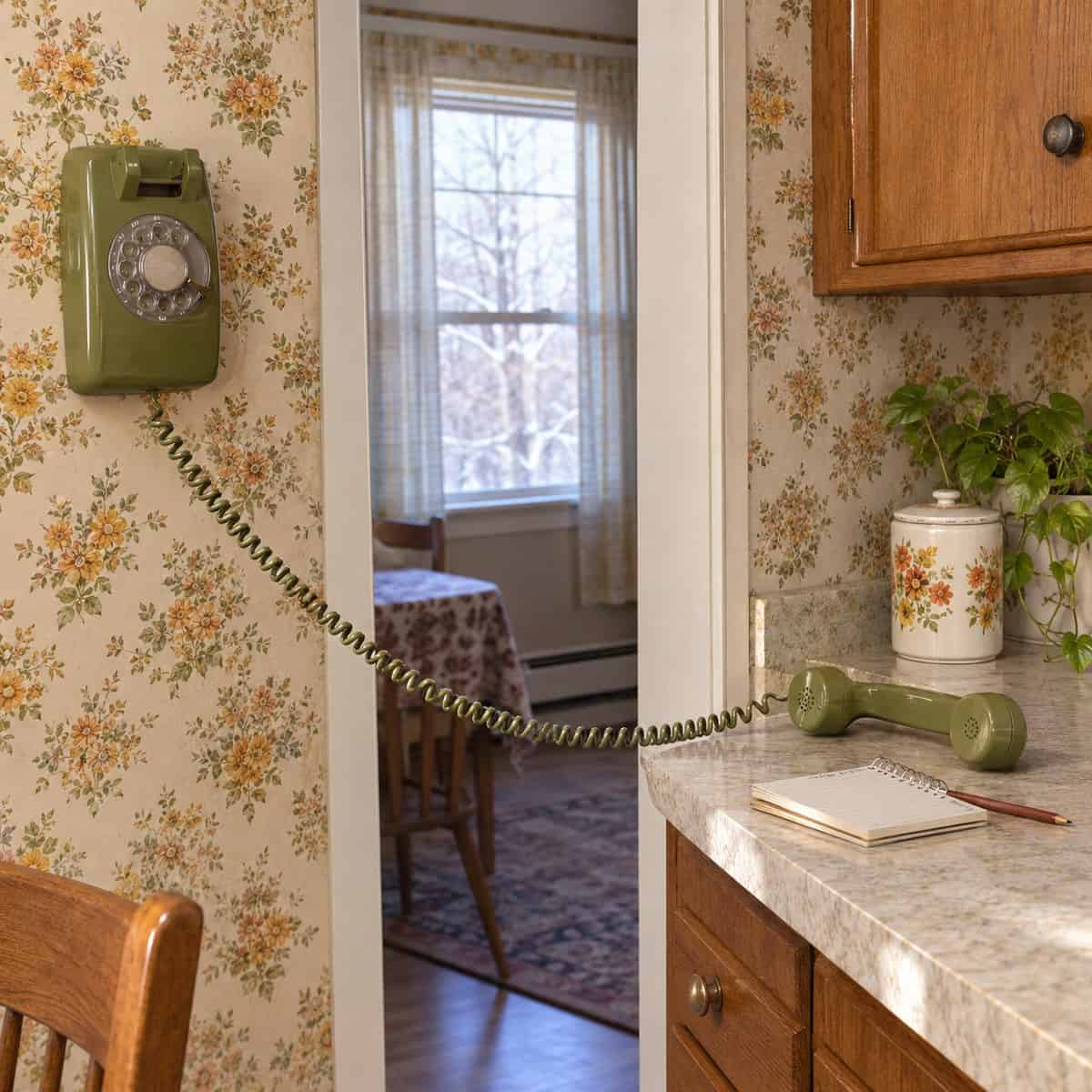
Six o’clock their time, so noon ours, and the kitchen phone with the long coiled cord got passed around the room. That cord reached from the wall clear to the dining room doorway, stretched into loose loops.
Everyone got ninety seconds. You said buon Natale, you said you were good in school, and you handed it to the next person while the adults watched the clock because of what it cost.
Nonna talked the longest and cried a little every time, then hung up and went right back to the stove like nothing happened. Nobody asked her about it. You just stirred whatever she pointed at.
It’s a video call now and it’s free and it lasts an hour and somebody always props the phone against the wine bottle so Palermo can see the table.
22. Every Grandchild Gets an Envelope From Nonna
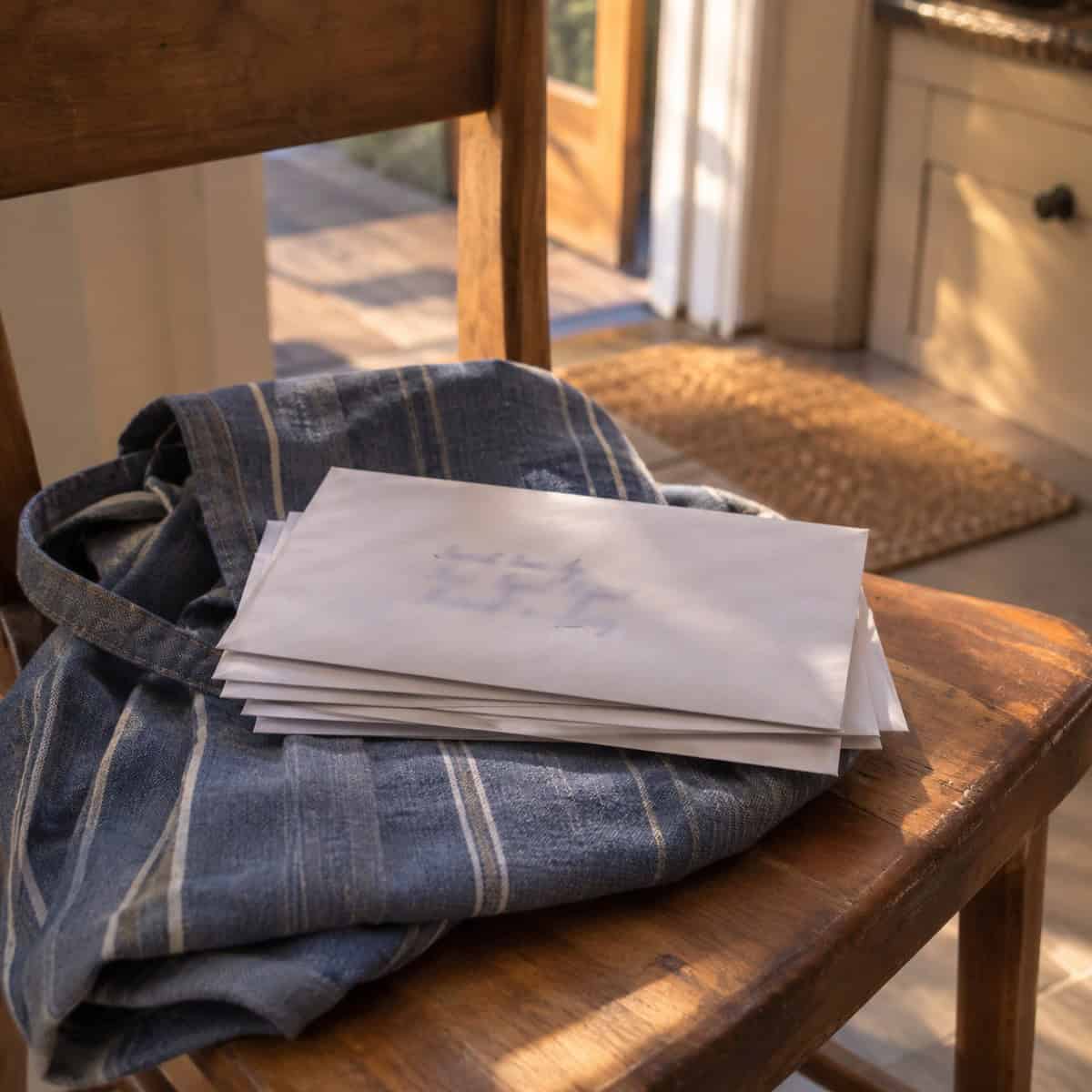
Not a wrapped gift. An envelope, your name on the front in that European script with the crossed sevens.
A twenty when I was little. A fifty by the time I was in high school. It came out of the pocket of her apron, handed over sideways, with a small speech about being good. The speech never changed, only the number inside.
The envelopes came after dinner, never before, and never in front of the whole room at once. She did it one at a time, in the kitchen doorway, so nobody could compare and nobody could count. You said grazie, and you did not open it until you were in the car.
Nonna still does it, with the same crossed sevens on the front. I am twenty-three, I pay my own rent, and I still get one. I have never once handed it back.
23. You Wear the Sweater You Unwrapped That Morning
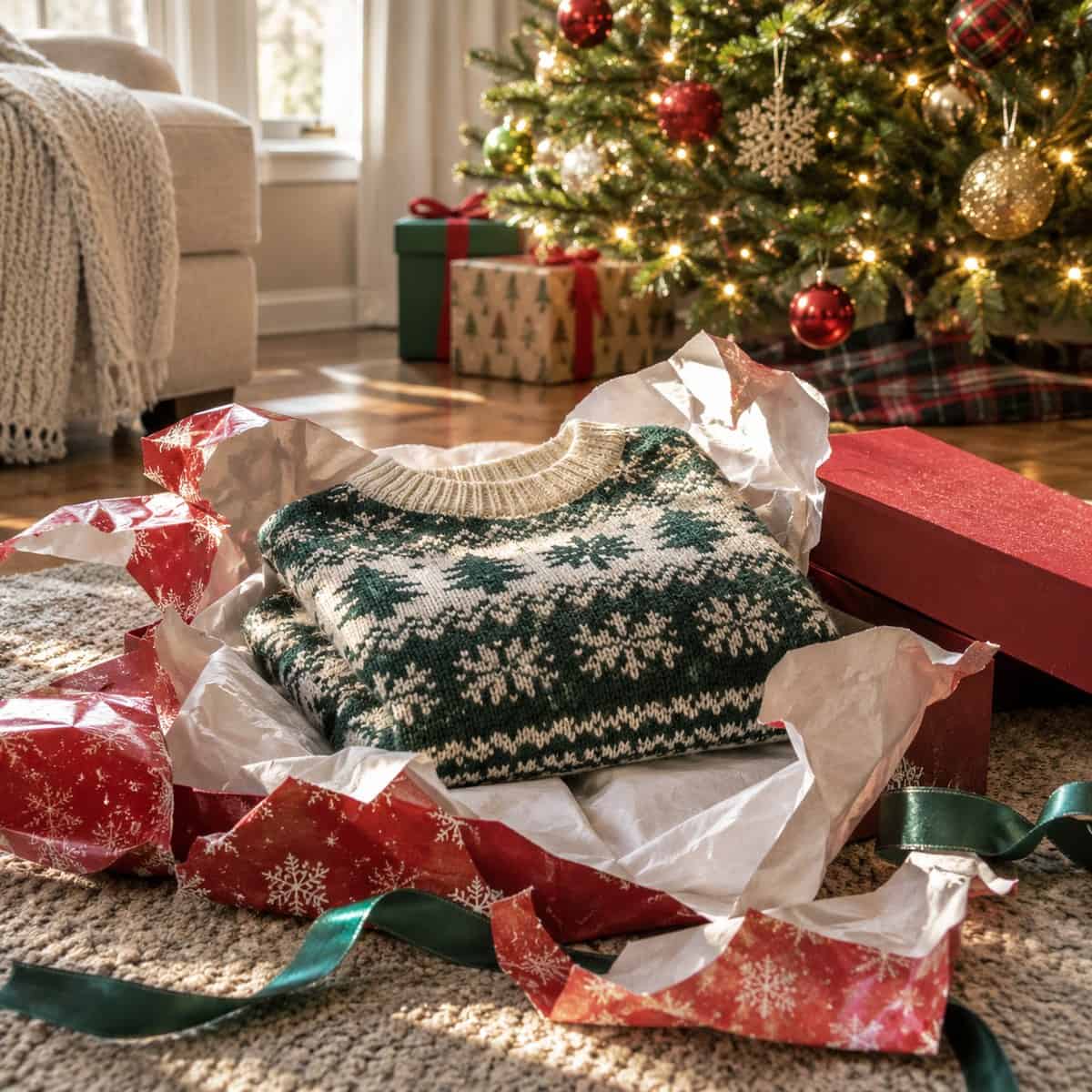
It doesn’t matter if it’s wrong. It doesn’t matter if it’s scratchy or three sizes big or has a reindeer on it.
Whoever gave it to you is sitting at that table at two o’clock and you will be wearing it. This is not negotiable and nobody ever said it out loud. The sweater is how the giver knows you opened it.
Nonna gave me a cardigan the color of split pea soup the Christmas I turned twelve. I wore it all day, through the lasagna and the roast, with a napkin tucked at the collar so the gravy wouldn’t touch it. I have never worn it since and I have never thrown it out.
Show up in your own clothes and you’ll hear, “You didn’t like it?” before you get your coat off. Roll the sleeves and change after the cards.
24. The Men Go to the Basement for Cards, the Women Stay in the Kitchen
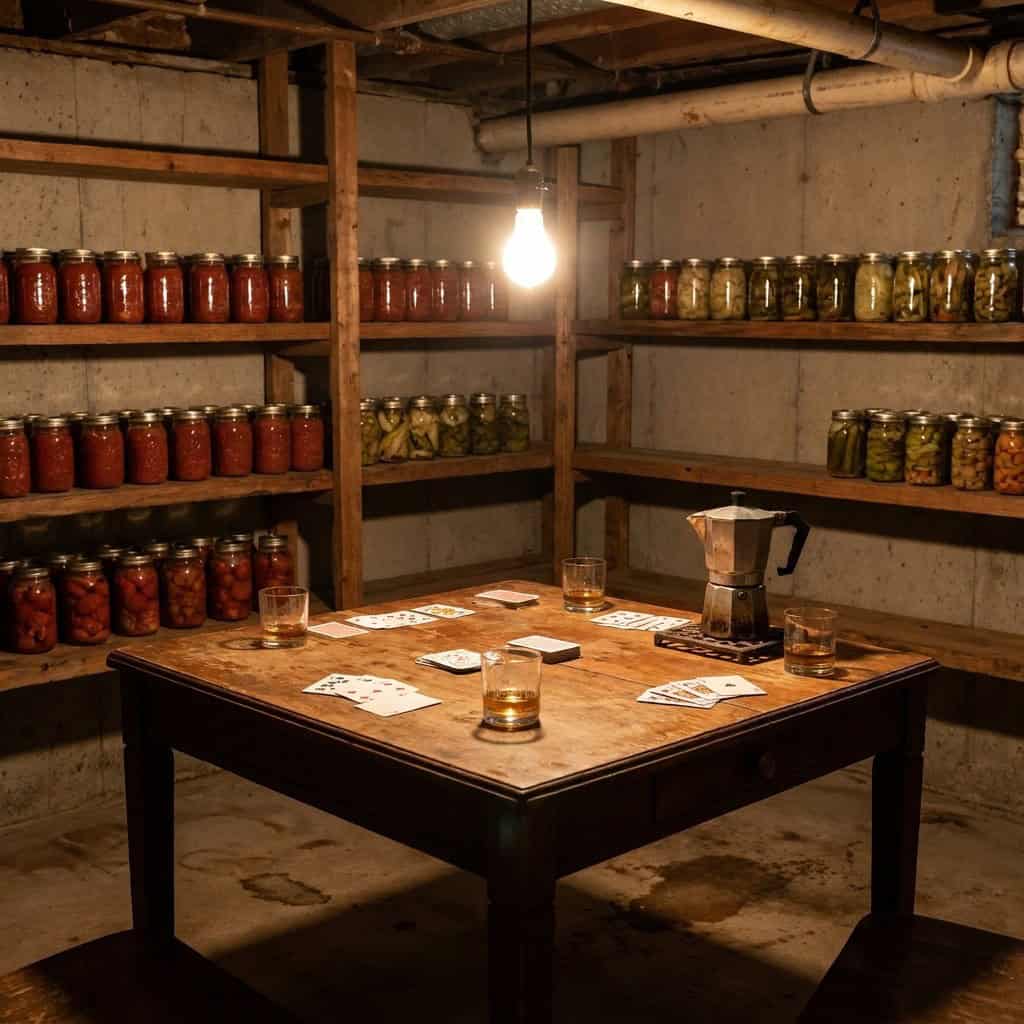
I’m not defending it. I’m telling you what happened.
Plates cleared, and the men filed downstairs to the second kitchen with the anisette and a deck of cards, and the women stayed up top with the dishes and the gossip, which was better anyway. You could hear them through the floor, slapping cards on the folding table and arguing over a point like it was money.
The real talk in that house happened at the sink. Who was sick, who wasn’t speaking to who, what the doctor actually said. Mrs. Carbone washed, Mrs. DiNapoli dried, and Nonna put away, because she was the only one who knew where the good platters went. The card game was noise.
It’s blurrier now. Marco dries dishes at my place without being asked, and Priya plays scopa and wins. Nonna raised an eyebrow the first time, then dealt her in.
25. The Kids Perform Something Before Dessert
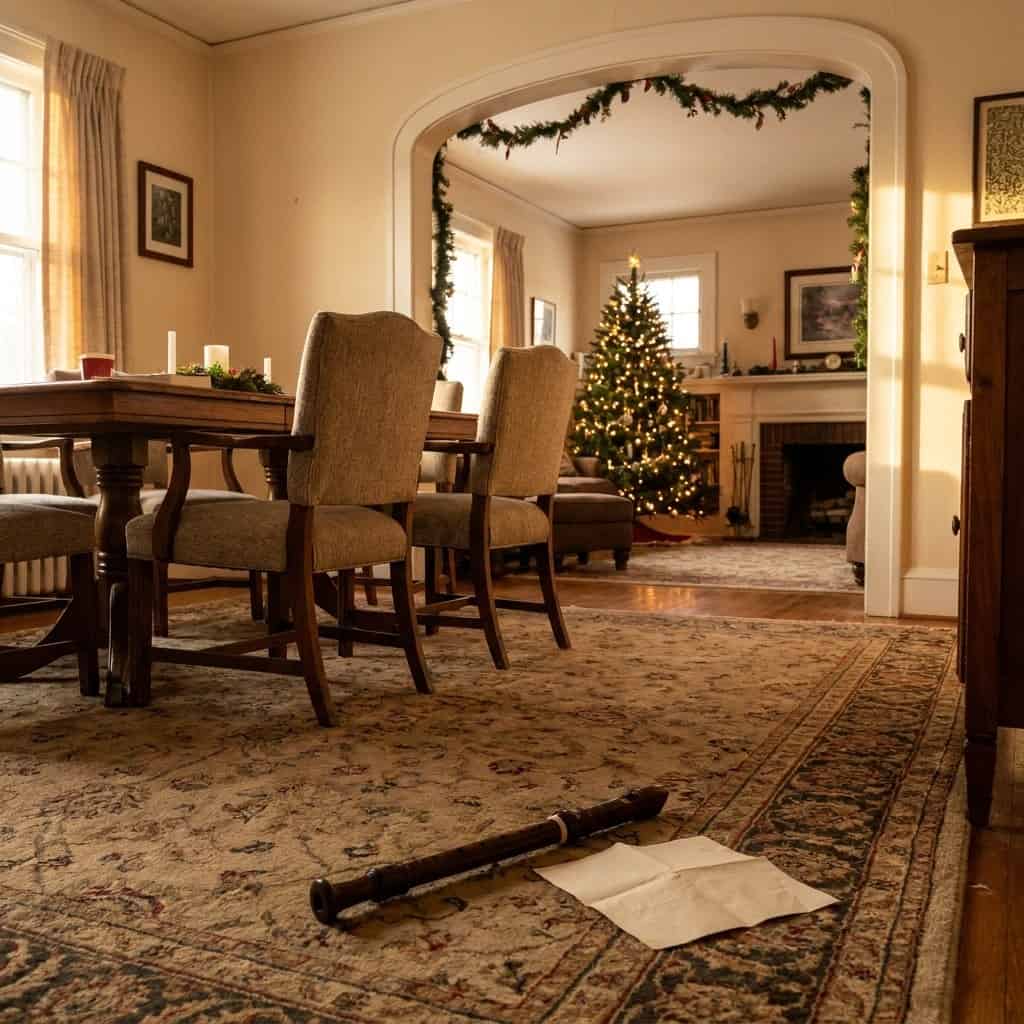
A poem, a carol, whatever you were learning on the recorder. You stood in the archway between the dining room and living room and you did it, with thirty people turned around in their chairs and the coffee pot already going behind you.
In Italy the kids recited for coins. In our house you got applause and a pinch on the cheek and the dessert came out right after, which was the actual payment. Nobody touched the cookie trays until the last kid bowed.
I sang “Tu Scendi Dalle Stelle” at seven, badly, and Nonna made me do it twice. She said the first time was practice.
The year Mrs. Carbone’s grandson refused (he was eleven and mortified), Nonna simply waited. Silent room. Nobody reached for a fork. He sang. Took forty seconds. Then she clapped first and loudest.
26. The Ricotta Cheesecake Waits on the Sideboard Where You Can See It
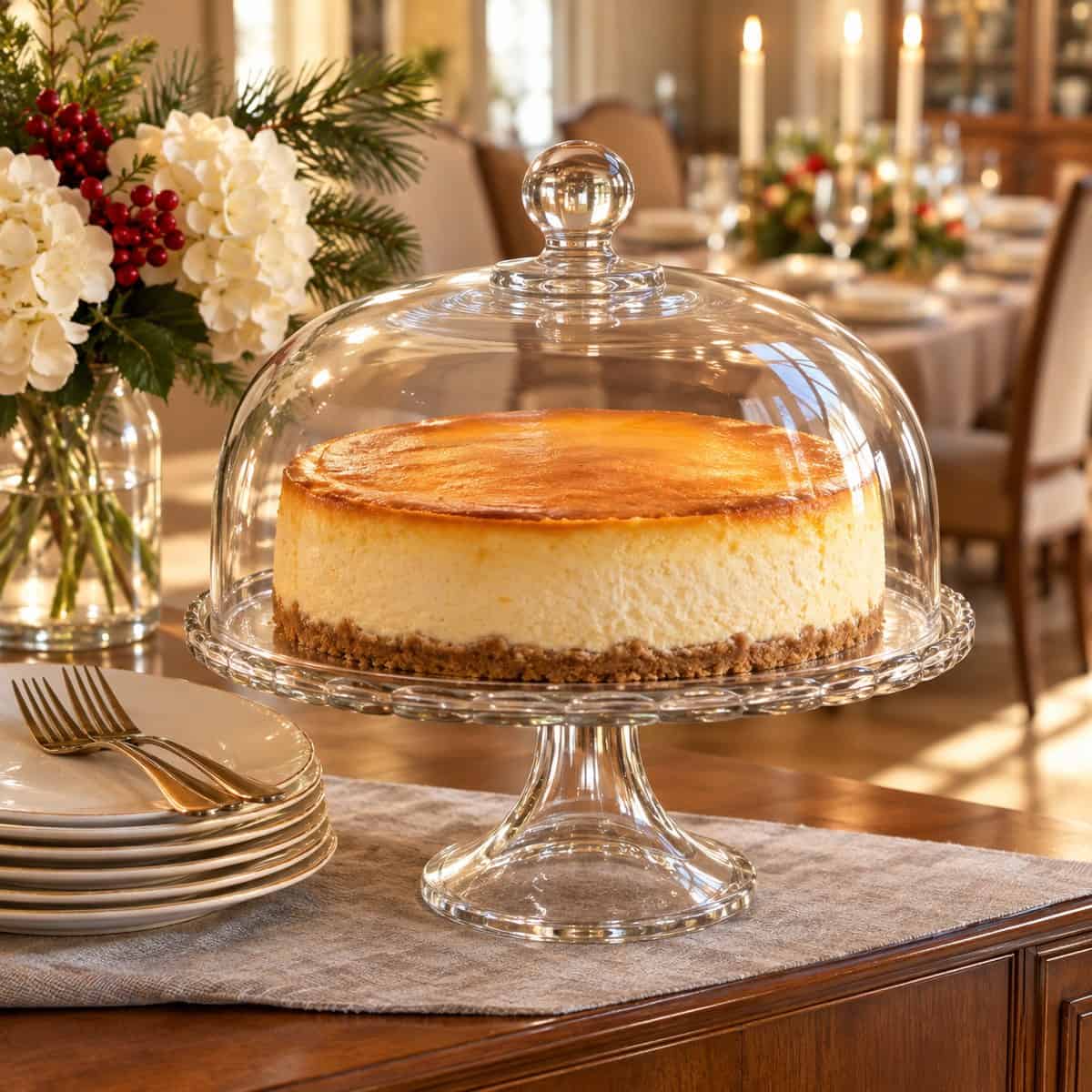
It’s made the day before, because it has to set, and it sits out in the open the entire meal under a dome or a sheet of foil. Nobody refrigerates it; there’s no room, and cold ricotta tastes like nothing.
You look at it through the lasagna. You look at it through the roast. That’s intentional. It’s the reason you pace yourself, and the reason Mrs. Carbone from next door always left two bites of meat on her plate.
Ours was ricotta, barely sweet, with orange zest and no crust to speak of. Mrs. DiNapoli brought cassata instead some years and the two camps did not mix. If you want to see the whole spread, the Italian Christmas desserts on the site cover both camps.
Cutting it before the coffee is poured is the kind of thing people remember. My friend Marco did it once, his first year at Nonna’s table. He still hears about it.
27. Nobody Brings Fish on Christmas Day
This one has teeth. Christmas Eve belongs to the seafood, and the custom traces back to the Catholic practice of abstaining from meat on the vigil before a feast — Tasting Table has a good rundown of where the whole thing actually came from.
The flip side of that rule is just as strong. The vigil is over. Put the fish away. You gave up meat for a day for a reason, and the reason is the roast and the braciole coming out of the oven at two.
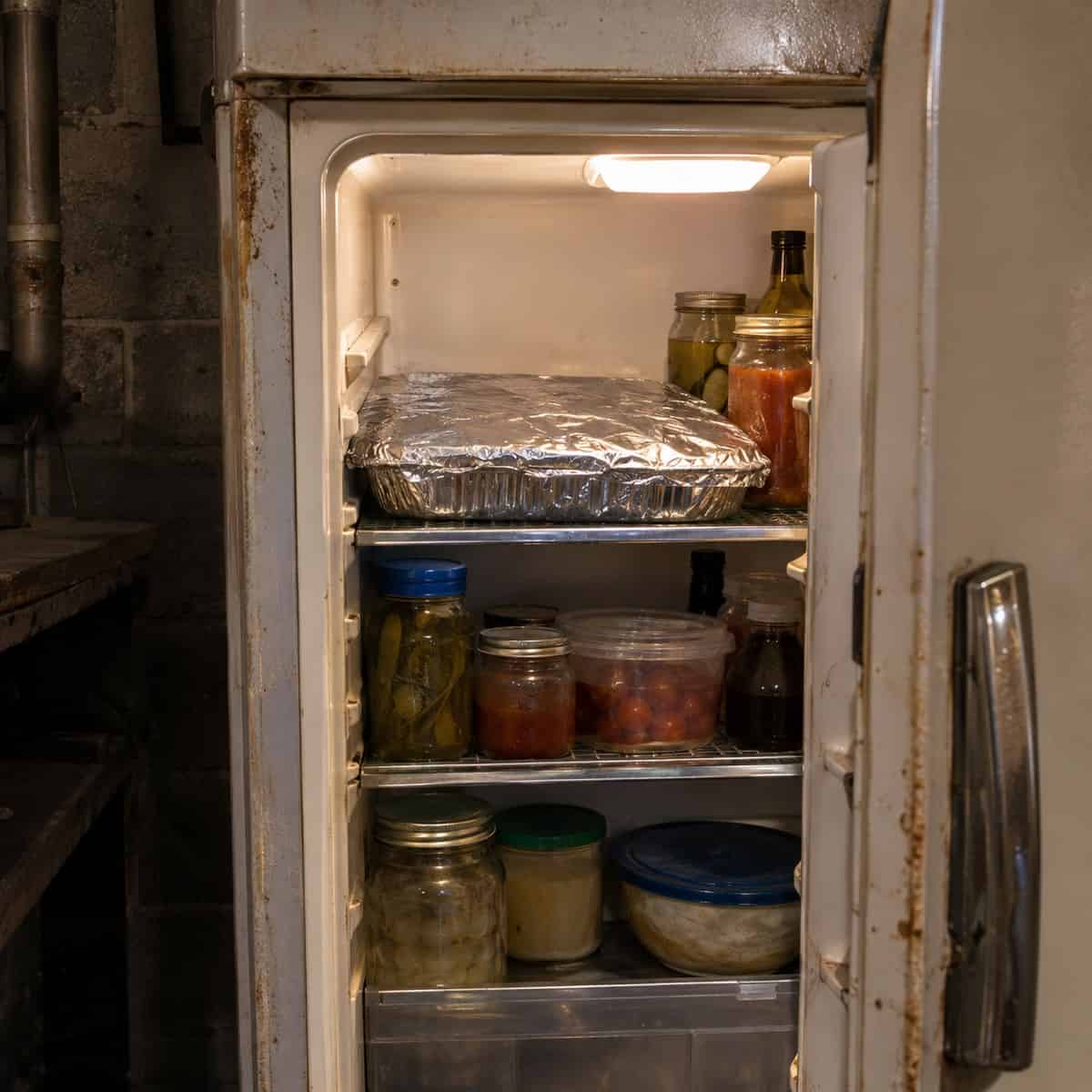
No anchovies in the salad. No tuna in anything. One year someone brought a baked clams tray left over from the night before and it was moved without a word to the basement fridge within four minutes, foil still on, behind the extra ricotta.
Nobody yelled. It just disappeared, the way things do. It came back up on the 26th.
28. If You Owe the In-Laws, You Eat Two Dinners
Married people know this one. Two o’clock at one house, six-thirty at the other, and you will eat at both.
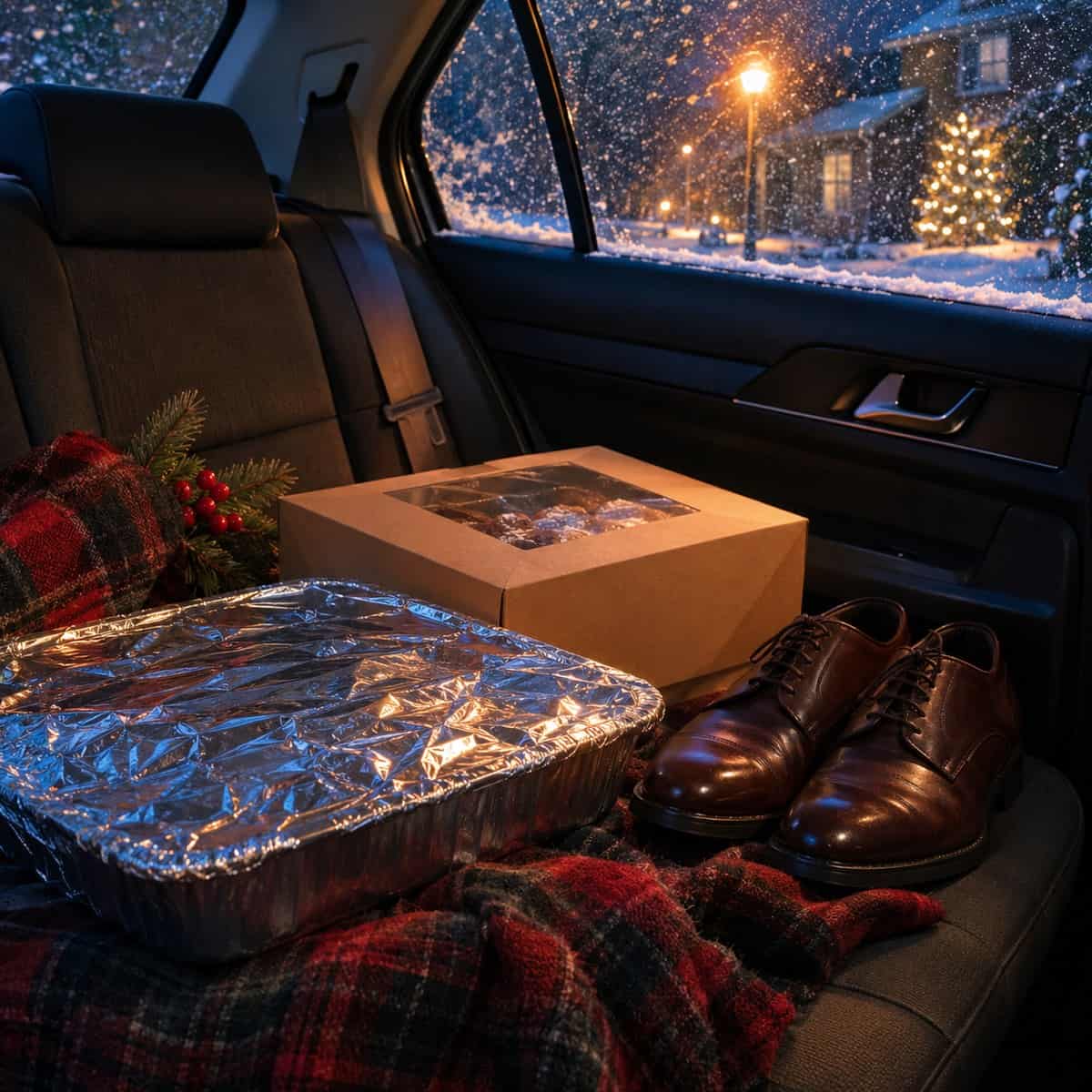
You cannot pick at the second. You will be watched. Nonna eats at two and Mrs. Carbone, who has been feeding me since I was in a car seat, eats at five, and for about ten years I have done both, every single December 25th, in the same clothes with a change of shoes in my bag. The good shoes are for the table. The flats are for the walk between houses.
The trick is a small first plate at the earlier house, and you still get caught. Somebody’s aunt counts your meatballs, and by the time you pull into the second driveway the phone has already rung.
“You’re not eating” is the worst sentence you can hear at six-forty-five with a full stomach and three hours of driving behind you. The only answer is a second helping.
29. Santo Stefano on the 26th Is Leftovers at Somebody Else’s House
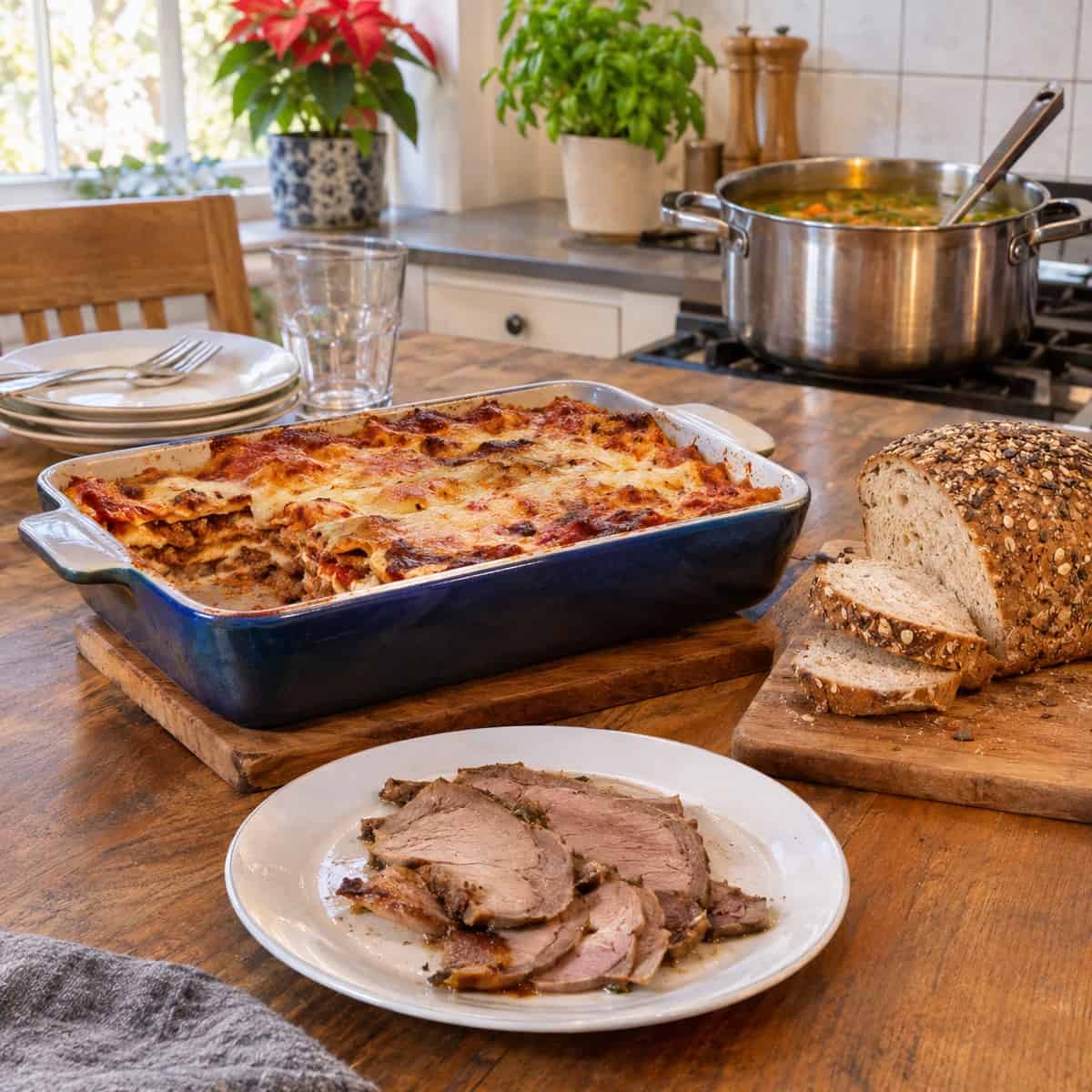
December 26th is not a day off. It’s Saint Stephen’s, and in Italy it’s a holiday. In our family it meant you got in the car again, with a roasting pan wrapped in foil riding on somebody’s lap.
Whoever didn’t host Christmas hosted the 26th, and the whole meal was built out of what survived. Lasagna reheated in the oven, covered so the edges didn’t turn to leather. The end of the roast sliced thin for sandwiches on seeded bread. Soup from the bones.
Nobody cooked anything new. That was the whole charm of it. The host’s job was to own the oven and the coffee pot.
The leftover recipes on this site are basically that day, written down. It’s the most relaxed meal of the week and the only one where Nonna sat for the whole thing, with her shoes off by dessert.
30. Christmas Isn’t Over Until the Befana — and the Tree Stays Up

January 6th. Epiphany. The Befana comes on her broom with candy for the good ones and carbone for the rest, which was a lump of black rock sugar that my grandmother bought at the Italian store and we were all slightly afraid of.
The tree stays up until then. Not December 28th. Not New Year’s.
My neighbors have theirs at the curb before the trash truck comes on the 27th and every year it startles me a little.
And the ribbon candy in the cut-glass dish, which nobody has eaten voluntarily since 1974, stays out right alongside it. Twelve days. Then you can take it all down.
None of this was ever explained. There was no list taped to the refrigerator, no one sat the grandchildren down and went through it.
You just noticed that the gravy went on before the presents, and that the artichokes showed up when the oven was running behind, and eventually you were the one doing it.
My grandmother has been gone a long time now. The tablecloth has a stain, the nutcracker still doesn’t work, and dinner is still at two.
Buon Natale,
Madeline