The Unwritten Rules of Coffee in an Italian House
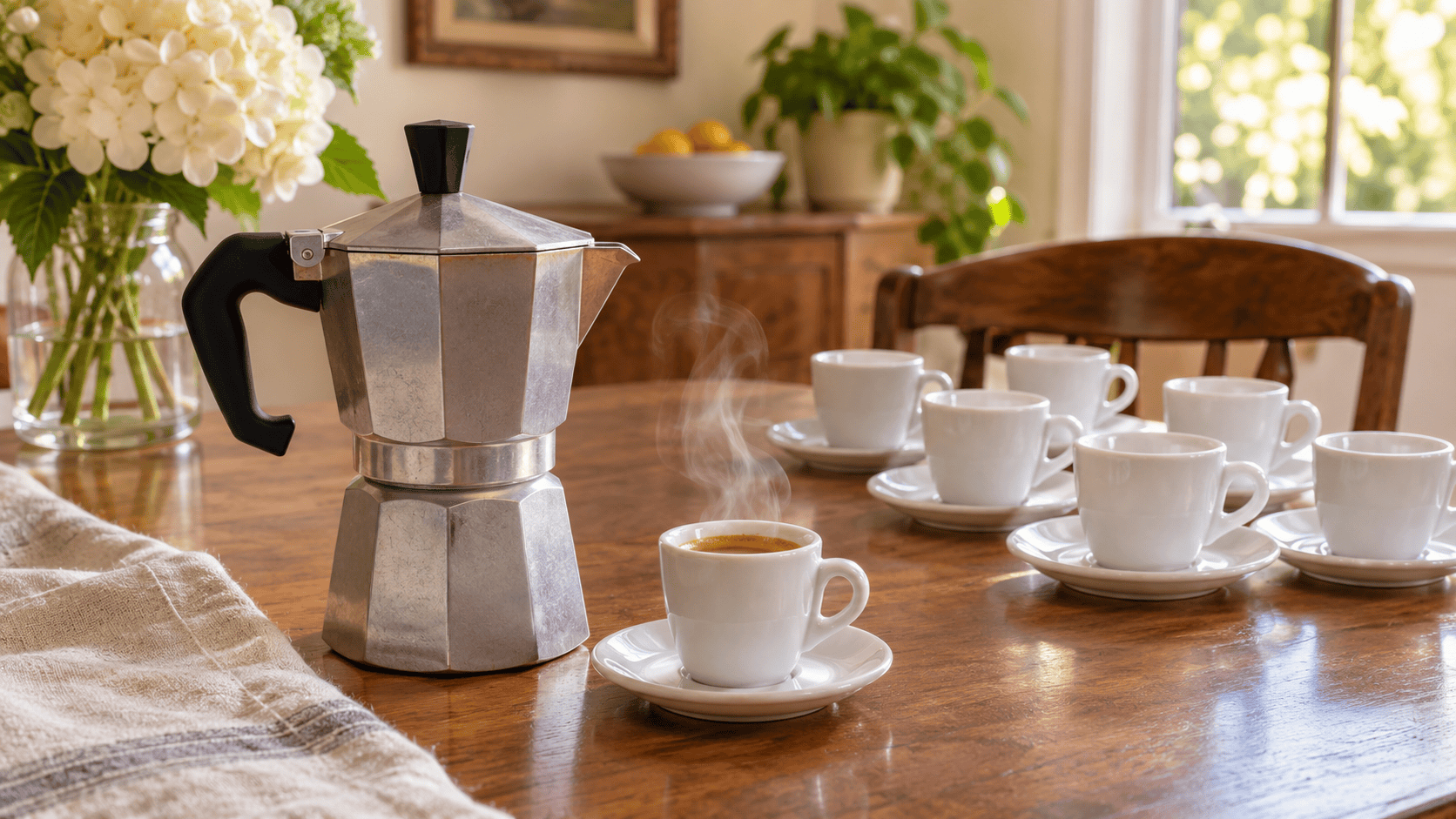
The first sound in my grandmother’s house isn’t a voice. It’s metal on metal, the moka being unscrewed over the sink at five in the morning while the rest of the block is still dark.
I grew up outside Philadelphia, on a chair pulled up to Nonna Pina’s stove, watching her do the same eight motions in the same order every single day. Nobody wrote any of it down. Nobody had to.
Then I moved into my own apartment with a two-burner stove and found out how many of those motions I’d absorbed without noticing, and how many I’d gotten completely wrong.
Some of these rules came over from a town outside Palermo. Some of them were invented in rowhouses in New Jersey and Brooklyn and nobody in Italy has ever heard of them. Both count.
Here are the coffee rules nobody ever explained to me, and the ones I’ve broken anyway.
1. The Moka Pot Never Touches Soap
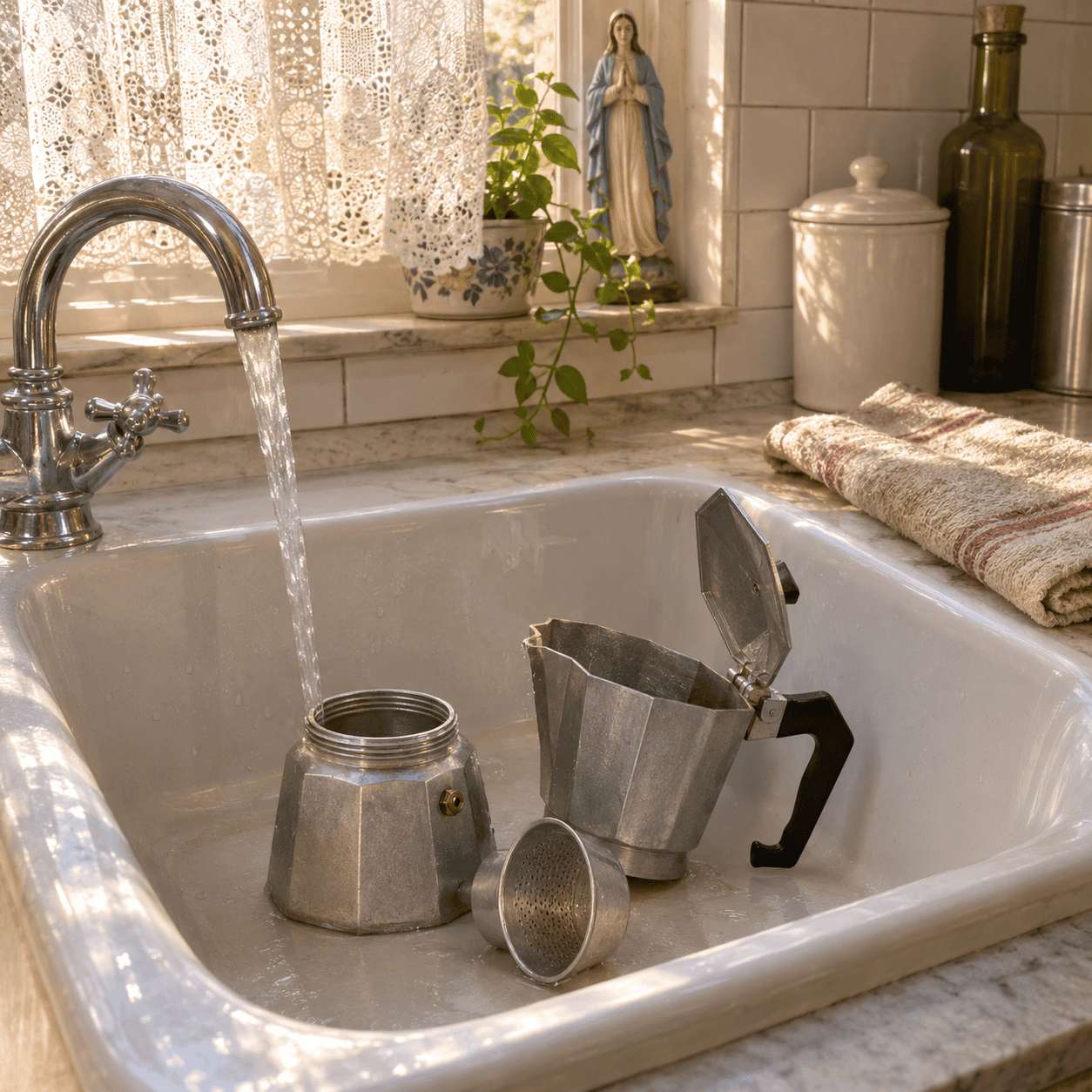
Hot water, a rinse, upside down on a dish towel to dry. That’s the entire cleaning procedure and it has not changed in sixty years.
Nonna says the aluminum holds the coffee and soap takes it away. The science is a little less romantic — soap residue trapped in the porous metal and the gasket is what you actually taste the next morning — but the instruction is the same either way.
My roommate, who is lovely and means well, once ran our moka through the dishwasher with the forks. It came out chalky white and the next pot tasted like a dish sponge. I didn’t yell. I just took it off the drying rack and put it on a high shelf where she would have to ask.
Three pots later it was almost right again.
2. Coffee Is Offered Before You’ve Taken Your Coat Off
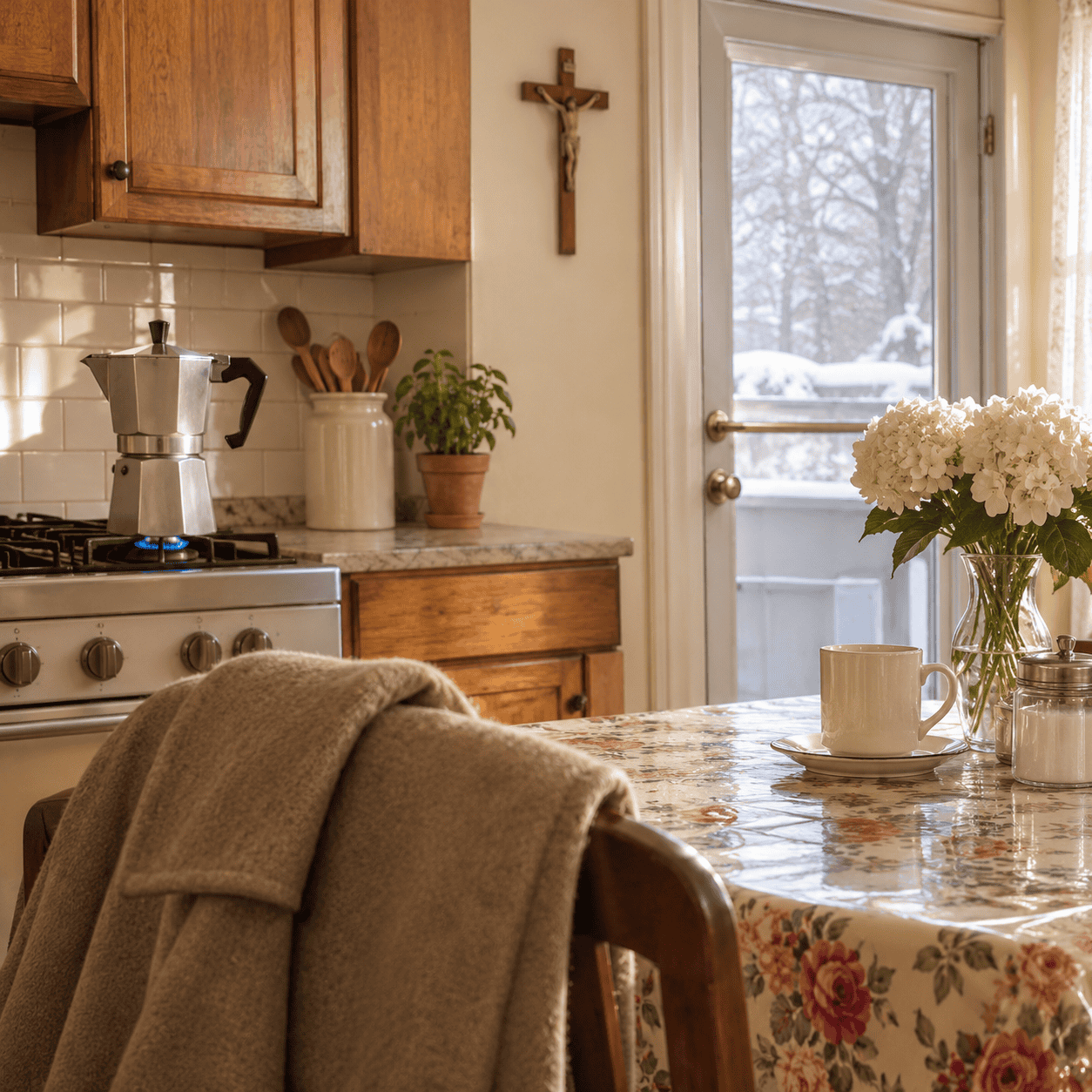
You’re in the door maybe four seconds. The question isn’t whether you want coffee. The question is already on the stove.
She asks and she’s walking to the burner at the same time, so the answer is largely ceremonial. The offer is how the house says you’re welcome, and it happens at nine in the morning and at four in the afternoon and at nine at night.
Saying no is allowed. But understand that it’s a statement, and it will be followed up on. A friend of mine turned it down once and got asked three times across one visit whether she was feeling all right.
Say yes and take two sips. That’s enough.
3. “Un Caffè” Means a Small Cup, Full Stop
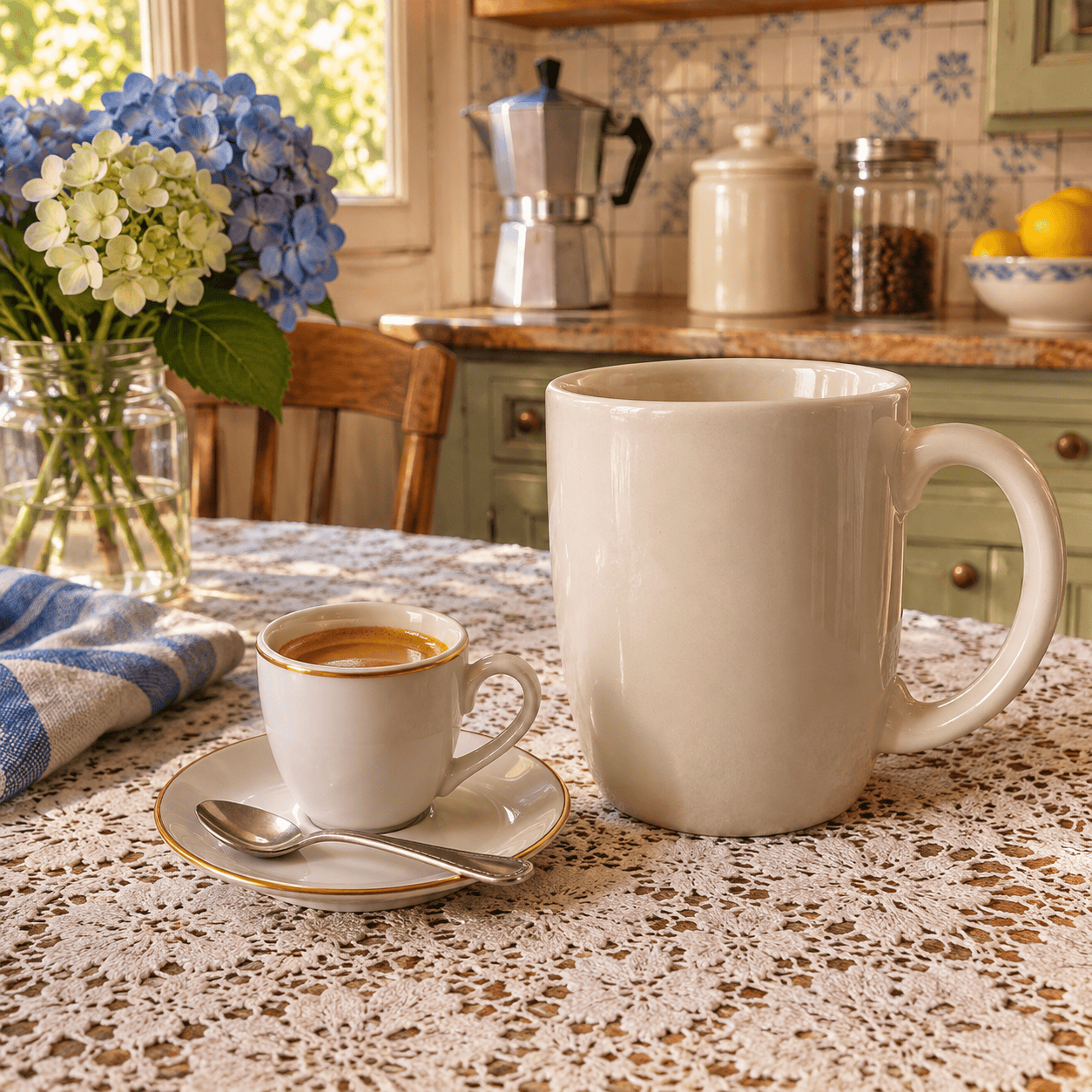
In Italy, asking for a coffee gets you an espresso in a little cup, about an inch of it, and that’s the end of the conversation. There’s no size question and no second question.
The big American mug of coffee has no equivalent in Nonna’s house. The demitasse holds what it holds. If you want more, you have another one.
I once poured moka coffee into a tall diner mug at her kitchen table because I was cold and wanted something to hold. She looked at the mug, looked at me, and asked if I was planting something in it.
The cappuccino-ends-at-breakfast thing is real too, but that’s a separate argument and I’m not opening it here.
4. The First Pot From a New Moka Goes Down the Drain
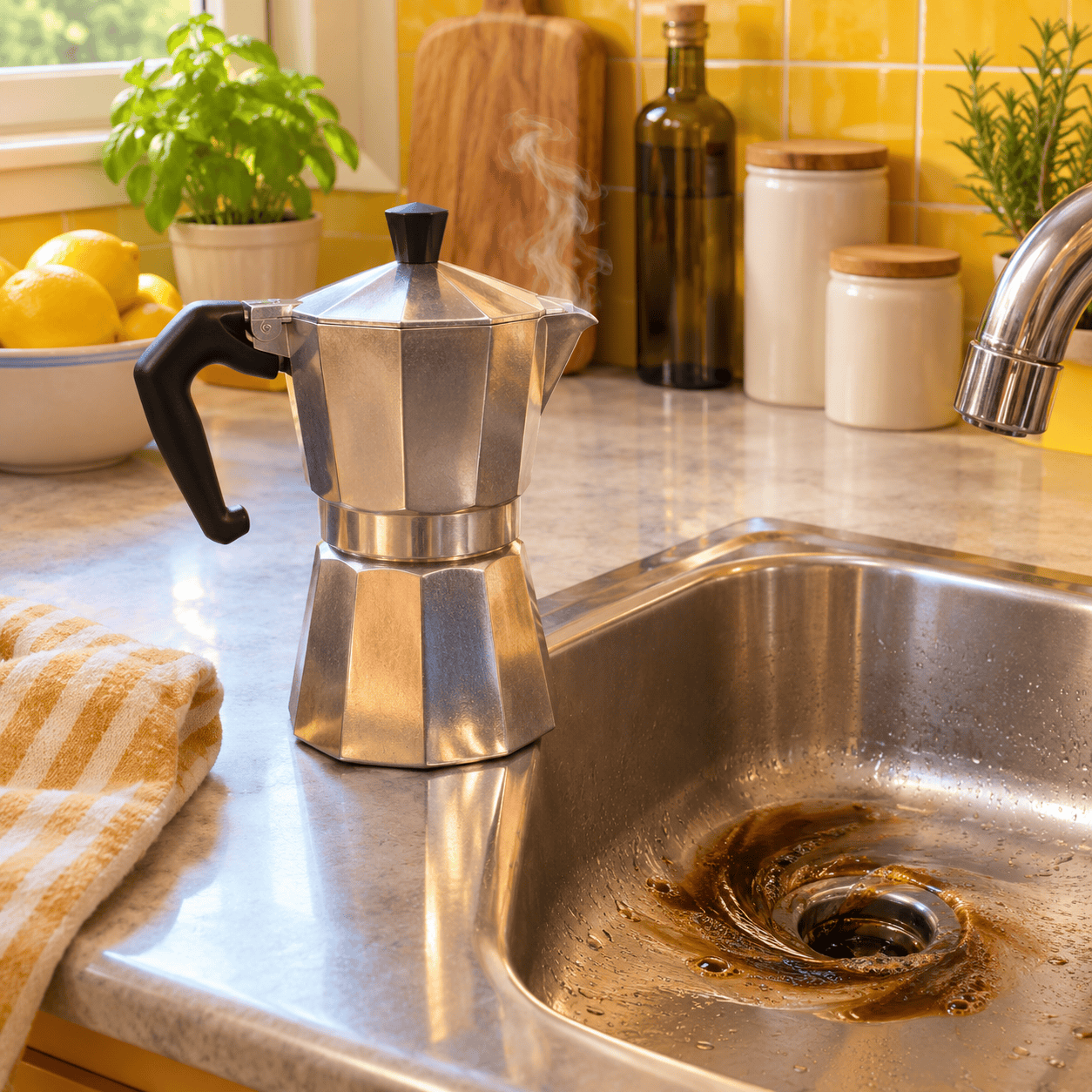
A brand-new pot is not ready to make coffee for a person. It’s ready to make coffee for the sink.
You brew a full pot, you pour it out, and depending on how particular you are, you do it two or three times before anybody drinks. It pulls the factory metal taste out and starts the seasoning.
Nonna gave me a three-cup moka the week I moved out and I was so excited I made coffee in it immediately and drank it. It tasted like a handful of pennies. I told her and she said, without looking up, that she assumed I was watching all those years for a reason.
Now I do three throwaway pots. It feels wasteful. It isn’t.
5. The Water Comes Before the Coffee, Not After
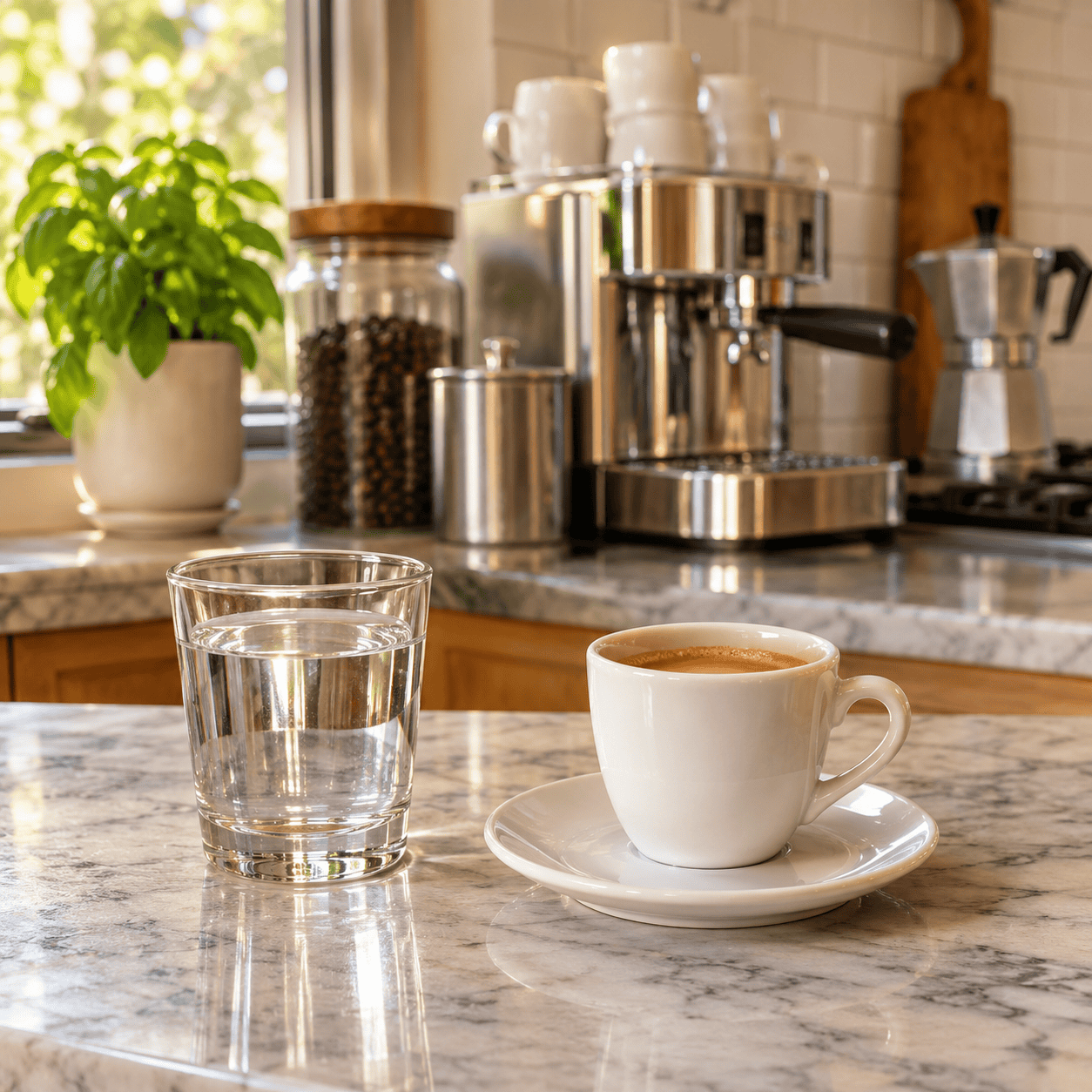
In the south — Naples, Sicily, Nonna’s whole upbringing — a small glass of water arrives next to the espresso. Not to chase it. To clear your mouth first, so the coffee lands on a clean palate.
Drinking it afterward suggests you’re washing the taste away, which is not a compliment to the coffee or the person who made it.
At a bar in Palermo I grabbed the water after, out of habit, and the man behind the counter tapped the glass and said “prima” without even slowing down what he was doing.
I didn’t know it mattered until that second. Now I set the glass down on the left side so I remember the order.
6. There’s a Moka for Every Head Count
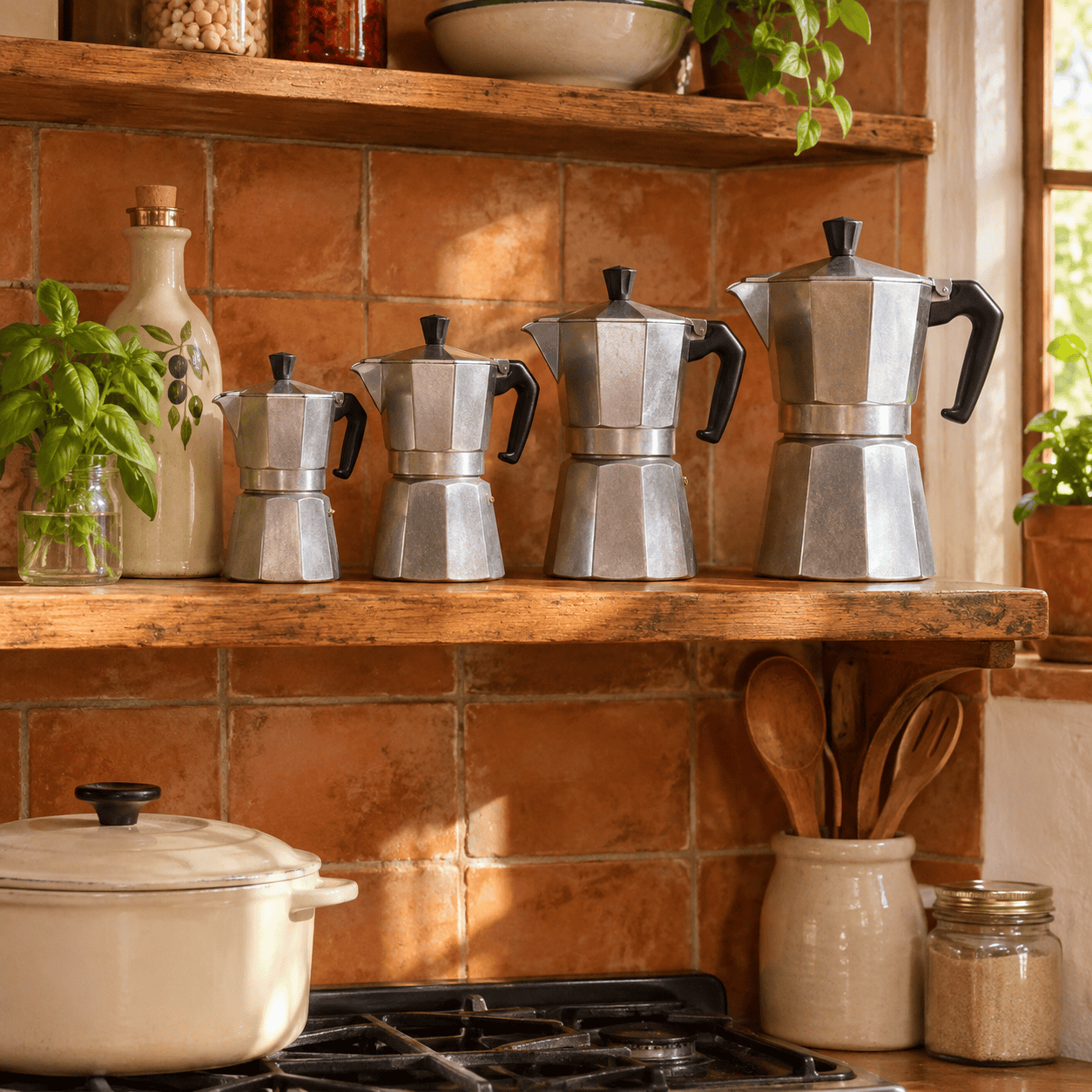
Open the cabinet above Nonna’s stove and there are four of them lined up by height like a family photo. One-cup, three-cup, six-cup, and the twelve-cup that only comes down when there are people.
You don’t make a small amount in a big pot. You pick the pot that matches the number of heads in the kitchen, and using the wrong one is a visible error, like setting the table with the wrong forks.
I own two. The three-cup she gave me and a one-cup I found secondhand for the mornings I’m alone and don’t want to pretend otherwise.
The day she handed me the three-cup she said it was the size for a person who has friends. I’m still deciding if that was a compliment.
7. Sugar Goes In First, and Then You Whip It
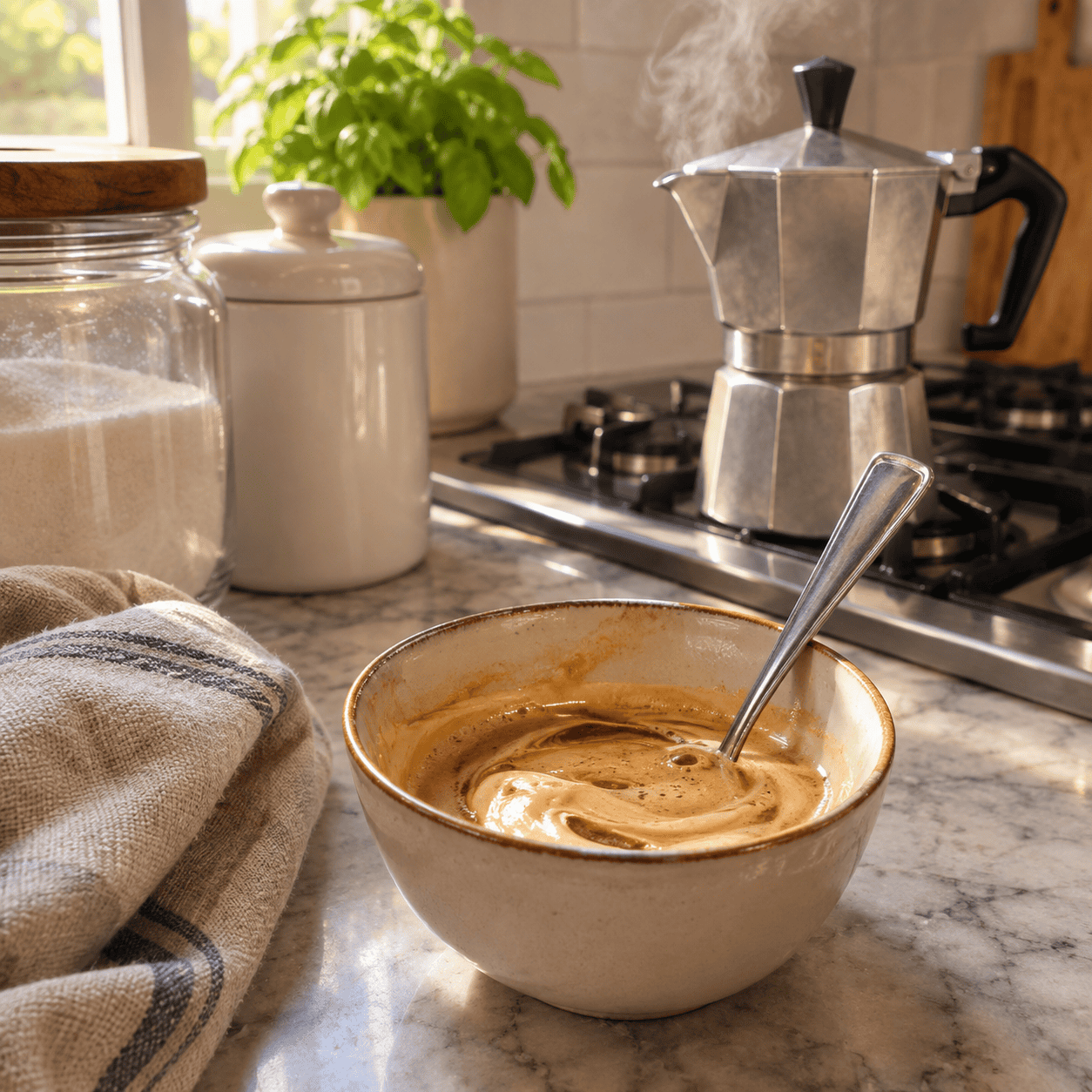
This one took me the longest to learn because it looks like nothing.
The sugar goes in the cup before the coffee. Then you spoon in the very first dark drops from the moka — a teaspoon’s worth, no more — and you beat it against the sugar until it goes pale and thick and glossy. That’s the cremina. Then you pour the rest in over it and it comes up through the coffee as foam.
Nonna does it in about forty seconds with a wrist motion I still can’t replicate. Mine takes two minutes and a slightly sore arm.
It’s a real southern Italian habit, and it makes stovetop coffee taste like it came from a bar counter. Worth the arm.
8. Nonna’s Own Cup Is Not Espresso
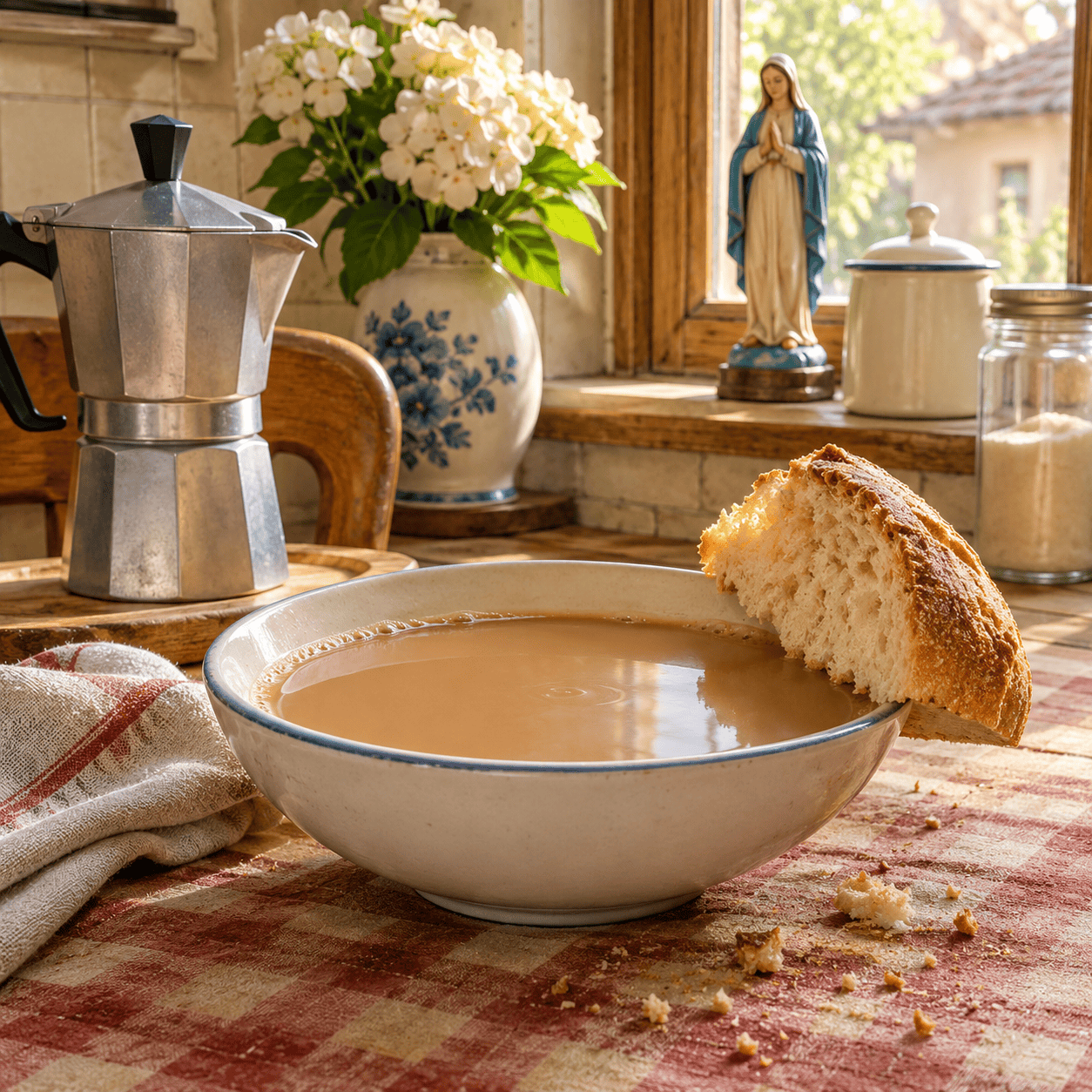
Here’s what surprised me: the woman with four mokas doesn’t drink espresso in the morning.
She drinks caffè latte out of a wide bowl-shaped cup with no handle, mostly hot milk, and she dunks yesterday’s bread in it. Sometimes a plain hard cookie instead — nothing frosted, nothing with filling. That’s her breakfast, same as it was in Sicily when she was six.
The tiny cups are for after meals and for guests. The bowl is for her, at the counter, standing up.
It’s the most Italian breakfast thing in the house and it’s the one thing I never saw a single American replicate growing up. I do it now on cold mornings. It’s better than anything I’ve paid for.
9. You Never Press the Grounds Down
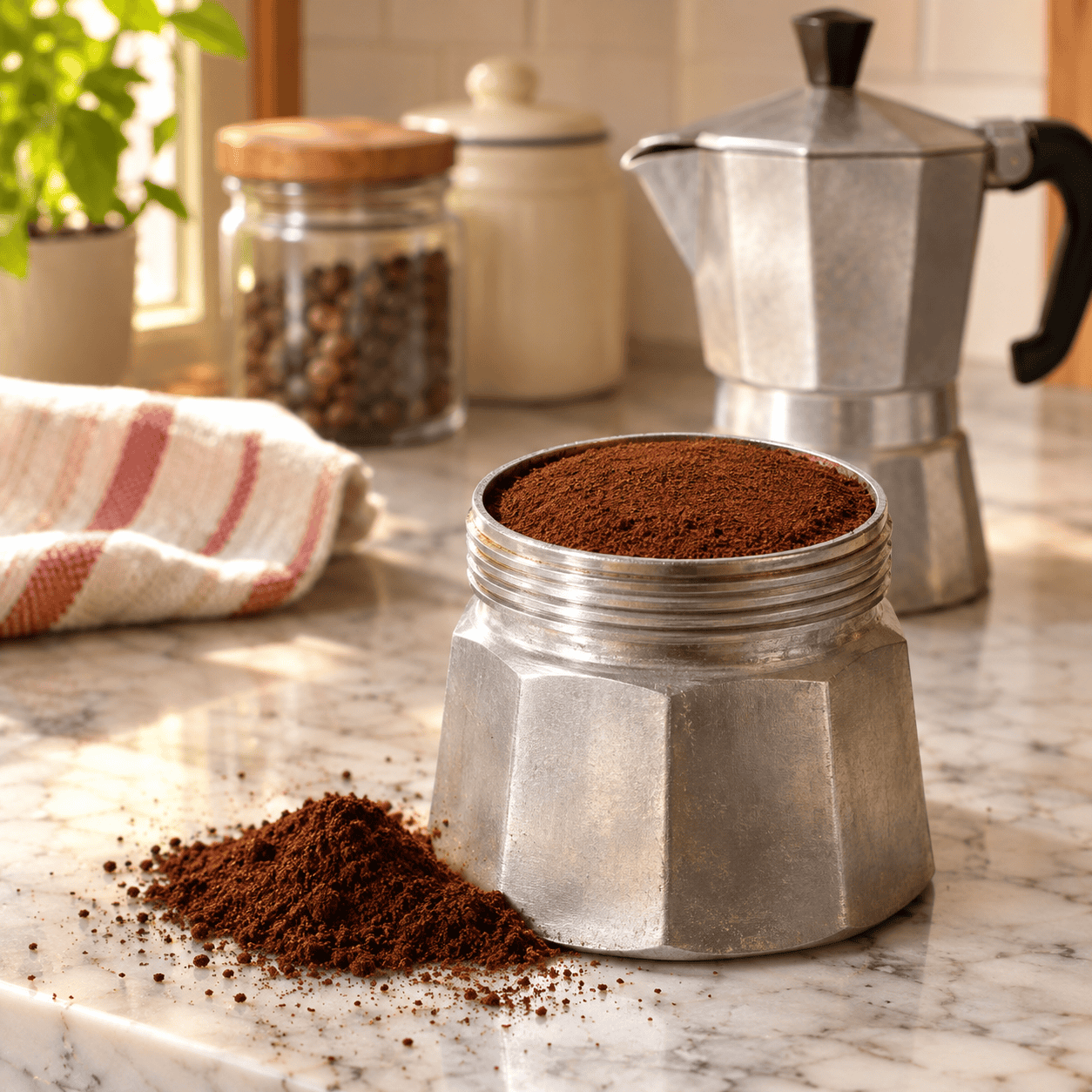
Fill the basket, level it off with your finger, done. No tamping, no packing, no spoon pressing it flat.
A moka works on low pressure — a couple of bars at most, nothing like a real espresso machine. Pack the grounds and the water can’t push through evenly, so you get a bitter, over-extracted trickle and a very unhappy gasket.
I spent an entire month tamping because I’d watched a barista do it and assumed it was universal. Every cup tasted burnt. Nonna tried one at my apartment, set it down after a sip, and asked what I had done to it.
A little mound above the rim that the funnel flattens when you screw it shut. That’s correct. That’s all of it.
10. The Lemon Peel Is an American Invention
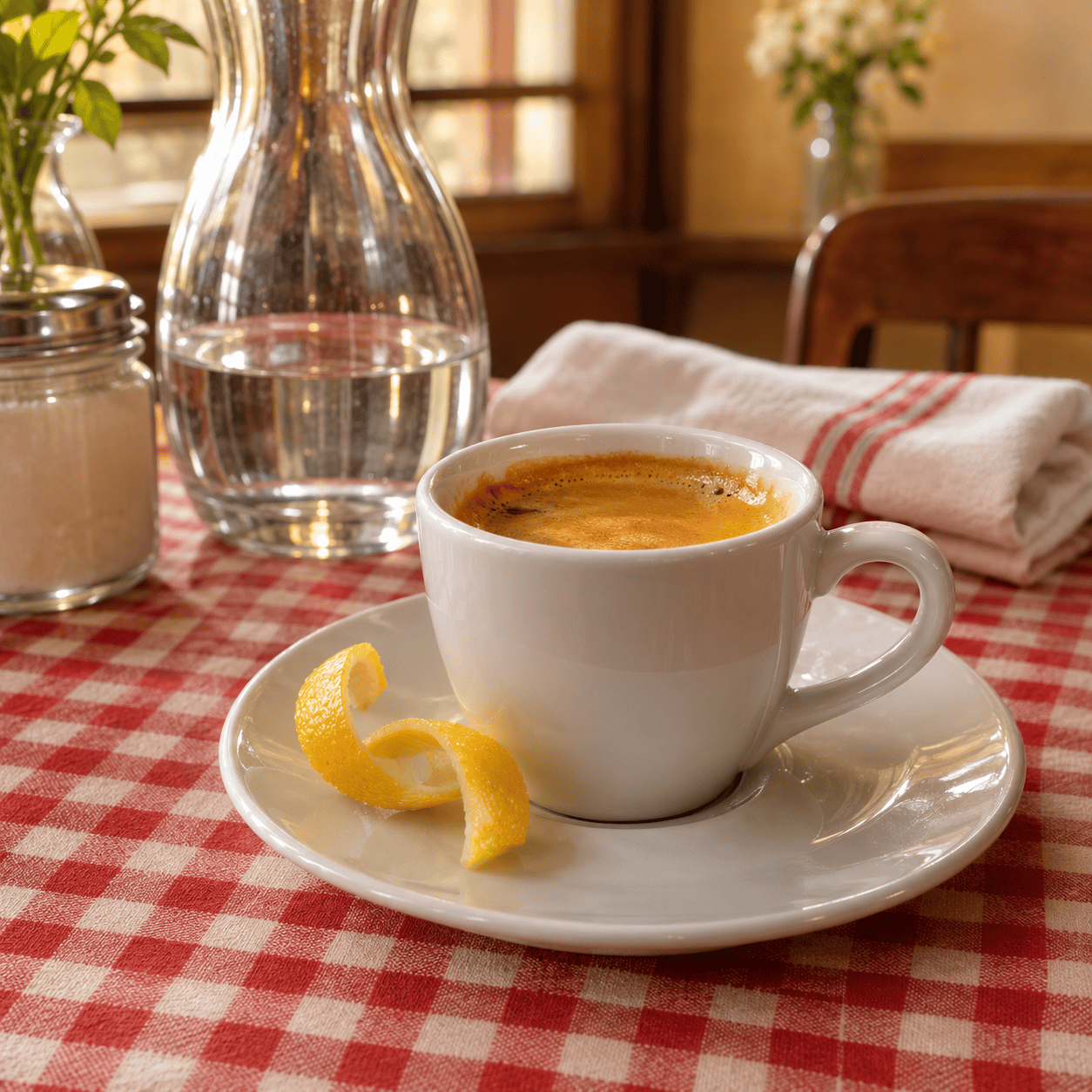
A twist of lemon rind on the saucer with the espresso: every Italian-American restaurant in the tri-state area, every holiday table I grew up at.
It is not an Italian habit. Order espresso in Rome or Palermo and ask for lemon and you’ll get a pause and then a polite no. The story goes that it started in the States, possibly to cover up coffee that wasn’t very good, back when the beans crossing the ocean weren’t much.
Nonna doesn’t do it. Some of her friends from church absolutely do, and she pours them coffee without comment, which from her is enormous tolerance.
I like it occasionally, in a stubborn way. It’s part of our side of the Atlantic and I’m not giving it up to be correct.
11. There’s the Good Set, and There’s the Everyday Cups
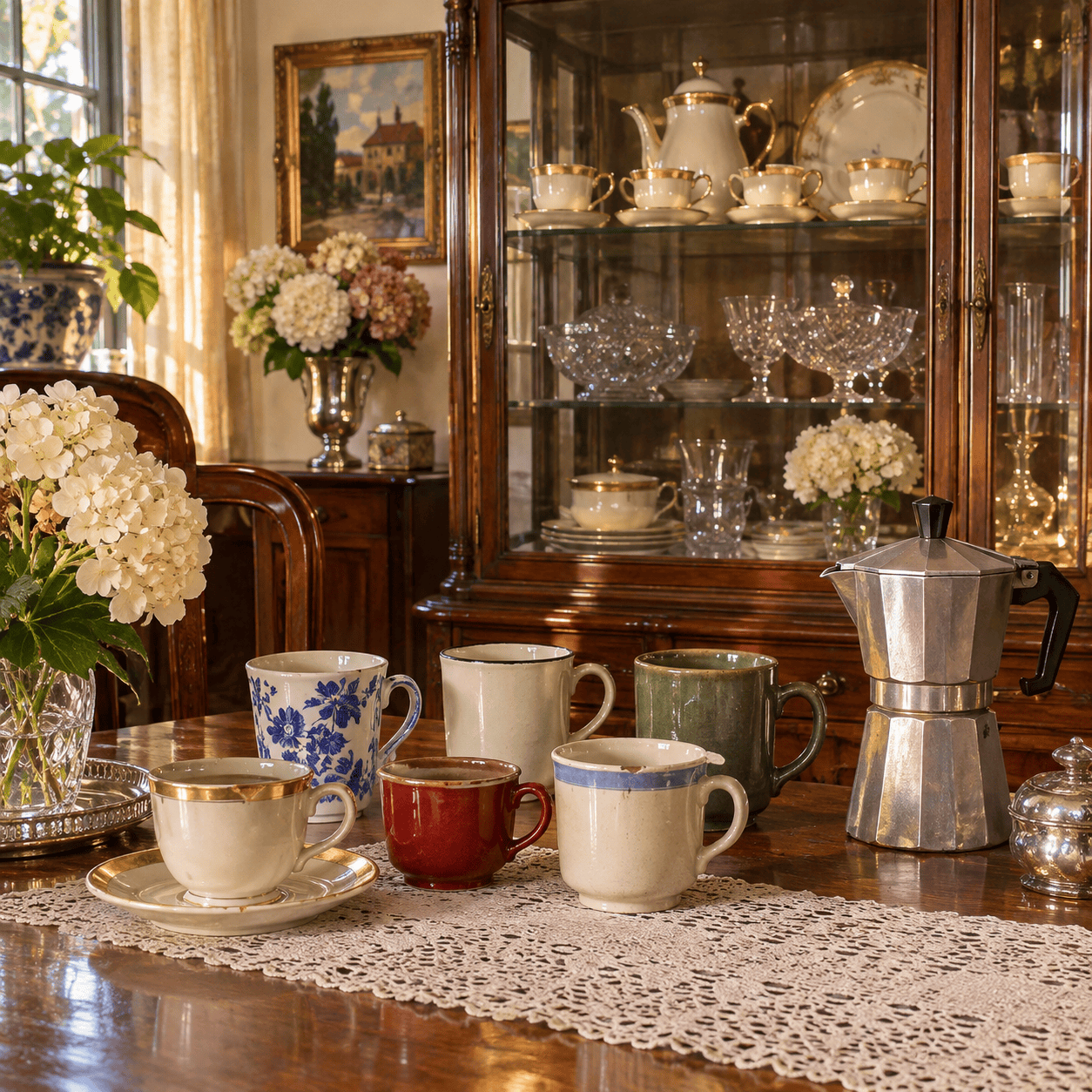
Behind the glass door in the dining room is the demitasse set with the gold rim. Twelve cups, twelve saucers, never been in a dishwasher, hand-washed and put back.
In the kitchen cabinet are the everyday ones. Mismatched, a couple chipped, one with a faded flower that I think came from a gas station promotion in the seventies.
The good set comes out for company, for holidays, and after funerals. Nobody announces which set it’s going to be. You find out when you sit down, and finding the gold rim in front of you means today is a day that counts.
I don’t own a good set. I own six mismatched cups and I’m aware that this is a stage of life, not a philosophy.
12. Low Flame, and You Stay in the Room
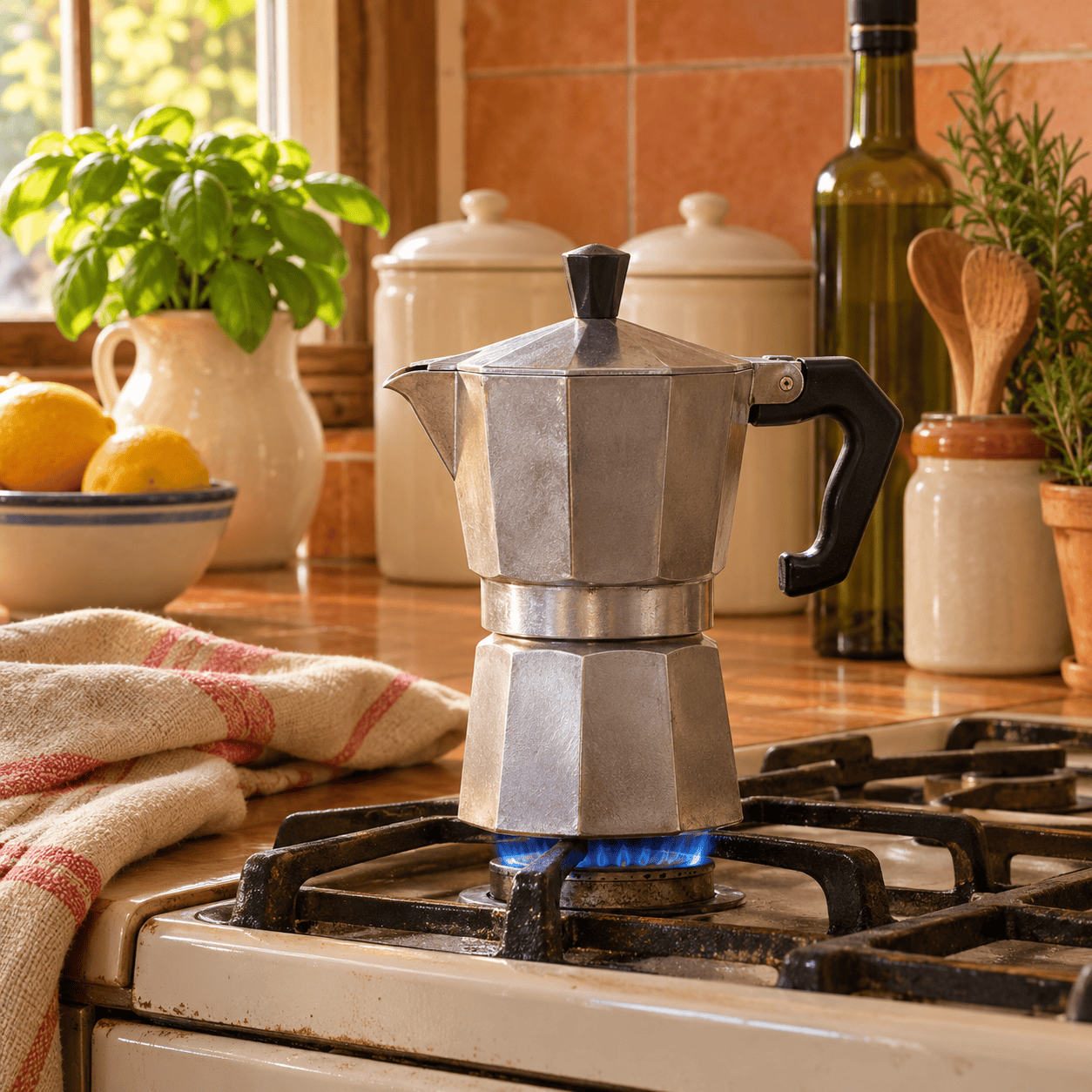
High heat on a moka is the single most common mistake in American kitchens, and it’s the one that makes people think stovetop coffee is bitter.
The flame should never lick up the sides of the base. Nonna keeps hers barely blue. The water rises slowly, the coffee comes out honey-brown instead of pale and screaming, and the whole thing takes about five minutes.
You listen for the gurgle. When it starts to sputter and go hollow, you pull it off the burner — some people run the base under cold tap water to stop it cold. That last gasp of steam is what scalds the coffee.
My first apartment pot got abandoned for a text message. The kitchen smelled like a campfire for two days.
13. Coffee Never Sits in the Pot
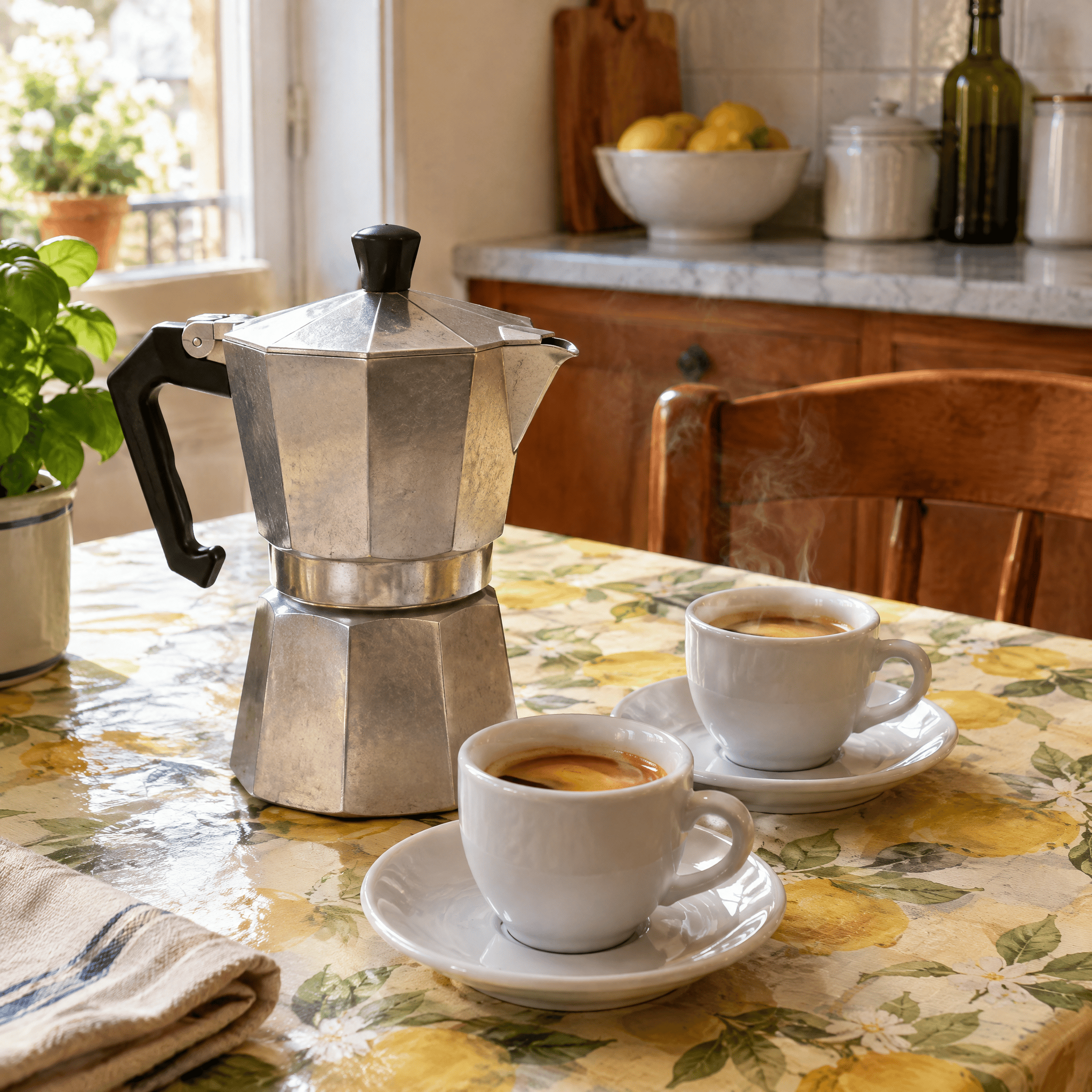
It gets poured the moment it’s done. All of it. Into cups, right then.
Leftover coffee sitting in the chamber keeps cooking against hot aluminum and turns flat and tinny within minutes. Reheating it later is worse than not having coffee at all, and in Nonna’s house it borders on an insult to whoever you’d serve it to.
I tried, exactly once, to microwave a half cup from the morning. She happened to be at my place hanging a picture. She didn’t say a word — she dumped it, rinsed the cup, and started a fresh pot like a nurse changing a dressing.
Make less coffee more often. That’s the whole solution.
14. Three Coffee Beans in the Sambuca
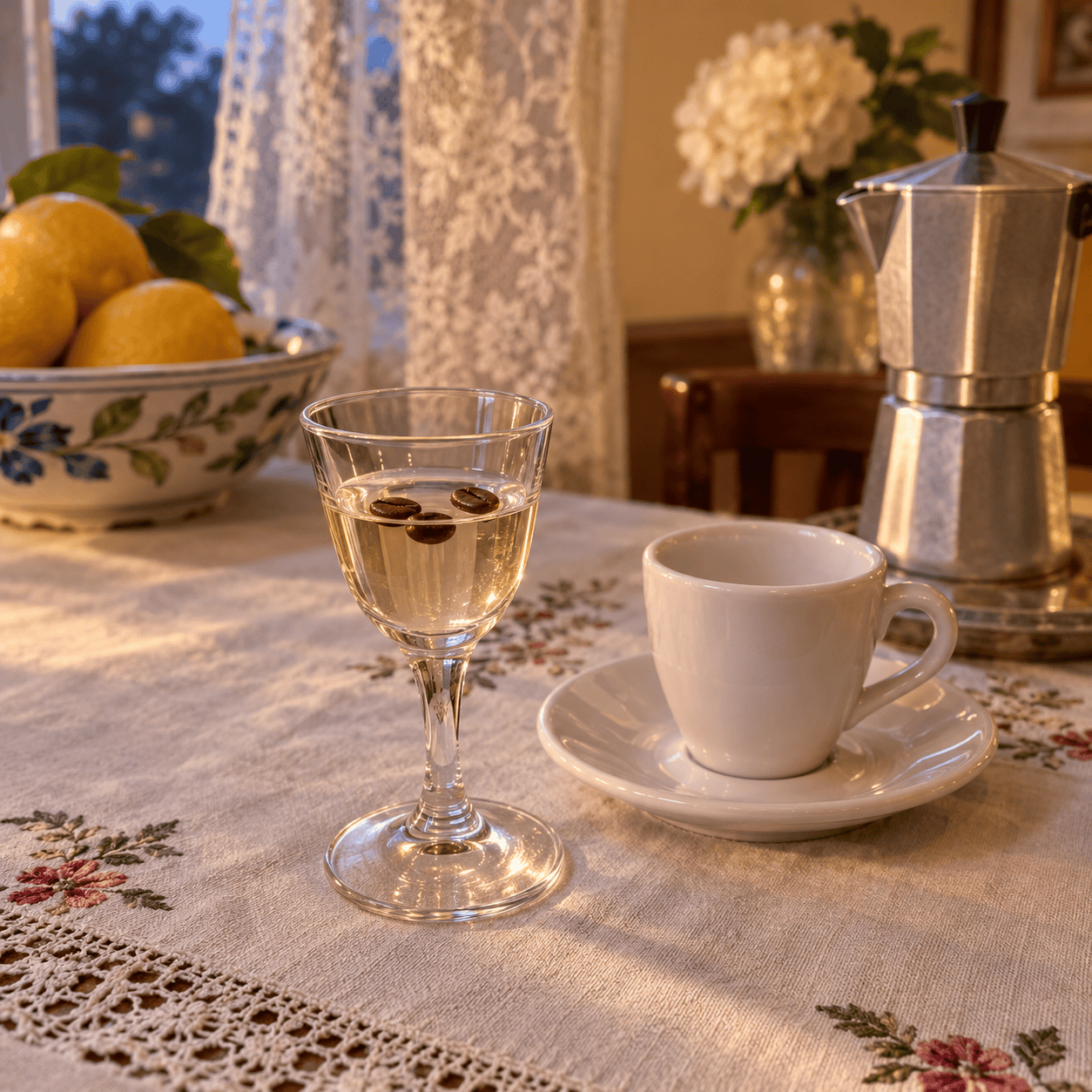
Three beans floating in the glass. Not two, not four. Three — health, happiness, prosperity.
It comes out after the coffee, usually when somebody says they shouldn’t and then holds out a glass anyway. In Italy they’ll sometimes set it alight briefly, which Nonna considers showing off and a waste of good anisette.
You chew the beans at the end. They’re bitter and a little oily against all that sweetness, and that contrast is the entire point.
I counted out four beans for a friend once because he said he liked them. Nonna reached over and removed one without breaking off her sentence. Three. It’s three.
15. At the Bar, You Stand, You Drink, You Leave
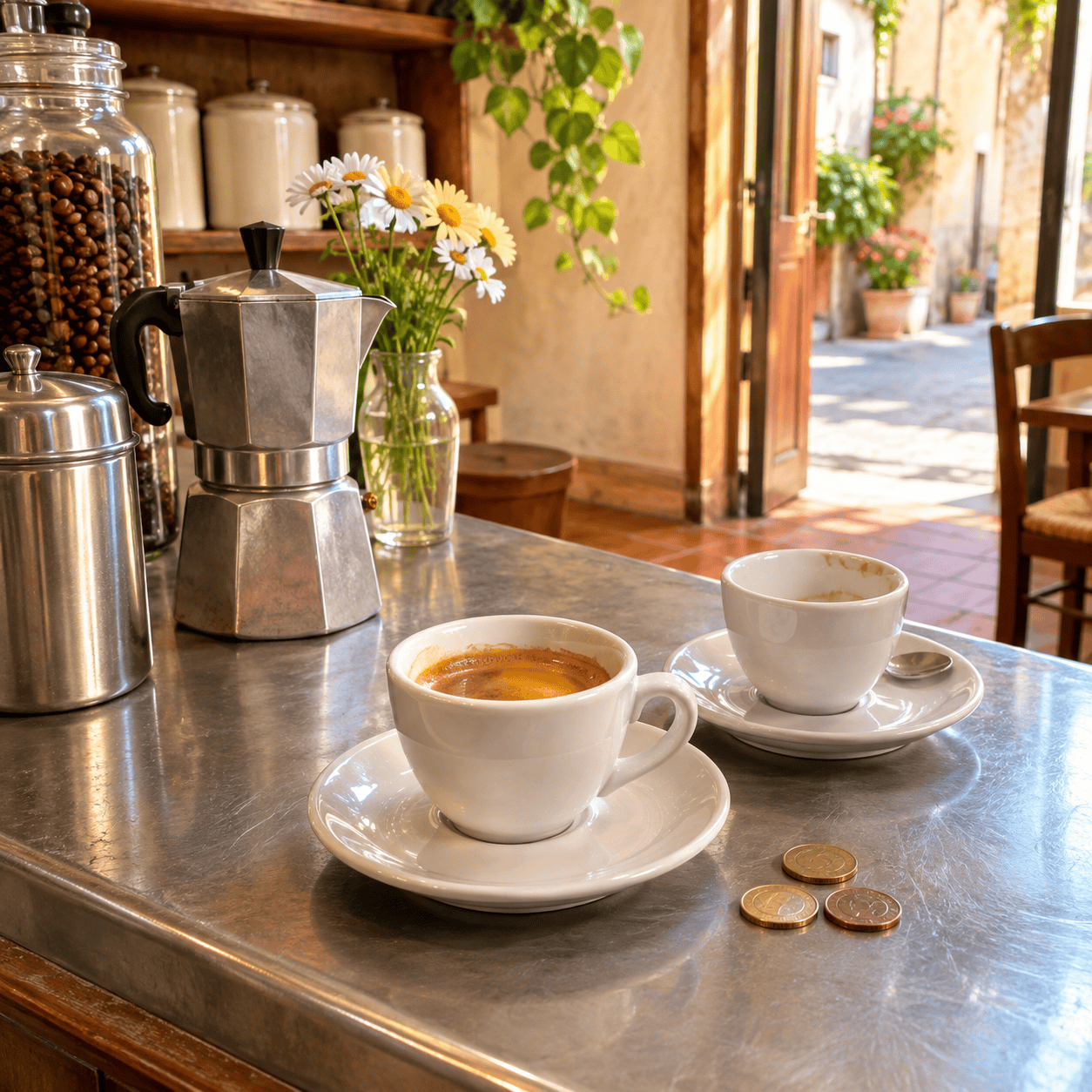
An espresso in an Italian bar is a ninety-second transaction. You pay, you drink it standing at the counter in two or three sips, you say something to the man behind the machine, you go.
Sitting at a table usually costs more, sometimes considerably more, and the locals at eight in the morning are all standing.
Nobody walks down the street holding a paper cup. There’s no to-go culture because the coffee is small, hot, and meant to be finished right where it was made.
In Palermo with Nonna I was still blowing on mine while she was already putting her change away and heading for the door. She told me it’s coffee, not soup.
16. Every Italian-American House Had the Percolator
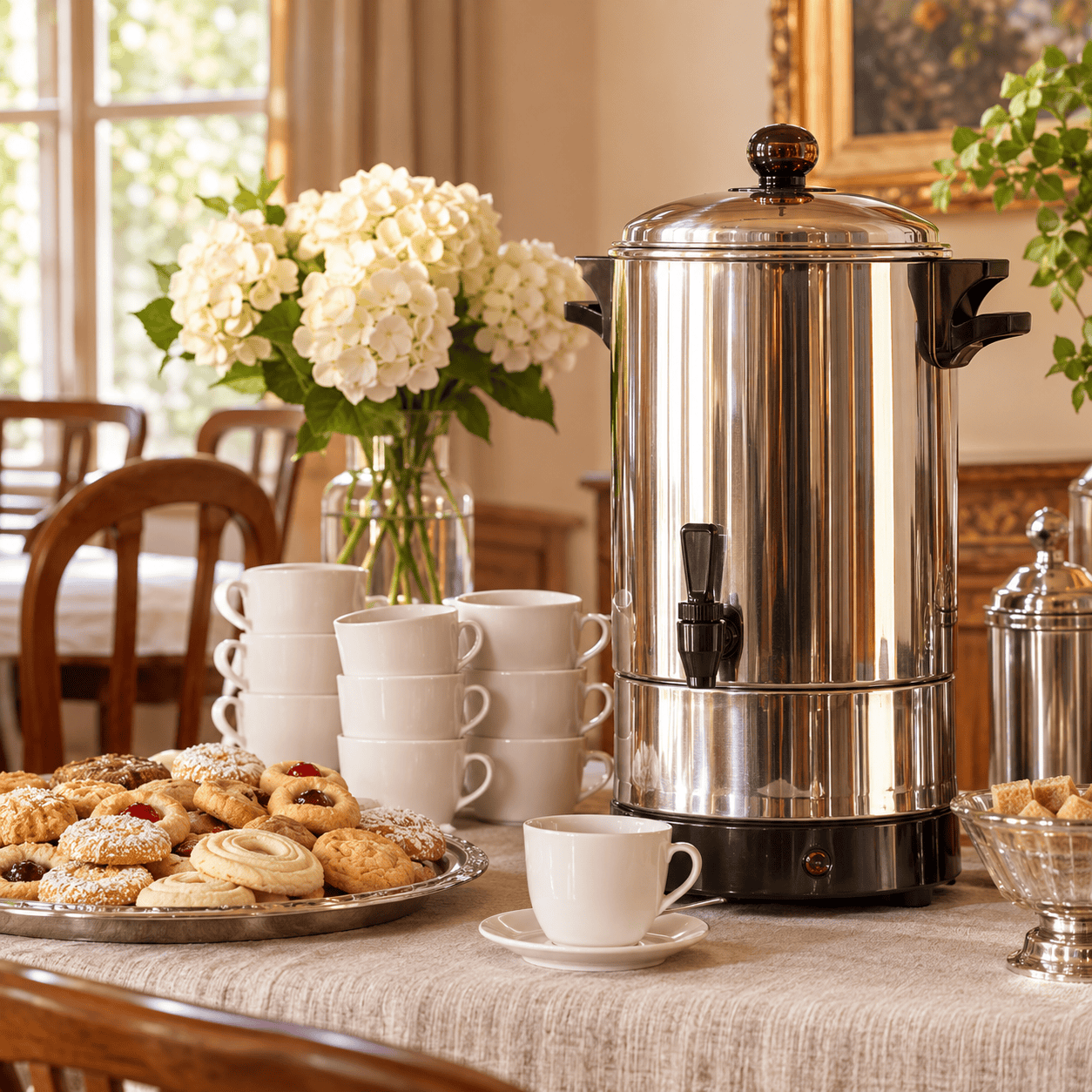
Under the counter, next to the roasting pan nobody used, sat the big electric percolator. Thirty cups. It came out at Christmas, at christenings, and after funerals.
This is purely our side of the ocean. No house in Sicily has a thirty-cup urn. But American Italian families hosted twenty-five people at a time, and no six-cup moka on earth can keep up with that.
The parish hall had an even bigger one, permanently stained brown on the inside, that took forty minutes to come up and made coffee that tasted mostly like the urn.
Nobody loved that coffee. Everybody drank four cups of it. That’s an Italian-American sacrament right there.
17. The Cups Get Warmed First
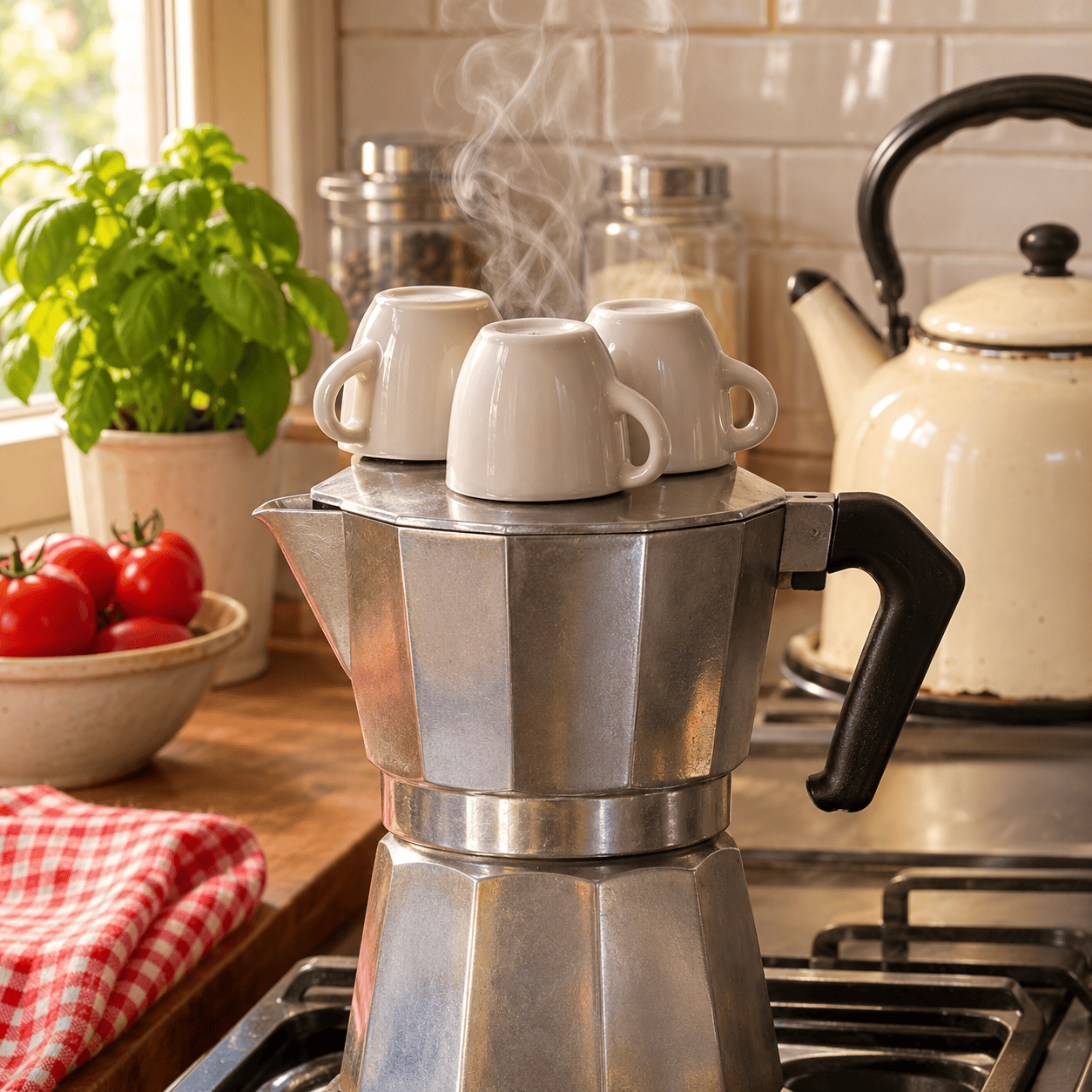
Espresso in a cold cup loses its heat almost instantly, because there’s barely any liquid in there to hold it.
Nonna runs the demitasse under hot tap water while the moka climbs, or she sets the cups upside down on the lid of the pot so the steam does the work. Thirty seconds. It changes the first sip completely.
At bars across Italy you’ll see the cups stacked on top of the machine for exactly this reason, warming all day long.
I skipped this step for years as fussiness. Then I did it side by side one morning with two cups and one pot, and I’ve never gone back. The cold cup version tasted like it had been sitting out.
18. Three O’Clock Means a Plate of Cookies
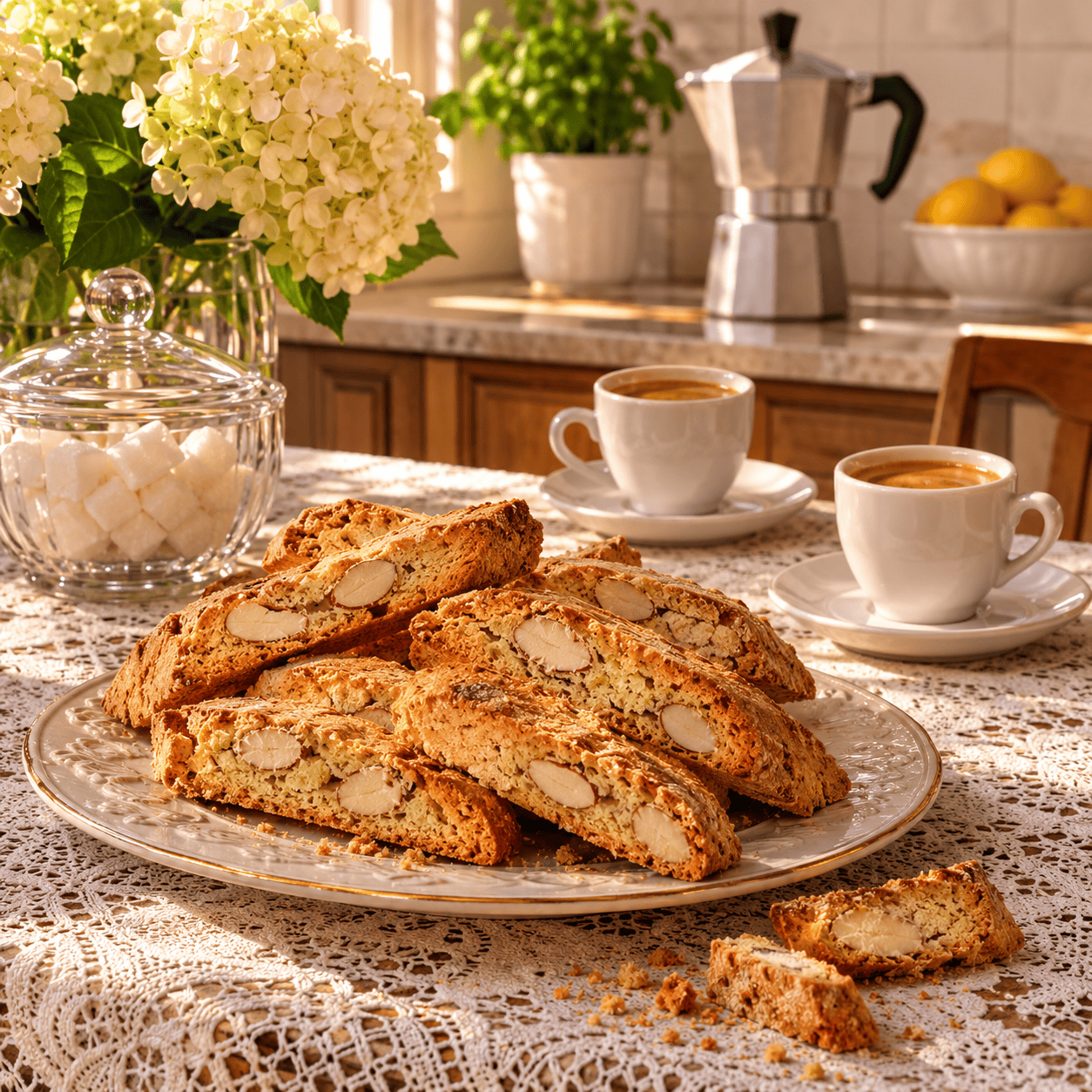
The afternoon visit is its own institution. A neighbor knocks around three, the moka goes on, and a plate comes out — not a bag on the table, a plate.
It’s never fancy. Hard cookies for dunking, maybe something left from Sunday. If there’s genuinely nothing in the house, that’s a small crisis and she’ll open the freezer looking for a tin from last Christmas.
Nonna’s cookie supply exists for the possibility of a knock at the door, not for herself.
My first year living alone I had a friend stop by and I handed her a sleeve of store cookies still in the plastic. I heard about it later, somehow, from across the county. I keep a tin now.
19. You Stir Even If You Take It Black
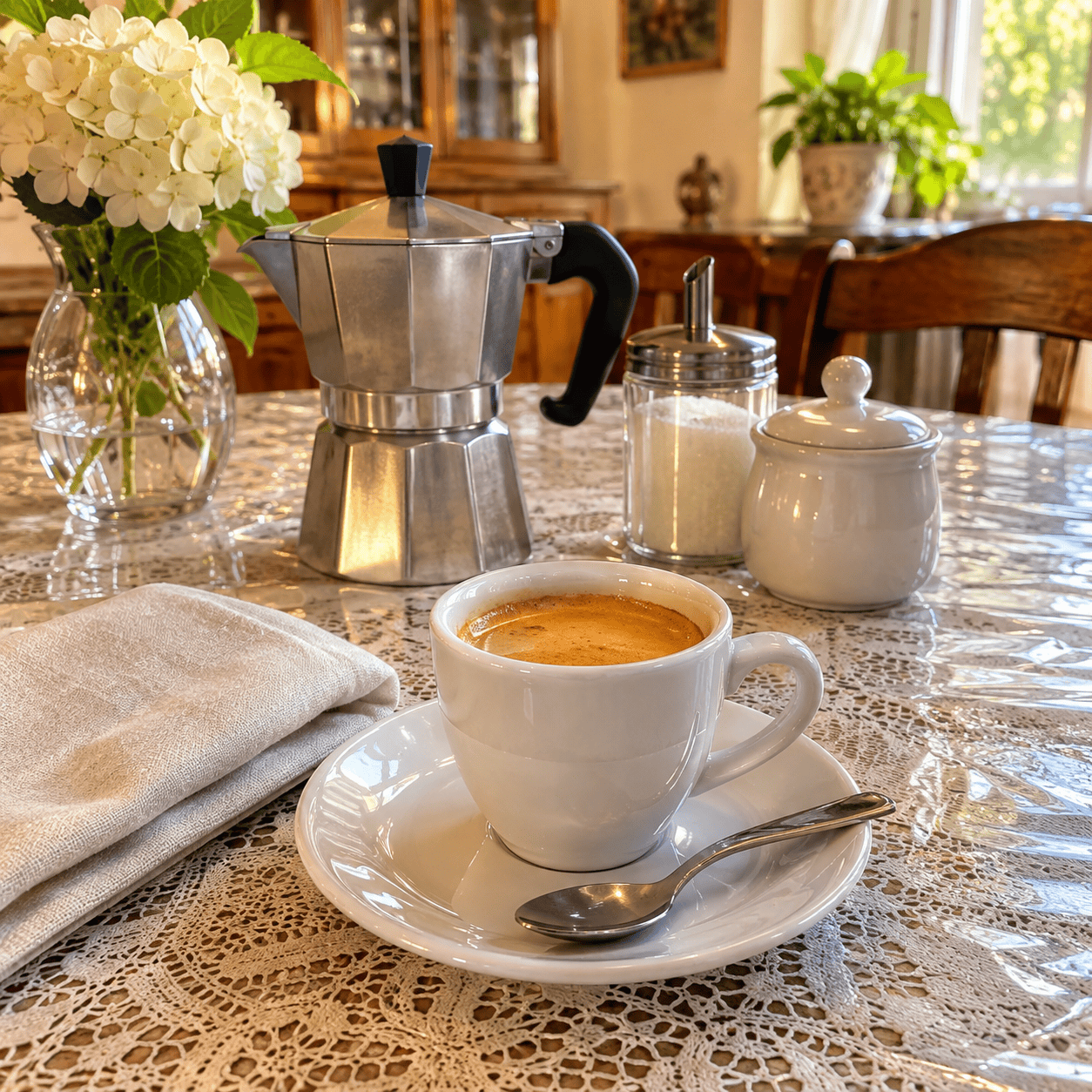
The spoon on the saucer isn’t decoration. Even with no sugar at all, you give it a turn before the first sip.
Coffee from a moka comes out in stages — the first drops are the strongest, the last are the weakest and thinnest. Left alone in the cup, they sit in layers. One stir and it’s one coffee instead of three.
Nonna doesn’t explain it this way. She says to stir it, and if you don’t, you get told to stir it.
I made coffee for a friend who takes it black and watched her drink it straight off without touching the spoon. The look on her face at the end of the cup was the whole lesson, delivered for free.
20. The Five A.M. Cup Belongs to Her Alone
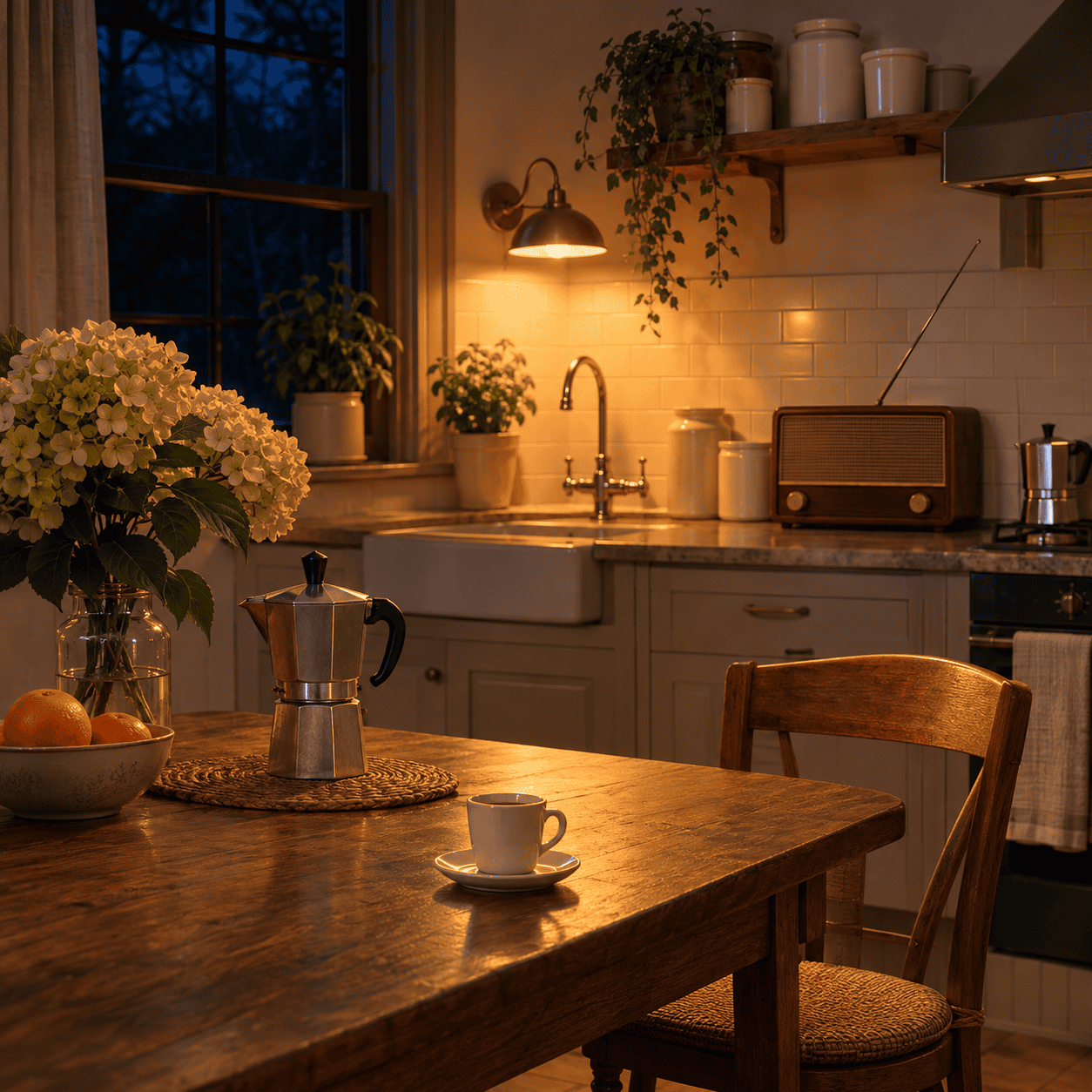
Long before anyone else is up, there’s a small pot on the stove and a kitchen light on over the sink.
She’s not doing anything. She’s sitting at the table with the cup and the radio turned down to almost nothing, looking at the yard. Thirty, forty minutes. Then the day starts and she doesn’t stop again until nine at night.
I slept over once as a kid and came down at ten of five because I’d had a bad dream. She poured me a splash of milk with a thumbnail of coffee in it and we both sat there not talking.
I get up at five in my own apartment now, some days, for no reason at all. Now I know what it’s for.
21. In Sicily, Coffee Granita Is Breakfast
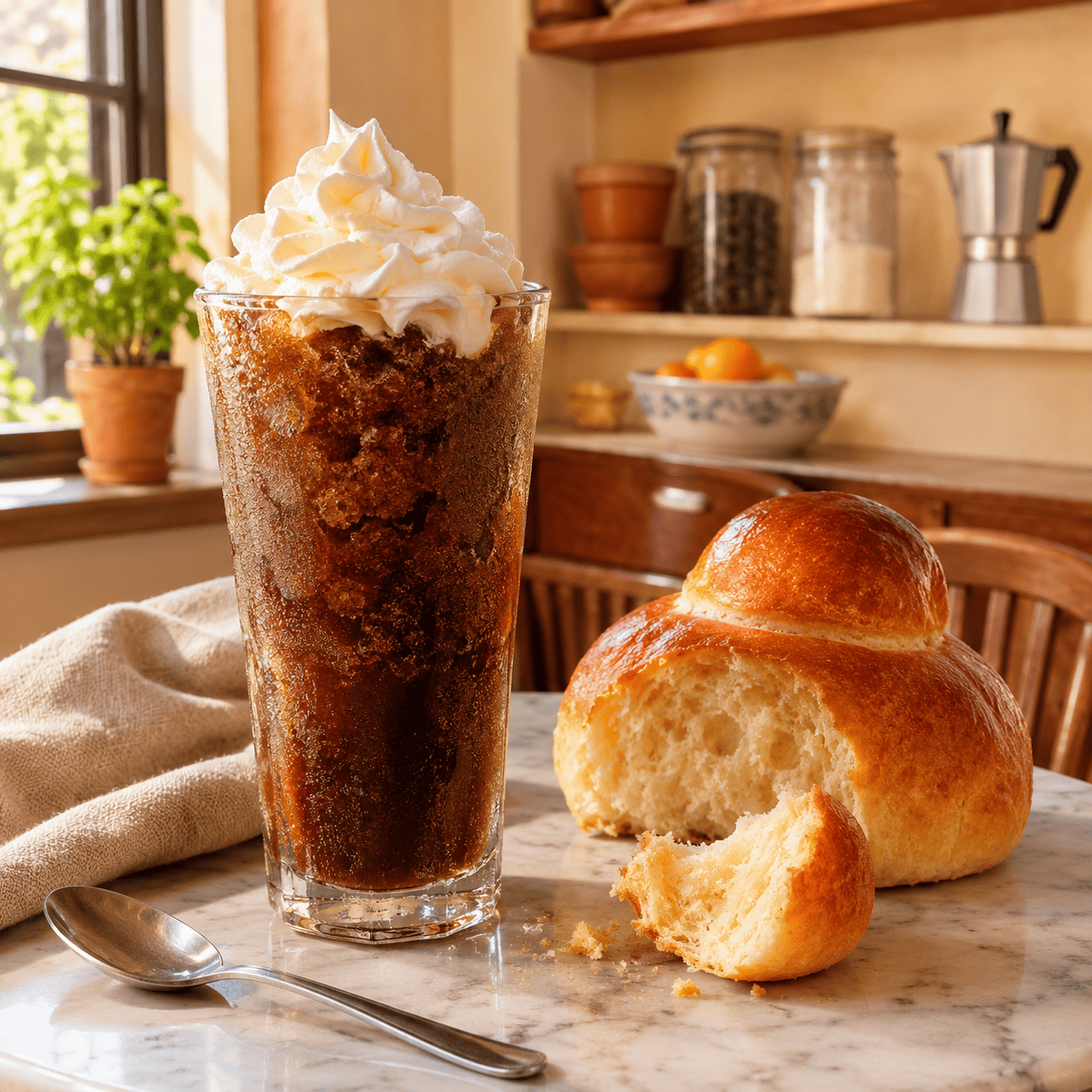
Coffee granita with whipped cream, and a brioche col tuppo on the side, eaten at nine in the morning like a normal person’s eggs.
You tear the brioche and dip it into the granita. Nobody treats it as dessert. It’s summer breakfast in Catania and Messina and all along that coast, and it has been for a very long time.
Nonna took me the first time I went with her and I asked, genuinely, if we were going to eat something after. She said this is the something.
I’ve tried to recreate it in my freezer with a fork and a shallow pan three times. It’s always a little too icy. Some things you have to go get.
22. Kids and Late Nights Get Barley Coffee
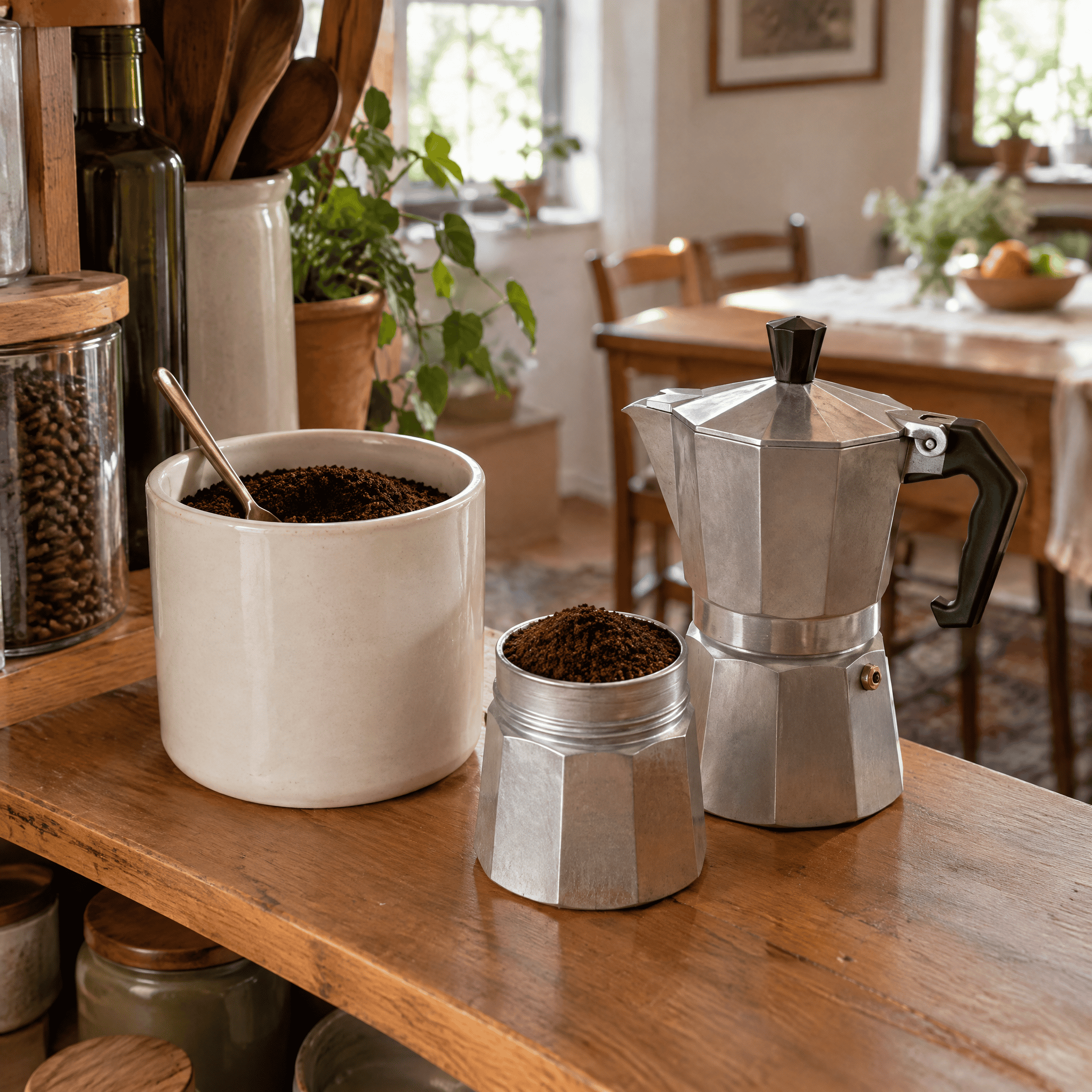
Caffè d’orzo is roasted barley brewed like coffee. No caffeine, dark brown, slightly sweet, and it’s been a normal Italian drink for generations — not a health trend.
It’s what children get served so they can have a cup at the table like everybody else. It’s also what adults switch to after eight at night when they want the ritual without lying awake until two.
Nonna keeps a box of it in the pantry and makes it in the same moka, which I was shocked by until I thought about it for a second.
I brought a bag back from Sicily and my roommate drank the whole thing in a month thinking it was decaf espresso. Close enough. She slept great.
23. A Second Pot Means Stay
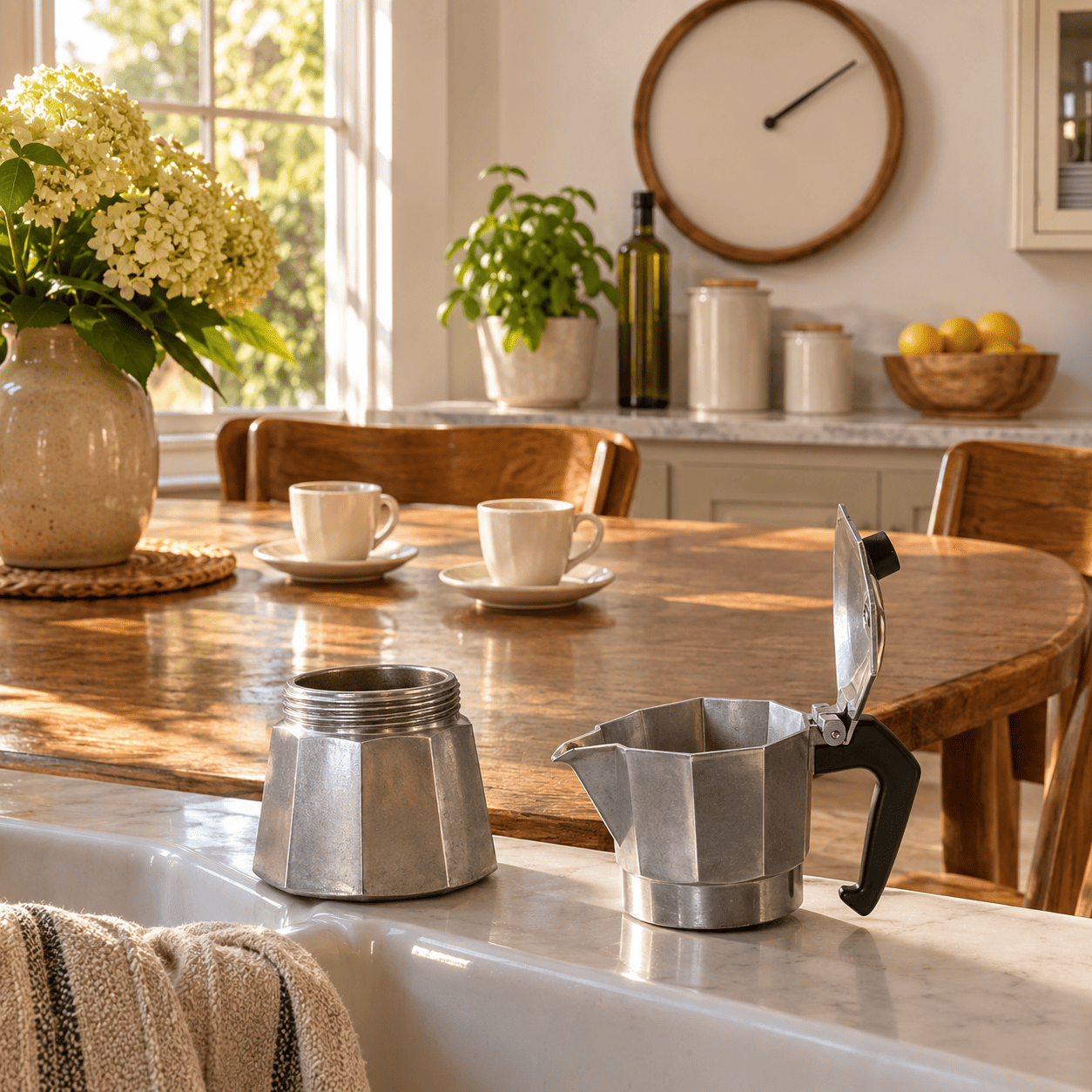
When the first pot is gone and she gets up and starts unscrewing the moka again, you are being asked to stay another hour. That’s the entire message.
You don’t have to accept. But you have to acknowledge it, which means you sit back down for at least one more cup even if you have somewhere to be.
Standing up before the coffee has been poured, on the other hand, is leaving early, and it gets noticed by everyone in the room without a word being said. The long Sunday table has a shape and coffee is the last act of it.
I once left before the second pot for a work thing. It came up again in March.
24. Water Goes to the Valve, Not a Drop Higher
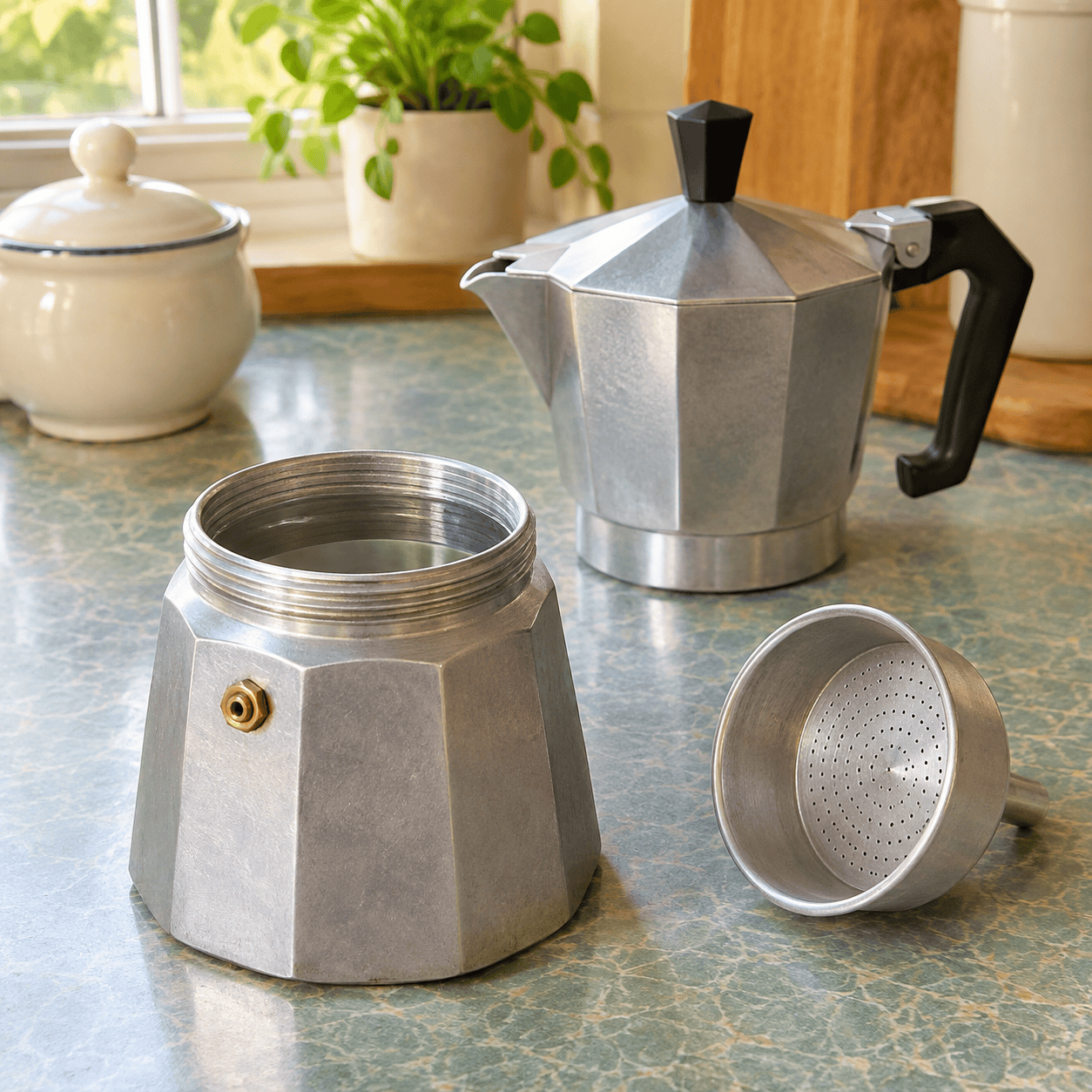
There’s a little brass nub on the inside wall of the bottom chamber. That’s the line. Fill to just under it.
That nub is a safety valve, and it needs air above the water to do its job if the pot ever clogs. Cover it and you’ve taken the pressure release out of a pressurized pot.
I watched a coworker fill hers to the brim at the office kitchen because she thought more water meant more coffee. It meant a weak, sputtering mess and a hissing valve. More water doesn’t make more coffee. It makes bad coffee at the same volume the basket was ever going to allow.
The pot decides how much. You just fill to the nub.
25. The Flip Pot Comes Down Twice a Year
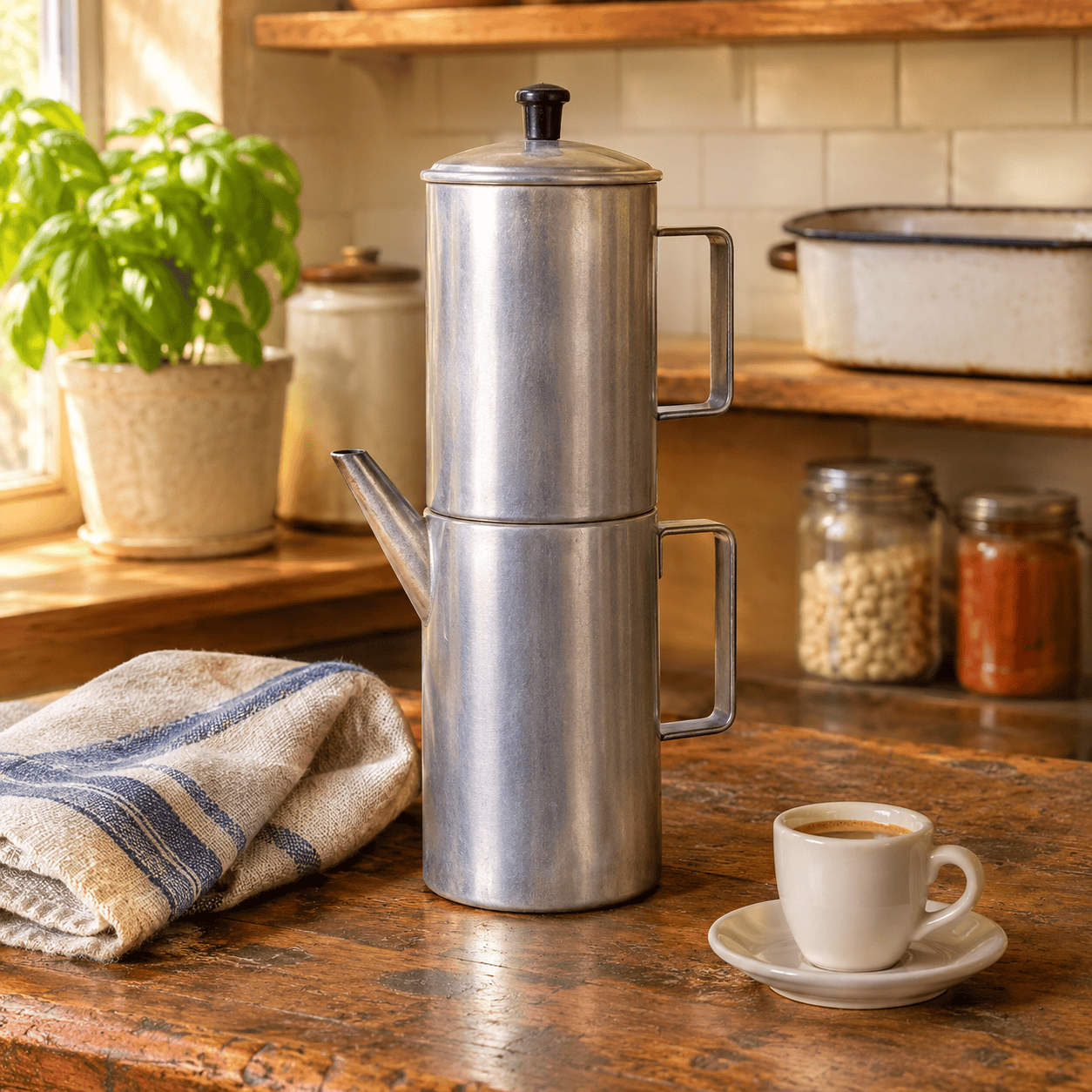
On the high shelf, behind the roasting pan, is the cuccuma — the Neapolitan flip pot. No pressure, no valve. You boil the water, then you turn the whole thing upside down and let gravity drip it through the grounds.
It takes about ten minutes and it makes a softer, rounder coffee than a moka does. It also requires standing there and paying attention, which is the reason it lives on the shelf.
Nonna brings it down at Christmas and sometimes in August for no stated reason. Watching her flip it with a dish towel over the handle is a small piece of theater and she knows it.
I’ve used mine twice and burned my wrist once. Still learning.
26. The Tiramisù Coffee Is Made Strong and Left to Go Cold
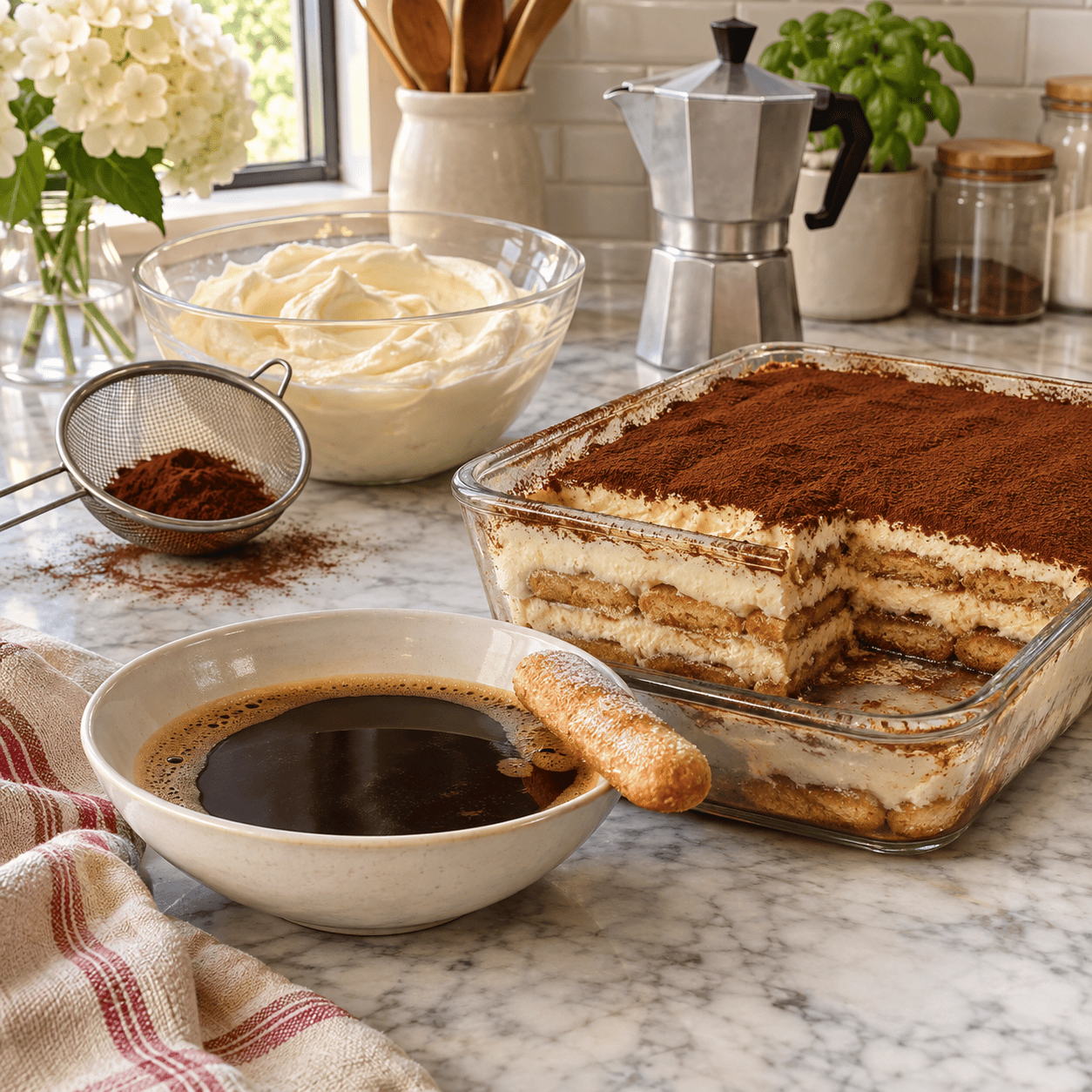
You don’t dip the ladyfingers in warm coffee. You make it strong in the morning, sweeten it a touch, and leave it on the counter until it’s stone cold.
Warm coffee turns the biscuits to mush in about one second. Cold coffee gives you a couple of beats to dip and lift, which is the difference between layers and soup.
Nonna makes a full six-cup pot for a pan of tiramisù and sets it aside before she does anything else, because she knows she’ll be rushing by the time the cream is done.
I once used coffee that was merely lukewarm. The first slice came out of the pan as a landslide. We ate it in bowls and called it something else.
27. Who Pours Matters
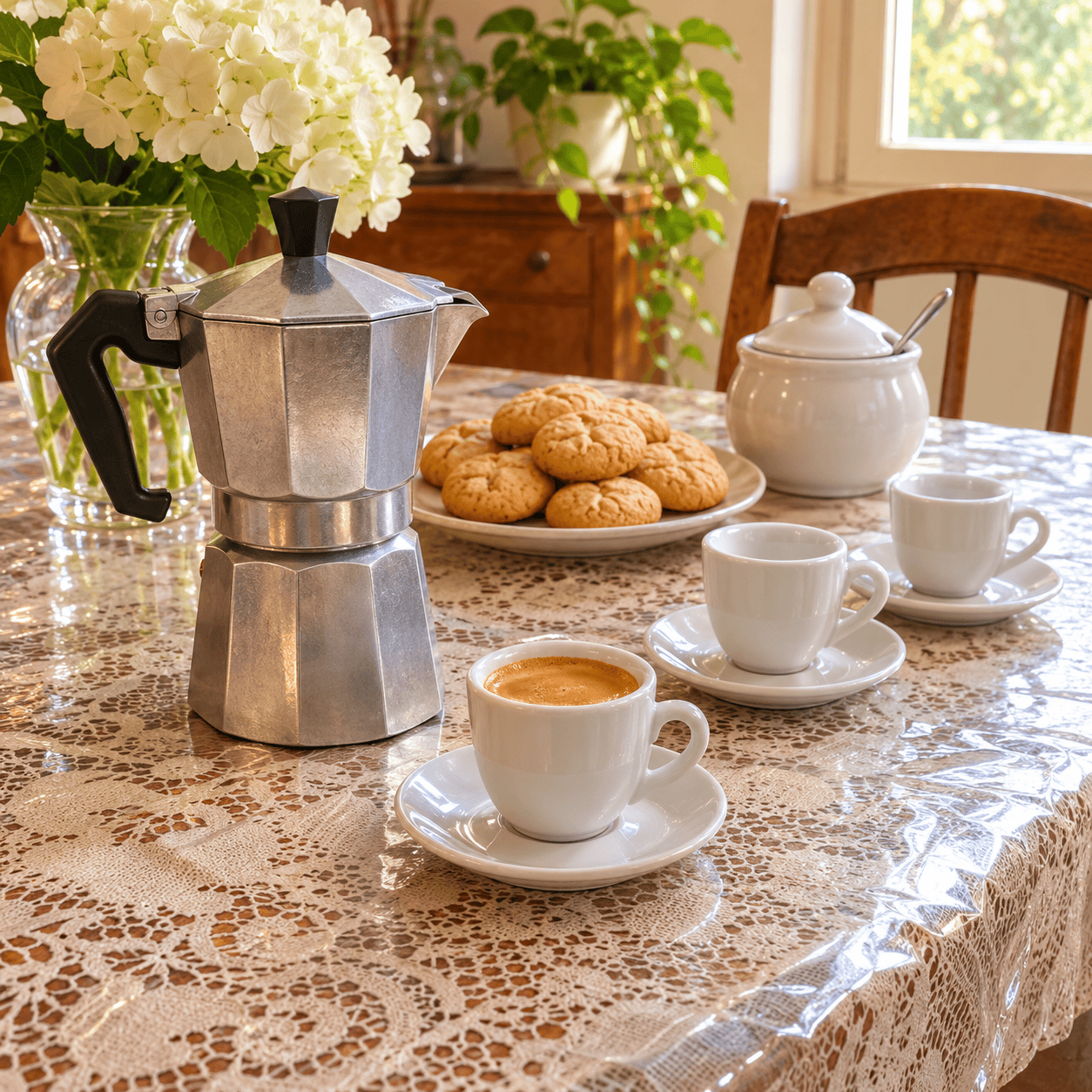
The person who made the coffee pours it. Not whoever is closest to the pot, not the helpful guest reaching across the table.
The first cup goes to the oldest person present, or to the guest who’s come the farthest, and the host pours her own last. Nonna will stand with the moka in her hand doing silent arithmetic about the room before the first drop lands.
I reached for the pot at thirteen to be useful and got my hand gently redirected to the sugar bowl instead.
Last Christmas she handed me the moka and sat down. No announcement, no ceremony. I poured, she got hers last, and I understood exactly what had just happened.
28. Nobody Asks for Flavored Syrup
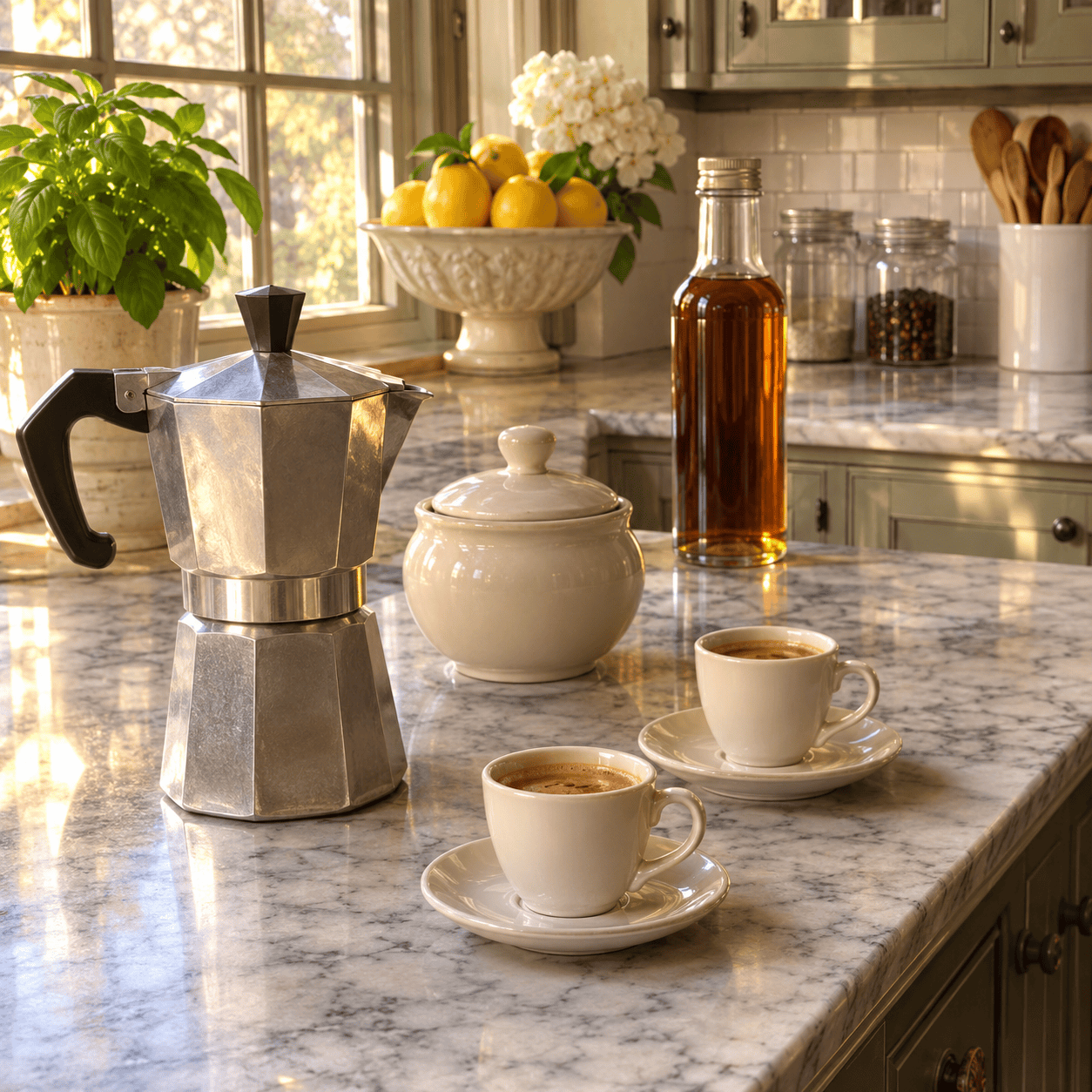
There is no vanilla, no caramel, no pumpkin anything in Nonna’s house, and there never has been.
Sugar, yes. A splash of anisette in the cup on a cold night, absolutely — that’s an old habit and she won’t hear a thing against it. Whipped cream on a granita in August, fine.
But a pump of syrup implies the coffee needs fixing, and if the coffee needs fixing, you fix the coffee.
A coworker brought a bottle of hazelnut syrup to a thing at Nonna’s once, trying to be a good guest. It went on the counter and stayed there, unopened, for the entire afternoon, like a small monument. I don’t think it was unkindness. I think she didn’t know what to do with it.
29. After a Funeral, the Coffee Never Stops
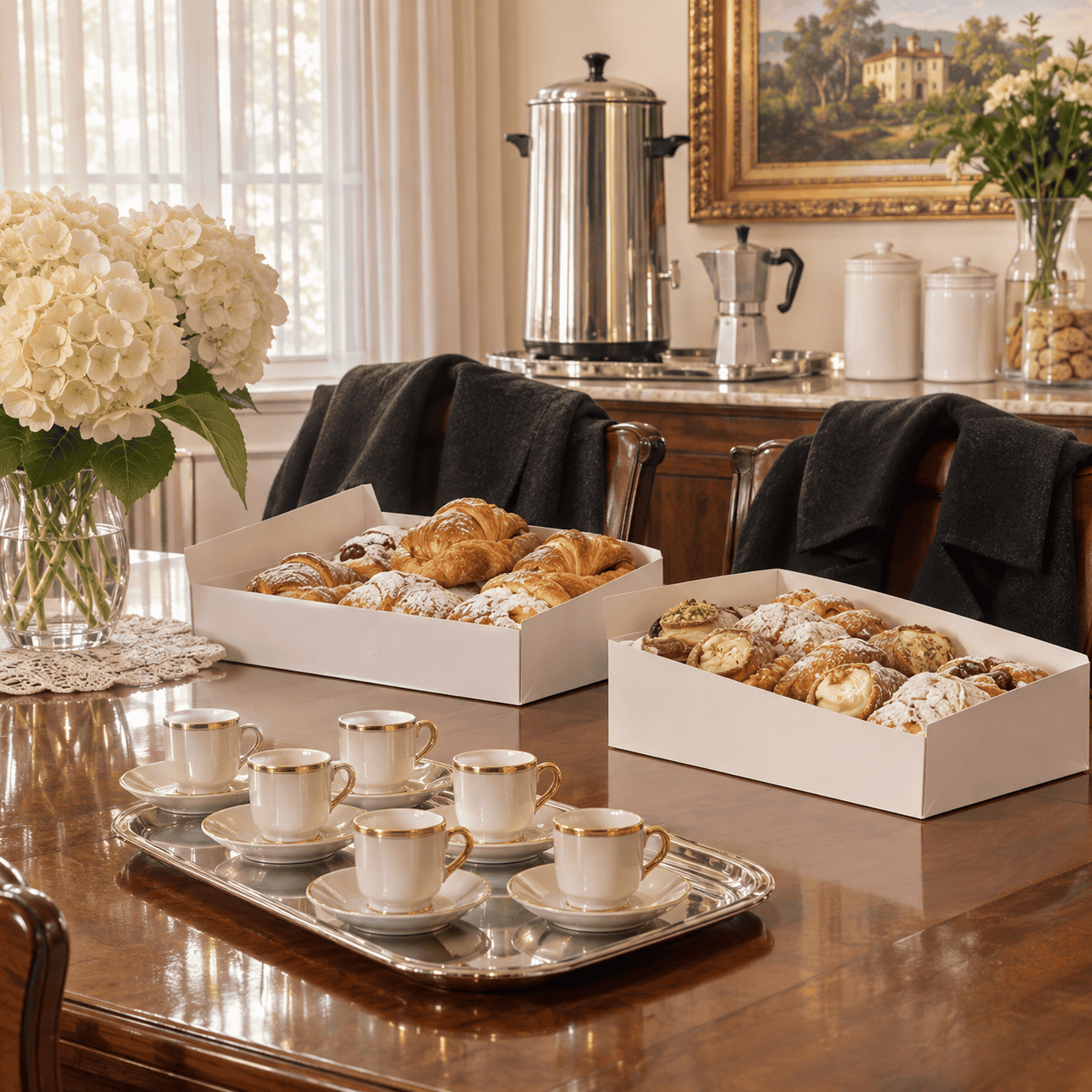
You come back from the cemetery and the kitchen is already going. Somebody has started the big pot. Somebody else is laying out the trays that came with people.
Nobody has much to say for the first hour, so the coffee does the talking. It gives everyone’s hands something to hold and a reason to stay in the room together.
The good cups come out. The gold rims, on a day when nobody is celebrating anything, because the point is that this is a day that counts.
I didn’t understand it as a kid. I thought it was strange to drink coffee at a sad thing. Now I know the coffee is why nobody leaves, and nobody leaving is the whole idea.
30. The Stain on the Burner Ring Stays
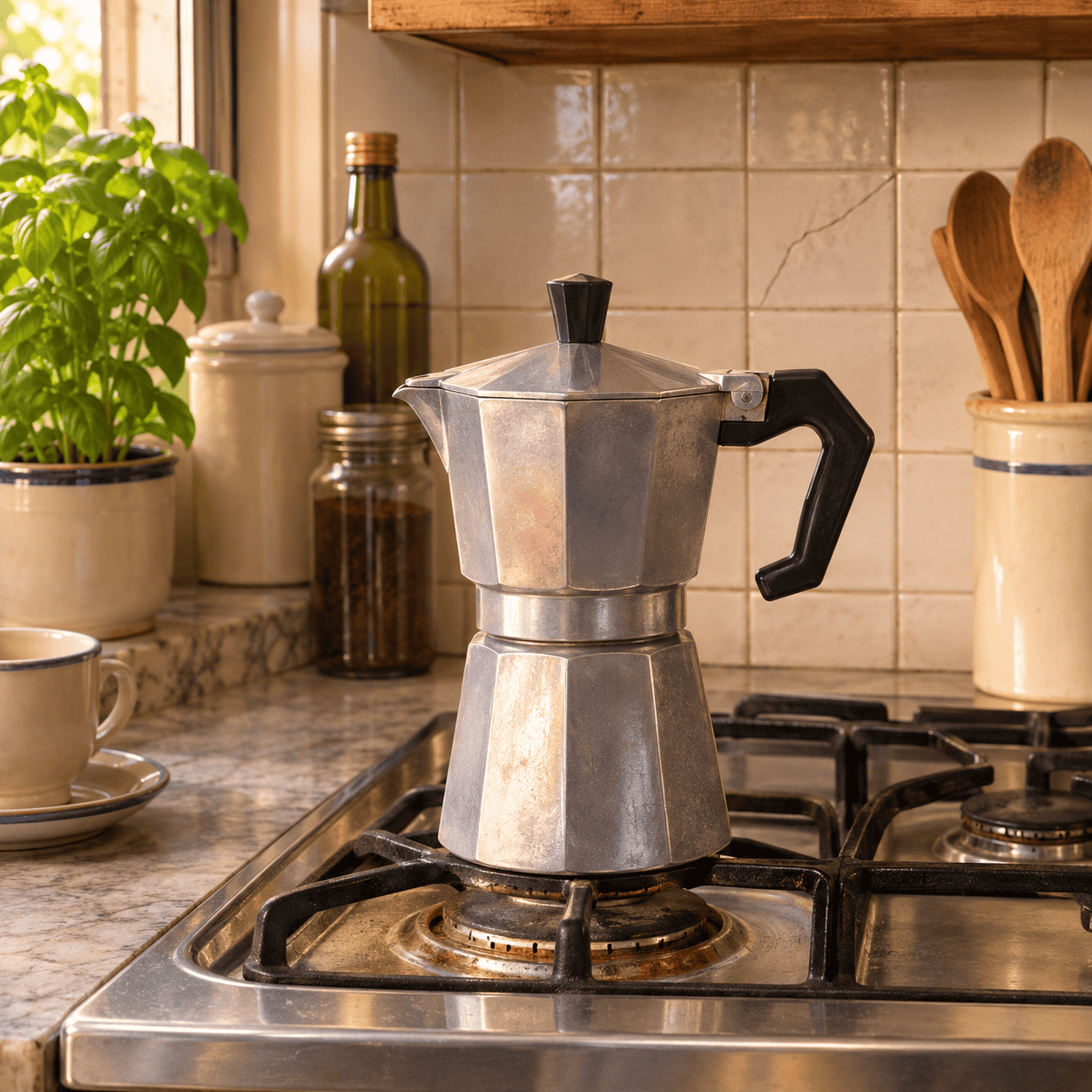
Around the front-left burner of Nonna’s stove there’s a brown halo that has been there my entire life. Forty years of moka pots boiling over a little at the end.
She scrubs the stove. She is not a person with a dirty stove. That ring simply does not come up anymore, and at some point she stopped considering it dirt.
My two-burner apartment stove got its own ring within about eight months. The first time I noticed it I actually stopped and looked at it for a minute.
Same mark, same spot, smaller stove. The three-cup she gave me sits right in the middle of it, and the day somebody scrubs that off is the day the kitchen stops being mine.
Buon appetito, Madeline