29 Things Italian-Americans Do at Christmas That Confuse Everyone Else
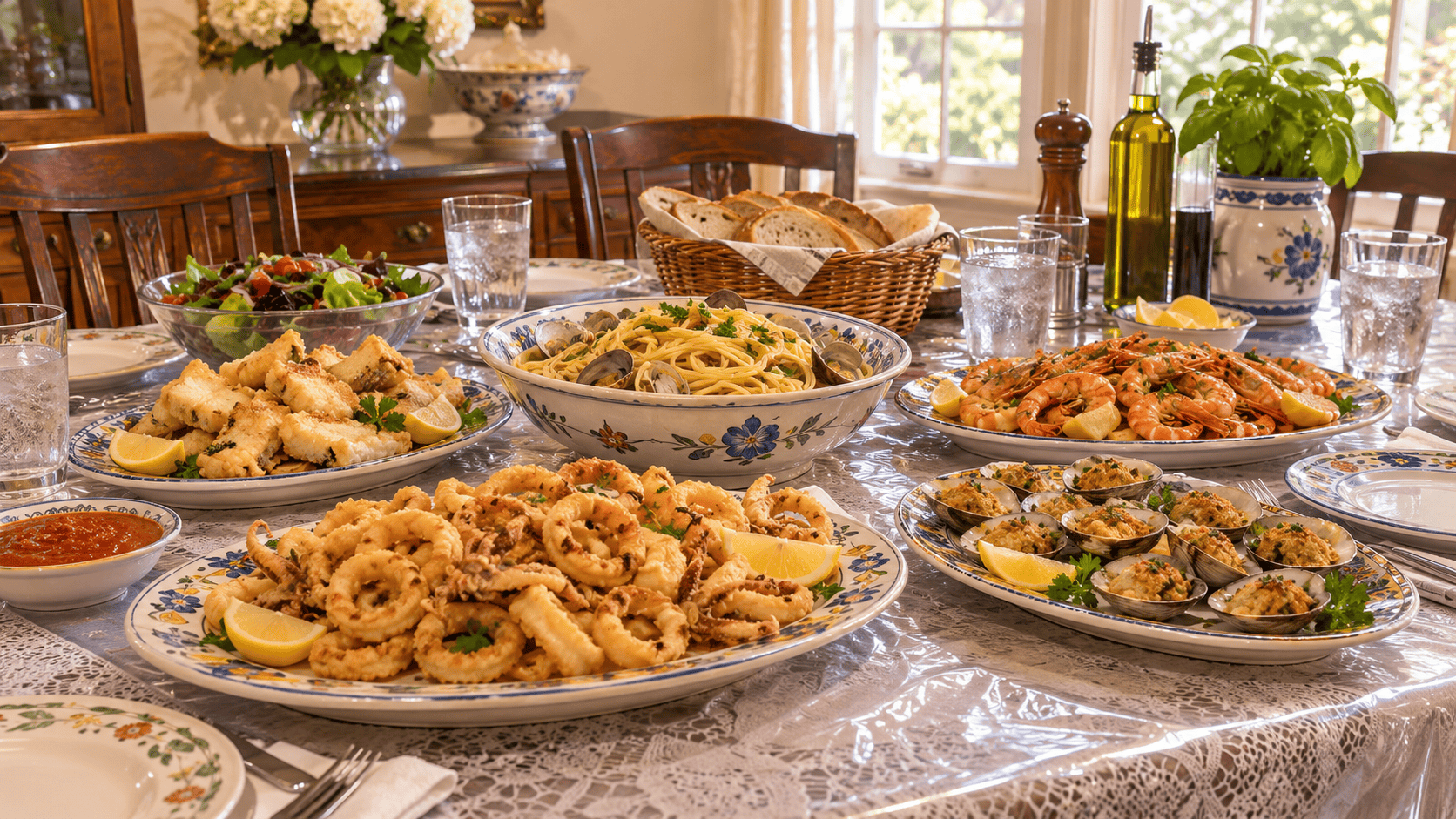
My roommate came to Nonna Pina’s for Christmas Eve two years ago and asked, around the fourth course, when dinner was going to start.
She wasn’t being rude. She genuinely thought the baccalà, the stuffed calamari, the shrimp, and the smelts were appetizers.
That’s when it hit me how much of this is invisible if you grew up inside it. The folding table in the hallway. The plastic over the good tablecloth. The baby Jesus kept in a drawer until midnight like contraband.
None of it is weird to us. All of it is baffling to everybody else.
So here’s the field guide I wish I’d handed her at the door. Twenty-nine things we do every single December that make guests from other backgrounds tilt their heads.
1. Christmas Eve Is Bigger Than Christmas Day
Tell a friend that December 24th is the main event and watch the confusion land. They’ve been raised on Christmas morning. We’ve been raised on the night before.
At Nonna’s, the 24th starts at 7 a.m. with the fish and doesn’t release anyone until after midnight. Christmas Day is almost a recovery operation by comparison — the leftovers come out, the lasagna goes in, everybody’s in sweatpants.
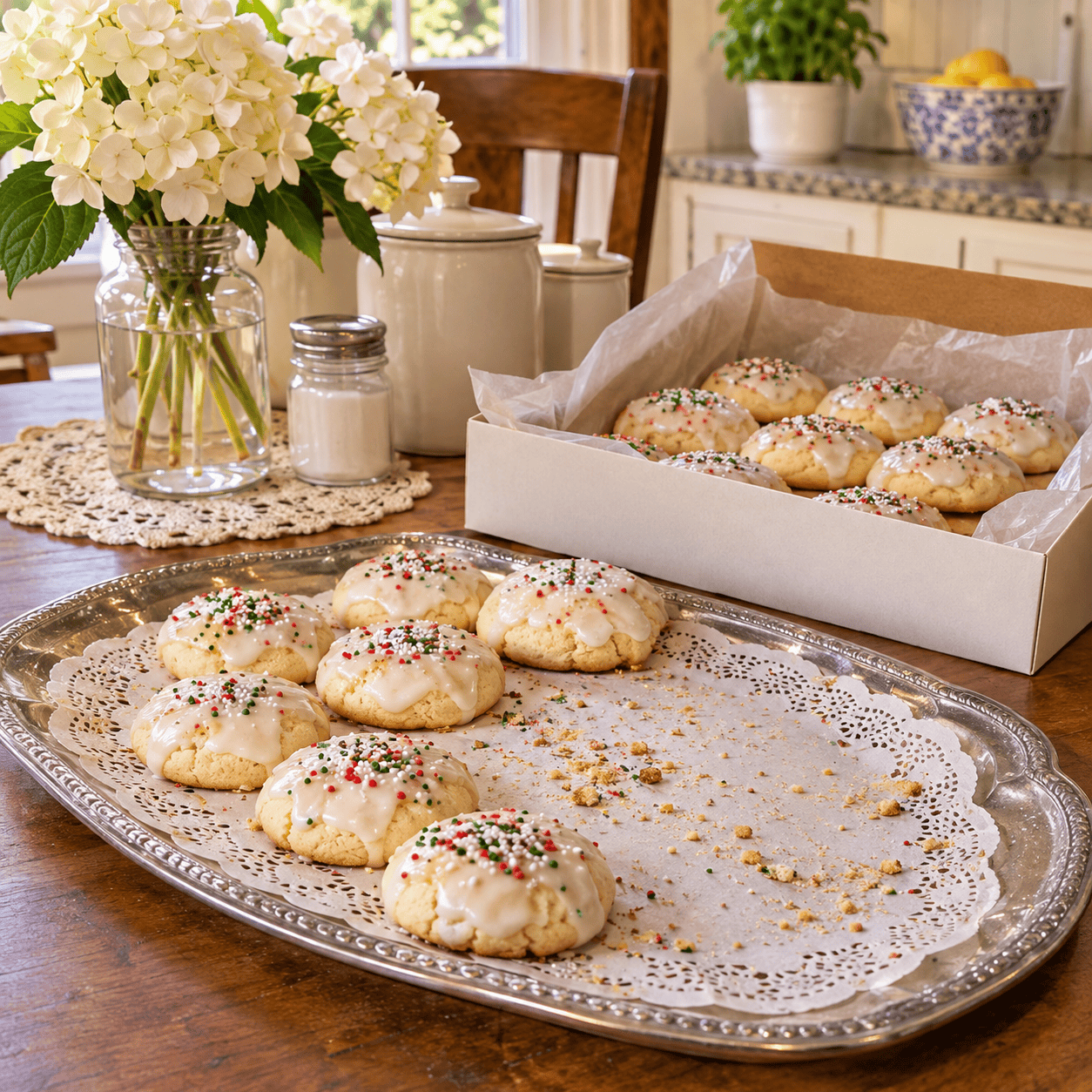
The Feast of the Seven Fishes is an Italian-American invention more than an Italian one, which surprises people. National Geographic traces the “seven” count to immigrant families in the U.S., not to any single town back home.
Nonna doesn’t care about the history. She cares that the eel got ordered by December 18th.
2. No Meat on Christmas Eve, and Nobody Explains Why
A coworker once brought a tray of sausage and peppers to Christmas Eve. Beautiful tray. Sat on the counter untouched like a small tragedy.
The old rule is abstinence from meat on the vigil of a feast day. Nobody at the table could cite a church document, but every one of them knows the rule in their bones.
So instead of one roast, you get seven kinds of seafood and a level of planning usually reserved for weddings. Italian seafood recipes for the Feast is basically Nonna’s December shopping list with photos.
The sausage got eaten the next day. It was excellent. It was also three hours early for the only clock that matters.
3. Pasta Comes Before the Main Course, Not With It
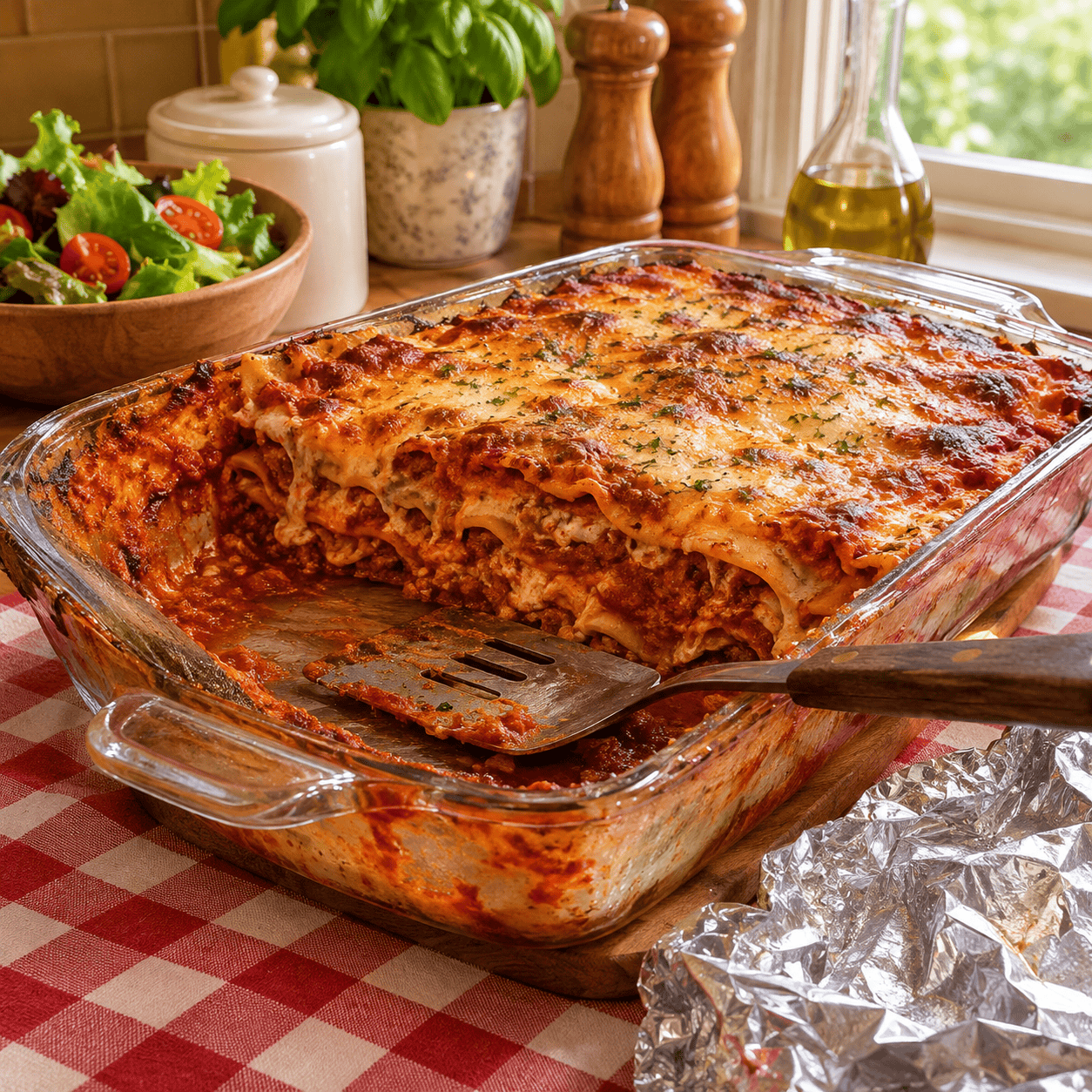
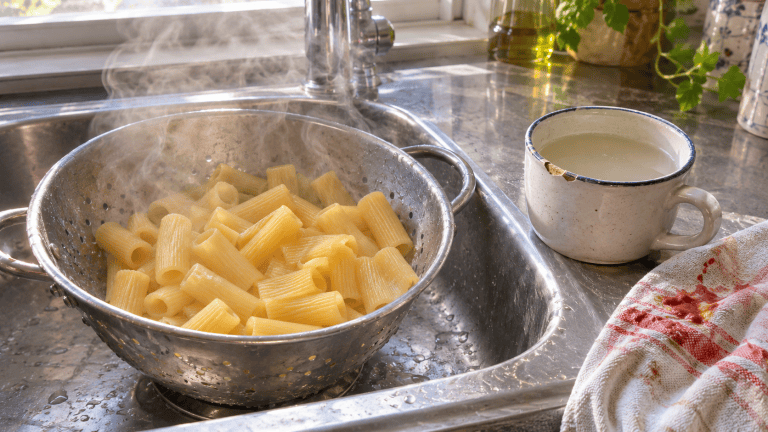
Americans put the spaghetti next to the chicken. Italians put the spaghetti first, alone, in its own bowl, and then take the bowl away.
Primo, then secondo. That’s it. The pasta is a course, not a side dish, and it will not be sharing a plate with your meat.
At Christmas this means people eat a full plate of linguine with clams and then are genuinely shocked when the fish platters arrive. Pace yourself or don’t — Nonna has watched grown men fold at 4 p.m.
The first time I hosted in my apartment I made the mistake of serving everything at once. My friends thought it was a buffet. I thought about never doing it again.
4. Dinner Is at 2 p.m. and Also at 9 p.m.
“What time is dinner?” is a trick question in this house.
There is the afternoon sitting, which starts around two and runs until four. Then a lull where everyone swears they’ll never eat again. Then, somewhere around nine, somebody starts reheating.
The second dinner is unannounced. It just materializes — cold shrimp, a reheated plate of pasta, bread, the cheese that never went back in the fridge.
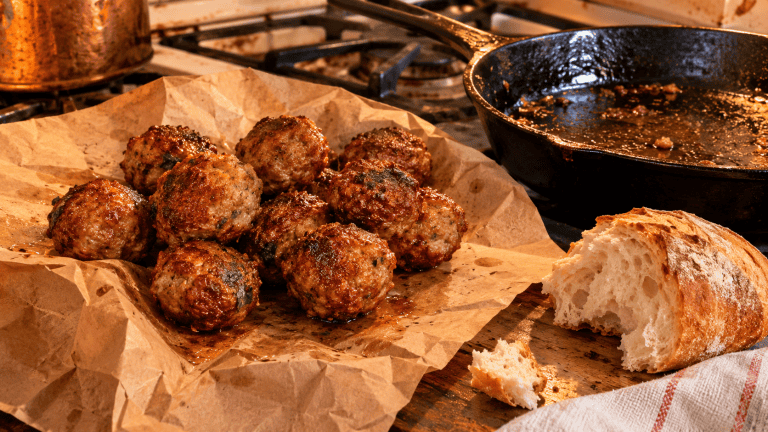
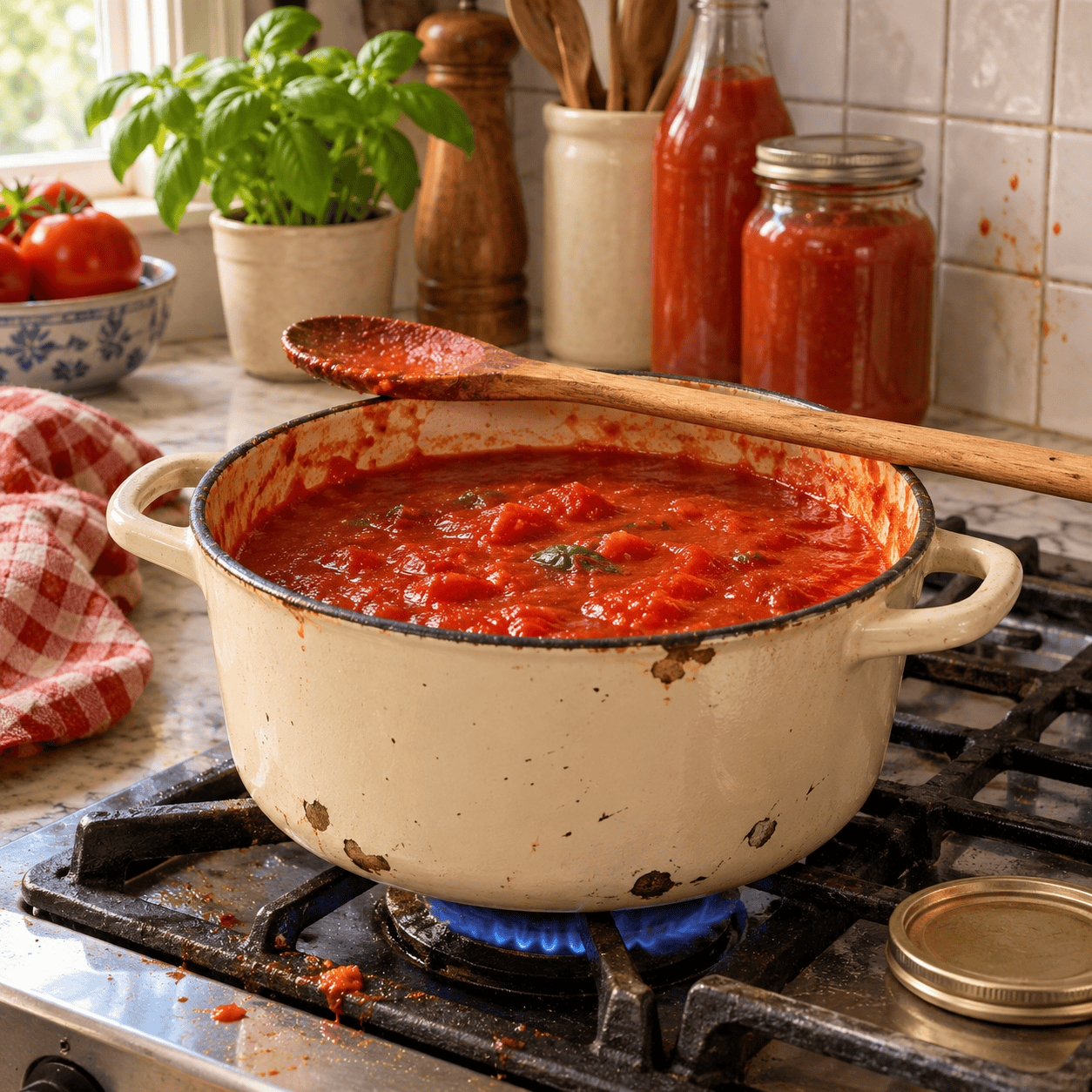
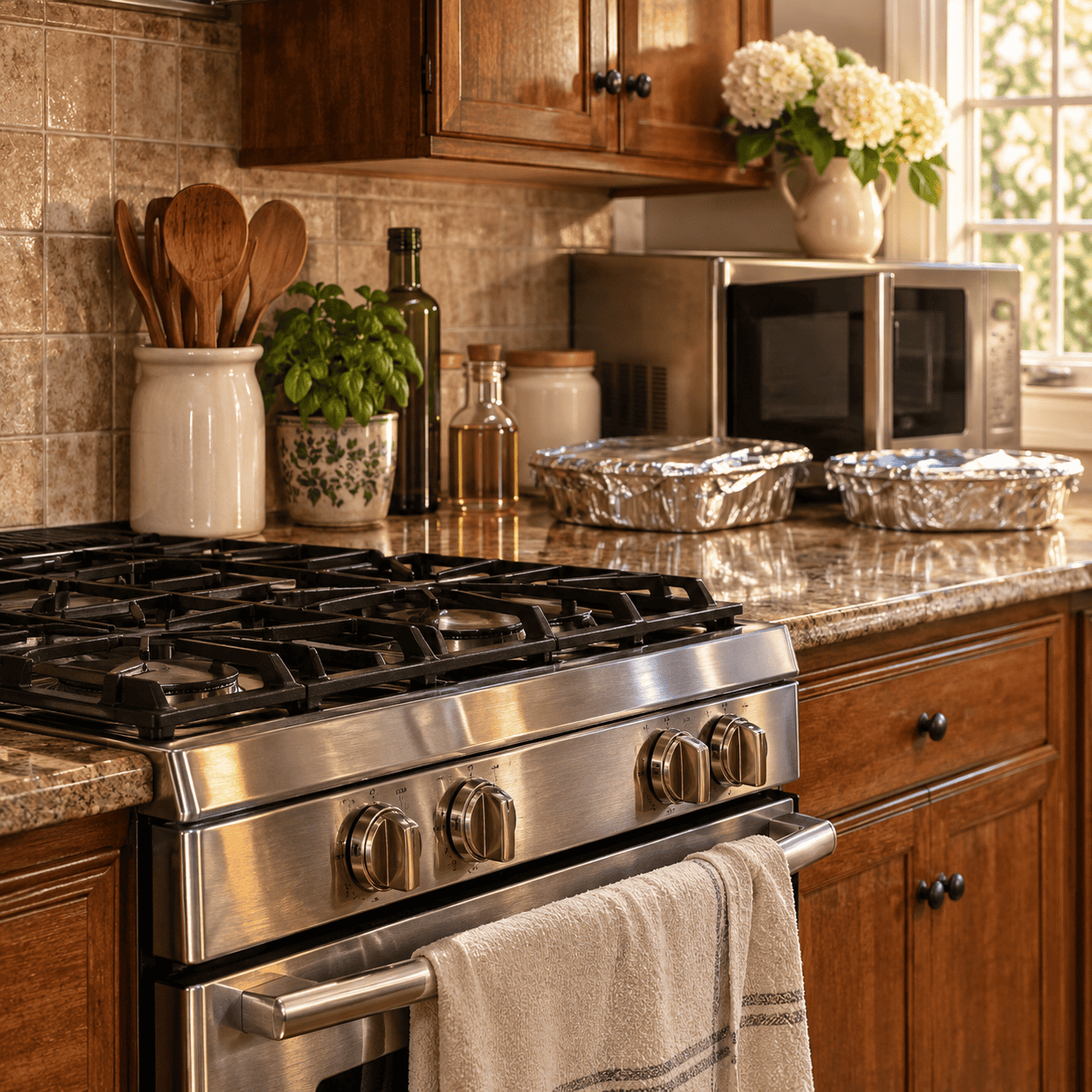
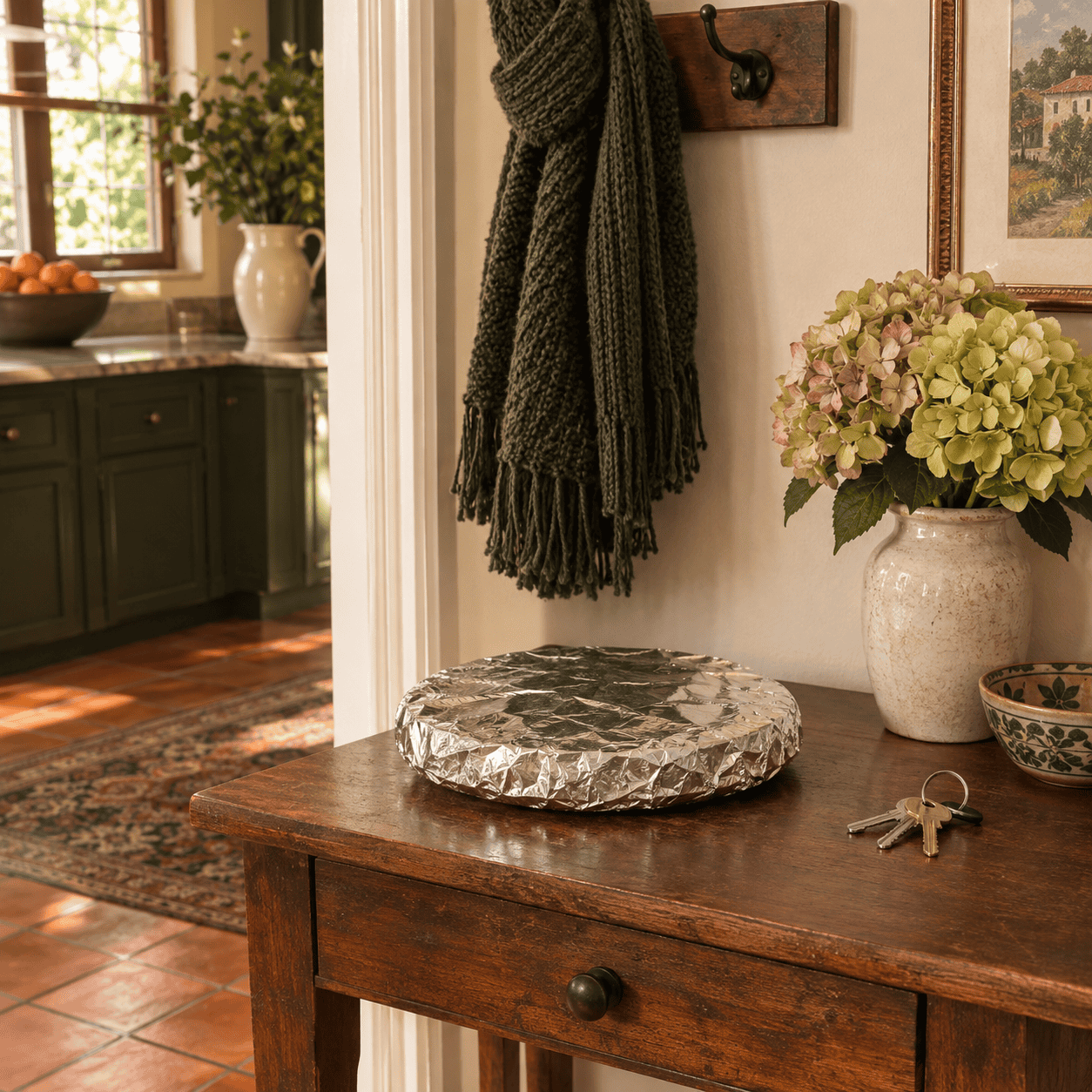
Nonna’s signal is the foil. She never wraps the leftovers at four; she drapes a sheet of Reynolds over the gravy pot and leaves it on the back burner, so the meatballs are ready for round two. Pull that foil off before nine and you will hear about it.
Guests who left at six always text later asking what they missed. Everything. They missed everything.
5. The Antipasto Is a Meal That Pretends Not to Be
Before a single course arrives, there’s a tray the size of a car hood.
Soppressata, provolone, roasted peppers in oil, marinated mushrooms, olives in two colors, celery sticks nobody touches but everyone expects, and a bowl of lupini beans that exist mostly as a test of character.
First-timers fill up on it. Every year. You can spot them by hour three, sitting very still.
Nonna builds hers on the same oval platter she’s used since 1979, and if you rearrange it she will rearrange it back. If you want the blueprint, the site’s Italian Christmas appetizers roundup is close to what she puts out, minus the lupini.
6. There’s a Second Kitchen in the Basement
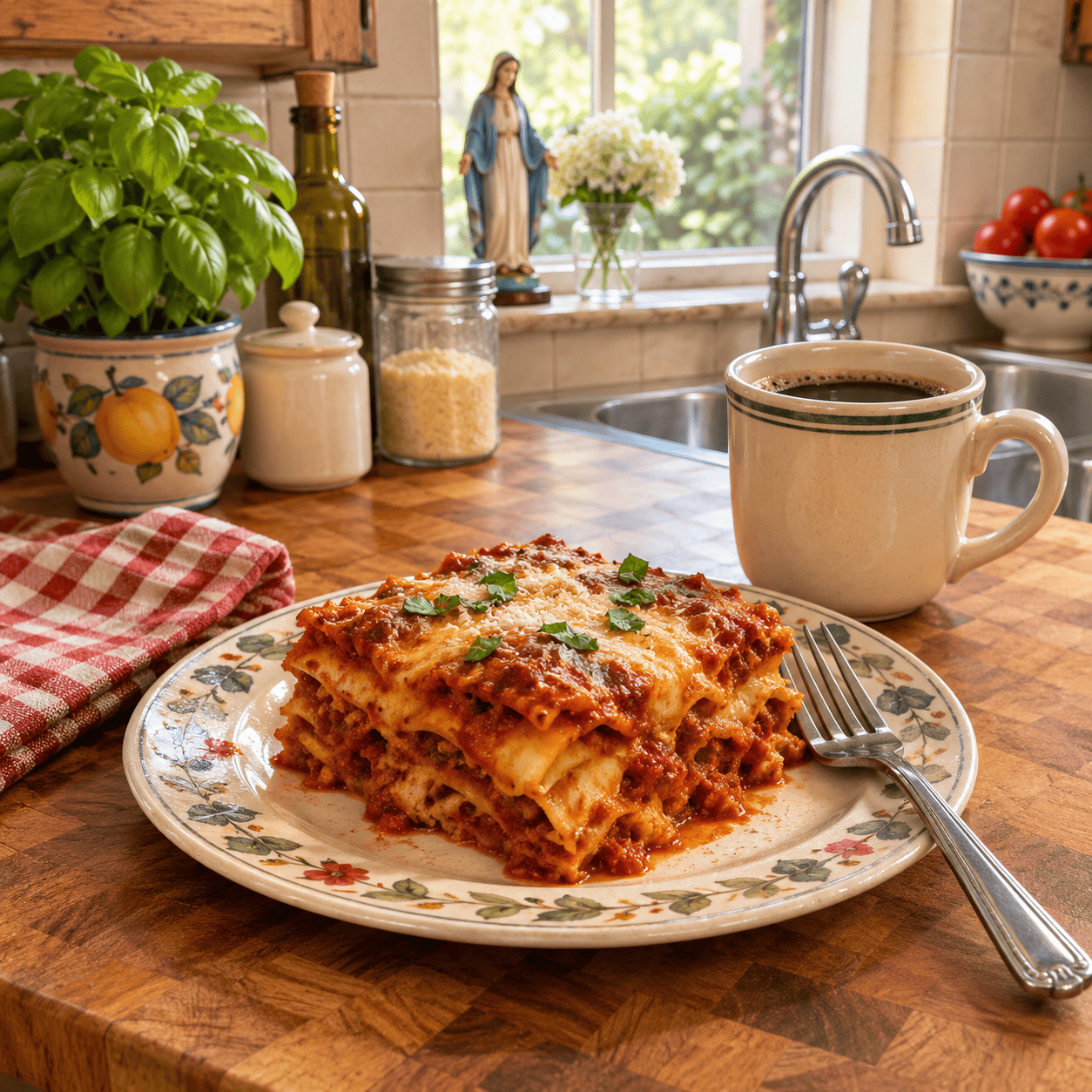
Upstairs is the kitchen for show. Downstairs is the kitchen for work.
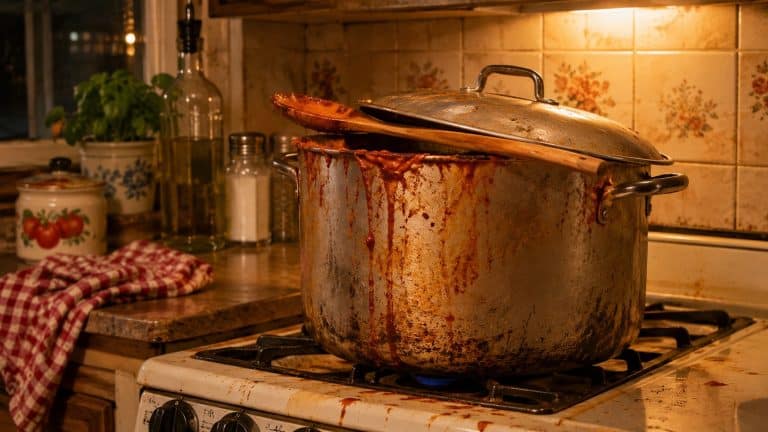
Nonna’s basement has a second stove, a utility sink, a chest freezer, a folding table, and a smell of fried garlic that has soaked permanently into the drywall. The frying happens down there so the upstairs curtains don’t smell like calamari until March.
Guests find it by accident, usually looking for a bathroom, and come back upstairs with the expression of someone who’s seen a secret room in a house they thought they knew.
There’s also a shelf of tomatoes she jarred in September. Yes, you can have a jar. No, you can’t refuse it.
7. Folding Tables in Every Room
The dining room table seats eight. Christmas Eve is twenty-six.
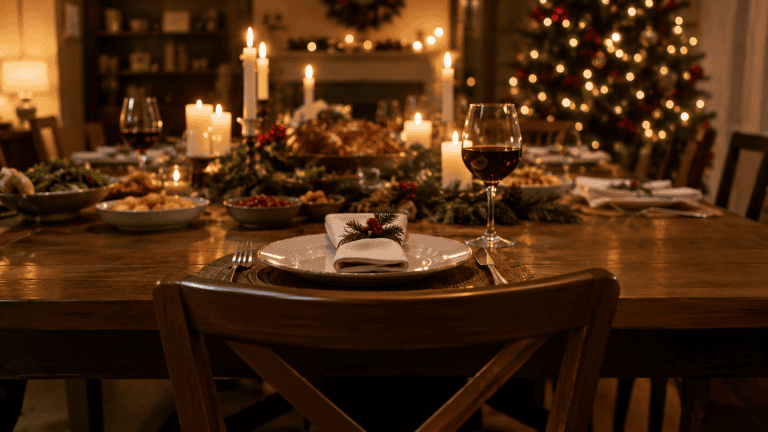
So out come the folding tables — one bridged onto the end of the dining table, one in the living room, one in the hallway where you have to turn sideways to get past it. They don’t match. Nobody expects them to.
A white sheet goes over the mismatched ones. From a distance it reads as one enormous table, which is the whole idea.
The leg that collapses is known. Everyone knows it. The person seated there is told, gently, not to lean.
They live behind the furnace in Nonna’s basement, and I’m the one sent down for them. The card table still has a ring burned into the vinyl from a percolator in 1994. Nonna puts the bread basket over it every year, like it’s a secret.
8. Plastic Over the Good Tablecloth
The lace tablecloth comes out once a year, and it comes out with a clear vinyl sheet over the top of it.
You can see the lace. You cannot touch the lace. This is the entire philosophy of the Italian-American house compressed into one object.
A friend once asked why we don’t just use the lace. Nonna looked at her like she’d suggested burning it.
The rest of the year, the vinyl lives rolled around an empty wrapping paper tube behind the hall closet door, so it never creases. There is a pale ring on it from a coffee pot in 1994, and Nonna can tell you whose.
The vinyl sticks to your forearms in a warm room and makes a sound when you peel off. That sound is Christmas to me, which is probably not normal.
9. The Cookie Tray Is a Competition Nobody Admits Is a Competition
Every woman at that table brought cookies, and every one of them said “oh, I just threw these together.”
Nobody threw anything together. There are pignoli cookies that cost eleven dollars in almond paste. There are pizzelle made on an iron older than I am.
The trays get arranged on the sideboard and watched. If one tray empties first, its owner says nothing and glows for eleven months.
I brought store-bought my first year on my own. I have not lived it down. The Italian Christmas baking recipes on the site are my redemption arc, and the unwritten rules of the cookie tray are not exaggerated.
10. Seven Fishes, and the Count Is Negotiable
Ask three families how many fish and you’ll get three answers and one argument.
Seven for the sacraments. Twelve for the apostles. Nine for the Trinity times three. Britannica lists several competing explanations, which tells you nobody actually knows.
Nonna counts anchovies in the sauce as a fish. That’s a controversial ruling and she knows it.
She keeps the tally on the back of a church envelope taped inside the cabinet door. Each fish gets crossed off as it hits the table, baccalà first, because it’s been soaking in the basement since Tuesday.
Last year we hit nine without trying because the fish man had good scungilli. Nobody complained. I counted the scungilli twice, just to annoy her. The count only matters until it’s beaten.
11. Fish Swimming in the Bathtub (or the Sink, or a Cooler)
The older generation bought eels alive. Not as a stunt, but because that’s how you knew they were fresh.
Nonna remembers a bathtub she wasn’t allowed to use on December 23rd. I got the cooler-in-the-basement version, which is less dramatic but still a lot to explain to a houseguest.
It was a red Coleman with a cinder block on the lid, because one year an eel worked the lid open and Nonna found it the next morning behind the water heater, very much alive. The cinder block stayed every Christmas after that.
Capitone is the traditional eel, and it terrifies anyone who didn’t grow up with it. Fair enough.
These days she orders it cleaned. She’s practical, not sentimental. But she still tells the bathtub story every single year, and we still let her.
12. The Frying Starts at Dawn
Walk into Nonna’s house at 8 a.m. on the 24th and there’s already oil heating.
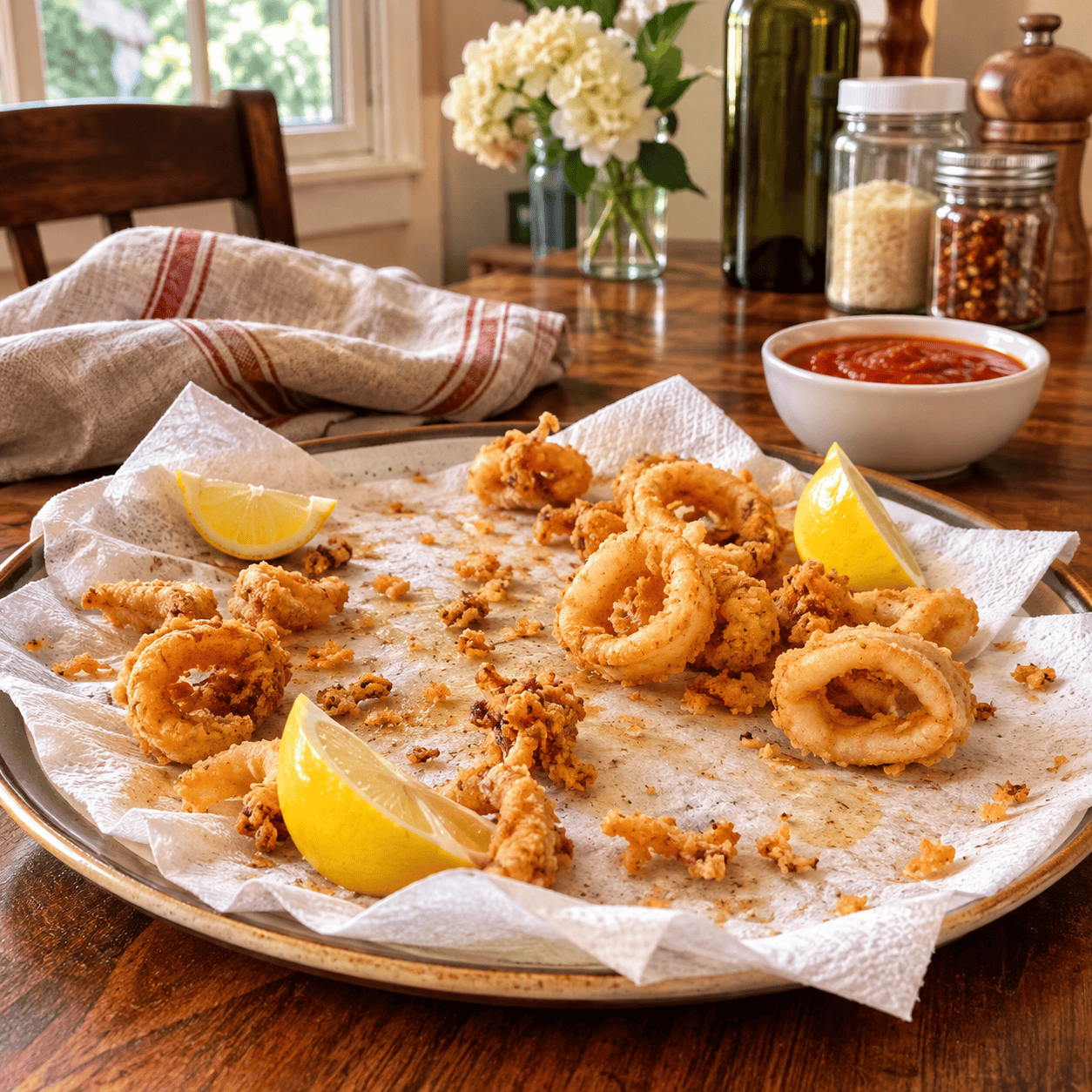
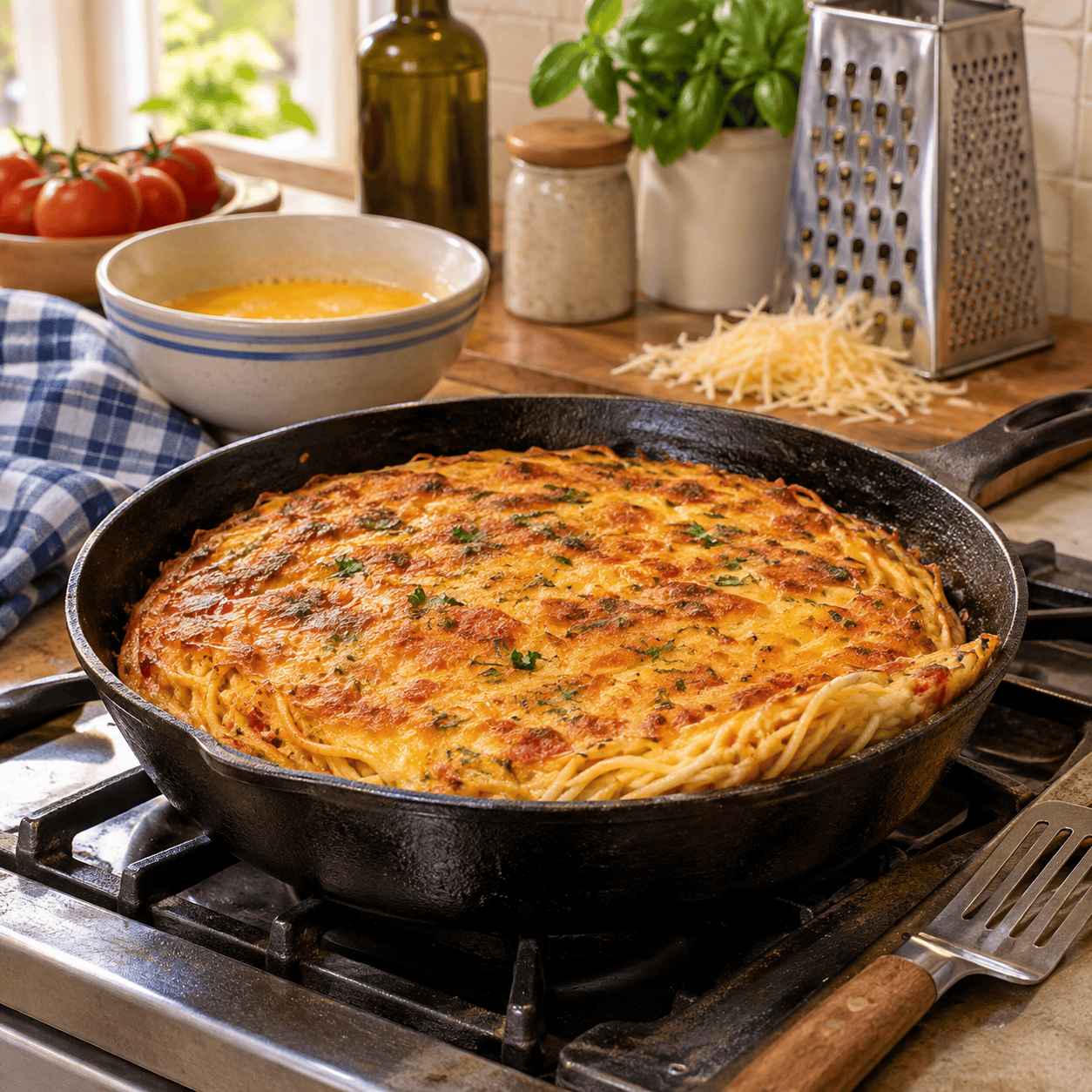
Baccalà fritters first, because they hold. Then smelts. Then calamari last, always last, because it goes soft if it sits.
Nonna fries standing in one spot for two hours with a slotted spoon and a paper-towel-lined sheet pan, and she will not sit down when you ask her to.
She tests the oil with the end of a wooden spoon. When little bubbles climb up the handle, it’s ready. She has never owned a thermometer and considers the idea of one a little insulting.
My job since I was seven has been the paper towels. It’s not a glamorous post. It’s mine, and I guard the roll like it’s the good silver.
13. Nobody Sits Down to Eat at the Same Time
There’s no single moment where everyone takes a seat and a host makes a toast.
Food comes out in waves and people orbit. Someone’s standing at the stove eating out of the pan. Someone’s at the folding table. Two people are in the doorway with plates, deep in an argument about parking.
Nonna doesn’t sit until the last meatball is out of the pot, and even then she eats off a saucer at the corner of the counter, one hand still on the burner knob.
Guests who expect a seated dinner stand there holding a plate, waiting for permission that never comes.
Just sit anywhere. That’s the rule. The chair you pick is yours for the night, and yes, everyone will notice where you sat.
14. Baby Jesus Stays in a Drawer Until Midnight
The nativity goes up December 1st with one obvious absence.
The manger is empty. The baby lives in a kitchen drawer with the rubber bands and the twist ties until midnight on Christmas Eve, when he gets placed in with some ceremony.
At Nonna’s, the youngest person in the room does the placing, carrying him across the living room on a folded dish towel like he might wake up. For years that was me. Now it’s the neighbor’s boy from upstairs, and he takes it very seriously.
Guests who notice the empty manger assume it broke. The reaction when you explain is always the same half-laugh, half “oh, that’s actually nice.”
One year Nonna’s baby Jesus was missing for forty minutes. The house was turned upside down. He was behind the coupon envelope.
15. The Three Kings Move Across the Room All Month
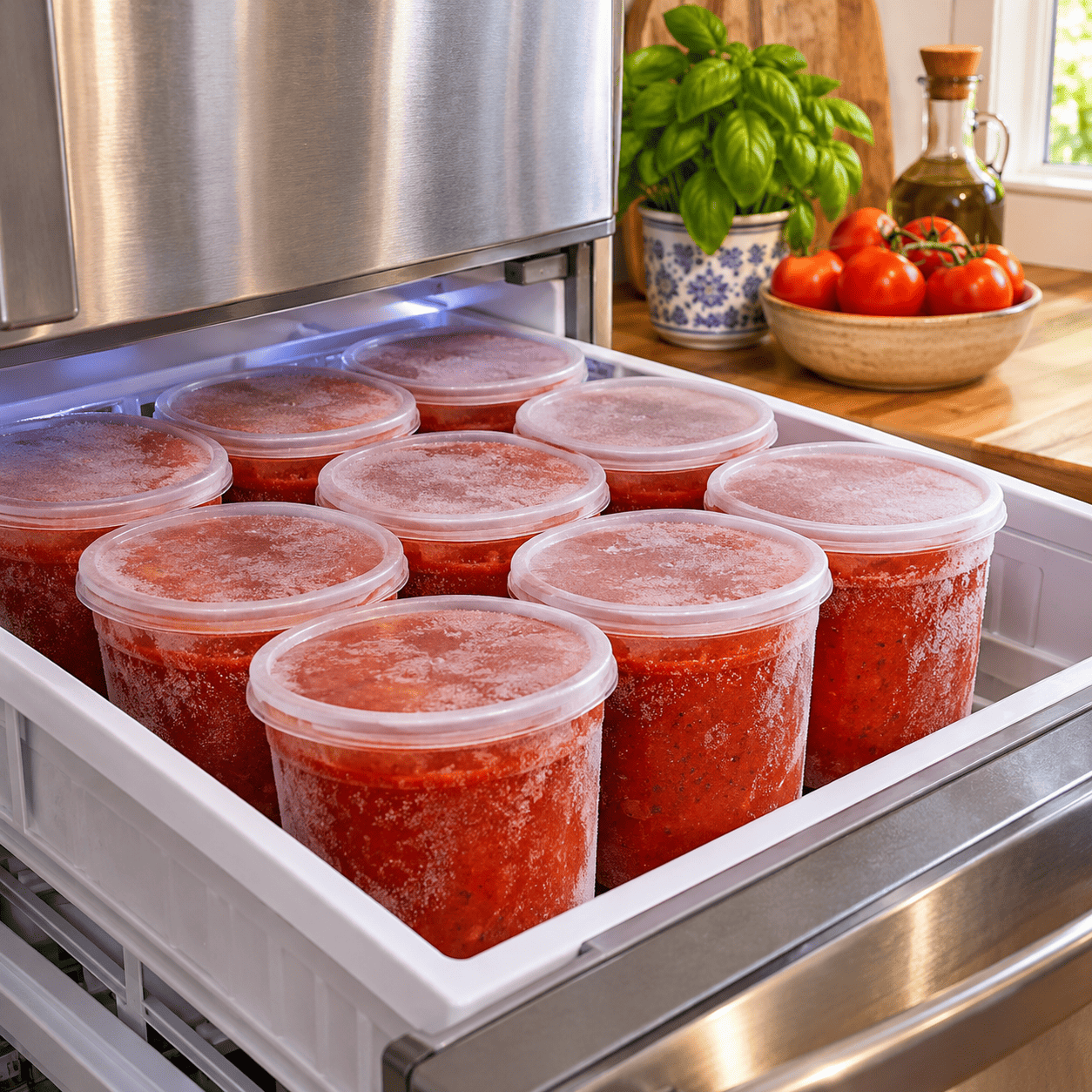
The baby gets all the attention, but the whole nativity is a slow-motion production.
The Magi start on a windowsill across the room in early December and get moved a few inches closer every few days, arriving at the stable on January 6th. At Nonna’s, the camel lost a leg sometime before I was born, so it rides propped against a pinecone, and nobody has ever suggested replacing it.
It takes four seconds a day and it’s the most patient thing in the house.
I do it in my apartment now with a nativity the size of a coffee cup. The kings travel from the bookshelf to the TV stand, with an overnight stop behind the remote. My roommate moved them backward once as a joke. I moved them back and didn’t speak to her until dinner. It’s ridiculous and I’m not stopping.
16. Midnight Espresso and Anisette
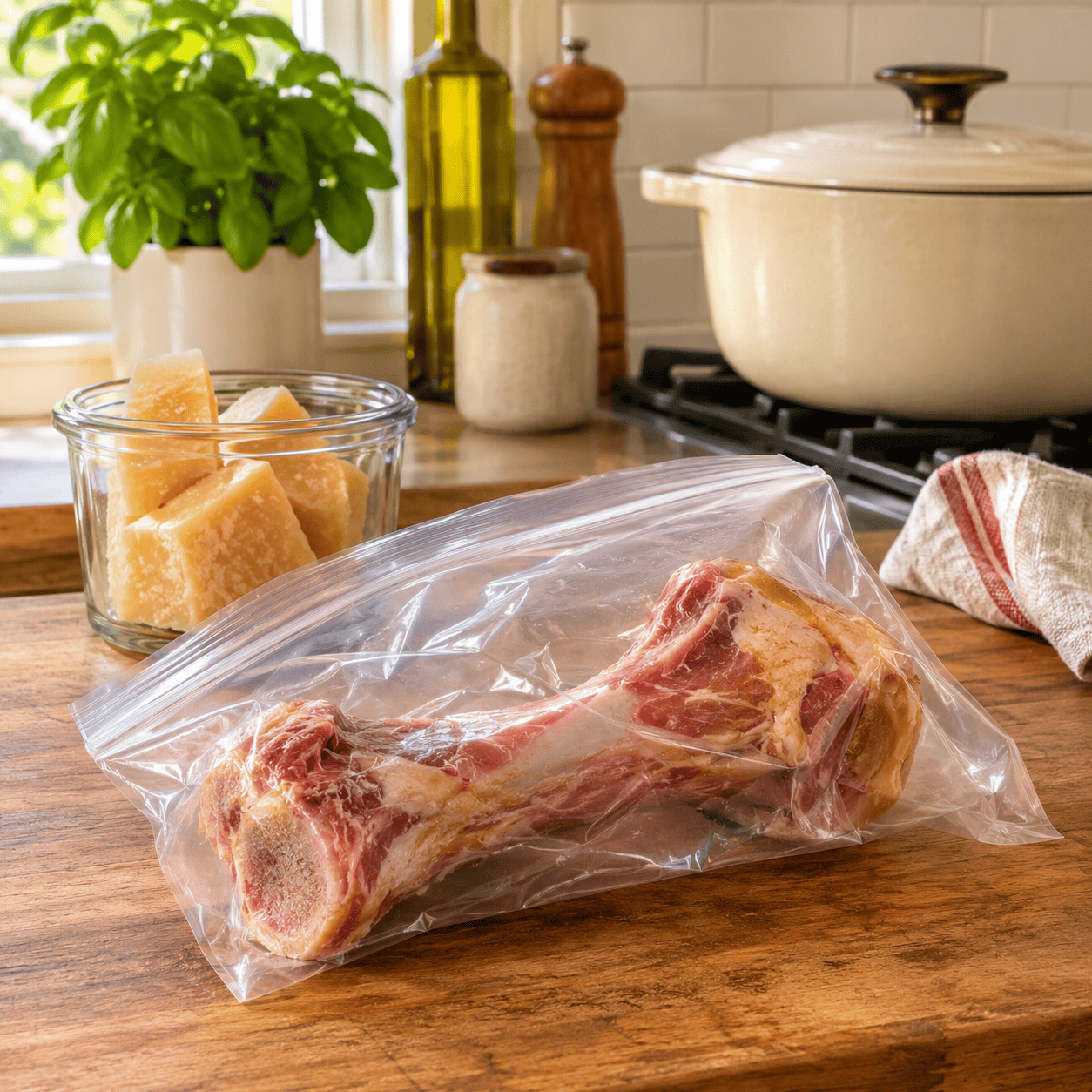
Around 11:30, the little cups come out. Not mugs. The cups with the gold rims that live in the china cabinet.
Espresso goes around, and the bottle of anisette comes out of the same cabinet where it’s lived since Easter. A splash in the coffee for the adults, and a sugar cube dipped in it for whoever’s youngest.
For years that was me, holding the cube over the cup like it was communion. Nonna made three rounds in the big Bialetti with the scorched handle, and somebody always got the last, muddy pour.
Non-Italian guests look at a round of caffeine at midnight like we’ve lost our minds. You’re not going home for three more hours. You need it.
If you want it sweeter, there’s a bottle of something cream-based now too, which Nonna tolerates. Barely.
17. The Card Game That Decides the Year
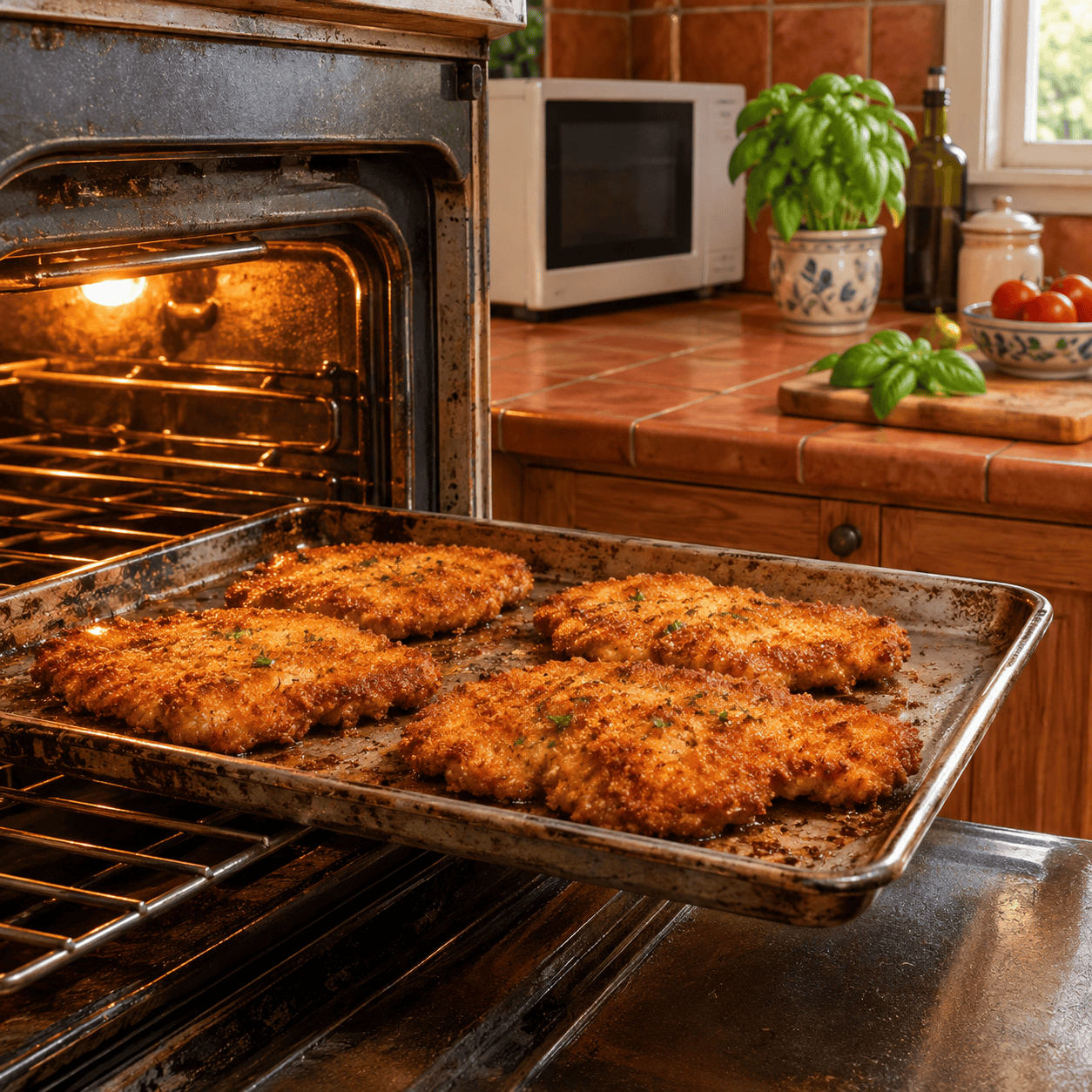
After the plates clear, the deck comes out.
Sometimes it’s a Neapolitan deck for scopa, sometimes it’s seven-card with change in the middle. The stakes are nickels. The intensity is federal.
The nickels live in a Maxwell House can on top of Nonna’s refrigerator, and nobody has seen the bottom of it since I was in grade school. The scopa deck lives in a rubber band, and the seven of coins is soft as a napkin from decades of being slapped down.
A neighbor sat in once and could not understand why a seventy-eight-year-old woman was that upset about forty cents. It’s not the forty cents.
Nonna cheats. Everybody knows she cheats. Calling it out is how you start a conversation, not how you end one.
18. Arguing Is the Entertainment
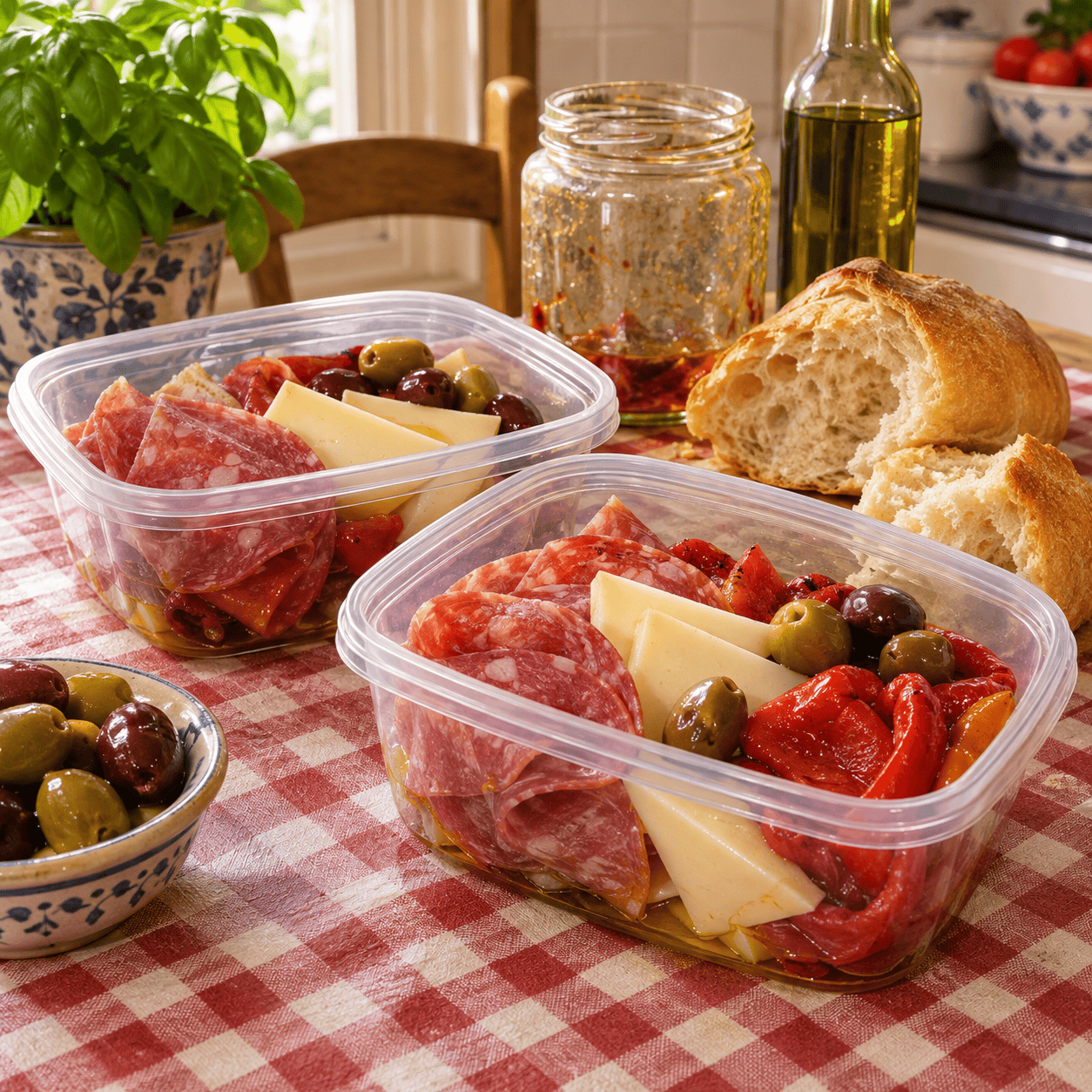
Volume goes up. Hands come out. A guest texts someone from the bathroom to ask if things are okay.
Things are great. That’s a conversation about whether the Eagles should have gone for it, or whether a certain bakery has gone downhill, or gravy versus sauce, which has never been settled and never will be.
At Nonna’s, the loudest fights happened over the last braciola, and she settled them by cutting it in half with the side of a fork and pointing that fork at whoever looked least sorry. My roommate saw this once and asked if she should leave. Nonna handed her the bigger half.
Nobody’s mad. Two people shouting about anchovies will be hugging at the door ninety minutes later.
The tell: if the house goes silent, something’s actually wrong. Loud is healthy.
19. You Will Not Leave Empty-Handed
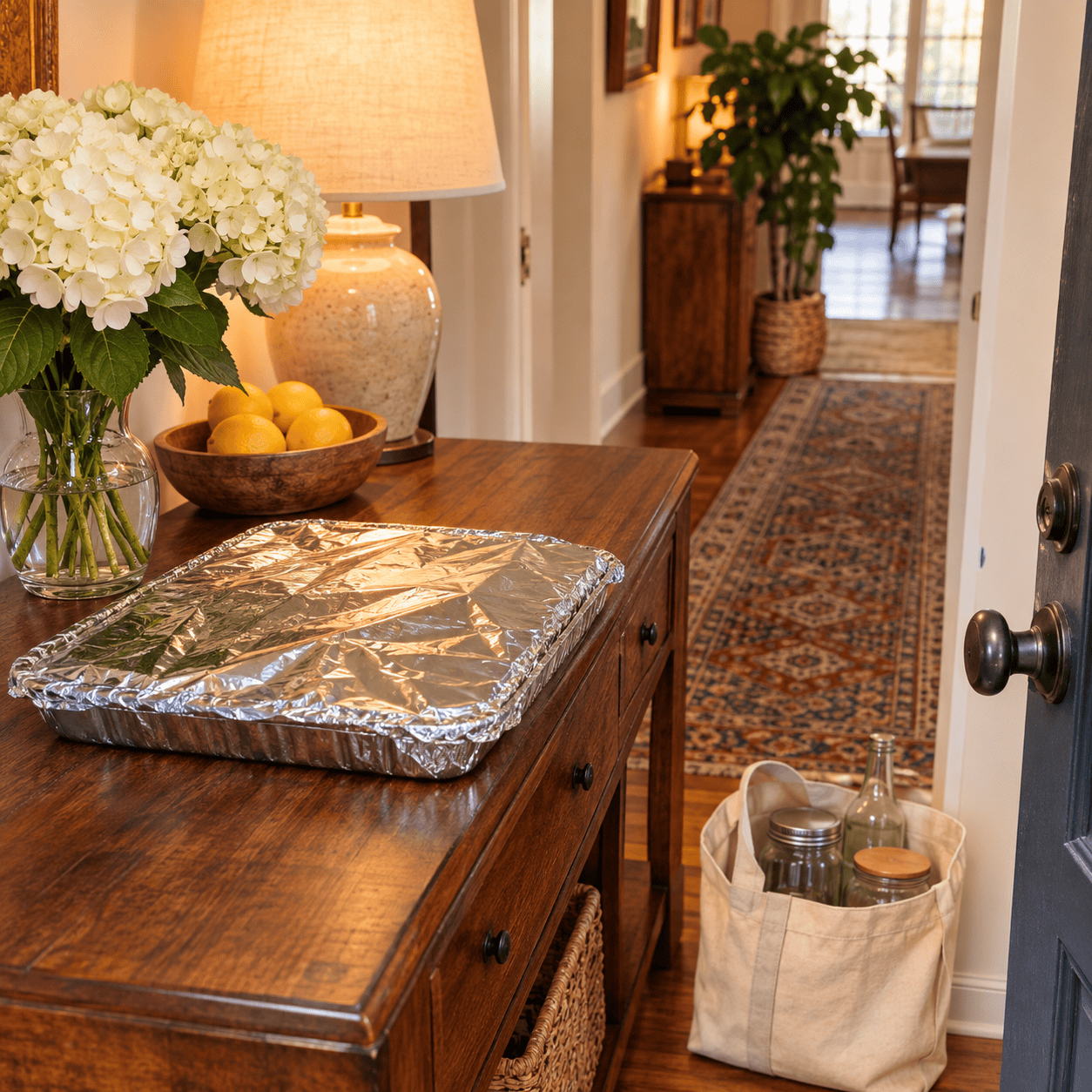
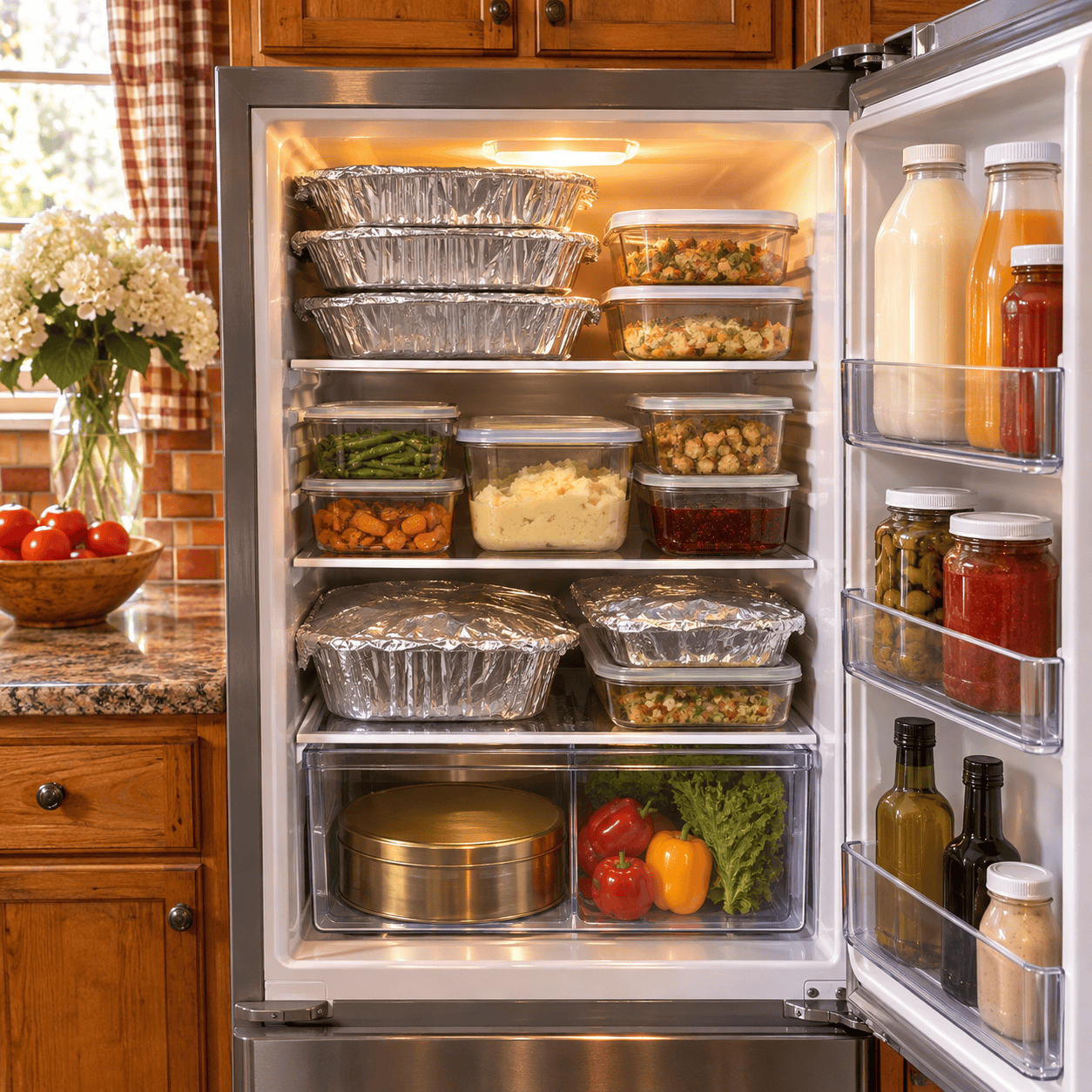
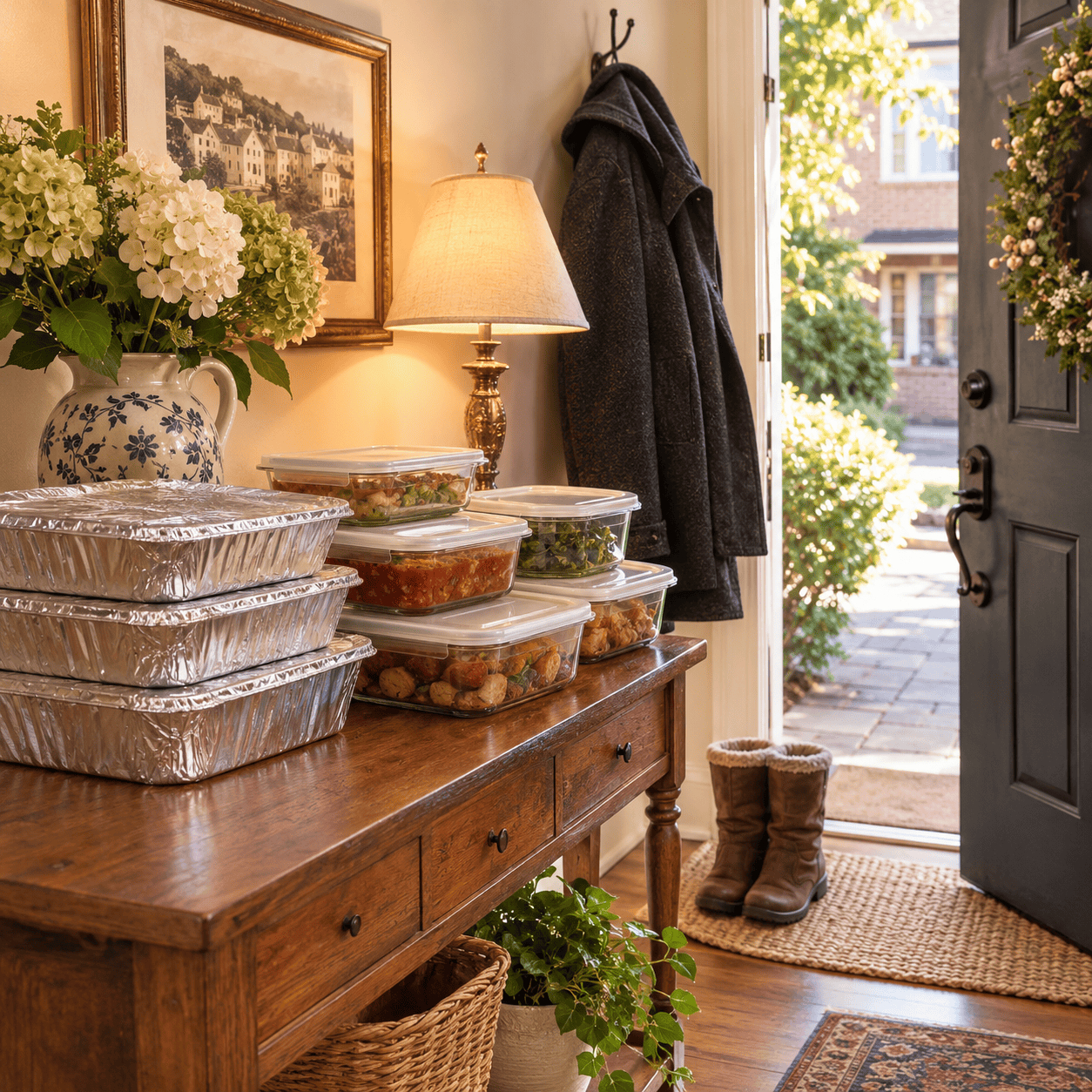
Before dessert is even cleared, the foil comes out.
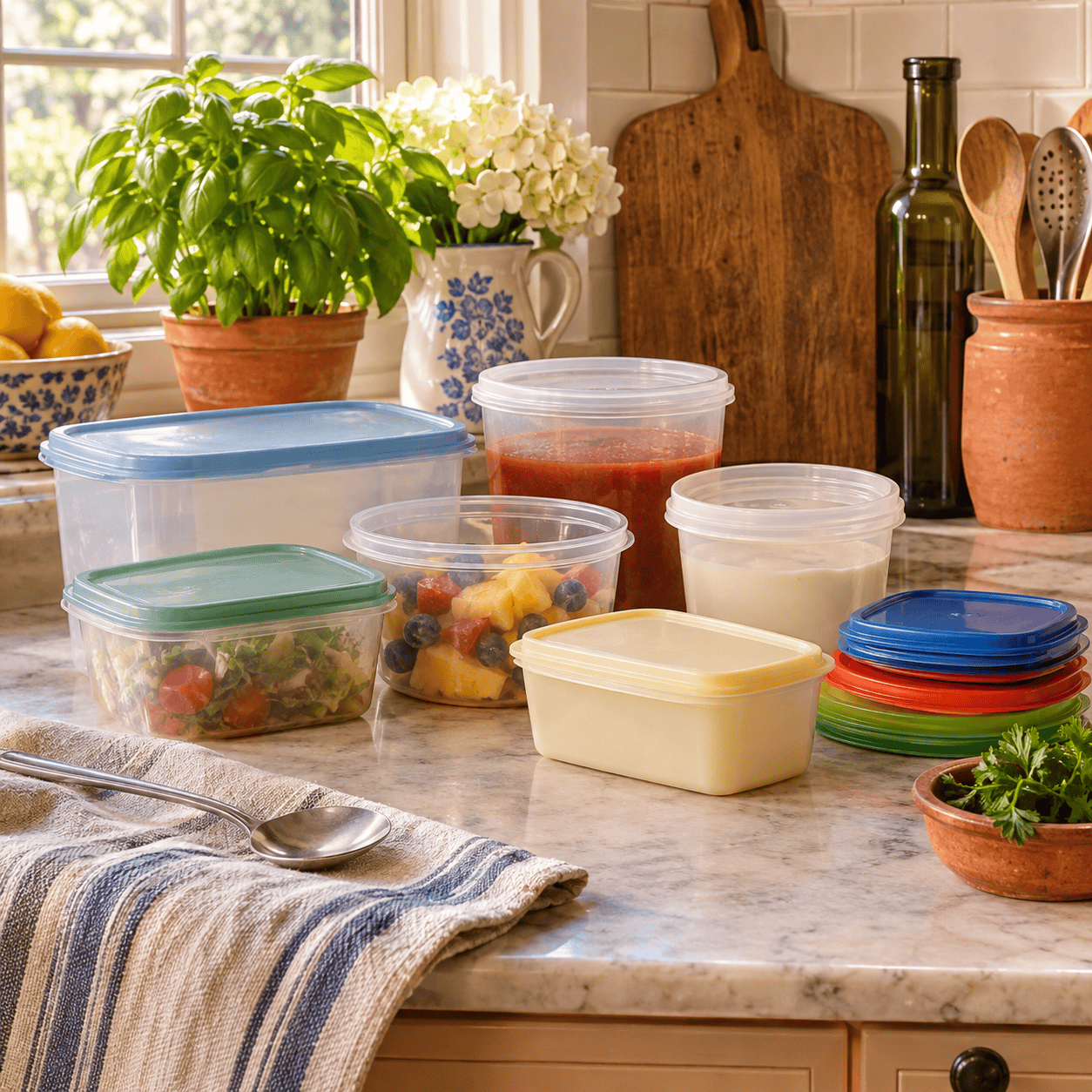
Nonna packs plates while you’re still sitting down. Leftover fish in one, cookies in another, a hunk of bread, maybe a jar of sauce from the basement shelf. She uses margarine tubs and ricotta containers, never actual food storage.
Every lid gets a strip of masking tape with your name on it in her slanted ballpoint, so you know the tub is a loan. Return it empty and you have insulted her. Return it with a few pizzelle inside and you’re square.
Refusing doesn’t work. “I’m fine, really” is heard as “please add more cookies.”
My friends have learned to bring a tote bag. One keeps a cooler in her trunk in December. She’s learned.
20. Showing Up Without Something Is a Crime
You can arrive late. You can arrive loud. You cannot arrive holding nothing.
A box from a bakery tied with red-and-white string. A bottle. A tray of something. A plant, if you’re desperate. The item barely matters; the gesture is the whole point.
And the box doesn’t get opened in front of you, usually — it goes straight to the counter to join the pile. You’ll never know if your struffoli made the cut.
The first time I went to a friend’s place alone, I was nineteen and broke and stood in a corner store for ten minutes before buying a lemon. One lemon. Nonna still brings it up.
It’s the first thing I was taught about being a guest anywhere, and the site has a whole list of rules for an Italian house that start exactly there.
21. The Panettone That Circulates Forever
Someone brings a panettone. Nobody eats the panettone.
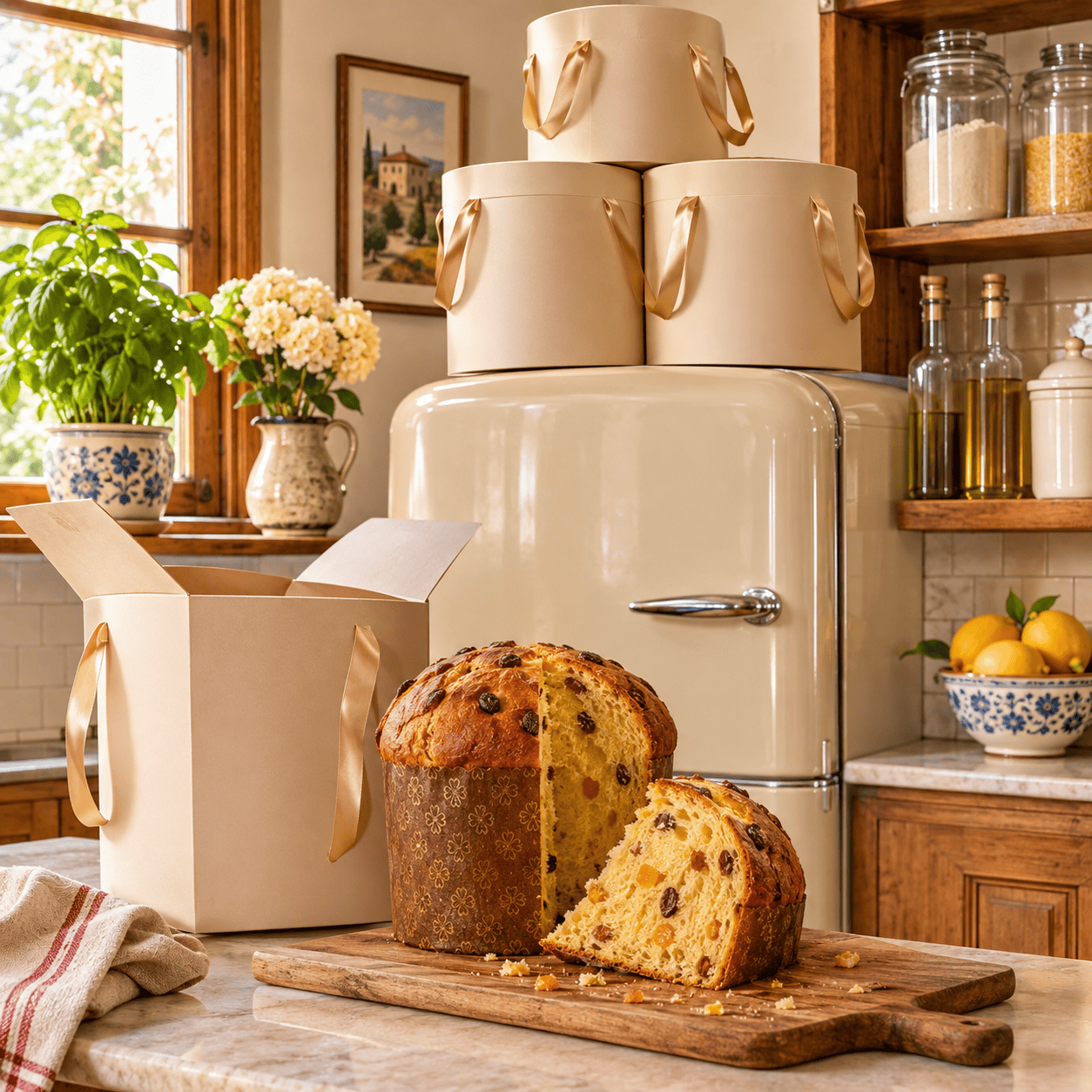
It sits in its box on the sideboard looking festive, gets admired, and then goes home with somebody who will bring it to a different house in four days. Some of these boxes have been in circulation since the Clinton administration.
Nonna actually likes it, toasted, with coffee, in January when the house is empty. That’s the only panettone that gets eaten in this family.
Here’s the difference nobody warns new guests about:
| Panettone | Struffoli | |
|---|---|---|
| Arrives as | A gift in a box | Homemade on a plate |
| Opened | Rarely | Immediately |
| Lifespan | Several Christmases | Eleven minutes |
| Regifted | Always | Never |
If it’s in a box with a ribbon, it’s decor. If it’s on a plate under foil, eat it now.
22. The Honey Balls Everyone Fights Over
Struffoli. Fried dough the size of marbles, piled into a mound, drowned in warmed honey and covered in nonpareils.
They go on a plate in the center and they’re gone before anyone’s served a formal dessert. People pick at them walking past. Hands only.
You can tell whose grandmother is whose by the shape. Nonna builds a wreath, her friend from church builds a cone, and they both say nothing about the other’s method.
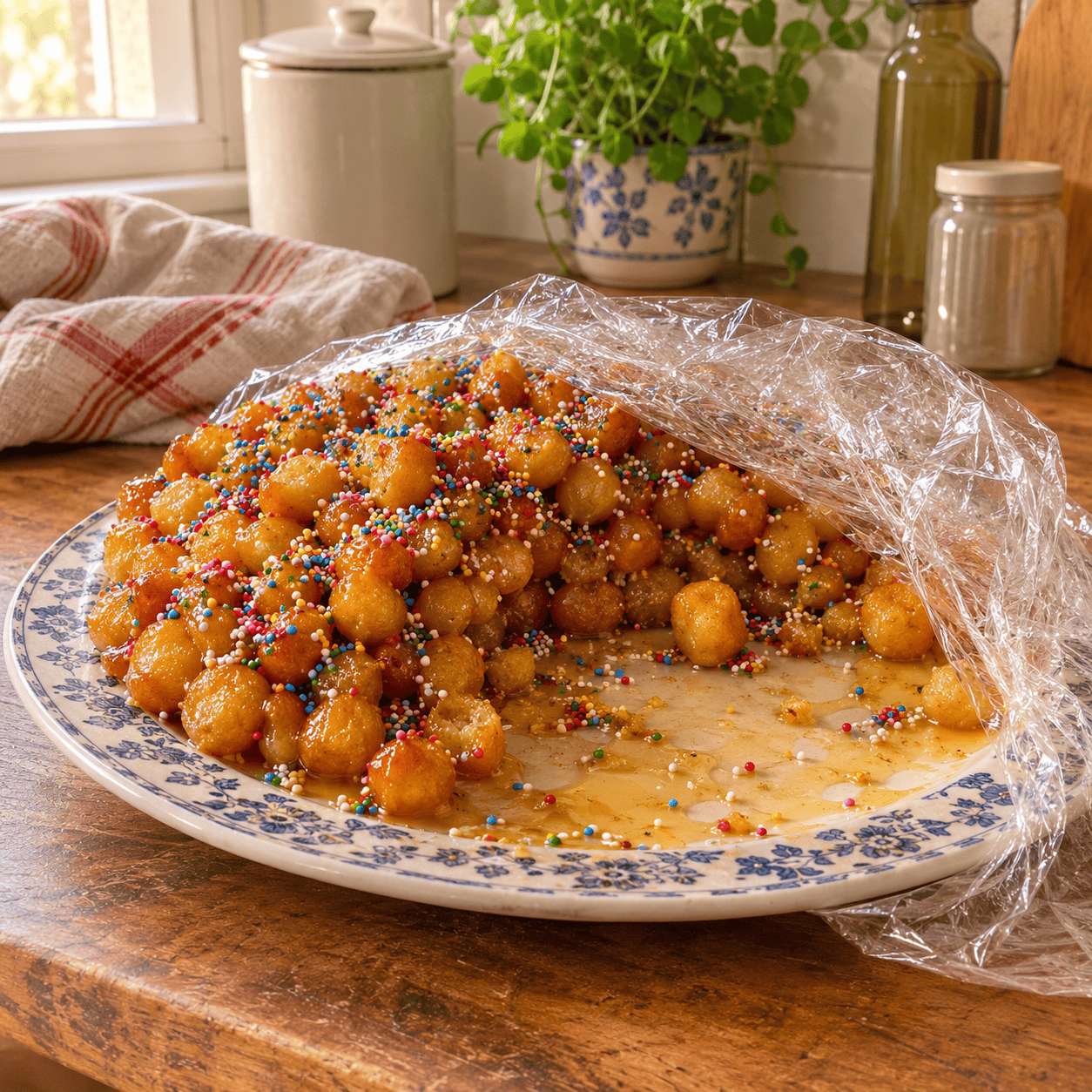
Whatever survives Christmas Day sits on the counter under plastic wrap until the honey sets like amber. By New Year’s the last dozen are fused into one brick, and I’m always the one prying them apart with a butter knife.
Fingers get sticky. The vinyl tablecloth earns its keep.
23. Nobody Says When the Night Ends
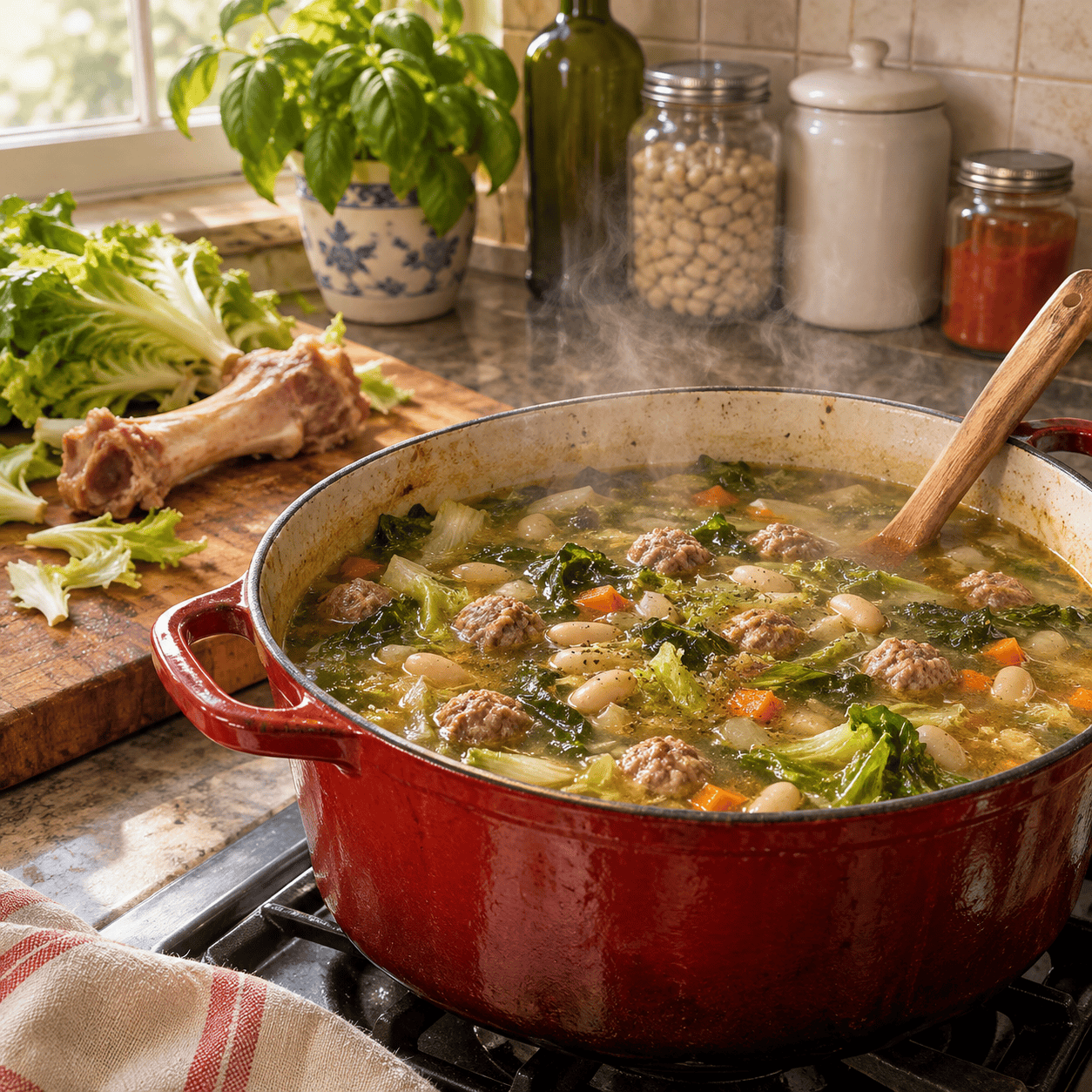
There’s no cue. No coats, no “well, it’s getting late,” no host yawning strategically.
Instead there’s the long goodbye. Fifteen minutes in the kitchen, fifteen more in the hallway, twenty in the doorway with the cold air coming in, and a final round of conversation at the car with the engine running.
Somewhere in the hallway stretch, Nonna disappears and comes back with a stack of Cool Whip tubs, each one holding gravy or meatballs, a strip of masking tape on the lid with nothing written on it. You do not refuse the tubs. You also bring them back clean next Sunday, or she remembers.
A first-timer once said goodbye and then actually left within five minutes. We talked about it for a year.
Budget forty-five minutes for departure. Wear your coat the whole time.
24. Christmas Day Is Lasagna, Not Turkey
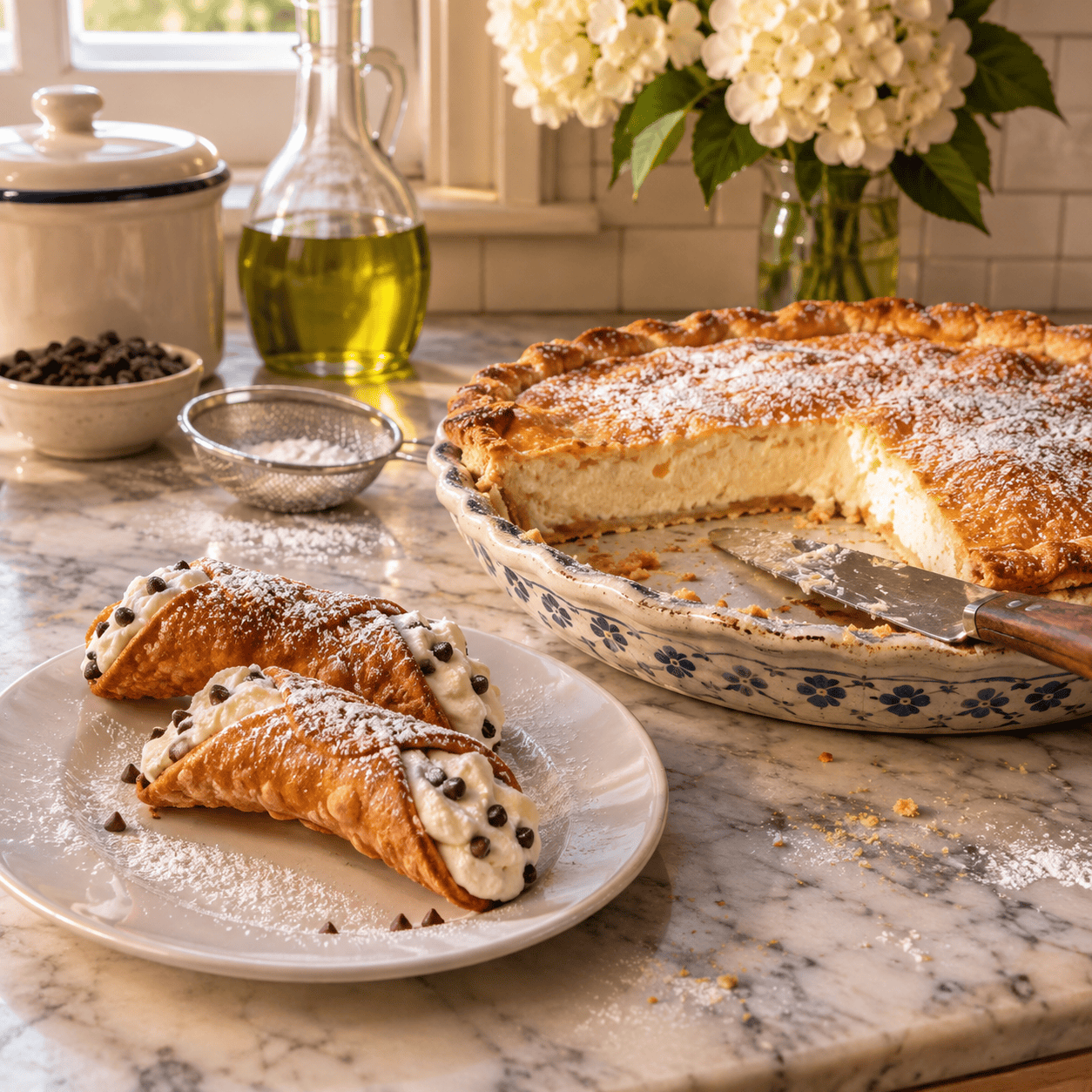
Thanksgiving had the bird. Christmas Day gets the pan.
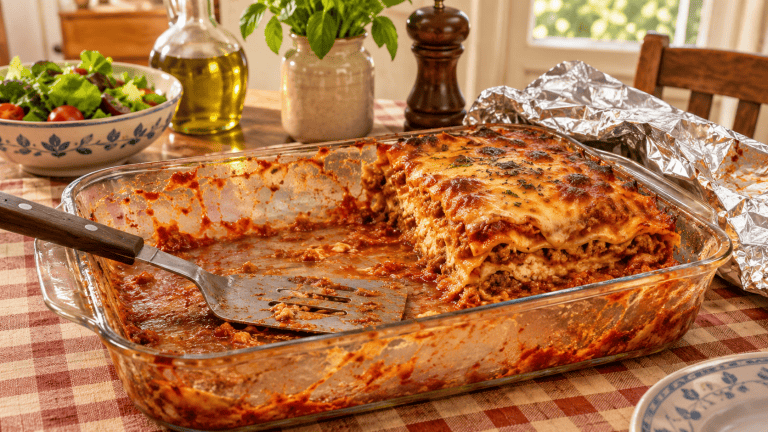
Nonna’s lasagna goes in around noon on the 25th, built the night before and resting in the cold garage because the fridge lost that war in November. There are tiny meatballs in it. There are always tiny meatballs in it.
She rolls them the size of chickpeas at the kitchen table on Christmas Eve, between the fish and Midnight Mass. When I was small my job was to count them, and I always lost track somewhere past forty.
Then braciole, sausage, maybe a roast as the secondo nobody has room for.
Guests who show up expecting a carving scene find a pan of lasagna and a woman who’s been up since six. The unwritten rules of Christmas Day dinner are a separate education entirely.
25. The Good Dishes Come Out and Everyone Is Nervous
The china cabinet opens twice a year, and December is one of them.
Gold-rimmed plates, a gravy boat nobody has ever used for gravy, glasses so thin you hold them differently without being told. They get hand-washed. Only Nonna washes them.
She dries each plate with the same linen towel, the one with a faded Saint Joseph in the corner, and stacks them back with a paper napkin between every plate so the gold doesn’t scratch. I was nineteen before she let me hand her one.
Break one and nothing is said out loud, which is far worse than if something were said.
Meanwhile the overflow eats off the Corelle at the folding table, which is honestly the better deal. Nobody’s watching your hands over there.
26. The Bread Is Not a Side, It’s a Tool
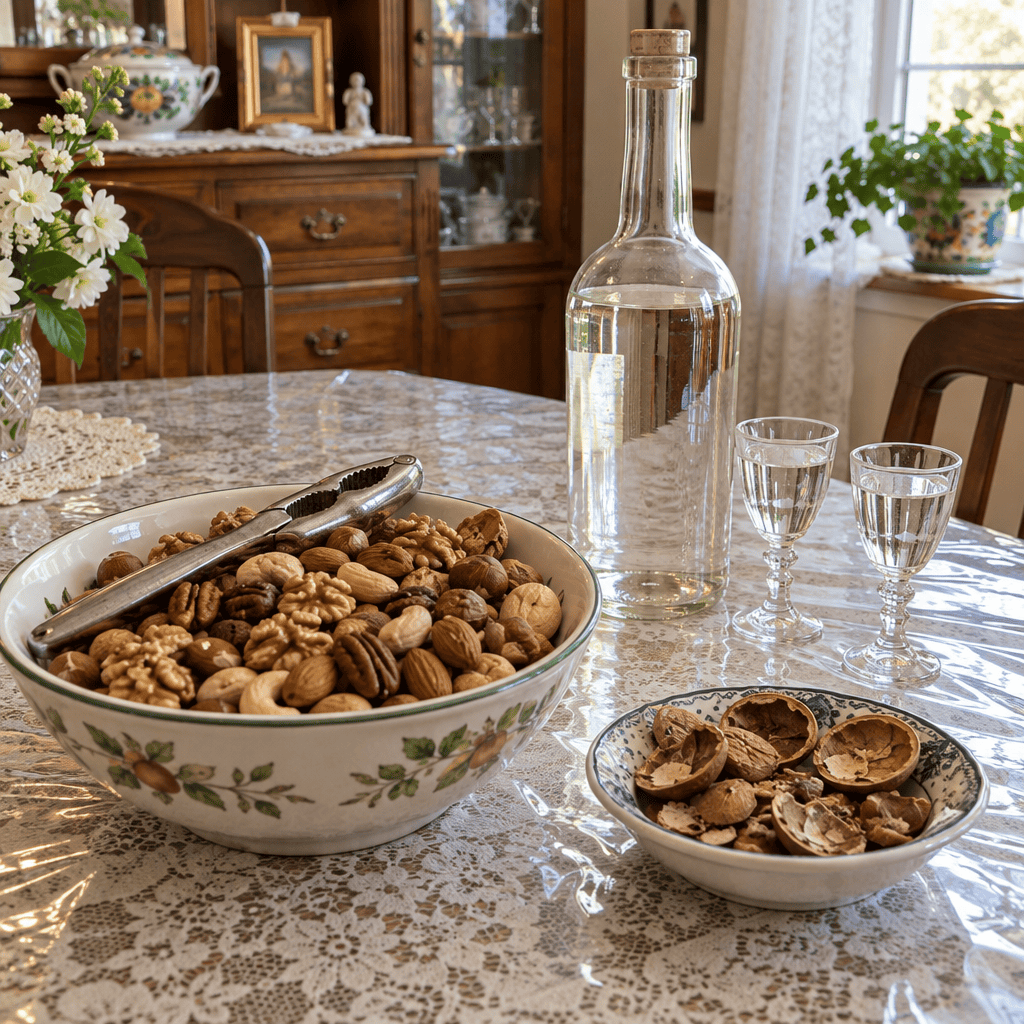
Two loaves minimum, from the bakery on the corner, bought that morning, sliced with the serrated knife that lives in the drawer with the scissors. The heel goes to whoever got there first, and at Nonna’s that was usually me.
It’s not there for butter. Butter does not appear on this table. Bread exists to chase sauce around a plate until the plate is clean enough to put back in the cabinet.
That move has a name. Scarpetta. Doing it is the compliment.
A guest once left sauce on the plate and Nonna asked, out loud, if something was wrong with it. Not passive-aggressive. Just genuinely worried.
My roommate learned that rule in one Sunday. She brought a store-bought baguette, watched me use a crust to clean the gravy pot, and has bought from the bakery ever since.
27. No Cheese Near the Seafood, Ever
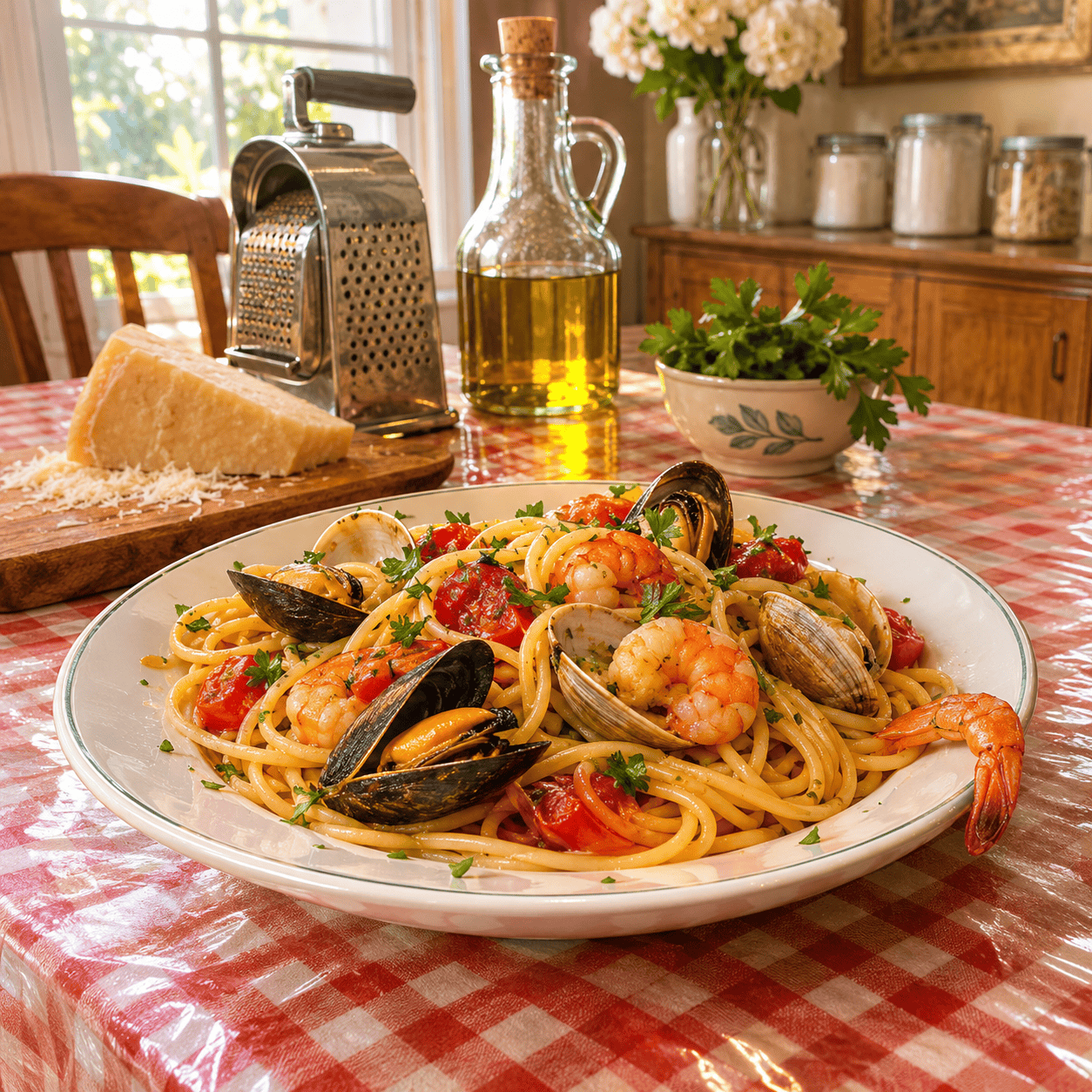
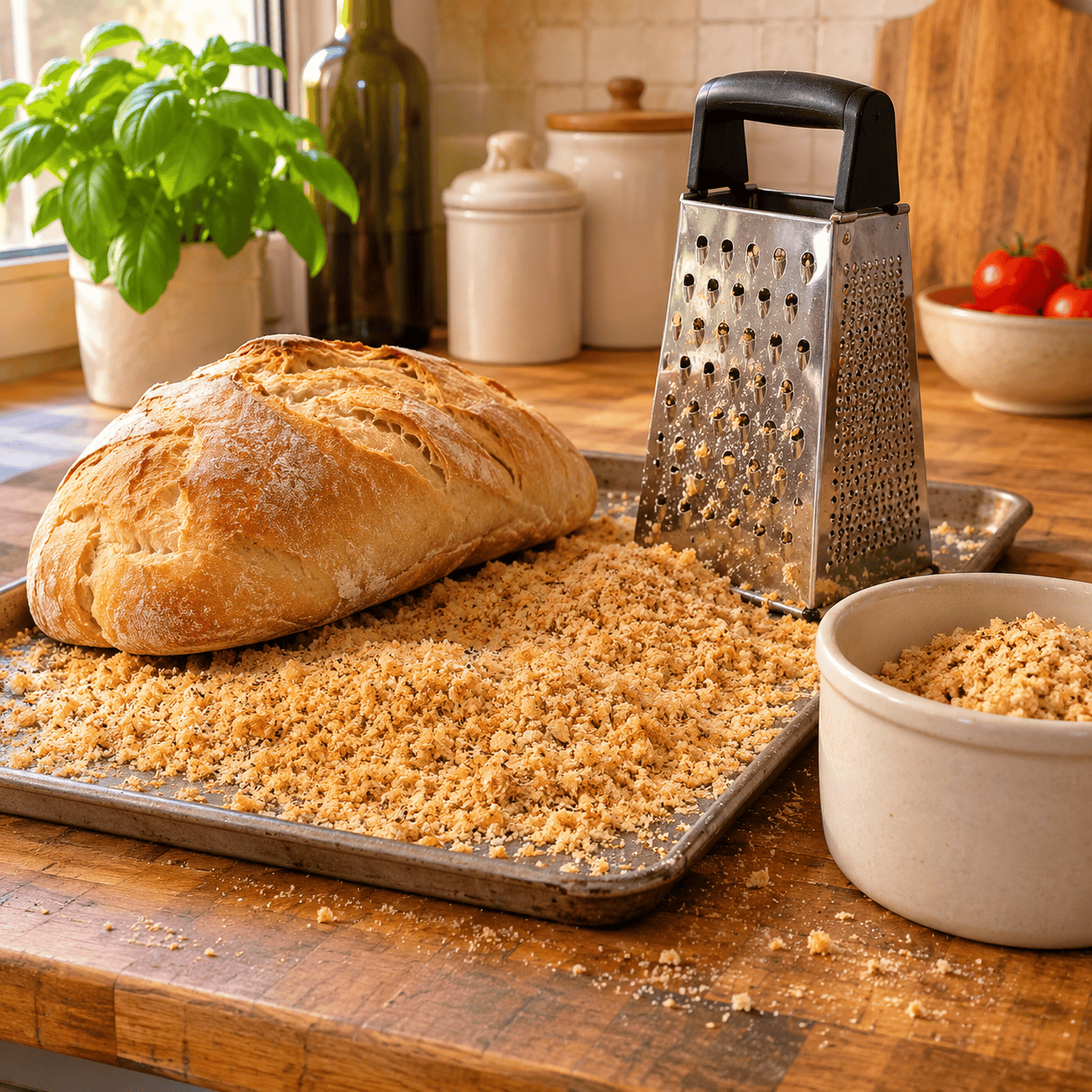
The grater sits on the table all through the pasta course on Christmas Day. On Christmas Eve, it doesn’t come out at all.
No parmesan on the linguine with clams. No pecorino on the shrimp. This isn’t a preference, it’s physics as far as this family is concerned.
I watched a guest ask for cheese on his seafood pasta once. The pause was long enough to hear the refrigerator running.
He got it. Of course he got it, he’s a guest. But the grater was handed over with the exact face you’d use handing someone the keys to a car you don’t think they can drive. There’s a full list of things never to say in an Italian kitchen and that’s near the top.
28. The 11 p.m. Sandwich
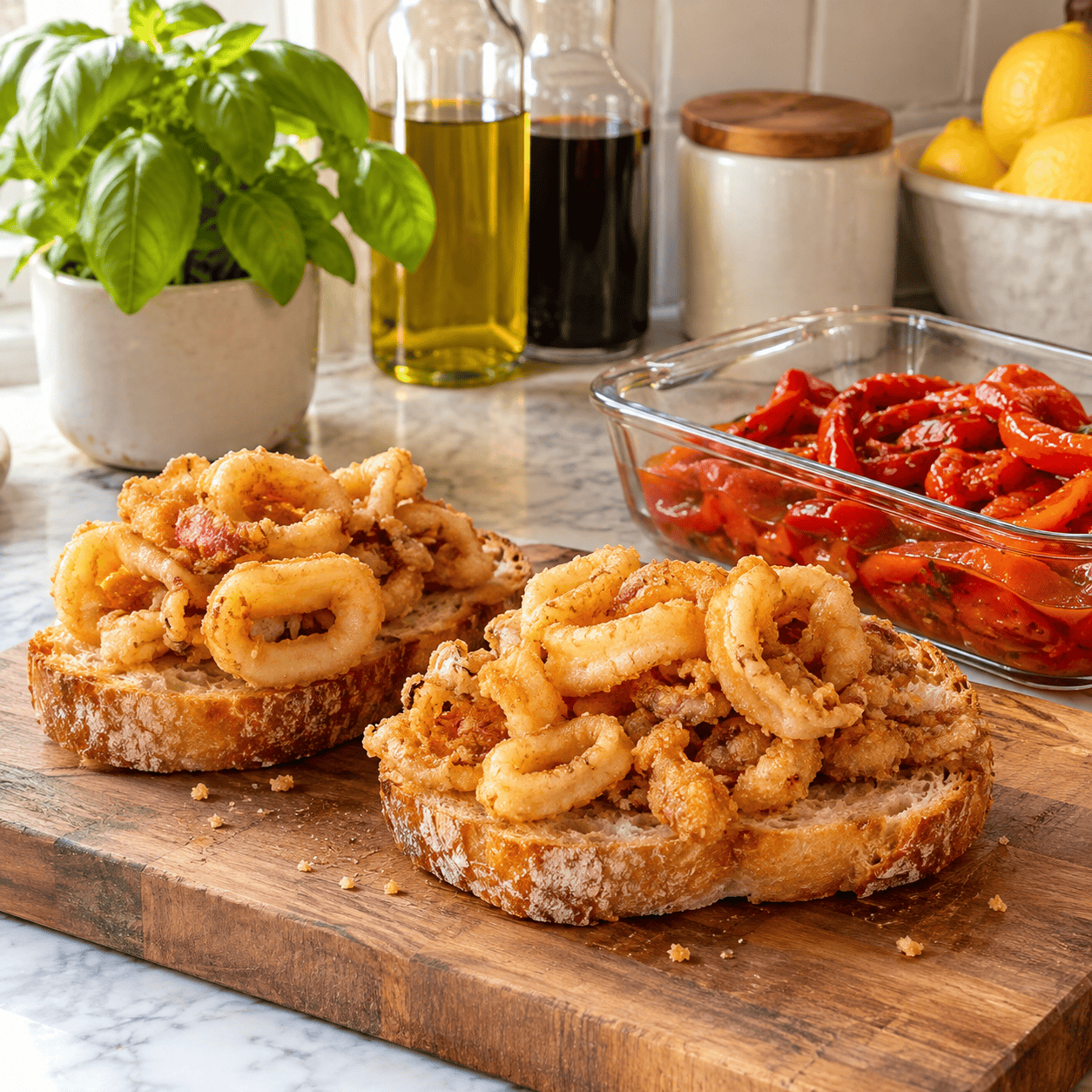
Somewhere after the cards and before the long goodbye, a loaf reappears.
Leftover fried calamari between two slices of bread. Or peppers and provolone. Or whatever’s on the counter in a container that hasn’t been covered in six hours, which is its own article on the site about things that would horrify a food safety inspector.
You’ve eaten for nine hours. You make the sandwich anyway.
The bread is the end of the Italian loaf from the bakery on Ninth Street, gone hard enough by then that Nonna saws it with the serrated knife she keeps in the dish rack, never the drawer. Nobody toasts it. A smear of gravy from the pot does the softening.
Nonna makes one too, standing up, and insists she isn’t hungry while she eats it.
29. It All Happens Again on January 6th
Non-Italian friends are stunned that the season doesn’t end on the 26th.
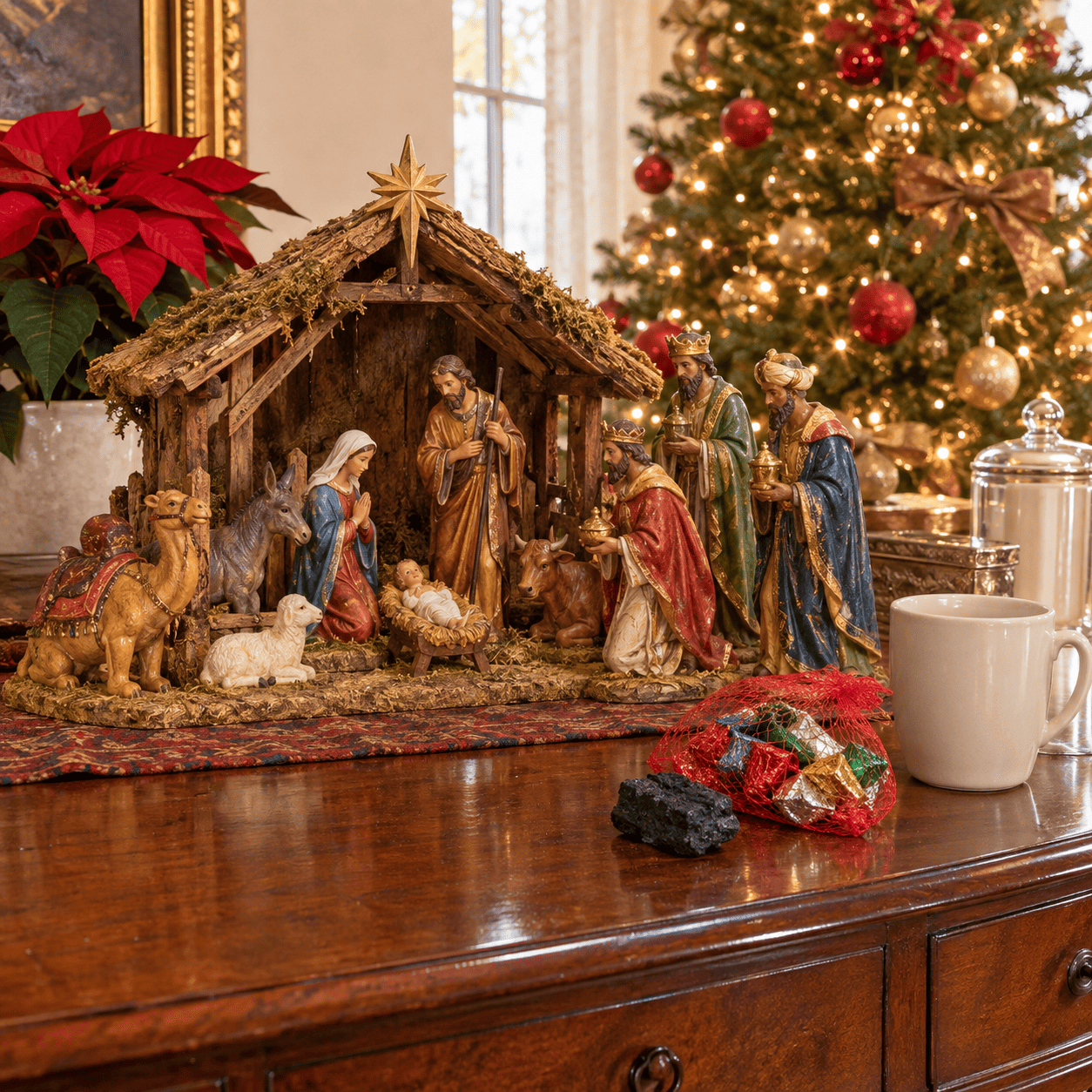
The Epiphany closes it out. La Befana comes with candy for the good kids and a lump of black sugar “coal” for the rest, and there’s one more meal, smaller, with whatever’s left and a fresh pot of coffee.
The tree comes down after that, not before. Taking it down on the 27th is, in Nonna’s view, giving up.
By the 7th the house is finally still, the folding tables are back in the basement, and there’s a panettone on the counter waiting for somebody’s February.
None of this is performance. It’s just a system built by people who came over with very little and decided that the one thing they’d never be short on was food on a table and people around it.
If you married into it or got invited in, you’re already in it. Bring something, sit anywhere, take the leftovers, and don’t try to leave quickly.
And if you’re reading this nodding at the vinyl tablecloth, call your grandmother. She’s got the baby Jesus in a drawer right now, waiting.
Buon appetito,
Madeline