30 Unwritten Rules of the Italian Christmas Cookie Tray
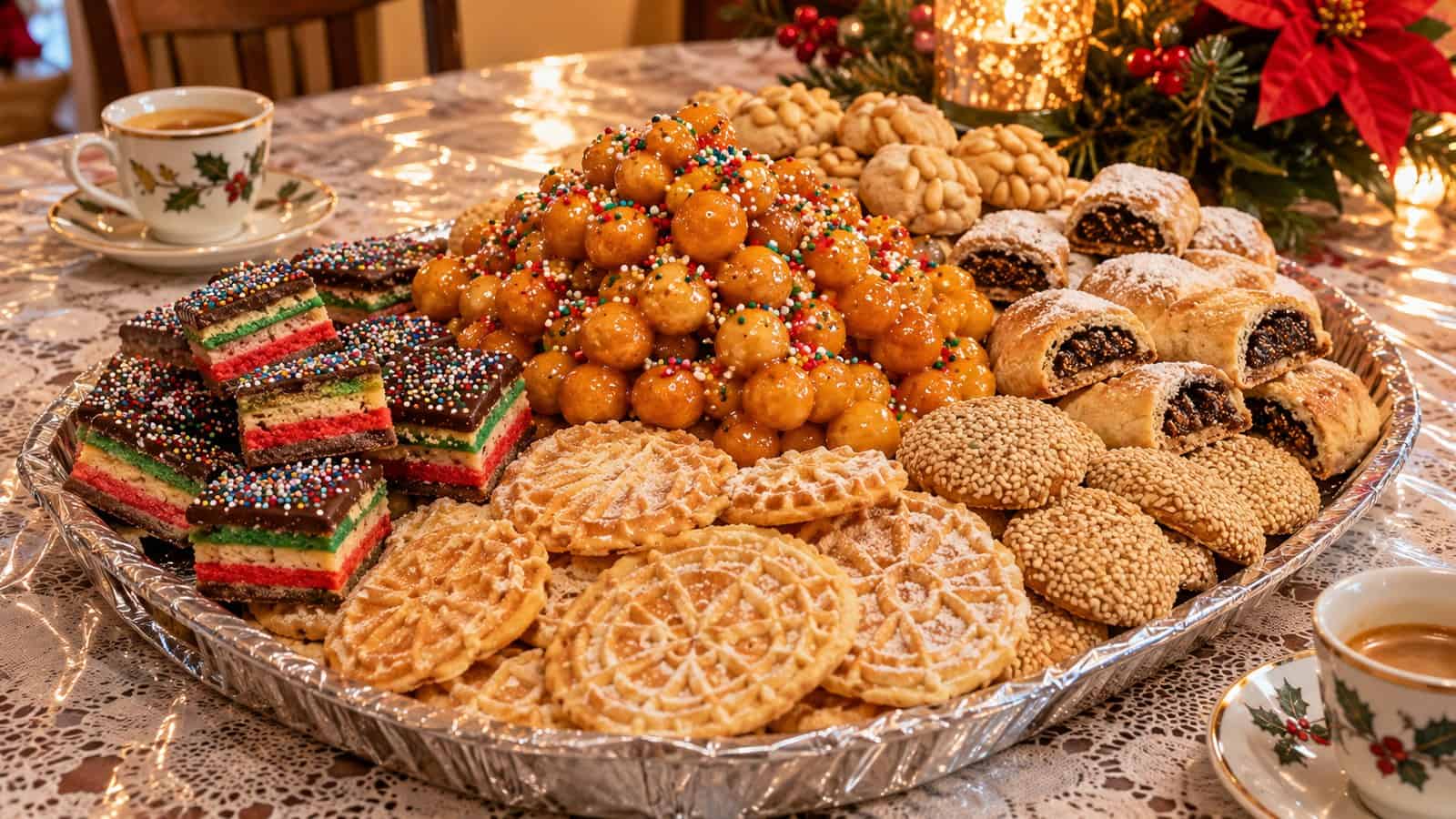
The tray comes out of the dining room hutch on December 23rd. Aluminum, dented on one corner, older than my marriage.
Nobody ever sat me down and explained how it worked. You just learned by getting your hand smacked.
Nonna Pina built that tray every year from 1952 until the year she couldn’t stand at the counter anymore, and she never once wrote a single thing down. The order was the order. The cookies were the cookies. You didn’t ask why the pizzelle went on the bottom any more than you asked why you knelt at Mass.
Now I build it, in a kitchen outside Philadelphia, with my mother’s cookie press and a coffee can of broken ones for the grandkids.
Here are 30 rules of the Italian Christmas cookie tray that nobody wrote down and everybody follows.
1. Pizzelle Go On First, and On the Bottom
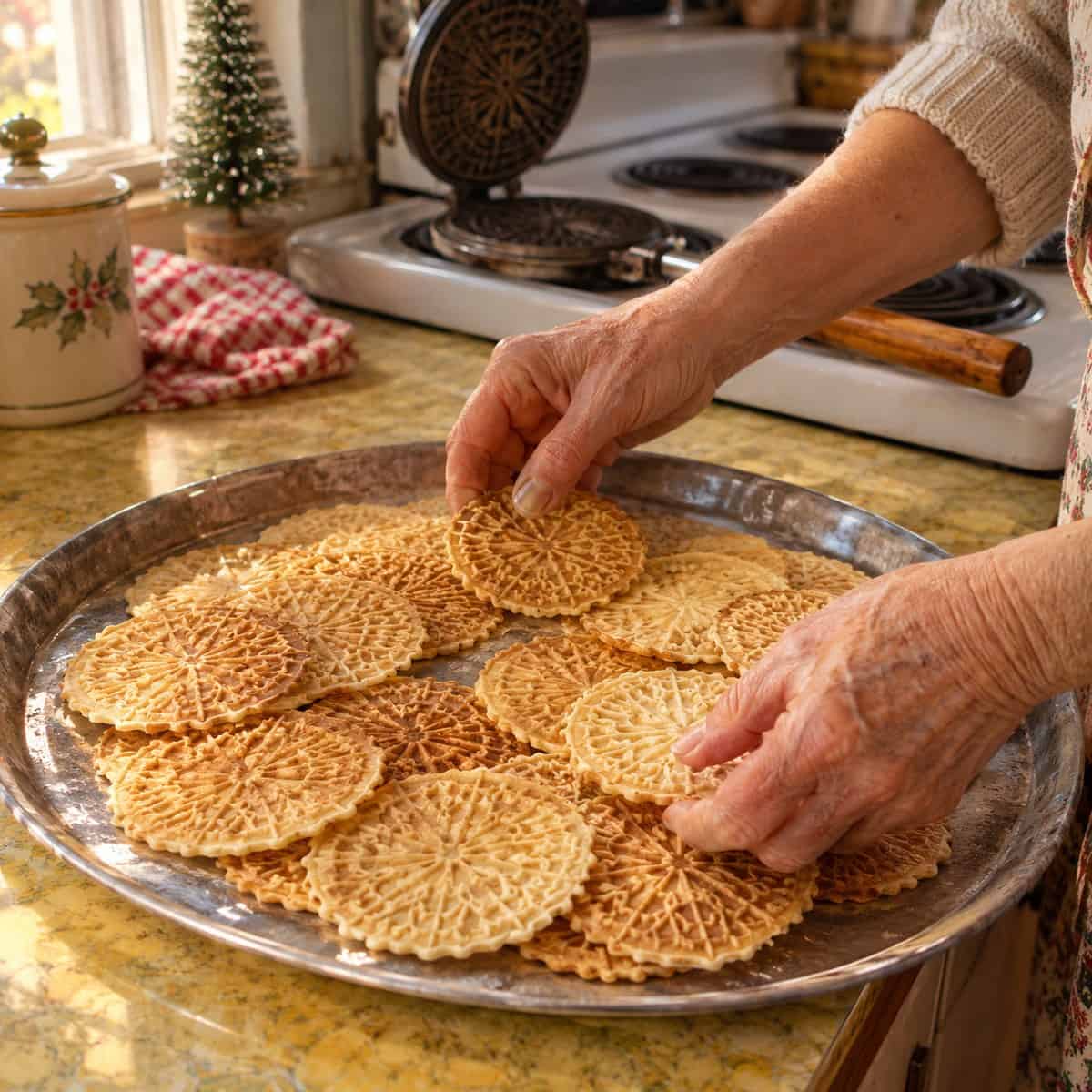
They’re the foundation. Flat, wide, strong enough to hold forty cookies on top of them without snapping.
Nonna laid hers in overlapping rings like roof shingles, anise ones facing up so you could see the pattern pressed into them. Her iron was a stovetop model with a wooden handle, and she turned it by counting — never a timer.
Put pizzelle on top and they shatter under their own weight by the second day. You end up with a tray of expensive crumbs.
My cousin Dominic tried arranging a tray “by color” one year. He put the pizzelle at the top like a crown. Nobody said anything to his face. His mother rebuilt it in the kitchen while he was in the living room.
2. There Is Always One Tray That Is Only for Company
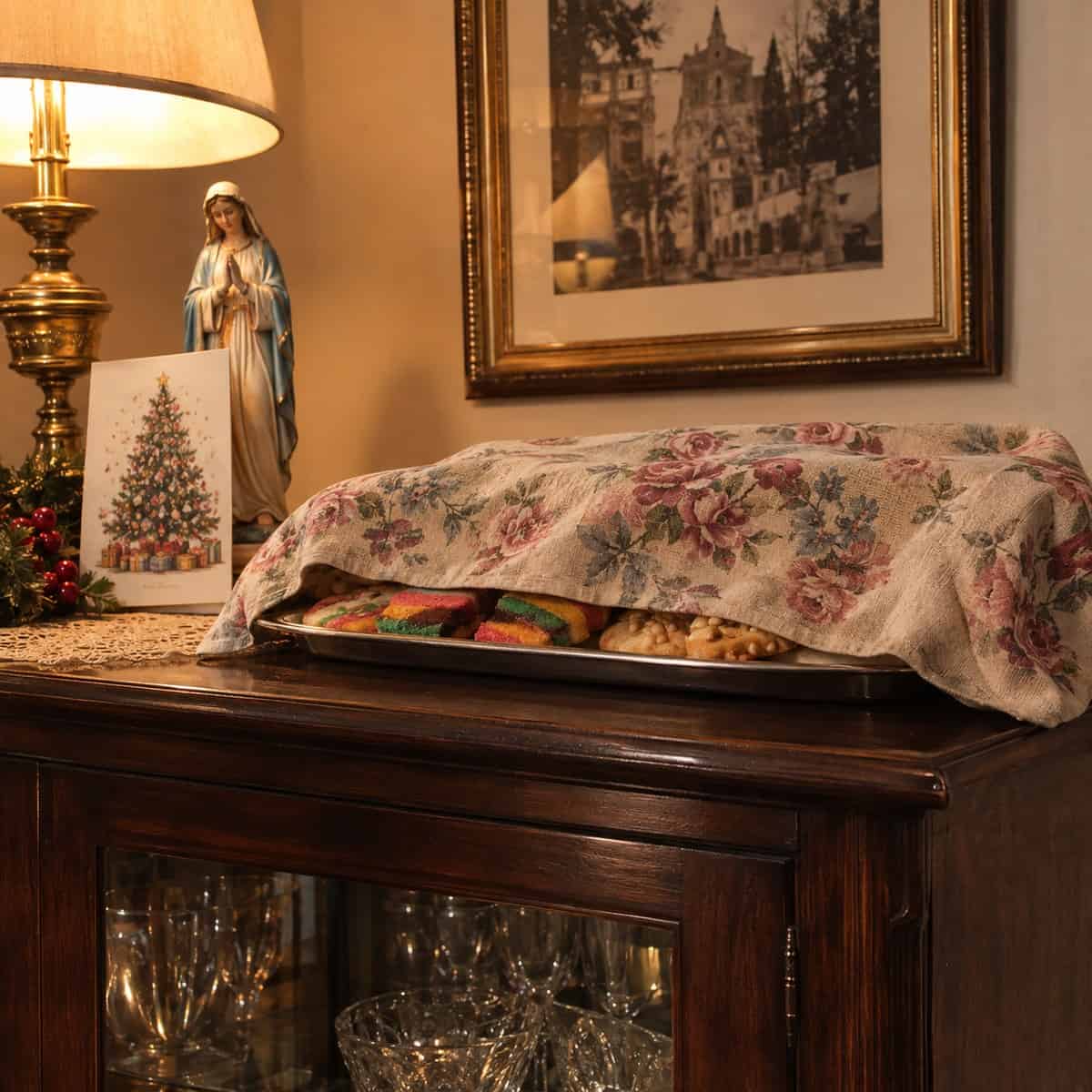
Two trays leave the oven. One lives on the counter and gets picked at. The other goes somewhere nobody can reach.
Ours went on top of the china cabinet, covered in a dish towel, and it was understood the way gravity is understood.
That’s the tray that comes out when the Marchettis stop by, when Father Dolan comes, when someone from the parish drops off a card. It has the prettiest rainbow cookies and all the whole pizzelle.
My brother took a fig cookie off the company tray in 1991. My mother brings it up at Christmas. He’s fifty-four.
3. Nobody Touches the Tray Before Christmas Eve
The baking starts in early December. The eating starts December 24th, after the fish. That gap is a test.
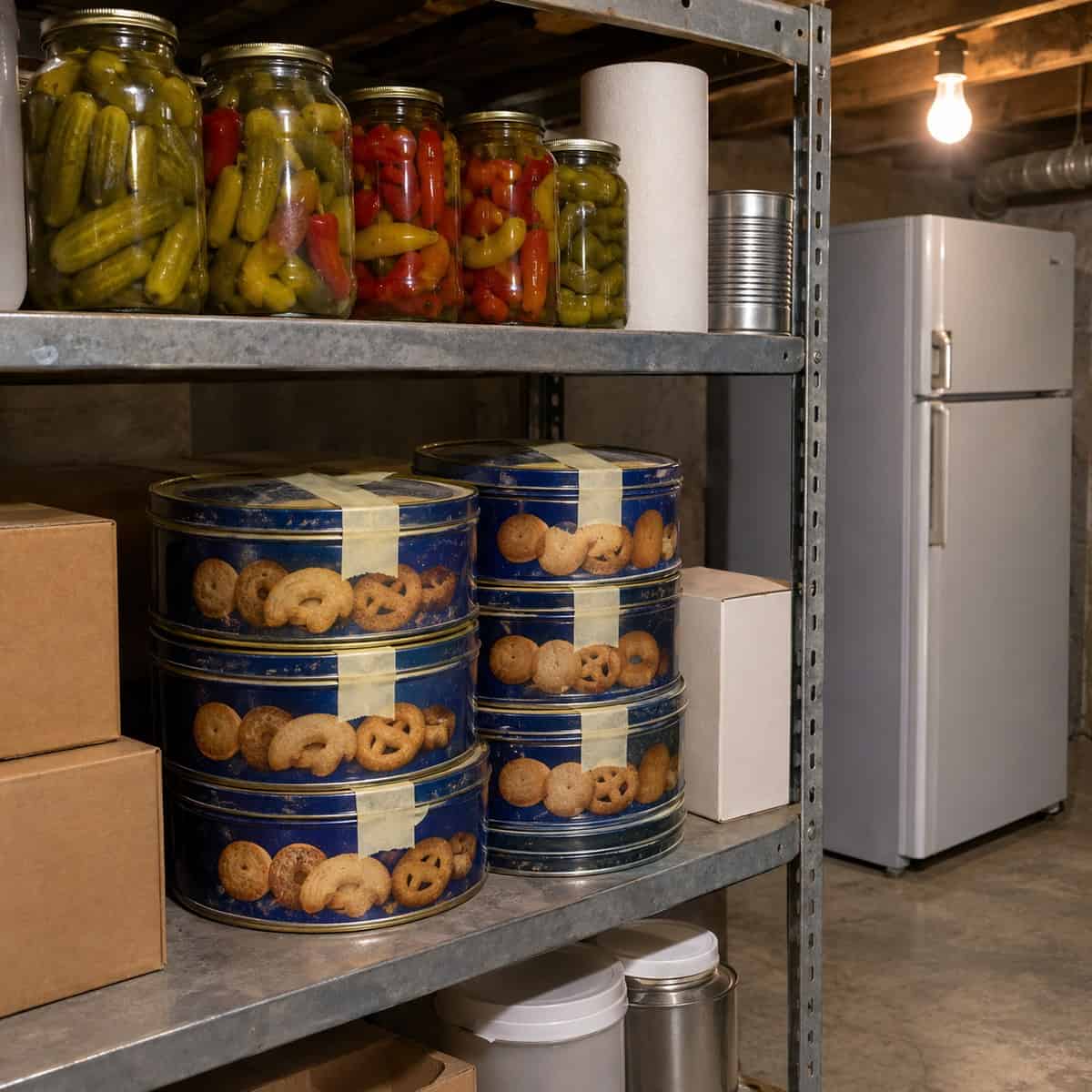
Tins stacked on the basement shelf, lids taped, and every kid in the house knowing exactly which one had the pignoli.
Break it and you don’t get yelled at. You get the look, and then the sentence: “Go ahead. Eat it now. There’ll be none Christmas Eve.” There was always plenty Christmas Eve. That wasn’t the point.
I caught my daughter at thirteen with powdered sugar on her chin, swearing it was toothpaste. I let her think she got away with it. I also moved the tin.
4. The Seven Fishes Dinner Ends With the Tray, Not With Cake
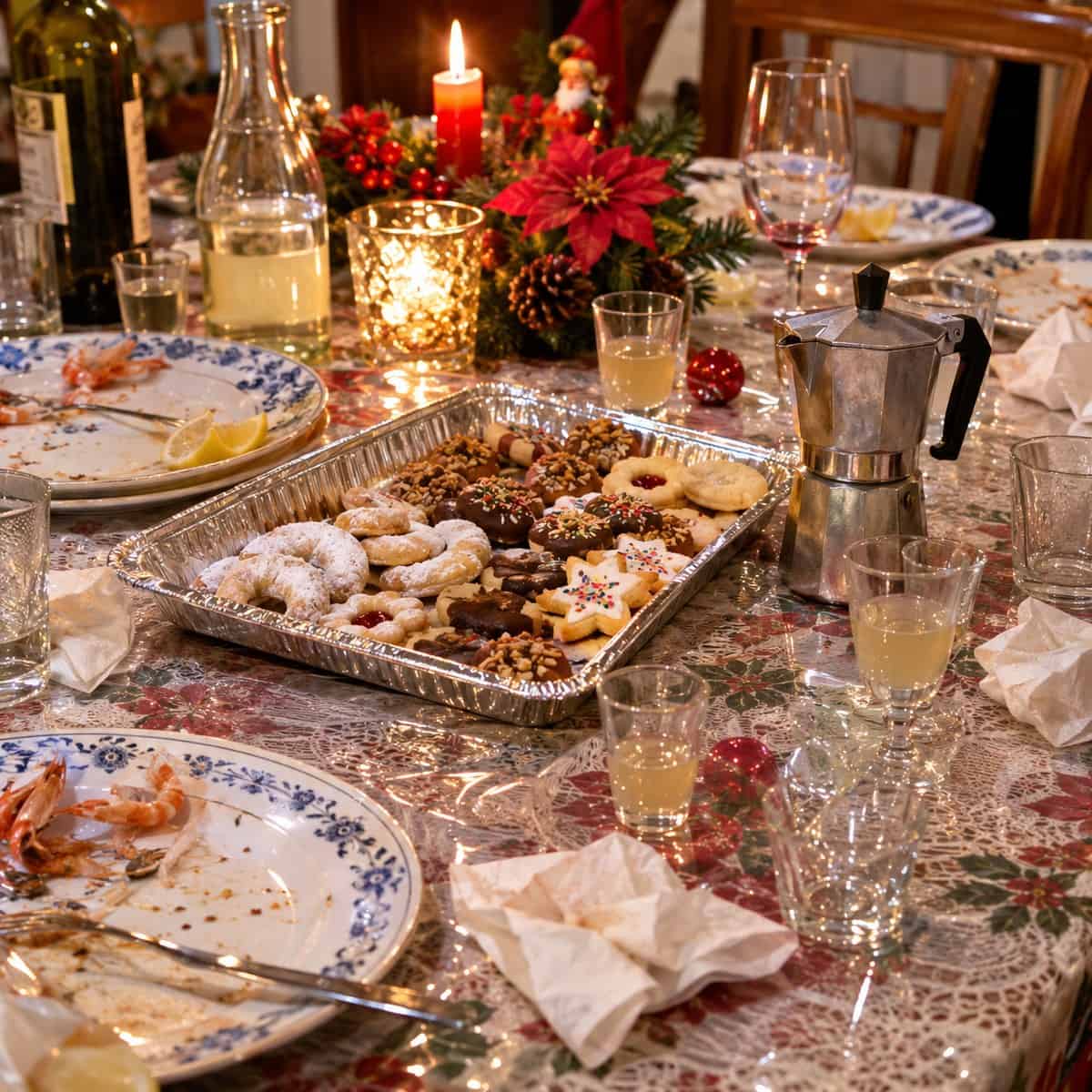
No layer cake. No pie. Nobody’s bringing a cheesecake to the Feast of the Seven Fishes and living it down.
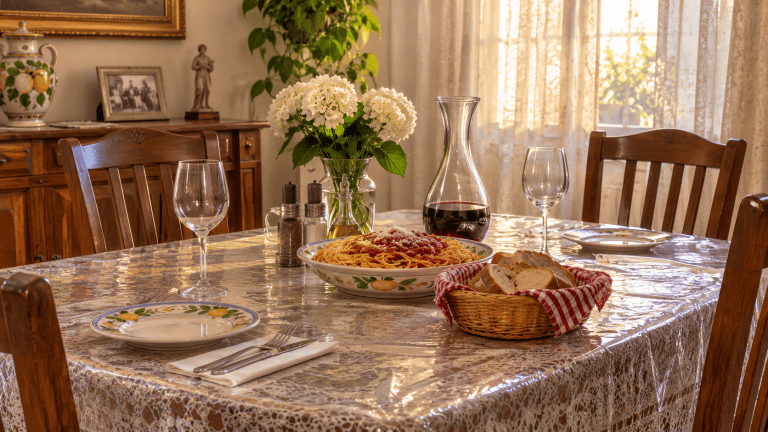
You eat baccalà and smelts and linguine with clams for three hours, the plates get cleared, and then the tray lands in the middle of the table with the coffee and the anisette.
Folklorists have actually written about how the Vigilia holds these families together — the Food and Foodways journal calls it a revitalizing ritual. The cookies are the last act of it.
A boyfriend of my cousin’s once brought a store-bought tiramisu in a plastic clamshell. It sat on the sideboard untouched until midnight. He went home with it.
5. Every Aunt Brings Her One Cookie, and Nobody Else Makes It
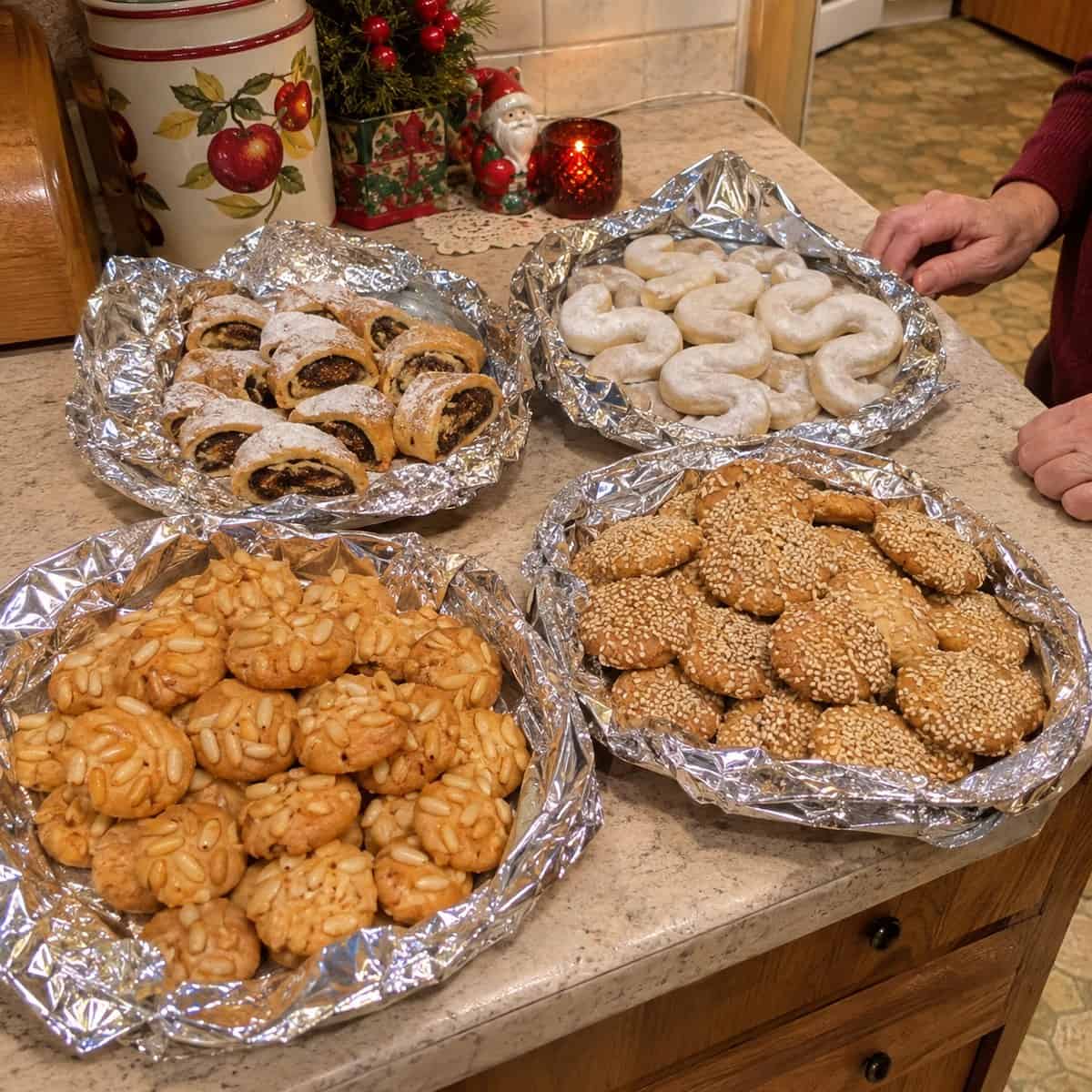
Aunt Rose: pignoli. Aunt Connie: the cuccidati. My mother: the anise S cookies. Nonna: everything, but officially the sesame.
These assignments were never negotiated out loud. They calcified sometime in the 1960s and that was that.
Make somebody else’s cookie and you’ve made a statement. You’re saying hers weren’t good enough, or you’re saying she’s getting old, or you’re saying she’s not coming this year.
When Aunt Rose died in 2011, nobody made pignoli for three Christmases. The fourth year my mother made them without announcing it. Everyone ate them. Nobody commented. That’s how the handoff works.
6. The Struffoli Sits in the Center and Nothing Else Does
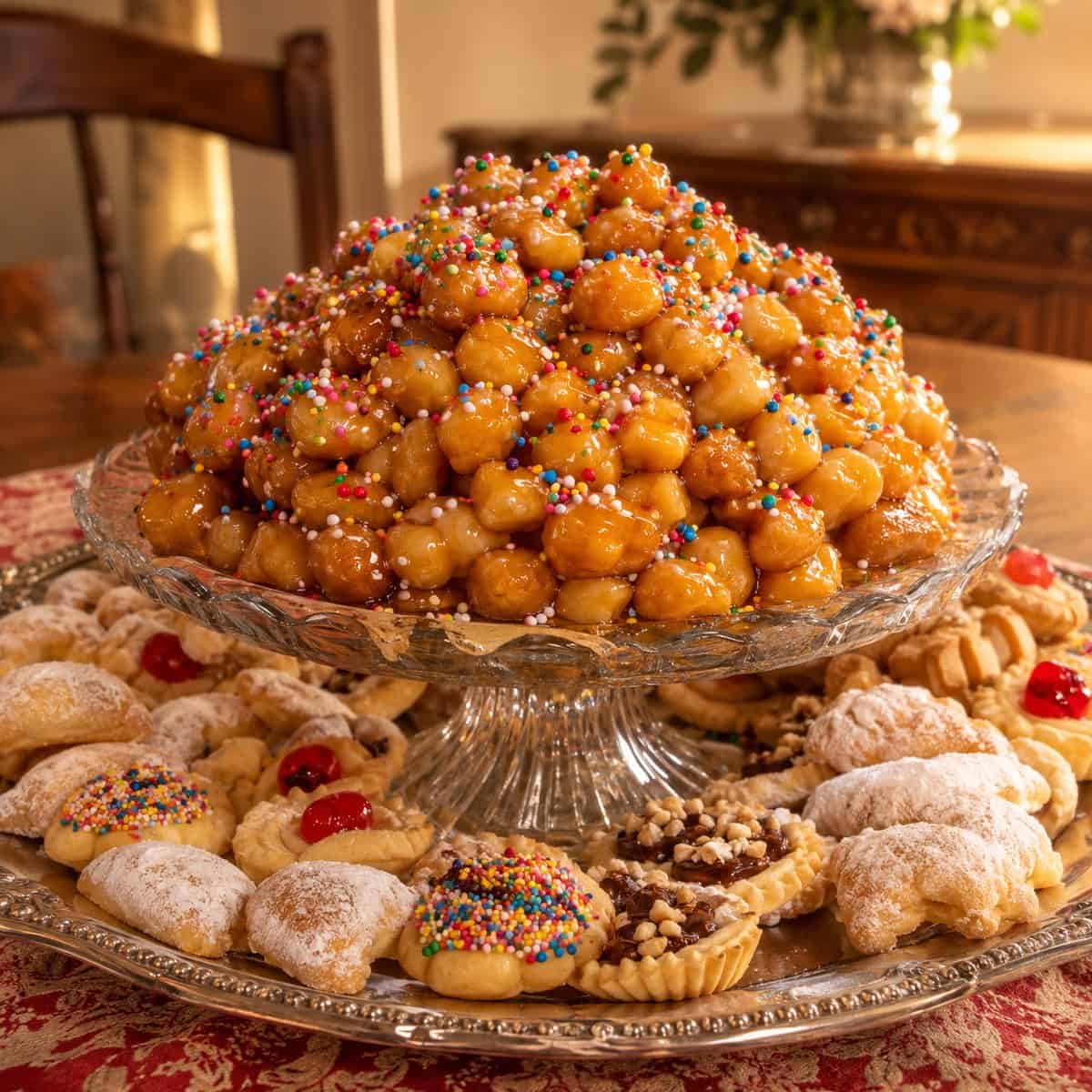
The honey balls go in the middle, piled in a mound or a ring, sprinkles on top. Everything else arranges itself around them.
It’s structural and it’s symbolic. The struffoli can’t be stacked, can’t be layered, and will glue itself to anything it touches. So it gets its own territory.
Nonna built hers on a glass cake stand set inside the tray so the honey wouldn’t run into the butter cookies. I use the same stand. It has a chip.
7. Biscotti Are for the Coffee, Not the Tray
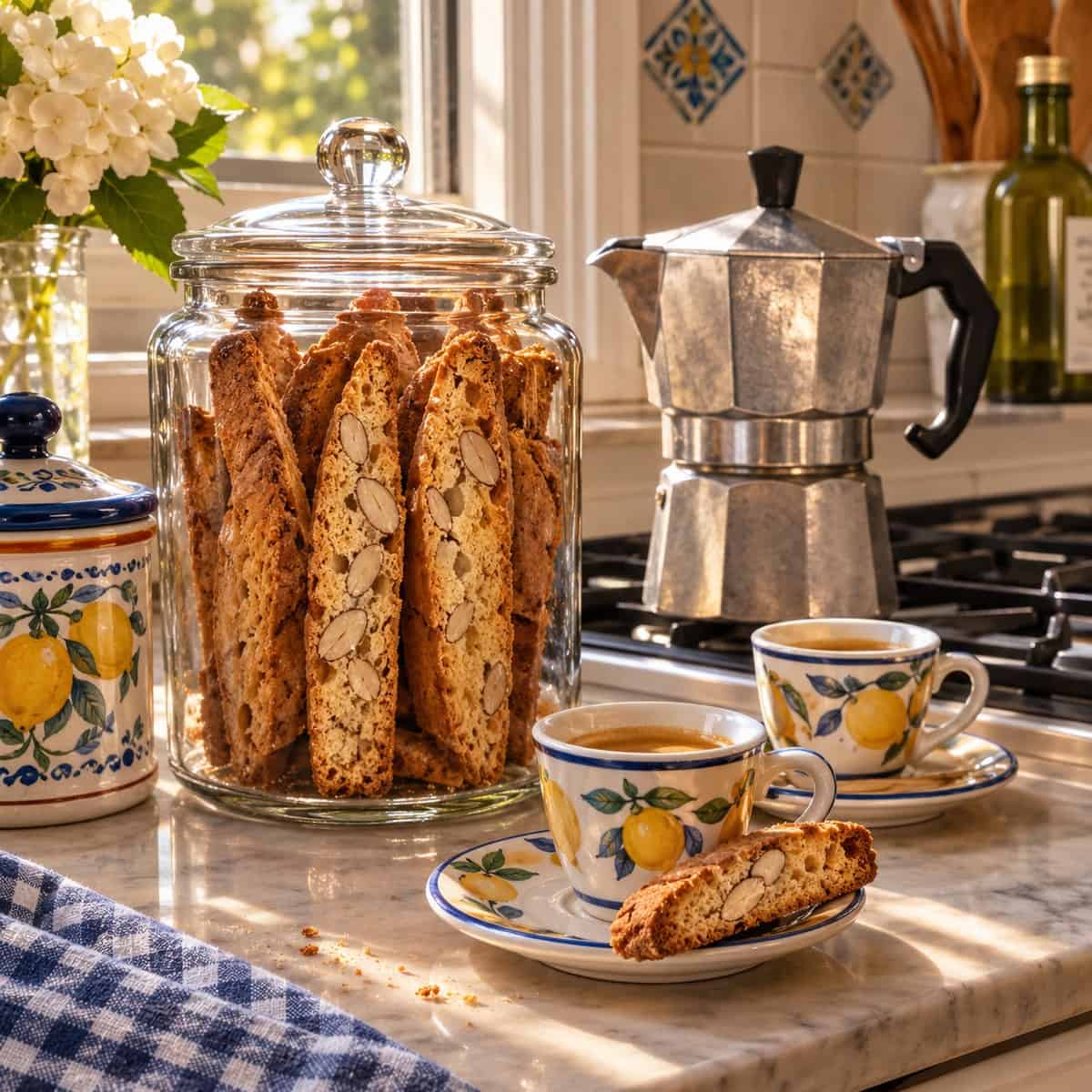
This one confuses outsiders every single time. Biscotti are not cookie-tray cookies. They’re coffee cookies.
They go in a tall jar or a basket near the espresso pot, and you take one when you’ve got something to dunk it in. Putting biscotti on the tray is like putting bread on the dessert plate.
Nonna’s exact words, in English because she wanted no confusion: “That’s not a cookie. That’s for the coffee.”
A neighbor gifted us a beautiful tray one year, all biscotti, store-bought, shrink-wrapped. My mother thanked her warmly and served it at breakfast the next morning. Correctly, as it happens.
8. The Cookie Tins Come Out of the Basement on December First
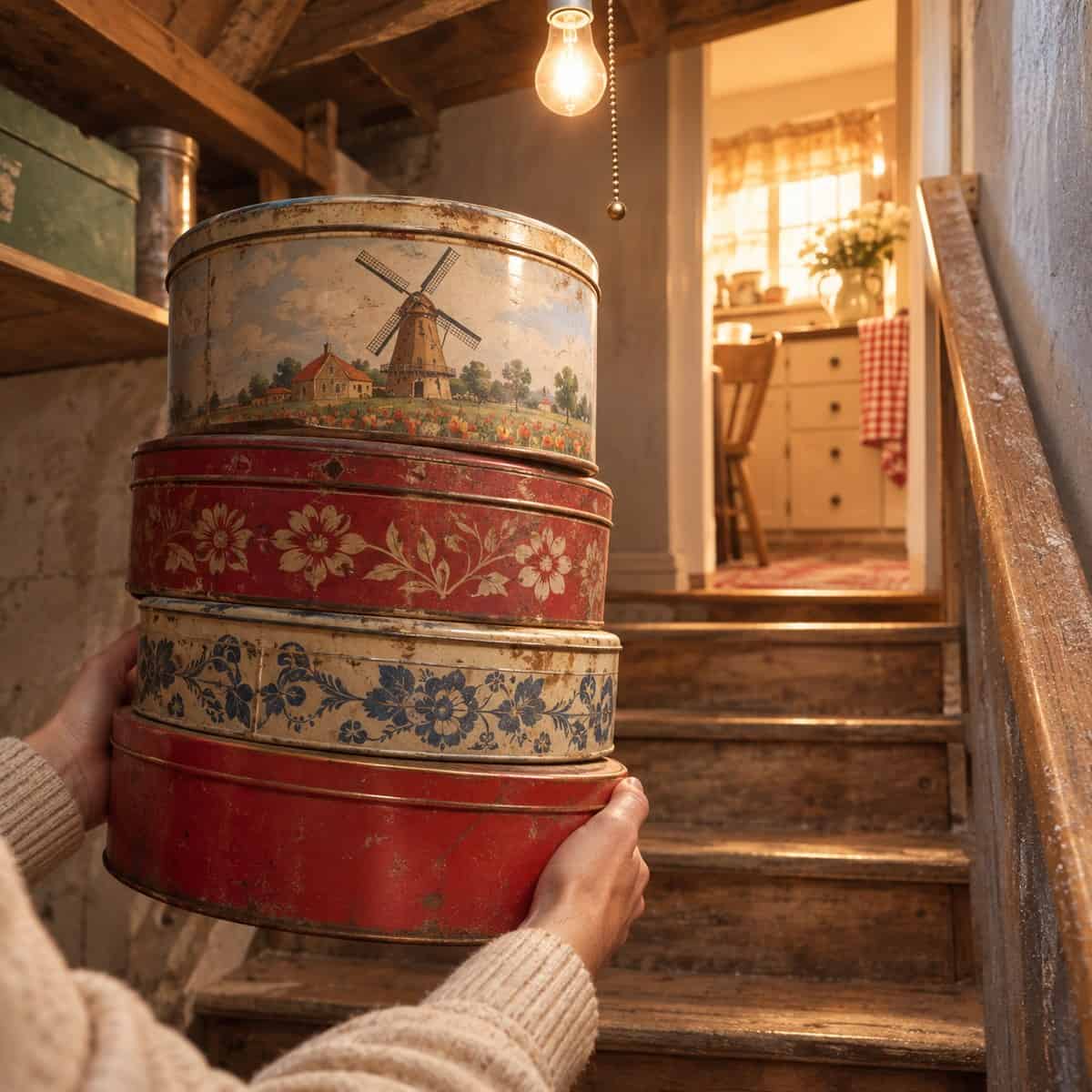
Not the 2nd. Not Thanksgiving weekend. December first.
Ours lived on a metal shelf next to the second refrigerator, down where the extra freezer and the jars of peppers were. Danish butter cookie tins, every one of them, rinsed and stacked by size since 1974.
You’d carry them up four at a time and the whole house smelled like basement for an hour. Then the baking started and it didn’t.
My mother still has a tin with a picture of a Dutch windmill on it. It hasn’t held actual Danish cookies in half a century. It holds the sesame ones.
9. Anise Is Not Optional

Some house in America makes Christmas cookies without anise. Not this one.
It’s in the pizzelle, it’s in the S cookies, it’s in the taralli dolci, and the little brown bottle of extract comes out of the cabinet and stays on the counter for three weeks straight.
People who didn’t grow up with it say it tastes like licorice, like black jellybeans, like medicine. Let them say it. More for everyone else.
My son-in-law told me, gently, that he “isn’t an anise guy.” I told him, gently, that he married into one.
10. Rainbow Cookies Are Weighed, Not Counted
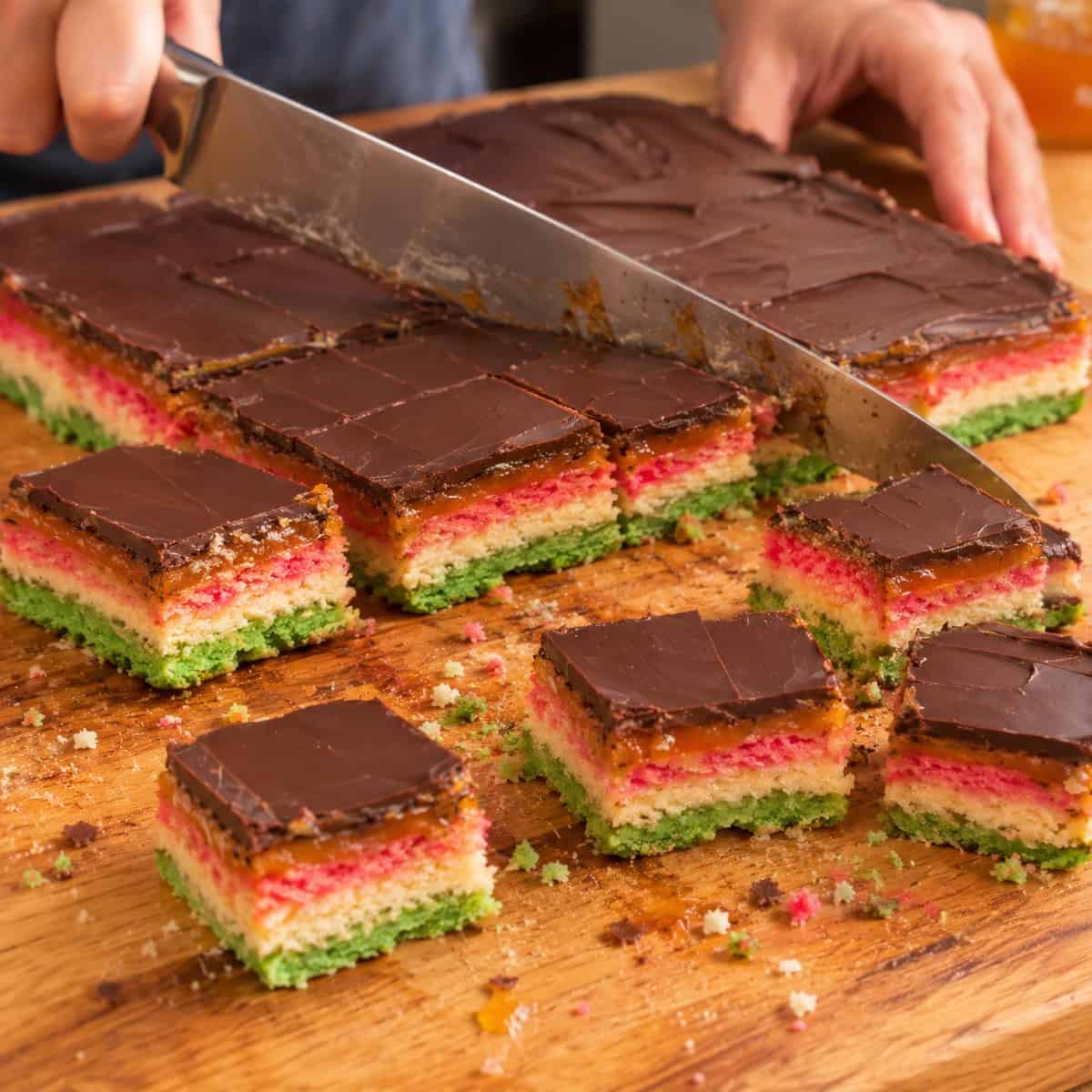
You don’t ask for two rainbow cookies. You cut a square, and the square is whatever the square is.
They come as a slab — three layers, jam between, chocolate on top and bottom — and someone cuts them with a long knife wiped clean between every pass. The pieces are never uniform. Nobody wants them uniform.
In the bakeries on Christian Street they sell them by the pound, and that’s how my family thinks about them. By weight. Like produce.
My aunt once cut them into tidy little one-inch cubes to make them “go further.” Everybody took three. They went less further.
11. The Fig Cookies Are Made the Week Before and Hidden
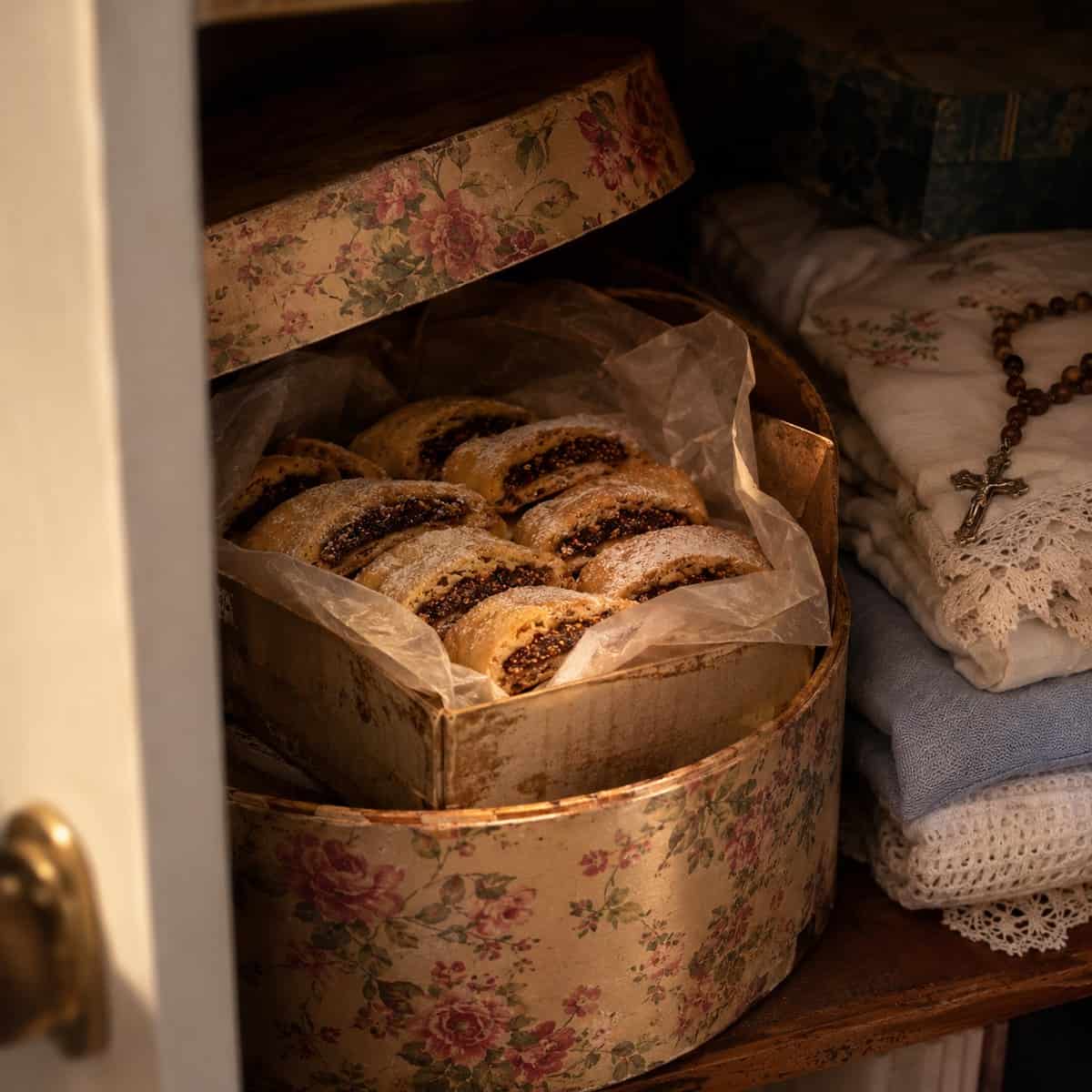
Cuccidati take a full day. The filling gets ground — figs, dates, orange, walnuts, a little whiskey — and then every cookie is rolled and cut by hand.
Nonna made hers the Tuesday before, and then they vanished. Not into the basement, either. Somewhere personal.
We found them once in a hat box in her closet, in wax paper, in a shoebox, inside the hat box. Three layers of security for a fig cookie.
They’re also the ones that get better sitting. The filling softens the dough from the inside, which is the actual reason for the week — though she’d never have explained it that way.
12. The Tray Is Restocked From a Second Tray in the Cold Garage
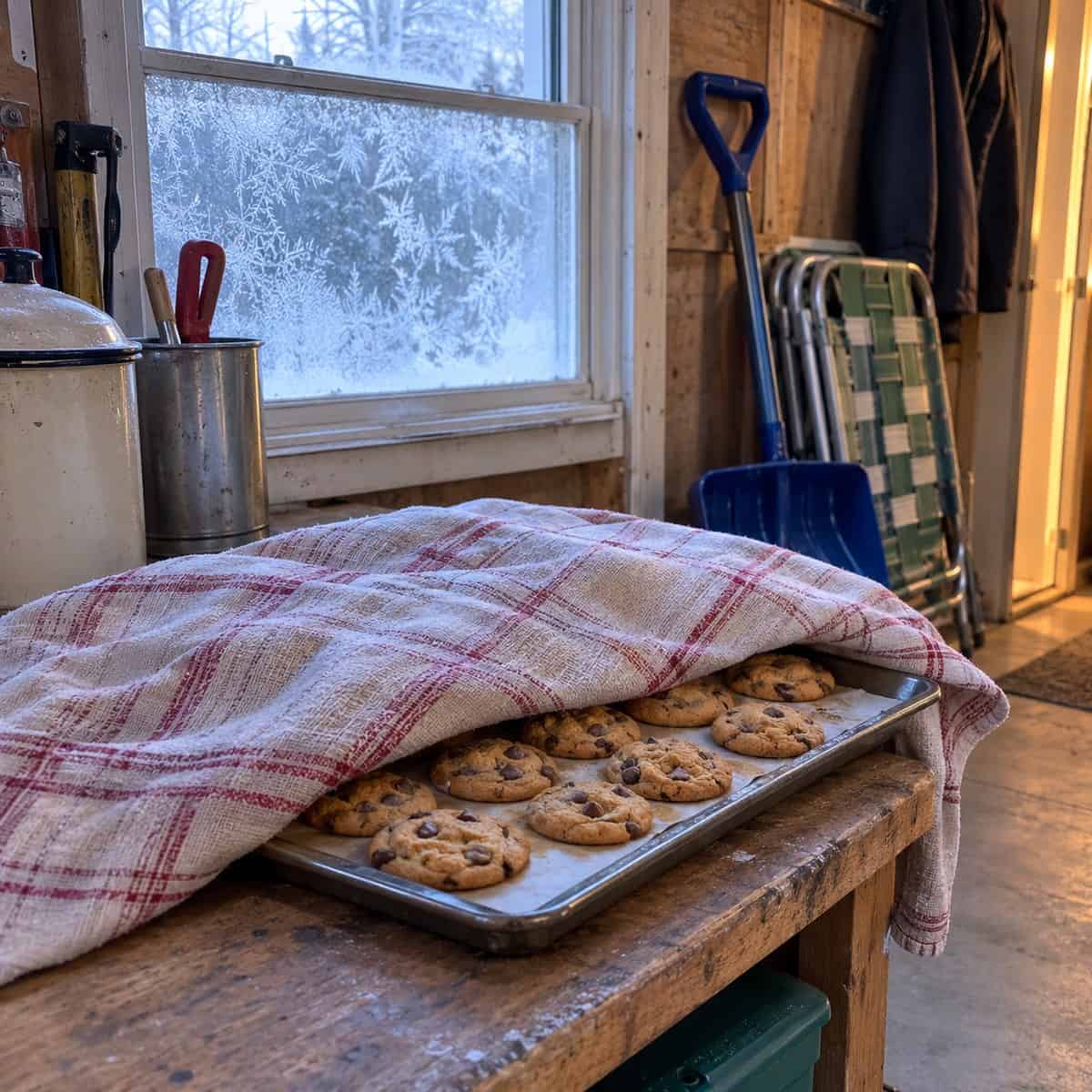
The tray on the table never empties. This is presented as a miracle and it is absolutely logistics.
There’s a backup tray in the unheated garage, or the back porch, or the enclosed breezeway. December in Philadelphia runs about 38 degrees. That’s a refrigerator you don’t have to plug in.
Somebody slips out, comes back with a dish towel over a plate, and the tray is full again. Nobody acknowledges the trip.
I asked Nonna once how it never ran out. She said, “Mangia.” That was the whole answer.
13. There Is a Tray for the Priest
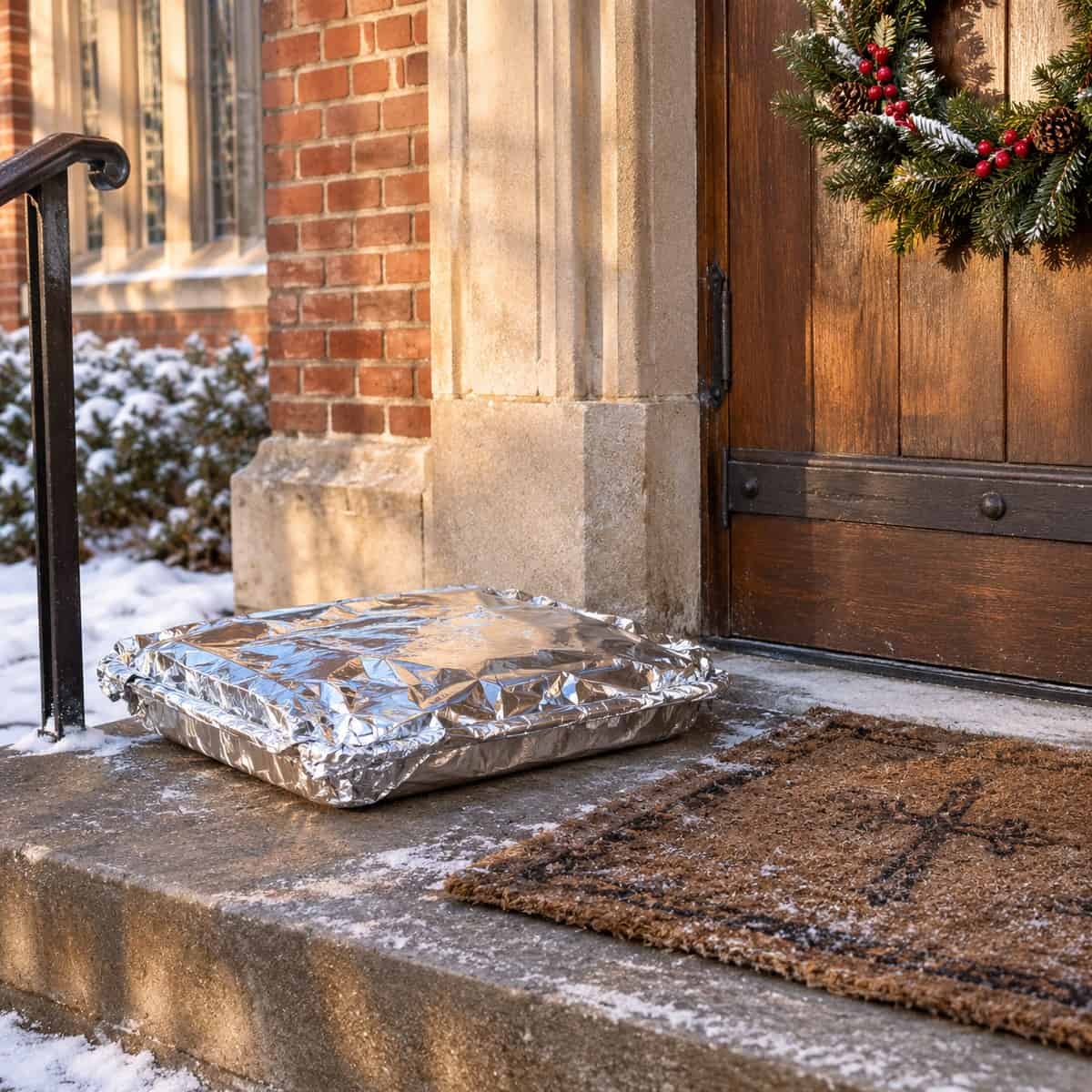
Before anything else gets distributed, one tray goes to the rectory. Wrapped in foil, no note, dropped off after the 4 o’clock Mass.
Ours went to St. Monica’s. My mother sent me up the steps with it because she said a kid holding a tray can’t be turned away, which was true.
It got the best of everything — whole pignoli, the prettiest cuccidati, and never, ever the broken rainbow ends.
The Order Sons and Daughters of Italy in America writes about how much of this holiday is invented in America rather than imported. The rectory tray is one of those inventions, and it stuck.
14. Someone Always Says the Cookies Were Better Last Year
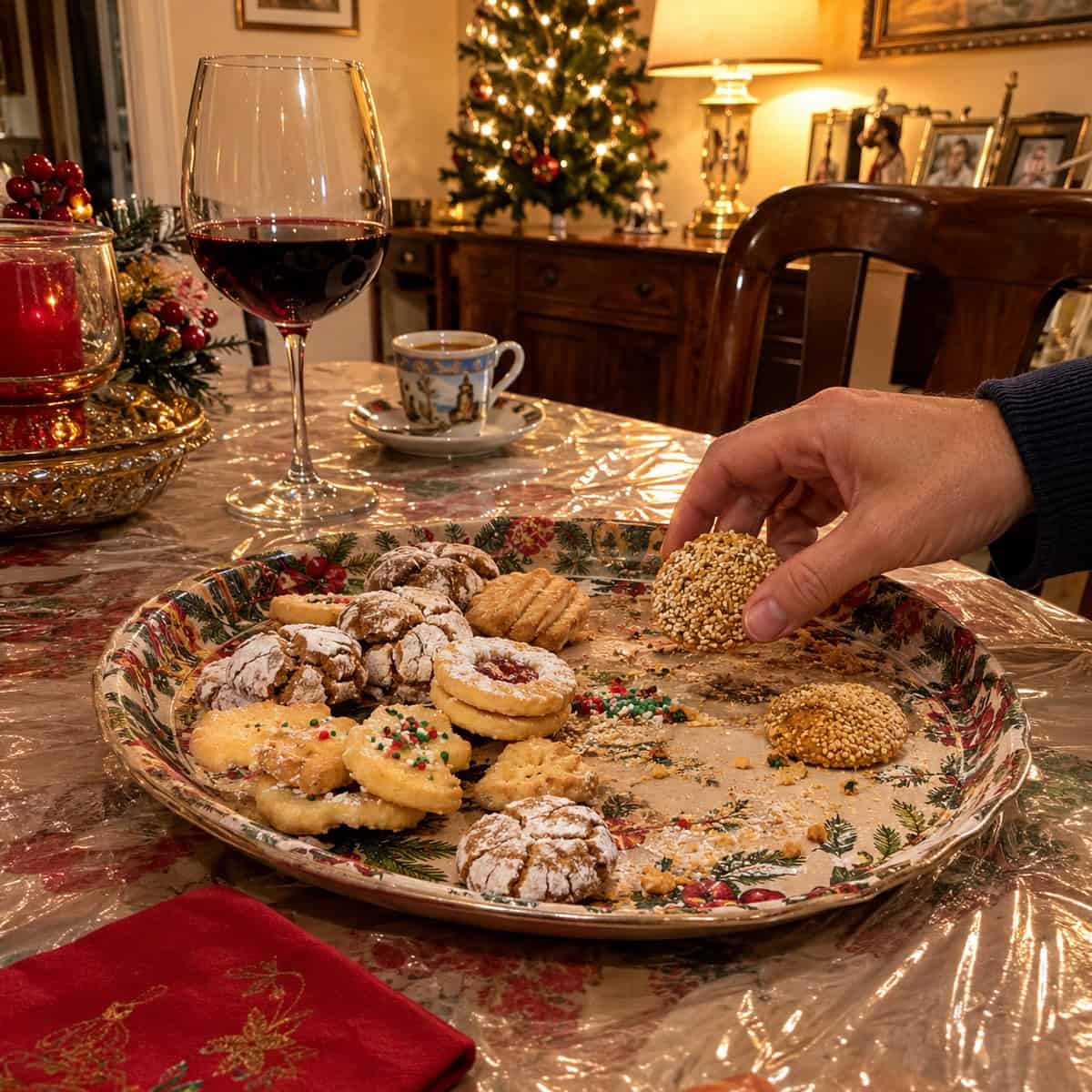
It’s usually an uncle. It’s usually said with a full mouth. It is never, under any circumstances, meant as an insult.
“These are good. Not like last year, but good.” That’s affection in this family. That’s a man telling you he remembers.
My Uncle Sal said it every Christmas from 1977 until he passed. The year he didn’t say it, my mother asked him if he was feeling all right.
Now my brother says it. He took up the position like an inheritance.
15. The Tray Is Never Store-Bought, and Everyone Can Tell
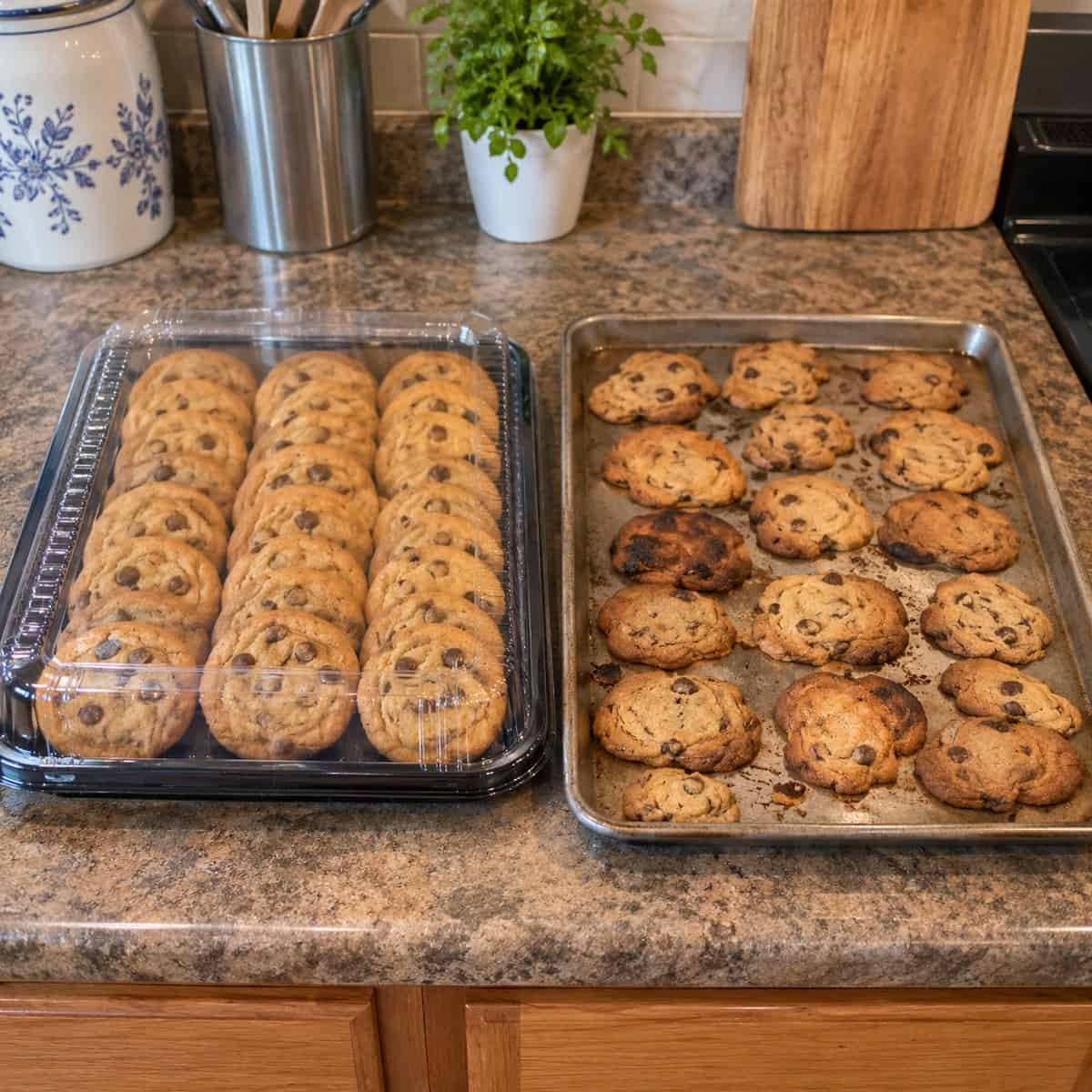
A homemade tray has uneven cookies. Three sizes of the same thing. One row slightly overbrowned because the back of the oven runs hot.
A bakery tray is perfect. Identical. Arranged by someone paid to arrange it. It looks like a catalog photo and it tastes like a catalog photo.
Nobody says anything when you bring one. They say “oh, these are nice” in a particular tone, and the tray stays mostly full.
If you can’t bake, bring wine. Bring the anisette. Showing up with something is the rule — showing up empty-handed is not an option — but it doesn’t have to be a tray you didn’t make.
16. Sesame Seed Cookies Are the Test of a Real Baker
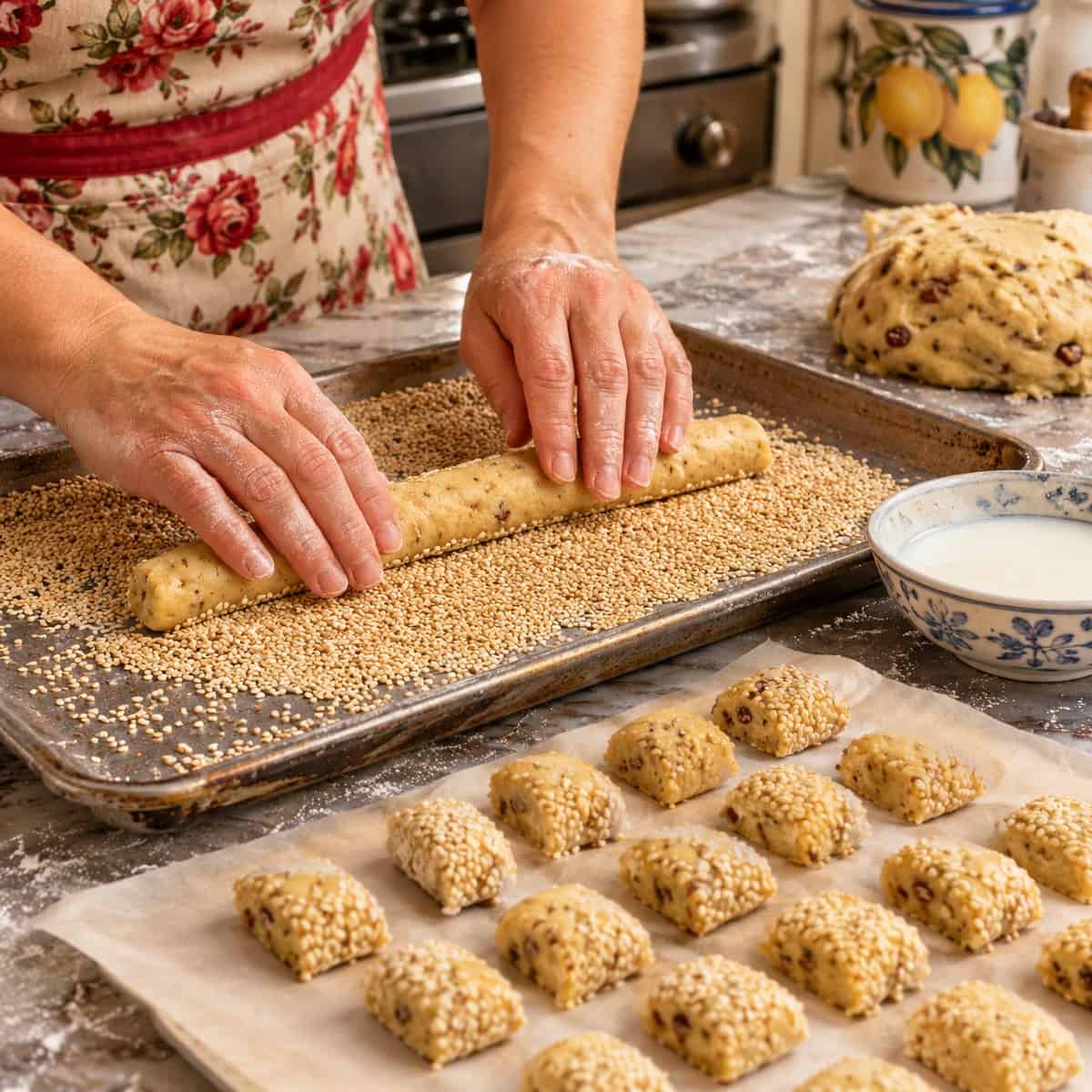
Giuggiulena. Reginelle. Whatever your family calls them, they’re the ones that separate the bakers from the people who bake.
The dough is stiff and plain. You roll ropes, cut them, roll each piece in milk and then in seeds, and if your oven is off by fifteen degrees you get either pale logs or charcoal.
Nonna rolled hers all at once on a sheet pan of seeds, both hands moving, forty seconds a dozen. I take four minutes a dozen. I have made peace with this.
Everybody in the family can make the pizzelle. Two of us can make the sesame.
17. Nobody Admits They Used Store-Bought Dough
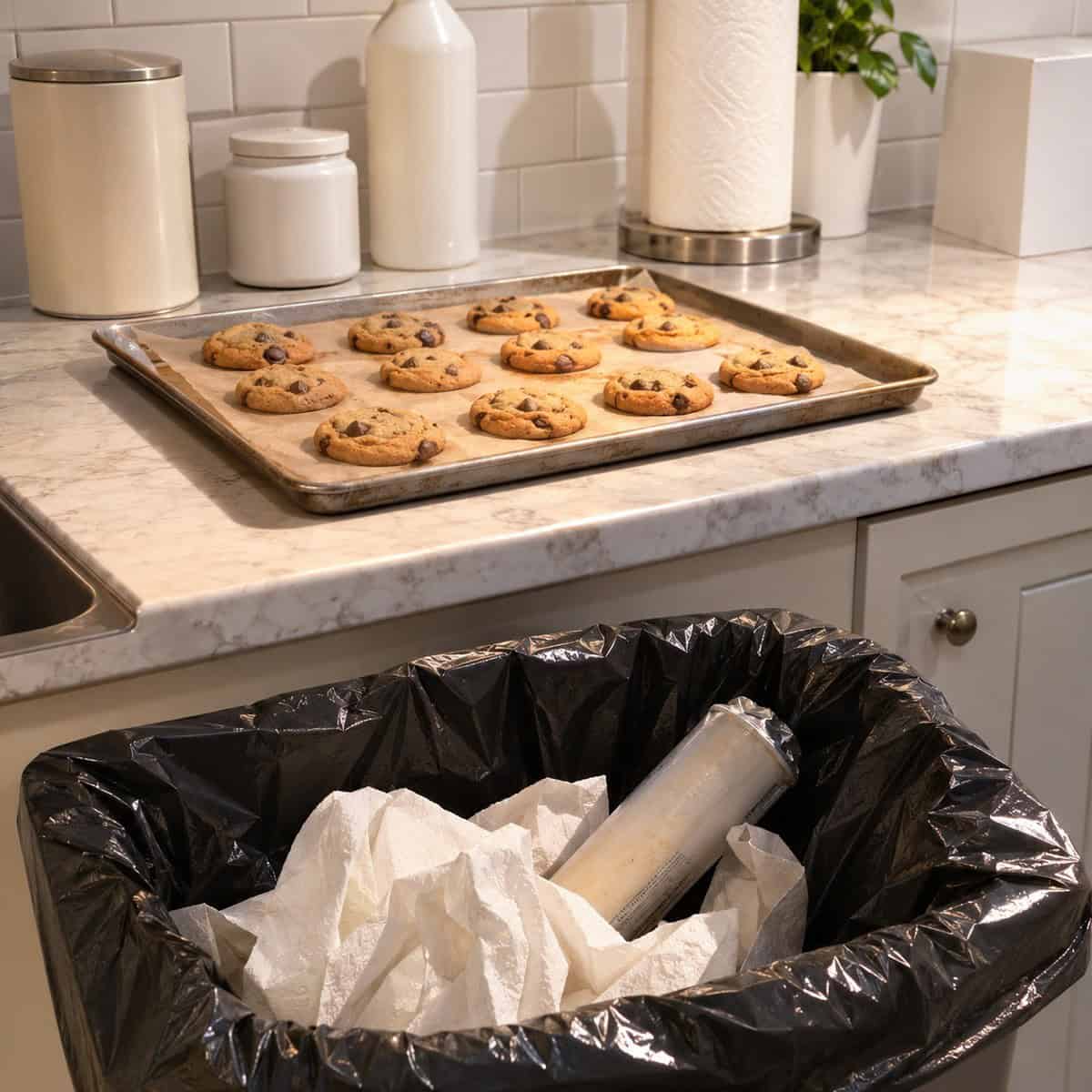
It happens. A rough December, a funeral, a kid home sick. The tube of dough gets bought and the evidence goes in the outside trash can.
And then the cookies get put on the tray and everyone proceeds as if nothing occurred.
My Aunt Connie did it in 1998 and we all knew because the cookies were round. Hers are never round. Nobody said a word, that Christmas or any Christmas since.
That silence is its own kind of love. You get one pass. Use it on a year you need it.
18. The Kids Get the Broken Ones
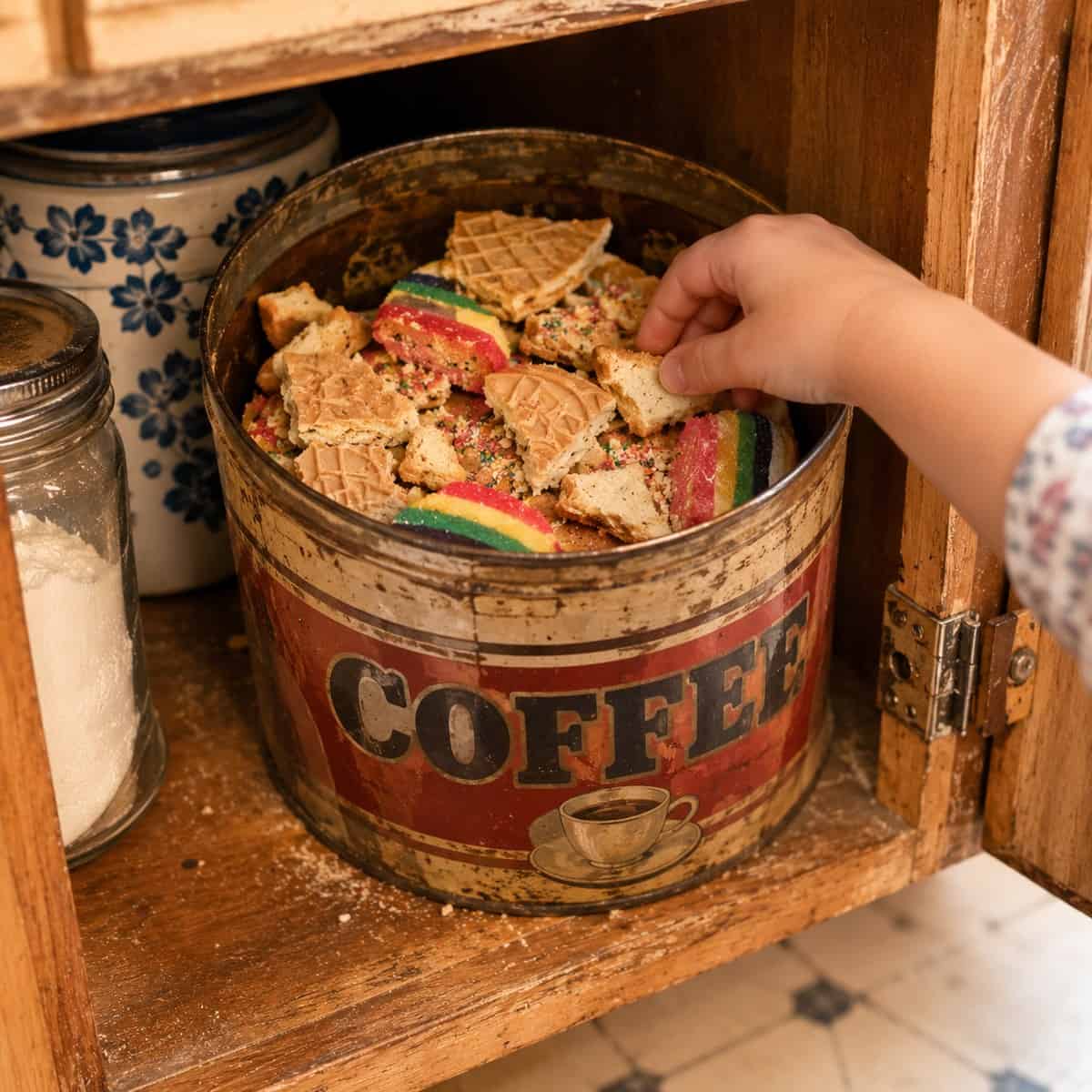
Every batch produces casualties. Cracked pizzelle, rainbow cookie ends, the pignoli that fused to its neighbor.
Those go in a bowl or a coffee can on the lower shelf, and the kids are allowed to raid it freely while the real tray stays untouched.
It’s the best deal in the house and children figure this out around age six. Unlimited cookies, no rules, no waiting for Christmas Eve.
My grandson now stands at the counter during baking with his hand out, waiting for a mistake. He’s four. He already understands the system better than most adults.
19. The Tray Goes Home With the Guests, in Foil
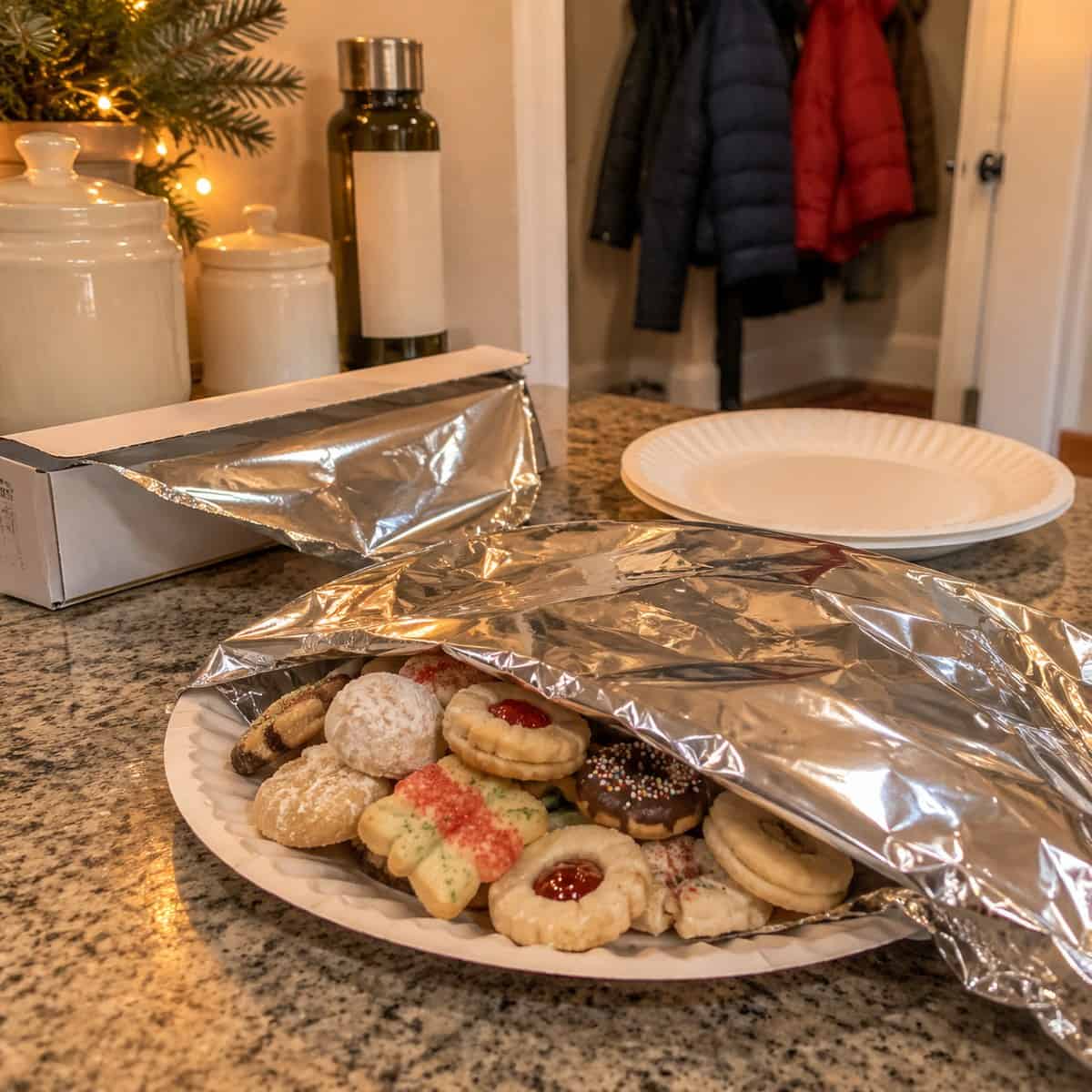
You don’t leave with empty hands. The hostess is already at the counter tearing sheets of Reynolds Wrap before you’ve got your coat on.
Paper plate, foil over the top, crimped at the edges. Sometimes two plates if there are kids in the car.
Refusing is not a real option. “We’re fine, we couldn’t” is understood as the opening of a negotiation you will lose.
My mother once sent a package home with the oil delivery man. He wasn’t a guest. He was in the house in December. Same thing.
20. The Last Cookie Is Never Taken
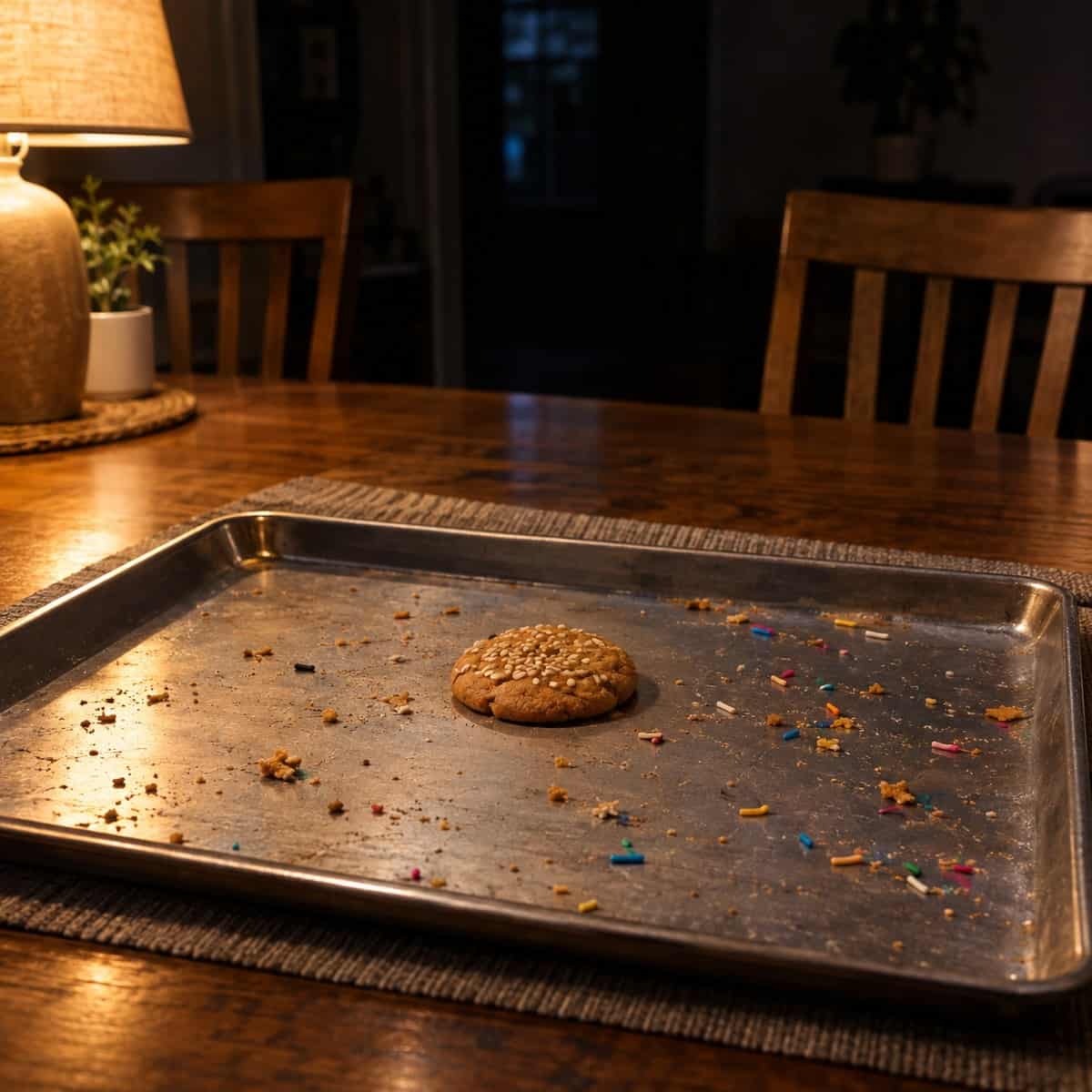
The tray goes down to one. That one sits there through the coffee, through the dishes, through the second round of anisette.
Nobody wants to be the person who took the last cookie. It’s not about the cookie. It’s about not wanting to be seen wanting.
It eventually gets eaten standing up at the counter by whoever’s cleaning, in the dark, with the kitchen light off.
Usually that’s me. I’ve accepted the role.
21. The Pignoli Are Counted and Everyone Knows It
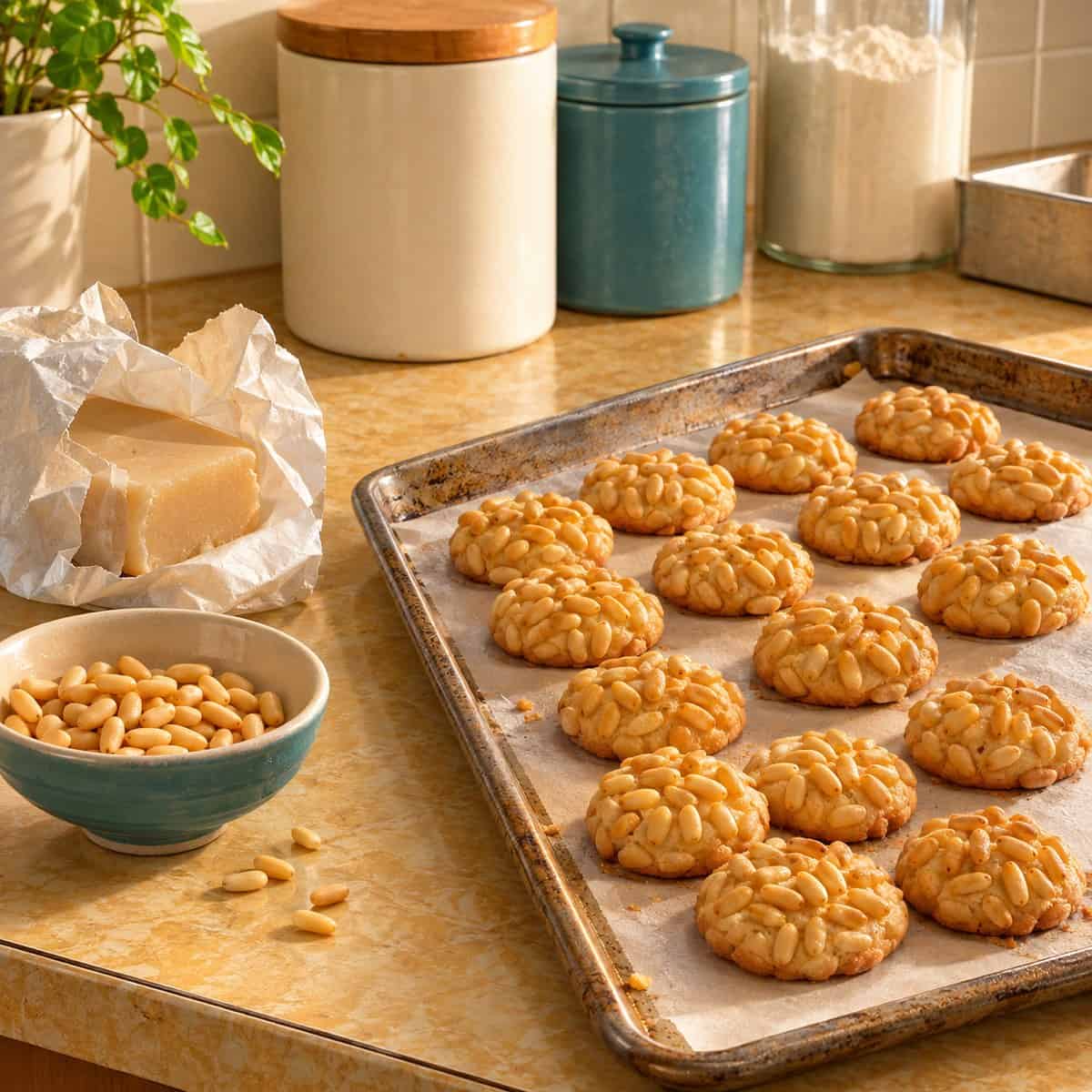
Pine nuts cost what they cost. That’s the whole explanation.
In 2024 they ran past $30 a pound at the Italian market, and Nonna was pricing them by the ounce back when thirty dollars was a week of groceries. So the pignoli get made in small numbers and placed on the tray with intent.
One per person, maybe two. Take three and somebody’s doing arithmetic.
My uncle used to eat four and say “what, there’s more in the garage.” There were. That’s not the point and he knew it.
22. Nothing Goes on the Tray Still Warm
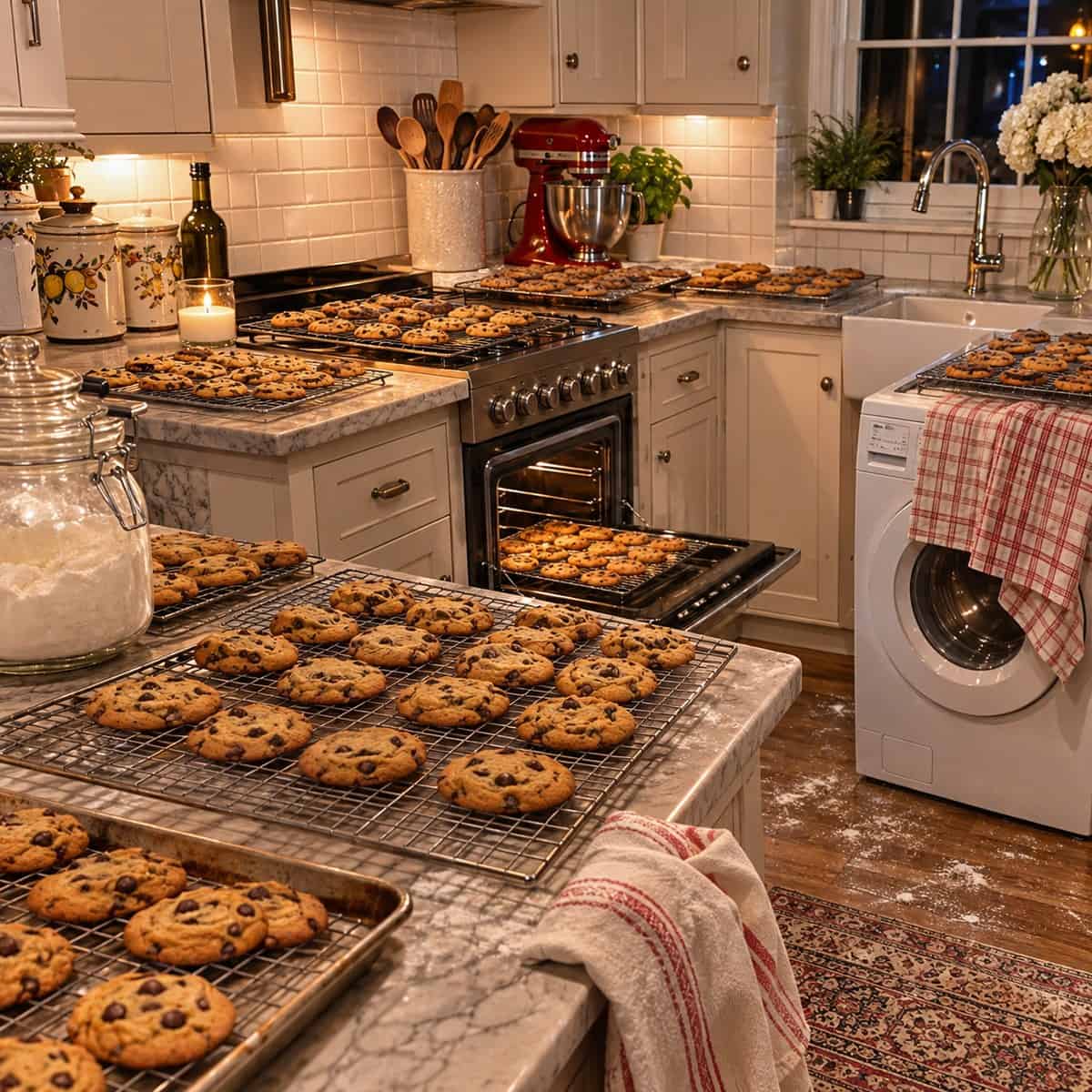
Warm cookies sweat. Sweating cookies go soft, and soft cookies take the whole tray down with them.
Everything cools completely on racks, on dish towels, on the open oven door, on every flat surface in the house including the top of the washing machine.
Nonna tested with the back of her hand on the bottom of the cookie. Cool to the touch or it waits.
Here’s what goes wrong when someone rushes it:
- Pizzelle lose their snap and bend like leather
- Powdered sugar dissolves into gray patches
- Chocolate on the rainbow cookies smears onto everything
- The whole tray smells faintly of steam by morning
23. Powdered Sugar Gets Applied at the Last Possible Minute
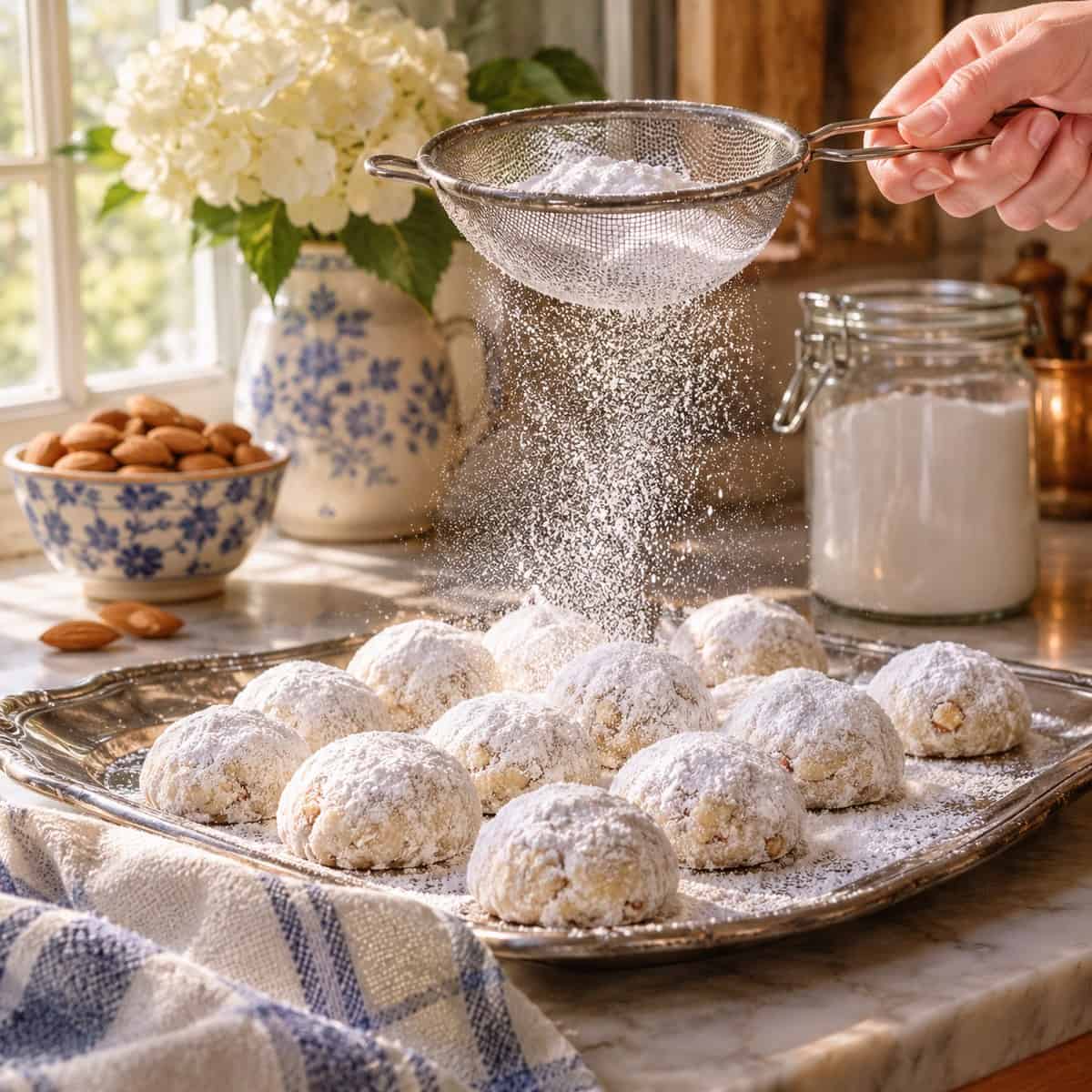
Wedding cookies, snowball cookies, whatever your family calls those round almond ones — they get their final dusting right before the tray goes out.
Dust them Monday and by Thursday the sugar has disappeared into the cookie like it was never there. You get a pale, naked, slightly sad little dome.
Nonna kept a small sieve just for this and she did it over the sink with the cookies already arranged on the tray. Snow falling on the whole thing at once.
Then she’d wipe the rim of the tray with a damp towel so the edge stayed clean. Presentation mattered to a woman who had almost nothing when she arrived in 1952.
24. Nobody Writes the Recipes Down
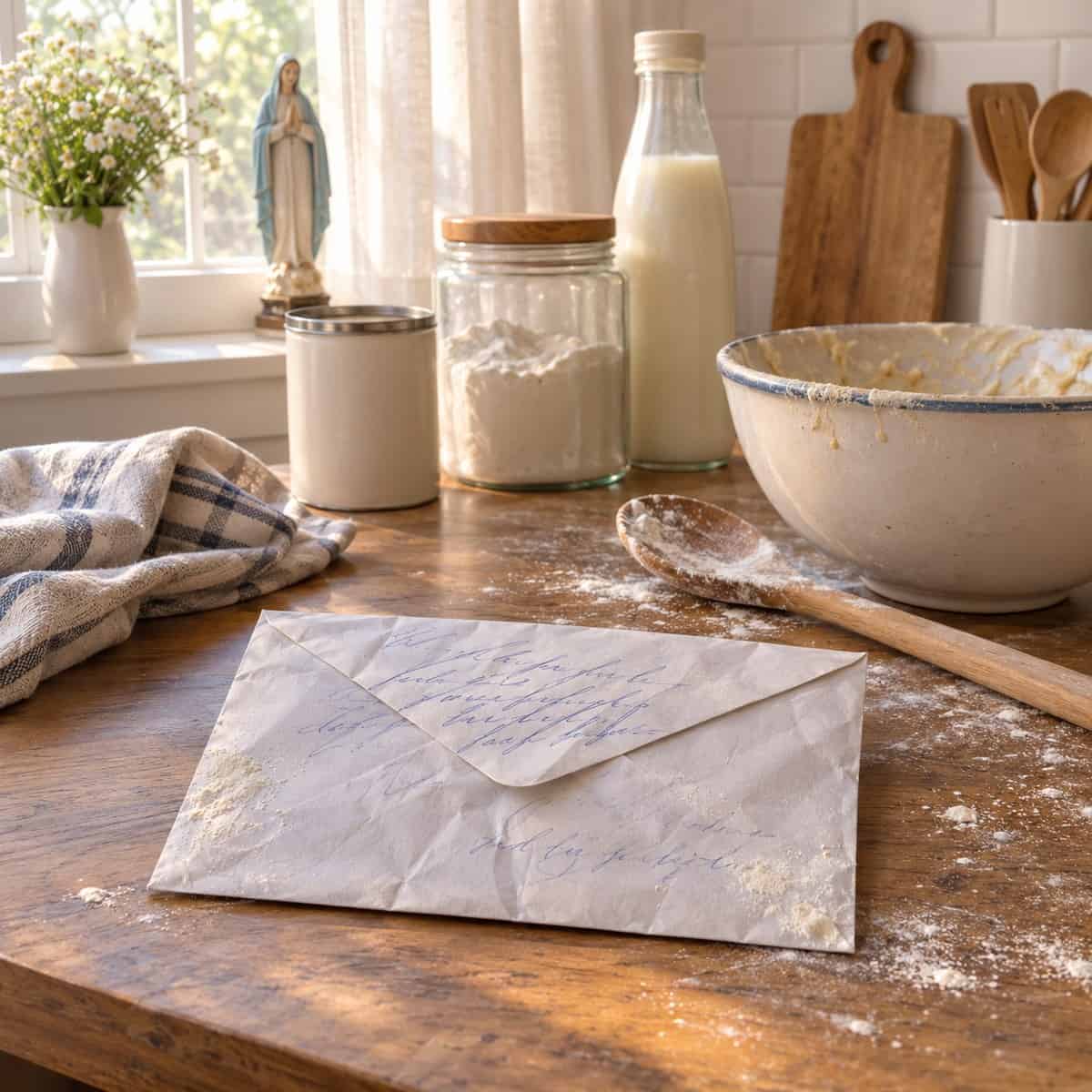
Not one card. Not one notebook. Everything lived in her hands and in whoever happened to be standing next to her.
Measurements were “until it looks right” and “two eggs, maybe three if they’re small.” The oven had no working dial after 1986 and she didn’t need one.
The Library of Congress American Folklife Center has whole collections of Italian-American oral histories for exactly this reason — the knowledge only existed in people, and then the people were gone.
I wrote down four of hers in 2003, badly, on the back of an envelope. It’s the most valuable piece of paper I own.
25. The Anise Cookies Get Their Own Tin
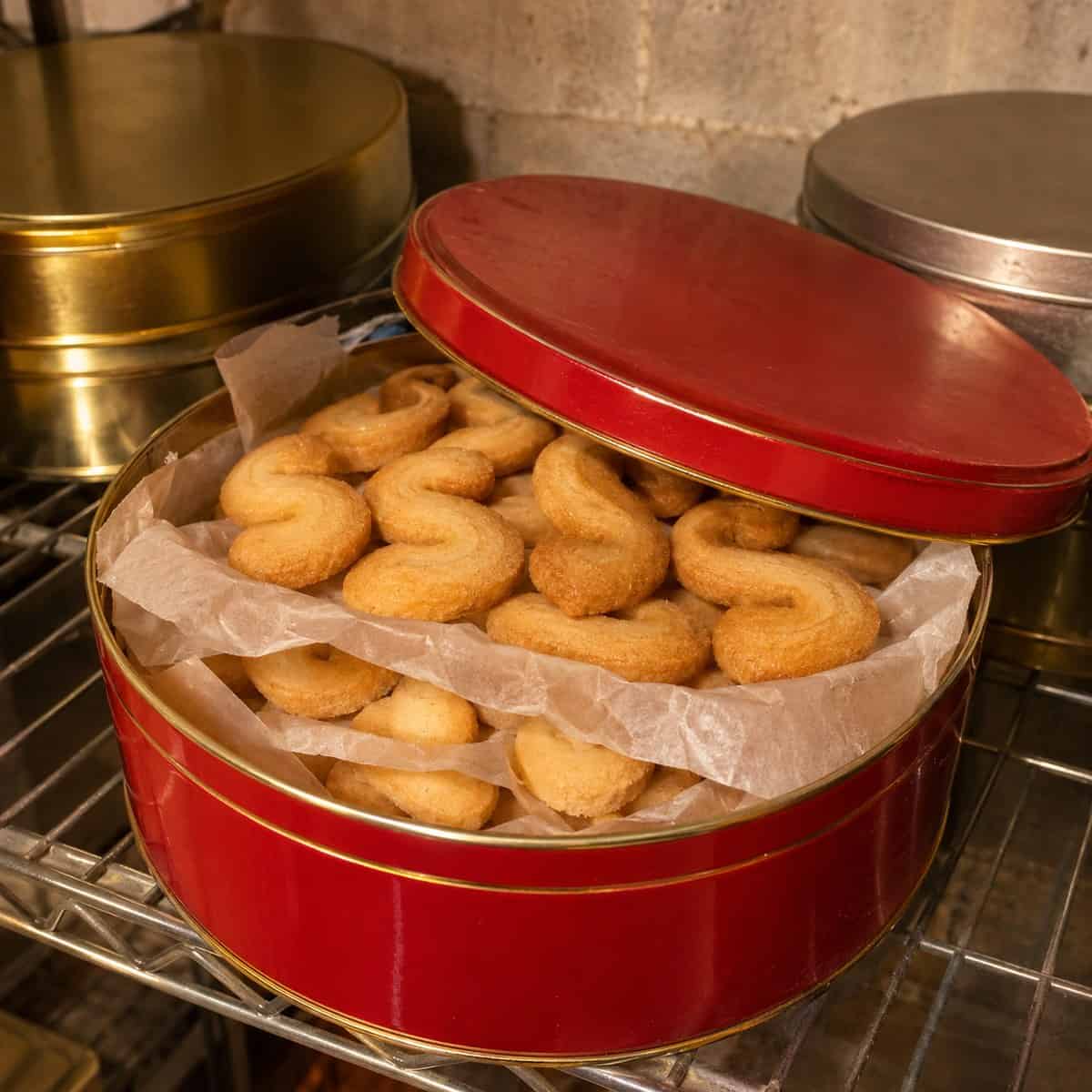
Anise travels. Leave the S cookies in a tin with the butter cookies overnight, and by morning everything in there tastes like the S cookies.
Nonna kept the anise ones in a round tin with a red lid, a whole shelf away from the rest. She tore wax paper by hand for every layer, never with scissors.
My first year doing the tins alone, I packed the pizzelle in with the almond crescents to save room. The crescents came out tasting like a pharmacy. My mother ate one and said nothing, which was worse.
Strong cookies live alone. Put wax paper between every layer, and don’t put the lid on until everything is cold.
26. Baking Day Takes the Dining Room Table Hostage
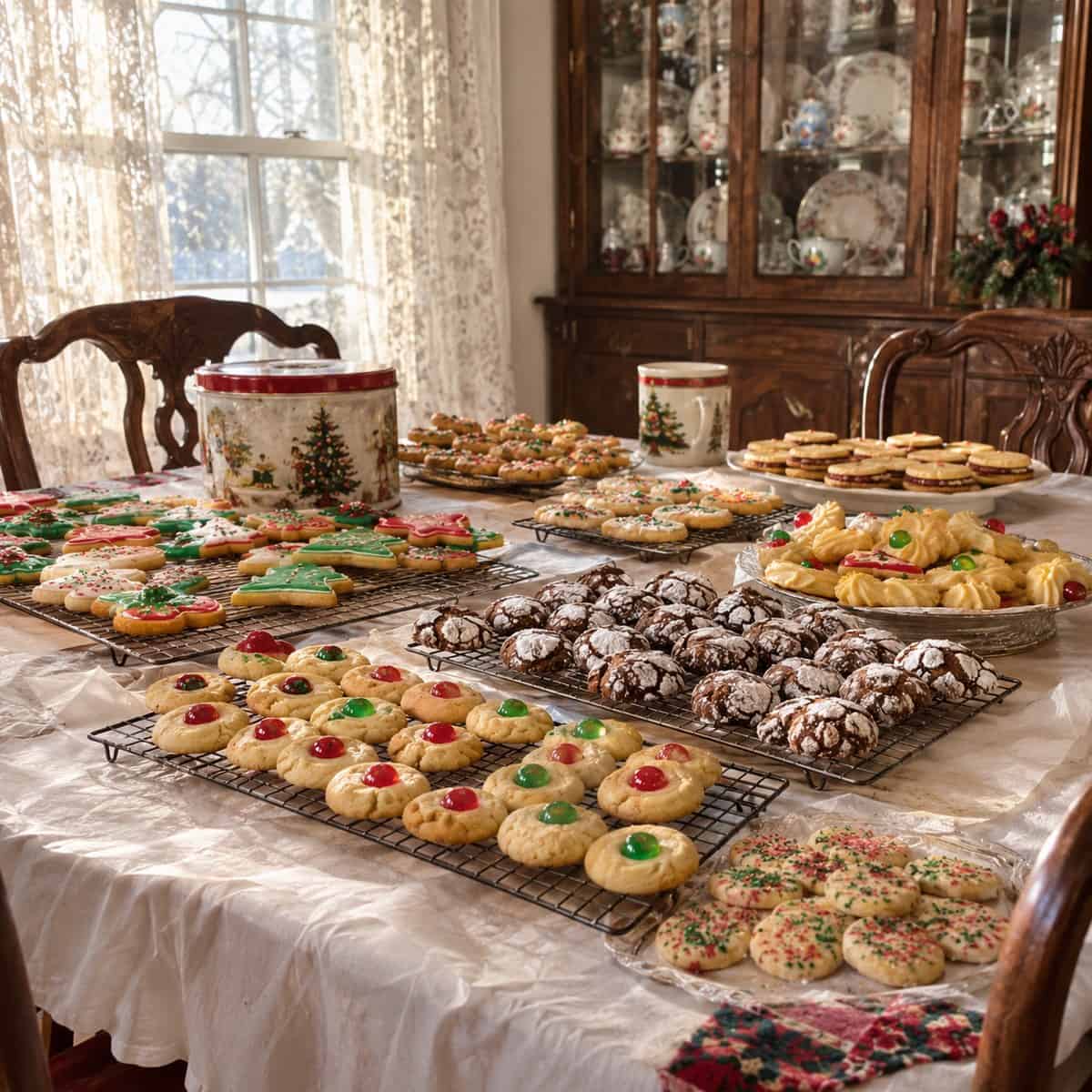
The table gets a bedsheet, then wax paper, then cooling racks. Nobody eats a sit-down meal there for the whole weekend.
Nonna’s baking Saturday started at six. By noon every surface held a different cookie, and dinner was soup from a mug, standing at the counter. My father ate in the basement next to the second stove and called it his office.
Kids got jobs by age: rolling ropes, dipping in seeds, counting into tins. Nobody sat down.
For one weekend, the whole house bends around the tray. If somebody schedules a party that Saturday, you’re going alone.
27. Only One Person Runs the Cookie Press
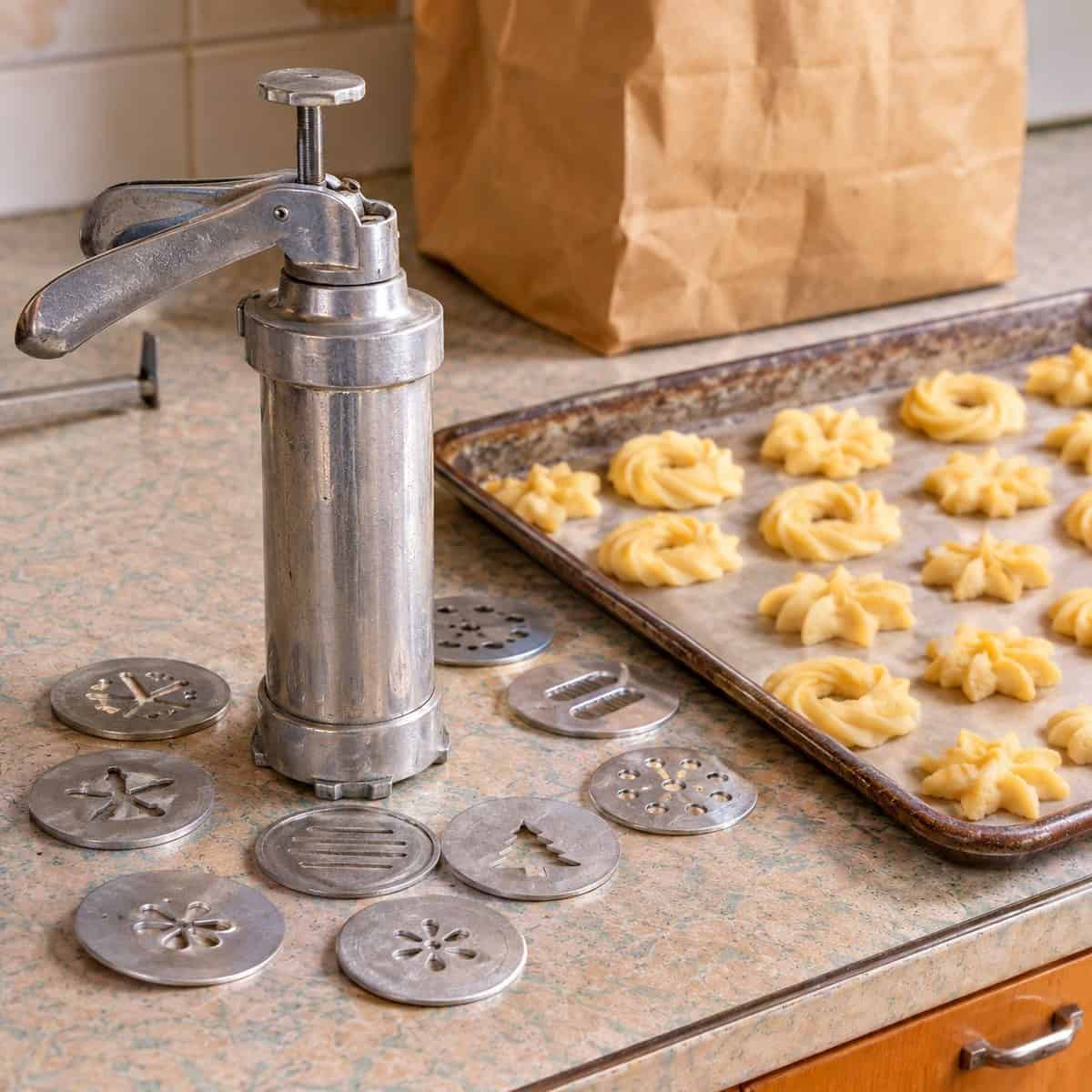
The press is aluminum, with a crank handle and a bag of disks shaped like stars, wreaths, and a camel nobody could explain.
It was my mother’s, and for forty years nobody else turned that crank. You could fill it, and you could hand her sheet pans. You did not touch the handle. She knew exactly how many turns made a wreath and how many made a blob.
She passed it to me in 2019 with no ceremony. She just left it on my counter in a grocery bag. If you want a butter dough that holds its shape through a press, the Italian cookie recipes on the site are a good place to start.
The press has one operator. When it changes hands, that’s an event, even if nobody says so.
28. You Take From Your Side of the Tray
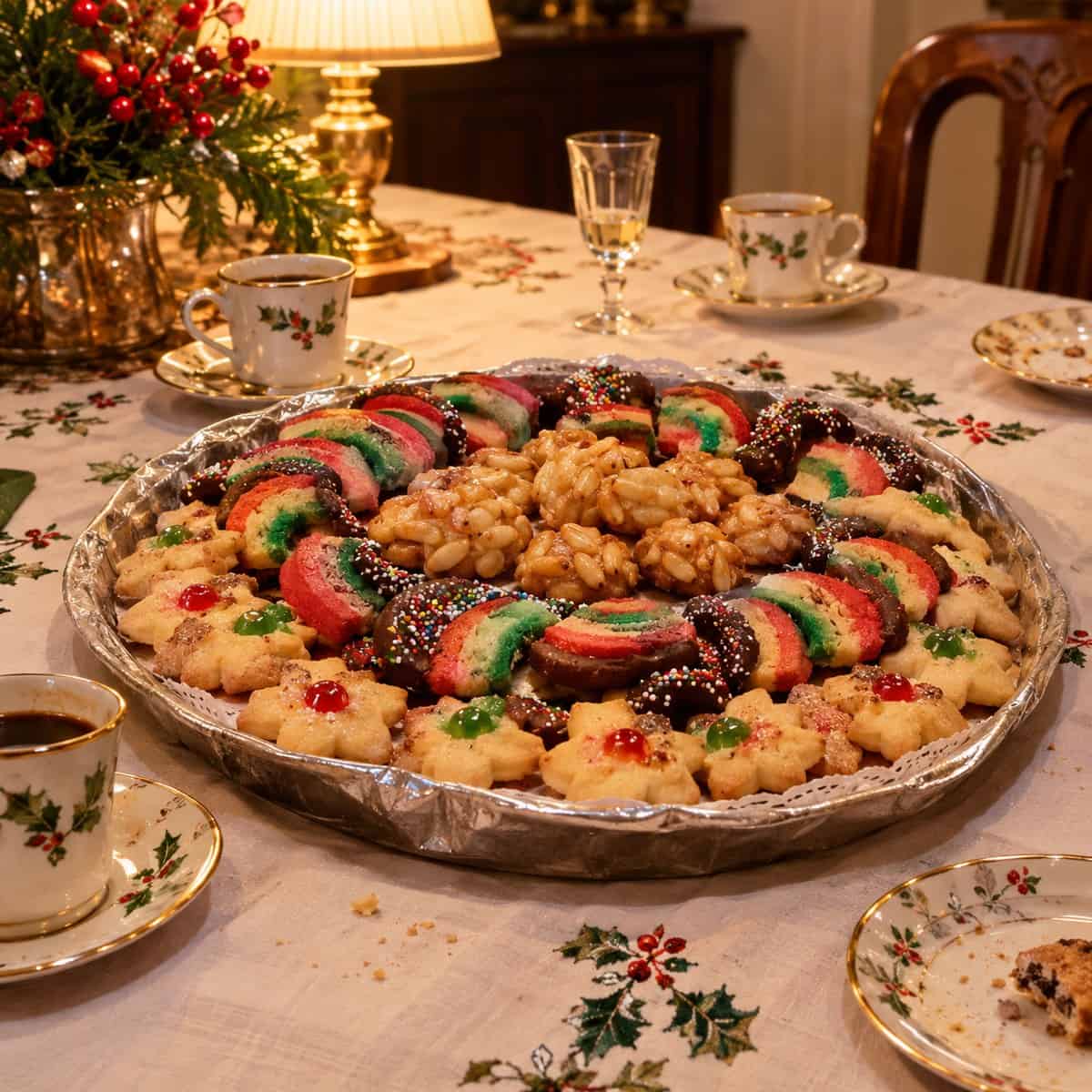
The tray lands in the middle of a table of fourteen people, and the cookies within reach of your plate are your cookies.
In my grandmother’s house, reaching across the table for a pignoli on the far side was like reaching into somebody’s pocketbook. You asked. Someone turned the tray a quarter and passed it back.
My Uncle Frankie used to spin the whole tray like a lazy Susan so the rainbow cookies faced him. My aunt smacked his wrist every year. He did it every year.
You can turn the tray if you ask out loud. You can’t reach.
29. The Baker Eats the First One From Every Batch
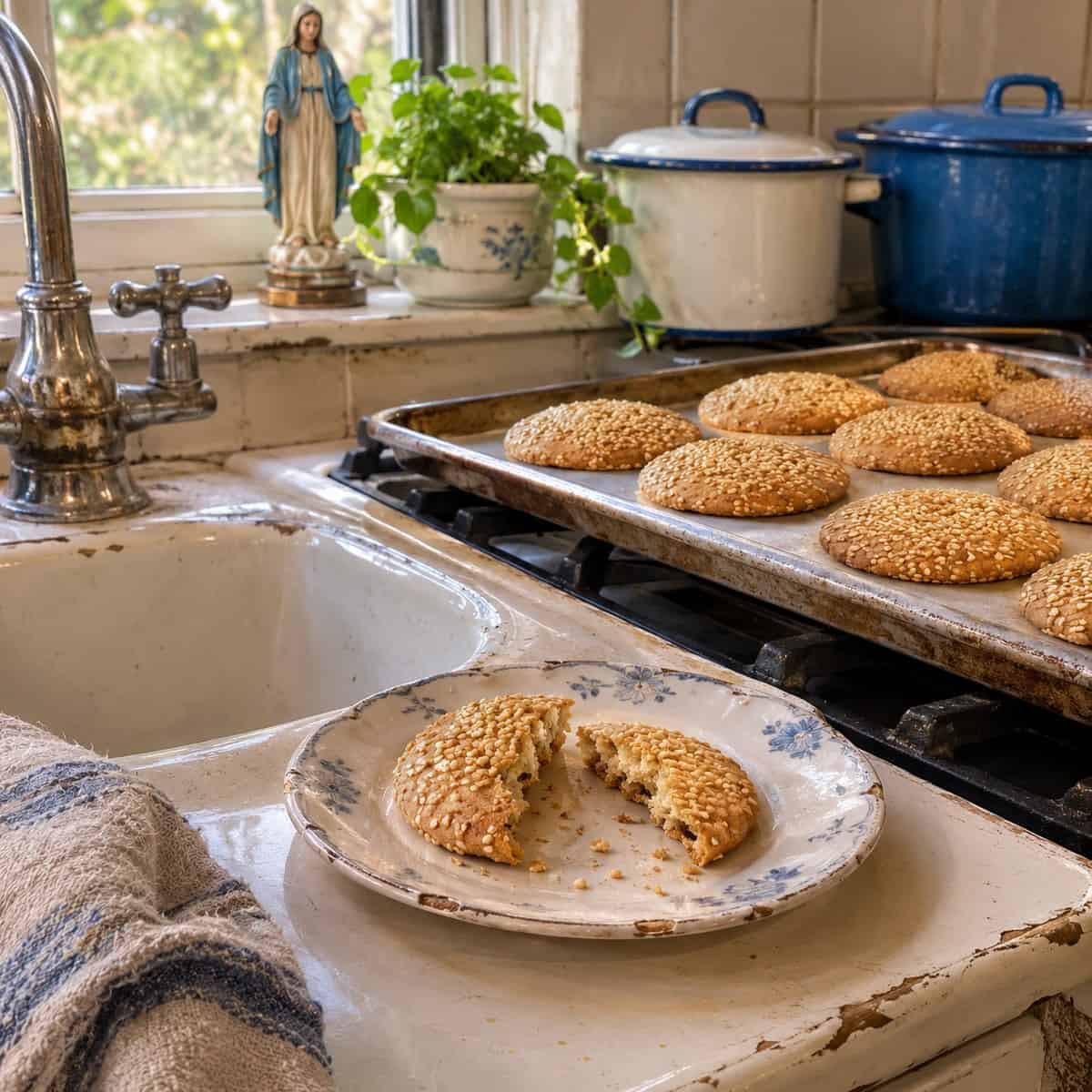
The first cookie off every sheet pan belongs to whoever baked it. It doesn’t go to a guest or to the kid hovering at the counter.
Nonna broke hers in half over the sink and looked at the crumb. She ate one half and handed the other to whoever was nearest. That was her inspection. If the inside looked wrong, the next pan stayed in two minutes longer.
I do it now, and my grandson thinks it’s a perk. It is a perk. It’s also how you find out the oven runs hot before you’ve ruined four dozen.
Taste the first one every time. That cookie is work, not dessert.
30. The Tray Comes Out Again on New Year’s, and That’s the End
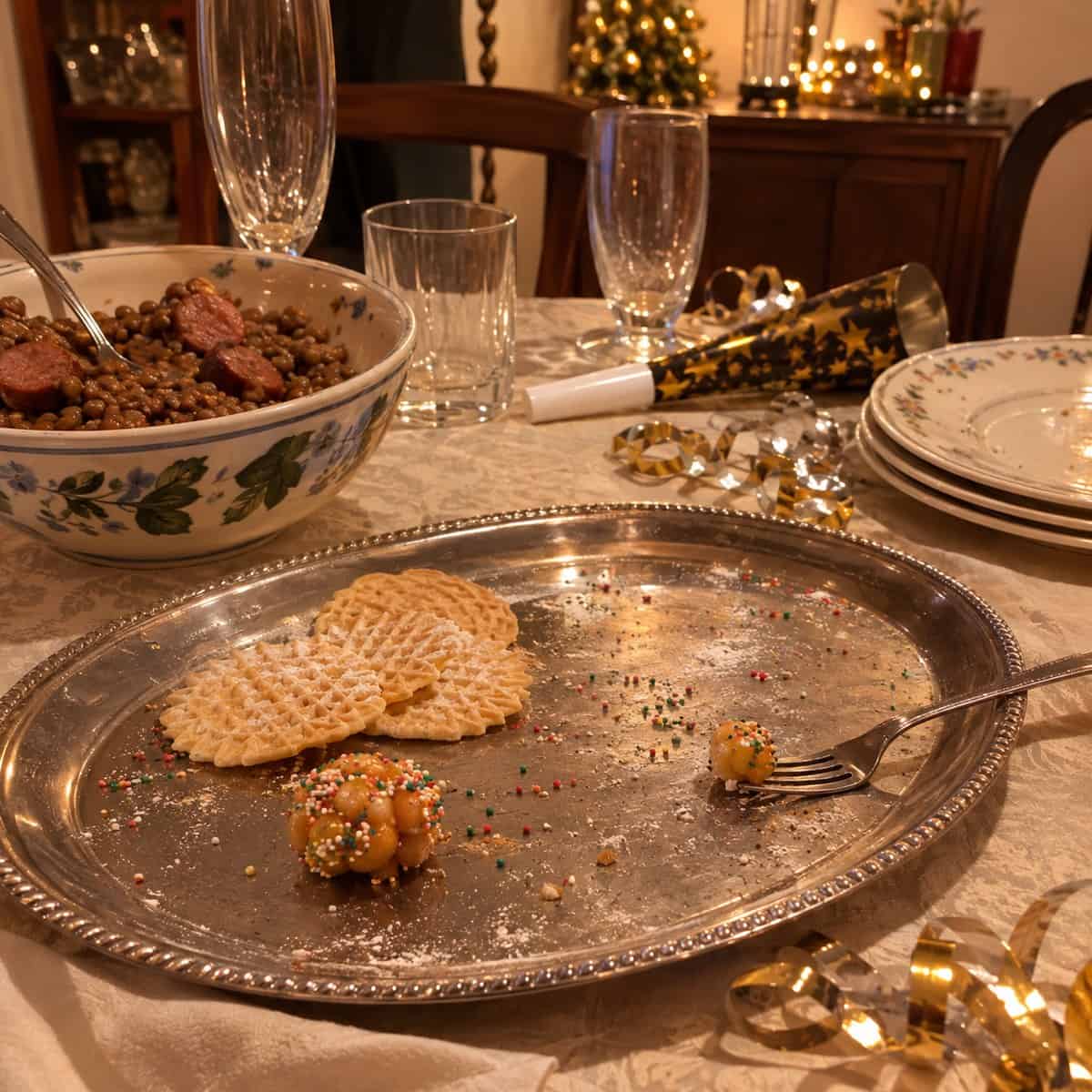
Whatever survived Christmas Eve and Christmas Day goes back into the tins. Then it comes out one more time, New Year’s Eve, with the lentils and the sausage.
By then the pizzelle have gone a little soft and the fig cookies have gone a little better. Somebody eats the last struffoli off the bottom of the cake stand with a fork.
And on January 2nd the tins get rinsed, stacked by size, and carried back down to the basement shelf.
Eleven months in the dark. Nobody touches them.
That shelf is the real calendar in an Italian-American house. Not the one on the wall.
None of this was ever explained. It was absorbed, the way you absorb which pew is yours and which aunt you don’t argue with.
And if you came into this family through marriage and spent your first Christmas Eve confused about why nobody would take the last cookie — welcome. You’re in it now. Next year you bring something.
Buon Natale, Madeline