Feast of the Seven Fishes: 34 Rules, Traditions and Arguments From an Italian Christmas Eve
By December 20 there’s a stockpot of salt cod in the back of my refrigerator, and nobody in this house is allowed to touch it.
That’s how I know it’s started. Not the tree, not the cards. The baccalà.
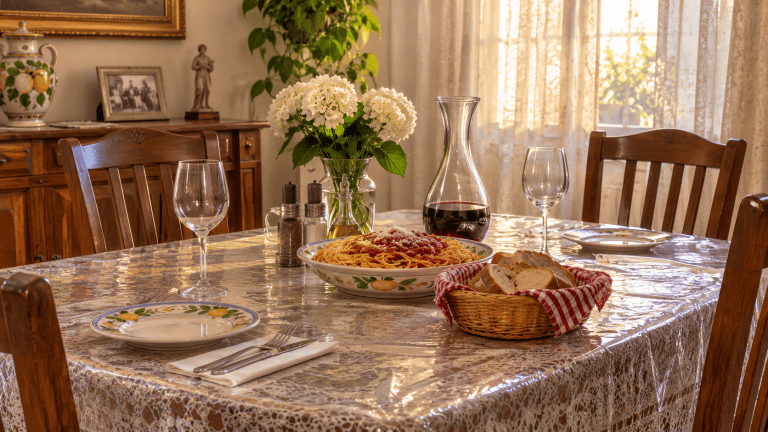
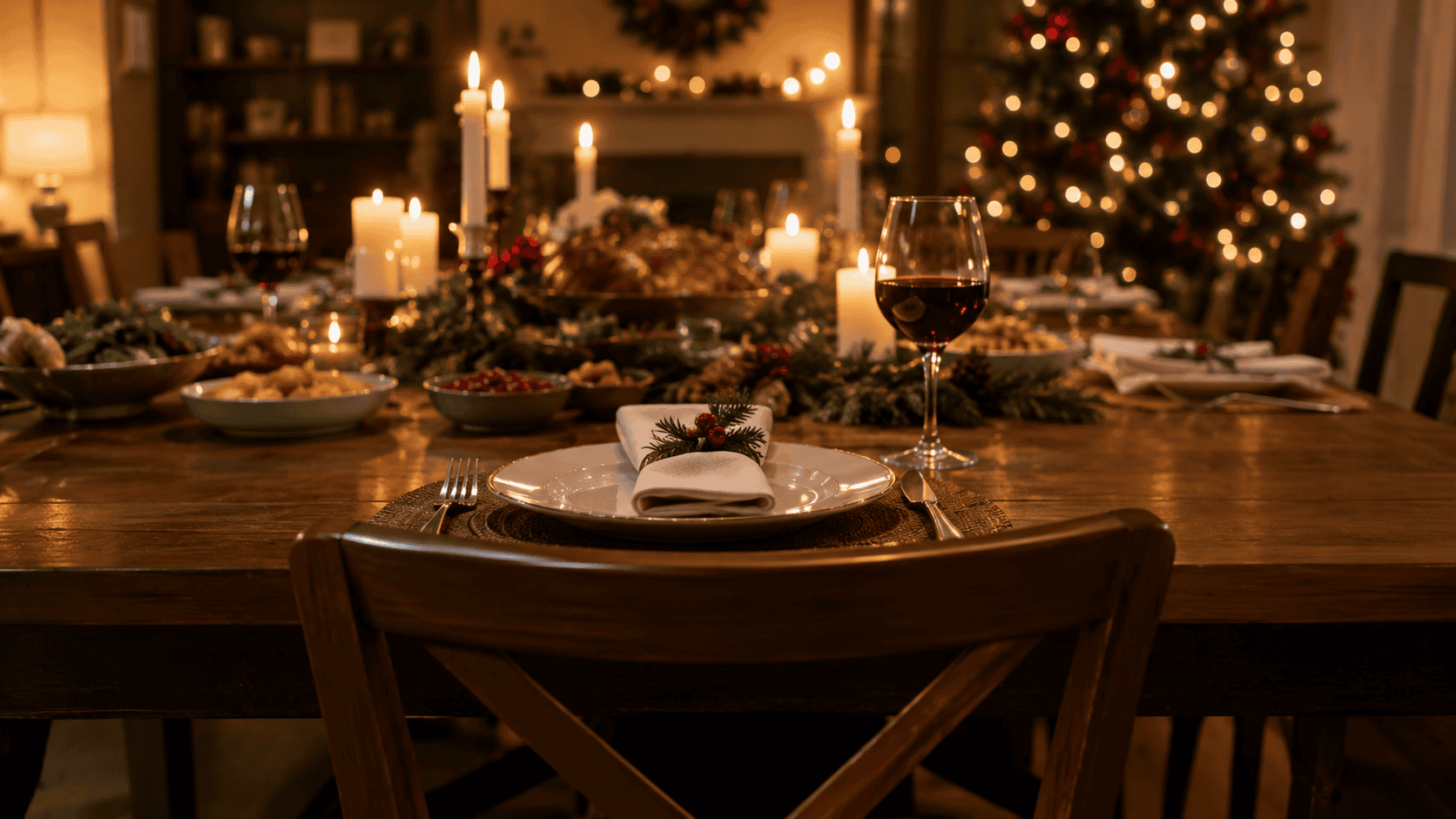
Christmas Eve at Nonna Pina’s was five hours of frying, shouting, and somebody’s uncle insisting mussels don’t count. She came from a town outside Palermo in 1952 and brought the whole night with her: the oil smell that got into the curtains, the good tablecloth under plastic until four o’clock, the plate nobody sat in front of.
Every Italian-American family runs this night slightly differently, and every one of them is certain theirs is correct. That’s the tradition. The arguing is the tradition.
Here are 34 rules, habits and permanent family fights from an Italian Christmas Eve.
1. There Is Only One Real Rule: No Meat Until Midnight
Everything else on this list is negotiable. This isn’t.
The whole feast exists because Catholics abstained from meat and animal fat on the vigil of a feast day, so southern Italian families cooked fish fried in oil instead. Britannica traces the American version straight back to that abstinence.
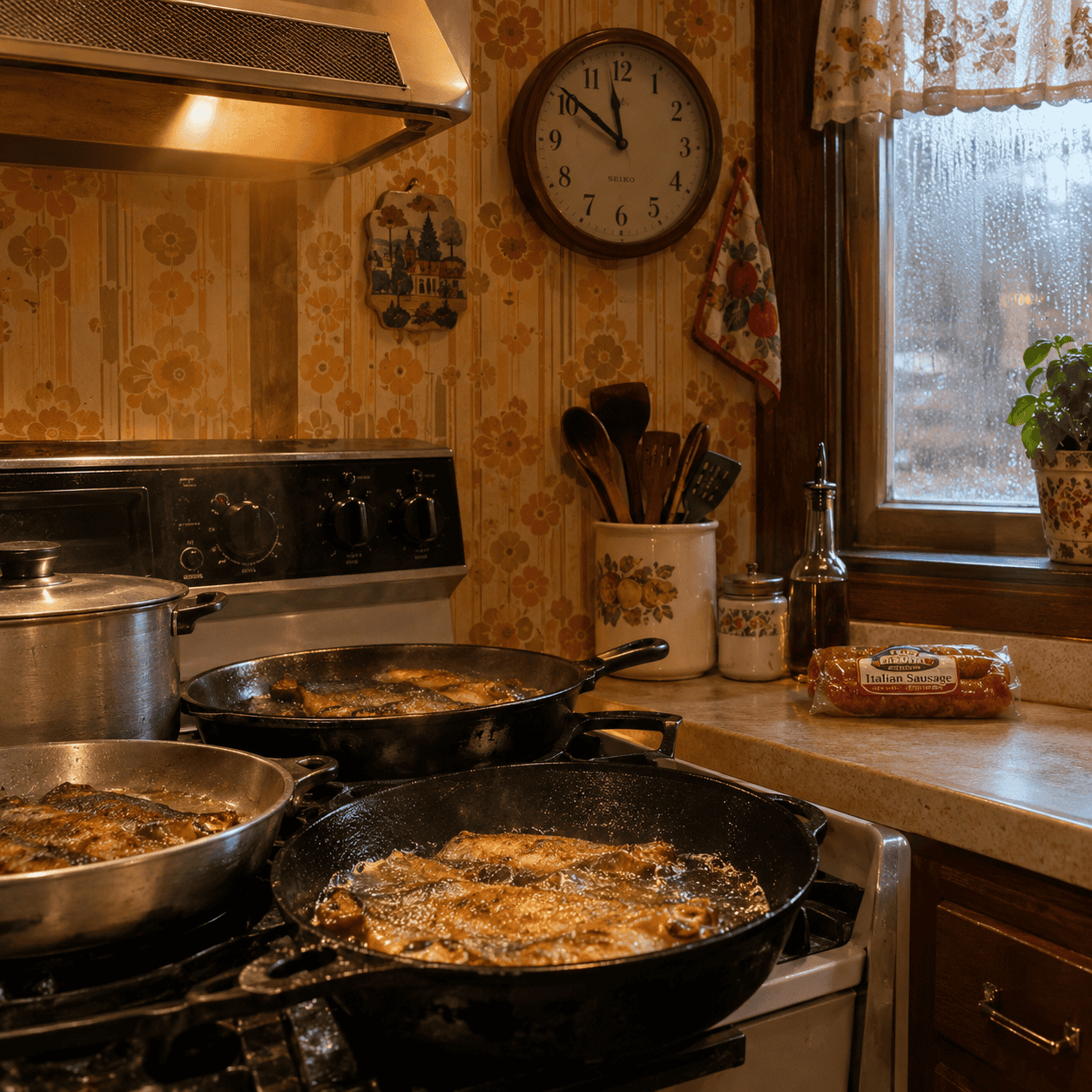
My father used to put a sausage on the stove at 12:01 like a man released from prison.
No meat until the clock says so. After that, go ahead.
2. The Baccalà Starts Soaking Before the Tree Goes Up
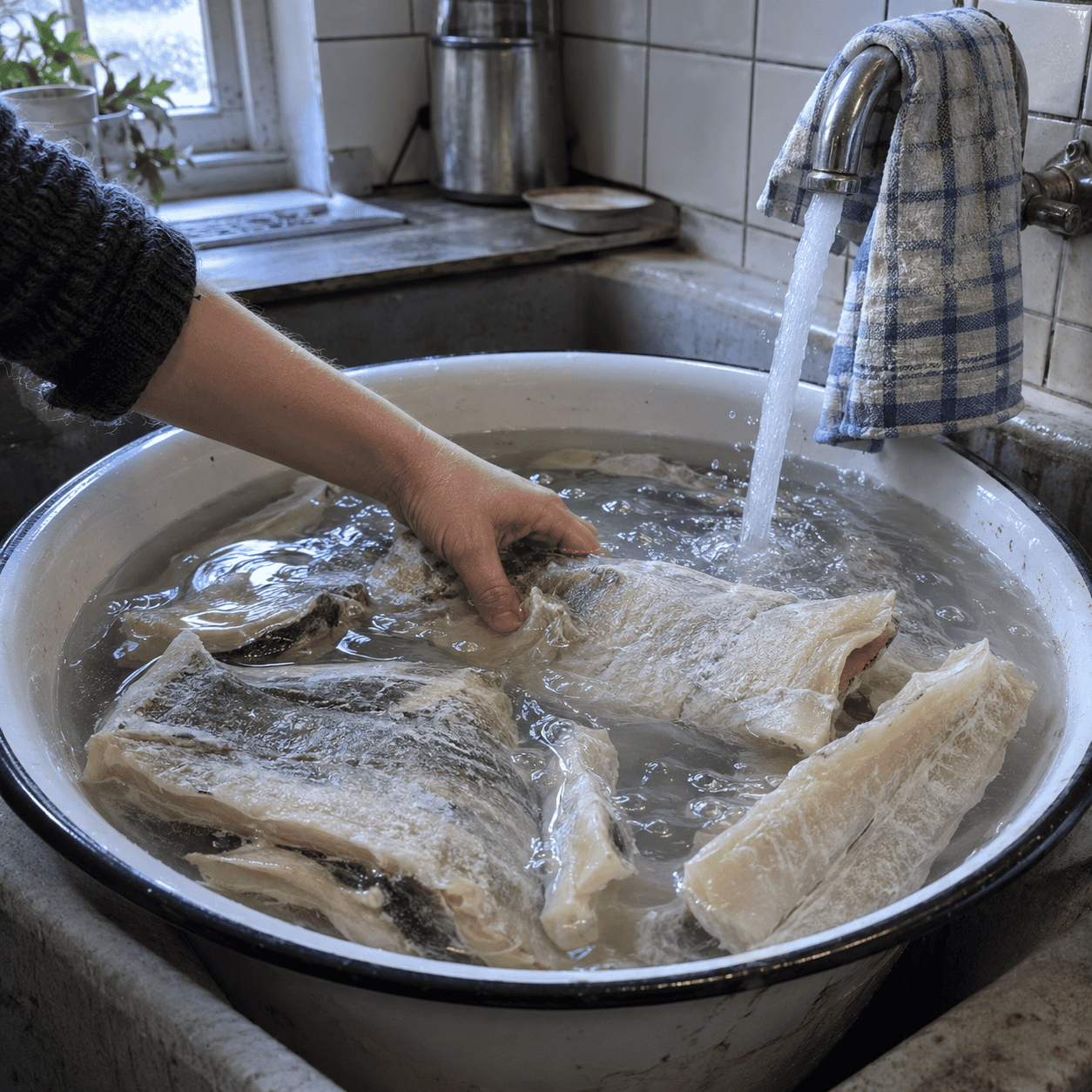
Salt cod arrives stiff as a shingle. You can knock on it.
Nonna kept hers in the enamel basin in the cellar sink, under cold water, and the water got changed three times a day for three days. My mother used a lobster pot in the second refrigerator. I use a plastic tub on the bottom shelf and set a phone alarm, which she would have found insulting.
Here’s what actually works. Rinse the surface salt off first, then submerge the pieces fully in cold water and refrigerate. Change the water every 8 to 12 hours for two to four days, depending on thickness — a thick center-cut loin needs the full four, thin tail pieces are ready in two. Taste a sliver raw at day two. If it tastes like seasoned fish instead of a salt lick, you’re done.
Buy the whole dried fillet from an Italian grocery or a fish market if you can get it, skin and bone in; it tastes better than the boneless pieces in the little wooden box, and it’s usually cheaper per pound. If all you can find is the box, it works — just soak it less, maybe 36 hours, because it’s thinner.
Then it gets floured and fried, or stewed with tomatoes, onions, olives and potatoes. Both are correct. In this house both show up.
3. Nobody Actually Agrees on Why It’s Seven
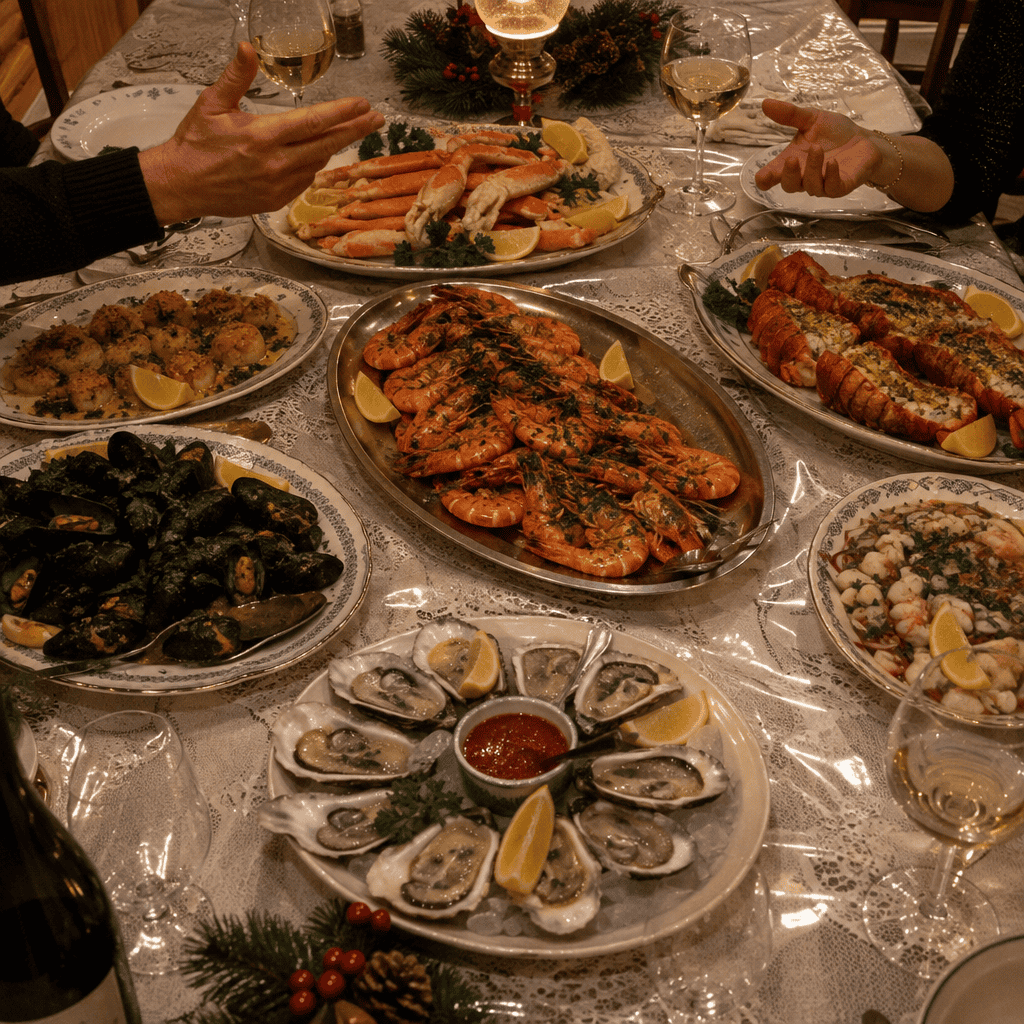
Seven sacraments. Seven hills of Rome. Seven days of creation, seven gifts of the Holy Spirit, seven deadly sins, seven days Mary and Joseph traveled.
My aunt swore it was the sacraments and said it in a tone that ended conversations.
Nobody can prove any of it. That’s why the argument comes back every single year, usually somewhere between the clams and the calamari.
4. The Fish Market Run on December 23rd
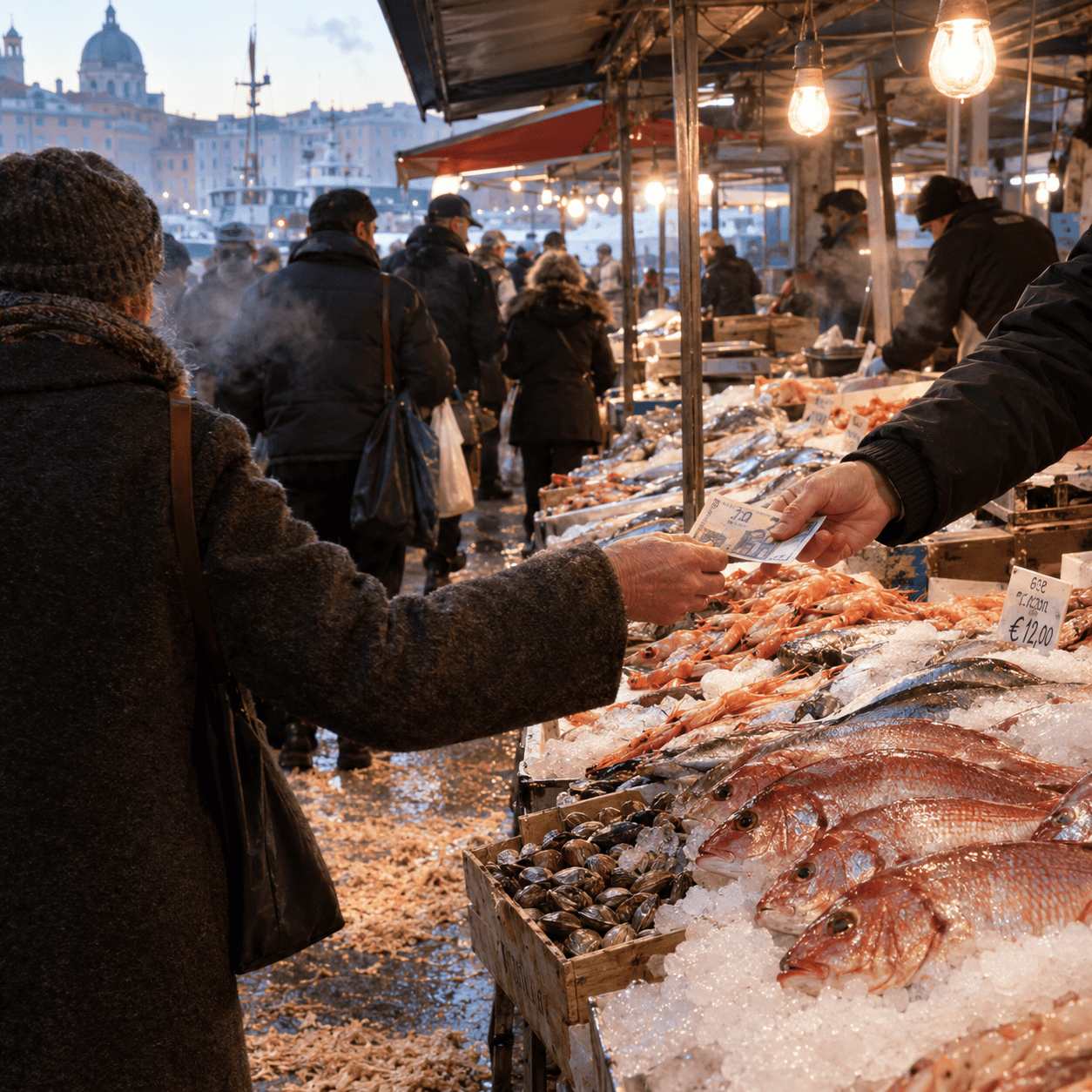
Dawn, cold, cash in a coat pocket. No credit cards, no list written down, because the list lives in your head.
Ninth Street in South Philly was my grandfather’s. Arthur Avenue in the Bronx, Lombard Street in Baltimore, the North End in Boston — same scene, different accents. Sawdust on the floor, men shouting prices, somebody’s grandfather carrying a paper sack that moved.
Go on the 23rd, not the 24th. By Christmas Eve morning the good whole fish are gone and you’re taking whatever’s left at whatever they’re asking.
Buy clams and mussels closed and heavy; a shell that gapes and won’t shut when you tap it goes back. Shrimp with the shells on taste better and cost less than the peeled ones. Ask the guy behind the counter what came in that morning and then build the menu around his answer instead of fighting him — that’s the whole trick, and it’s the one thing nobody writes down.
Keep everything on ice in a cooler in the garage if your fridge is already full of baccalà. Mine always is.
5. Nobody in Italy Calls It ‘The Feast of the Seven Fishes’
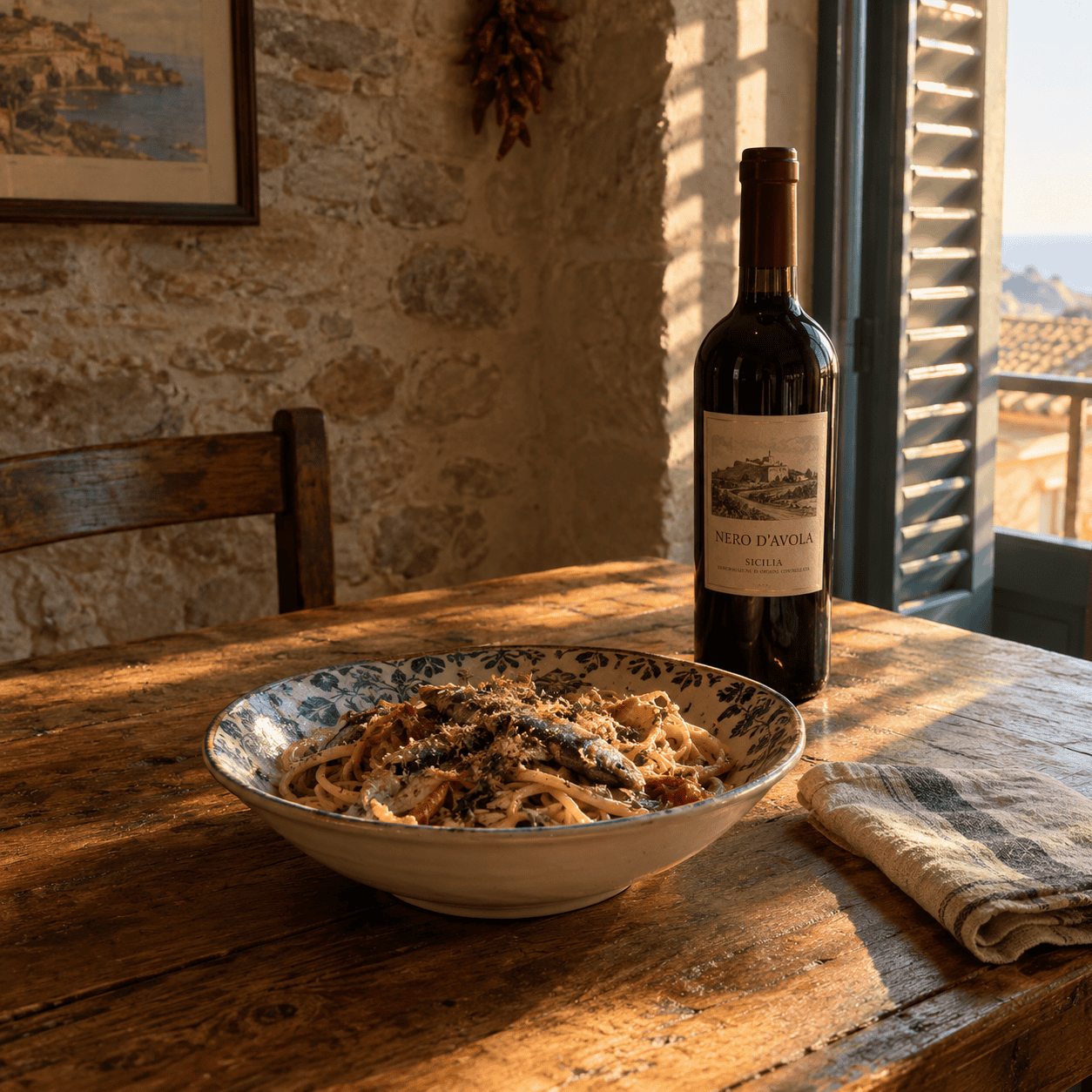
Say that phrase in Palermo and you’ll get a polite blank look.
It’s la Vigilia. The meal is cena della Vigilia. The seafood is absolutely real, but the branded number is an American thing — each of Italy’s twenty regions has its own vigil menu, and plenty of them aren’t counting anything. Agnolotti in Piemonte. Fish soup in Rome. Malloreddus in Sardegna.
My cousins outside Palermo eat pasta with sardines and go to Mass. That’s it.
Doesn’t make ours fake. Makes it ours.
6. The Eel That Lived in the Bathtub
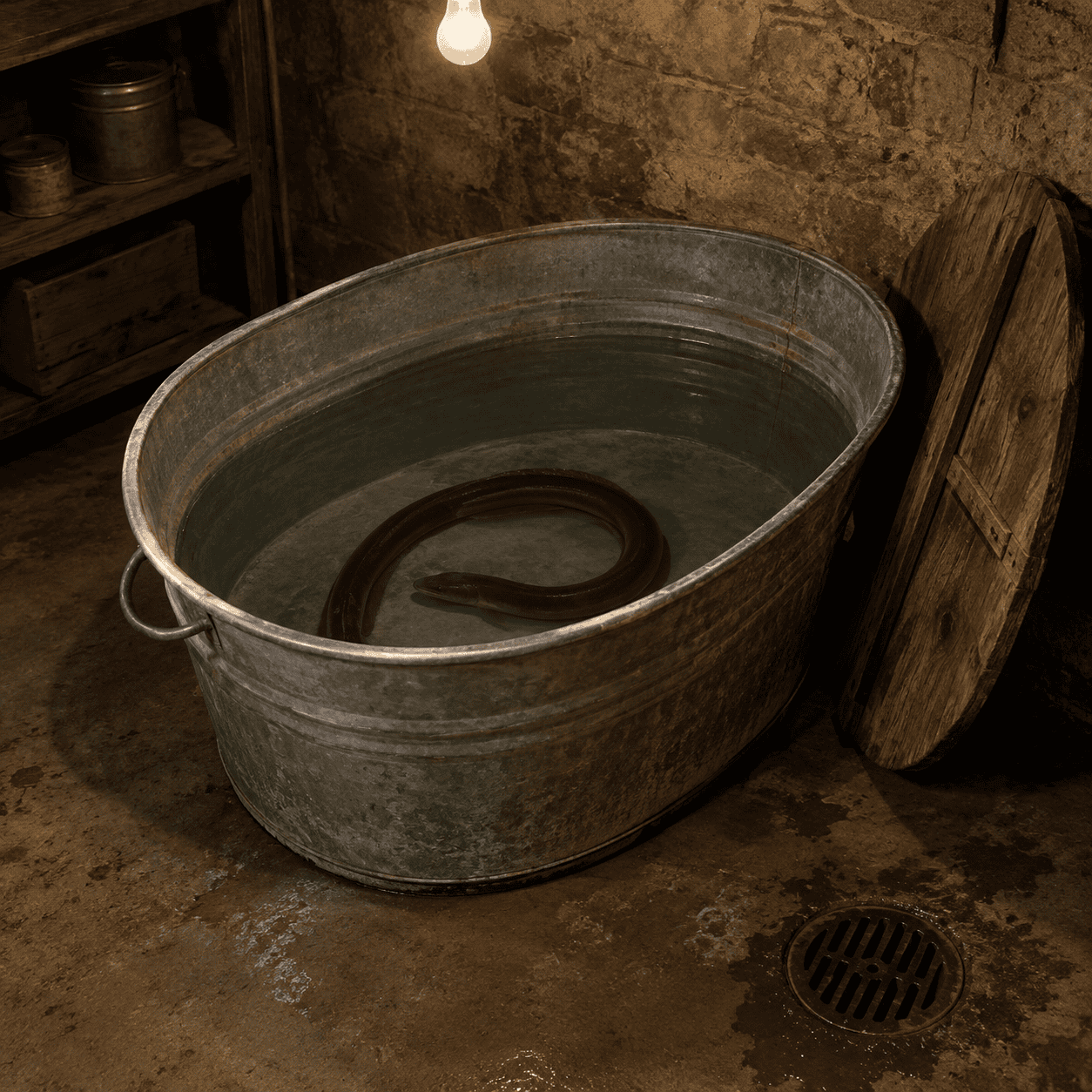
Capitone — the big female eel — was not optional on a Neapolitan vigil table.
It came home alive and went into a tub or a bucket in the cellar until somebody’s grandfather dealt with it. Cheap, fatty, filling, and symbolically it was the serpent getting what was coming to it.
Ask anyone Italian-American over sixty and you’ll get an eel-in-the-kitchen story within ninety seconds. Ours involved a loose capitone, a linoleum floor, and my great-uncle in his undershirt.
It mostly disappeared from American tables after the 1970s. The grandchildren wouldn’t eat it.
7. Shellfish Count, and That’s Not Negotiable
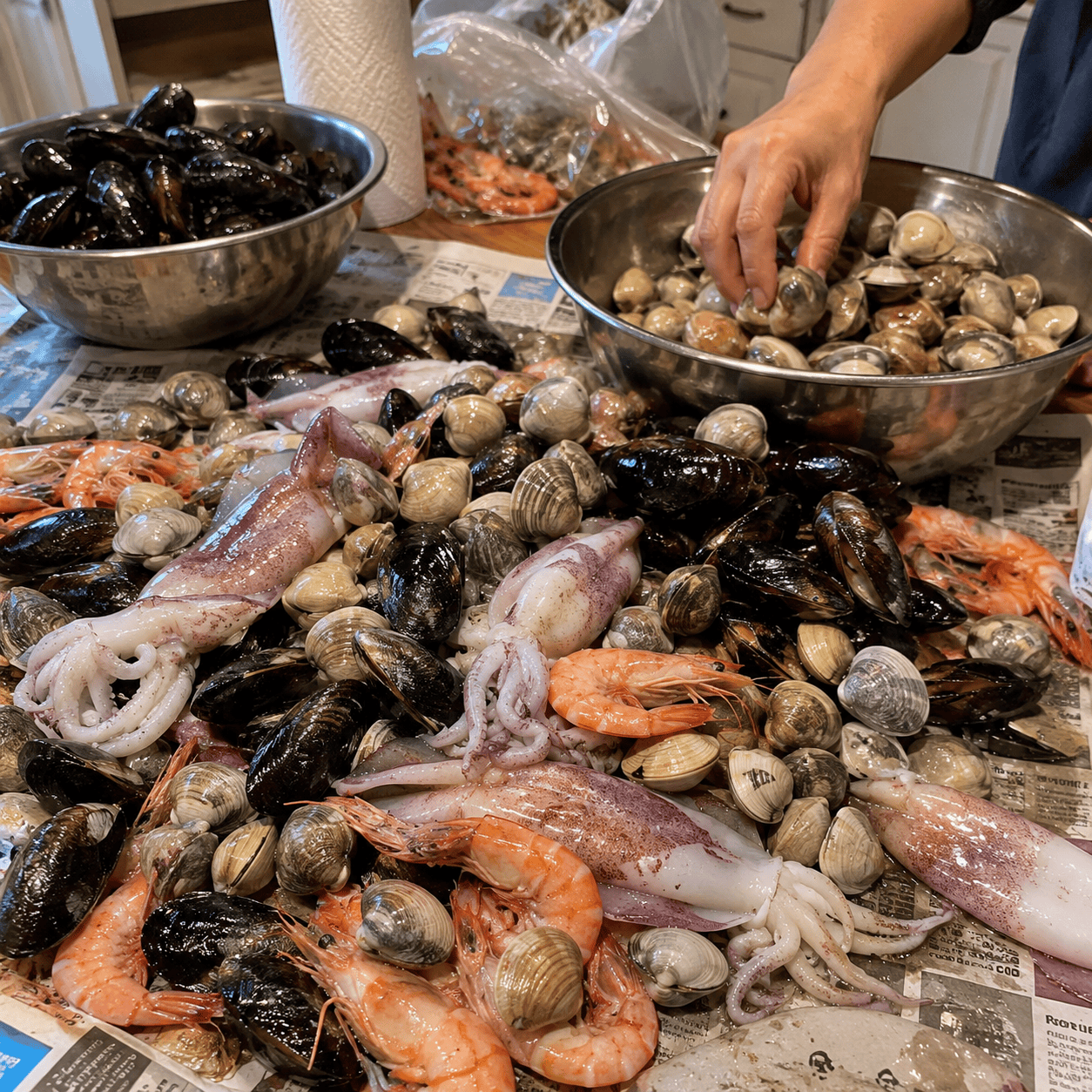
Clams, mussels, shrimp, scallops, calamari, octopus. All of them count.
Every year one brother-in-law points out that a clam is not technically a fish. Every year he’s overruled by the person who did the cooking, which is how all rulings work in that kitchen.
If shellfish didn’t count, half of Campania never completed a Christmas Eve in its life.
8. Fried Smelts, Eaten Whole, Heads and All
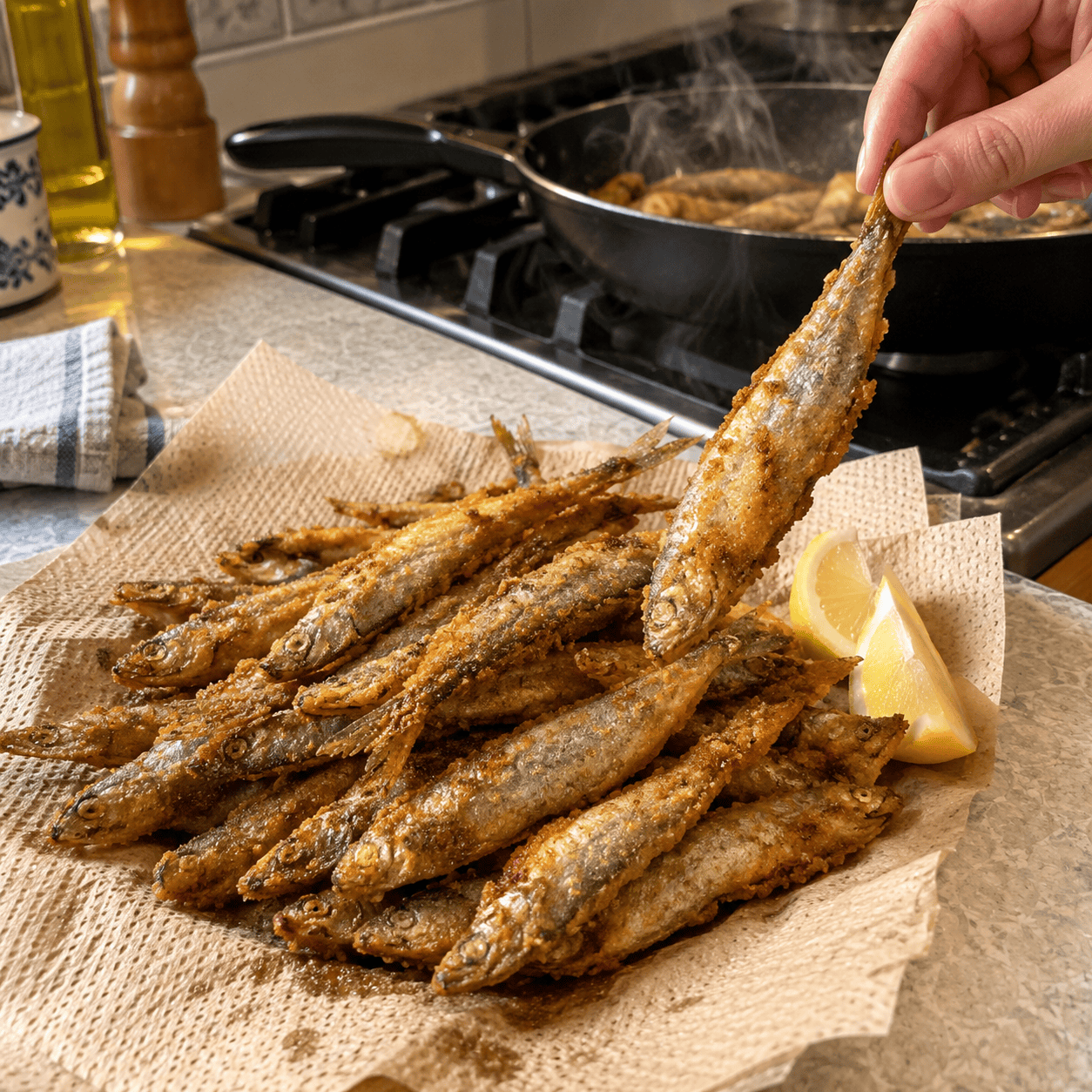
Floured, fried hard, hit with lemon, eaten in two bites. Bones, head, everything.
This is the dish that separates the raised-right from the visiting. You watch a new boyfriend’s face at the platter and you learn a great deal about his character.
They were on the table in 1935 because they cost almost nothing by the pound. Now they’re nostalgia, and they still cost almost nothing.
9. Never, Ever Put Cheese on the Seafood Pasta
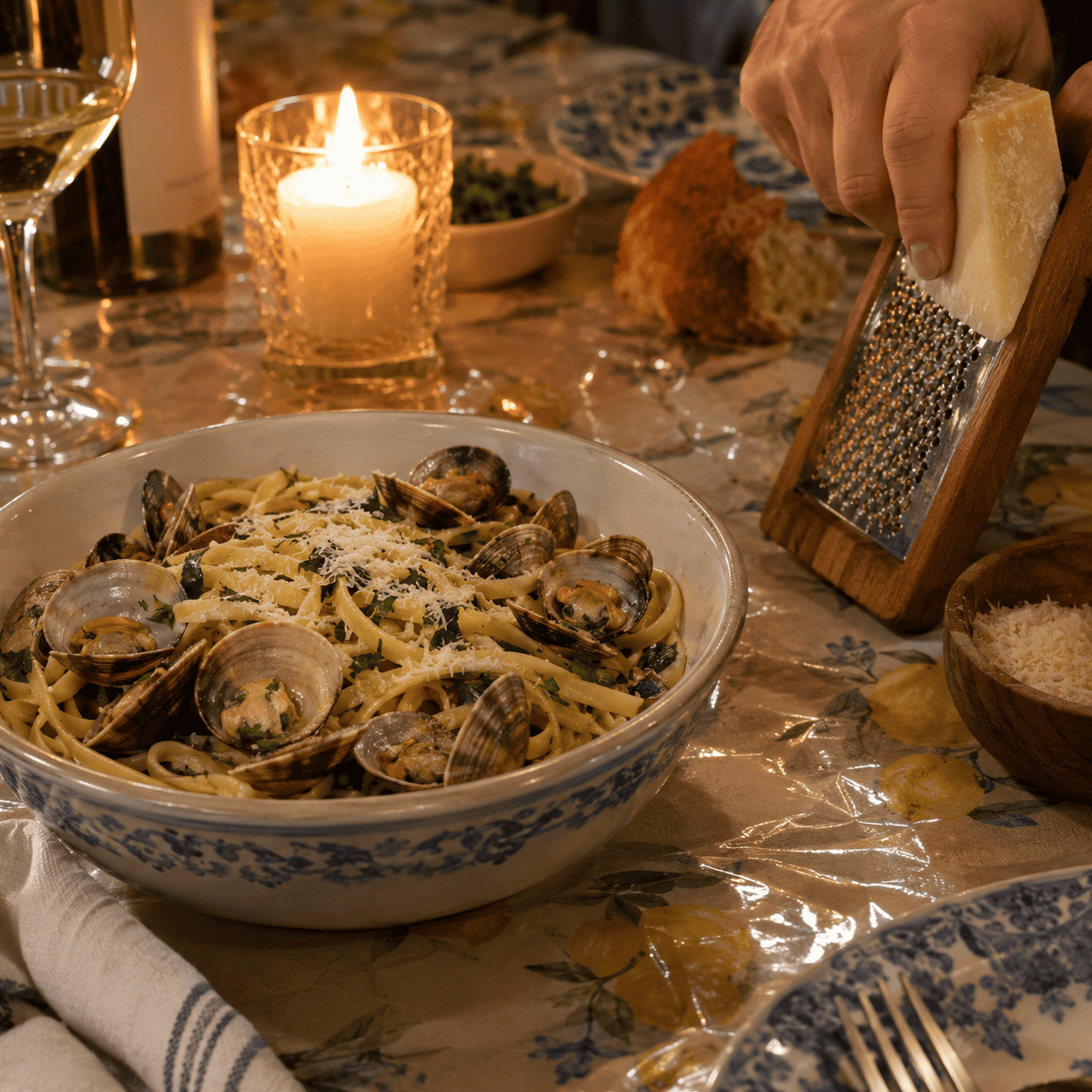
Reach for the Pecorino over a bowl of linguine with clams and watch what happens to the room.
People defend this as a flavor law. It started as a fasting law — the original vigil abstinence covered dairy along with meat, so there was no cheese on the table to put on anything.
The religion faded. The rule stayed, and got meaner.
I don’t break this one. It’s one of those unwritten rules nobody ever explained, they just looked at you until you put the grater down.
10. It Isn’t Always Seven — Try Nine, Eleven or Thirteen
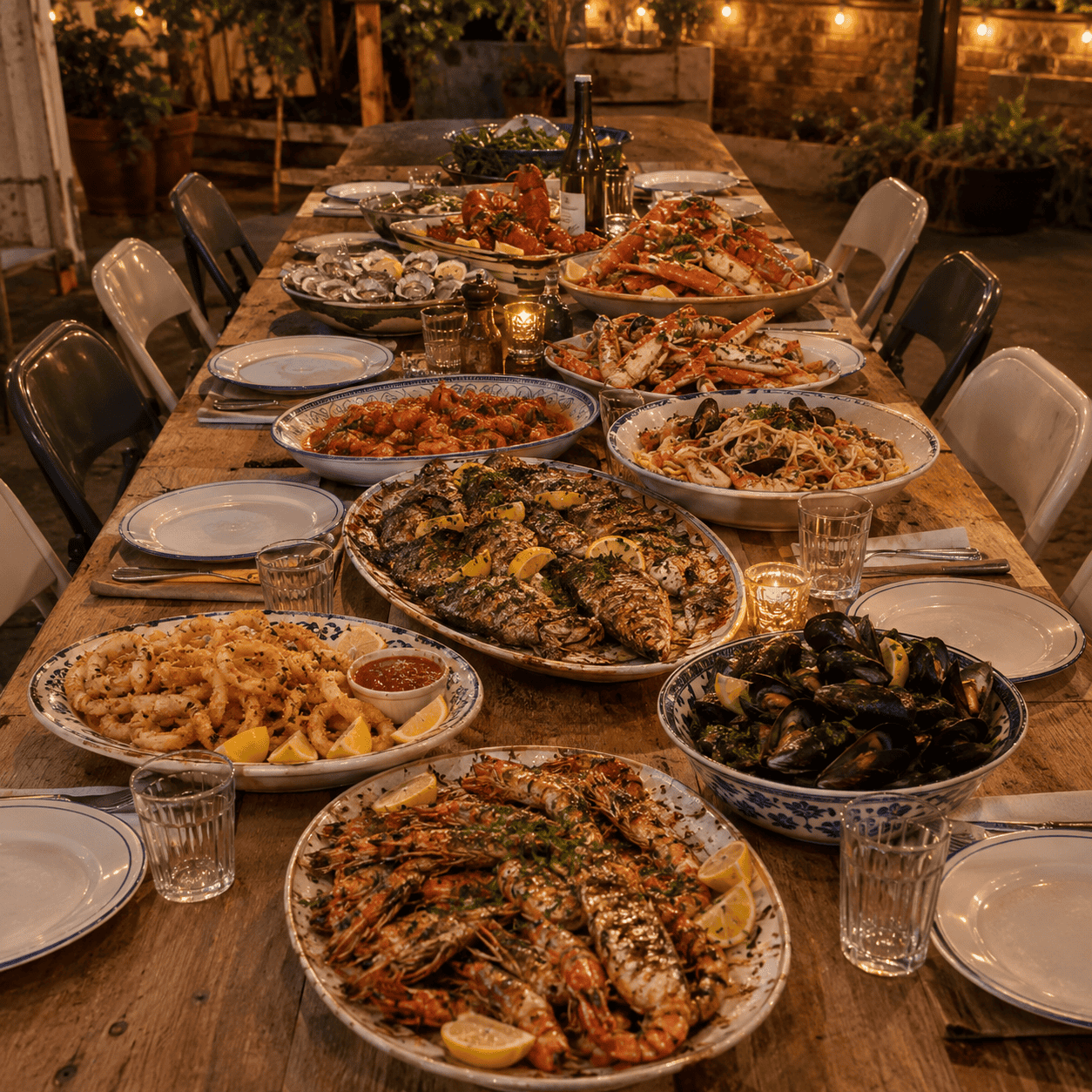
Odd numbers are the real tradition. Three in a lean year, nine, eleven, thirteen if the house was showing off.
Thirteen gets explained as Jesus plus the twelve apostles, which is as good an explanation as any of the other six.
So if your family did nine, your family wasn’t doing it wrong. Nobody was doing it wrong. There’s no governing body.
11. Linguine With Clams: Red Sauce or White
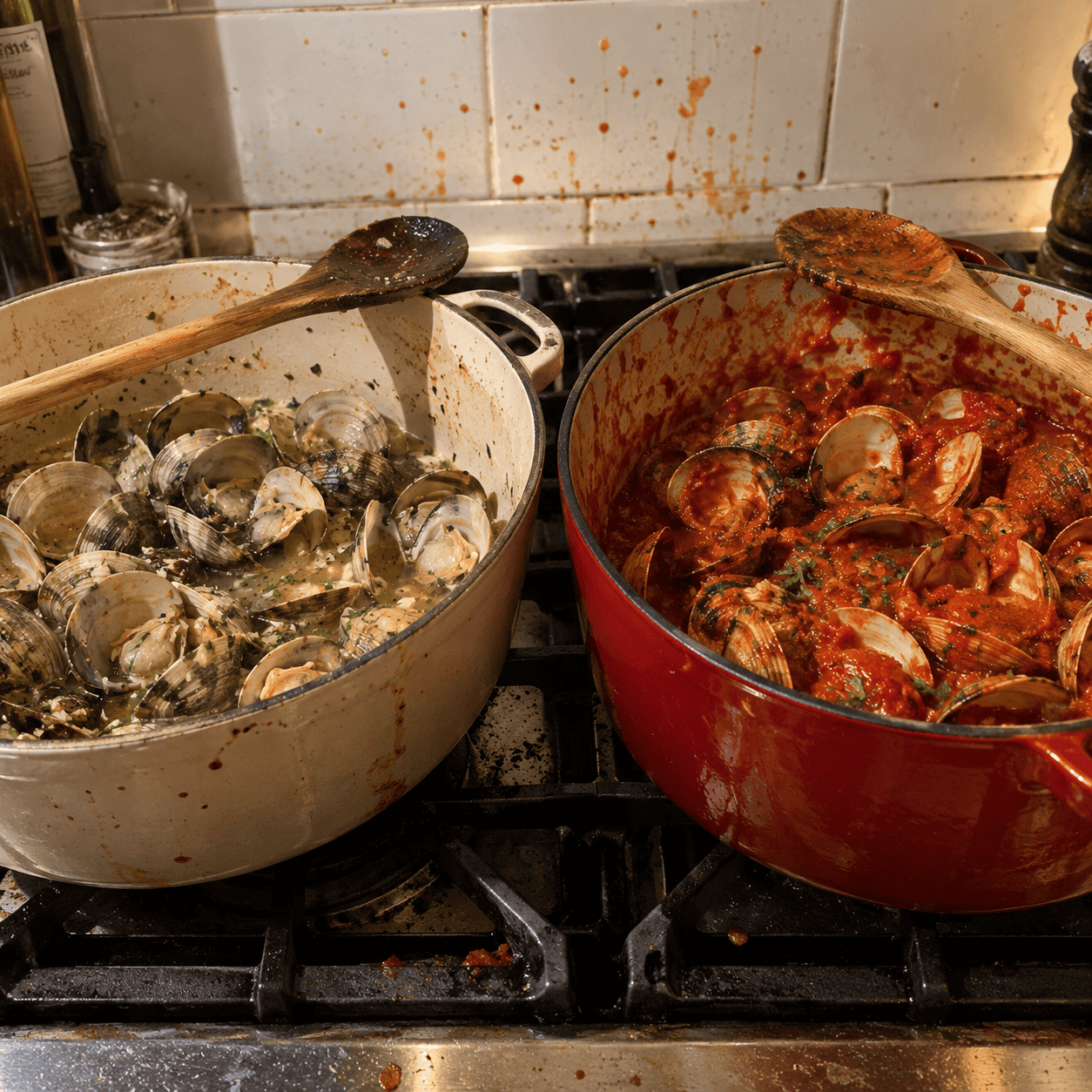
In bianco: garlic, good oil, white wine, parsley, the clam liquor doing the heavy lifting.
Rosso: the Neapolitan-American version with tomatoes, usually defended by whoever’s family came from a town where they did it that way.
This splits households. It split mine — Pina was white, my father’s side was red, and the compromise was two pots and no eye contact.
Make both. It costs you one more pan and buys you peace.
12. The Name Is Younger Than Your Grandmother’s Recipes
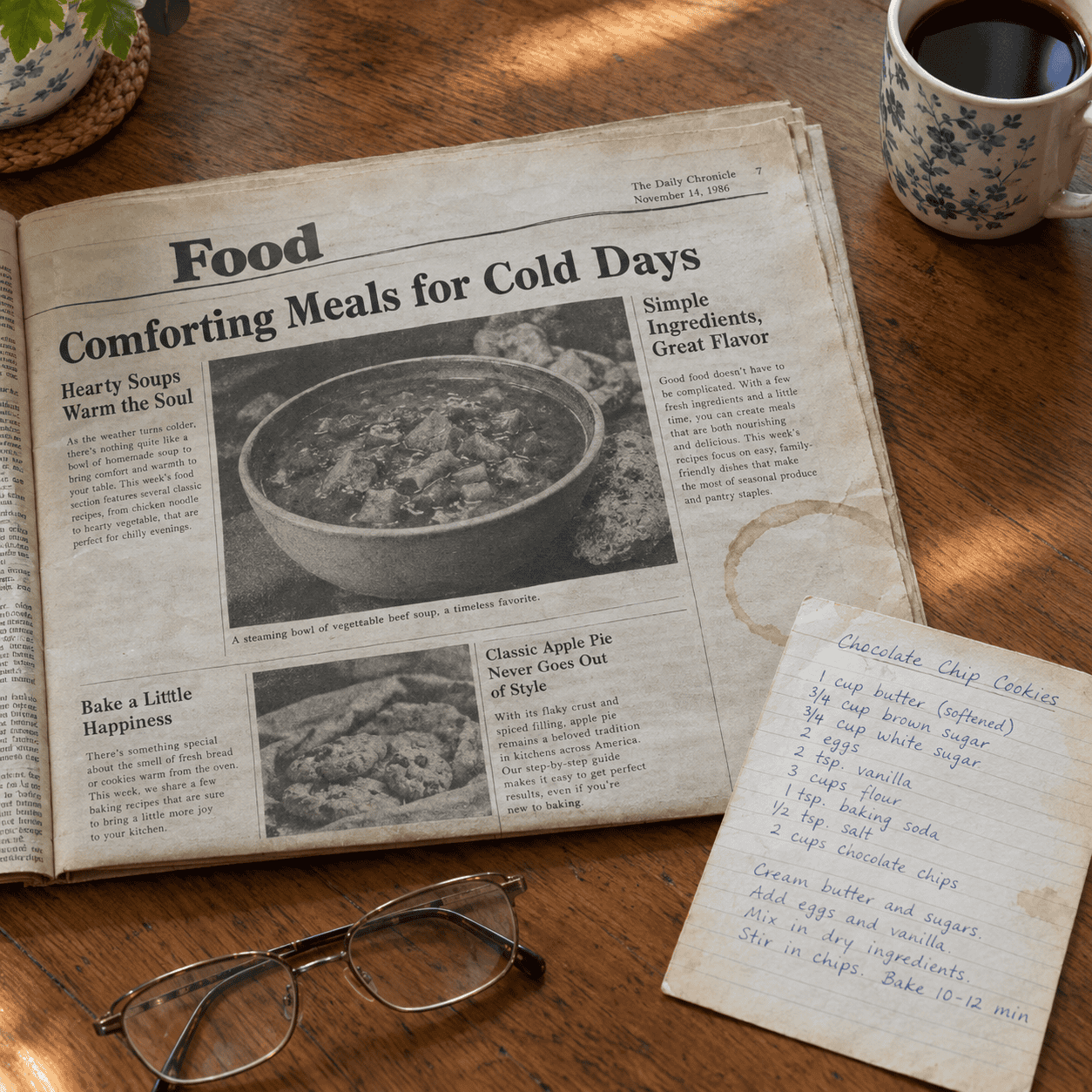
The food came over with the immigration wave between the 1880s and the 1930s. The name did not.
The phrase shows up in the Philadelphia Inquirer in 1983, and Craig Claiborne wrote it up in the New York Times in 1987. So the dishes are a century old and the label is Reagan-era.
Nonna never said “seven fishes” once in her life. She said Vigilia, and she said it like a deadline.
13. Calamari: Fried for the Table, Stuffed for the Sauce
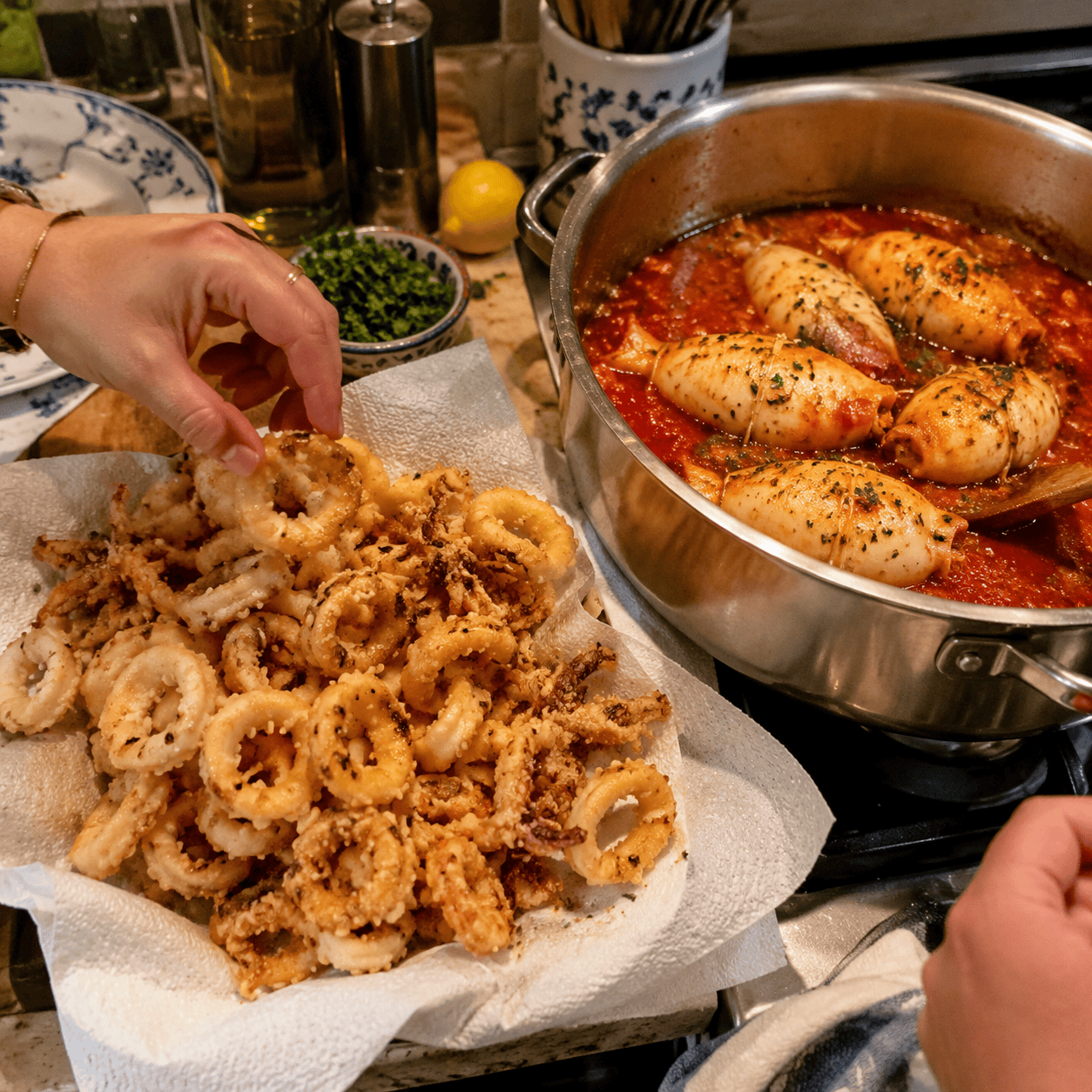
Squid works two shifts.
Rings get floured and fried and passed around while people are still in their coats, standing in the kitchen with the door open behind them. Later the bodies come back stuffed with breadcrumbs, garlic and parsley, simmered in tomato sauce, sliced into coins.
Fried calamari never gets plated. It goes on the paper towel on the counter and you eat it standing up, and if you put it in a serving bowl somebody will ask what the occasion is.
14. The Seafood Salad Is Made a Day Ahead
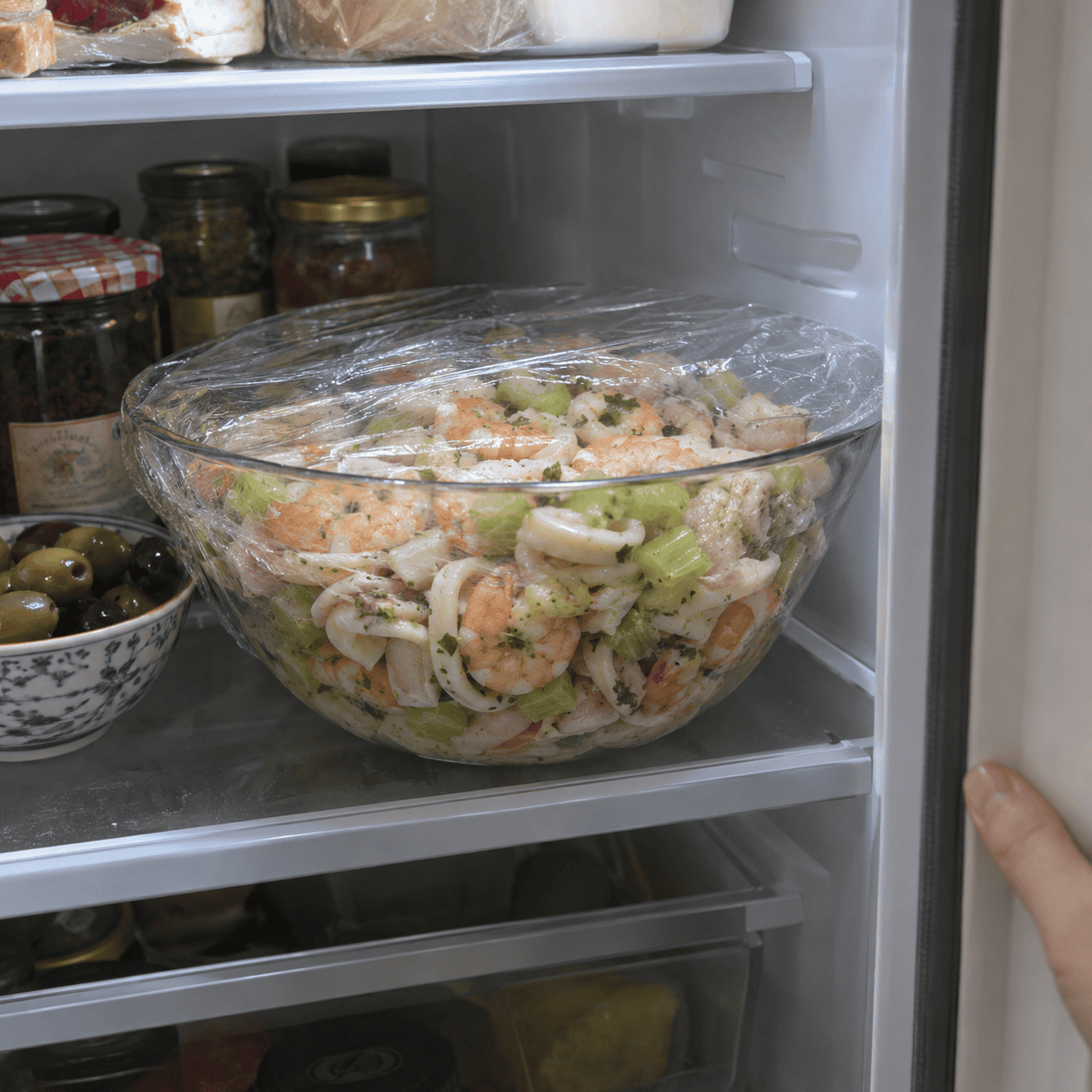
The one dish you’re allowed to finish before the 24th.
Shrimp, calamari, celery, garlic, lemon, olive oil, maybe a little parsley. It sits in the back of the fridge overnight in a covered bowl and gets better while you sleep.
Then there’s scungilli. Nonna’s favorite, chewy as a belt, and the reason my kids learned to say “I’m good” very politely.
15. Shrimp Cocktail Is the Great American Compromise
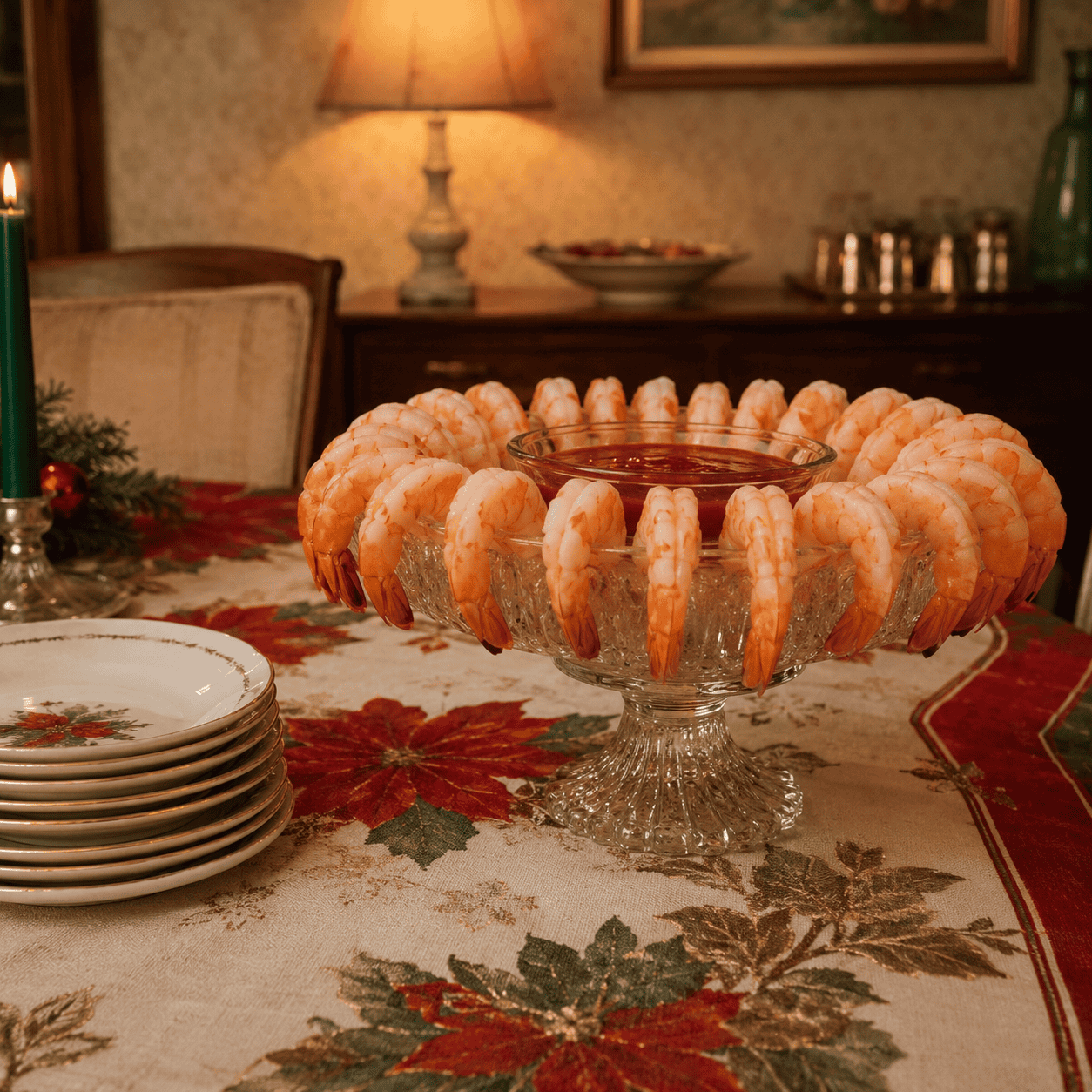
Cold shrimp, a glass bowl, red sauce with horseradish. Nothing about it is Campania.
Purists call it a cheat. Hosts call it course one and keep moving, because it feeds eighteen people while the oil comes up to temperature.
It came in with the in-laws sometime around 1962 and it never left. Grandfathered in.
16. One Dish Can Count as Three Fishes (If You’re Desperate)
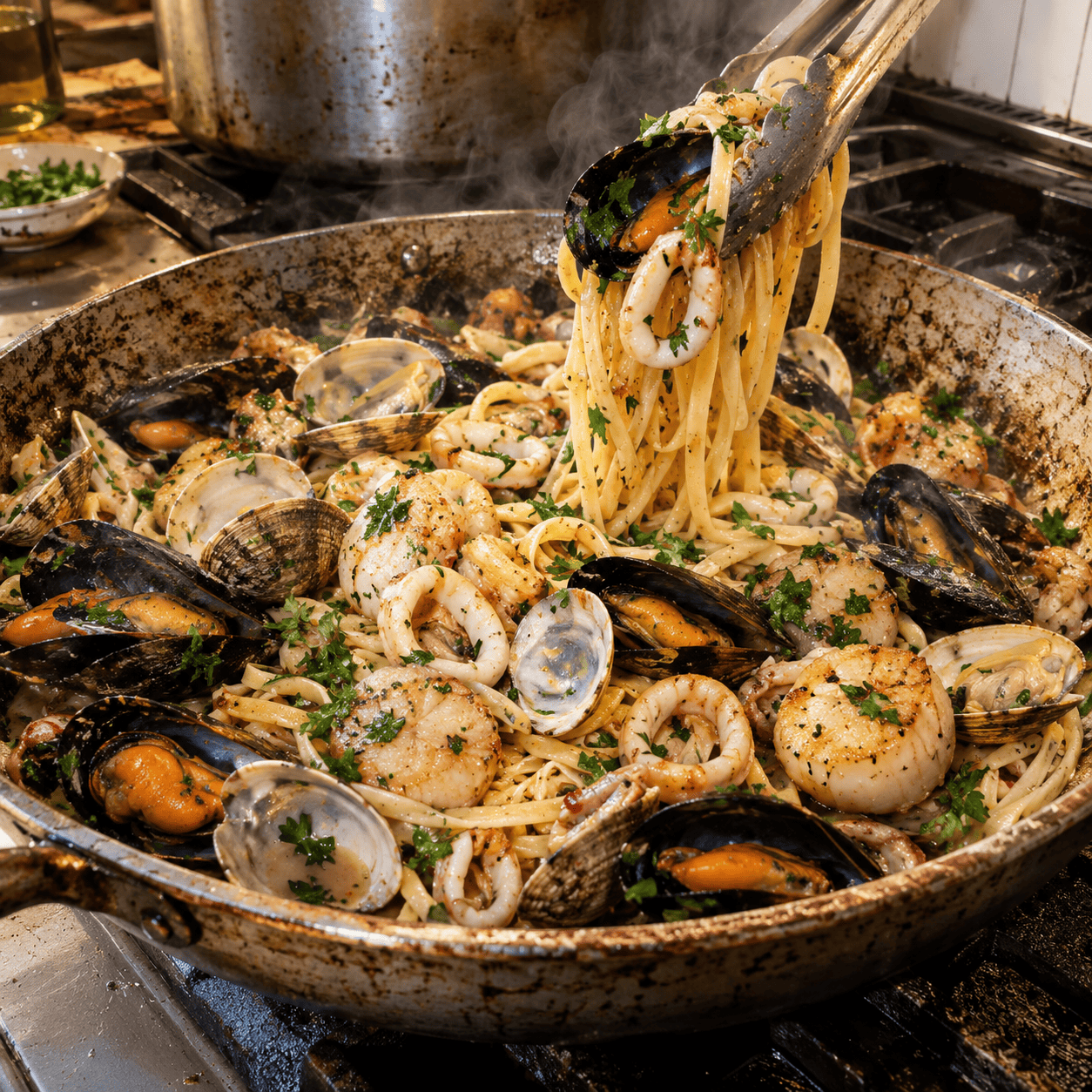
This is arithmetic, not eligibility.
One seafood pasta with clams, mussels, calamari and scallops takes four off the list in a single pot. A brodetto with swordfish, shrimp and clams does similar work and feeds the whole table.
Older cooks consider this cheating and say so. They also raised eight kids without a dishwasher, so they get to.
I use the loophole. I just don’t announce it.
17. Baked Clams Oreganata and Whoever Drew Shucking Duty
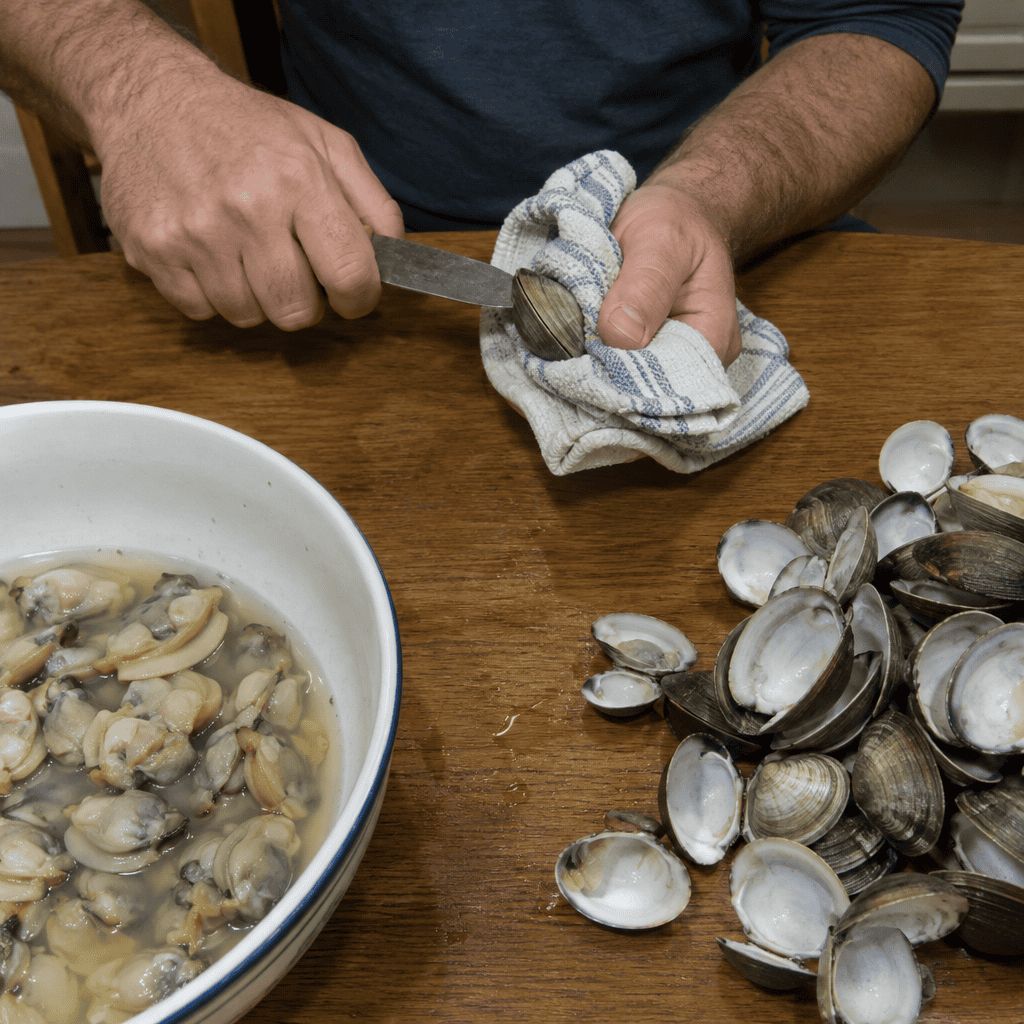
Breadcrumbs, garlic, oregano, lemon, broiled in the shell until the tops go gold.
Somebody has to open six dozen littlenecks first, with a dull knife and a folded dish towel, usually at the kitchen table with a bowl between his knees.
It’s the same uncle every year. Nobody ever volunteered him. Jobs at this feast are inherited, like furniture.
18. The Anchovies You’re Not Supposed to Notice
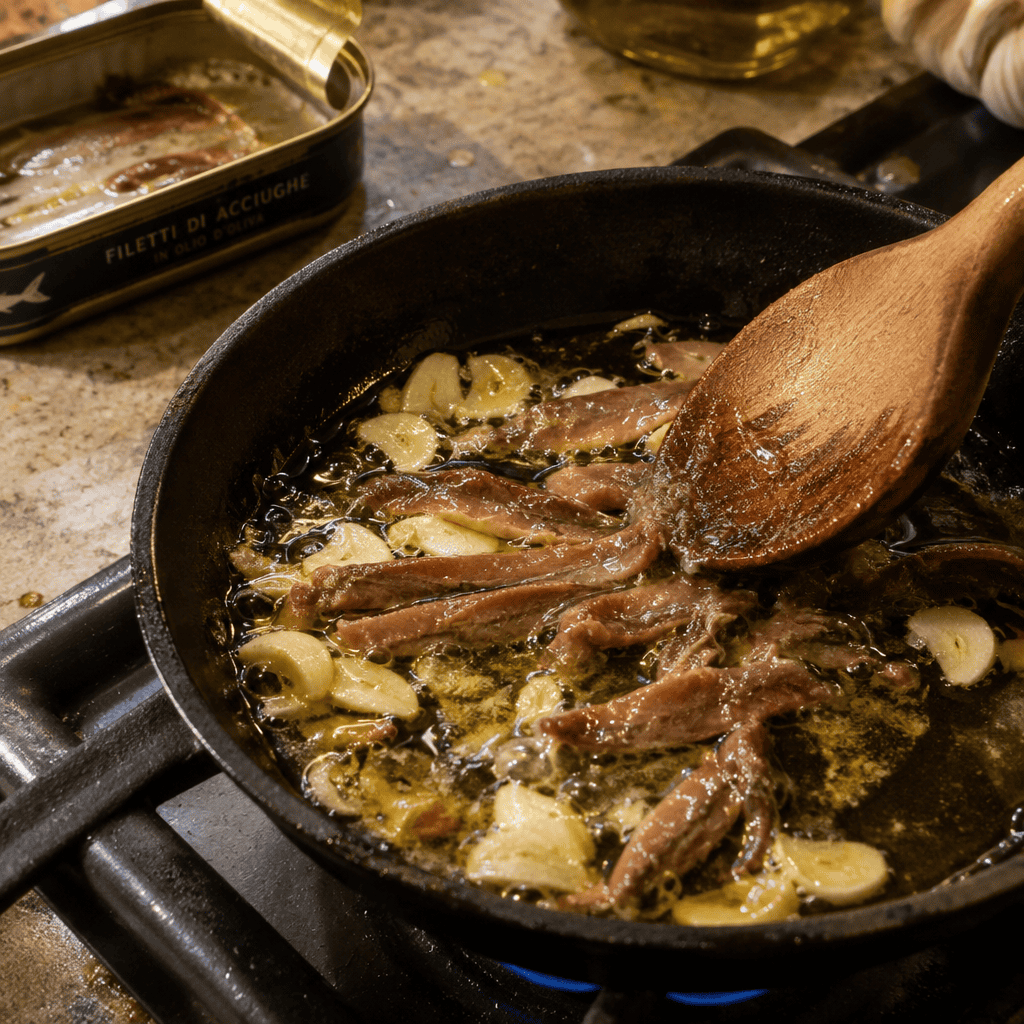
Melt two fillets into hot oil with garlic for the spaghetti and they vanish. No fish. Just a savory thing nobody can name.
Same trick in the sautéed escarole. The fish-haters at the table eat fish all night and never know it, and it counts toward the seven.
Cheapest thing on the table, which is exactly why it survived the years when there wasn’t anything else.
19. Plain Pasta Exists for the Kids Who Won’t Touch Fish
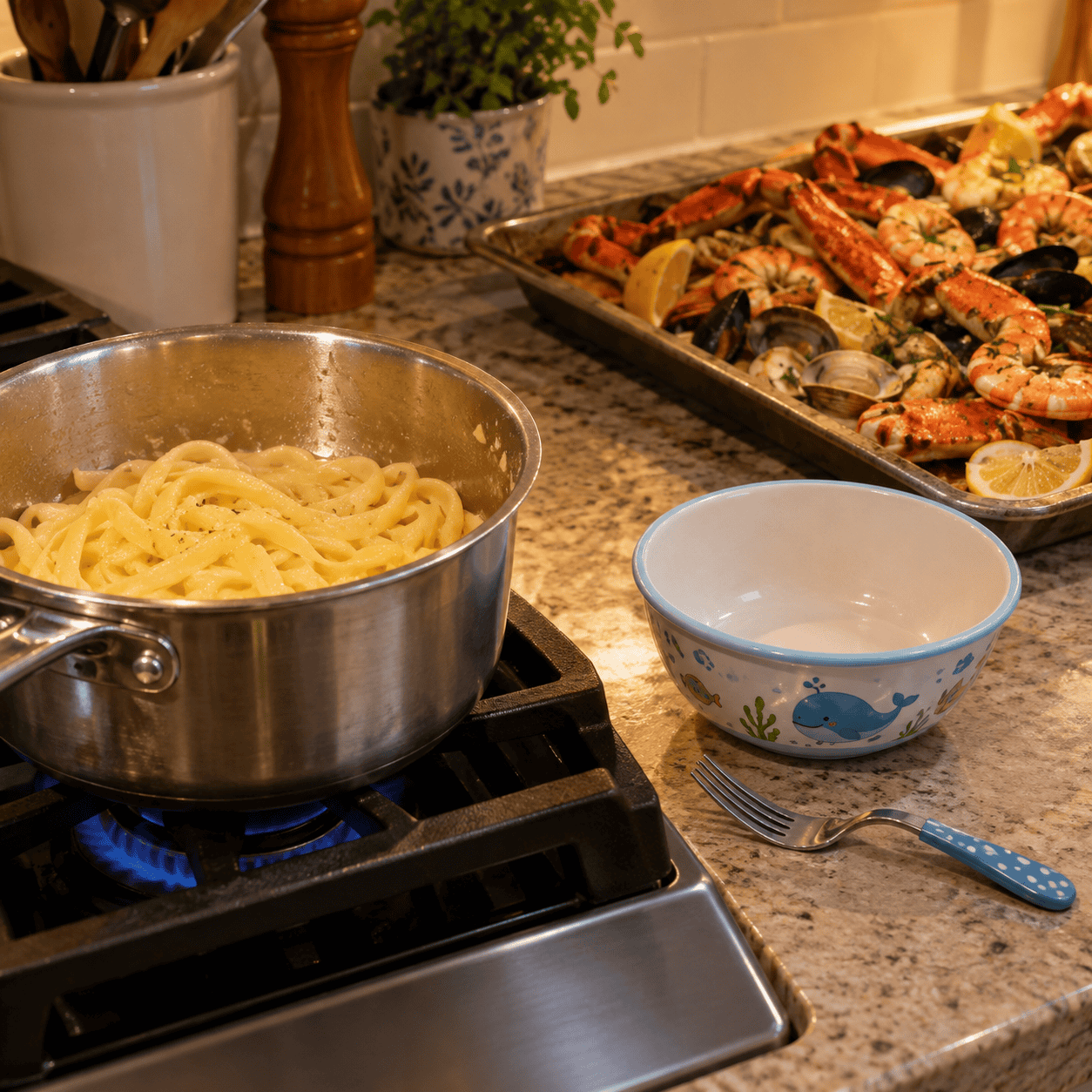
A small pot of buttered pasta on the back burner, or plain sauce, no cheese on it if it’s going near the vigil table.
The rule is that nobody comments. Not the aunt with opinions, not the cousin who’s been eating octopus since he was four.
Those kids turn thirty and ask where the smelts are. Every time.
20. The Whole Fish Comes to the Table With Its Head On
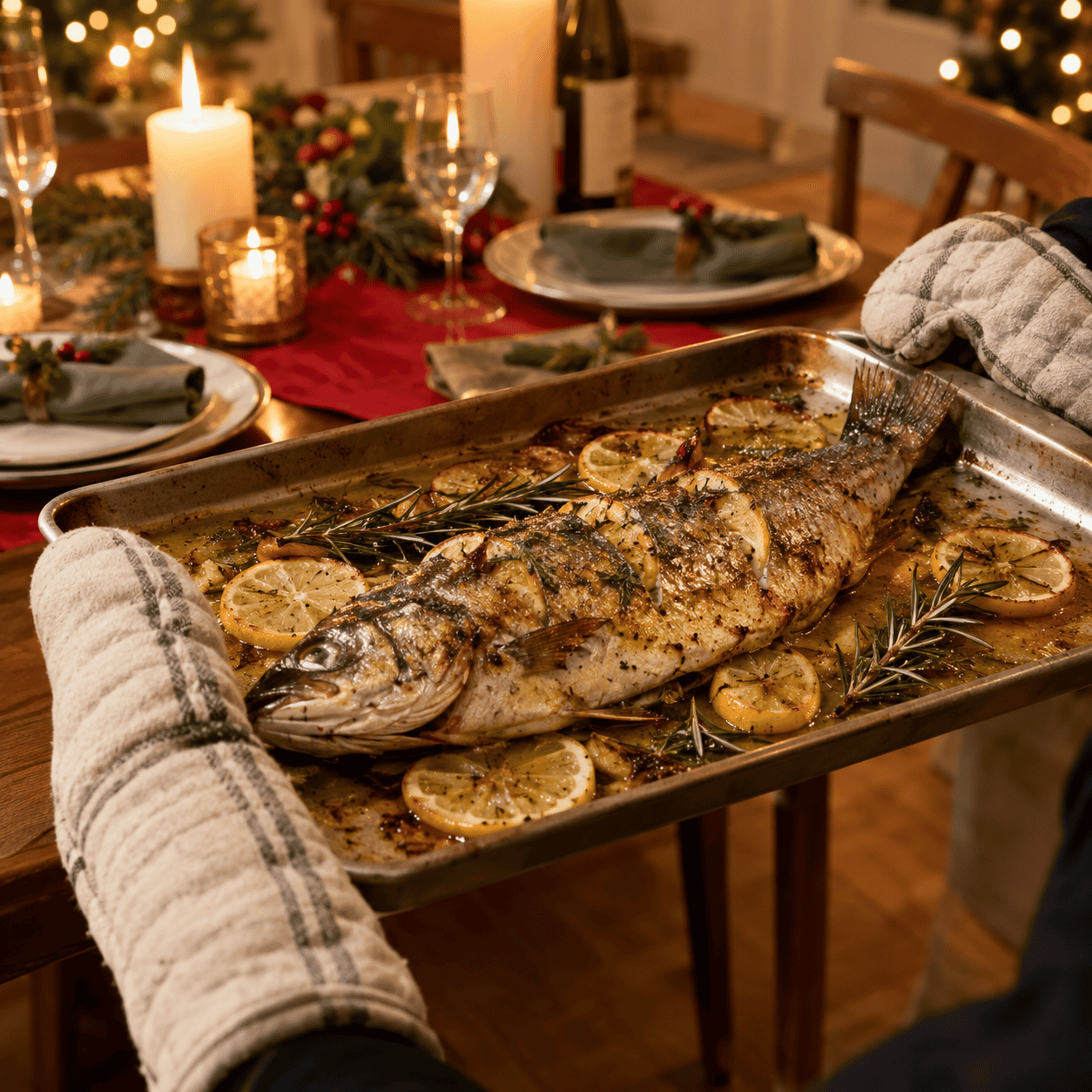
Branzino, red snapper, sea bass — roasted whole on a sheet pan with lemon, oil and a branch of rosemary, head and tail intact.
Trimming the head off is considered a loss of nerve. The whole fish says there was enough, and in the years there wasn’t, saying it mattered.
Some families also hold that the head shouldn’t point at the guest of honor. Ours rotated the platter without discussion.
21. The Cook Does Not Sit Down
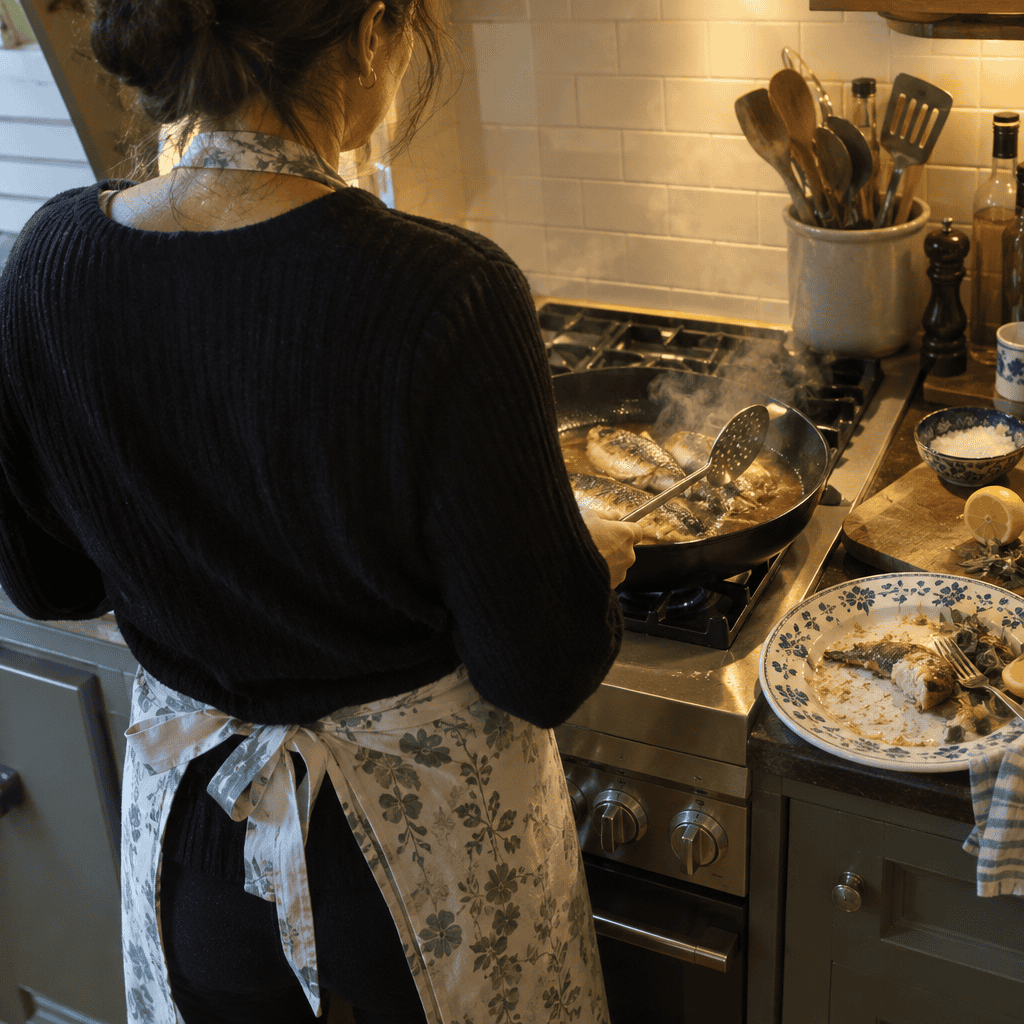
Five hours of courses means somebody is at the stove the entire time with a slotted spoon and a splatter screen.
Pina ate standing at the counter, out of the pan, between batches. When you asked, she’d say she already ate.
She had not already eaten. Nobody believed her and nobody could move her either.
I understand it now. The food tastes better over the stove and you can see everyone from there.
22. The Octopus and the Wine Cork
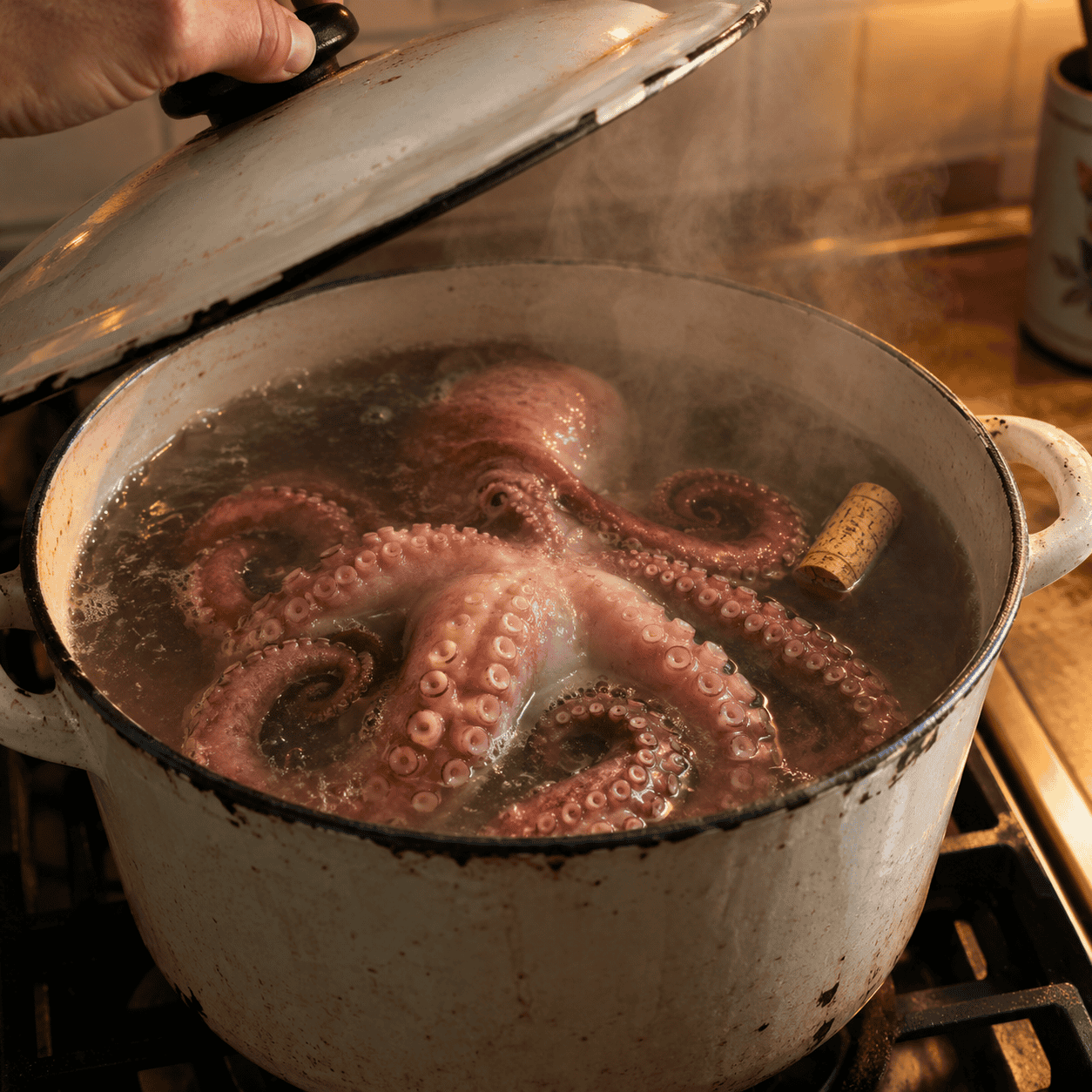
Drop a wine cork in the pot and the octopus comes out tender. Gospel. Passed down like a baptismal name.
It does nothing. There’s no enzyme, no chemistry, no mechanism. What actually tenderizes octopus is a long lazy simmer — 45 minutes to an hour in barely-bubbling water, then let it cool in its own liquid.
I still throw a cork in. She’s watching.
23. Lobster Fra Diavolo Is the Flex
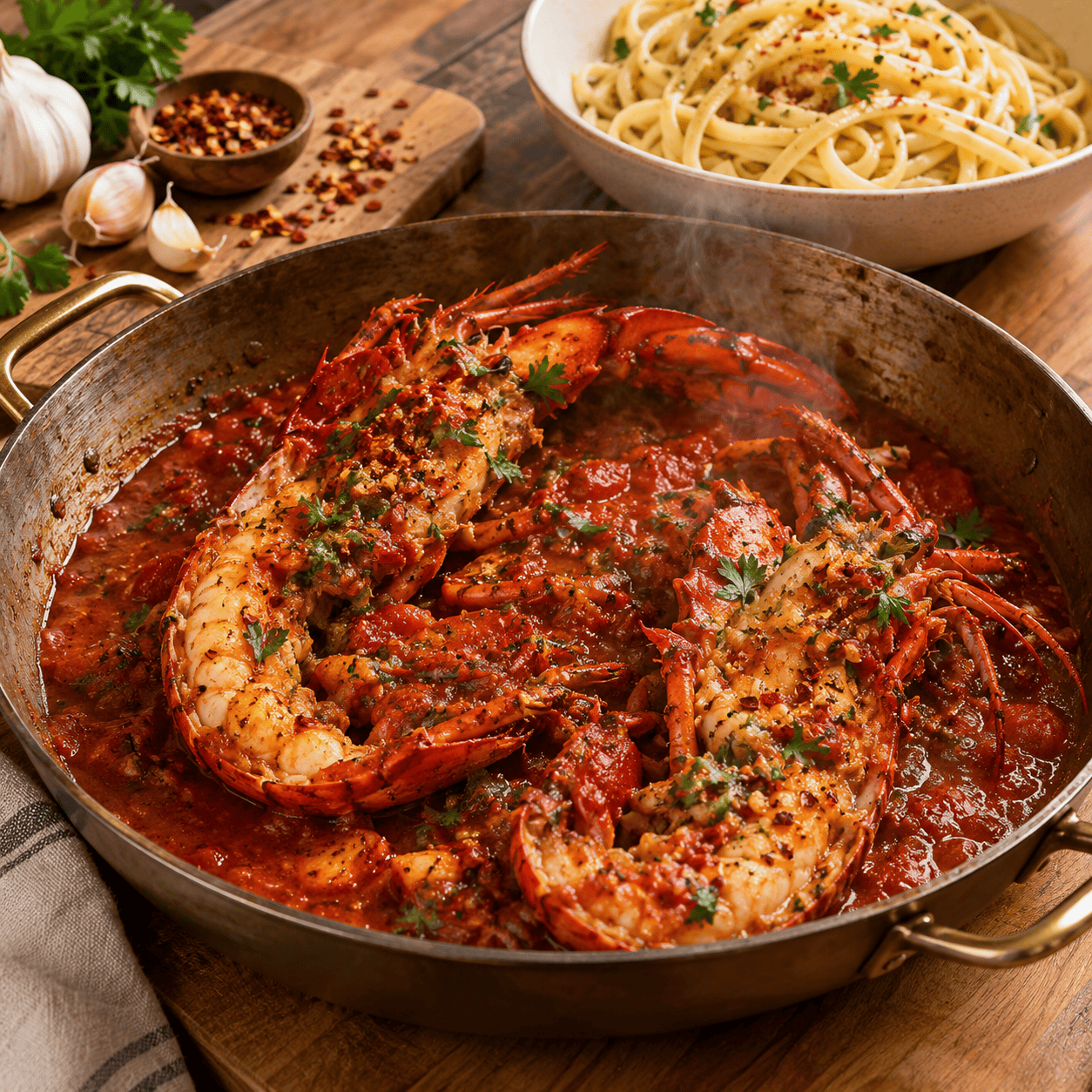
Lobster was not on the old-country vigil table. It showed up in American kitchens in the 1950s, when the family could finally afford to put it there.
Split the lobsters, sear the shells cut-side down in hot oil until they go red and the pan smells like the ocean. That step is the entire dish — the shells flavor the sauce, not the meat. Then garlic, red pepper flakes, white wine, canned San Marzano tomatoes crushed by hand, and the lobster pieces back in for the last eight minutes so the meat doesn’t turn to rubber.
Over linguine, and the sauce should be loose enough to pool. Two 1½-pound lobsters feed six people when there are nine other dishes.
Buy them live the day you’re cooking, from a tank with clean water and active animals. Frozen tails work and nobody will say anything, but you lose the shells, which means you lose the sauce.
This is the dish that marks the exact year the feast stopped being about poverty food and started being about having made it.
24. The Meatless Vegetables Nobody Counts
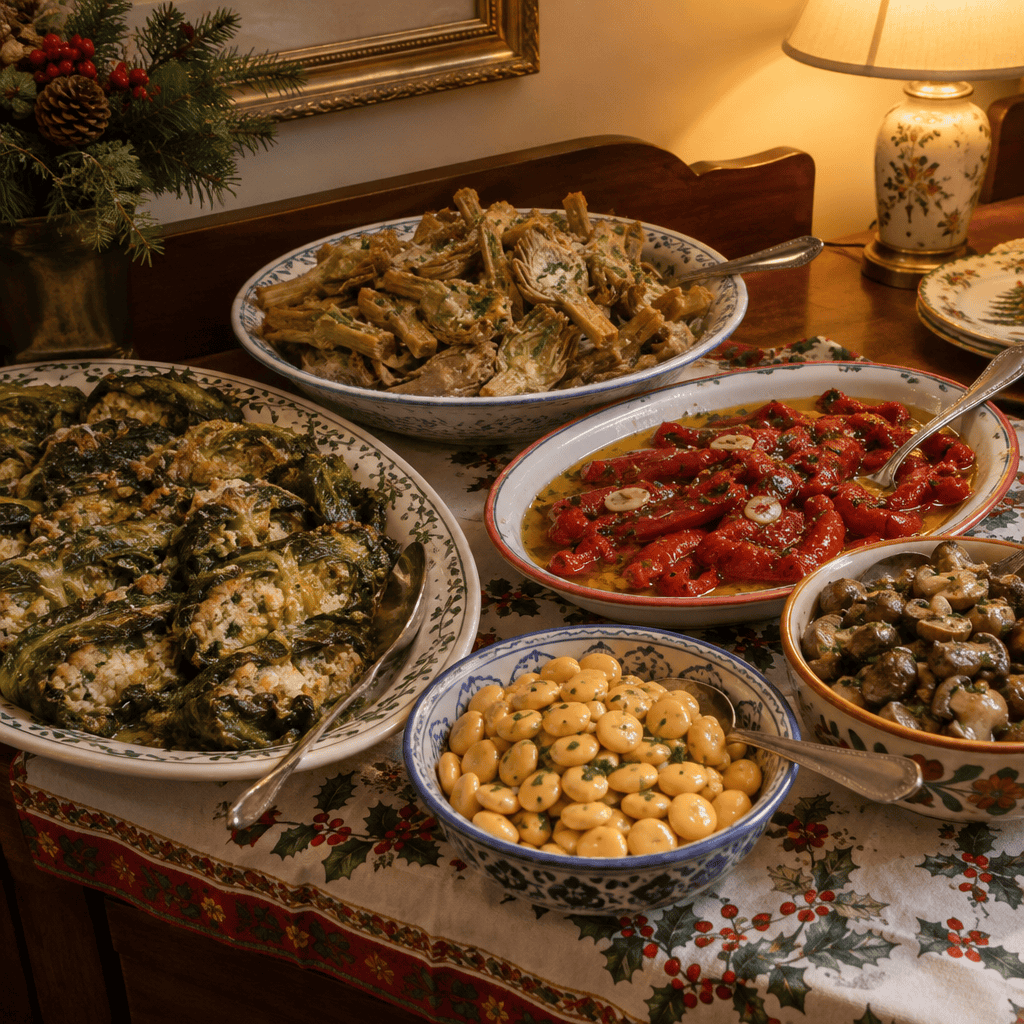
Stuffed escarole with pine nuts and raisins. Fried cardoons in batter. Stuffed artichokes, roasted peppers in oil, lupini beans in a bowl with salt, marinated mushrooms from a jar nobody admits is from a jar.
All meatless. None of it counts toward seven. All of it is what people actually miss thirty years later.
My mother’s cardoons are the thing my brother asks about, not the lobster. If you’re building out the table, the Italian side dishes for Christmas on the site cover most of these.
25. Dinner Is Scheduled Backward From Midnight Mass

Six or seven o’clock for the first courses. Dessert on the table by ten. Coats on at 11:15 because the good seats go fast.
The entire clock existed to get everyone to church before midnight, since the fast technically broke there.
Plenty of families stopped going to Mass decades ago and still eat on that exact schedule. Nobody’s quite sure why anymore. The food just comes out at six.
26. The Bambinello Doesn’t Go in the Manger Until Midnight
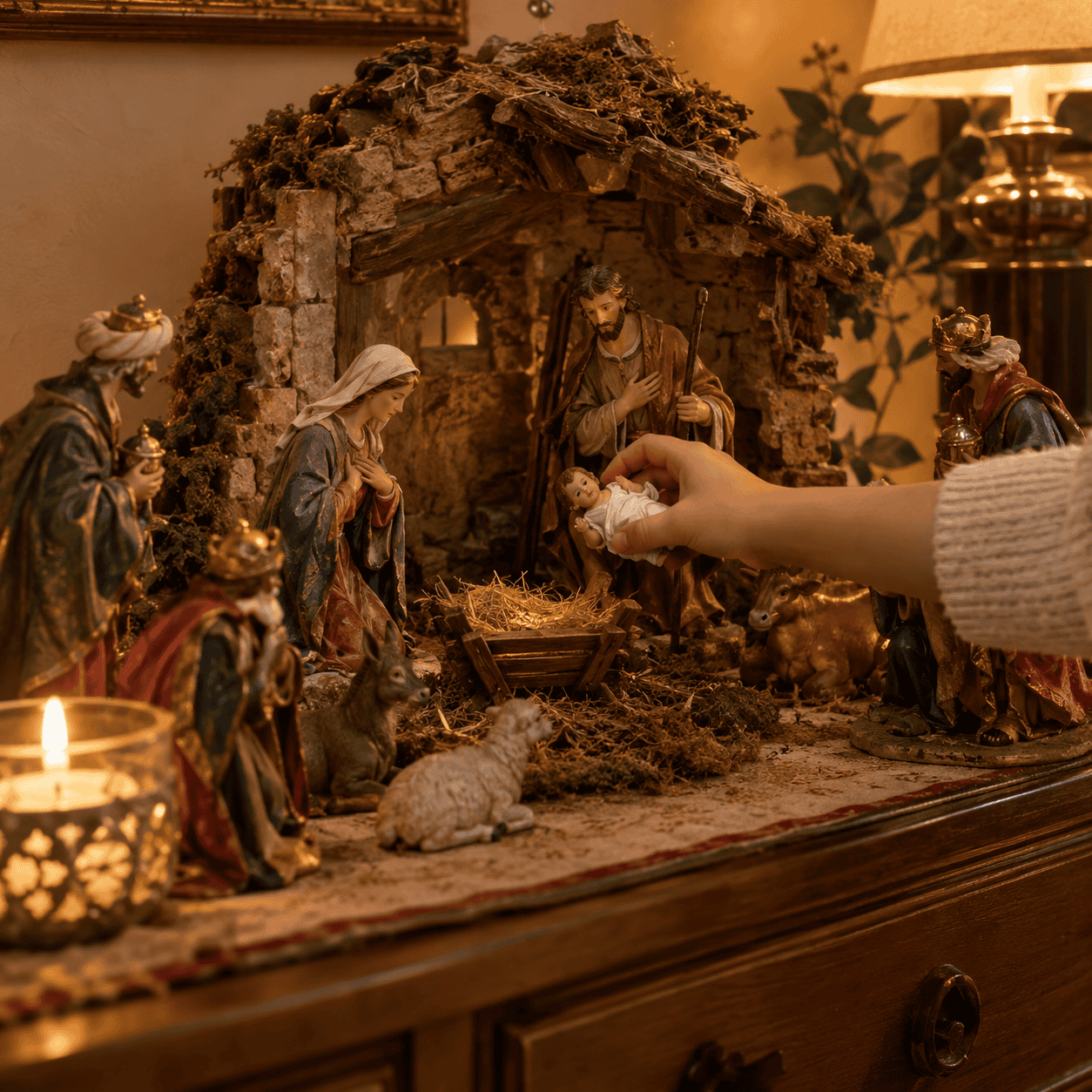
The presepe sits assembled all December with an empty manger. Shepherds, animals, the whole hillside — no baby.
At midnight the youngest child carries him over, or the oldest woman in the house does, and the room gets quiet for about forty seconds.
My daughter did it at four and dropped him. He’s been glued at the shoulder since 2003.
27. The Sweet Table Appears the Second the Fish Leaves
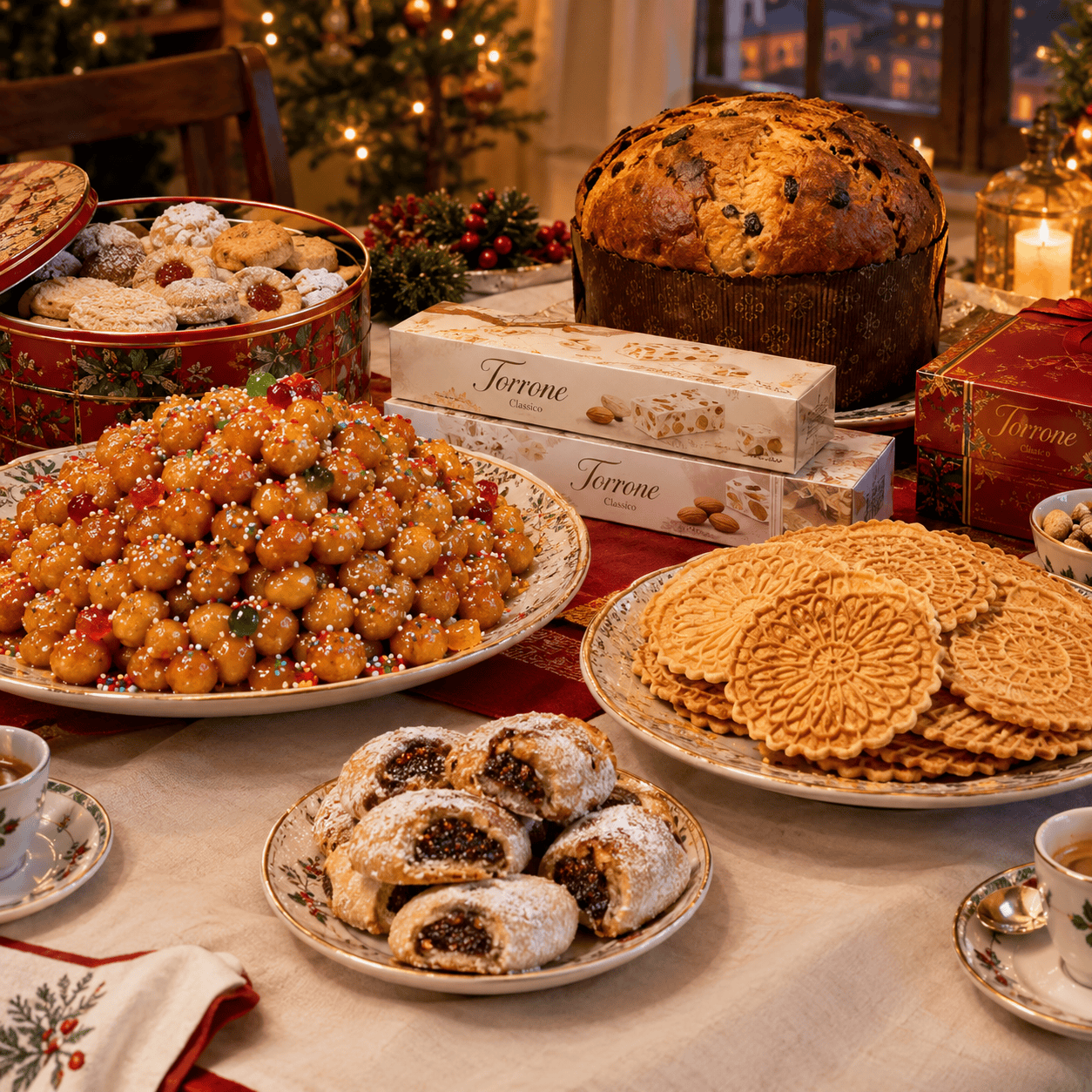
It’s not a course. It’s a scene change.
Struffoli in a sticky mound, pizzelle, cucidati, cartellate, torrone in the striped box, panettone, and a tin of Italian cookies — all of it hitting the same table that held the fish ten minutes earlier, usually over a fresh cloth laid right on top.
Store-bought panettone is fine. Nobody has ever made panettone at home in this family and nobody pretends otherwise.
Store-bought cookies are a different matter entirely, and the tin gets noticed. The Italian Christmas desserts on the site are mostly Pina’s, down to the anise.
28. Anisette, Espresso and the Card Game
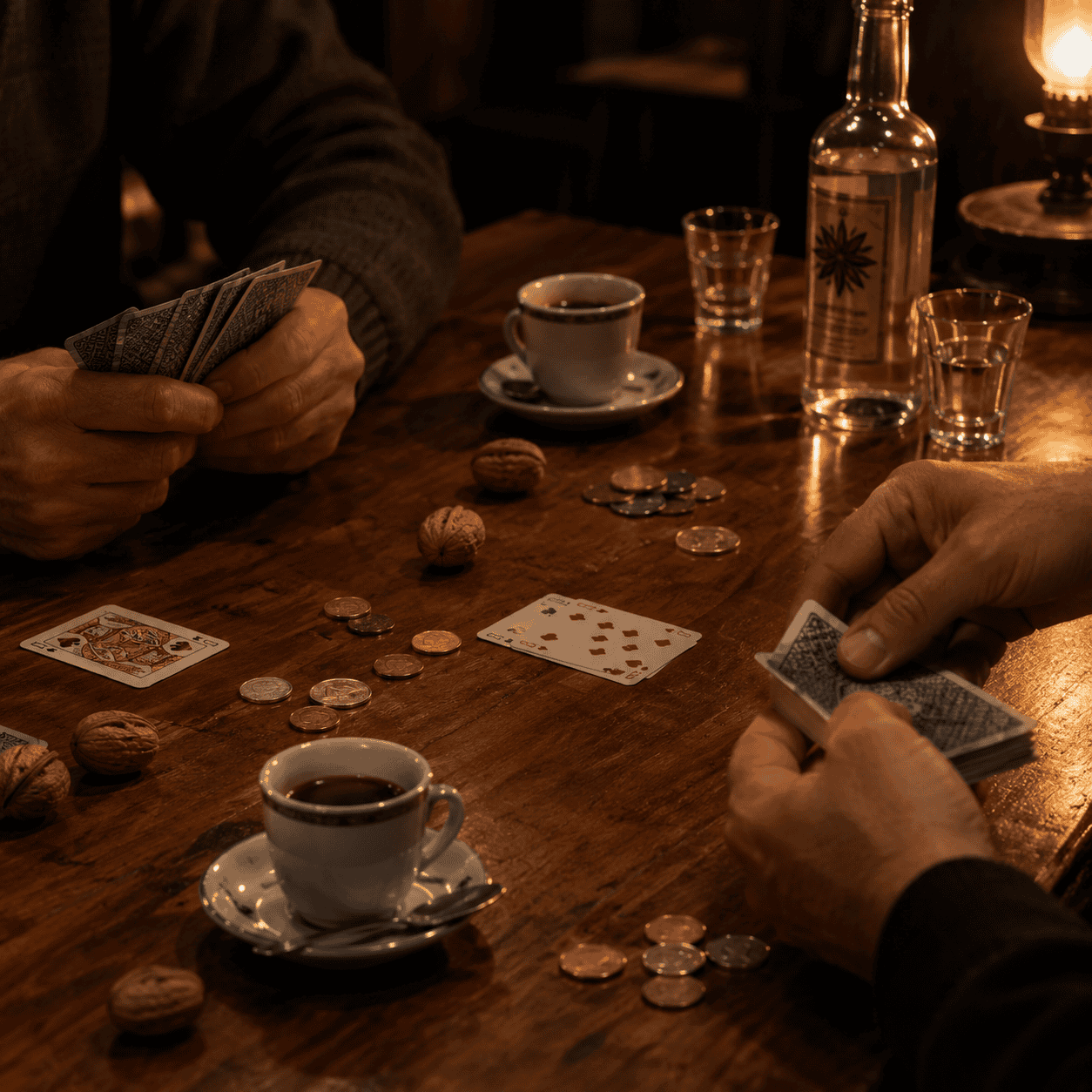
Espresso in the little cups, with a drop of anisette or sambuca in it, or next to it, depending on the uncle.
Then the cloth comes off and the cards come out. Tombola with dried beans for markers, or sette e mezzo for coins and walnuts.
This is where the night actually happens, somewhere around 12:40. It’s also where every kid in that family learned to count cards and keep a straight face.
29. The Leftovers Are the Real Christmas Morning
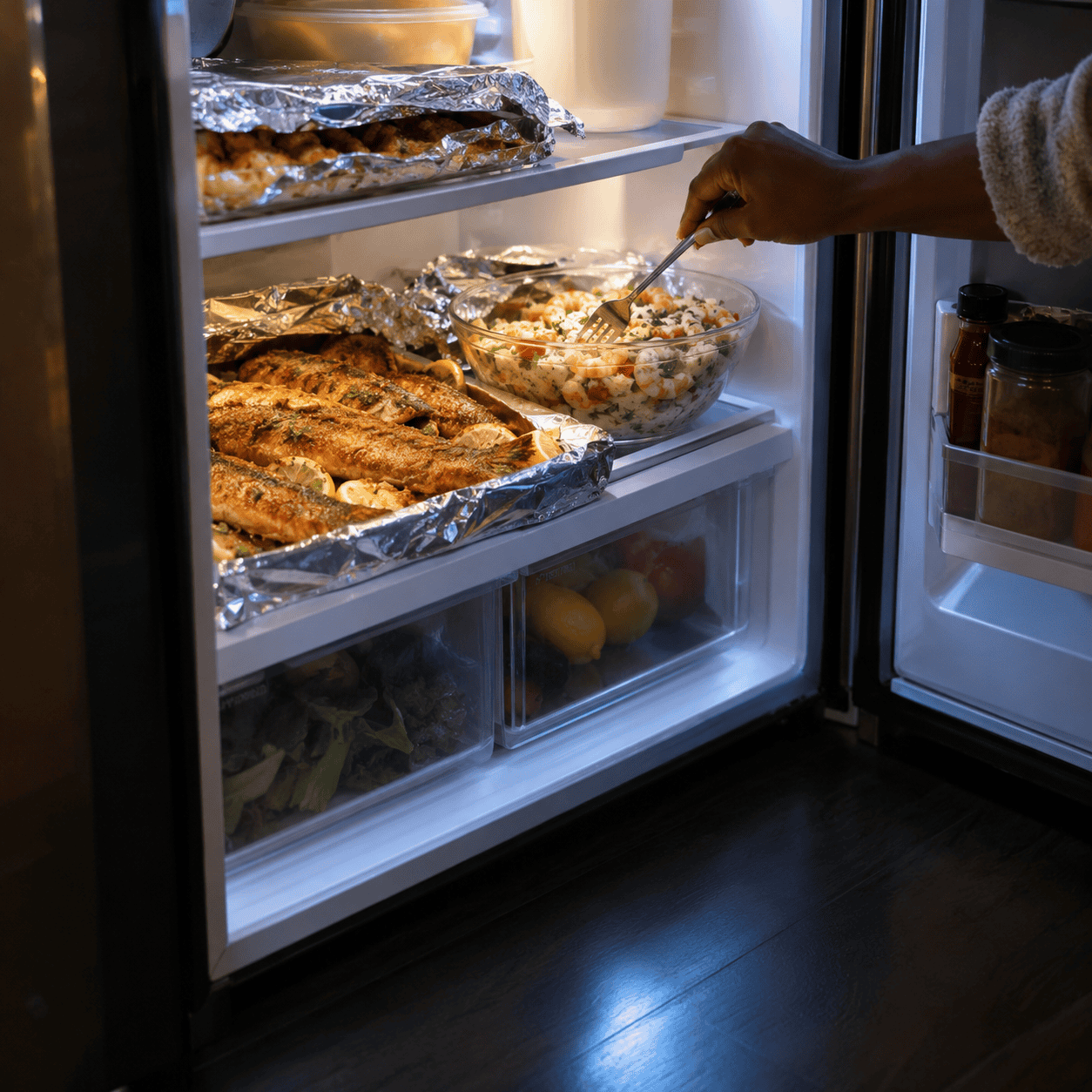
Cold fried smelts straight from the platter. A forkful of baccalà over the sink. Seafood salad eaten out of the bowl with the refrigerator door open and the light on your face at 7 a.m.
No plates. No rules. Nobody saying grace.
It’s the best meal of the whole holiday and it happens before anyone opens a present. Which is funny, considering Christmas Day is the day the meat finally comes back.
30. The Feast Happens at the Same House, Forever

Thanksgiving rotates. Christmas Eve does not.
There’s a house. Everyone drives to it. It stays that house until the woman running it physically can’t anymore, and then there’s a year where nobody says anything out loud and the whole family holds its breath.
The handoff — when a daughter or a daughter-in-law takes it — is the loudest quiet moment an Italian-American family has. Pina handed mine over in 1998 by just not buying the fish.
31. The Place Setting for the Ones Who Aren’t There
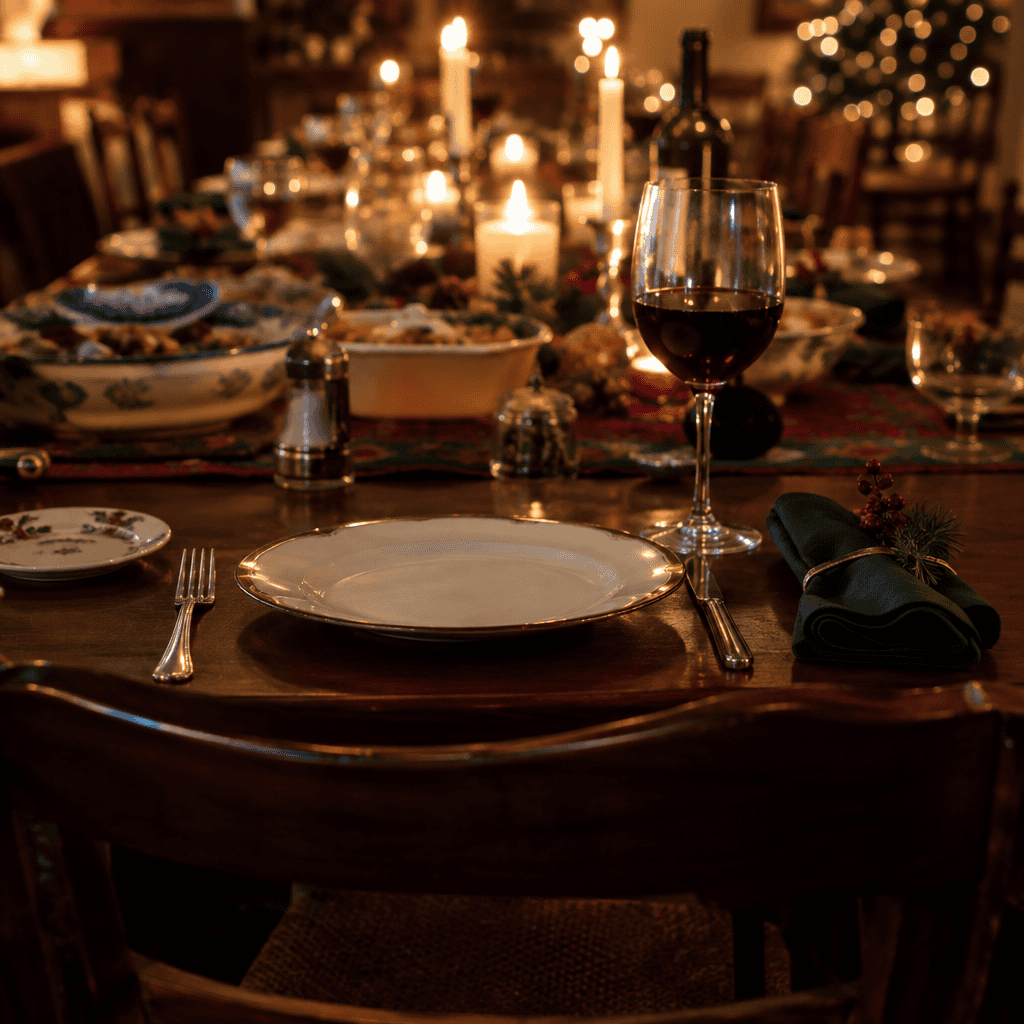
An extra plate at the end. An empty chair nobody pulls out. A glass poured and left.
For the dead, and for the ones still in Italy who aren’t coming. The USC Digital Folklore Archives collected the same habit from families who’d never met each other.
Nobody explains it to the children. They figure it out around twelve.
The seven fishes were never about the fish. They were about counting who’s still at the table.
32. Canned Tuna Is Still a Fish
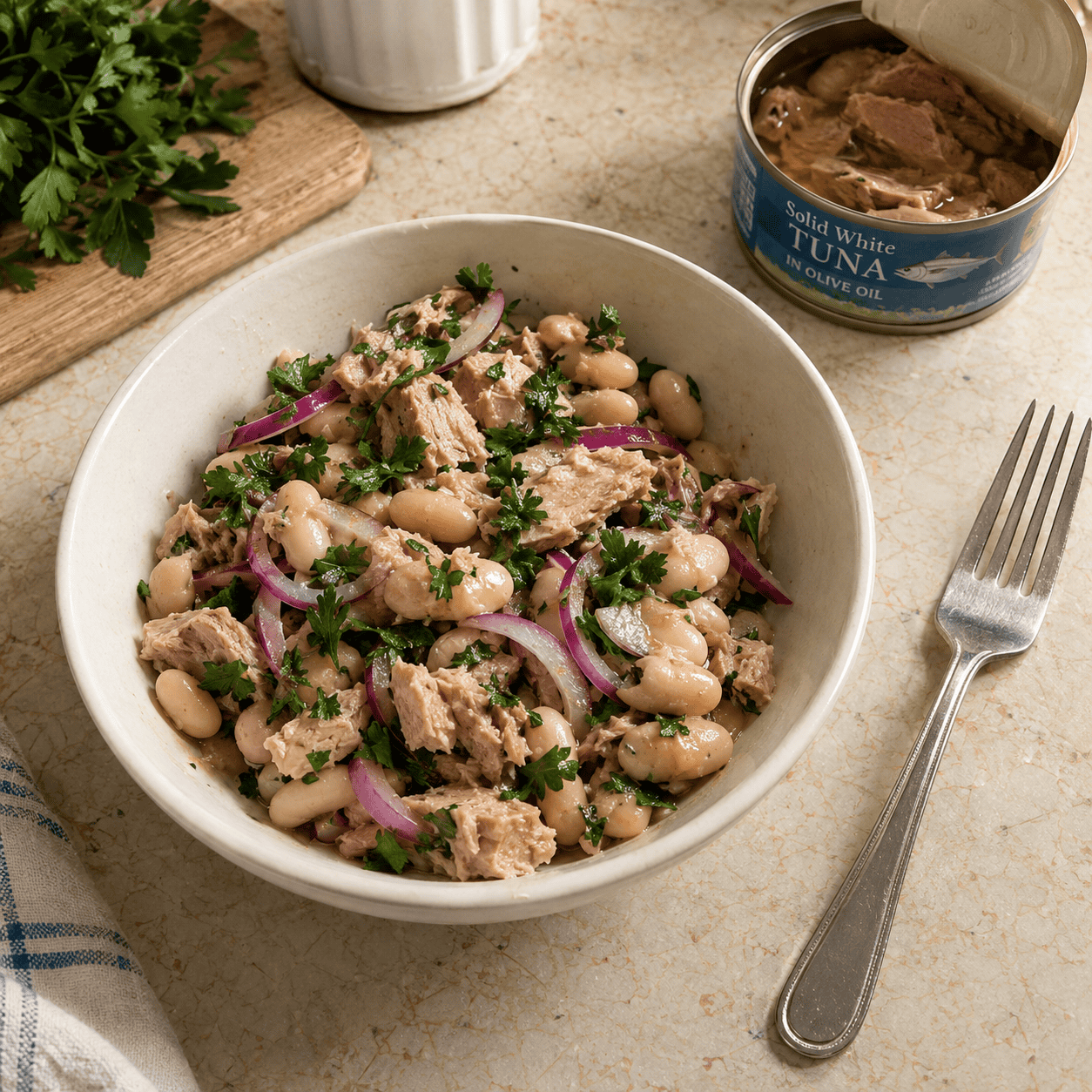
In a lean year, tuna packed in oil with white beans and red onion was a legitimate slot on the list. So was tuna stuffed into a roasted pepper.
Nobody apologized for it. The number got made and the kids got fed, and that was the entire point of the exercise.
I still put the bean and tuna out. It disappears before the lobster does.
33. Nobody Eats Before the Toast
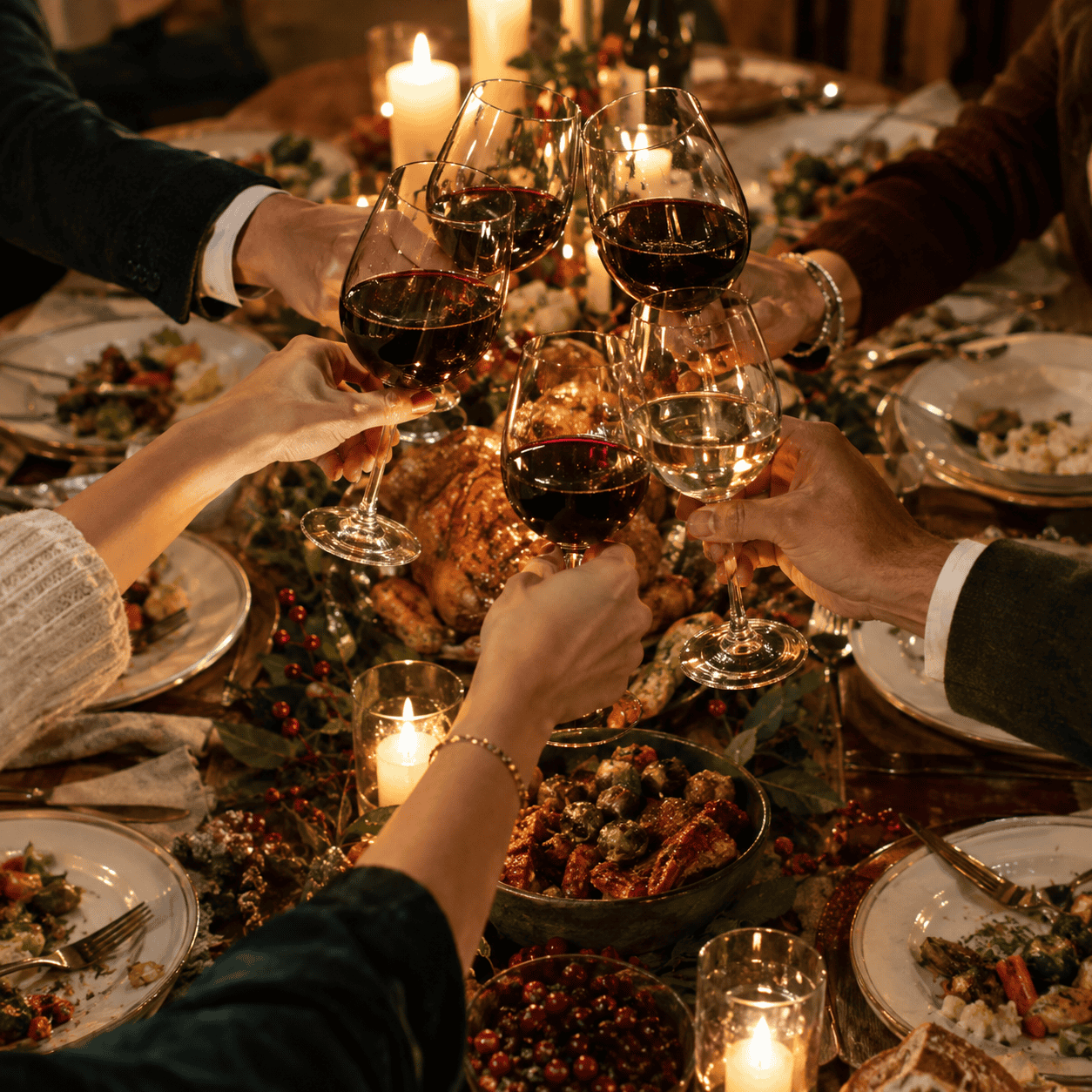
Glasses up first. The oldest person at the table says something — usually short, sometimes in dialect, occasionally just a name.
Forks stay down until then, including the cousin who’s been circling the smelts for twenty minutes.
My grandfather’s whole toast was four words and he cried through two of them.
34. The 2019 Movie That Explained the Feast to Everyone Else

There’s an indie film called Feast of the Seven Fishes, set in a West Virginia Italian-American family, and for a few years it did the explaining so we didn’t have to.
Around the same time restaurants started running seven-fish tasting menus at $95 a head, which is a strange thing to see when your version happens on a folding table with plastic on it.
Mixed feelings. But it’s nice not having to describe baccalà from scratch to every new in-law.
The fish change. The arguments don’t.
Somebody will bring up the seven sacraments this year, and somebody will say mussels don’t count, and the whole thing will go exactly the way it went in 1974 in a rowhouse outside Philadelphia with the windows open in December because of the frying.
Set the extra plate. Put the cork in the pot. Let the kids have the buttered pasta.
Buon appetito,
Madeline