
My Mom’s Sicilian Peperonata Recipe (No Tomato)
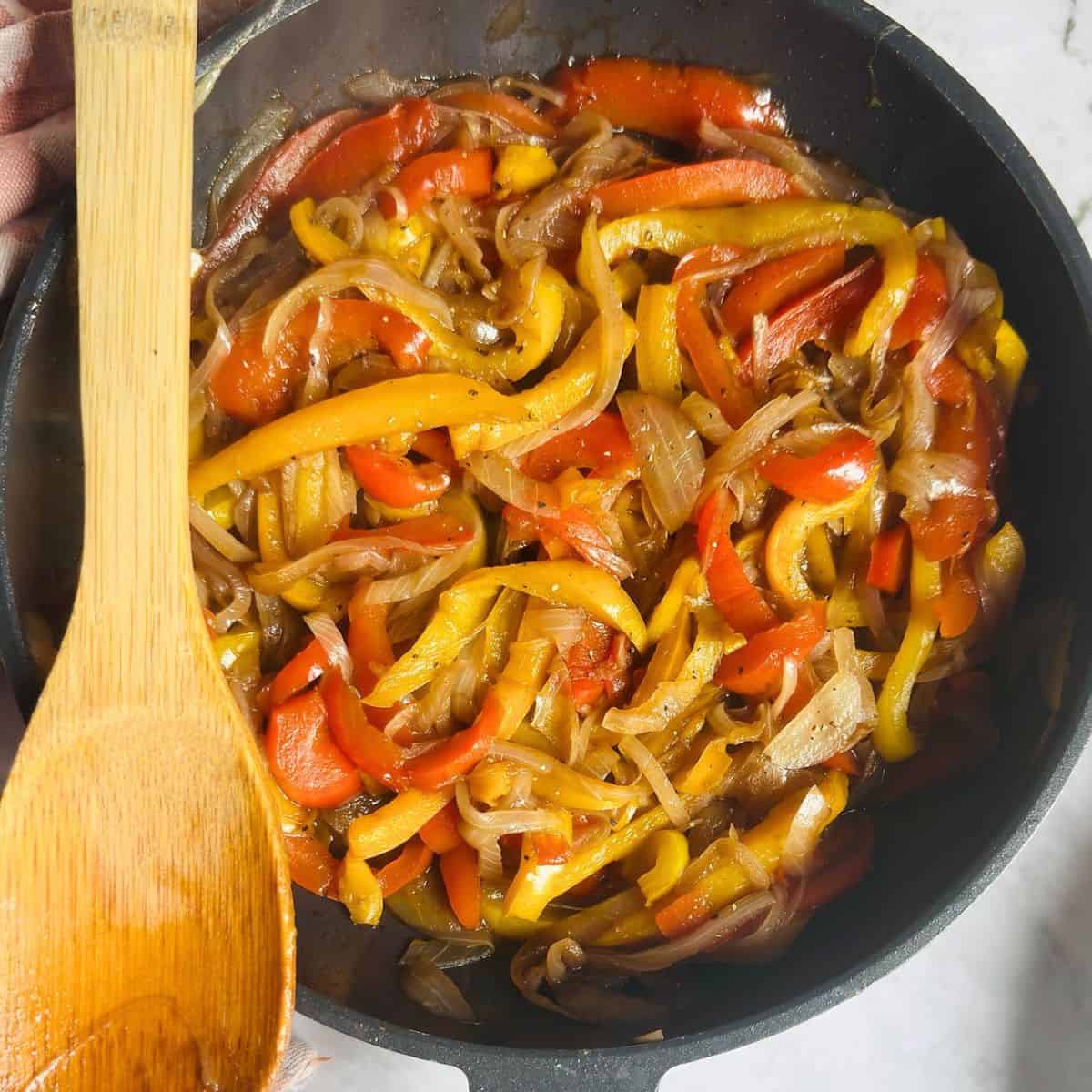
Some recipes don’t need much explaining, and this peperonata recipe is one of them. It’s the way my mom makes it in Sicily, and it’s the version I always come back to.
What makes it different from most peperonata you’ll find online? There’s no tomato.
The peppers are the star here, and honestly, they don’t need any help. Slowly cooked until soft and sweet, with a little tang at the end, they’re the kind of side dish that ends up on everything.
It’s easy, it’s cheap, and it’s even better the next day. Once you try it this way, you might never go back.
What is Peperonata?
Italian peperonata is a classic dish of stewed peppers. The name comes from “peperone”, the Italian word for bell pepper.
You’ll find it all over Italy, and every region (and honestly, every family) has its own way of making it. Many versions include tomatoes, and some add potatoes too.
My mom keeps it simple. She cooks the peppers slowly with onion and olive oil until they’re tender, then finishes them with balsamic vinegar. Nothing else.
If you’ve never had it, think of Italian stewed peppers that are soft and sweet, with a little tang at the end. It’s usually served as a side dish, but it’s just as good piled on a slice of bread.
What Ingredients You Need for This Peperonata Recipe
Red and yellow bell peppers: Pick the sweetest ones you can find. Red and yellow peppers are riper than green ones, so they’re sweeter and much less bitter. Look for peppers that feel heavy for their size, with shiny, firm skin. Using both colors also makes the dish look so pretty on the plate.
Onion: Just one, sliced thin. It melts into the peppers as they cook and adds a gentle sweetness.
Extra virgin olive oil: Use a good one. With so few ingredients, you’ll really taste it.
Water: About half a glass. It helps the peppers steam and soften under the lid without sticking to the pan.
Balsamic vinegar: It goes in at the very end and gives the peperonata its sweet and tangy flavor. You don’t need an expensive aged balsamic here. A good everyday bottle works fine.
Salt and black pepper: Added once the peppers are soft, so you can season to taste.
Why no tomato? This is simply how my mom makes her Sicilian peperonata, and I love it this way. Without tomato, the natural sweetness of the peppers comes through much more. The balsamic brings the little bit of acidity that tomato would normally add, and the whole dish feels lighter.
How to Make Peperonata
Making peperonata at home is really easy. The only thing that takes a bit of time is slicing the peppers.
Peel the onion and cut it into thin slices. Heat the olive oil in a large pan over medium-low heat, add the onion and let it soften for about 5 minutes, stirring now and then.
While the onion cooks, wash the peppers, cut them in half, and remove the stem, seeds, and white ribs.
Slice them into thin strips. Thin strips cook much faster, and that’s the secret of this quick version.
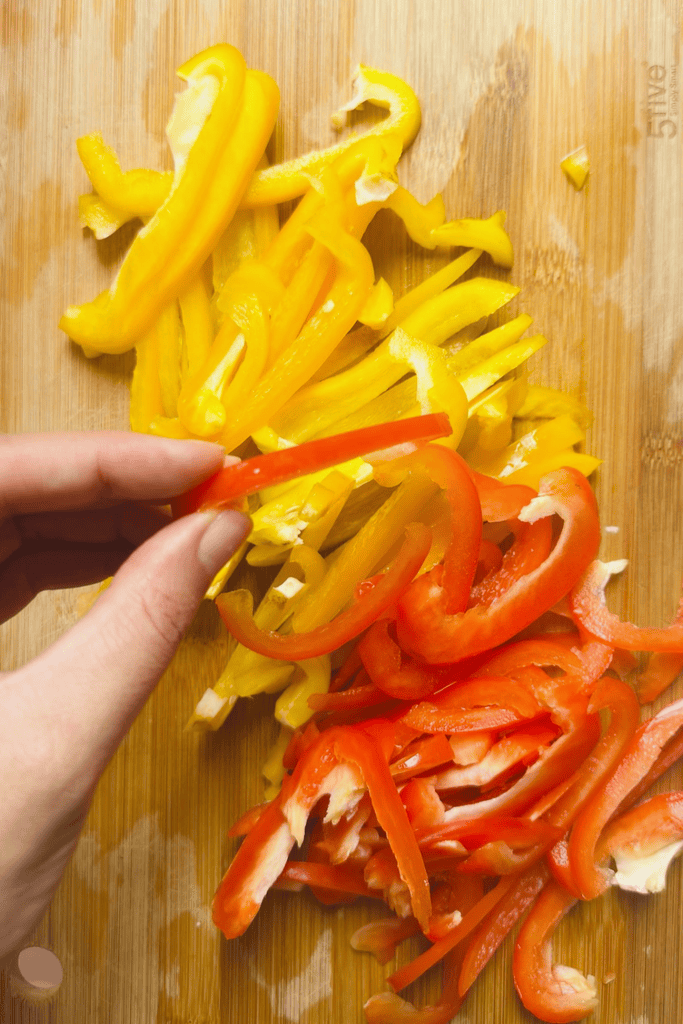
Add the pepper strips to the pan and stir them into the onion. Let everything soften for a few minutes.
Pour in about half a glass of water, cover the pan with a lid and turn the heat down to low. Cook for about 20 minutes, stirring from time to time.
When the peppers are nice and soft, season with salt and black pepper.
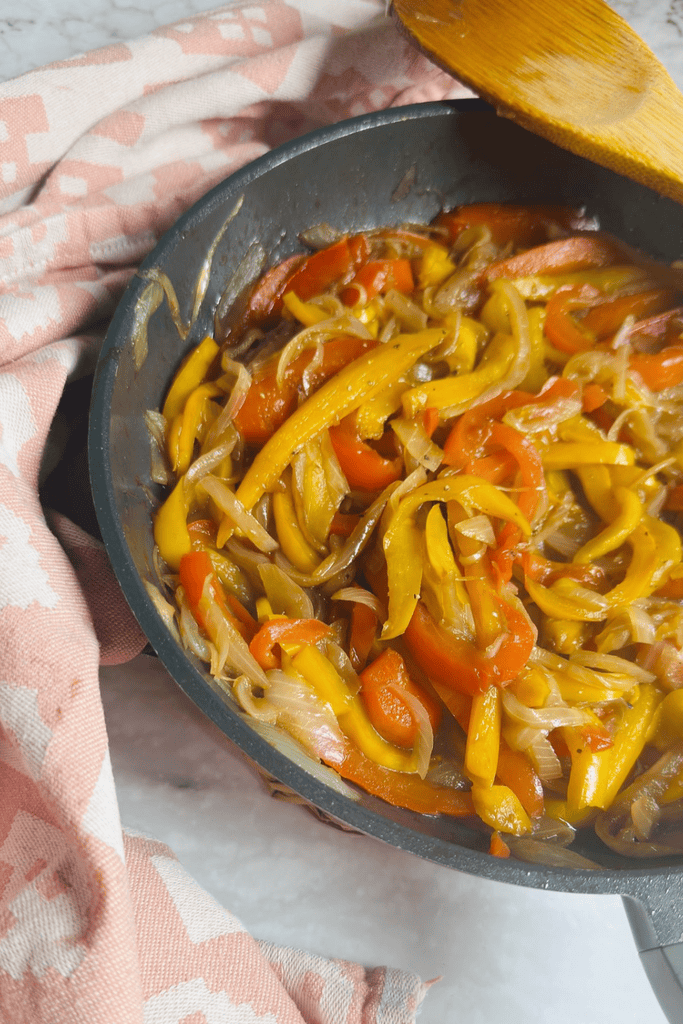
Pour in the balsamic, turn up the heat and let it bubble for a minute or two until the vinegar evaporates. Your peperonata is ready!
Chef’s Tips
Slice the peppers thin. Thin strips soften in about 15 to 20 minutes. Thick chunks will need a lot longer.
Keep the lid on. The lid traps the steam from the water, and that’s what makes the peppers tender without frying them.
Keep an eye on the water. If the pan looks dry before the peppers are tender, add another splash. If there’s too much liquid at the end, leave the lid off for a few minutes.
Let the vinegar cook off. A minute or two over high heat takes away the sharp smell of the vinegar and leaves just the sweet, tangy flavor.
Make it ahead. Peperonata tastes even better the next day, once the flavors have had time to settle.
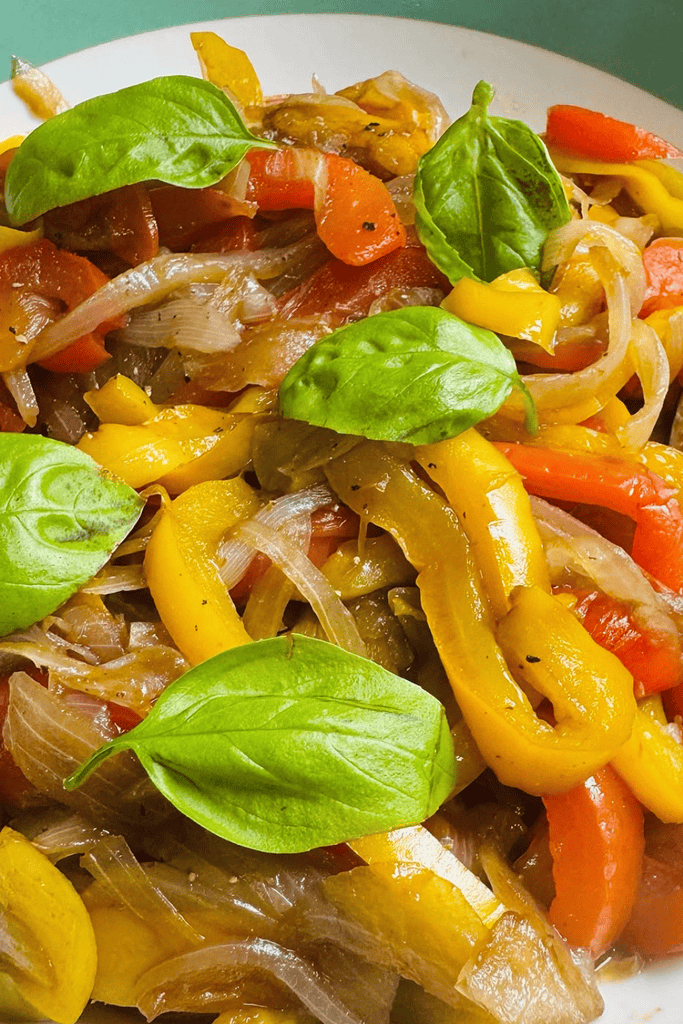
How to Serve Peperonata
Peperonata is one of those dishes that goes with almost everything. You can serve it hot, warm or at room temperature.
My favorite way to eat it, though, is piled on top of a warm slice of my chickpea farinata. The crispy edges and soft center soak up all those sweet pepper juices, and together they make a simple lunch I could eat every week.
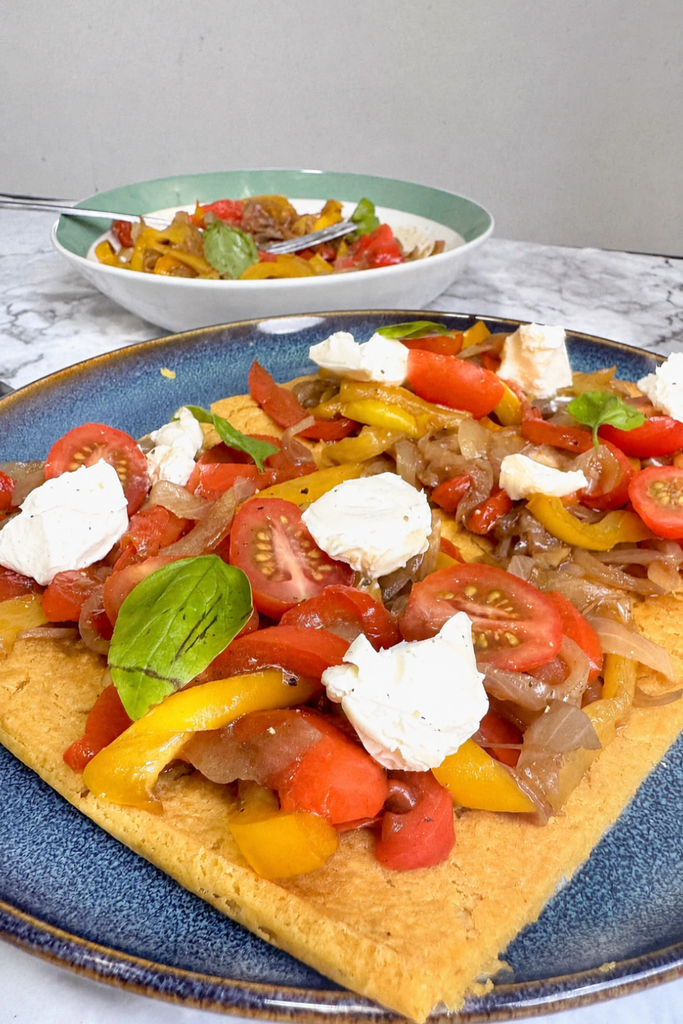
It’s a classic side dish for grilled sausages, chicken or a nice steak. If you need ideas, most of these Italian sausage recipes pair really well with it. It’s lovely with fish too, so try it next to one of my Italian seafood recipes.
I also like it spooned over a slice of toasted crusty bread, just like a quick homemade bruschetta. Add it to an antipasto platter with cheese, cured meats and a few other Italian appetizers, and it disappears fast.
You can even toss it with pasta as an easy tomato-free pasta sauce, or tuck it into a sandwich with fresh mozzarella. And don’t forget the bread for the scarpetta, to wipe up the juices left in the pan.
How to Store Peperonata
In the fridge: Let it cool, then keep it in an airtight container in the refrigerator for up to 3 to 4 days.
To reheat: Warm it gently in a pan over low heat, or let it come to room temperature before serving. It’s really good cold too.
In the freezer: You can freeze peperonata for up to 3 months. Thaw it in the fridge overnight. The peppers will be a little softer, but still full of flavor.
Recipe Variations
My mom’s version is the one I always come back to. But if you feel like trying something different, here are a few optional twists. They’re not part of her recipe, just ideas to play with.
Peperonata with potatoes: Add a couple of peeled, cubed potatoes together with the peppers. You’ll need a little more water and a few extra minutes of cooking, until the potatoes are tender.
Peperonata with tomato: If you like the more common version, add a few spoonfuls of tomato passata or a couple of chopped ripe tomatoes after the water. In that case, use less balsamic vinegar or leave it out.
Peperonata with olives and capers: Stir in a handful of pitted olives and a spoonful of rinsed capers when you add the balsamic. It gives the dish a salty, briny kick.
Try My Mom’s Sicilian Peperonata
I hope you’ll give this peperonata recipe a try. It’s simple and comforting, and it shows how good a few honest ingredients can be when you let them cook slowly.
This is how my mom makes it in Sicily, and now you can make it in your kitchen too. If you try it, let me know in the comments!
Peperonata recipe

Ingredients
- 2 large bell peppers 1 red and 1 yellow
- 1 medium onion
- 3 tablespoons extra virgin olive oil
- 1/2 cup water about half a glass, 120 ml
- 3 tablespoons balsamic vinegar
- Salt to taste
- Freshly ground black pepper to taste
Instructions
- Peel the onion and slice it thinly. Heat the olive oil in a large pan over medium-low heat, add the onion and cook for about 5 minutes, until soft.
- Meanwhile, wash the peppers, remove the stems, seeds and white ribs, and slice them into thin strips.
- Add the peppers to the onion, stir and let everything soften for a few minutes.
- Pour in the water, cover with a lid and cook over low heat 20 minutes, stirring now and then, until the peppers are soft.
- Season with salt and black pepper.
- Add the balsamic vinegar, turn up the heat and cook for 1 to 2 minutes, until the vinegar evaporates. Serve hot, warm or at room temperature.
Notes
- Choose the sweetest red and yellow peppers you can find. Avoid green peppers, which are more bitter.
- Slice the peppers thin so they cook quickly.
- If the pan gets dry before the peppers are soft, add a splash more water.
- Store leftovers in an airtight container in the fridge for up to 3 to 4 days, or freeze for up to 3 months.
Peperonata FAQ
Can I use green peppers?
You can, but green peppers are less ripe and more bitter. For this recipe, I really recommend the sweetest red and yellow peppers you can find.
Is peperonata served hot or cold?
Both! It’s great hot from the pan, but also at room temperature or cold from the fridge.
Can I make peperonata ahead of time?
Yes, and I think it’s even better that way. Make it a day ahead, store it in the fridge and warm it up or serve it at room temperature.
Is peperonata vegan and gluten-free?
Yes, this easy peperonata is naturally vegan and gluten-free. Just check the label on your balsamic vinegar if you need to be strict about it. For more ideas, take a look at my vegan Italian recipes.
What’s the difference between peperonata and caponata?
Sicilian caponata is a sweet and sour dish made mostly with eggplant. Peperonata is all about the peppers.


