![Pink vintage Italian scooter, est. 2020. Italian [Brand Name] logo.](https://www.the-bella-vita.com/wp-content/uploads/2022/03/cropped-new-logo-2.png)
Easy Pasta alla Gricia Recipe
If you’ve ever wondered what makes Italian food so magical, Pasta alla Gricia might be the answer.
It’s one of Rome’s oldest recipes — simple, satisfying, and quietly elegant.
With just a handful of ingredients, it creates a creamy, peppery pasta that’s as comforting as it is refined.
This pasta is everything I adore about Italian cooking — it’s all about tradition, taking your time, and really appreciating the ingredients.
Every bite tells a story, like the shepherds in the Roman hills and families coming together around cozy wooden tables, sharing recipes that have been lovingly handed down through generations.
And you know what? It’s a great reminder that cooking doesn’t have to be complicated to be delicious! With care and intention, even the most basic ingredients can become something extraordinary.
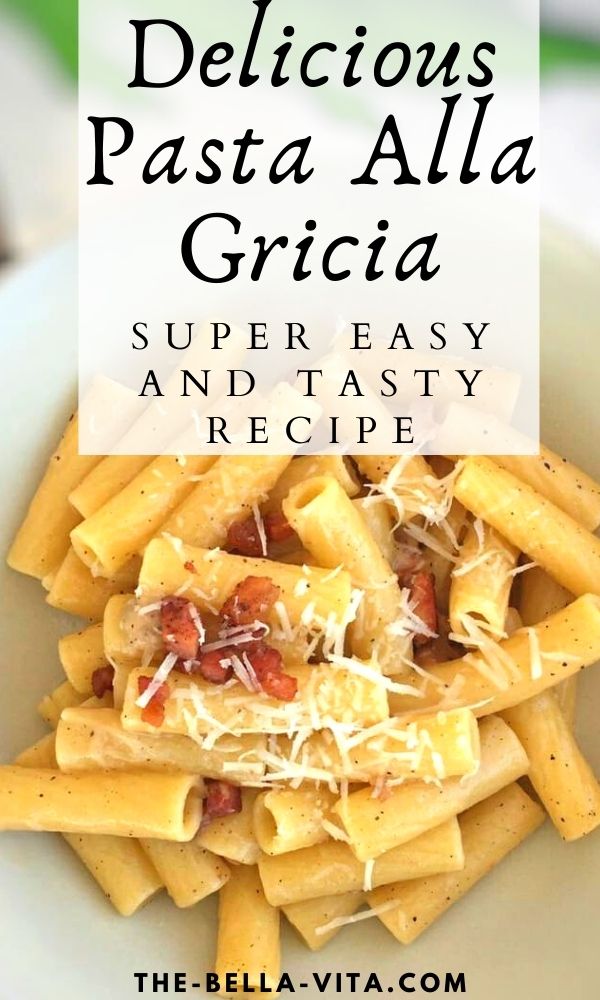
What Makes Pasta alla Gricia So Special
You might look at this dish and think: “That’s it? Just pasta, pork, cheese, and pepper?”
Yes — and that’s exactly the beauty of it.
Here’s what makes it stand out:
- Simplicity. With only a few quality ingredients, every flavor matters.
- Fast: It takes less than 20 minutes from start to finish.
- Naturally super creamy: No cream, no butter — just the magic of pecorino and pasta water.
- Soo good. The kind of pasta that feels like a warm hug.
About the Ingredients
When you’re cooking with only five or six ingredients, quality matters more than ever. Each component brings something essential to the table.
1. Guanciale
This is the star of the dish — cured pork cheek that melts as it cooks, releasing rich, savory fat. It’s what gives Gricia its depth and texture.
If you can’t find guanciale, pancetta is the best substitute. Bacon works in a pinch, but guanciale’s delicate balance of salt and fat is what makes the best flavor.
2. Pecorino-Romano cheese
Made from sheep’s milk, this hard, salty cheese is sharp, tangy, and full of character. It forms the creamy sauce when combined with starchy pasta water.
Always grate it fresh. Pre-grated versions won’t melt the same way.
3. Black Pepper
Freshly cracked black pepper adds warmth and spice. Don’t skimp on it.
4. Pasta
Traditionally, Romans use rigatoni or spaghetti. Rigatoni’s ridges catch the sauce beautifully, but both work perfectly.
5. Pasta Water
When you cook pasta, it releases starch into the water. This starch helps thicken melted cheese and fat, creating a creamy sauce.
How It All Comes Together
(You’ll find full measurements and step-by-step directions in the recipe card below.)
The process is simple but requires attention to detail — a hallmark of good Italian cooking.
- Cook the pasta until just al dente, saving a cup of the starchy water.
- Slowly render the guanciale in a skillet until golden and crisp.
- Toss in the pasta and add a cup of pasta water.
- Remove from heat and mix in the pecorino and pepper until silky.
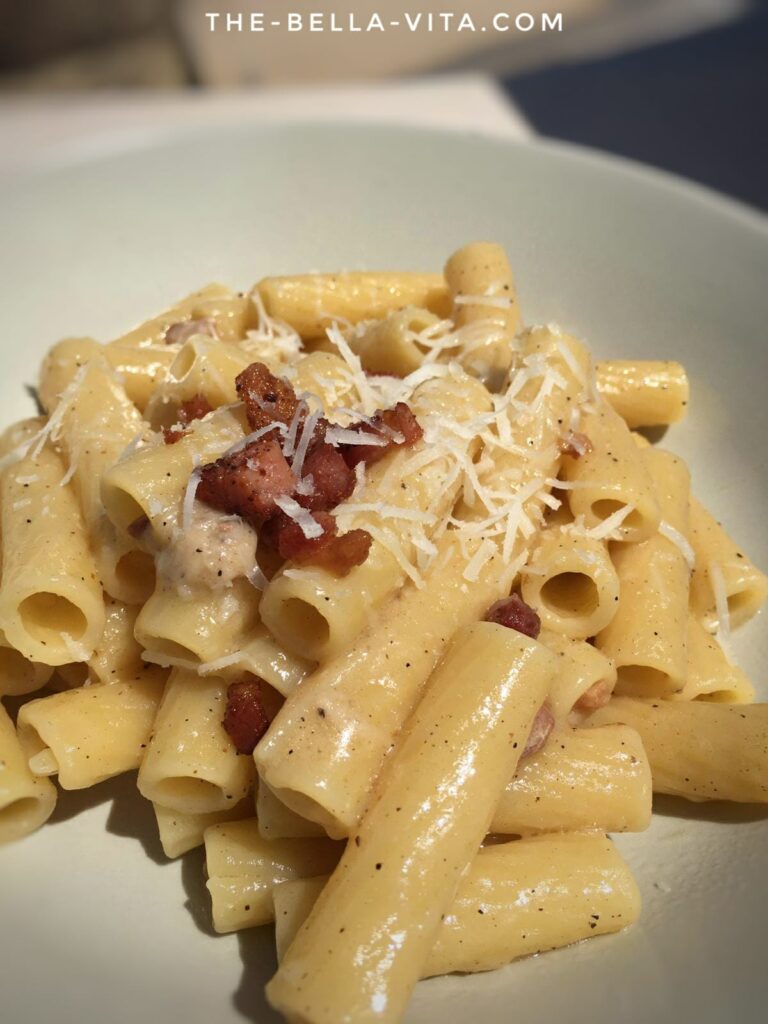
Angela’s Tips for the Perfect Gricia
I’ve made this pasta countless times — and while it’s simple, a few little habits make all the difference:
- Don’t rush the guanciale. Let it cook gently.
- Add cheese off the heat. This prevents clumping.
- Use your pasta water wisely. Add a little at a time until you reach the perfect texture.
- Toss, don’t stir. Lifting and folding helps the sauce coat every piece of pasta.
- Serve it hot. Pasta alla Gricia waits for no one — it’s meant to be enjoyed immediately.
How to Serve It
In Rome, Pasta alla Gricia is often served as a primo piatto (first course), but it easily stands alone as a full meal.
For the perfect Italian-style dining experience:
- Pair it with a glass of Montepulciano d’Abruzzo or a light white wine.
- Serve with arugula salad dressed with lemon and olive oil or grinder salad.
- End with something sweet — perhaps a slice of Lemon Bread or Tiramisu.
Variations You Can Try
Traditionalists will tell you not to touch the original recipe — and they’re mostly right! But once you’ve mastered the basics, you can play a little:
- Add chili flakes.
- Use pancetta if guanciale isn’t available.
- Add seasonal vegetables such as peas or zucchini.
- Try with Parmigiano Reggiano.
- Experiment with different pastas — bucatini and mezze maniche both work beautifully.
Can You Store or Freeze It?
Here’s the honest truth: Pasta alla Gricia is best eaten immediately.
Once the sauce cools, it loses that luscious texture that makes it special. If you happen to have leftovers:
- Store them in the fridge for up to a day.
- Reheat gently with a splash of hot water to revive the sauce.
- Avoid freezing — the cheese and fat separate when thawed.
But really, this is one of those dishes that’s worth making fresh every single time.
Pasta Alla Gricia Recipe: Super Fast & Easy Recipe
More Italian Recipes to Try Next
- Pasta alla Carbonara – creamy, rich, and timeless.
- Cacio e Pepe – simple, peppery, and unforgettable.
- Amatriciana – the tomato-kissed sister to Gricia.
- Pasta with Zucchini, Bacon & Tomato Sauce – fresh and hearty.
- Pasta with fresh tomatoes, a classic.
- Pasta alla Nerano, another super creamy pasta.

Pasta Alla Gricia Recipe
Ingredients
- 4 ounces guanciale or thick-cut bacon if you can’t find guanciale
- Salt to taste
- 8 ounces rigatoni or spaghetti
- 1 cup freshly grated Pecorino Romano cheese divided
- Freshly ground black pepper to taste
- 1 cup of reserved pasta water
Instructions
- Cut the guanciale into small cubes or strips. Set aside.
- In a large non-stick skillet, cook the guanciale over low heat. Let the fat slowly melt and render out, stirring occasionally. Continue until the pieces are crispy and golden.
- Bring a large pot of water to a boil. Add a generous pinch of salt, then cook your pasta until al dente according to the package instructions.
- Add one ladle of the starchy pasta water to the pan with the cooked guanciale. Let it simmer gently for a minute to create the flavorful base of your sauce.
- When the pasta is ready, use tongs or a skimmer to transfer it directly into the pan with the guanciale. Toss well to coat each piece in the rendered fat.
- Turn off the heat. Sprinkle the freshly grated Pecorino Romano cheese over the pasta. Toss so the cheese melts and blends with the pasta water, forming a smooth, creamy sauce. Add more pasta water if needed.
- Transfer the pasta to a warm serving bowl. Top with the remaining Pecorino and plenty of freshly cracked black pepper. Serve immediately.
Frequently Asked Questions
What’s the difference between Gricia and Carbonara?
Gricia is the original — Carbonara adds eggs, and Amatriciana adds tomato sauce.
Can I use Parmesan instead of Pecorino Romano?
You can, but the flavor will be milder. Pecorino gives Gricia its authentic salty, tangy punch.
Why isn’t cream used?
Because it’s not needed! The creamy texture comes naturally from the starch in the pasta water and the melted cheese.
The Origins: Rome, 400 A.D.
The roots of Pasta alla Gricia stretch deep into Roman history.
Centuries ago, shepherds roaming the Lazio countryside relied on ingredients that could travel: dried pasta, aged pecorino cheese, guanciale (cured pork cheek), and black pepper. With nothing more than a small pan and an open flame, they created a meal that was filling, flavorful, and timeless.
It’s from this humble beginning that so many iconic Roman pasta dishes were born.
Carbonara adds eggs.
Amatriciana introduces tomato sauce.
But Gricia? Gricia is the original — the “white Amatriciana” that started it all.

Angela Pagliarello is the creator of The Bella Vita — a food blog inspired by Mediterranean living, seasonal ingredients, and the joy of sharing simple recipes that make everyday moments special.
With a passion for homemade comfort and an eye for detail, Angela shares kitchen-tested recipes that are approachable, trustworthy, and full of flavor.
👉 Learn more about her journey on the About page.


Delicious pasta!
This looks so good, I am craving pasta now!
Delicious!
I love that this recipe is so old…and yet so easy to put together!
This pasta is delicious and so easy to make!
Love a nice and simple pasta recipe for a midweek dinner. This was great!
Love how easy and quick this recipe is. Delicious too.
This is simple delicious pasta all gricia
This dish is making my tummy growl!
This looks really creamy and delicious
looks great!