Never Say These 35 Things in an Italian Kitchen
There’s a specific silence that happens in an Italian kitchen. The wooden spoon stops moving. Nobody says anything for about two seconds.
I’ve heard it maybe a hundred times. Usually it’s a boyfriend, a coworker, somebody’s new wife who doesn’t know yet.
Nonna Pina never yelled about any of it. She’d just look at you, go back to the pot, and then mention it again eleven years later at a baptism.
Most of these aren’t rude. That’s what gets people. They’re normal sentences in any other house, and in this one they land like a dropped plate.
Here are 35 things you never say to an Italian cook, what actually happens when you do, and what to say instead.
1. “I Just Use the Jarred Stuff”
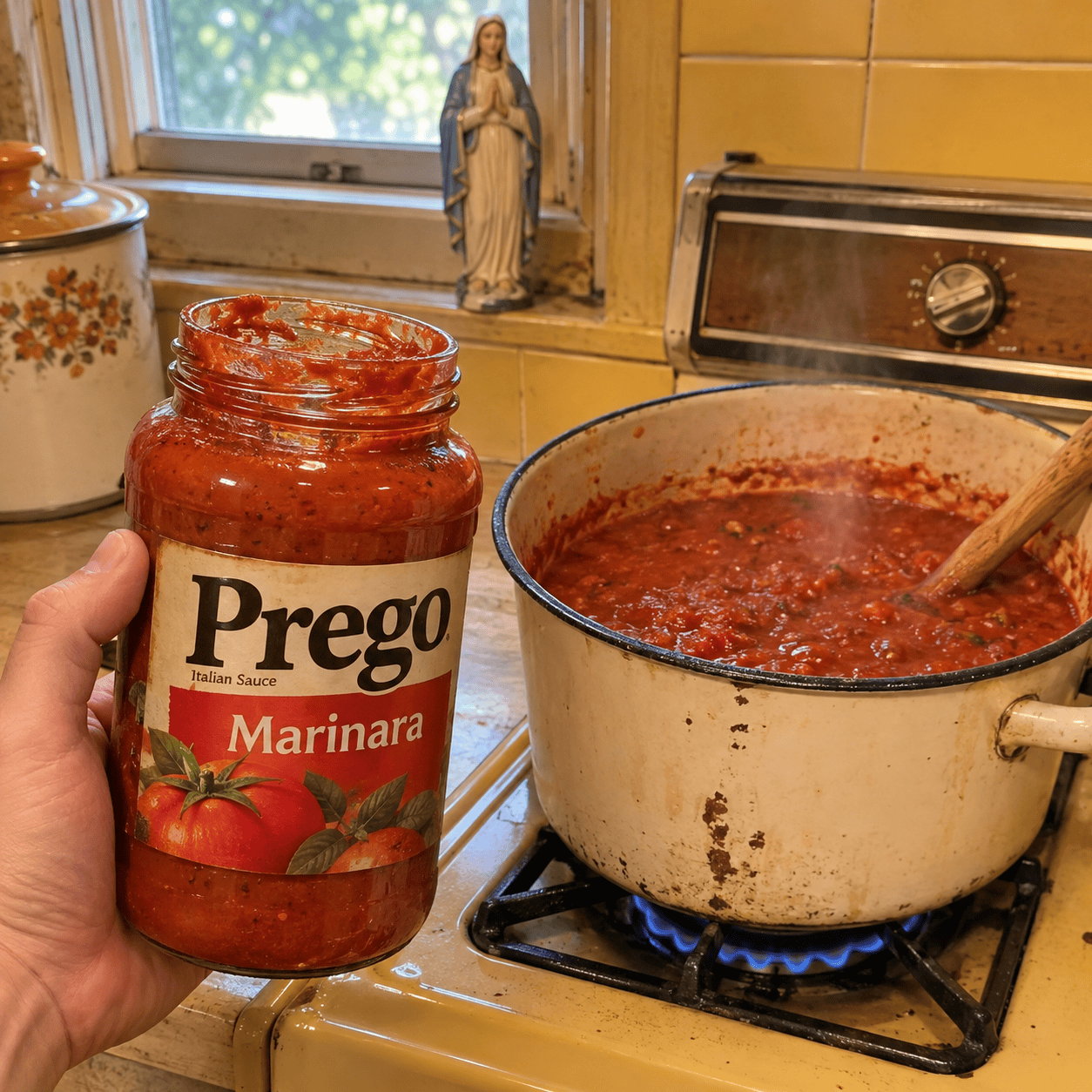
In a house where the pot goes on before Mass, admitting to a jar isn’t a shortcut confession. It’s saying you opted out.
My mother kept jarred sauce in the back of the pantry for emergencies and treated it like contraband. She’d decant it into a pan with garlic and a little oregano so nobody could prove anything.
Nobody’s going to throw you out. But understand what you’re saying in a room where somebody crushed tomatoes by hand in August so February would taste right.
2. “I Broke the Spaghetti So It Would Fit in the Pot”
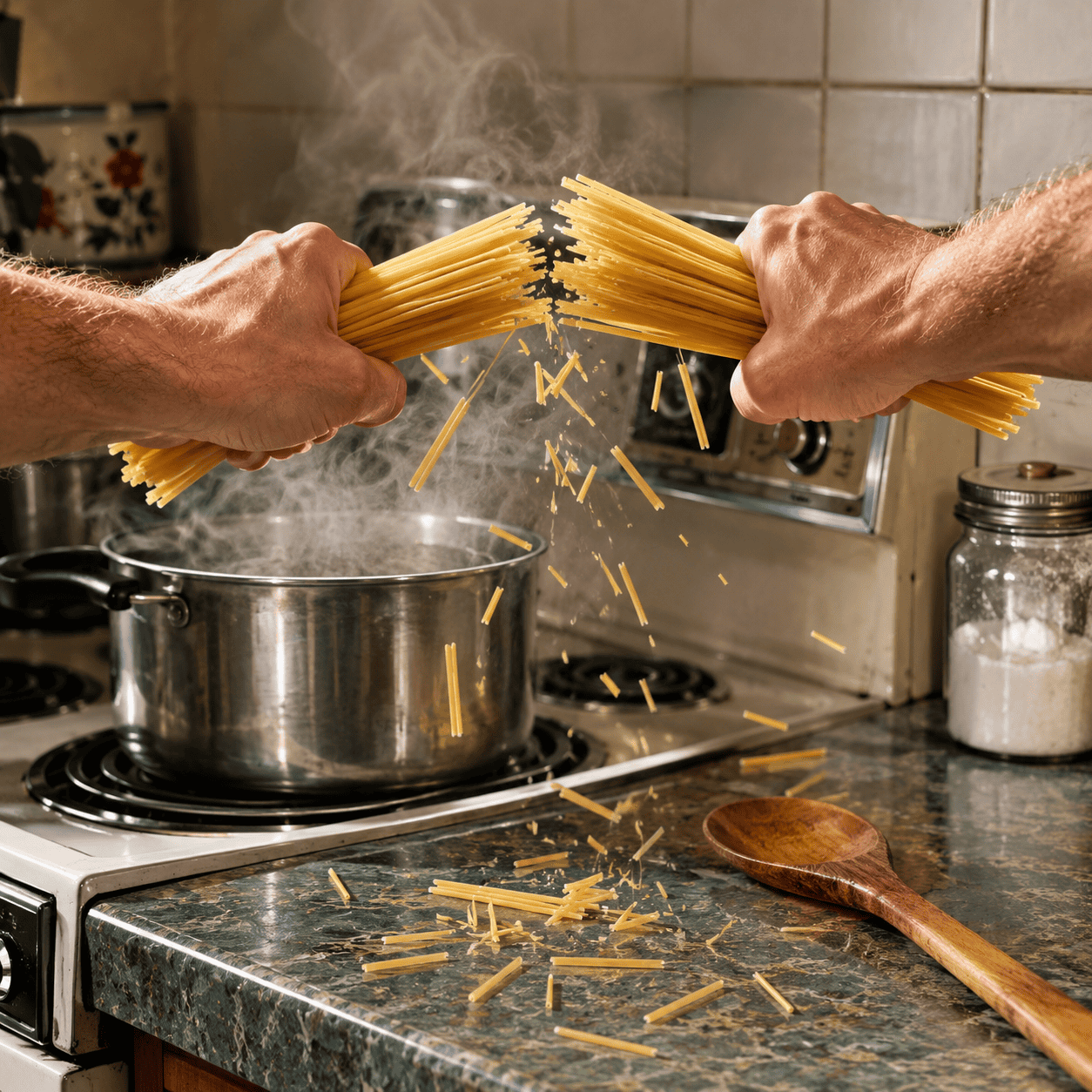
This is the one. The universal offense. Say it out loud and watch three generations turn around at once.
The reason it’s a crime isn’t mysticism. Long pasta is built to be twirled, and half-length strands flop around the fork like wet string.
You don’t need to break anything. Stand the bundle in the boiling water, hold it ten seconds, and the ends soften and slide right down on their own.
A wider pot helps more than people think.
3. “It Tastes Just Like Olive Garden!”
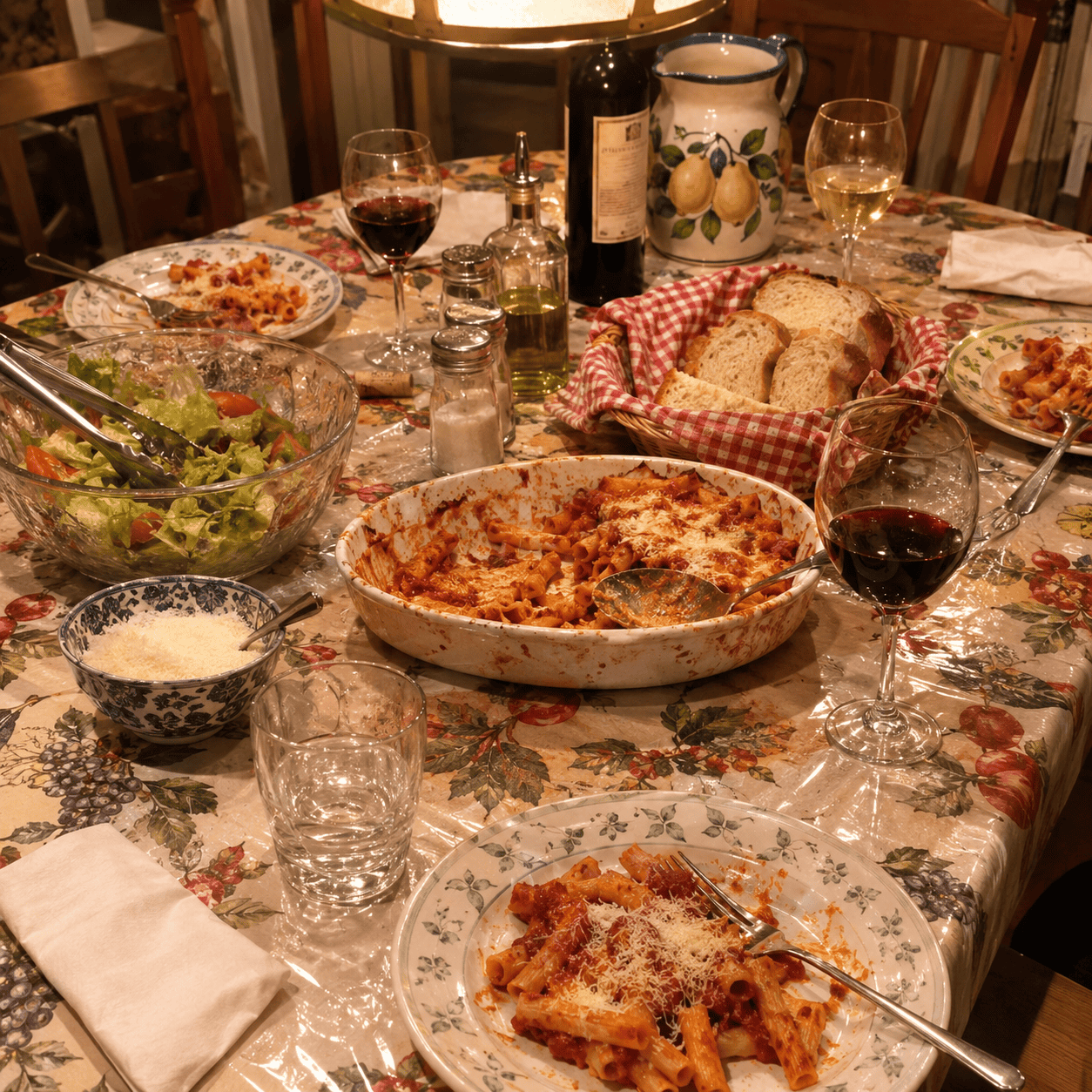
Said with a full mouth and real affection. Received as a comparison to a place with a breadstick policy.
My cousin’s husband did this at Easter, in 2009, and he still gets asked whether he’d like some soup and salad with that.
If you want to compliment the food, be specific. Say the sauce tastes like it’s been going a long time. Say you can taste the fennel in the sausage.
Specificity is what proves you were paying attention.
4. “Just a Little for Me — I Ate Before I Came”
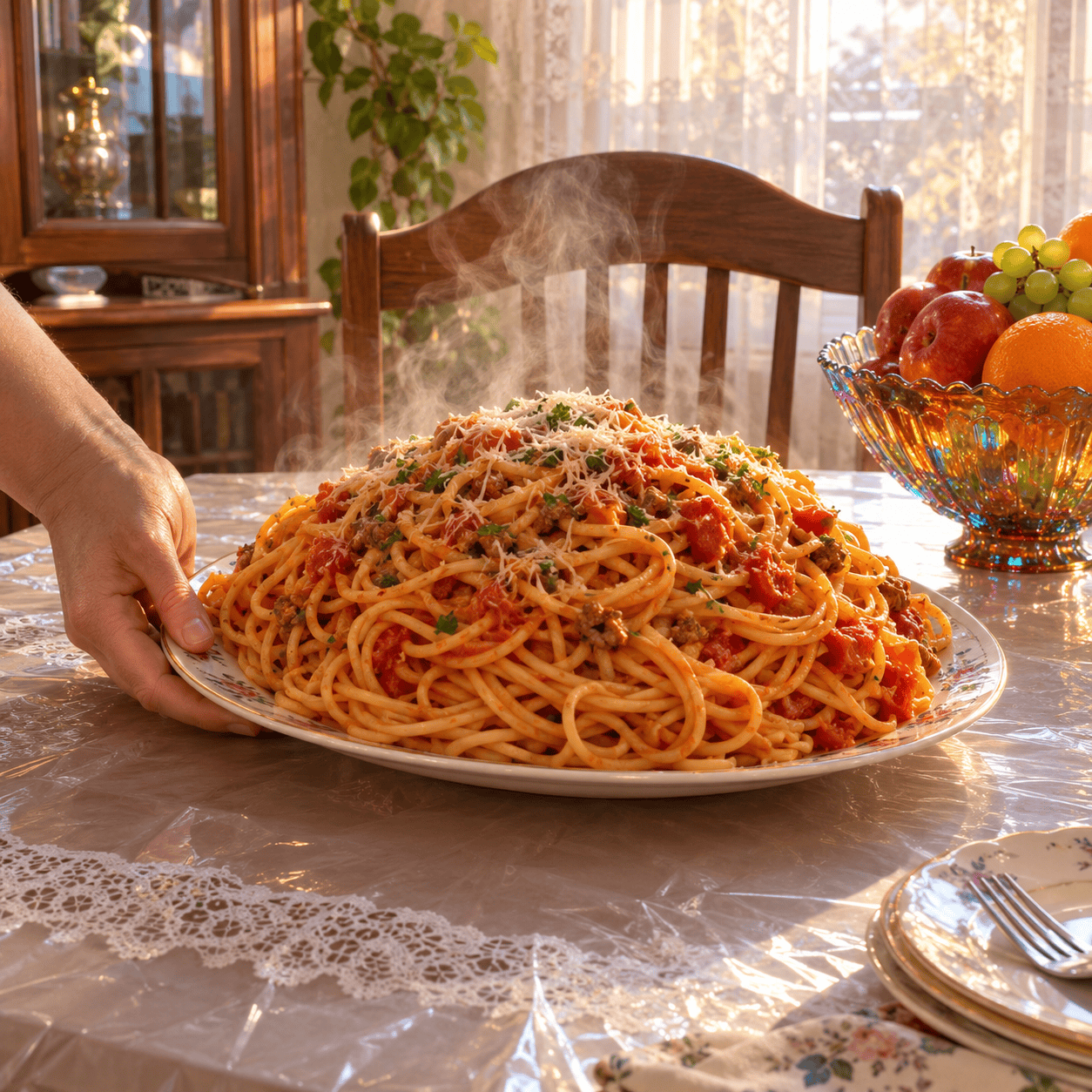
You didn’t just decline food. You announced that you made a plan to not need her.
The plate still gets made. It is not a small plate. There is no mechanism in that kitchen for producing a small plate.
The right move is to come hungry and say so at the door. Watch her face change.
5. “I Put a Little Oil in the Pasta Water”
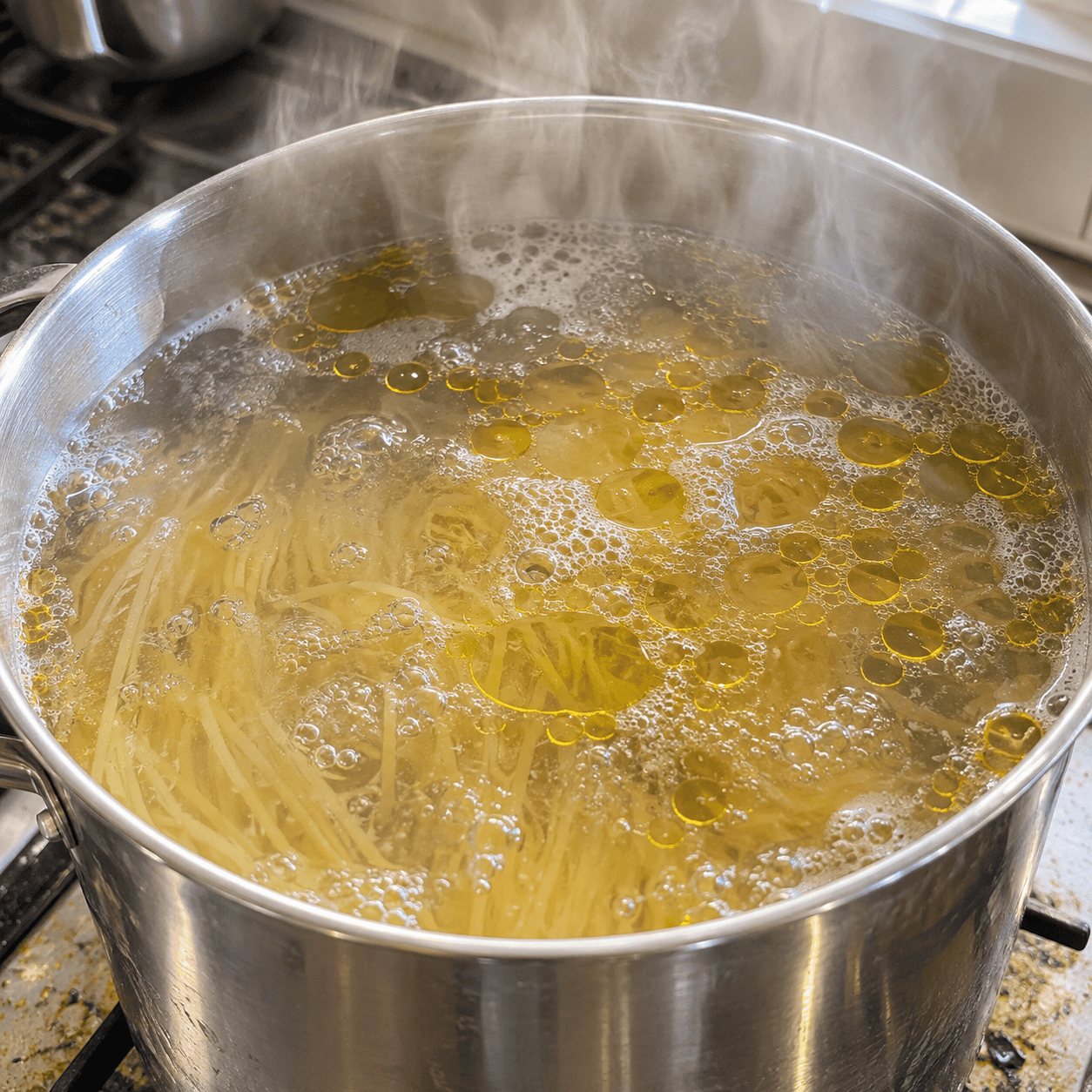
Oil floats. Your pasta is at the bottom. The two of them never meet while the water’s boiling.
What the oil does do is coat the strands when you drain them, so the sauce slides off onto the plate instead of clinging. Lidia Bastianich has been saying this on television for thirty years and people still do it.
Stir the pasta in the first minute instead. That’s when it actually sticks, and that’s all it takes.
6. “Can You Write It Down? With Actual Measurements?”
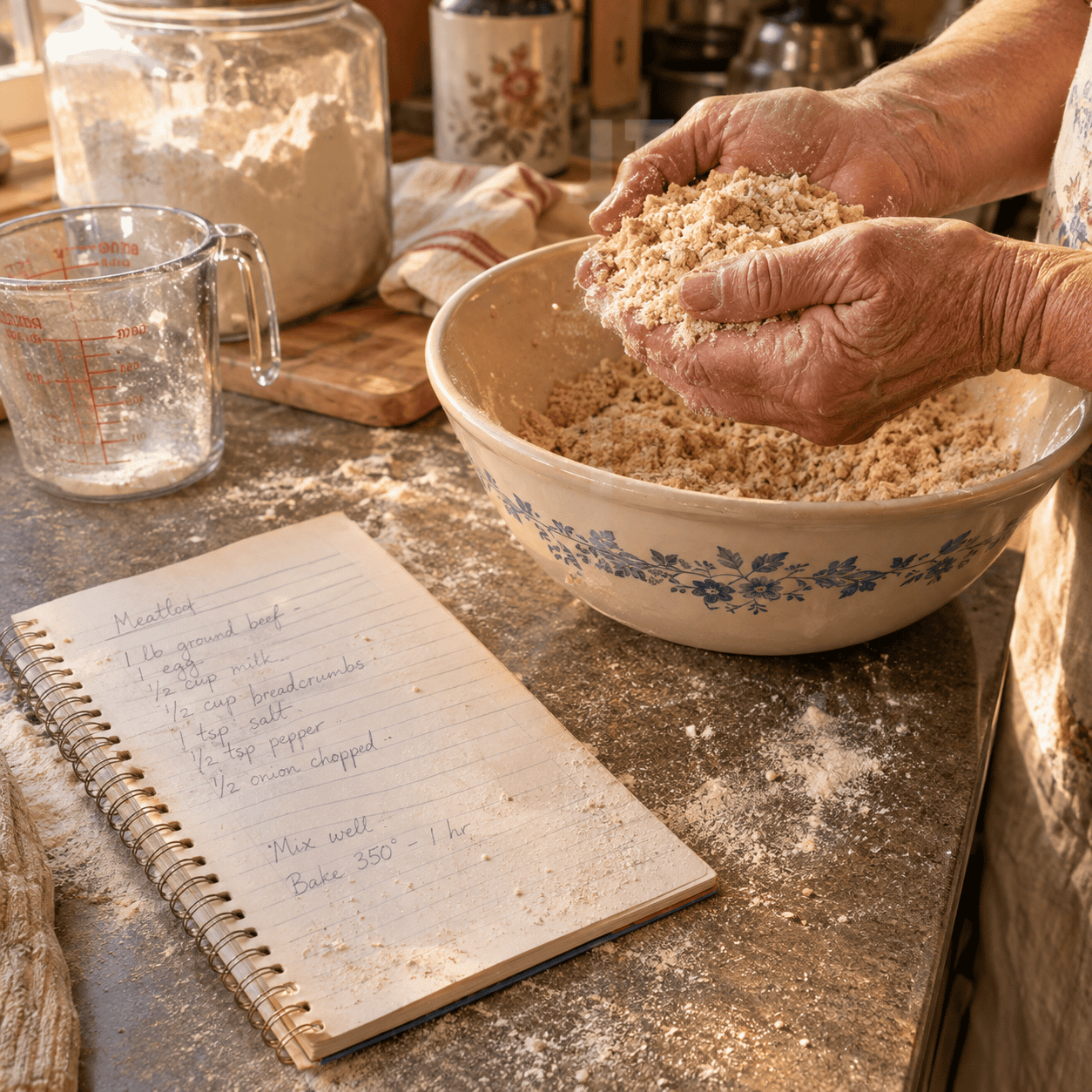
There are no measurements. There’s a handful, a pinch, and a thing she does with her wrist over the olive oil.
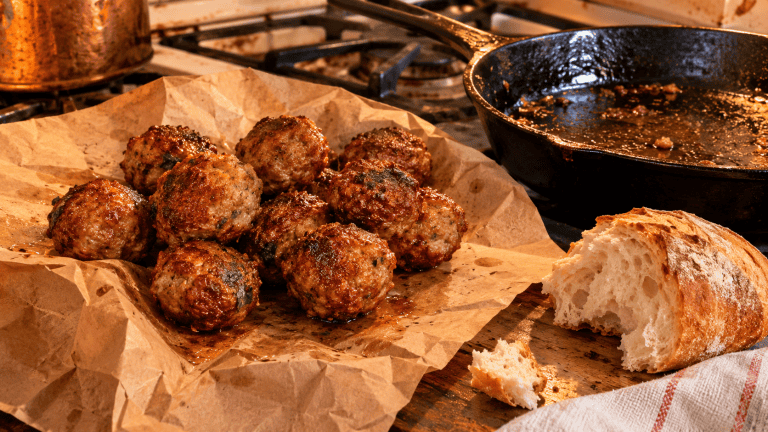
I tried to write down her meatballs in 1998 with a notepad and a measuring cup. She kept pushing the cup aside. “Until it looks like meatballs,” she said, which is both useless and completely accurate.
The only way to get the recipe is to stand next to her and cook it six times. Bring a notebook anyway, but write down what her hands do, not what the cup says.
7. “Do You Have Any Ketchup?”
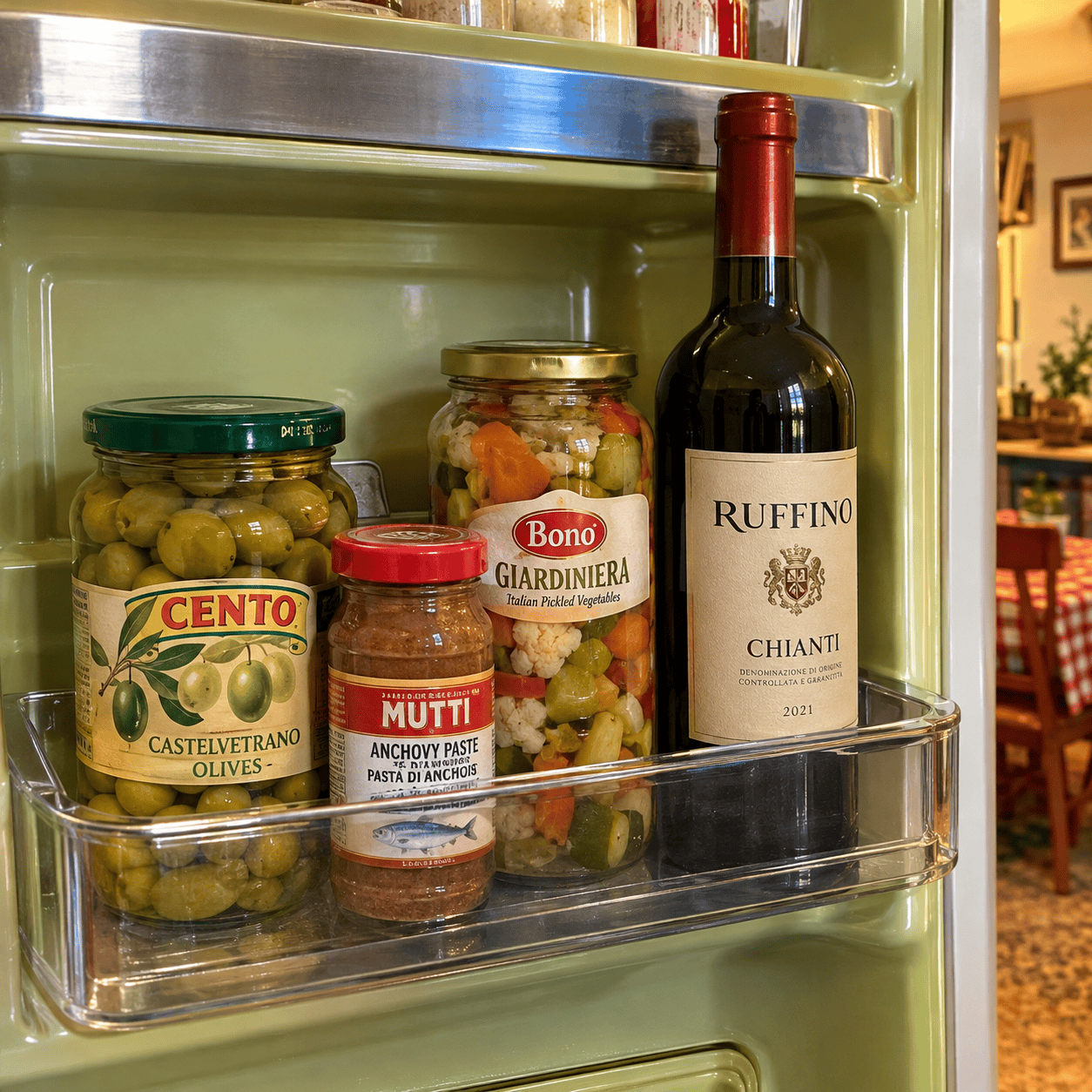
Asking for ketchup says the food arrived incomplete. That’s the whole message, whether you meant it or not.
Ranch is worse. Ranch is a declaration of war.
In most of these houses the bottle genuinely doesn’t exist. Somebody will go next door to borrow one, which is somehow more humiliating than just going without.
8. “I Rinsed the Pasta So It Wouldn’t Stick”
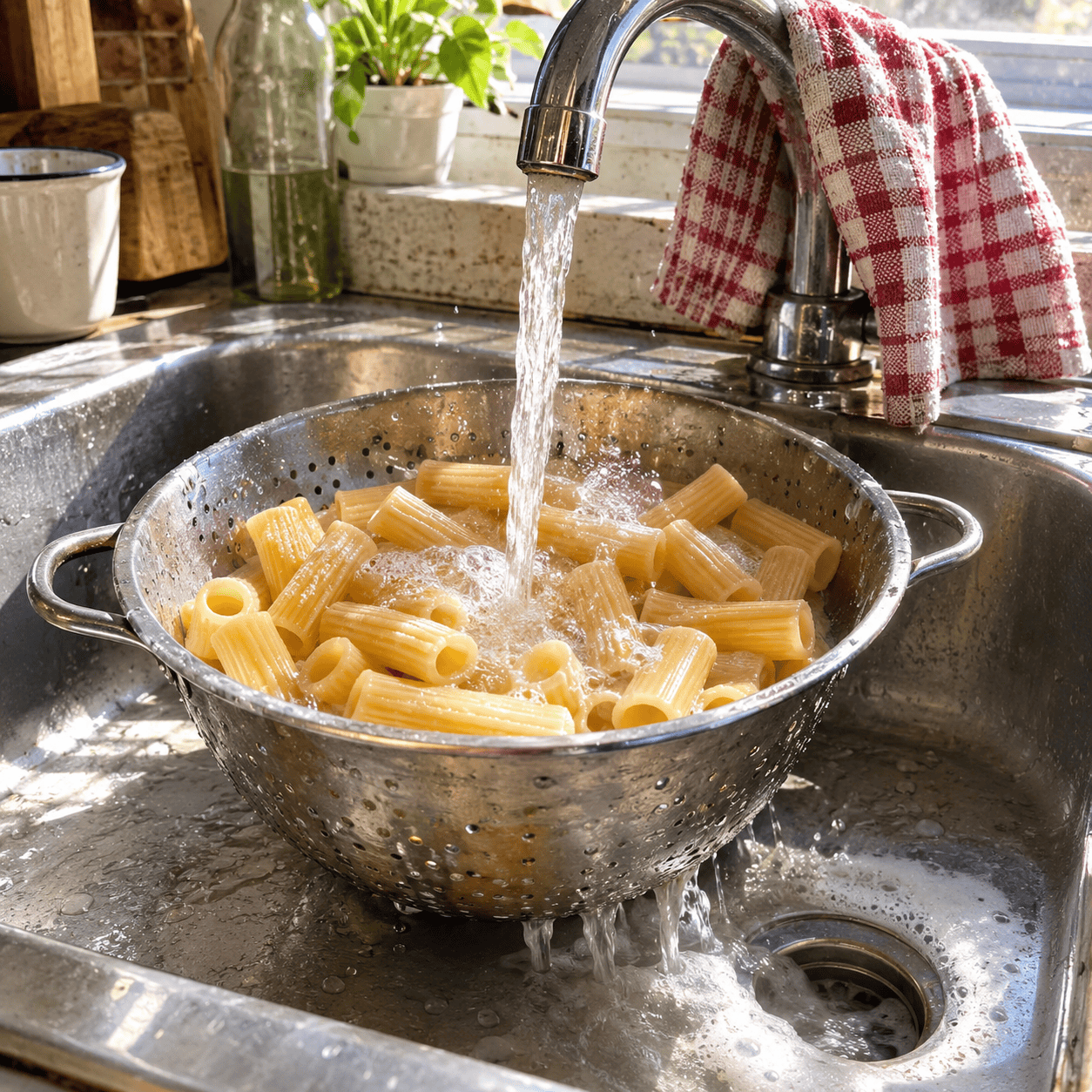
That cloudy film on hot pasta is surface starch, and it’s the glue. Rinse it off and the sauce has nothing to grab.
You end up with naked noodles and a puddle at the bottom of the bowl. Then somebody adds more sauce to fix it, which fixes nothing.
One exception, and only one: cold pasta salad, where you want the cooking to stop. Otherwise the colander goes straight into the pan.
9. “I’m Cutting Back on Carbs”
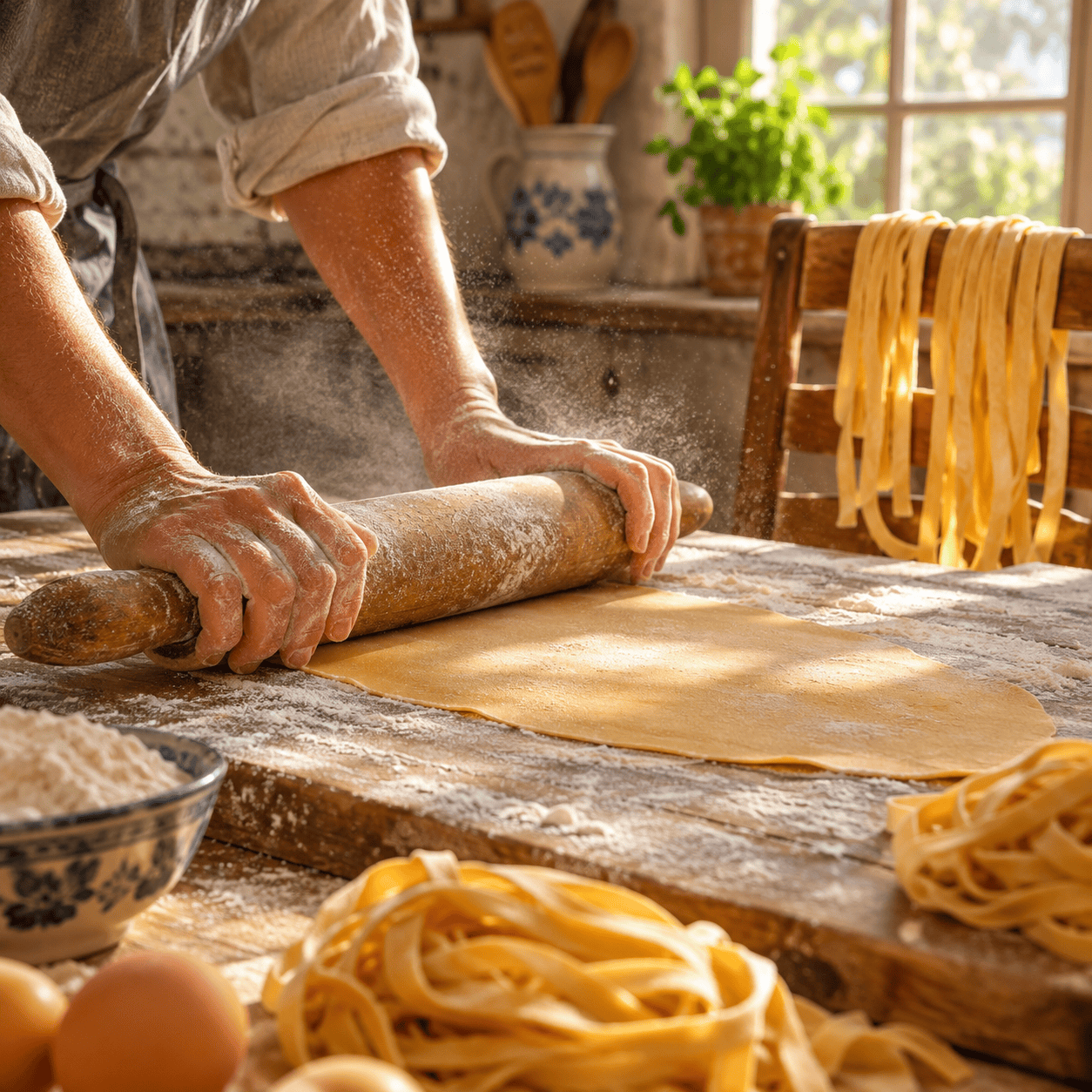
Say that in front of a woman who rolled dough at seven in the morning and you’ve reviewed her entire life’s work.
She won’t argue. She’ll say “of course, of course” and hand you a plate anyway, calling it a taste.
Eat what you can. Nobody’s counting, and the leftovers are going home with you regardless.
10. “I Used the Green Can”
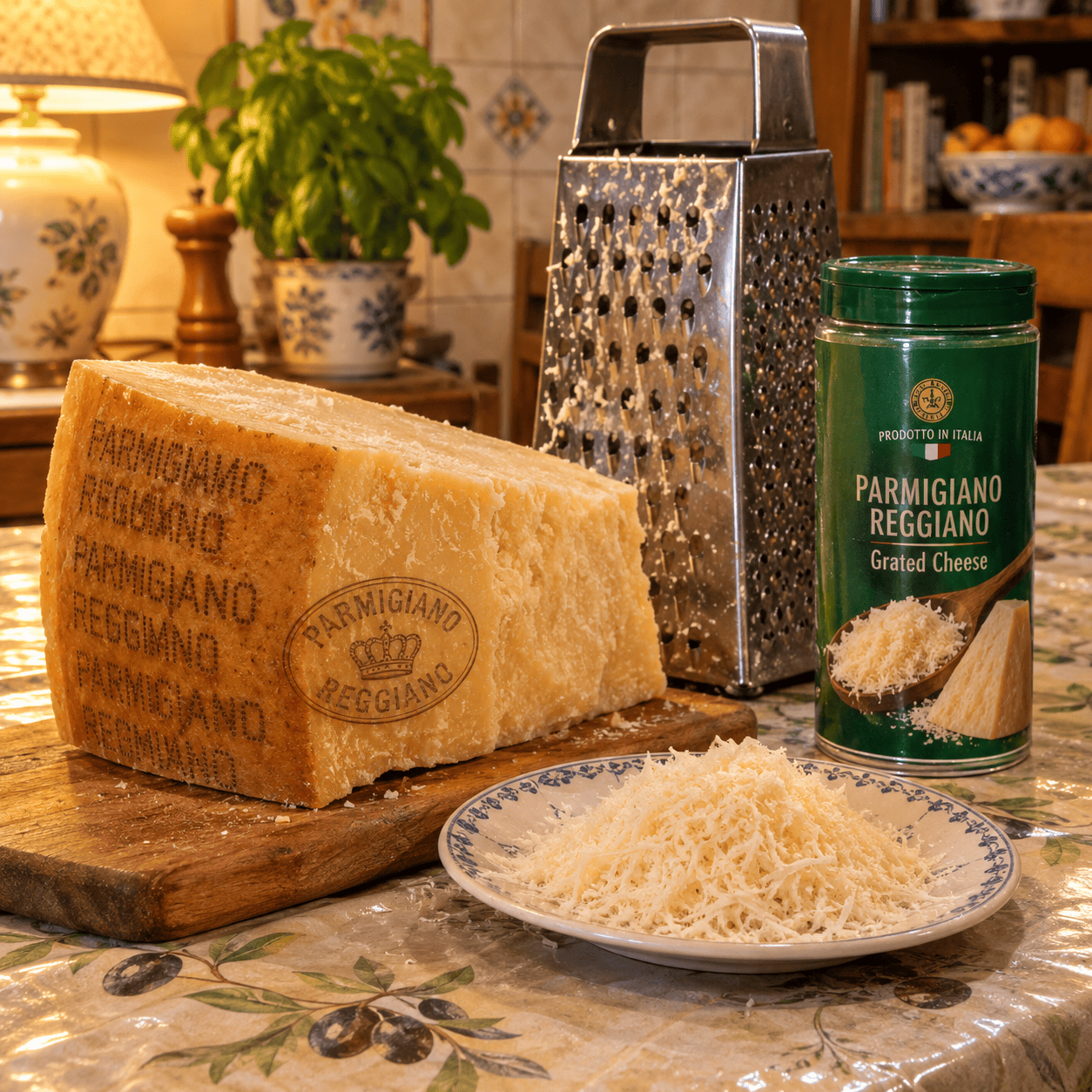
This one has an actual scandal behind it, which makes it my favorite to explain.
Shaker cheese labeled “100% parmesan” has been caught not being that. In 2016 the FDA investigated a Pennsylvania plant and found products padded with cheaper cheeses and wood pulp cellulose, and independent lab testing of several national brands afterward turned up cellulose levels well above what’s needed to keep cheese from clumping.
Parmigiano Reggiano, the real thing, is a protected-name cheese made in a defined stretch of Emilia-Romagna with three ingredients: milk, salt, rennet. It’s aged a minimum of twelve months, usually twenty-four, and the name is fire-branded into the rind in dots you can read with your fingers.
A wedge costs more per pound and less per meal. It grates to about three times the volume of what you pour out of a can, it melts instead of sitting on top like sand, and the rind goes into the pot of soup on a cold evening and gives back everything you paid for it.
Nonna kept hers wrapped in a damp cloth, then a plastic bag, in the cheese drawer. The grater lived on the table, not in a cabinet. You grated your own, over your own plate, and you didn’t take more than you needed.
11. “You Know They Don’t Really Eat This in Italy, Right?”
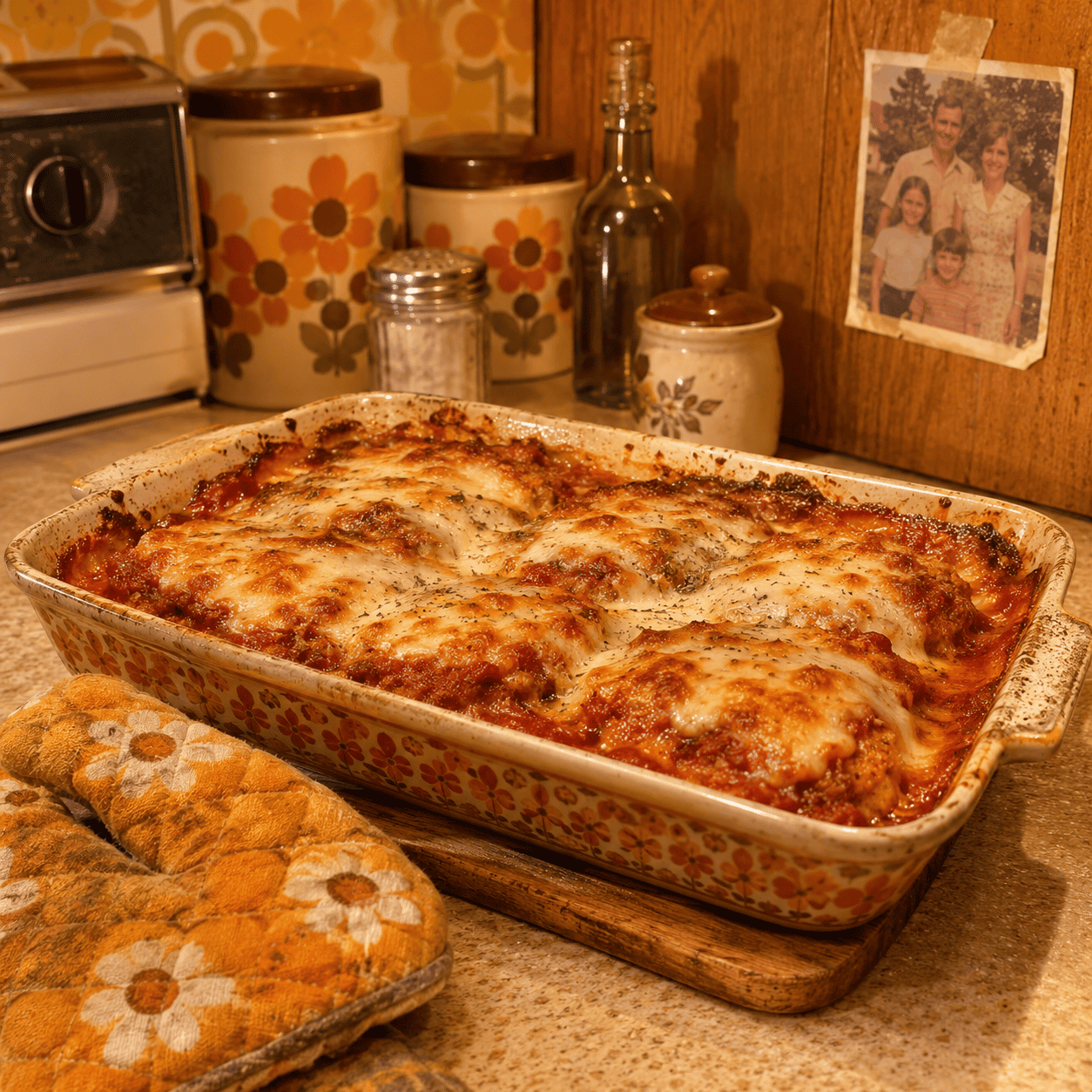
Correct. They also didn’t have a butcher on the corner selling cheap beef and a paycheck that finally stretched to meat on Sunday.
Chicken parm, Sunday gravy, the baked ziti with the ricotta layer — that’s an immigrant cuisine, invented by people adapting Naples and Palermo to South Philly and Brooklyn with what was available. It’s real food with a real history.
Telling a woman her gravy isn’t authentic Italian is telling her that her grandmother’s hunger wasn’t authentic either. Don’t.
12. “Let Me Help — I’ll Take Over the Stove”
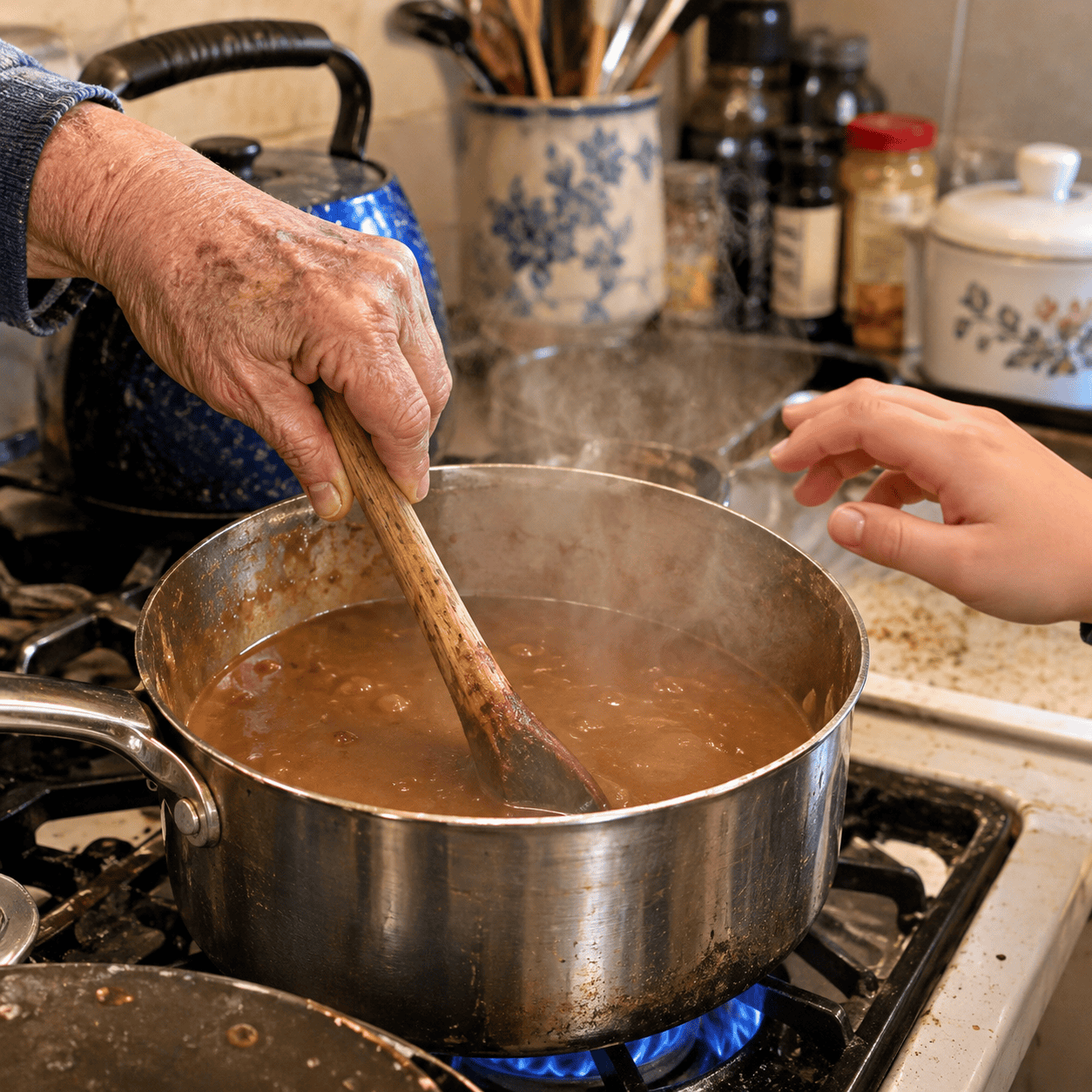
There’s one cook. There has only ever been one cook.
Help means stirring when told, carrying things, setting the table with the good cloth, or standing somewhere out of the path between the stove and the sink.
I learned this at nine by reaching for a spoon and getting the back of a hand on my wrist. Not hard. Just clear.
13. “I Think It Needs a Little Salt”
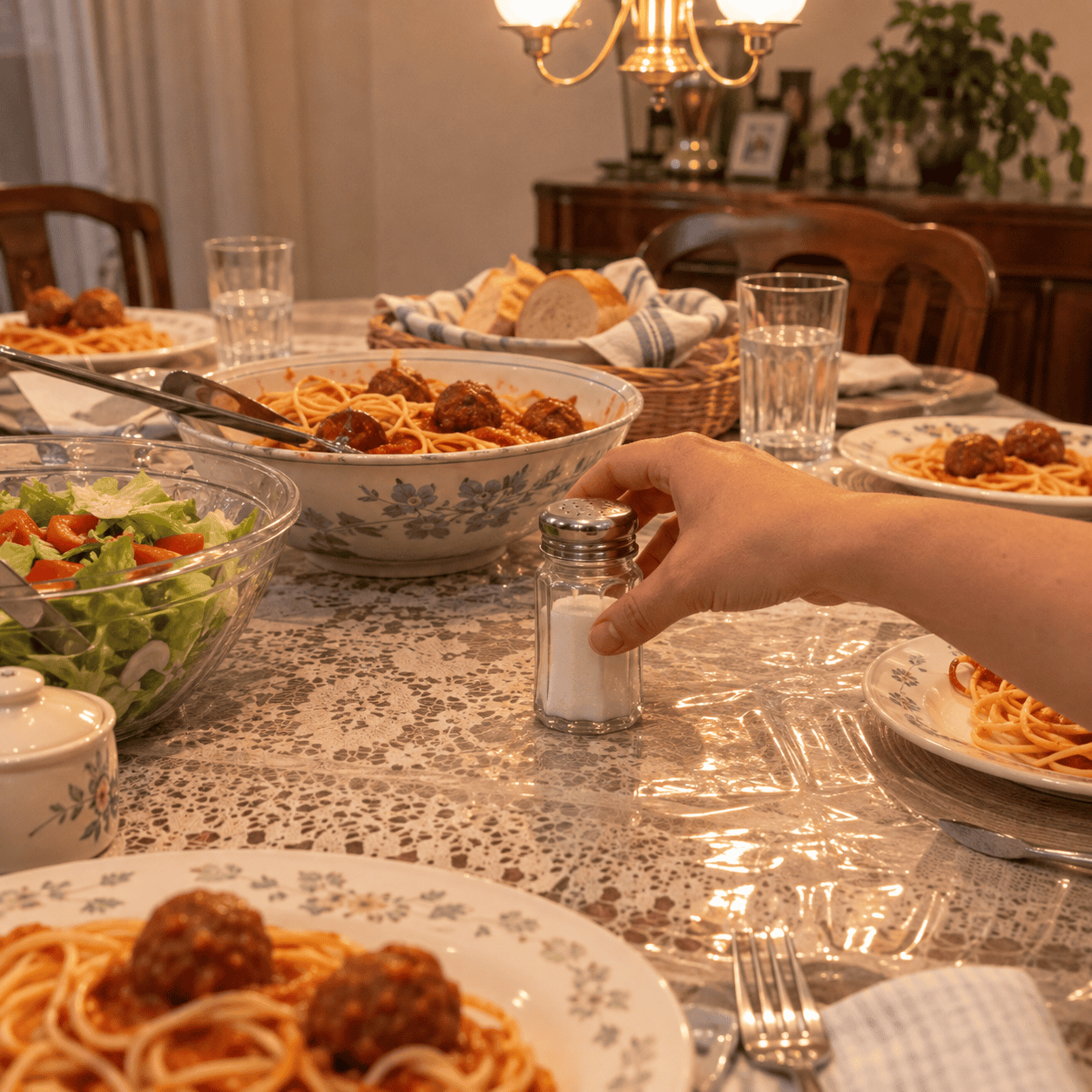
Reaching for the shaker before you’ve tasted is the classic offense. Announcing your verdict to the table is a different category entirely.
She salted that sauce eleven times over seven hours. She tasted it with a crust of bread at every stage.
If you want more salt, take some. Silently. Like an adult with a sense of self-preservation.
14. “I Made Chicken Alfredo the Other Night”
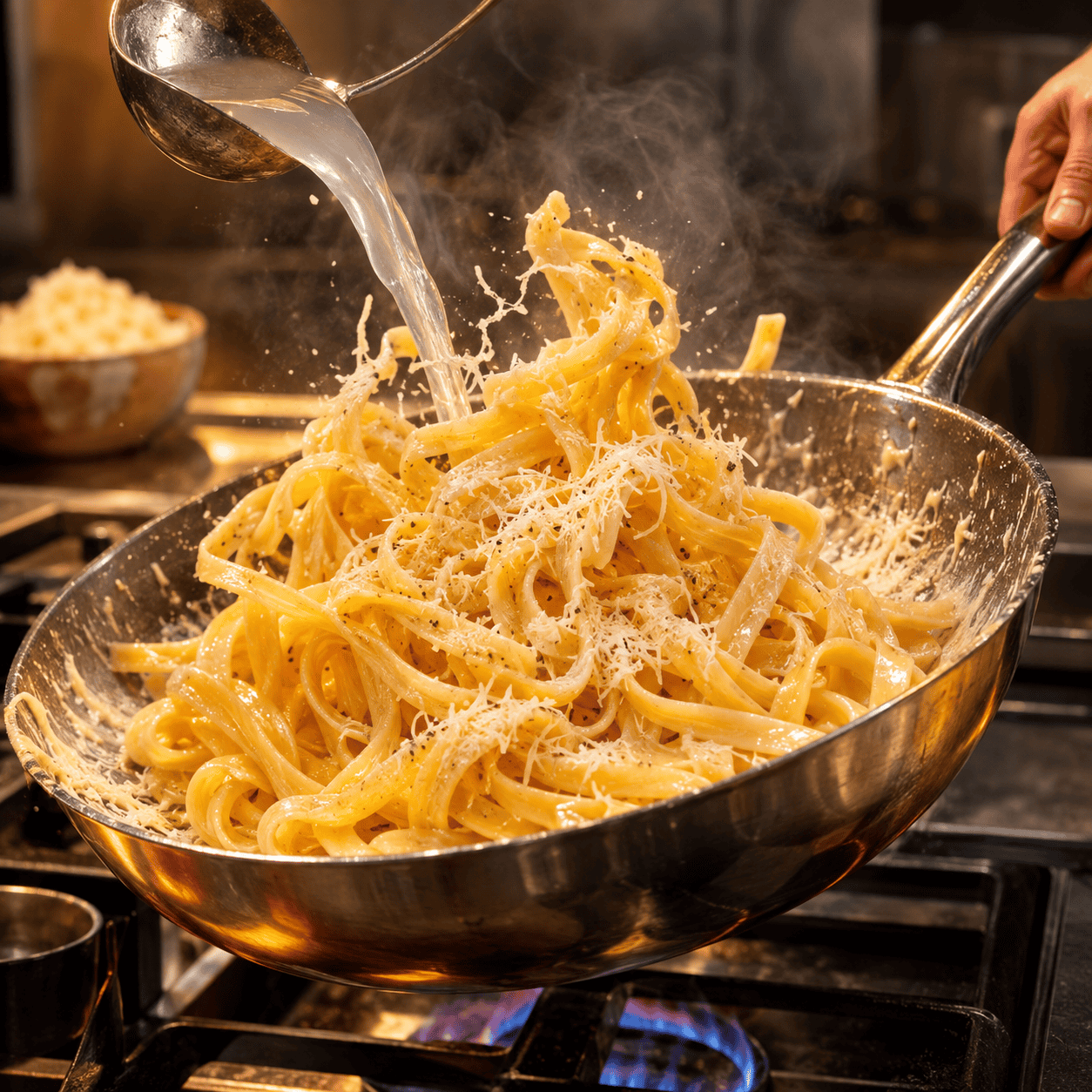
Two problems in one sentence, and she’s already counting them.
The original is Roman — fettuccine al burro, just butter and Parmigiano whipped into the pasta with its own water. No cream anywhere. The heavy-cream version is American, and the chicken on top is the second strike, since meat in Italy comes as its own course after the pasta.
Make the real one once. Butter, cheese, a ladle of pasta water, and your arm doing the work. It takes four minutes and it ruins the jarred version for you permanently.
15. “I Poured the Pasta Water Down the Drain”
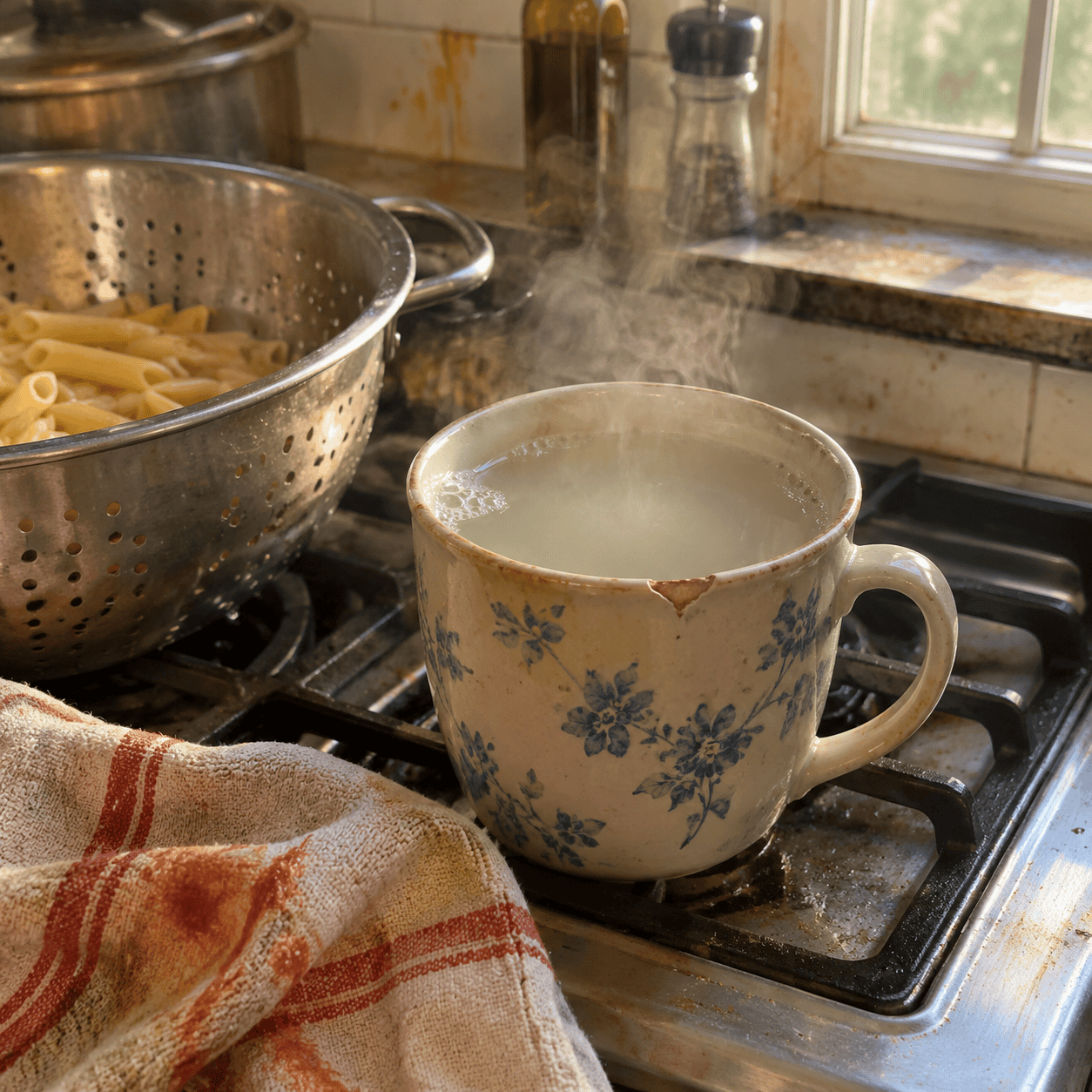
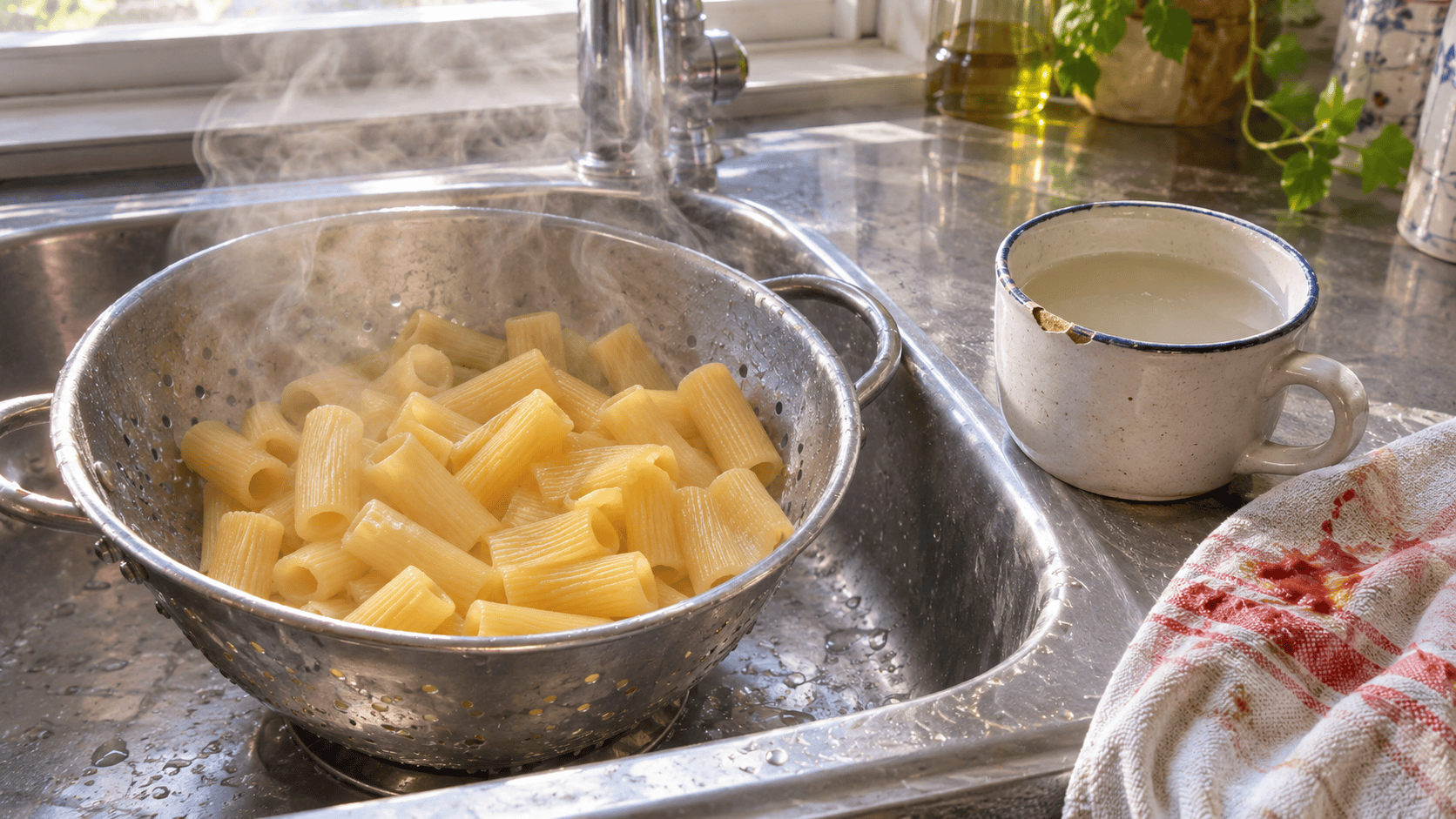
Salted, starchy, cloudy. That water is the ingredient you just threw away.
A ladle of it in the pan with the sauce turns oil and tomato into something that coats every strand instead of sliding off into a pool.
Keep a mug by the stove. Dip it before you drain. It’s one second and it’s the difference between a decent plate and a good one.
16. “I Brought Dessert — I Grabbed It at the Supermarket”

A white box from the Italian bakery, tied with string, gets opened at the table and admired.
A plastic clamshell goes to the back counter. Behind the struffoli nobody is allowed to touch yet. It will be there when you leave.
Nobody says a word about it. That’s the part that gets you.
If you can’t get to a bakery, bring something you made, even if it’s imperfect. A plate of homemade cookies outranks anything with a barcode.
17. “Isn’t That a Lot of Garlic?”
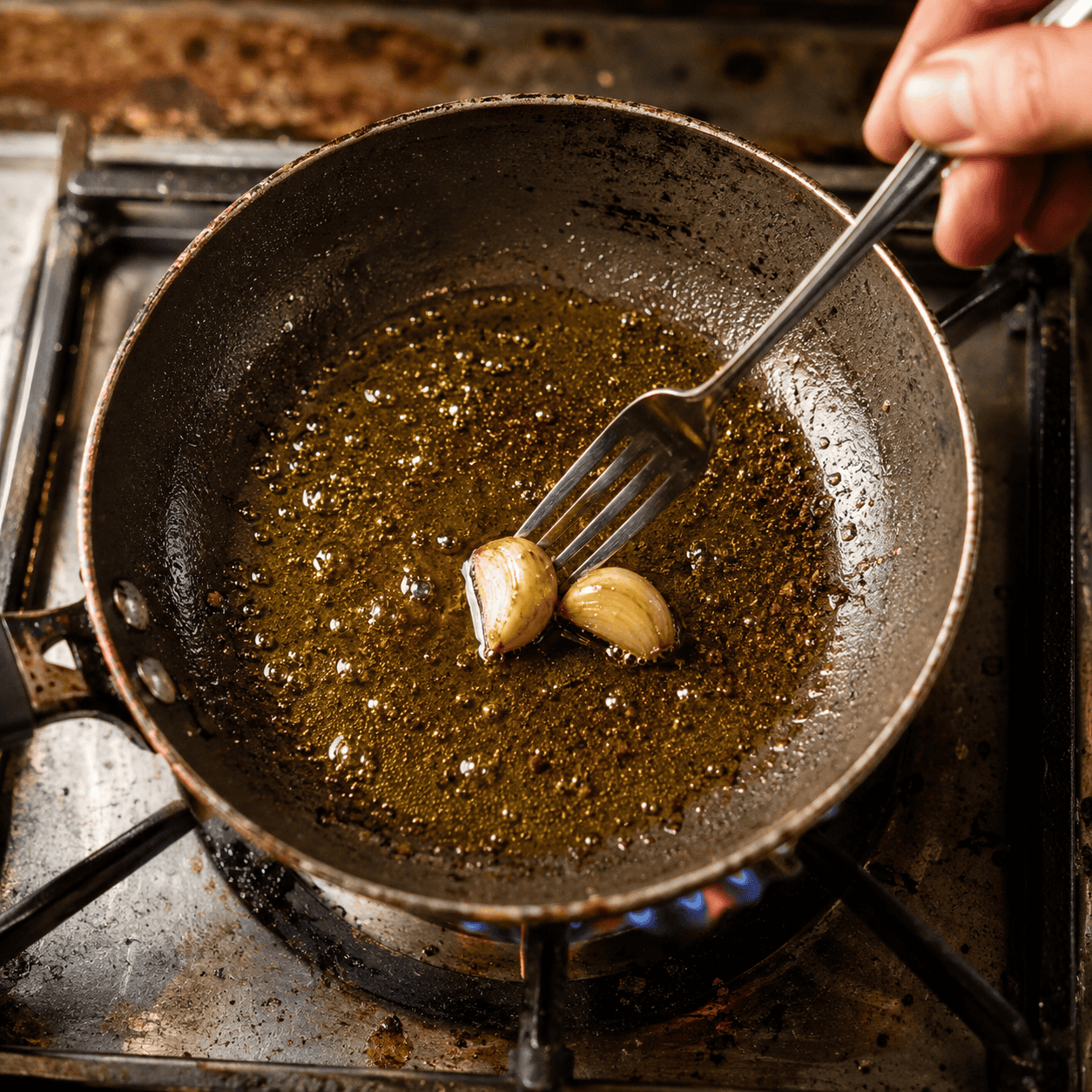
Funny thing — the stereotype is backwards. Traditional southern Italian cooking is often restrained with garlic in a way Italian-American kitchens are not.
Nonna fried two whole cloves in the oil until they went gold, then fished them out and threw them away before the tomatoes went in. The oil kept the perfume. The sauce never tasted sharp.
Try it once. Whole clove, medium heat, pull it the second it colors. You’ll stop mincing.
18. “Is It Sauce, or Is It Gravy?”
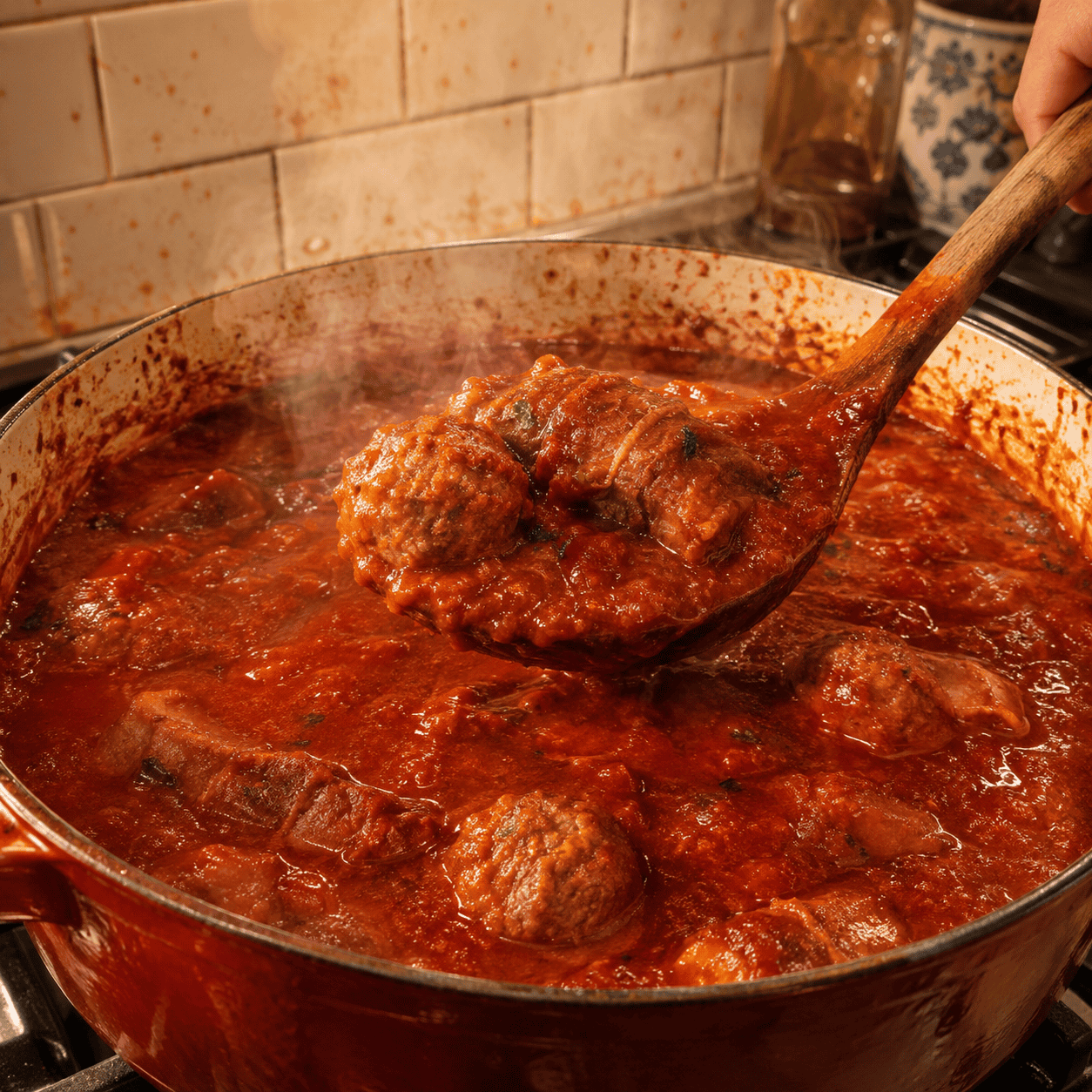
You will not settle this. You’ll just pick a side and lose people.
The best explanation anyone’s given me is that southern Italian immigrants reached for “gravy” as the closest English word for a meat-heavy ragù — a thing that simmered with pork and beef and went over everything, the way American gravy did. The word stuck in Philadelphia, Brooklyn, parts of Jersey, and nowhere in Italy at all.
In my house it’s gravy when there’s meat in it and sauce when there isn’t. My husband’s family says that’s insane.
Here’s how the sides actually break down:
| “Gravy” Houses | “Sauce” Houses | |
|---|---|---|
| Where | Philly, Brooklyn, North Jersey | Most of the rest |
| What’s in the pot | Braciole, sausage, meatballs | Tomato, basil, garlic |
| Cook time | All day Sunday | Thirty to ninety minutes |
| In Italy | Called ragù | Called sugo or salsa |
So both camps are right and neither will accept that. Say “the pot” and keep your head down.
19. “Can I Get Some Cheese for the Shrimp Pasta?”
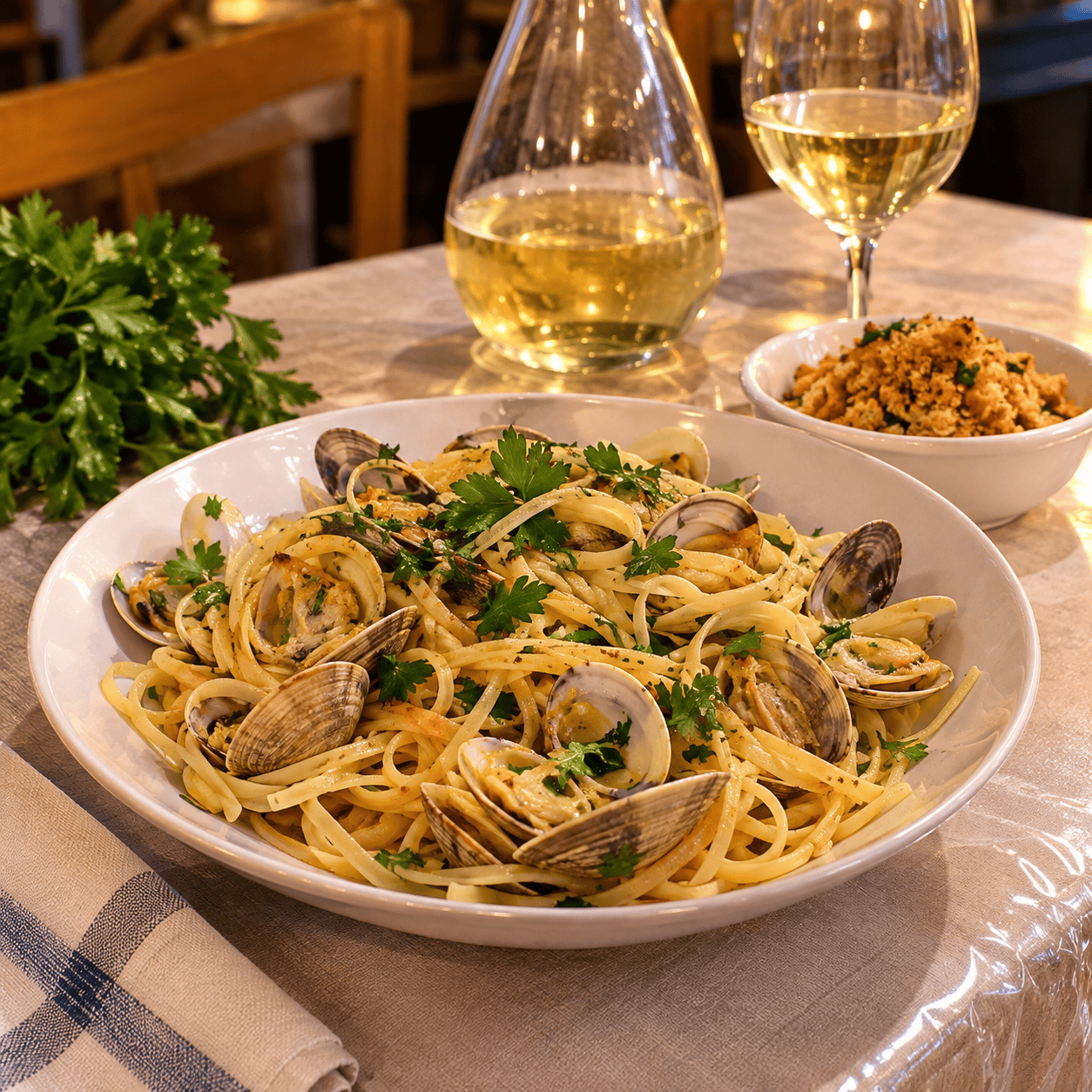
No. This is the one rule she will not bend on, and she’s not being difficult.
Grated pecorino is salt and funk and it bulldozes clams, shrimp, anything delicate. You lose the sea entirely.
There’s geography behind it too — the cheese-making regions and the fishing coasts were different worlds, and the two ingredients never shared a kitchen until someone put them on the same menu in America.
Toasted breadcrumbs are the move. Pangrattato, in a pan with olive oil until golden, over spaghetti with clams. You get the crunch and the salt without drowning the shellfish.
20. “Can’t You Turn Up the Heat and Finish It Faster?”
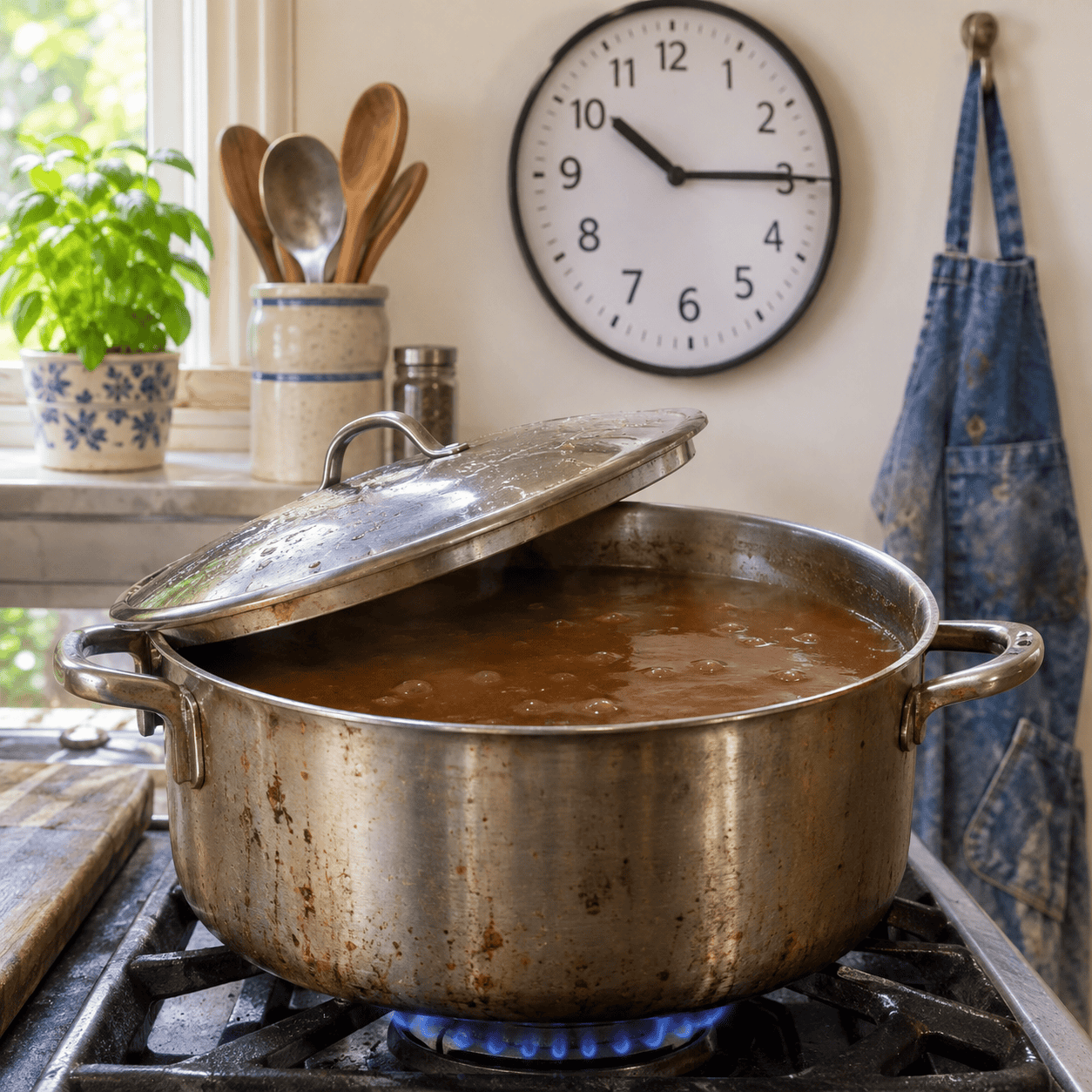
The pot went on at eight in the morning for a reason. Collagen in the braciole needs hours of low heat to give up and turn to silk.
Crank the flame and you scorch the bottom, tighten the meat, and get something that tastes like tomatoes and disappointment.
Also, the smell is the point. Six hours of that house smelling like Sunday is half of what you’re actually eating.
21. “I Like My Pasta Soft”
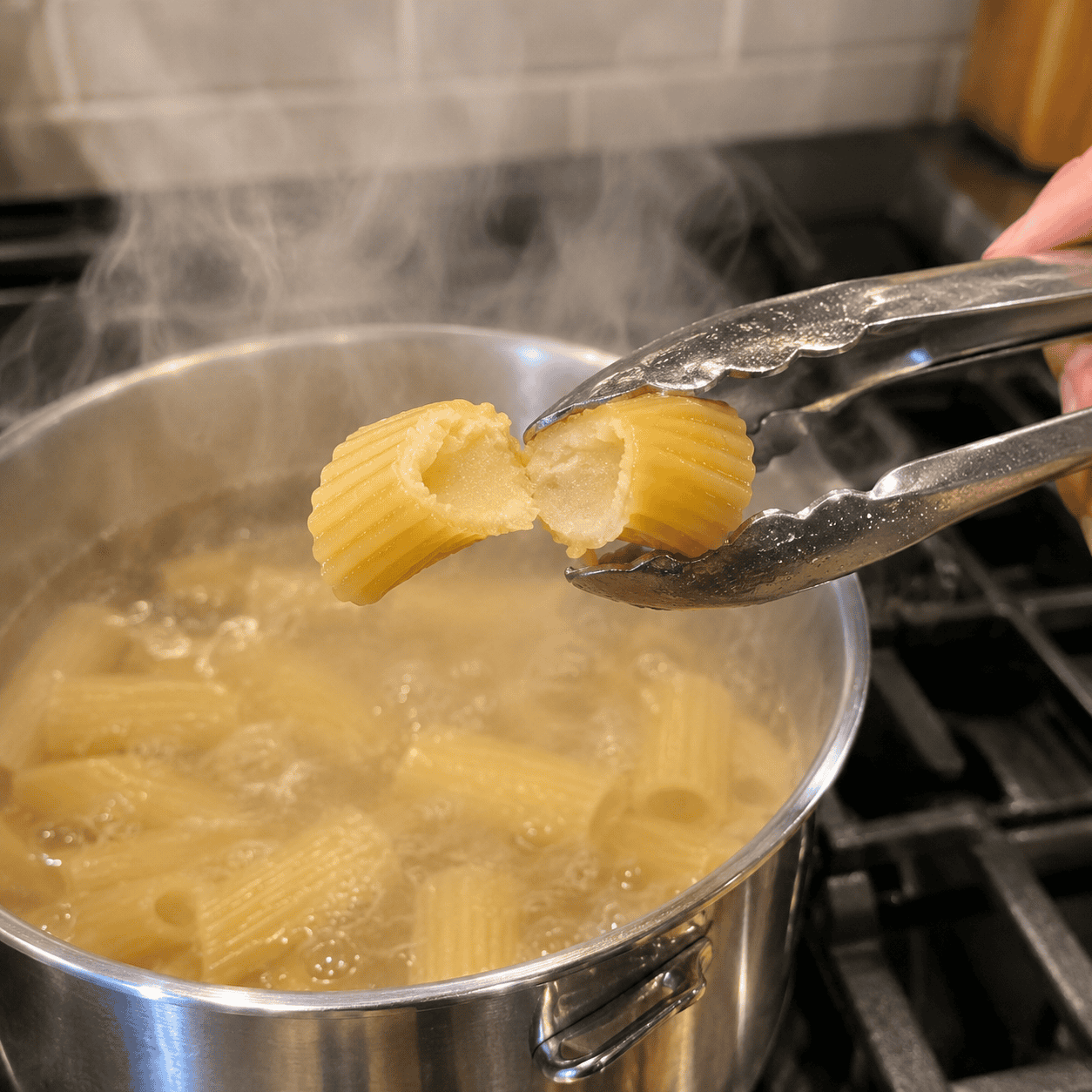
She can see overcooked pasta from across the room. The way it sits on the fork gives it away.
Al dente isn’t snobbery, it’s structure — pasta with a little resistance left holds sauce and holds its shape all the way through dinner.
Pull it a full minute before the box says and finish it in the pan with the sauce and a splash of that water you saved. It cooks the rest of the way in there and comes out coated instead of dressed.
22. “Let’s Just Order Takeout Tonight”
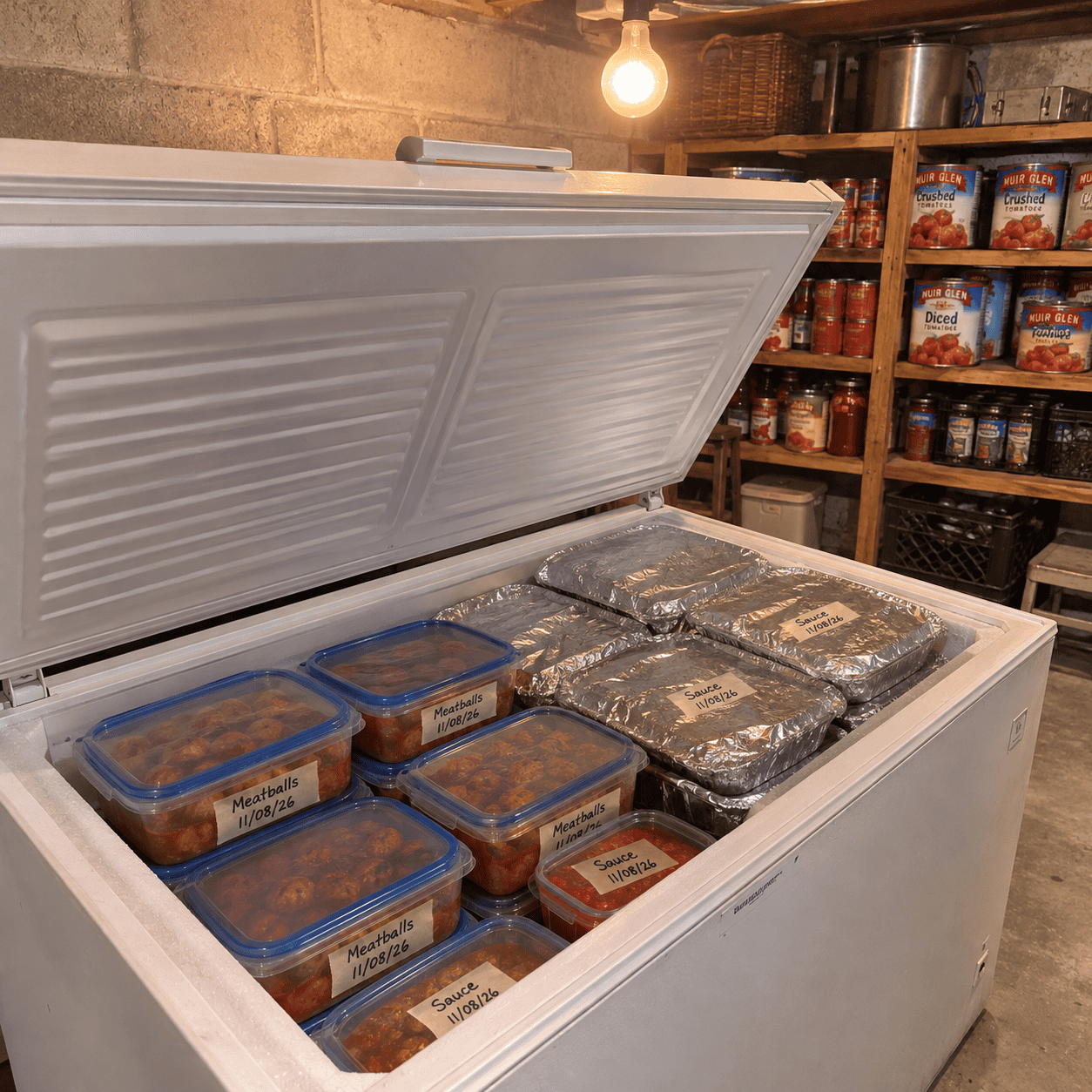
Said inside a kitchen with a freezer of meatballs, a pantry wall of pasta, and six jars of last August’s tomatoes in the basement.
This woman has never once not had dinner handled. Not through a hurricane, not through a funeral, not through the week the oven died.
If you’re tired, say you’re tired. She’ll have something on the table in twenty minutes and feel useful doing it.
23. “I Used the Jarred Minced Garlic”
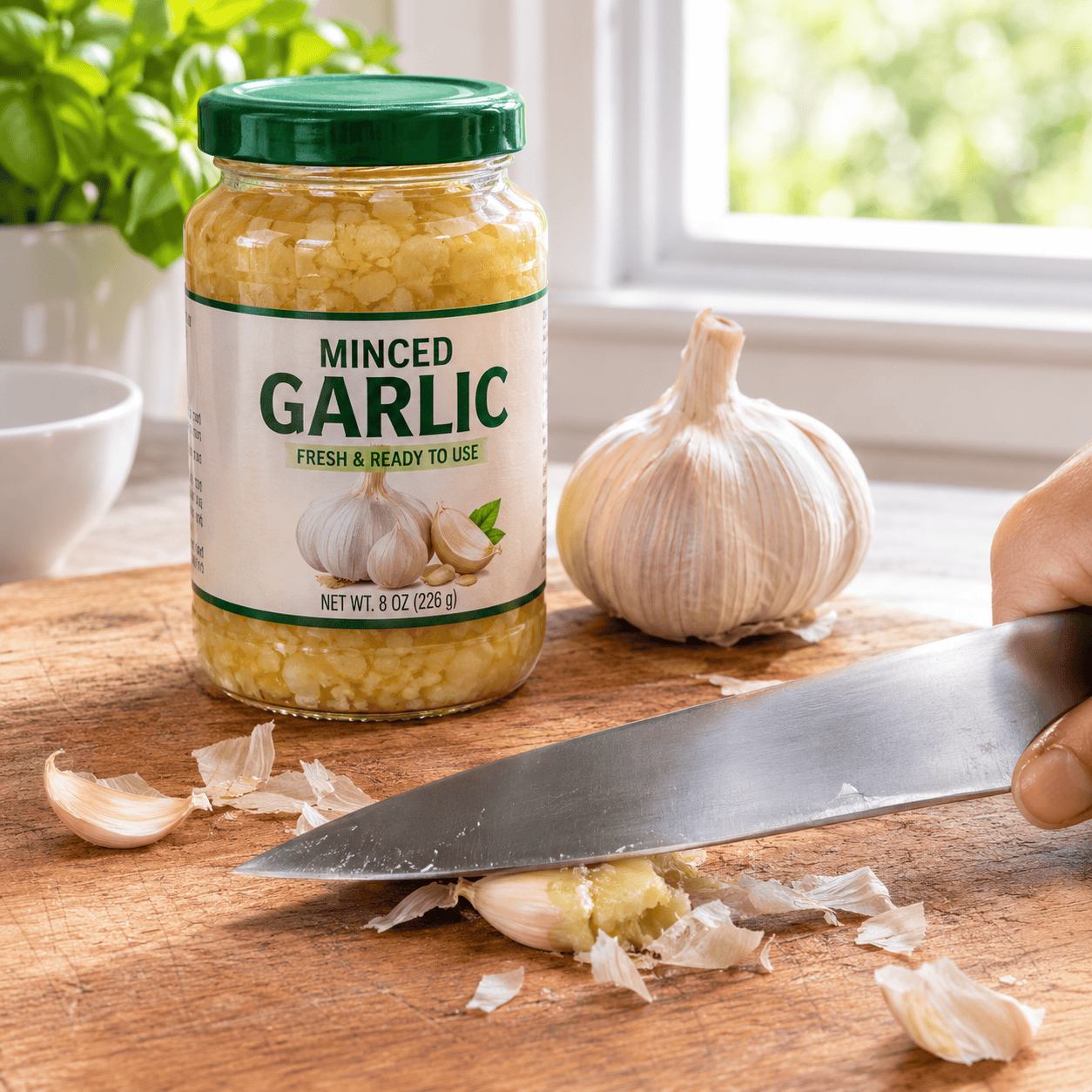
Smell them side by side. Fresh clove is sweet and hot; the jarred stuff has a sour, faintly metallic edge from the acid that keeps it shelf-stable.
It doesn’t cook out. It just sits underneath everything you make, slightly off.
Buy a head of garlic. Smash a clove with the flat of a knife and the skin falls away in one piece. That’s the whole technique.
24. “I Made the Pesto in the Food Processor”
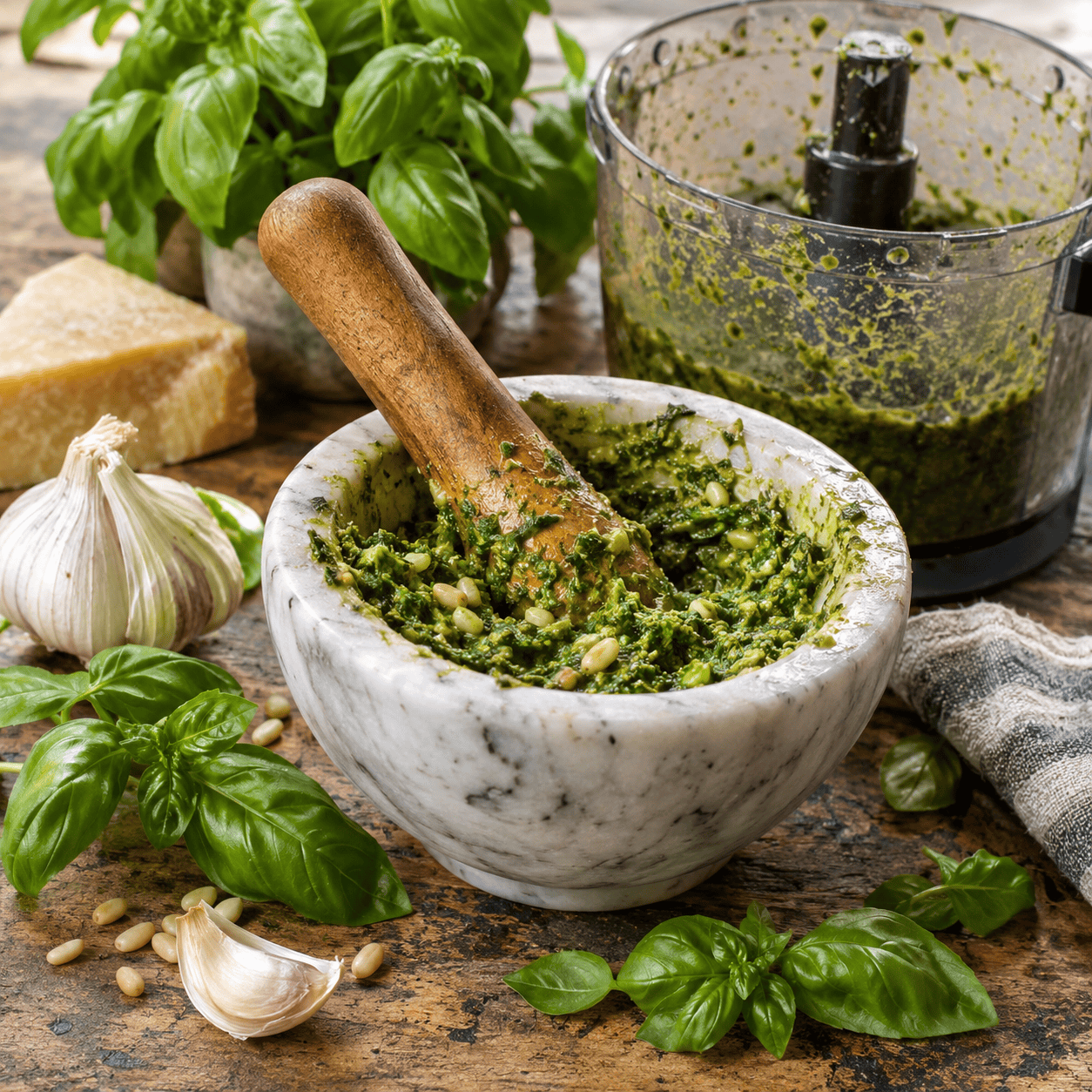
The word pesto comes from pestare, to pound. The method is in the name.
Spinning blades bruise basil and heat it, and the leaves oxidize and go dark olive within an hour. Pounded pesto stays green and tastes rounder — the garlic and pine nuts get crushed into paste rather than chopped into bits.
If you don’t own a marble mortar, pulse in short bursts with the bowl cold and the basil dry. Or try the Sicilian version with almonds and tomato, which is what we actually made at home.
25. “Is There a Gluten-Free Option?”
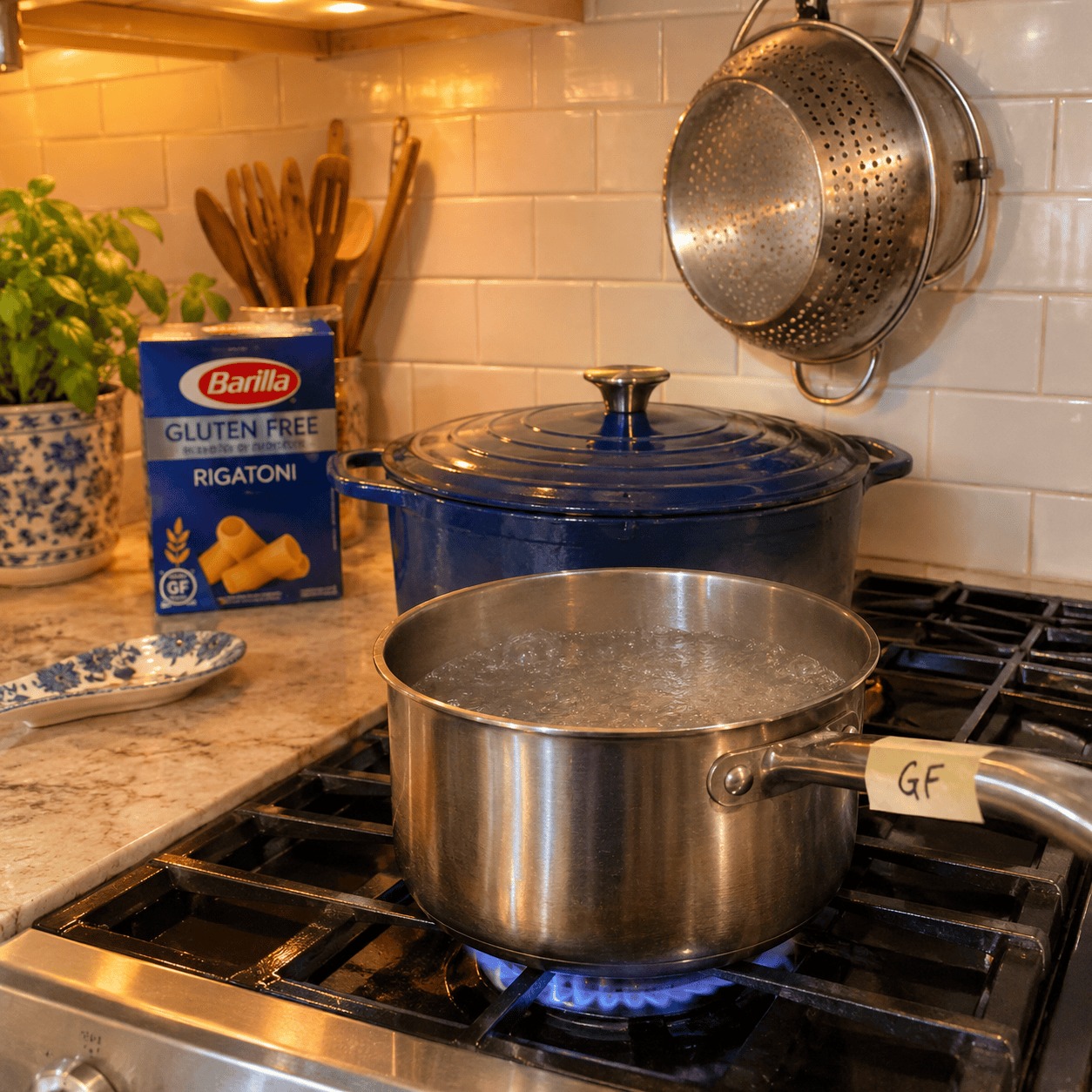
She’ll be hurt for about ten minutes. Not at you — at herself, for not knowing in advance.
Then something happens that I’ve watched three times now. She starts asking questions. What exactly can’t you have, is it celiac or is it sensitivity, does semolina count, what about the breadcrumbs in the meatballs.
By the next Sunday there’s a separate colander, a separate strainer for the gravy, and a box of gluten-free rigatoni she has already cooked twice to figure out the timing. My aunt Rosalie got diagnosed at sixty-one and my mother mastered a gluten-free pasta dough inside a month, out of pure stubbornness.
If you’re the one asking, make it easy on her. Call ahead instead of announcing it at the table, be specific about what you can eat rather than what you can’t, and offer to bring your own pasta so she doesn’t have to guess at brands.
And know that gluten-free rigatoni needs watching — most brands go from firm to mush in about ninety seconds, so start tasting two minutes early and pull it the moment it has a little bite. Rinse is still forbidden; instead, dump it straight into the warm sauce and let it sit a minute off the heat.
Plenty of the old dishes never had flour in them to begin with. Risotto, polenta, caponata, braciole, the whole antipasto table. There’s a list of Nonna’s naturally gluten-free dishes on the site if you need a place to start.
26. “Can I Cut My Spaghetti?”
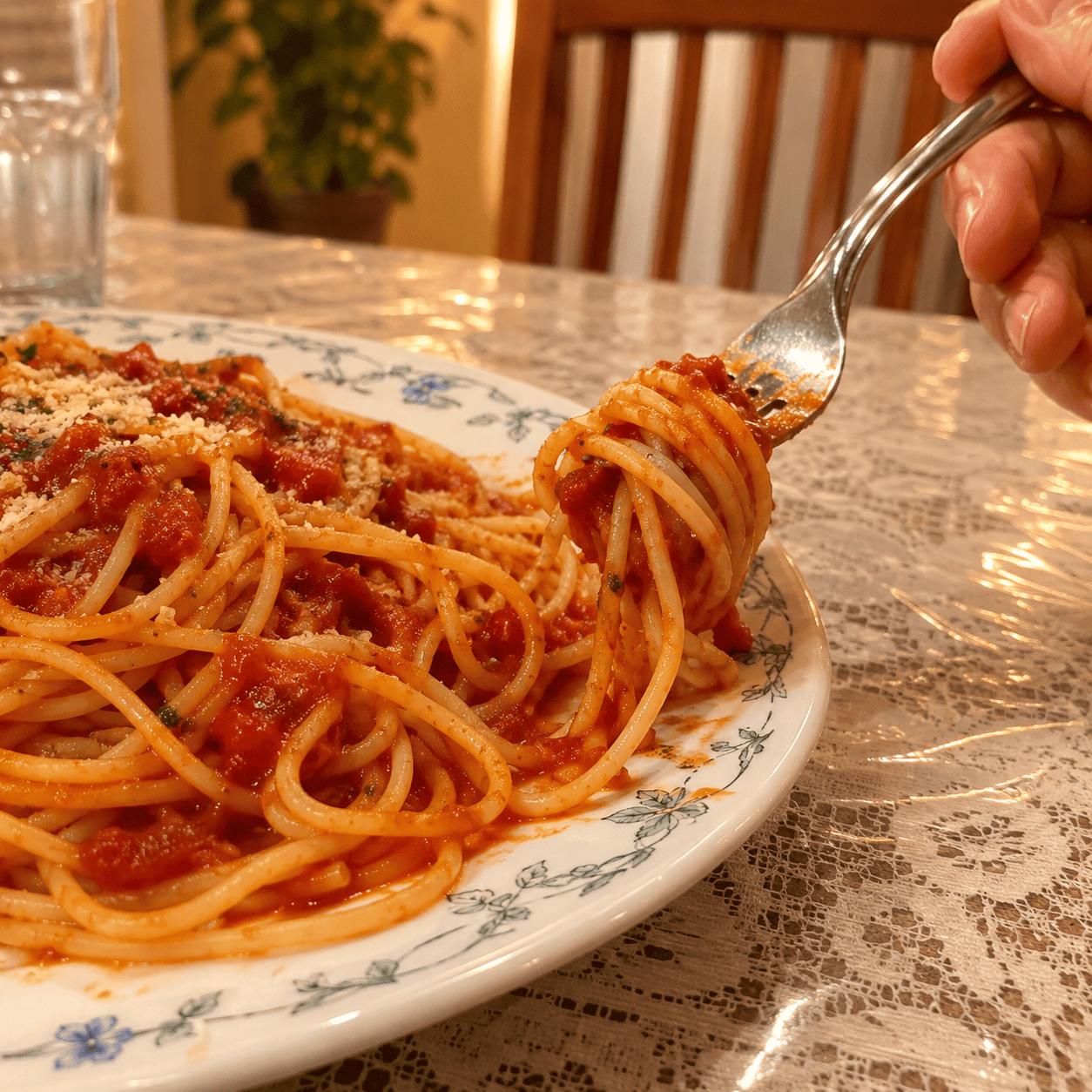
This is entry two again, but at the table, in front of witnesses.
Fork against the curve of the plate, three or four strands at a time, turn. That’s it. Too many strands is why people struggle.
And no, you don’t get a spoon. The spoon is a restaurant invention — nobody in Nonna’s house ever handed one across the table, and children were taught the wrist motion before they were taught cursive.
27. “I Used Dried Basil — Same Thing, Right?”
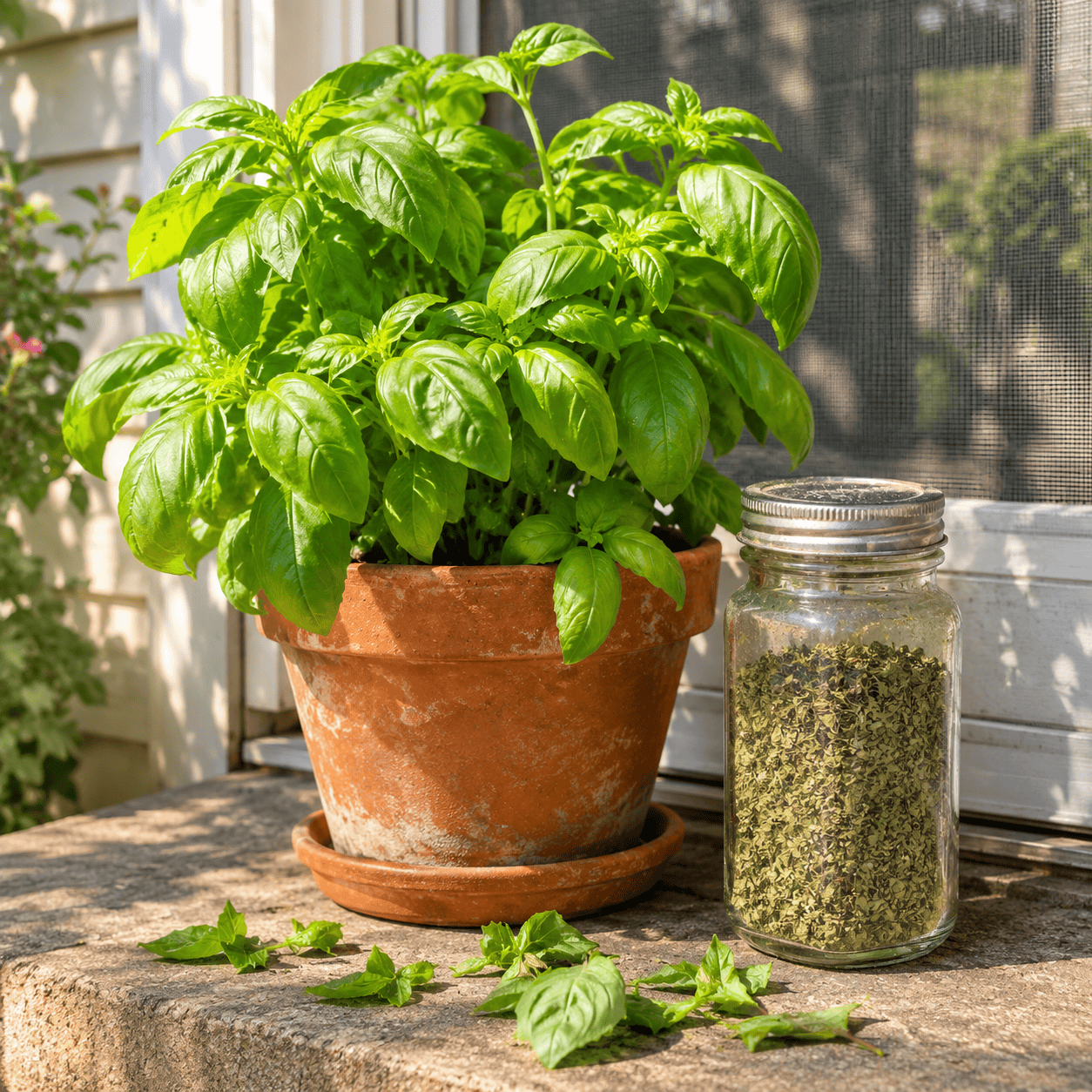
Dried basil tastes like hay. There’s no gentler way to put it.
Basil’s flavor lives in volatile oils that mostly disappear in drying. Oregano survives it, thyme survives it, rosemary survives it. Basil does not.
Every one of these houses had a pot of it by the back door from May to September, and the leaves got torn in by hand after the pan came off the heat. Never chopped with a knife, which bruises the edges black. If you’ve got a plant going wild, there are a dozen ways to use it up before frost.
28. “Could I Get a Cappuccino With Dessert?”
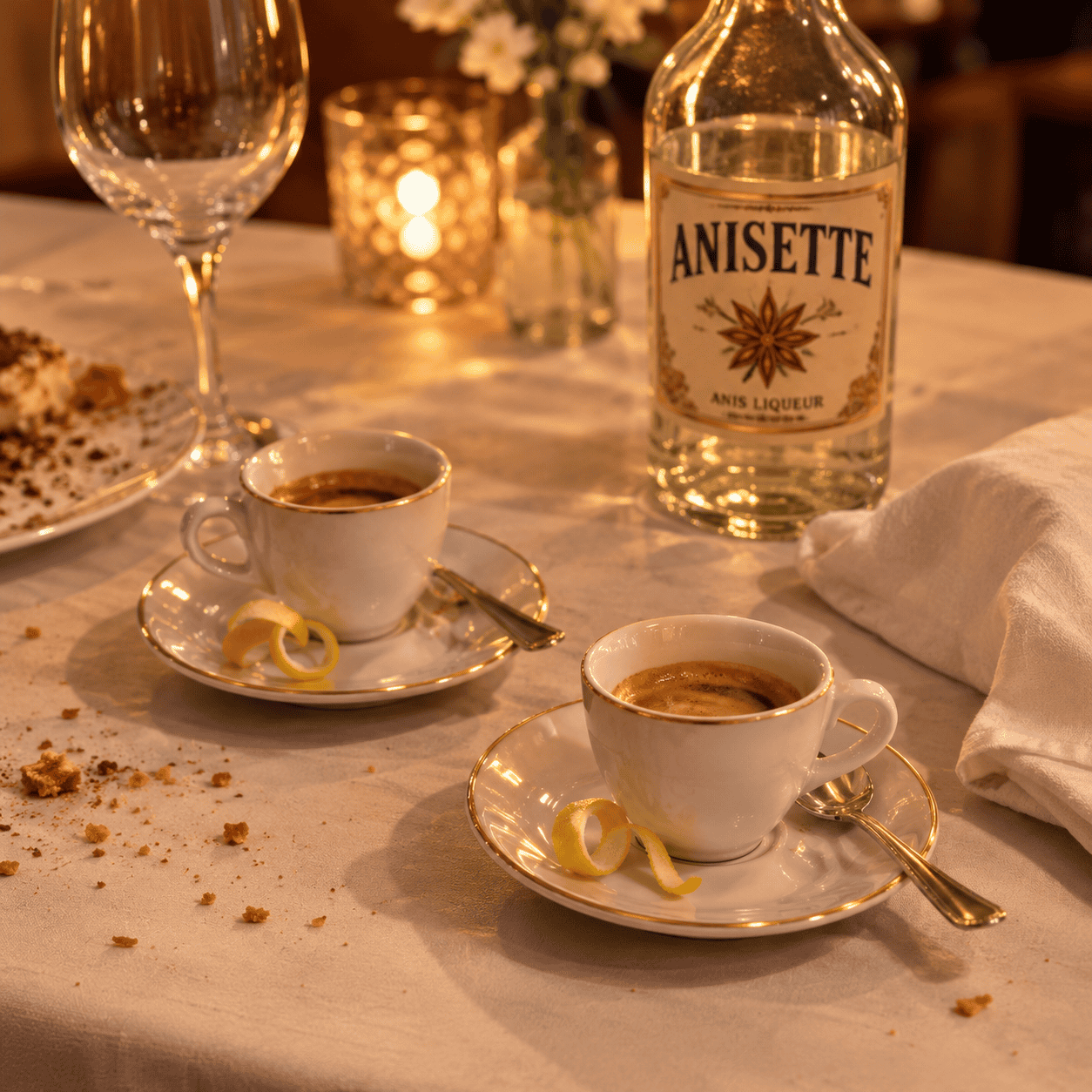
Milk after a meal is considered heavy, and cappuccino in Italy is a breakfast drink — most Italians stop ordering it around eleven in the morning.
After dinner it’s espresso. Small cup, two swallows, maybe a lemon peel. Sometimes a splash of anisette in it if the night’s going long, which my uncles called a correction.
Order the cappuccino if you want it. Just know the raised eyebrow is coming, and it’s not personal — it’s the same reflex as putting ice in red wine.
29. “I Put Cream in the Carbonara”
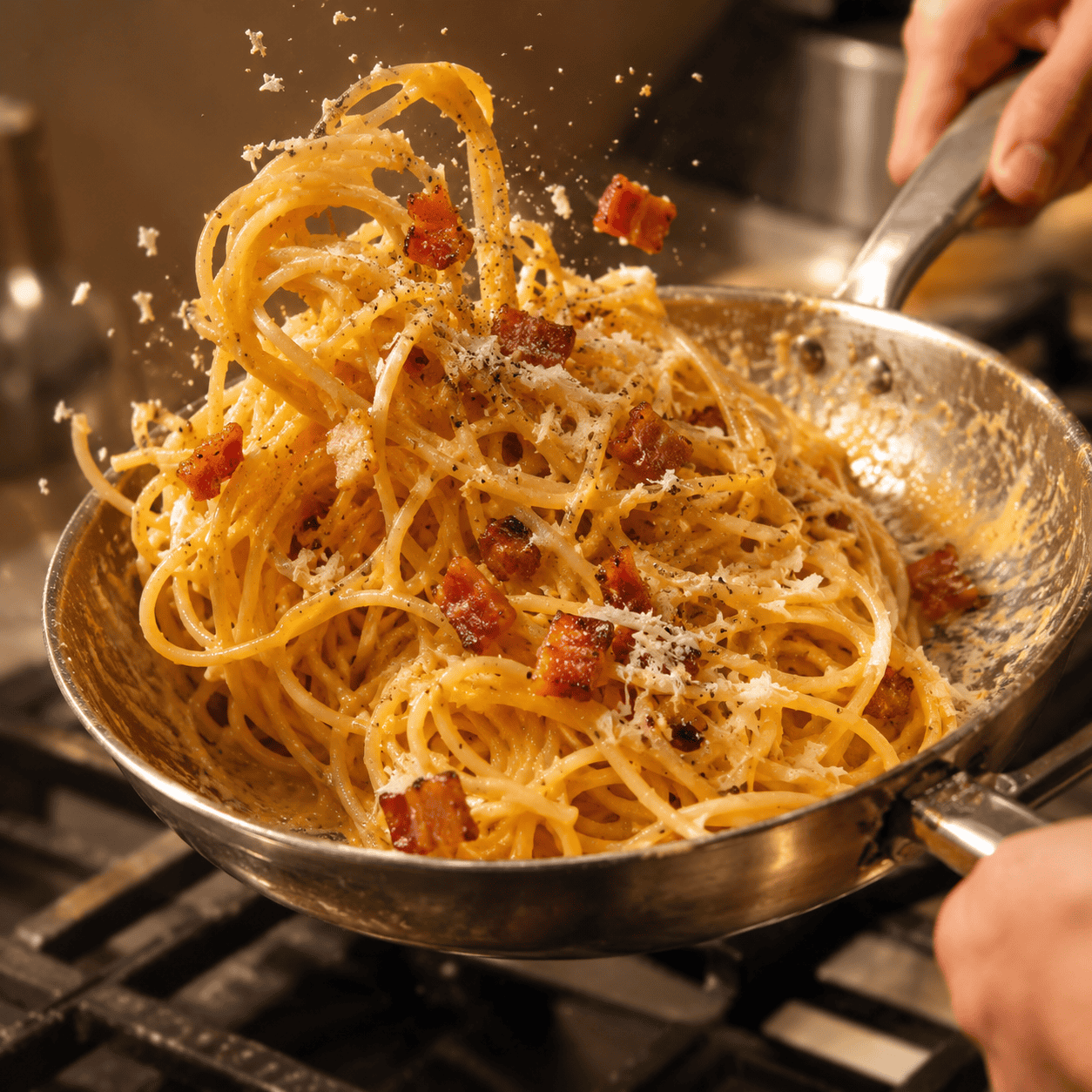
Four ingredients plus pasta: guanciale, egg yolks, pecorino romano, black pepper. That’s the entire dish.
The silk comes from technique. You pull the pan off the heat, you temper the eggs with hot pasta water, and you toss hard until the yolks thicken into sauce without scrambling. Cream is what you reach for when you don’t trust yourself to do that.
Get the pan off the burner before the eggs go in. That single move is the whole recipe.
30. “Can You Make a Batch Without the Meat?”
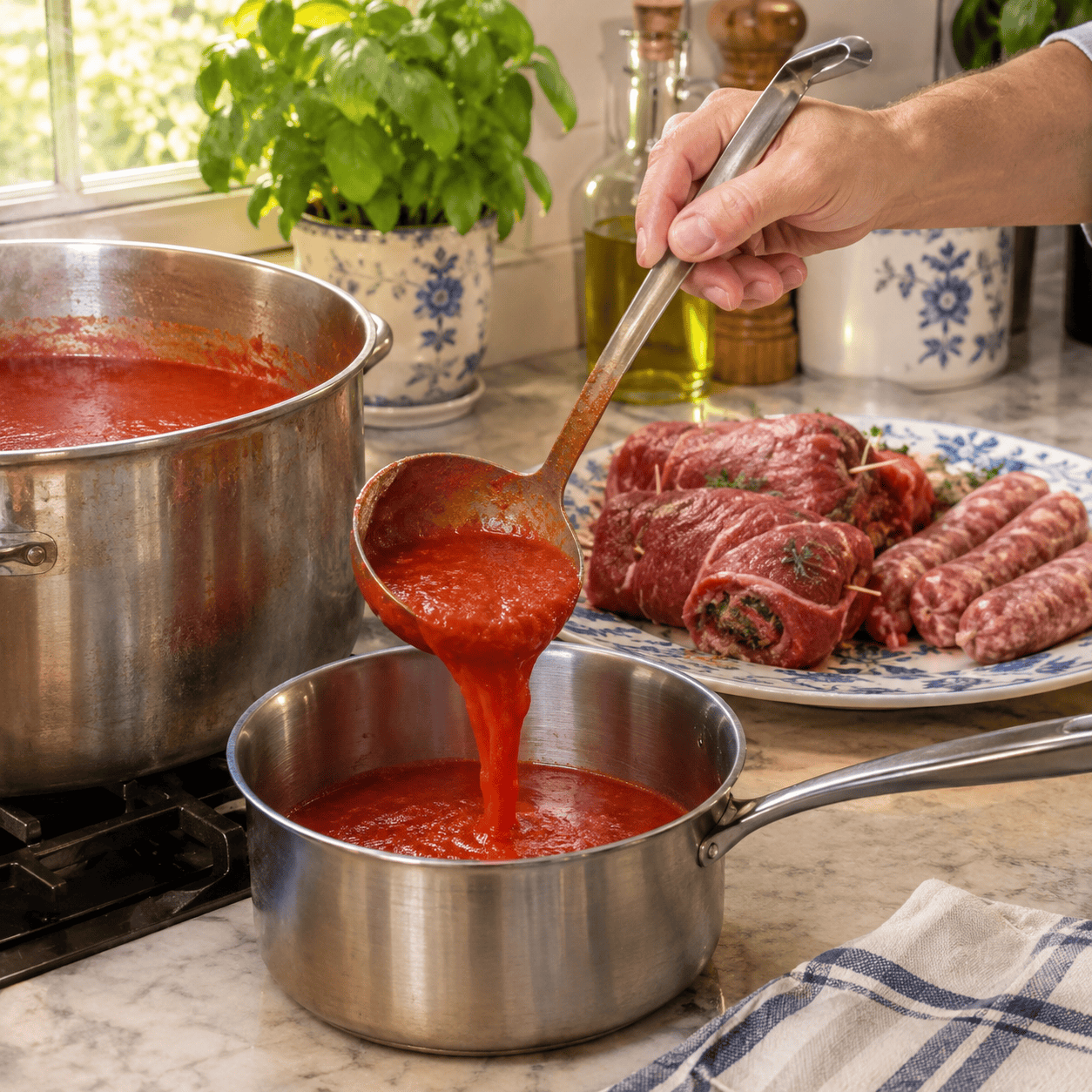
The braciole, the sausage, the pork neck bones — that’s what makes Sunday gravy taste like Sunday gravy. Take the meat out and you have marinara that cooked too long.
She can’t just lift the meat out at the end. The pot’s been one thing since morning.
What works: ask her to ladle off a quart before the meat goes in. Takes thirty seconds, gives you a clean little pot of tomato and basil, and she gets to feed you properly instead of apologizing.
Ask on Friday, not at one o’clock Sunday.
31. “I’ll Just Microwave It”
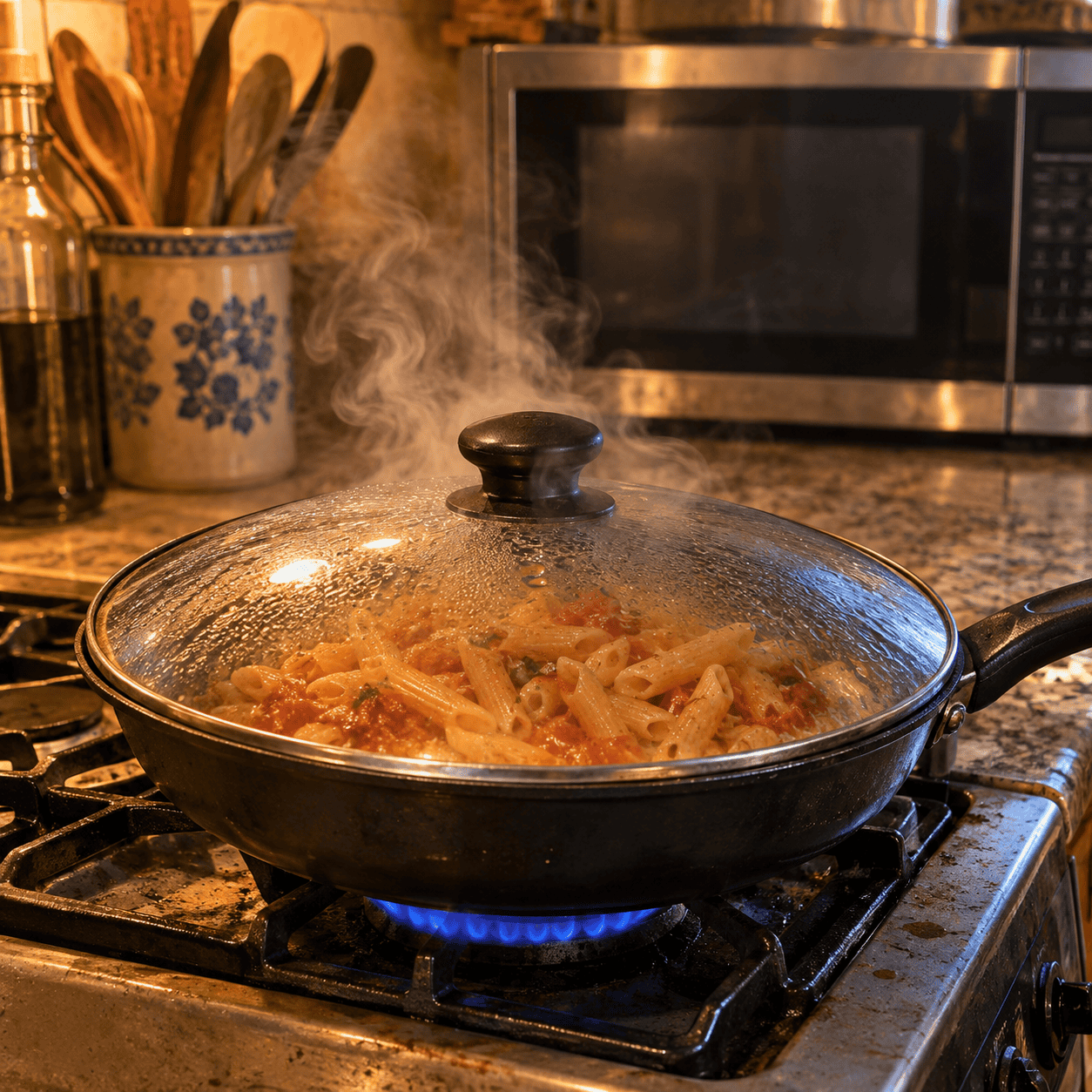
The microwave is where texture goes to die. Everybody knows this and does it anyway.
Leftover pasta goes back in a skillet with a splash of water and a lid, three or four minutes, and comes out nearly new. Leftover eggplant parm goes in a 350° oven until the edges bubble again.
The one thing the microwave is good for is warming the plate before the food hits it. That’s it. That’s the whole job.
32. “I Washed the Pan With Soap”
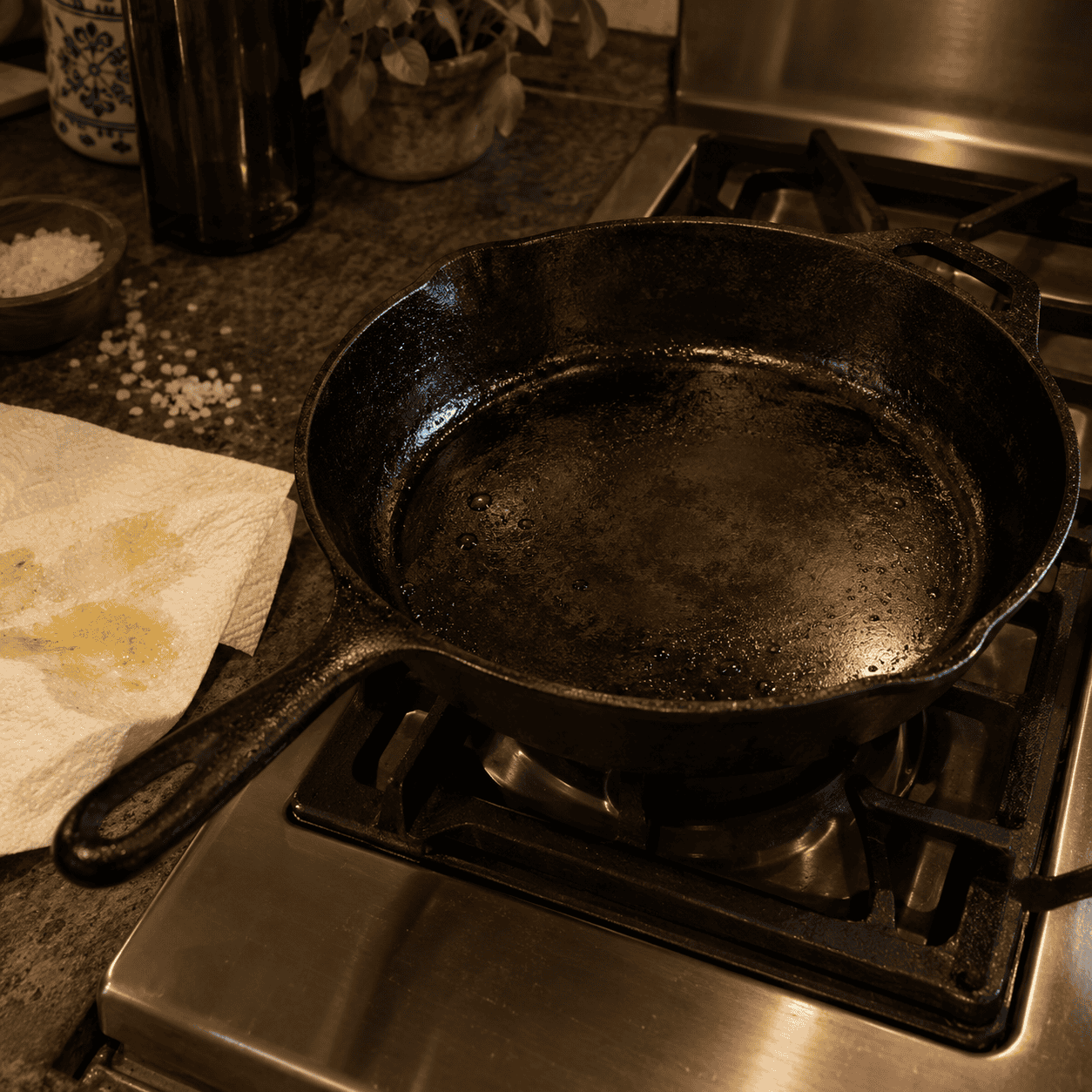
There was a black frying pan on the back burner of that stove for as long as I was alive. Cast iron, or maybe carbon steel — nobody ever said. It turned out every cutlet, every frittata, every batch of peppers and eggs from 1952 to 2011.
It never saw a sponge with dish soap on it. Not once.
Here’s what she actually did, and it took about ninety seconds. Pan comes off the heat still hot. Hot water goes in, a stiff brush or a handful of coarse salt scrubs the stuck bits loose, and the water goes down the drain. Back on the burner to dry completely — this is the step people skip and it’s the one that matters, because water sitting in the pores is what rusts it. Then a half-teaspoon of oil wiped around with a paper towel until it looks dry, not greasy.
Modern dish soap won’t strip a well-seasoned pan the way the old lye-based stuff would, so a quick wash isn’t the catastrophe it used to be. But soaking it is. Putting it in the dishwasher is. Scrubbing it down to gray metal with steel wool undoes forty years of polymerized oil in about four minutes.
If you do strip one, you can rebuild it. Thin coat of oil, oven at 450° for an hour, repeat three or four times. It just takes a year of cooking after that to get the slickness back.
That pan went to my cousin Joanne. She uses it every week and it still doesn’t stick.
33. “Your Lasagna Is Almost as Good as My Mother-in-Law’s”
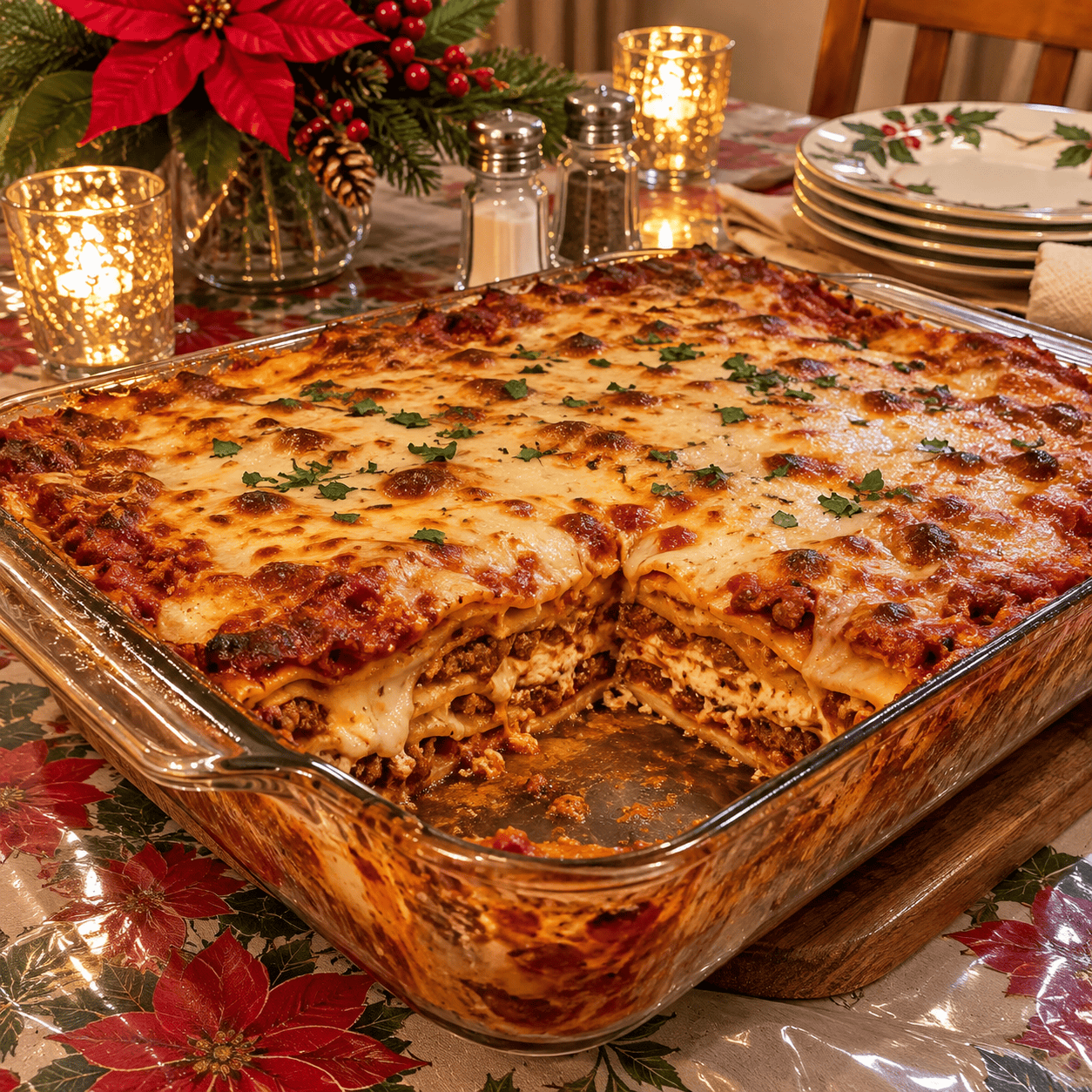
Comparative praise is not praise. The only word anybody heard was “almost.”
That sentence gets filed. It comes back out at Christmas, at christenings, at the table twelve years later when somebody mentions lasagna and she says “well, mine’s only almost.”
Compliment the food in front of you without a scoreboard. Two cooks, two recipes, no ranking.
34. “I Couldn’t Eat Another Bite”
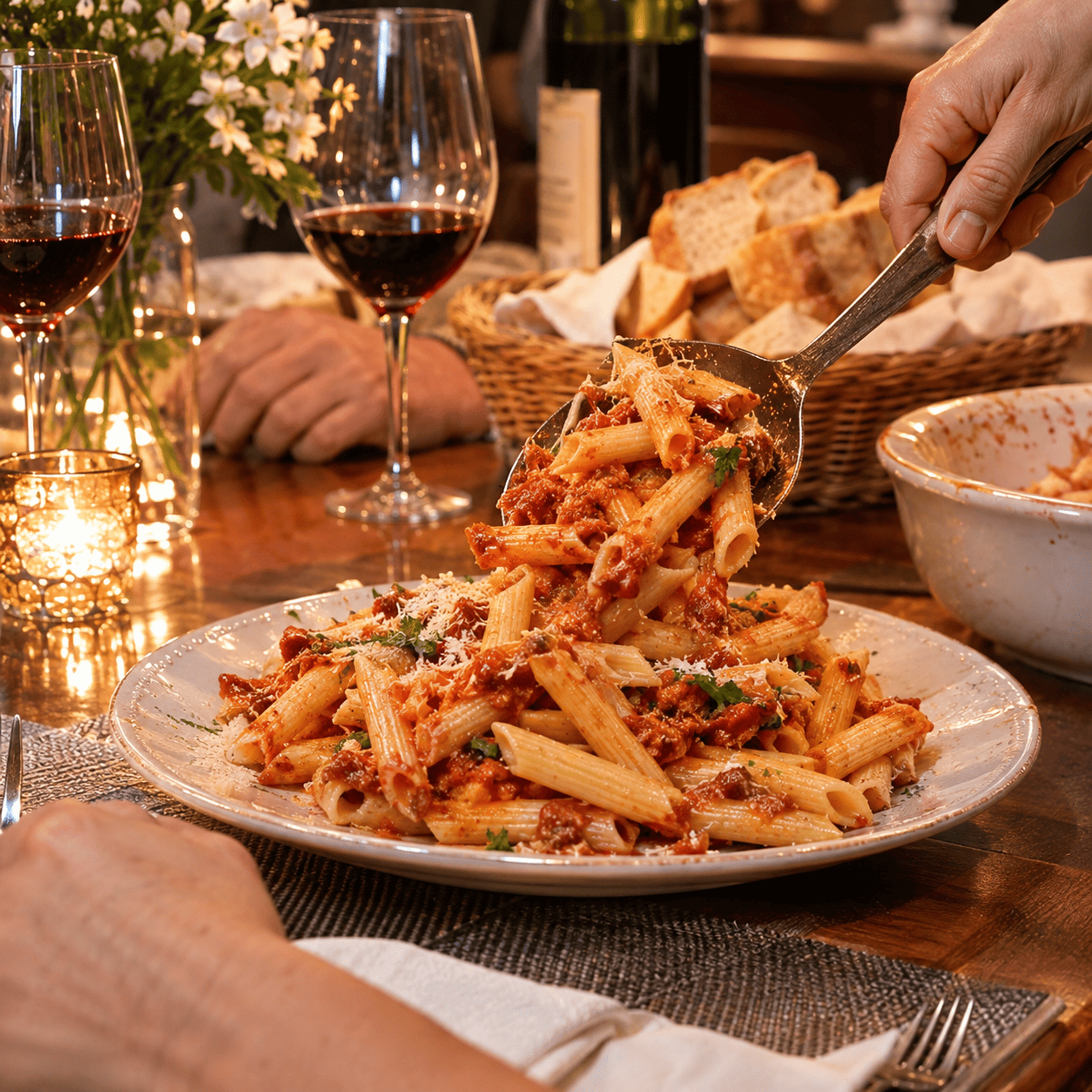
Fullness is not an excuse. It’s an opening position.
She hears a negotiation. You will be offered the plate three more times, each time described as “just a little,” each time larger than the last.
The only winning play is to accept a small amount and leave a bite on the plate. A clean plate is a request for more. That’s not a joke — that’s the system.
35. “No Thanks — I Don’t Need to Take Anything Home”
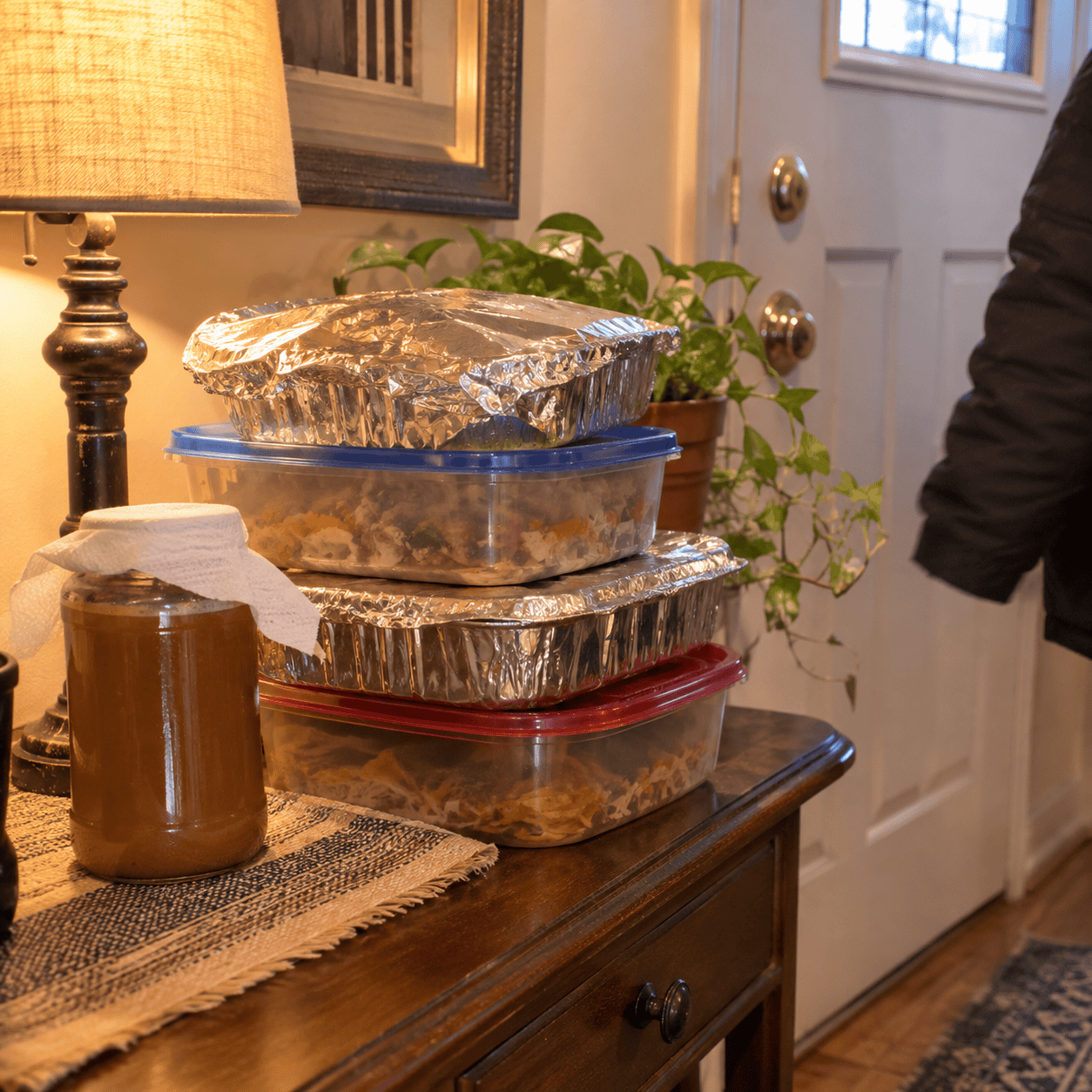
The foil trays come out while you’re putting your coat on. She’s been assembling them since the middle of dinner.
Cool Whip containers, the good Tupperware she’ll want back, aluminum pans with the edges crimped down. Gravy in a jar with a paper towel under the lid in case it leaks in your car.
Saying you don’t need it means you don’t need taking care of. And taking care of you is the only thing she has ever wanted the job of doing.
Take the tray. Call her when you eat it.
Everything on this list is really the same thing said thirty-five different ways: in that kitchen, food is how she says the things she doesn’t say. The sauce is the sentence. The foil tray is the goodbye she can’t quite do out loud.
So break the rules if you want. Put cream in your carbonara, snap your spaghetti, drink a cappuccino at nine at night.
Just don’t do it in front of her. And when the plate comes anyway — and it will — eat it.
Buon appetito,
Madeline